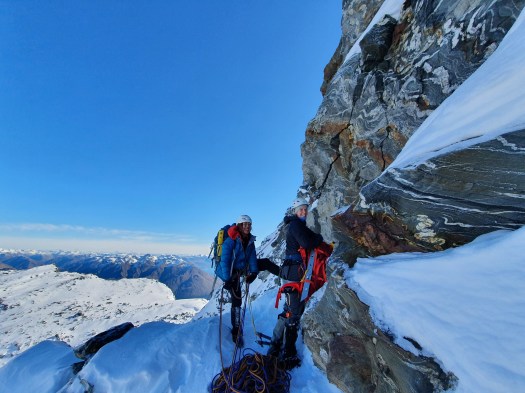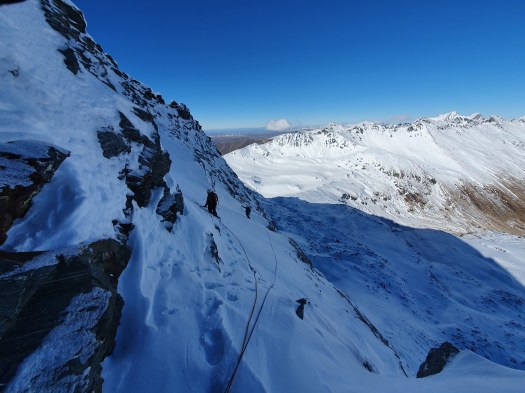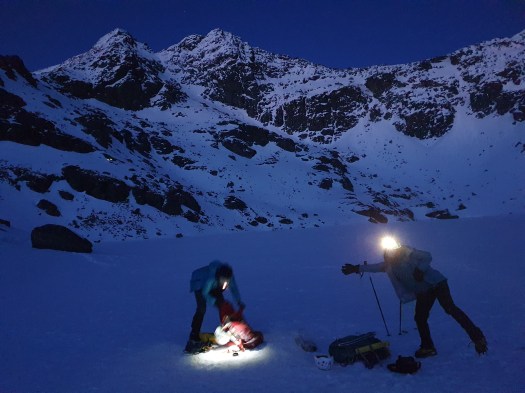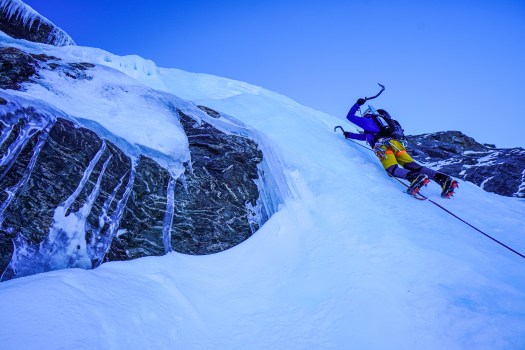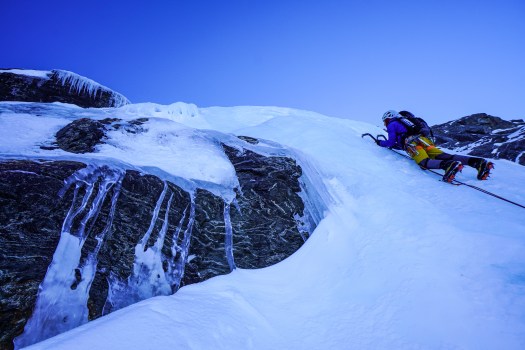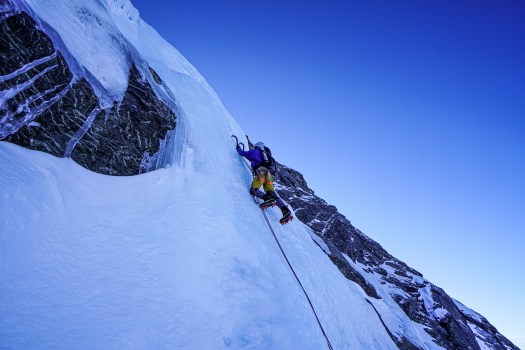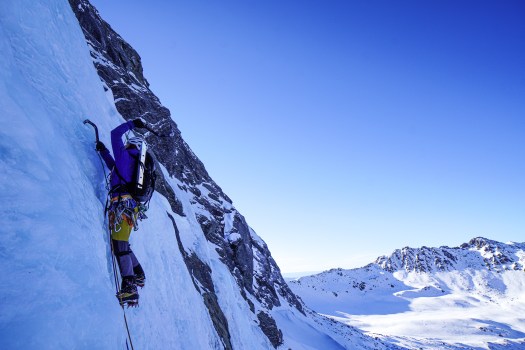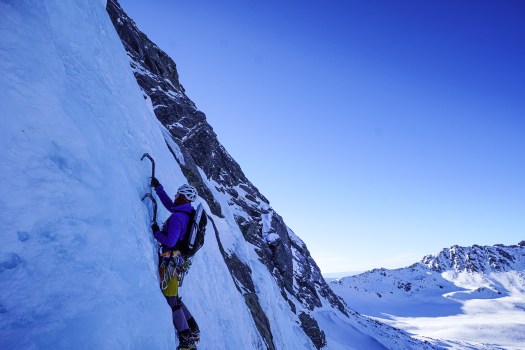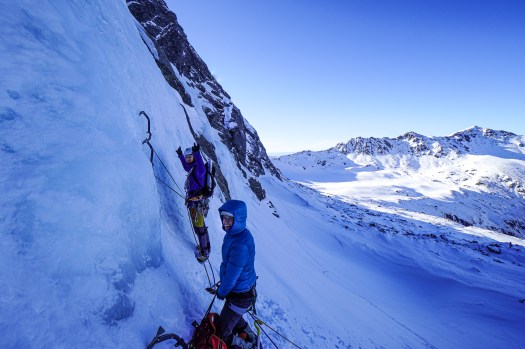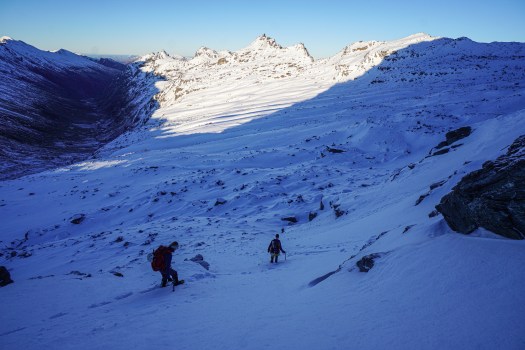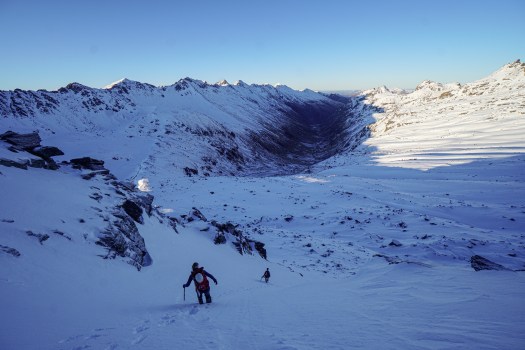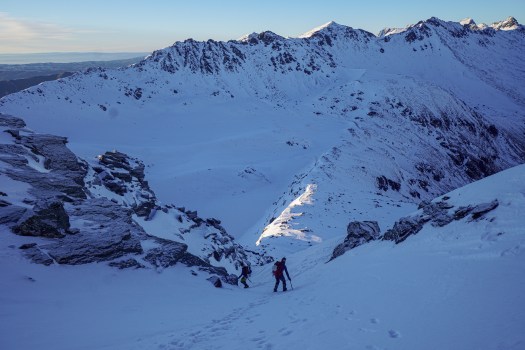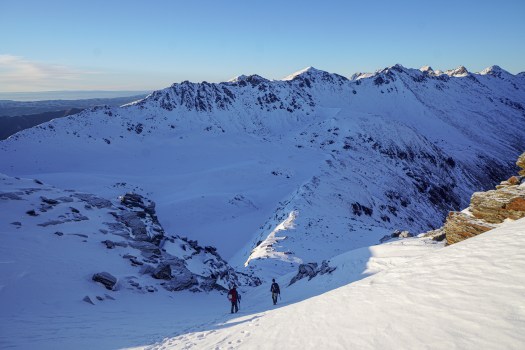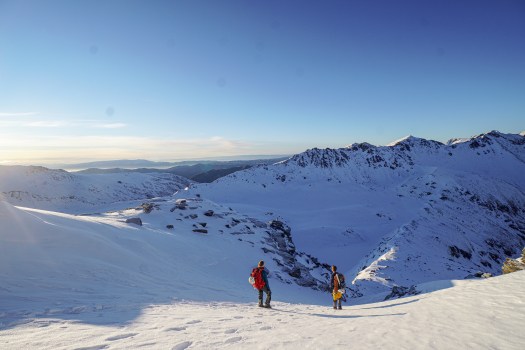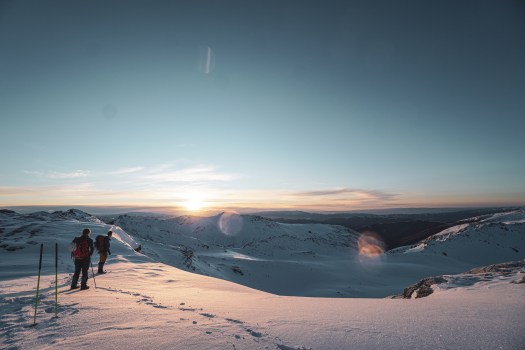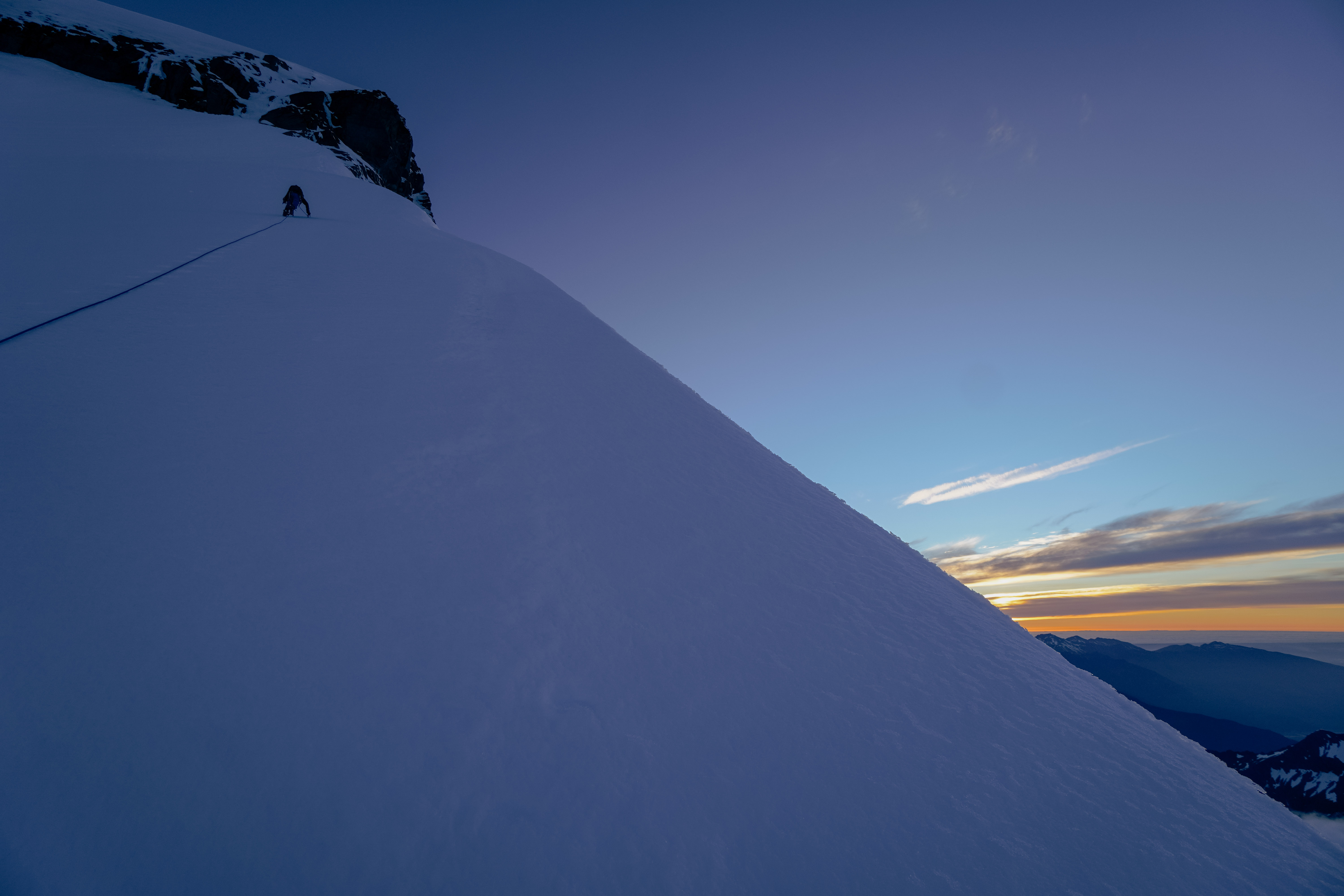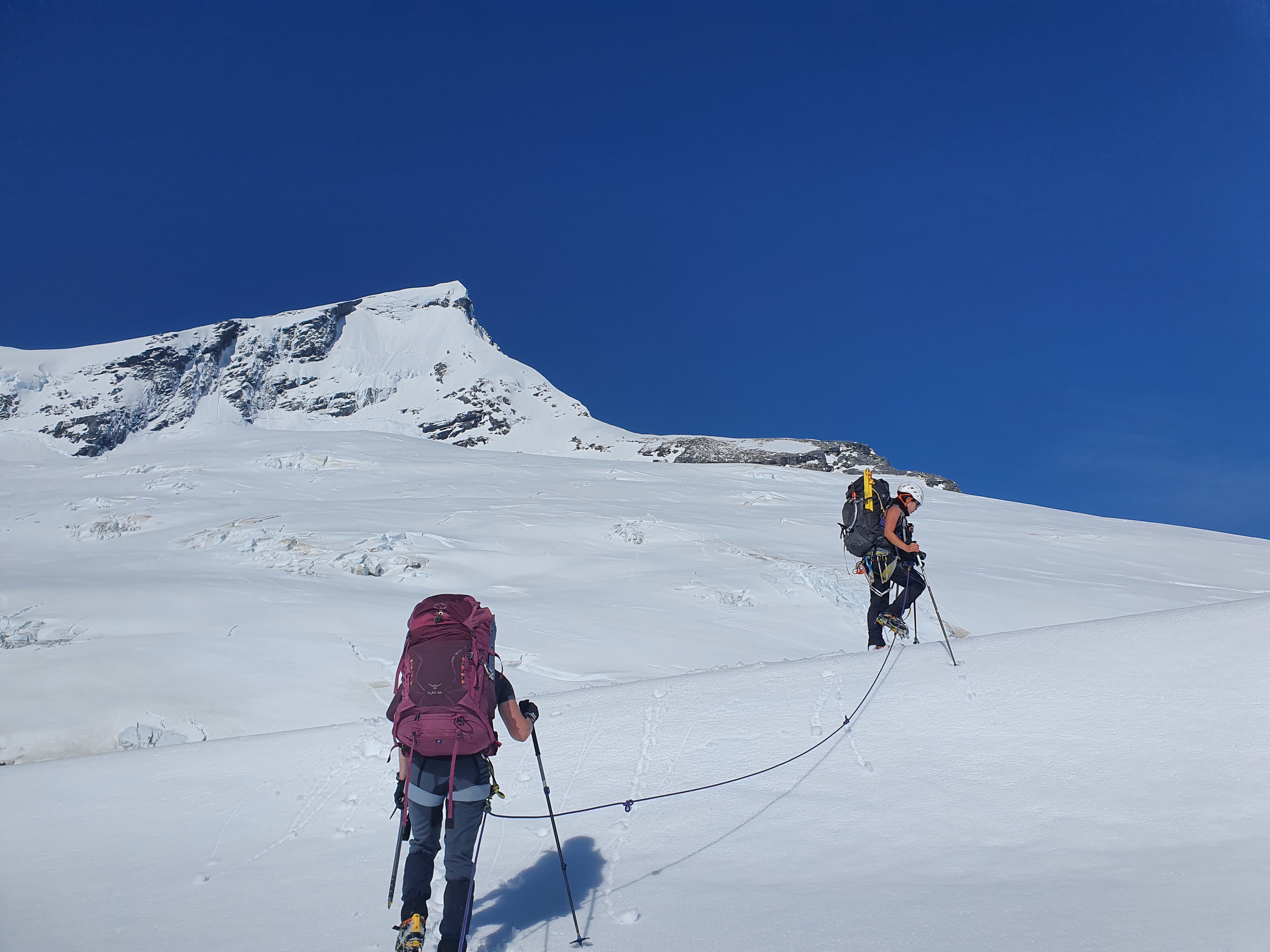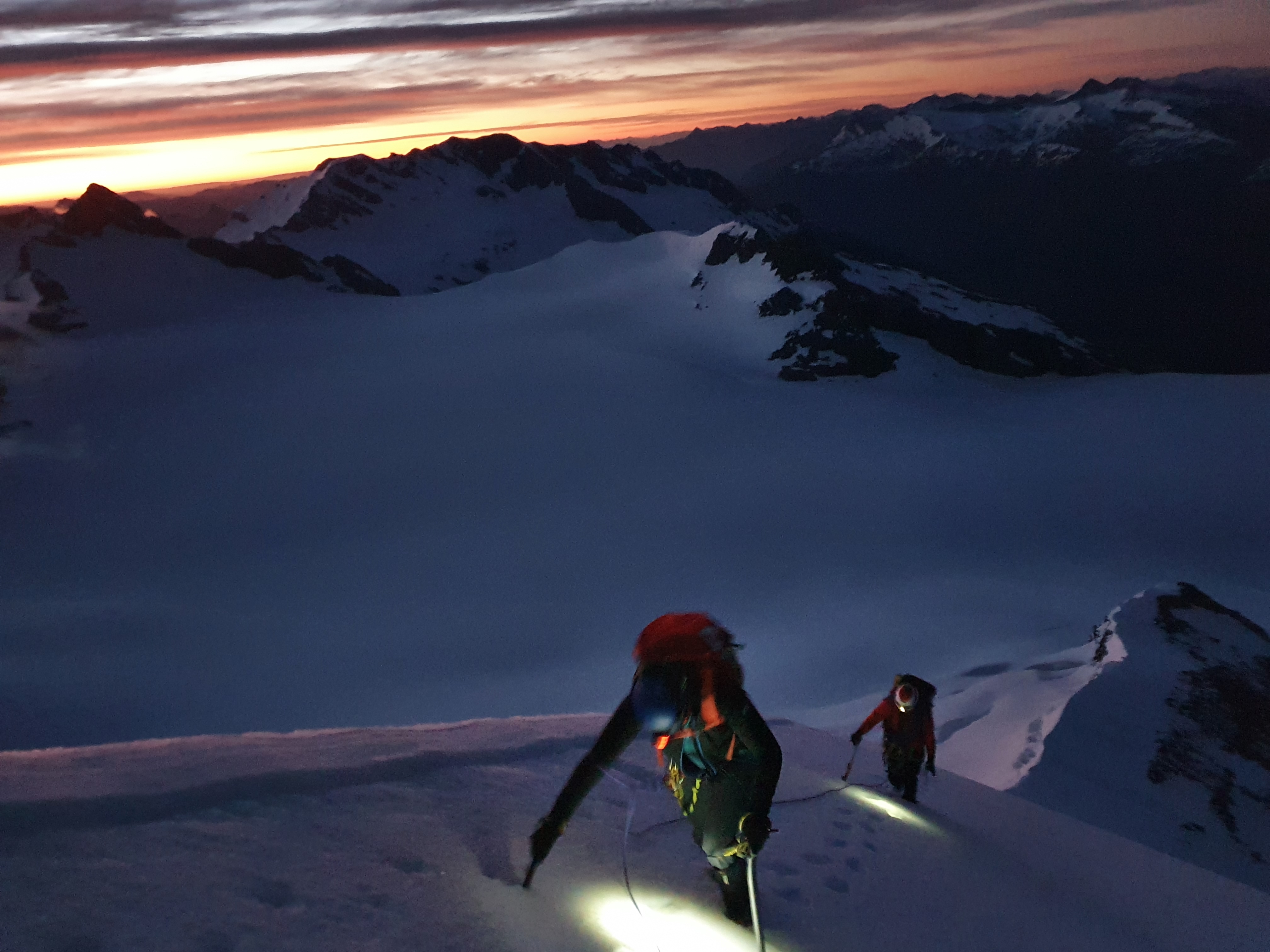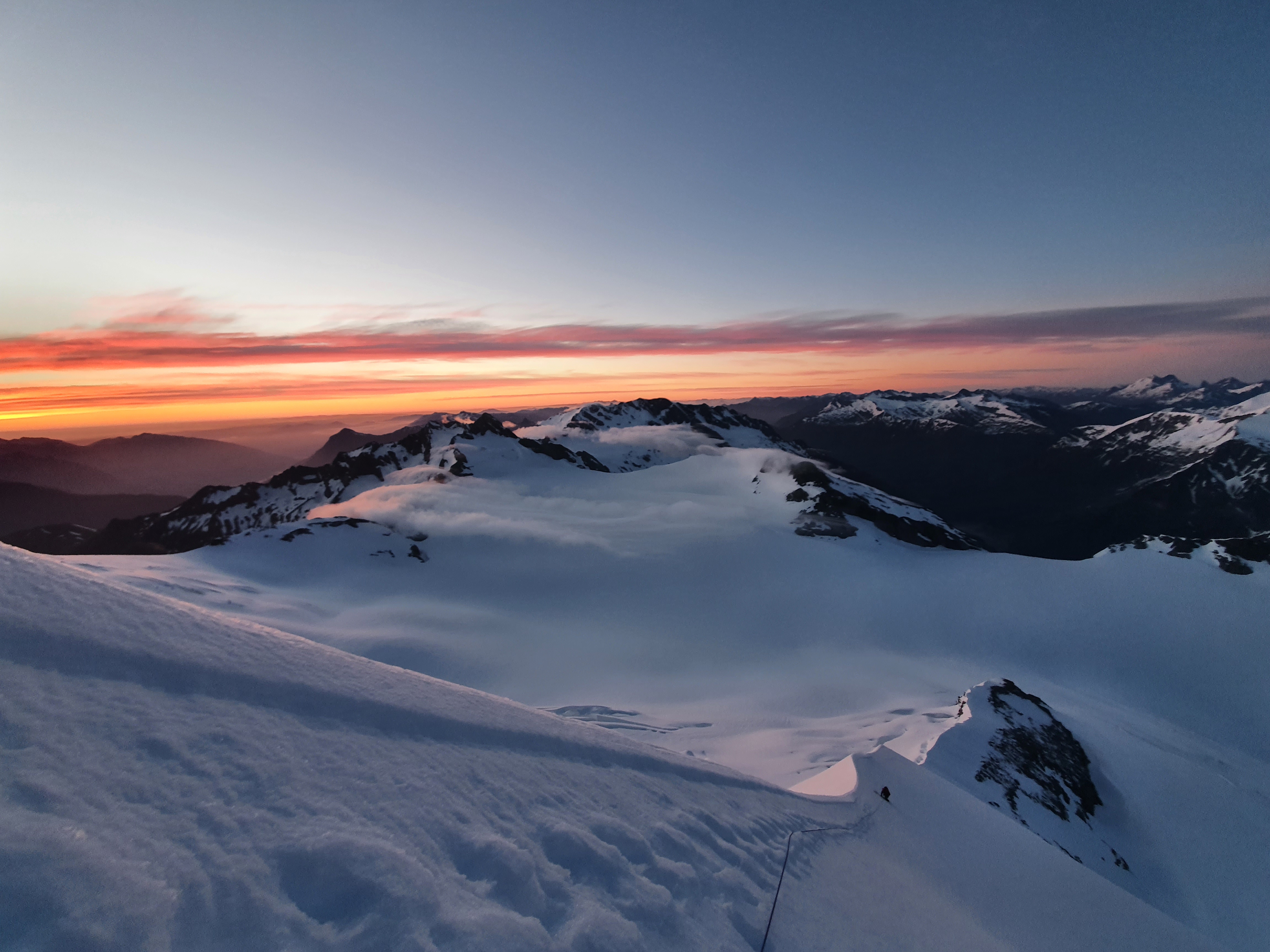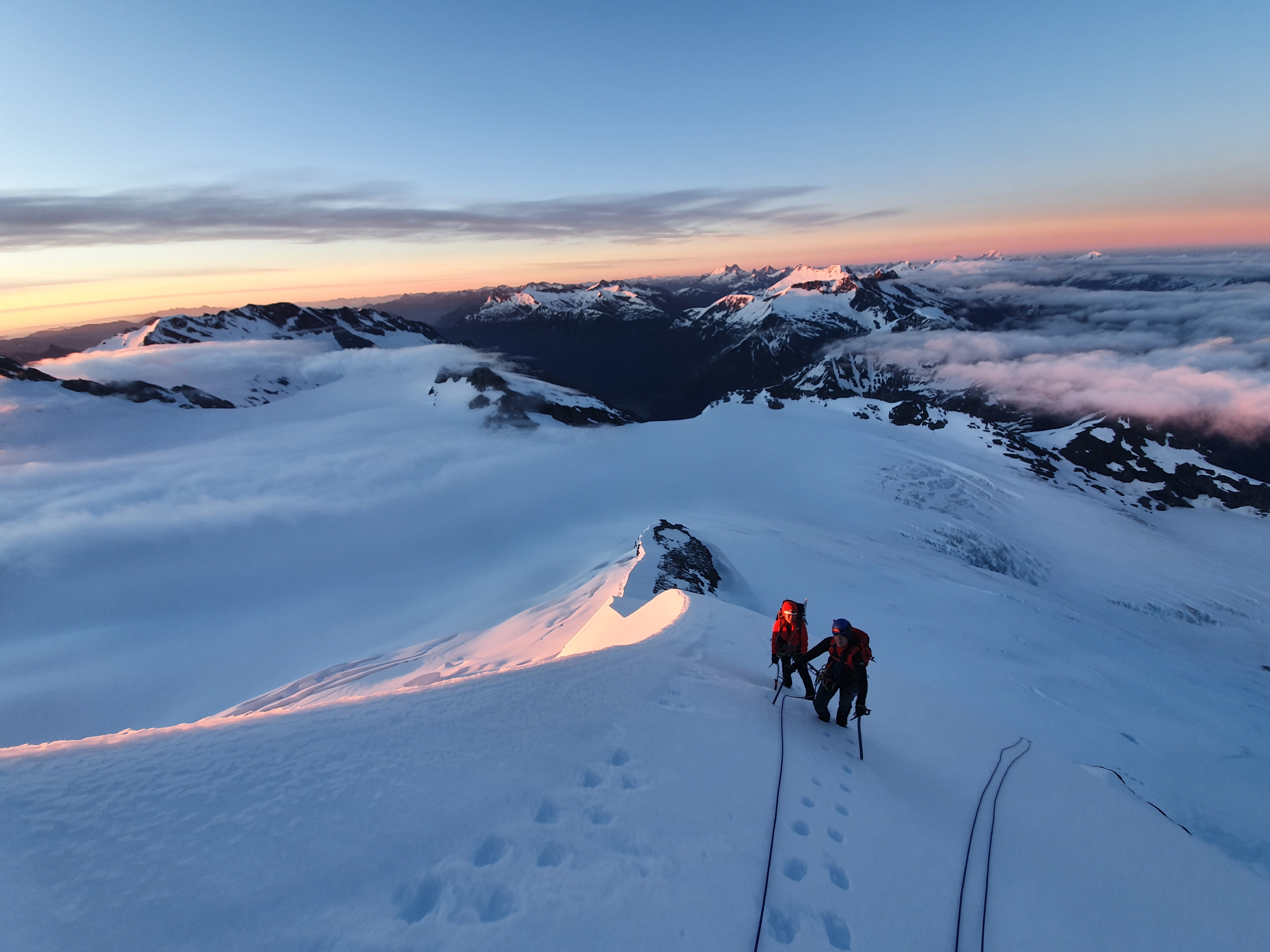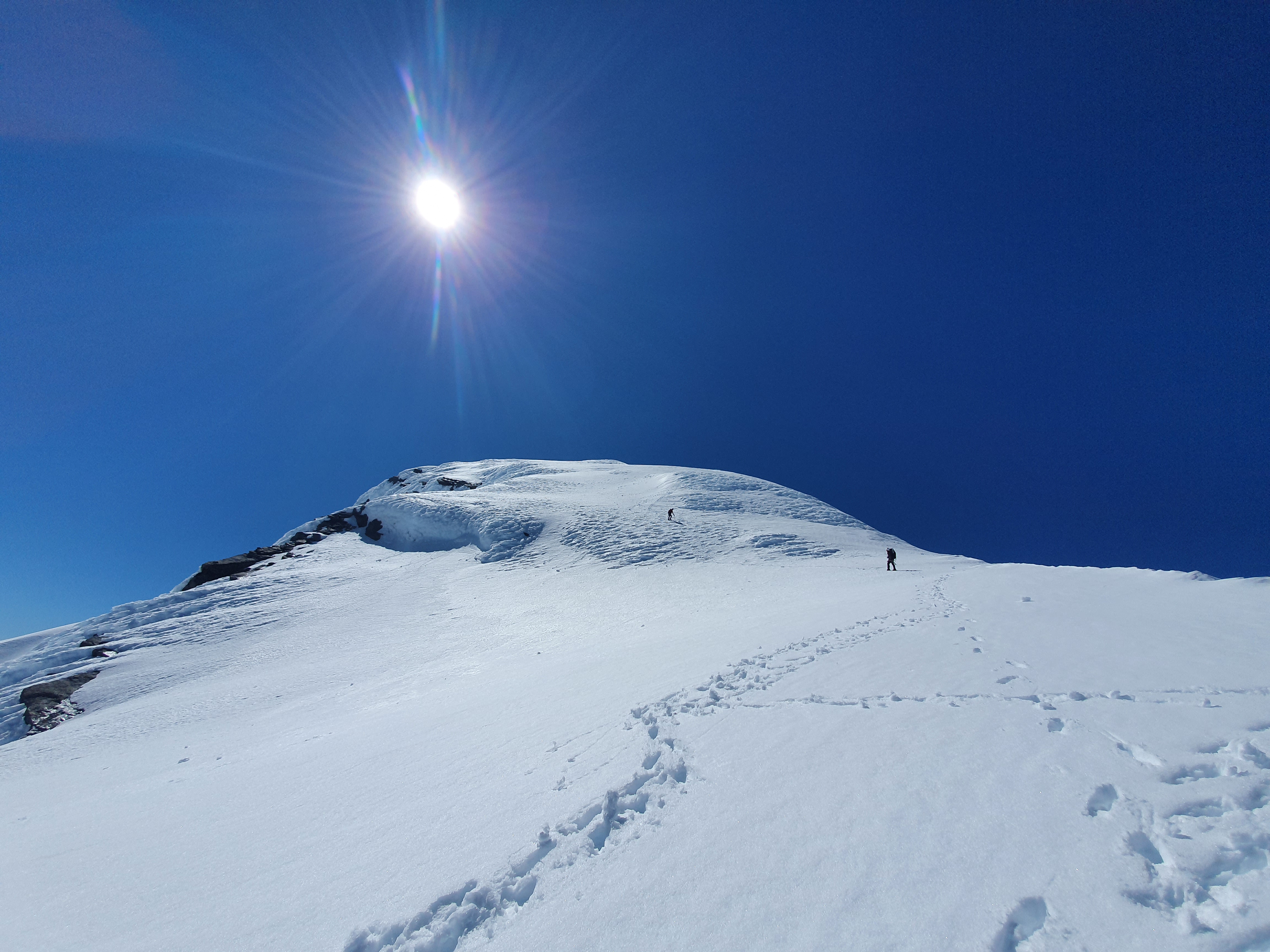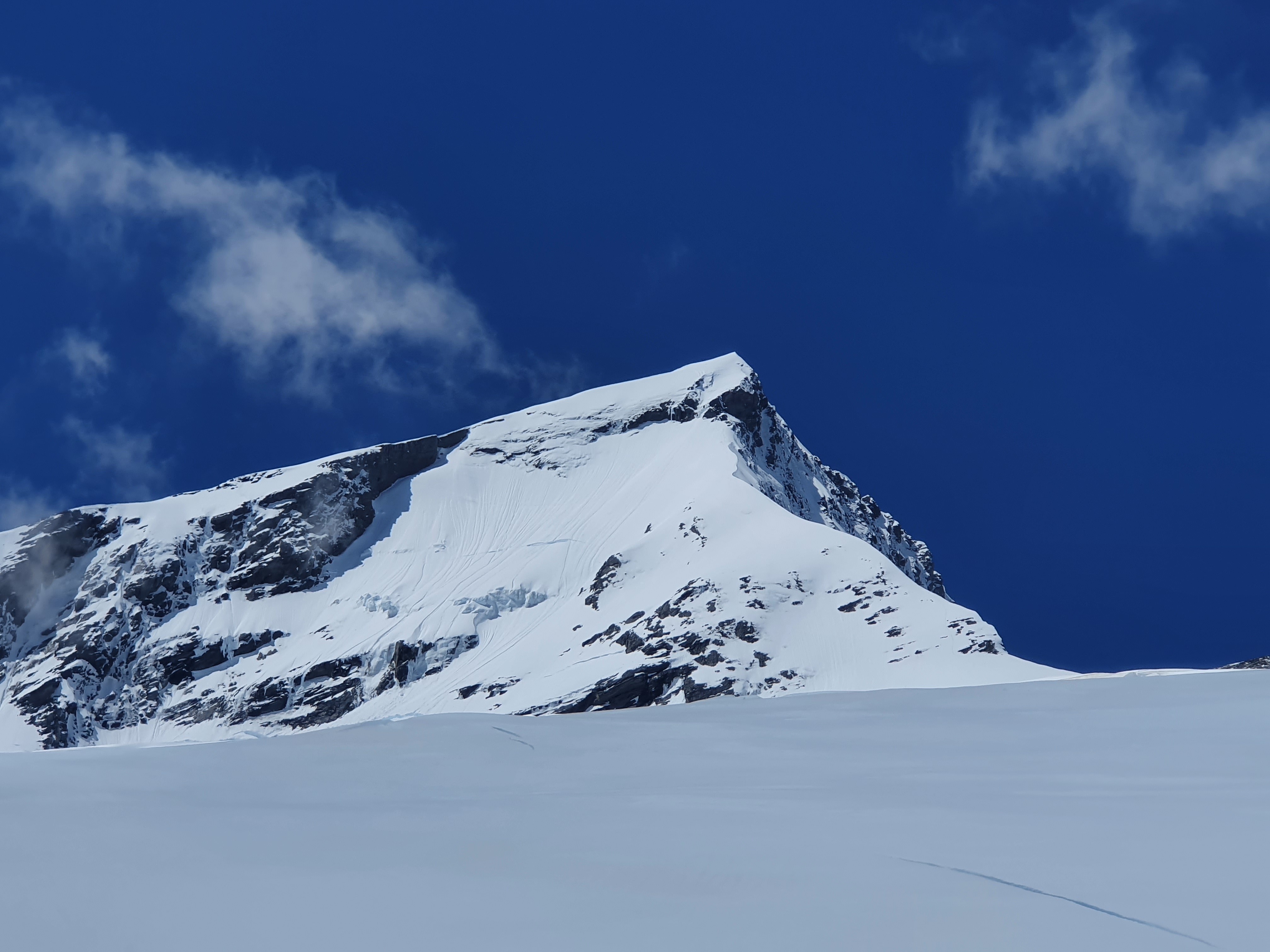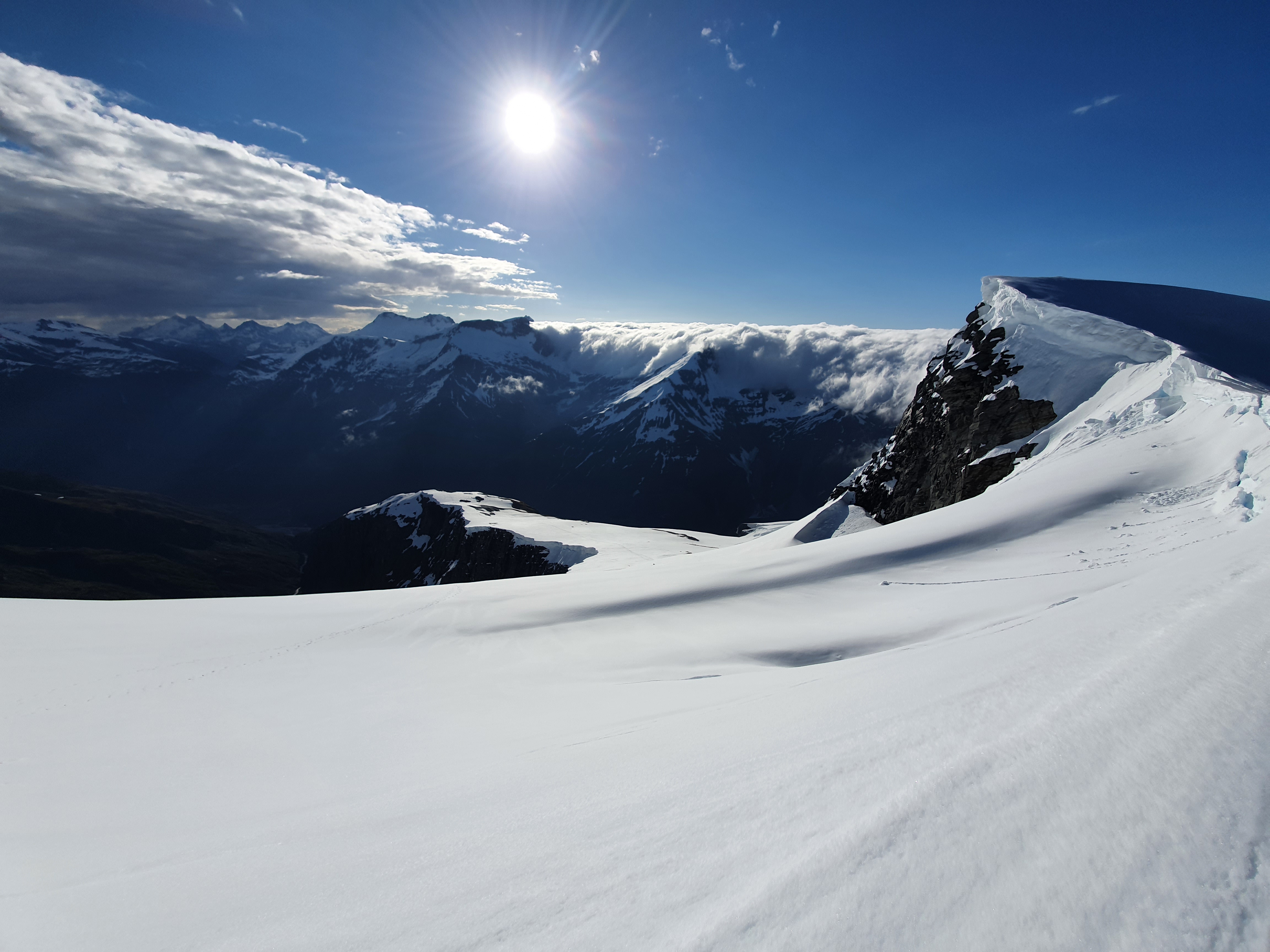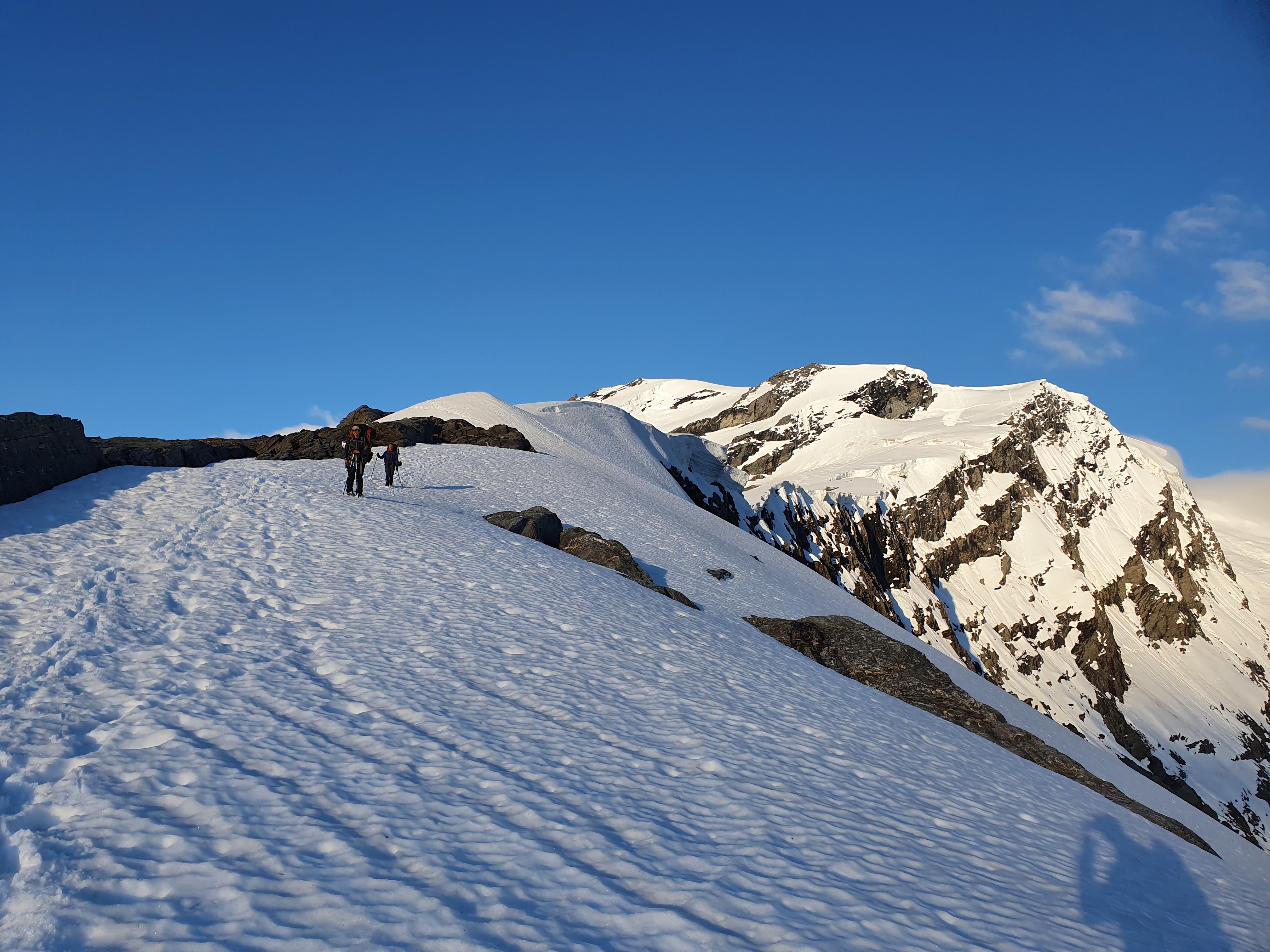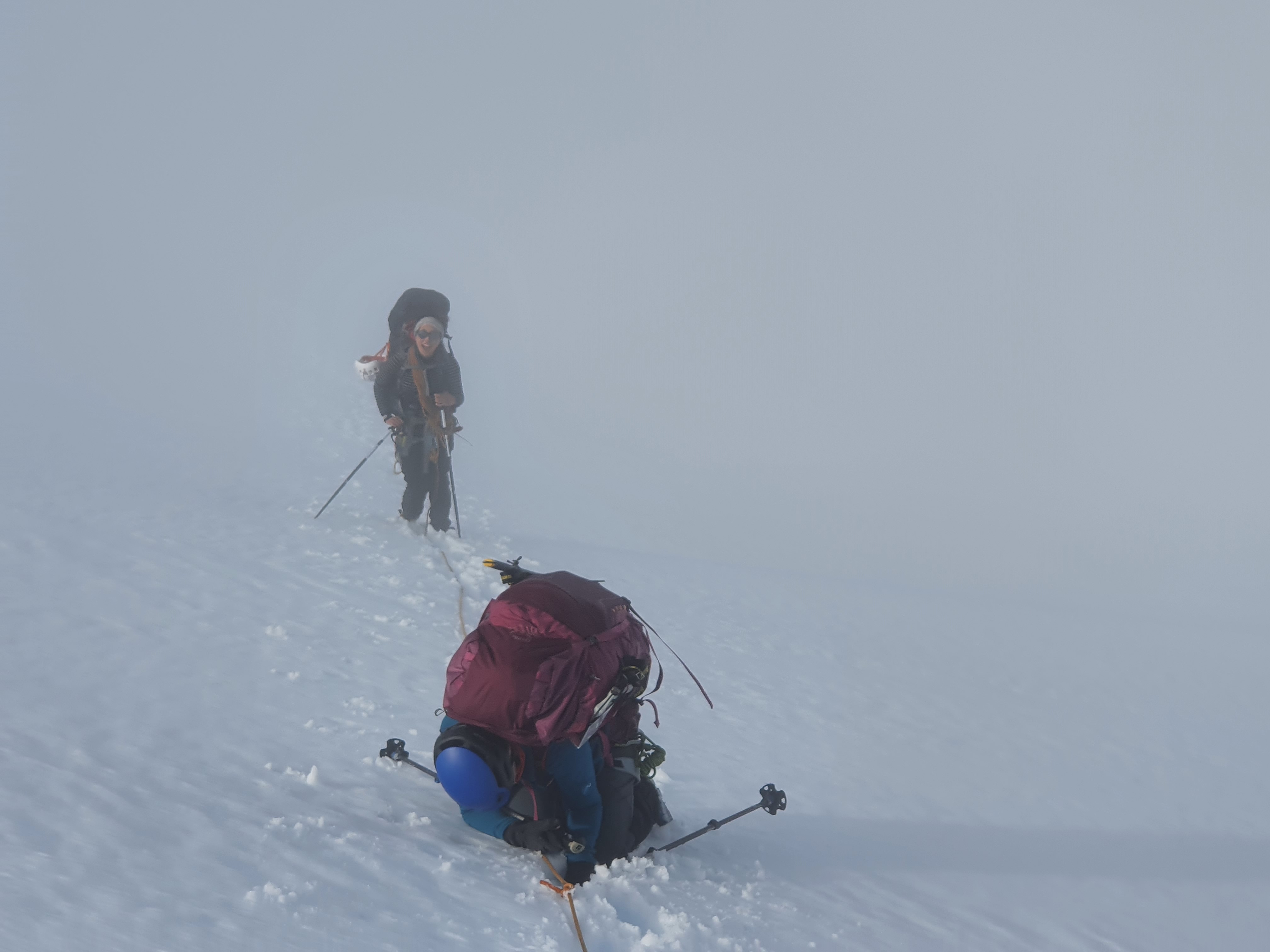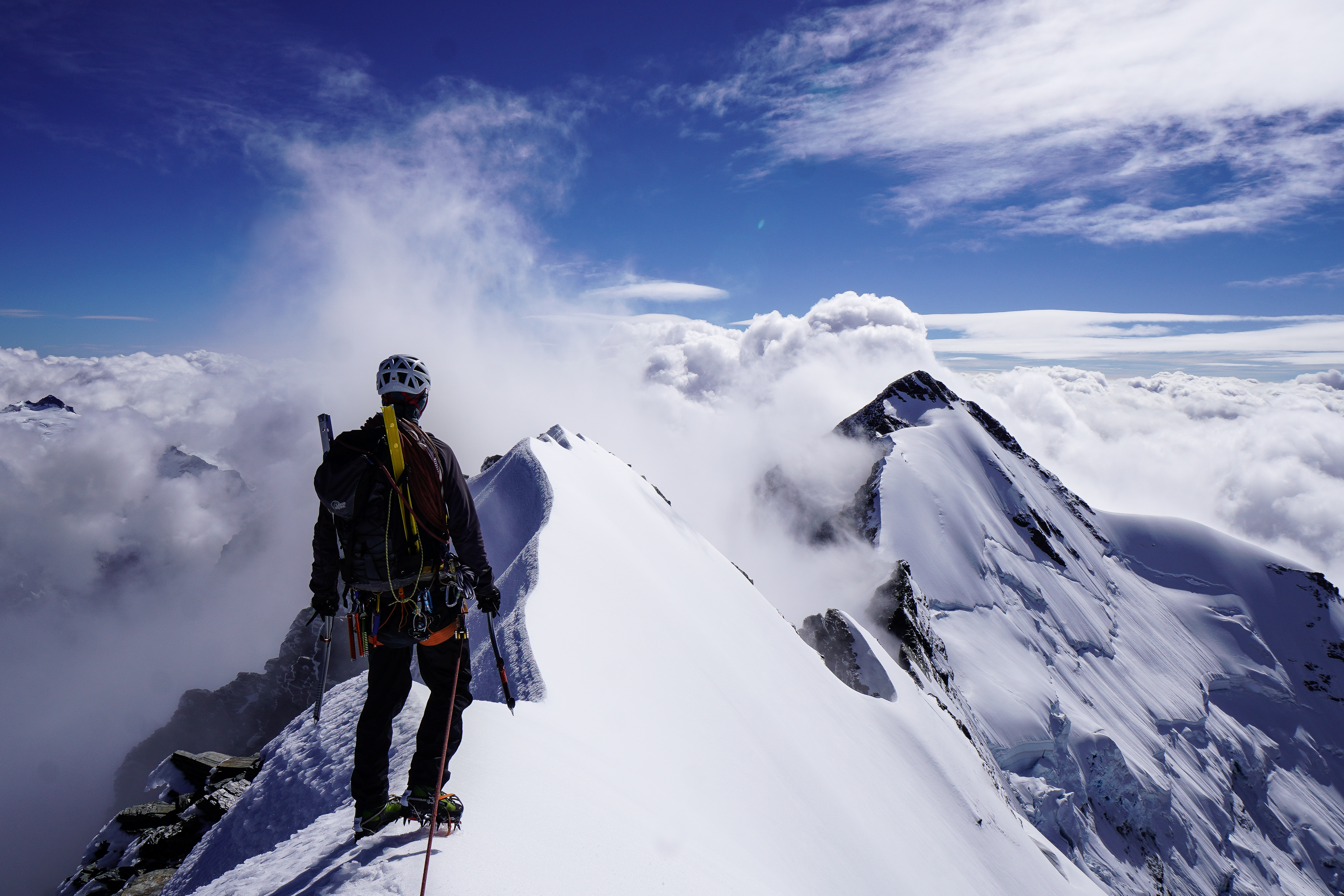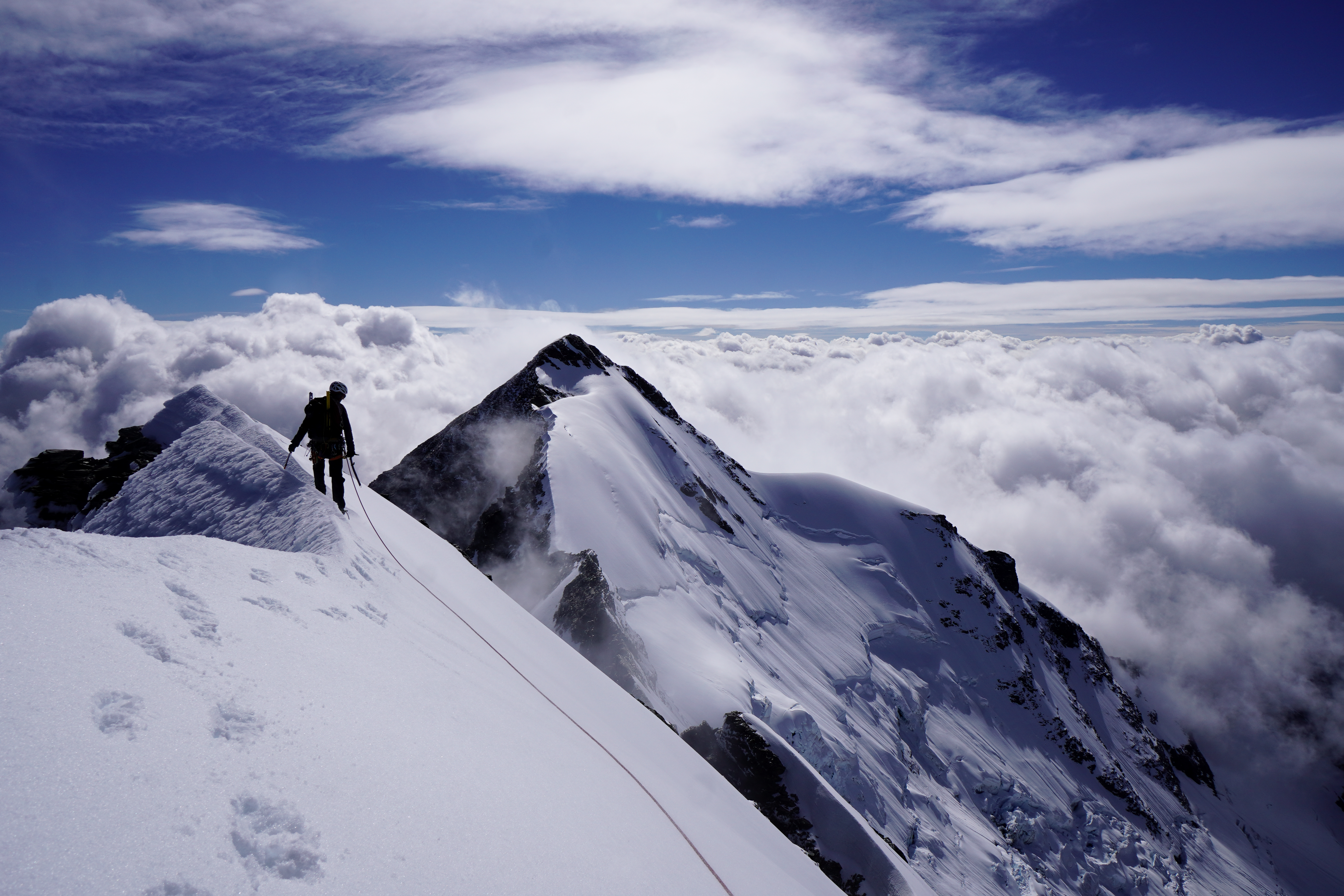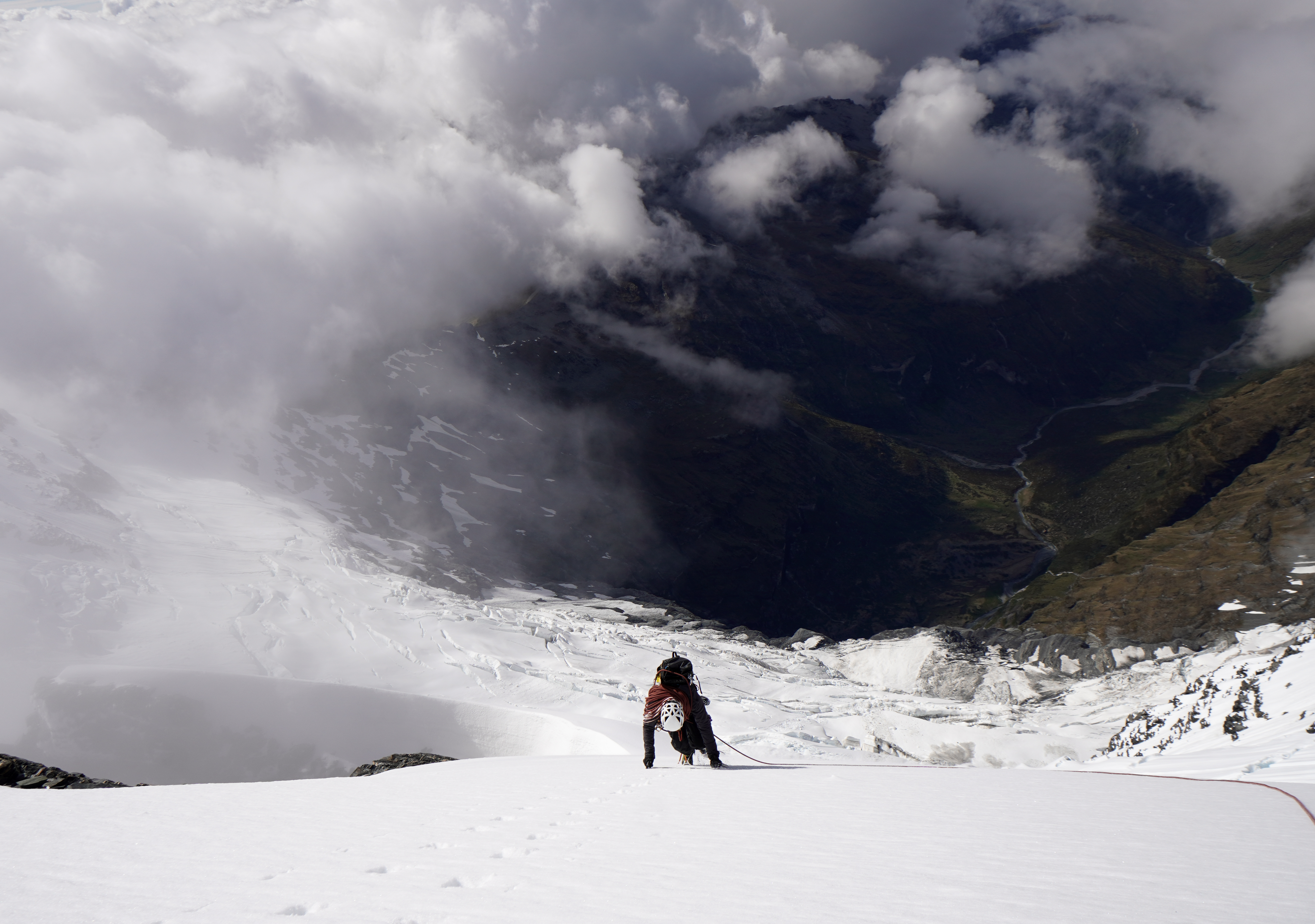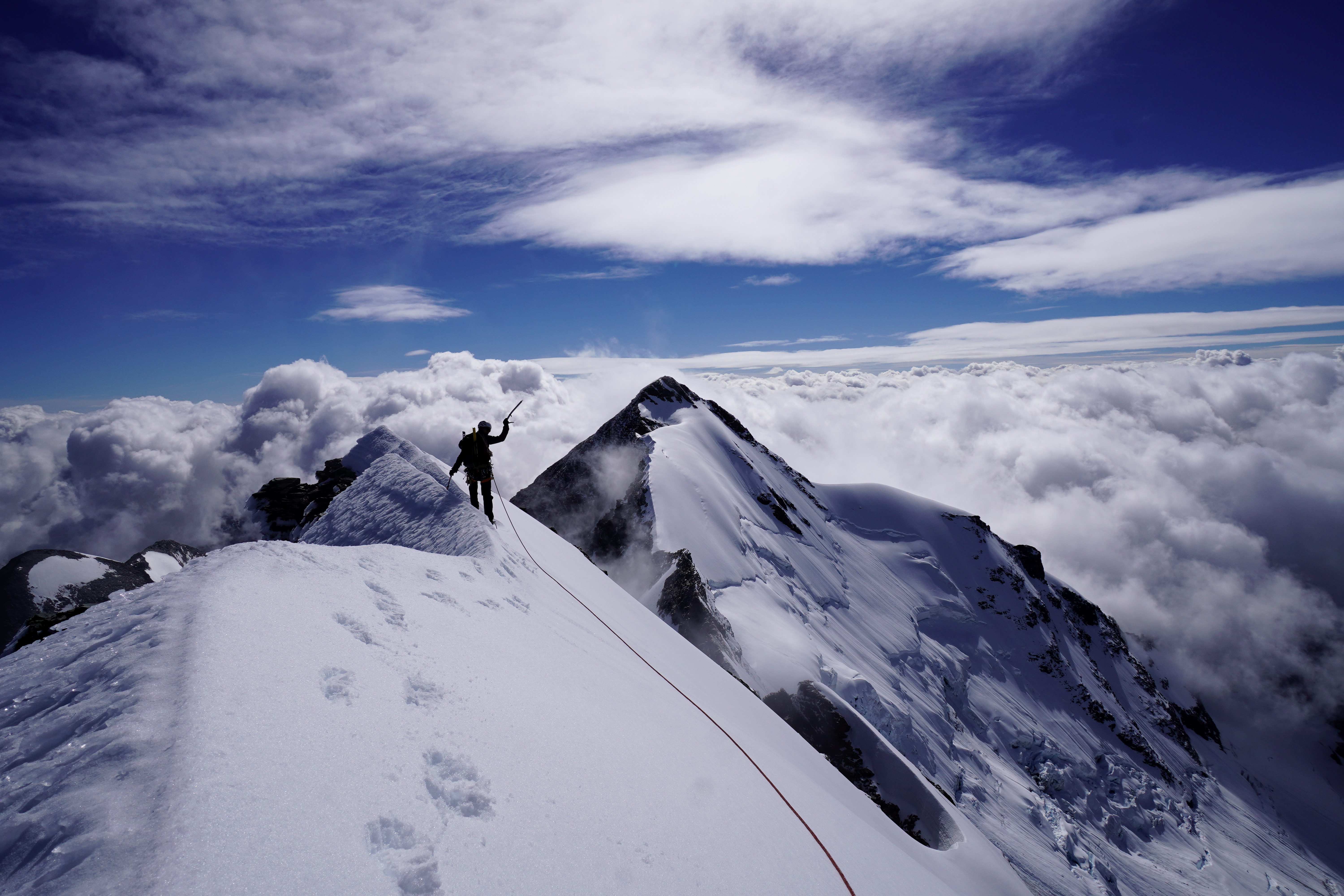
Mt Douglas, South Face, Central Gully

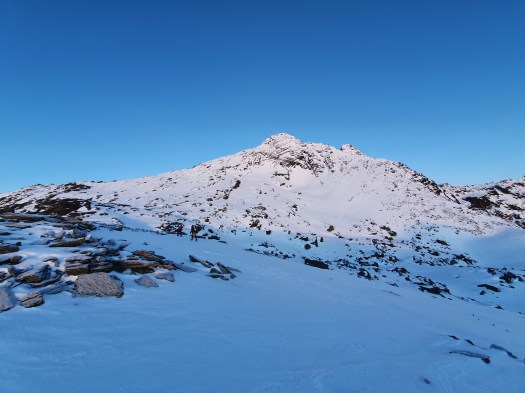
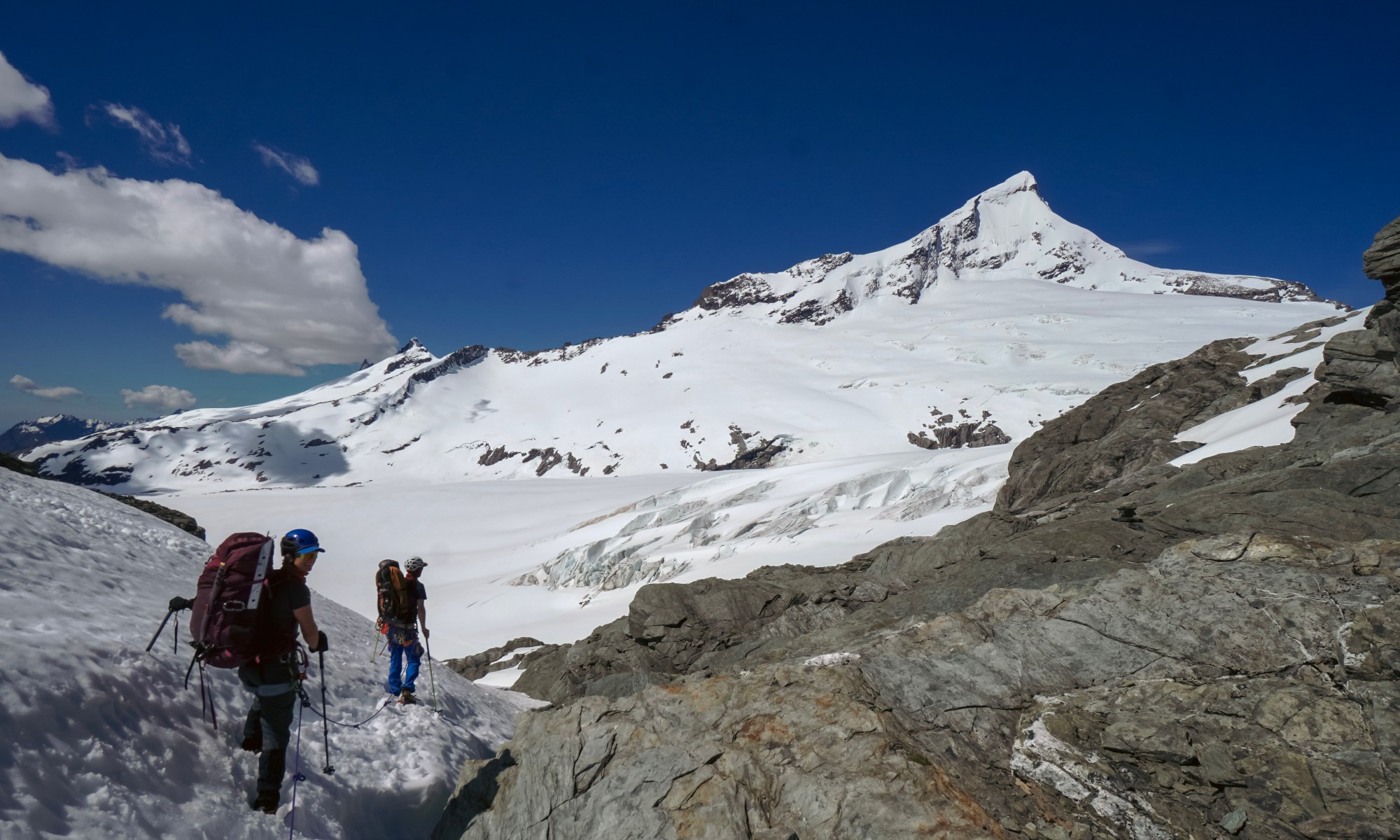
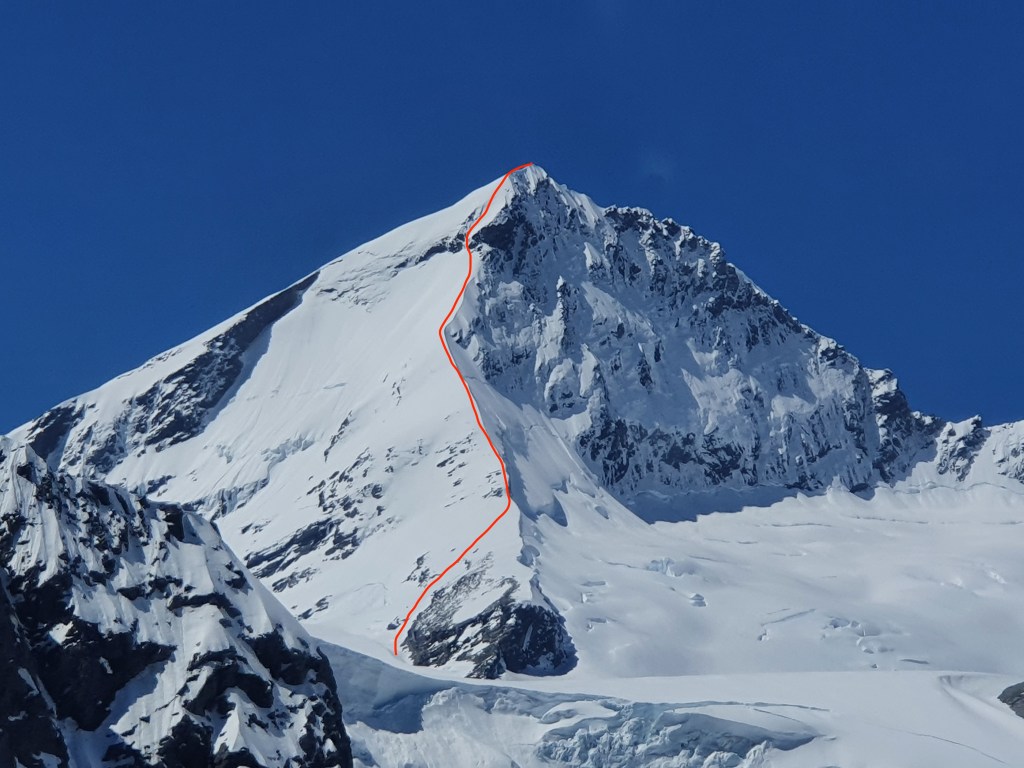
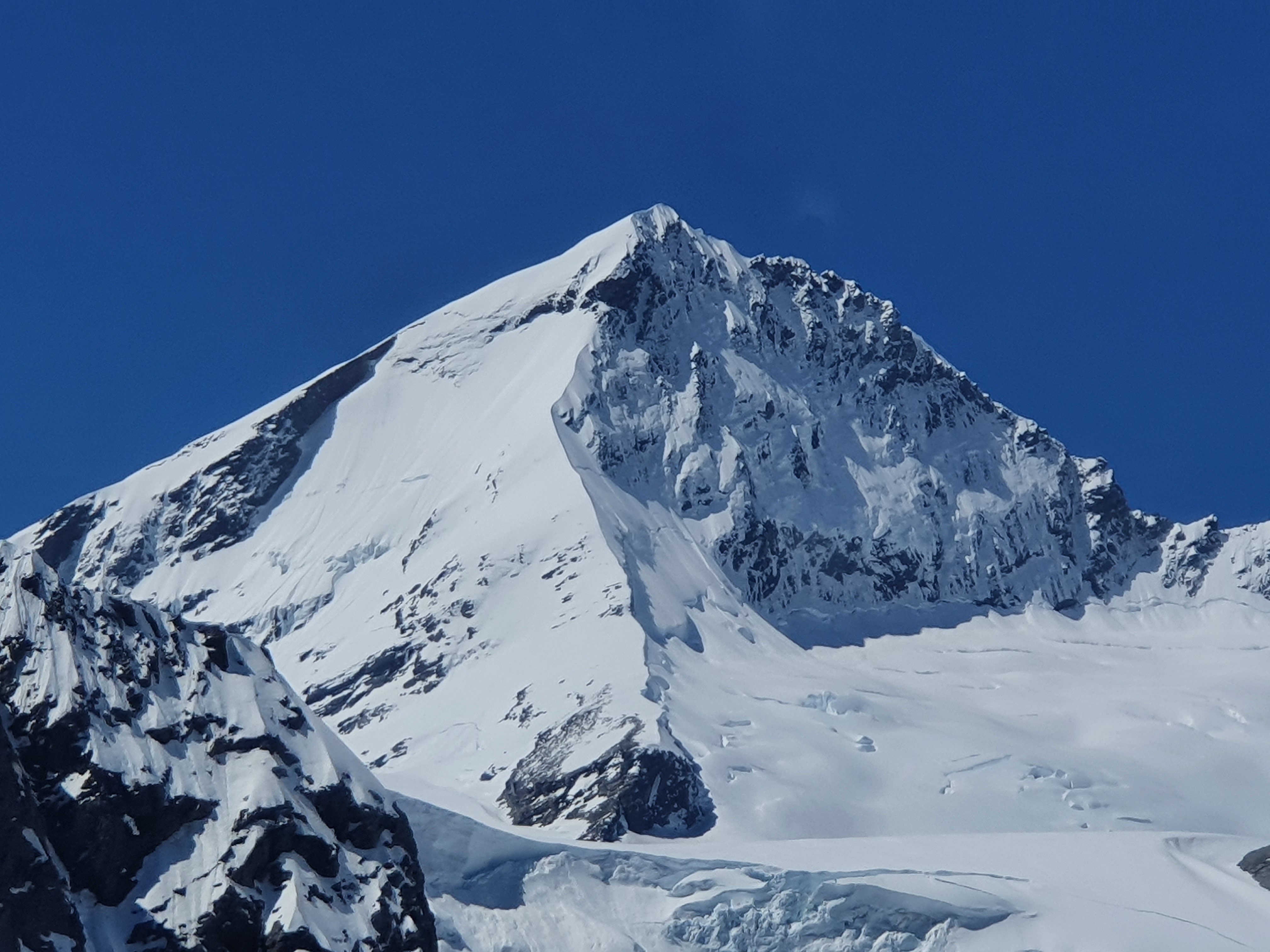
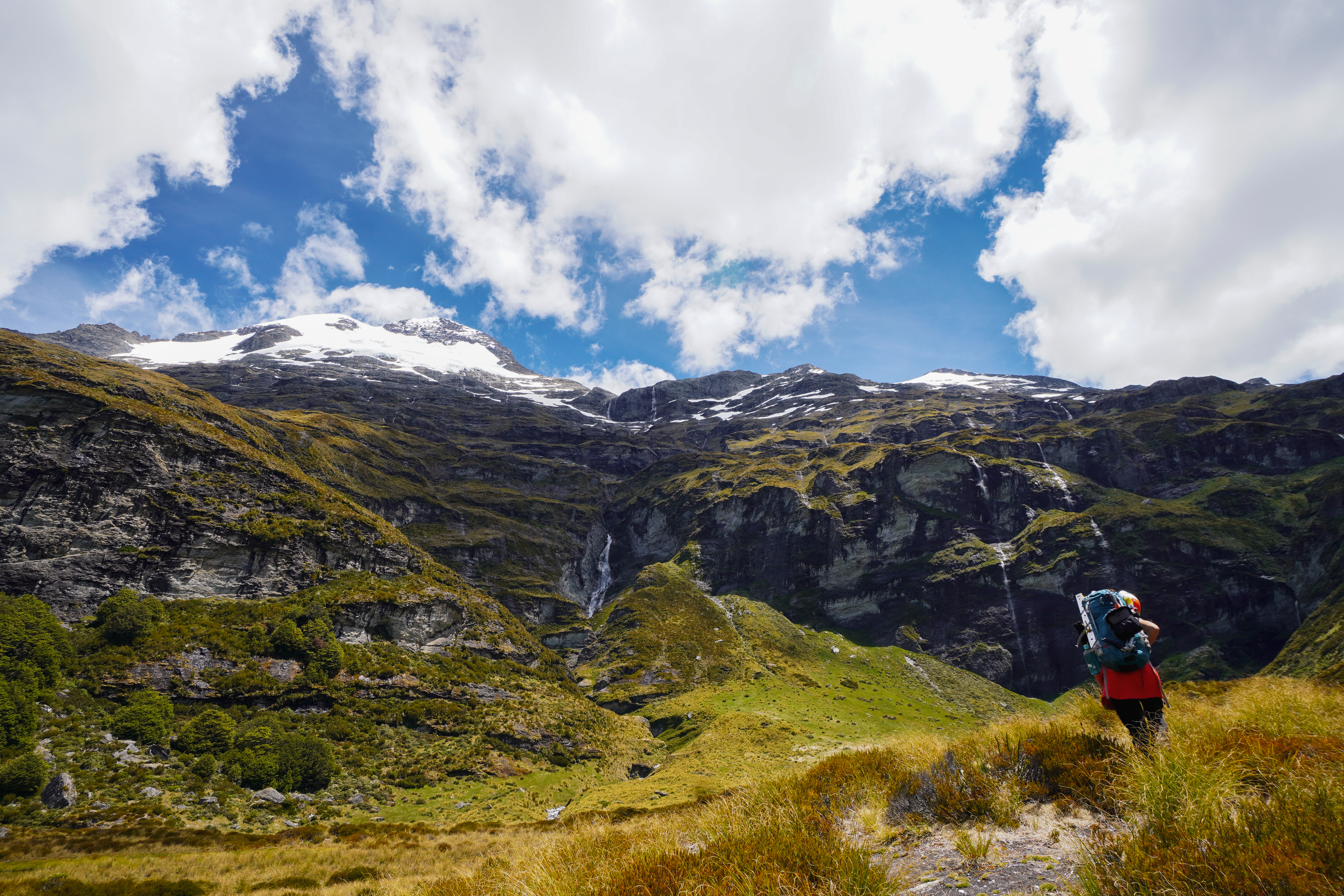
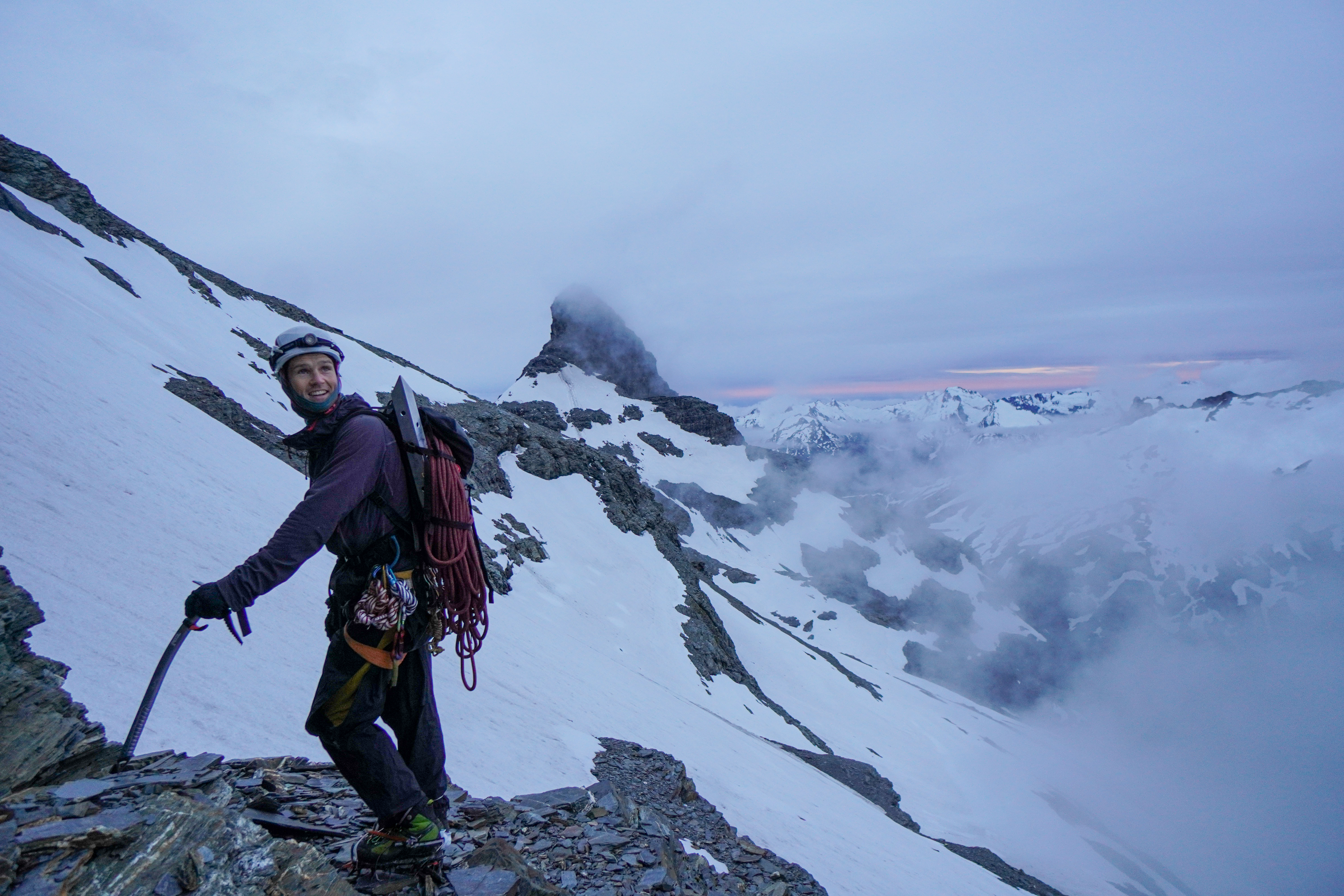
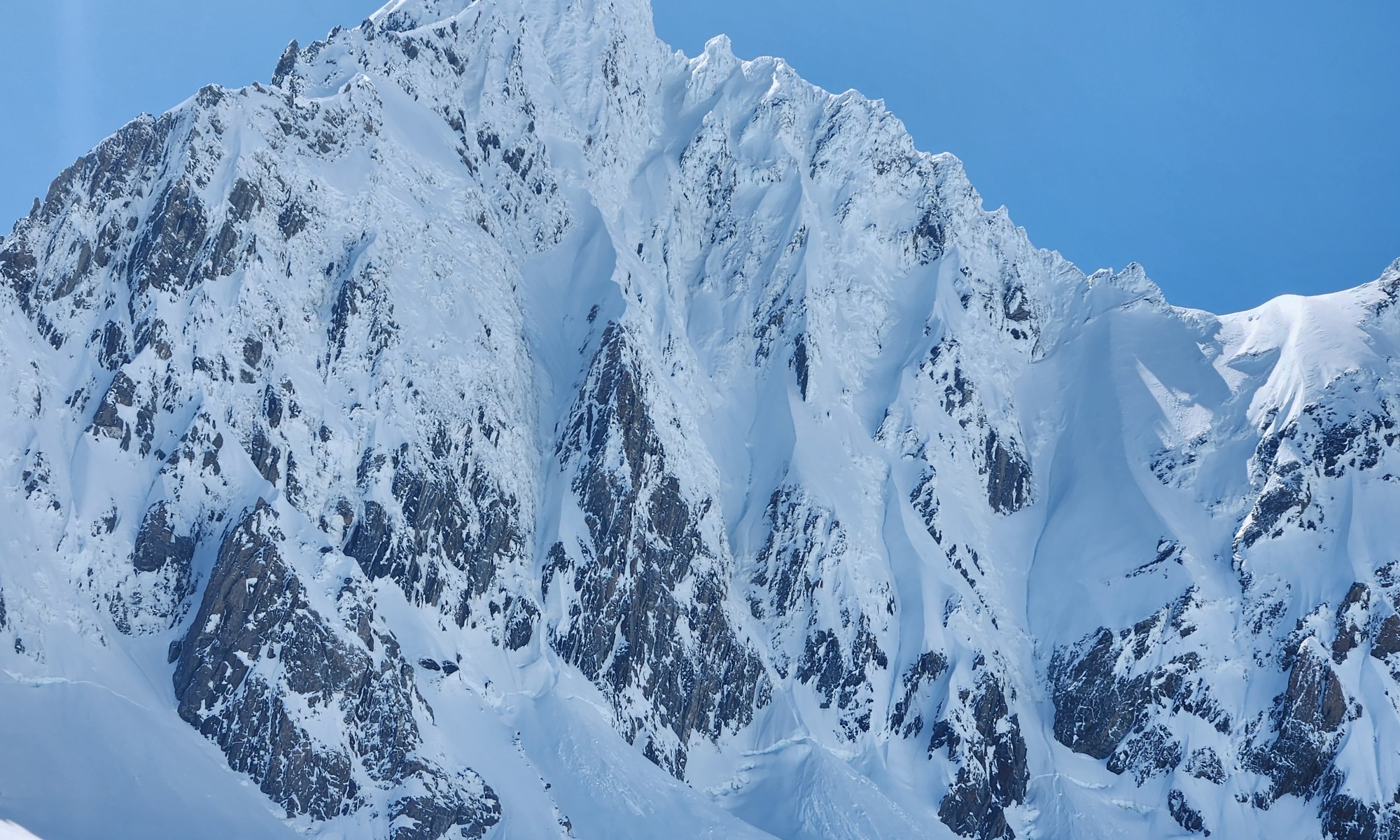
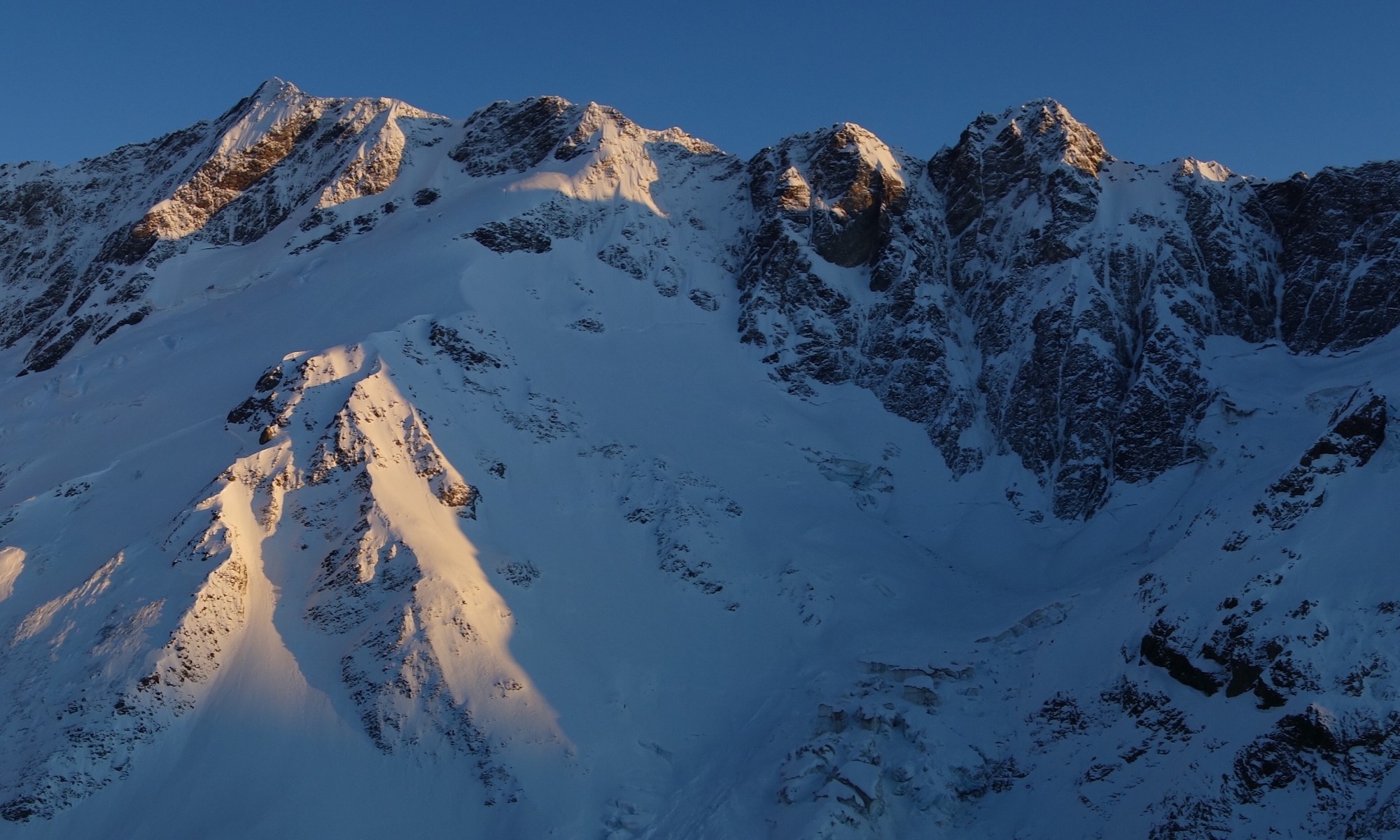
A huge day, stoked to have climbed this one! Decribed in the guide book as ‘one of New Zealands great ice climbs’ and ‘a perfect line on a beautiful face’, we had to see if it lived up to the hype. Not only is its reputation enticing, but its an incredibly aesthetic mountain and (provided you heli in to Pinoeer) is only an hour approach from the hut. Despite being only slightly taller than neighbouring 3000-ers Haidinger and Glacier peak, due to its sheer, forboding near vertical south face it dominates the surrounding skyline, appearing to overshadow everything nearby.

Ice is nice, but it ain’t rock so Joe took one for the team, taking on all the leading. Thanks Joe!

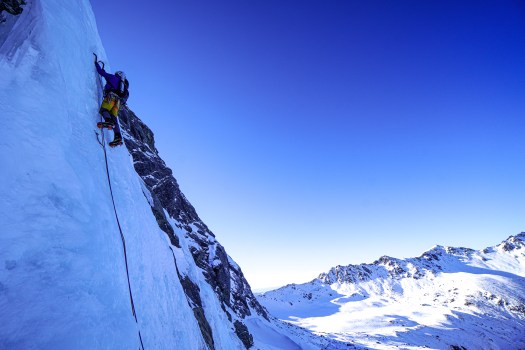
In terms of difficulty, the main issue is the long length of the route, especially if pitching the whole thing. You need to be efficient and confident at the grade to get off the face in time. Technical difficulty varies depending on the conditions but expect back to back pitches of sustained WI3, and when we were there short but delicate vertical sections, edging more into WI4.

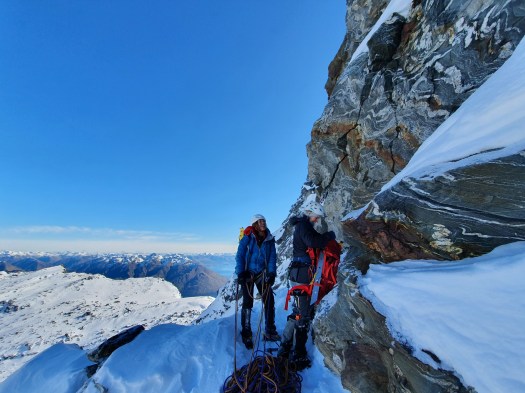
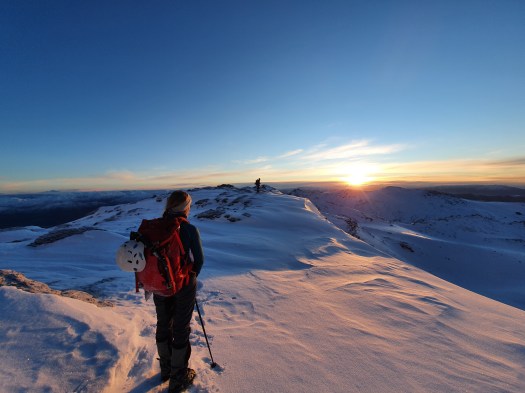
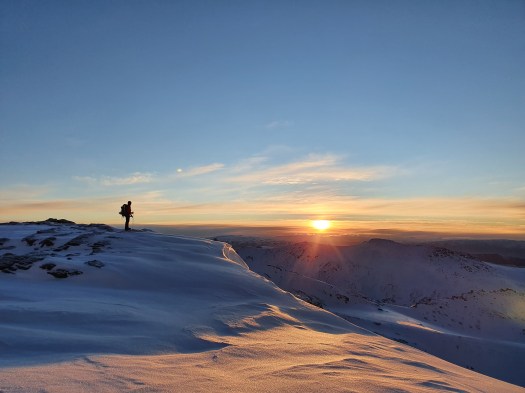
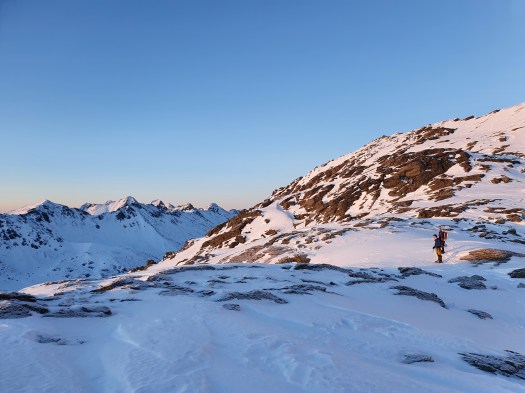
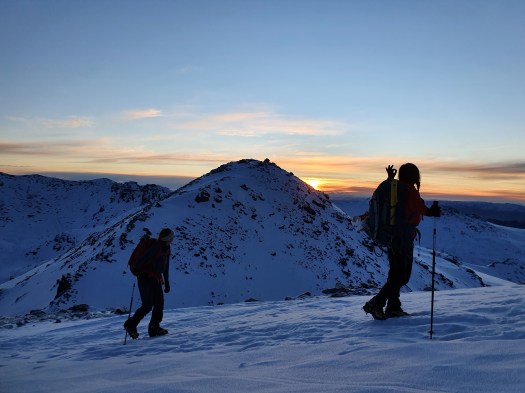
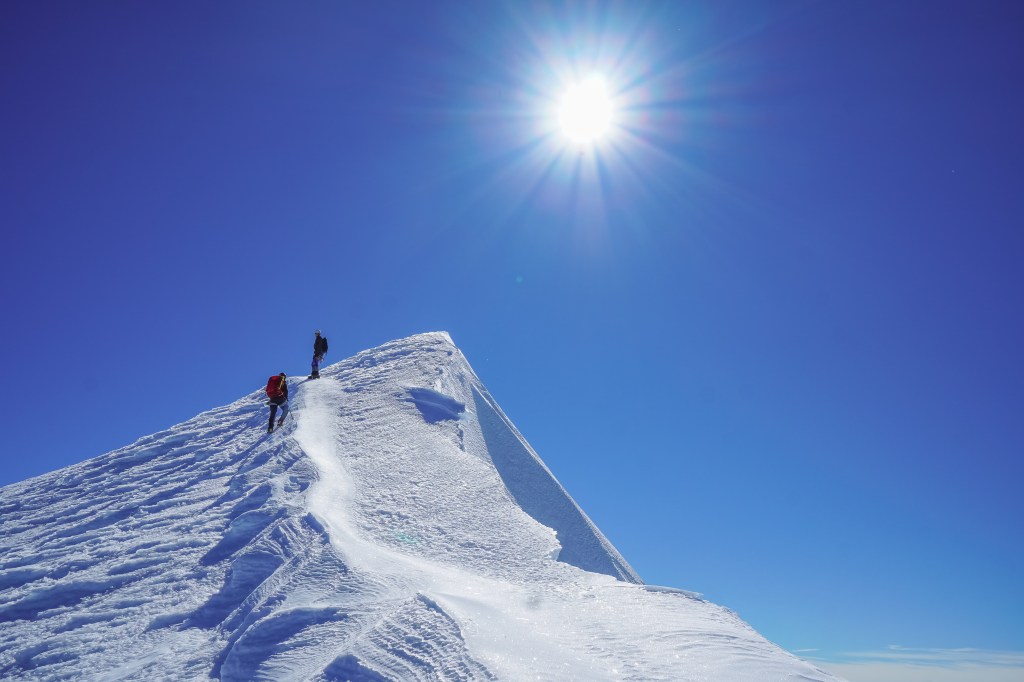
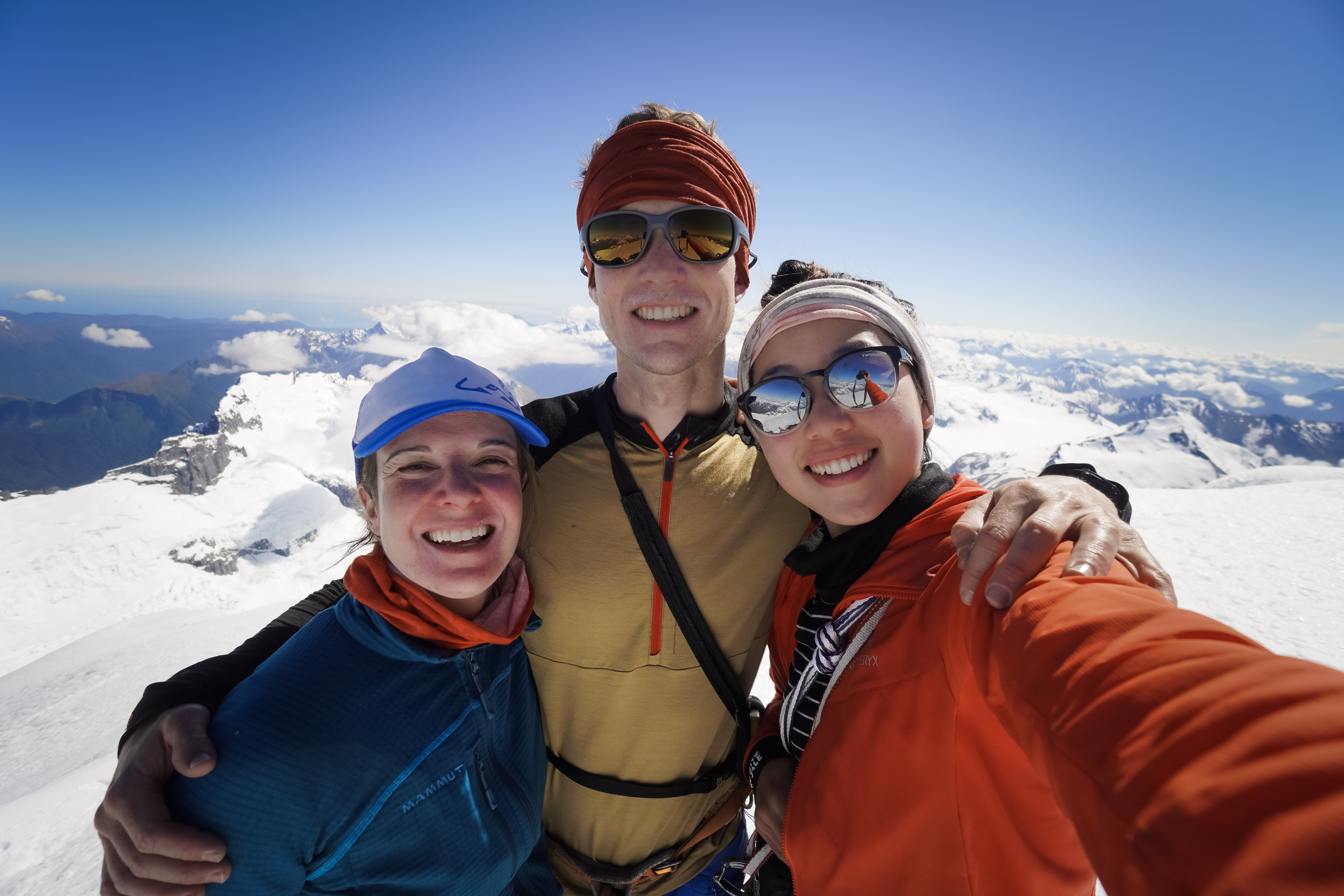
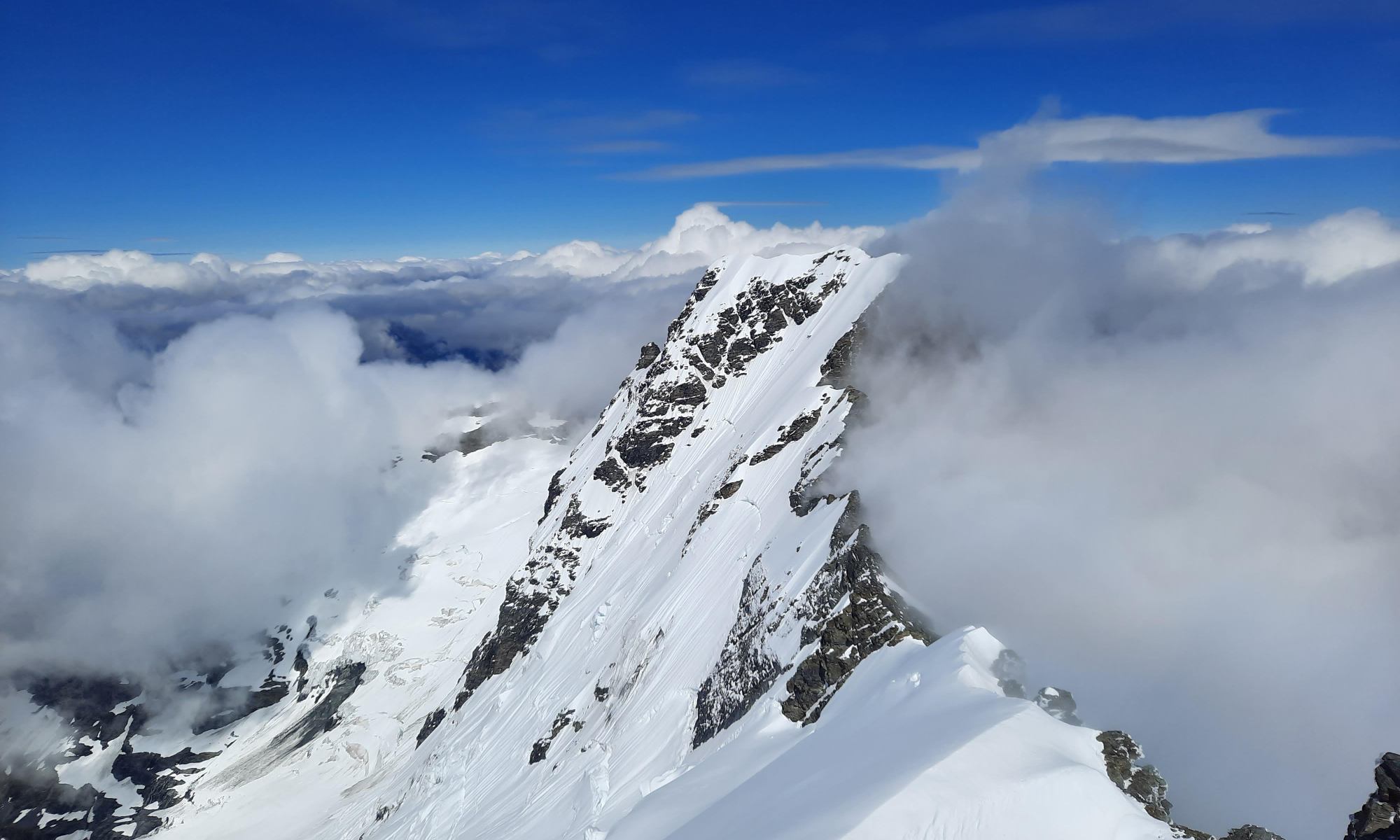
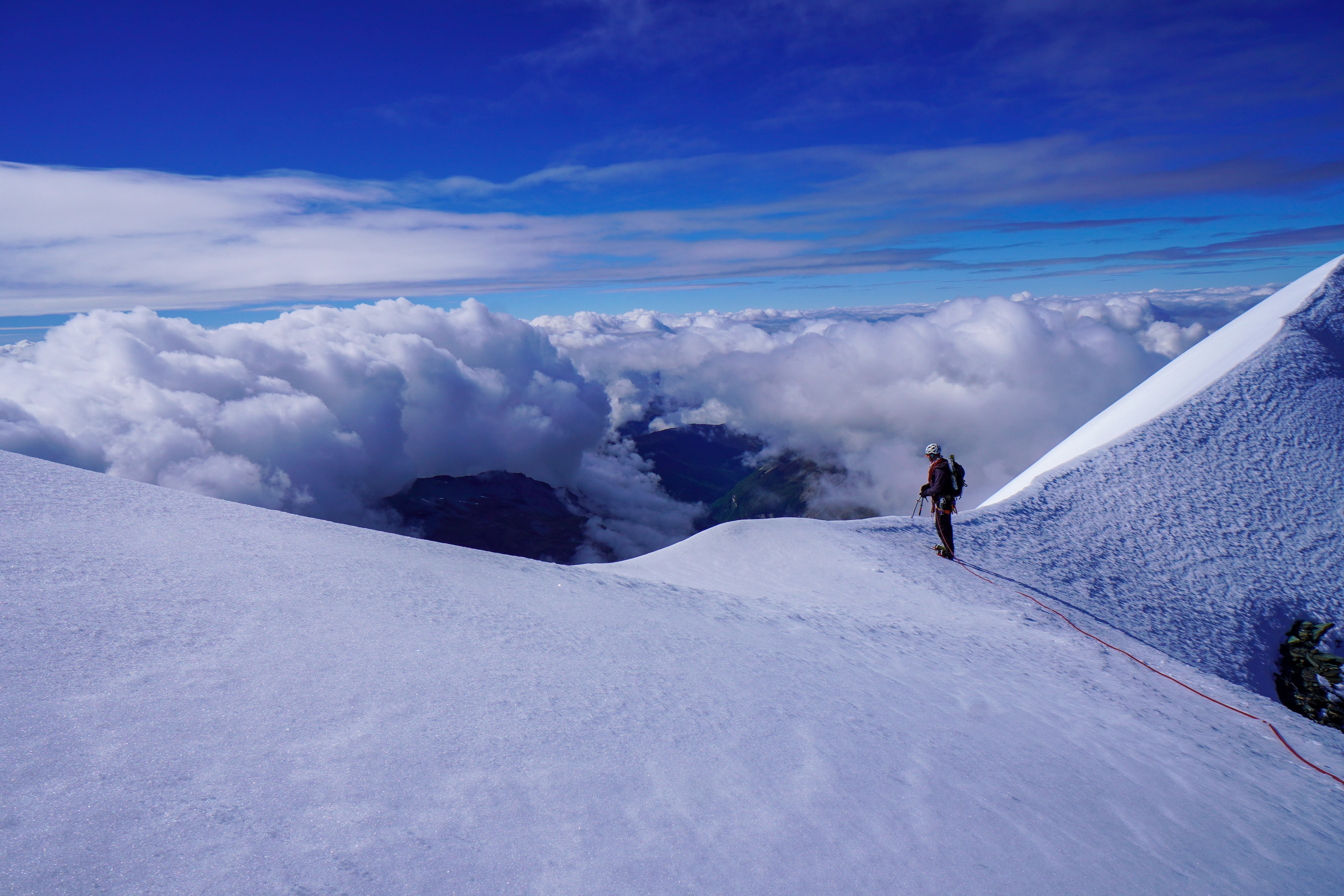
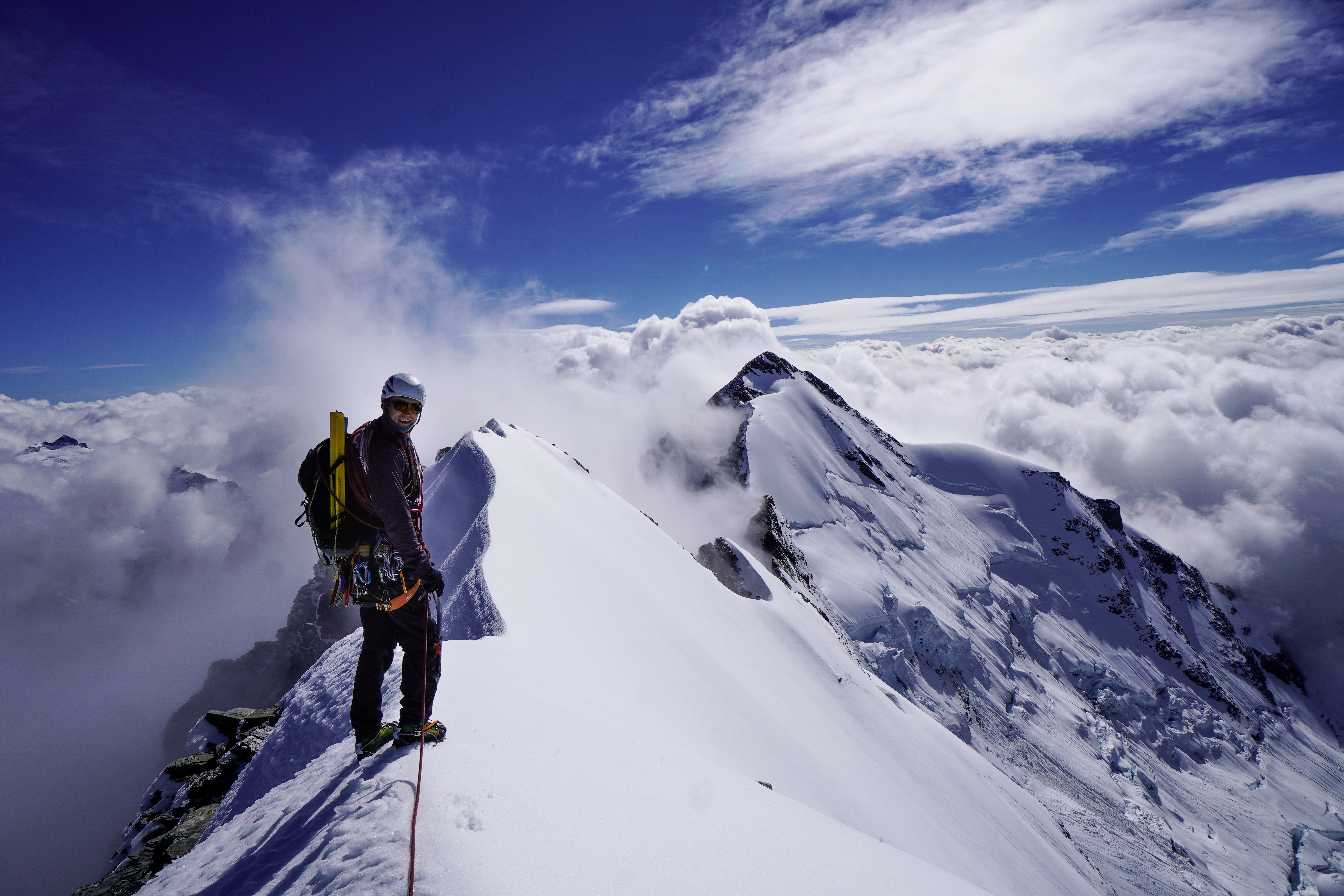
Summit stoke! Ridge behind that we had to shuffle across to get to the summit.

  • Grade : Technical grade = 5, Seriousness grade = IV
  • Equipment : 2x 60m ropes, 12 screws with long runners, small rock rack (didn’t end up using). 2 x snow stakes. Tat for V threads.
  • Approach : 1 hour from Pioneer hut on skis, 30 mins on skis.
  • Climb time : time on route around 12h (we pitched it all); round trip via glacier peak was 18h
  • Season : 19/11/2023
  • Team : Joe and Maria

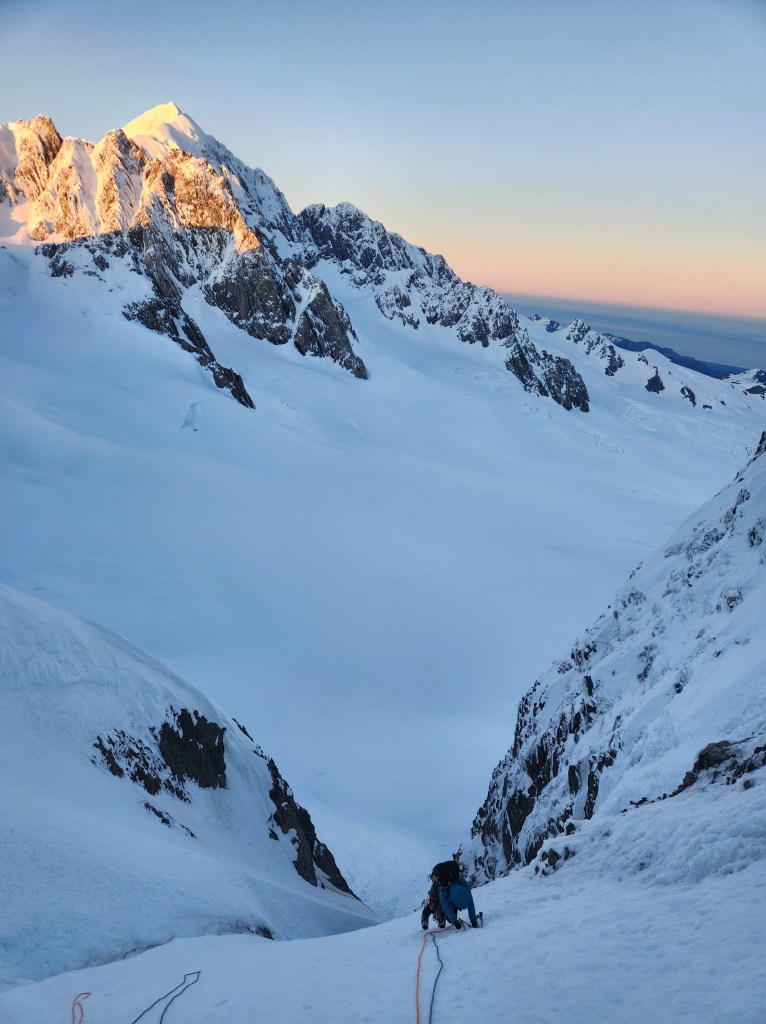
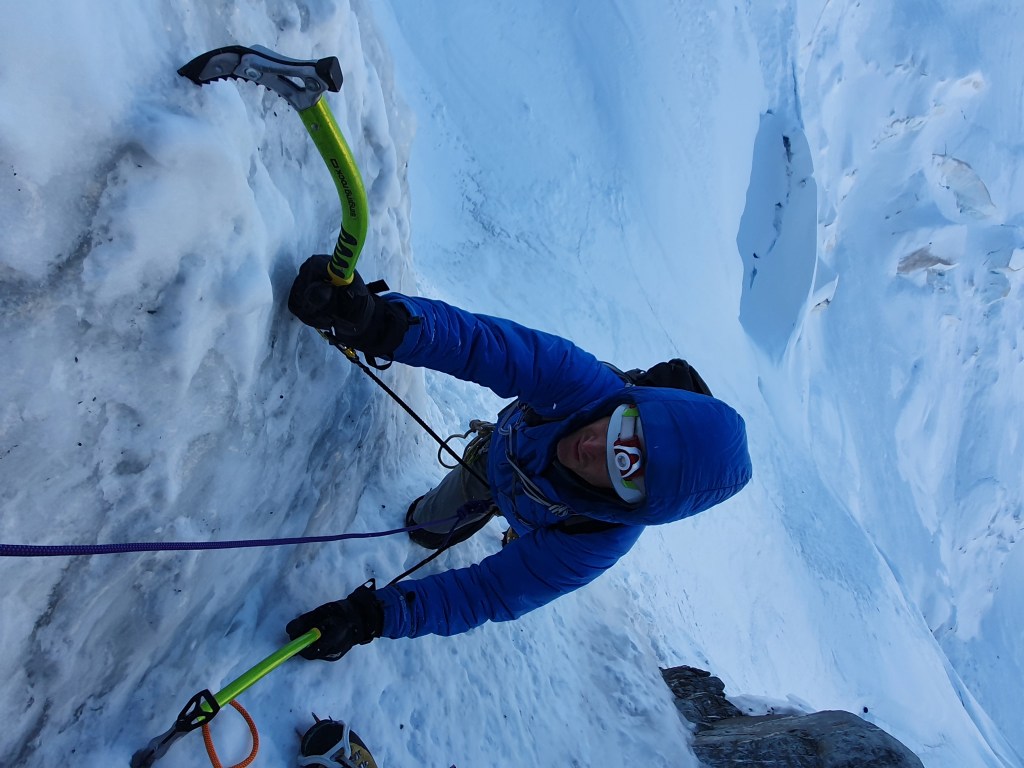
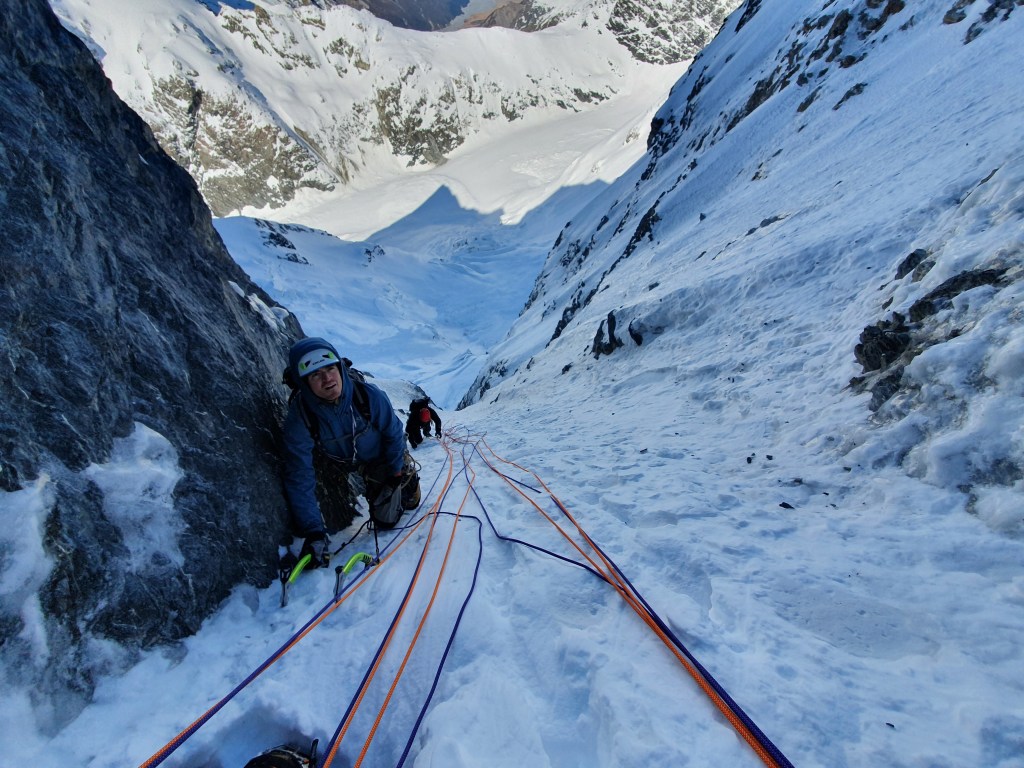
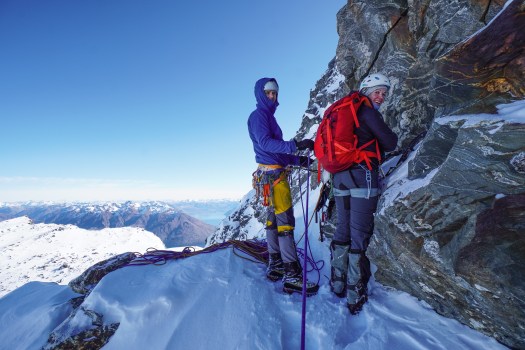
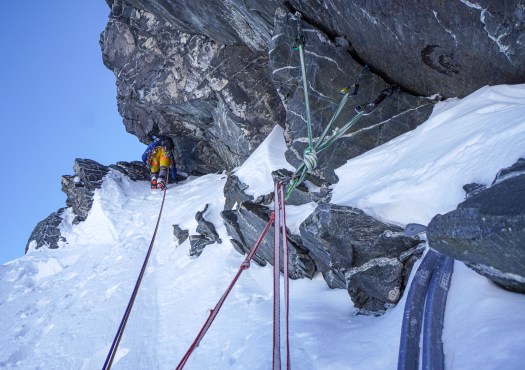
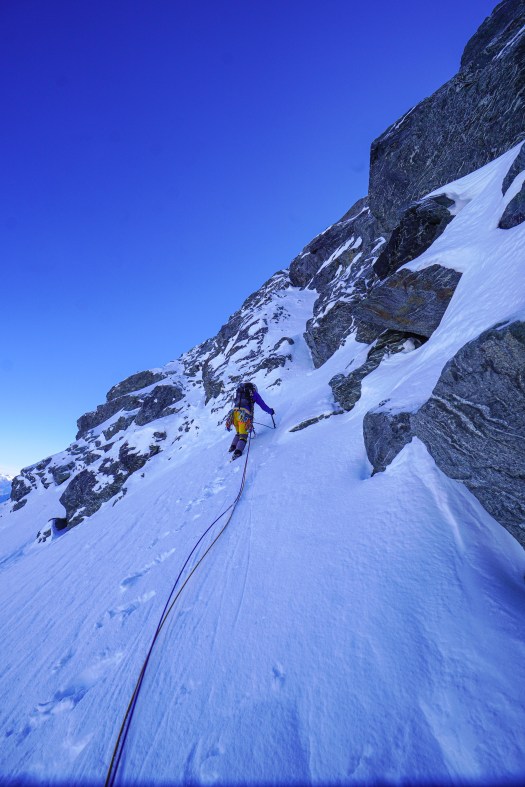
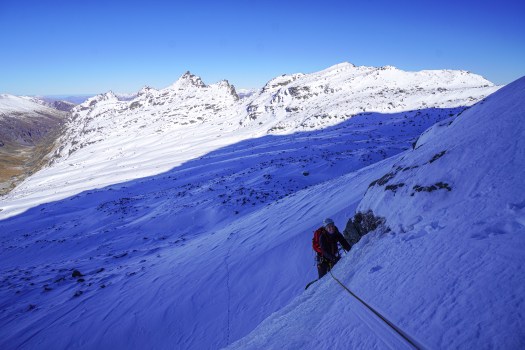
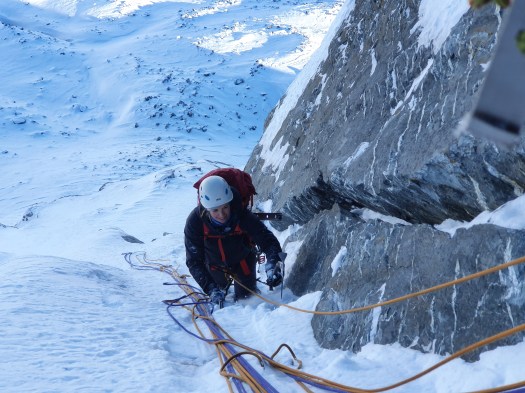
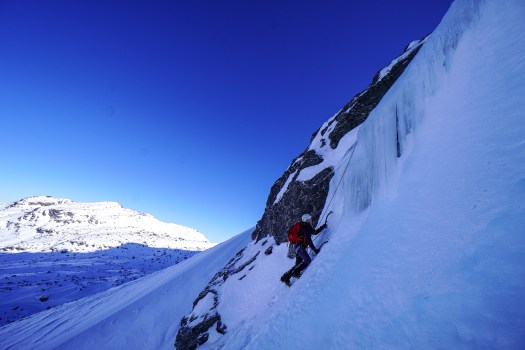
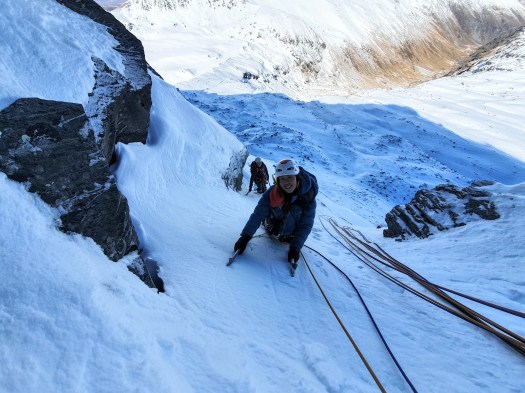
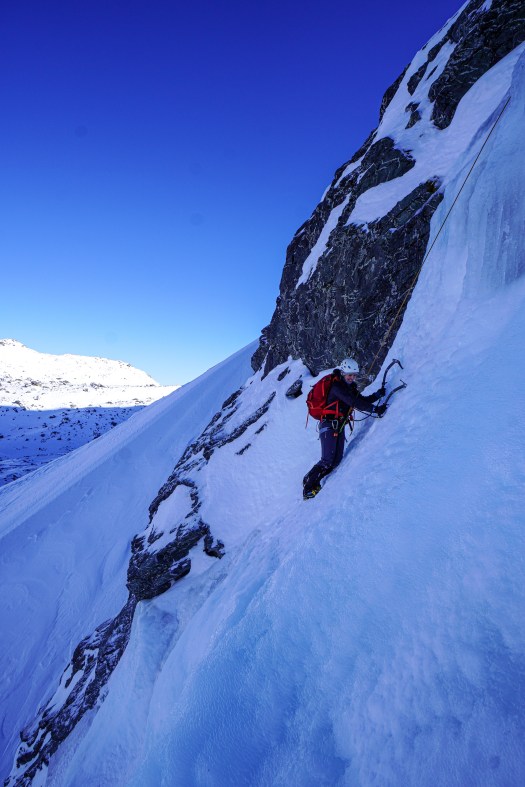
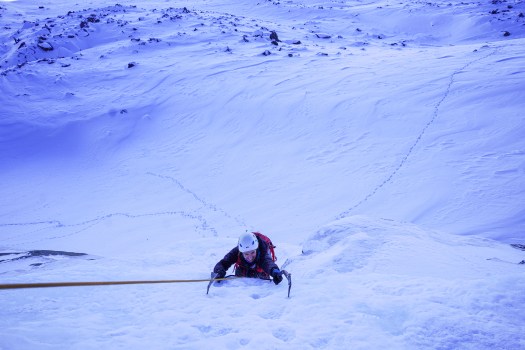
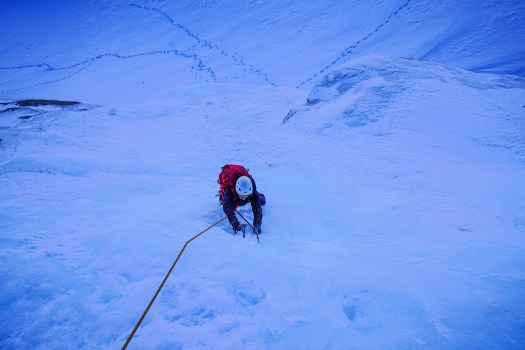
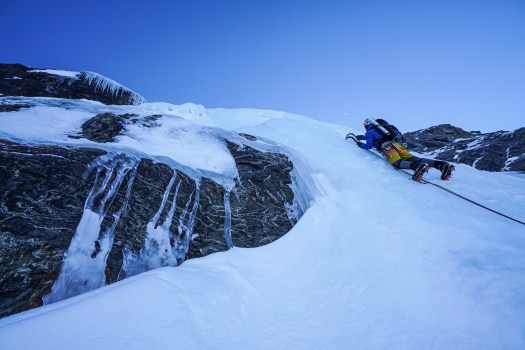
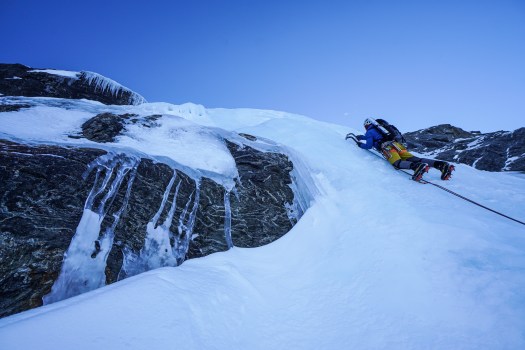
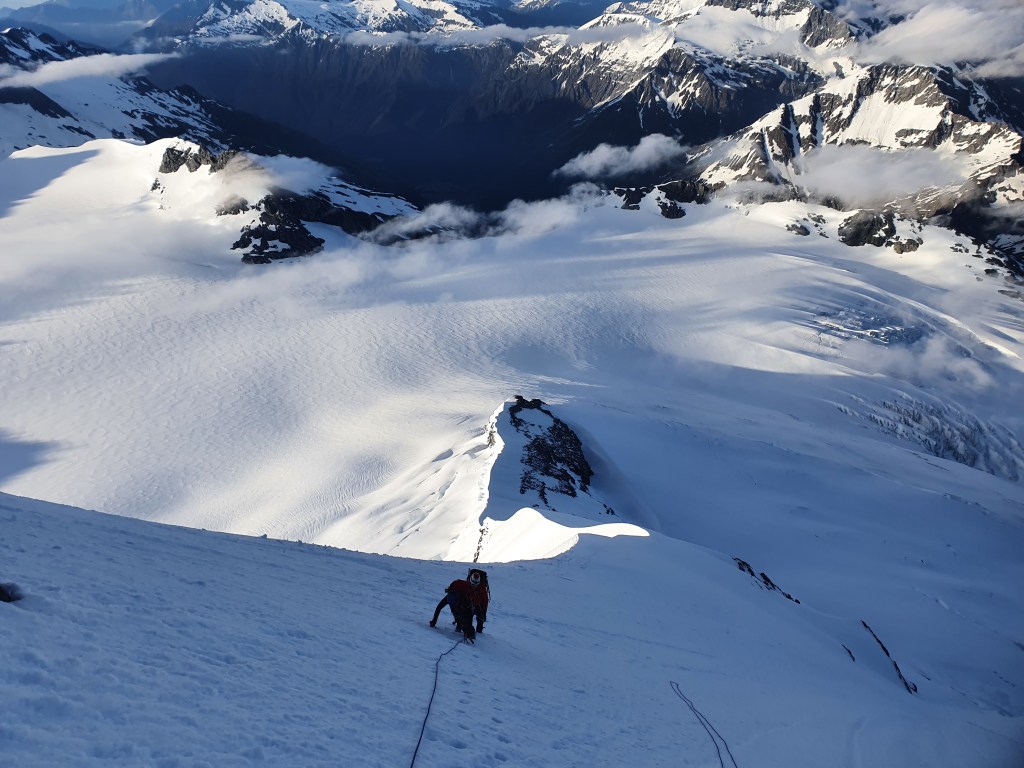
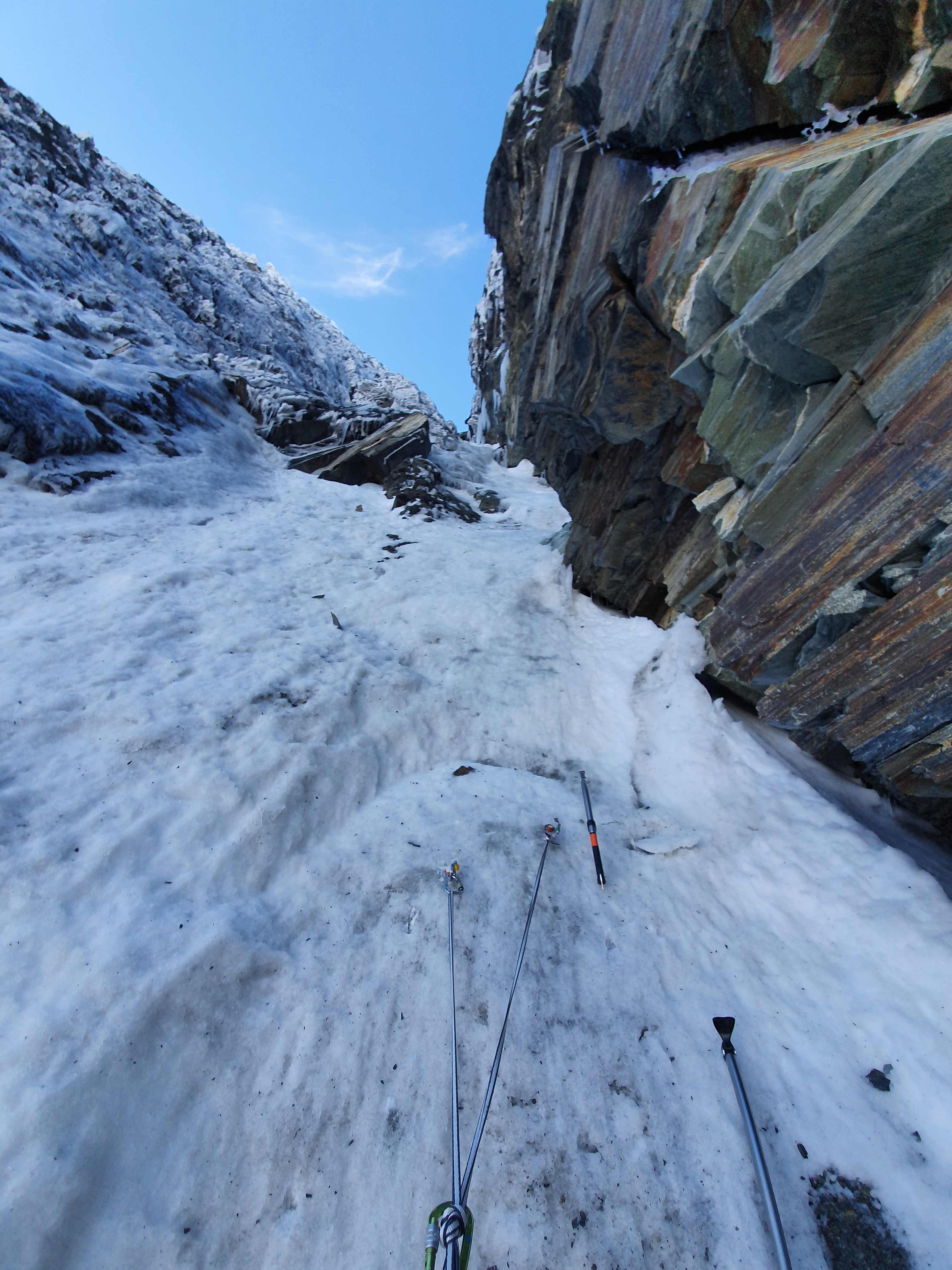
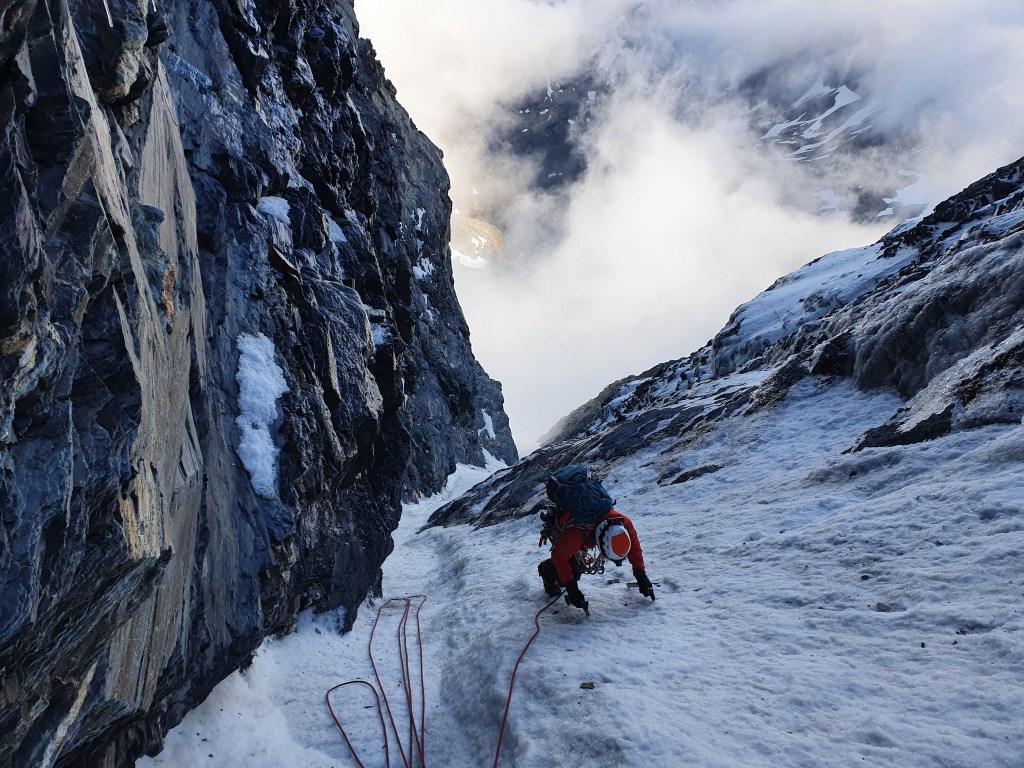
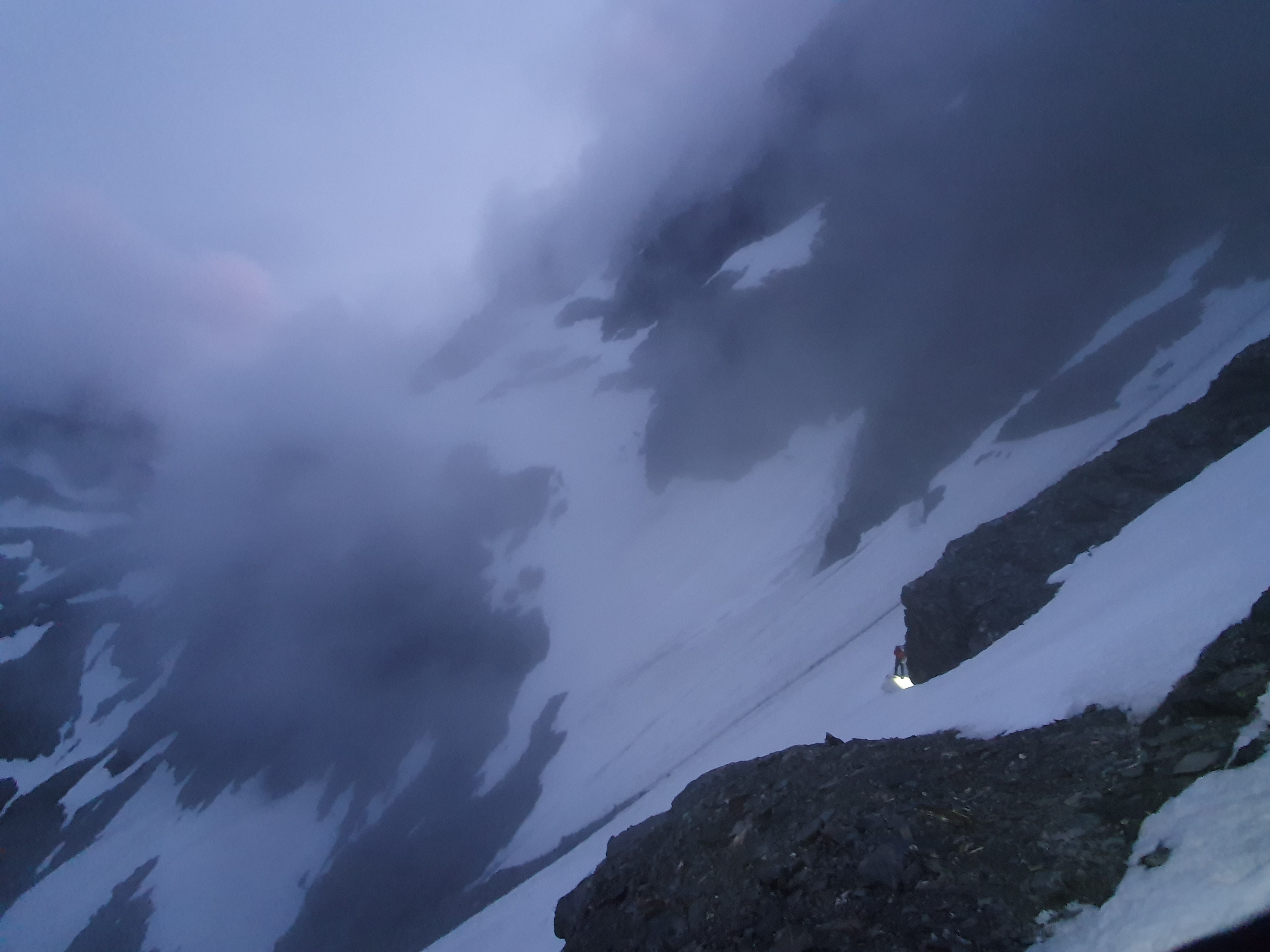
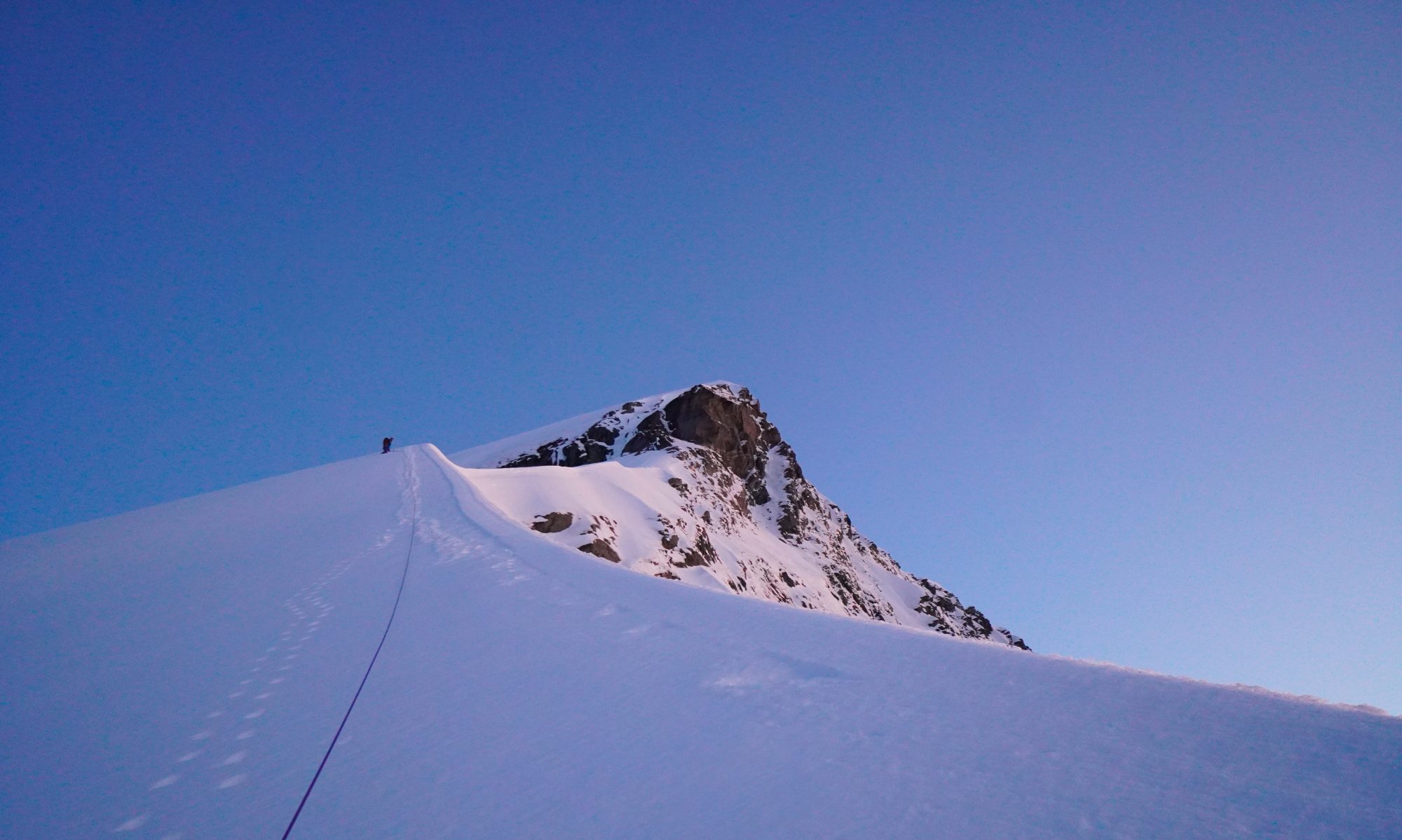
Coming up the lower snice pitches before the crux section. The conditions here were excellent, with confidence inspiring placements with a single swing and decent screws. Sometimes this section is snow.
Approach

Stayed at NZAC’s H.E.L Porter Memorial Lodge the night before. Flew with Heliservices, linking up with 2 other climbers making it $525 between 2 of us (770 on the way out between 2). We have never walked in or out of the west coast neves. It is still possible and reguarly done, but it looks increasingly gnarly and difficult as the glacier recedes leaving unstable moraine walls. Horror stories abound, and it certainly seems more dangerous objectively that anything you would experience on the route.

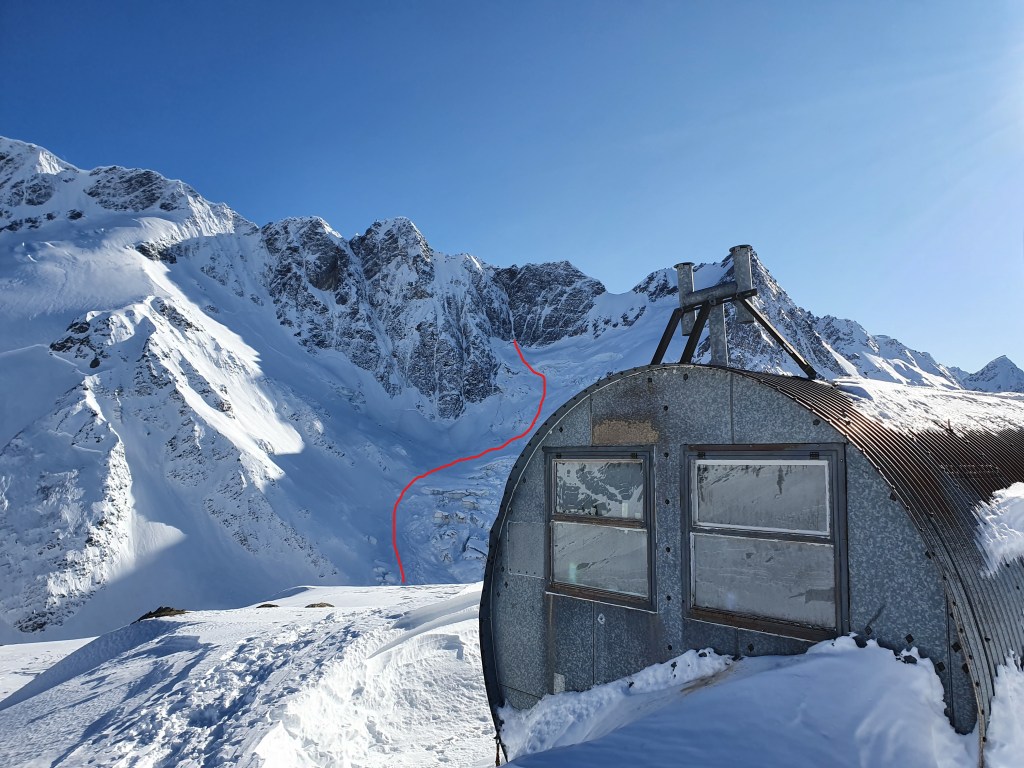
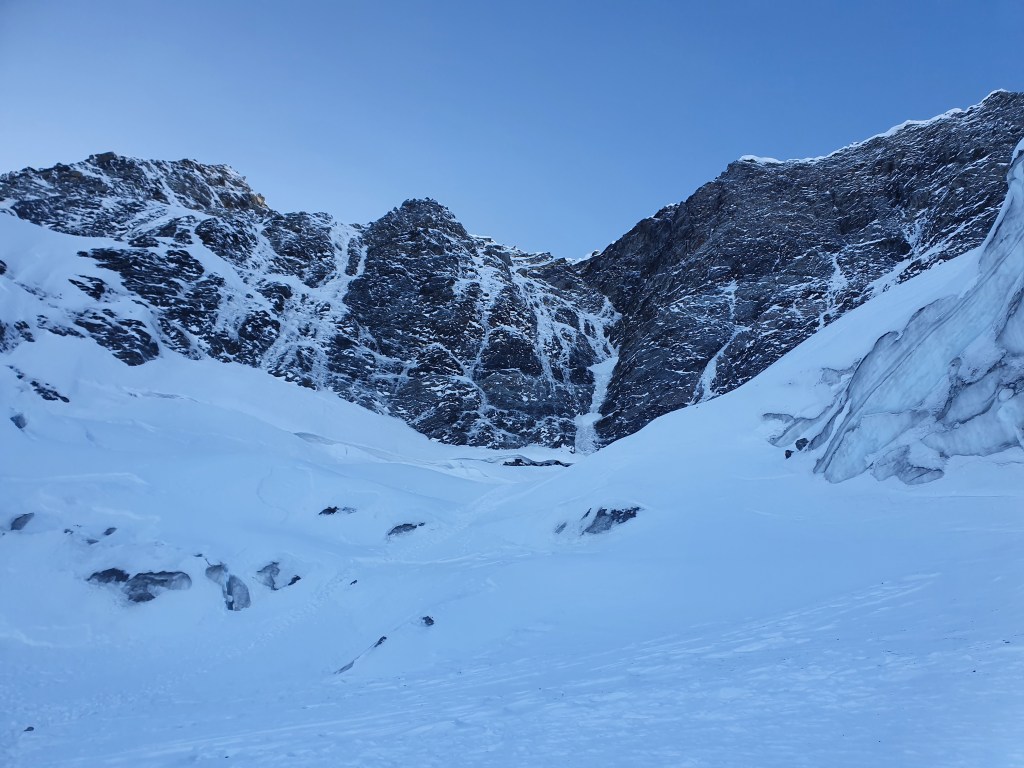
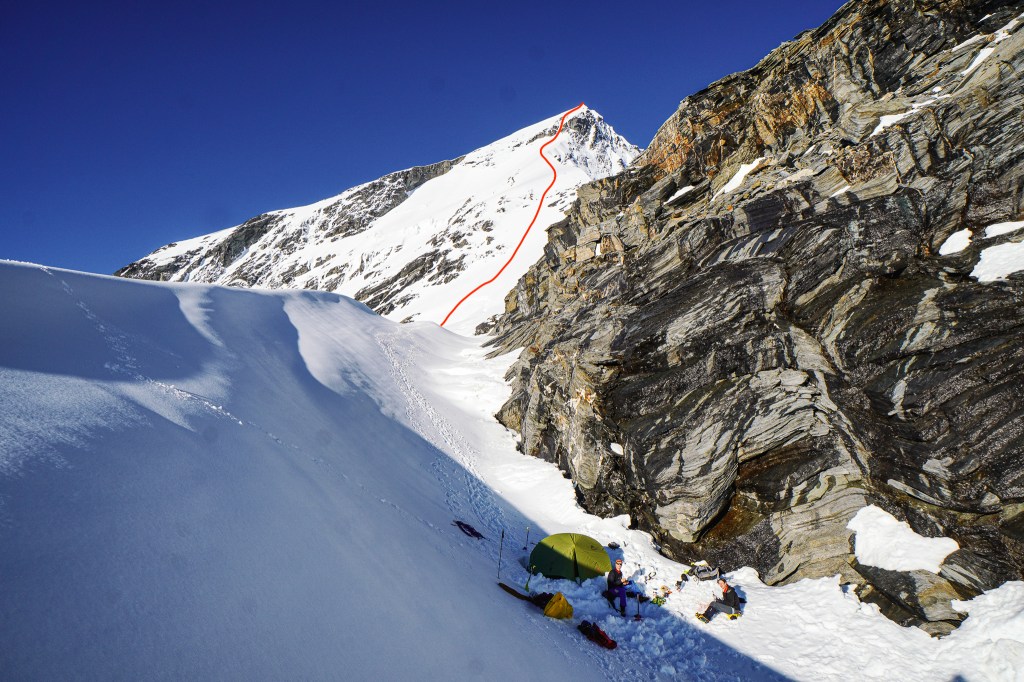
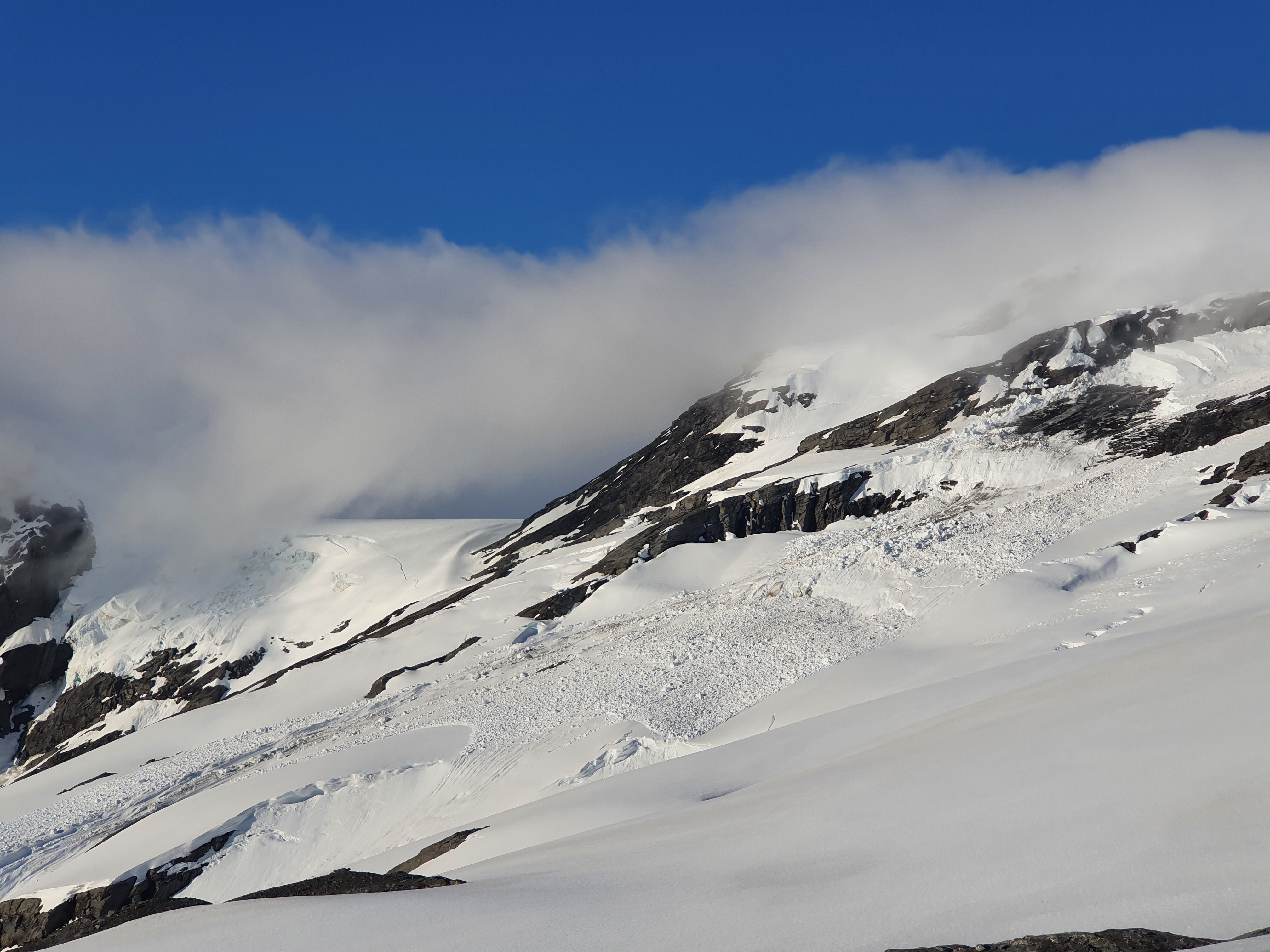
We landed at the hut mid morning, so went to scope the route out to plan for the next day. It’s an easy approach from Pioneer hut, giving you a full view of the face without having to get too close. We could see the route was looking fat, but also that by midday it had turned into a shooting gallery. The sun hits the final headwall around then, and all the debris gets funnelled directly down the route. Options are to either climb in the winter so it stays cold and a few days after a storm so there is less ammo at the top, or aim to be off the route by around midday. Factor this in if you’re planning to rap the face. We stashed our gear at the base of the route for a cruisy approach the next day and headed back to the hut.
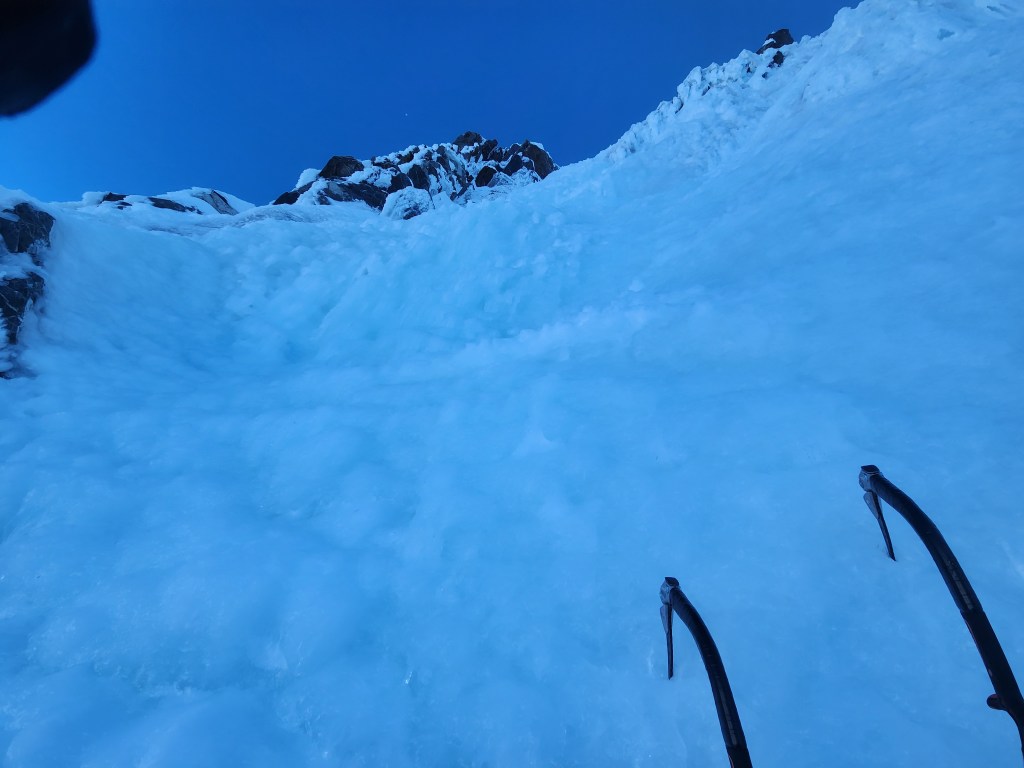
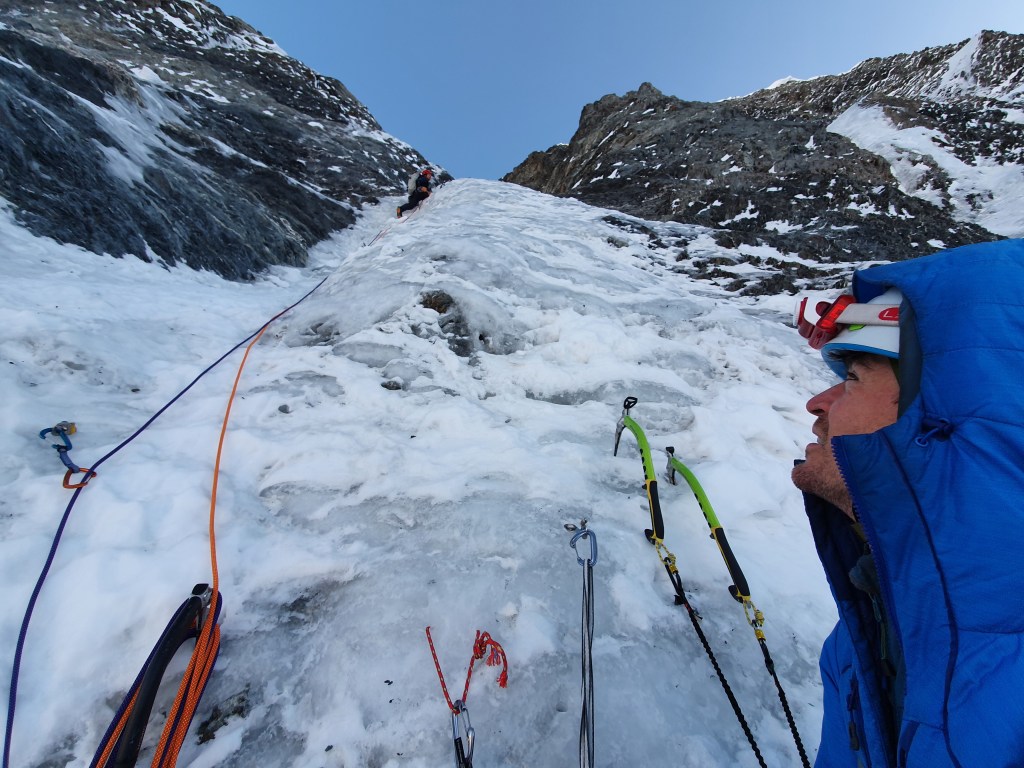
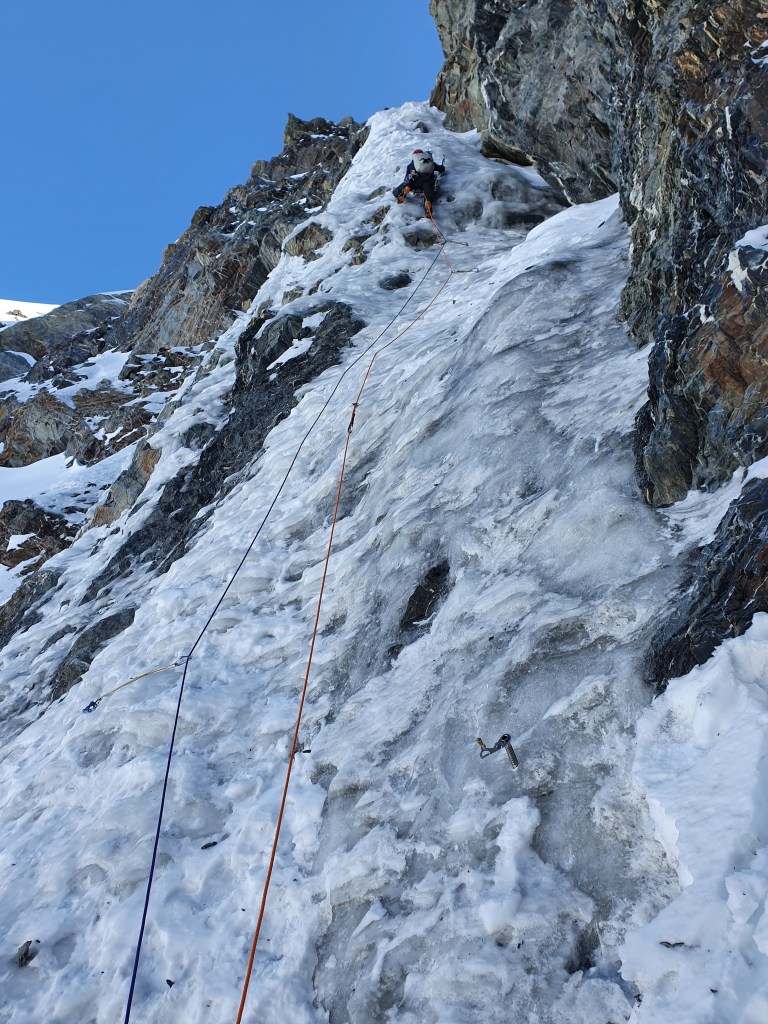
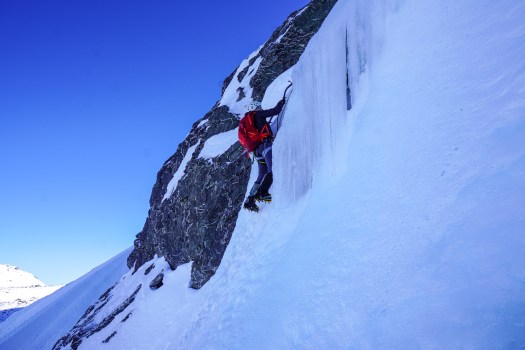
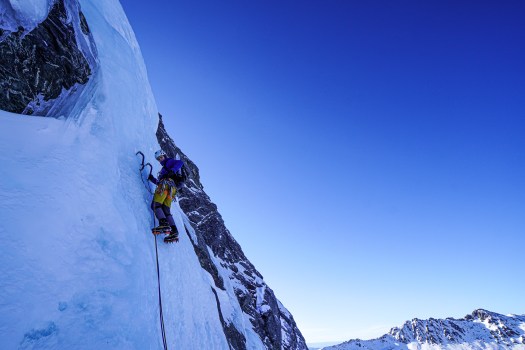
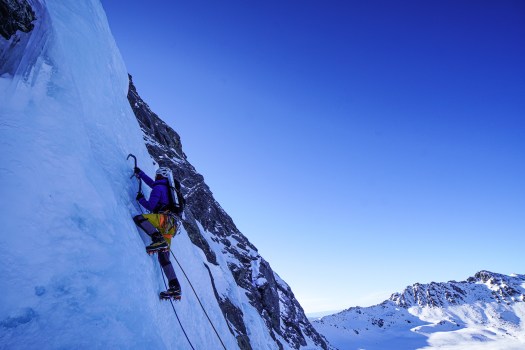
Onto the water ice! Beatuiful ice climbing over blobby bulges with short body length near vertical sections and bomber screws. As is often the way we didnt get any photos of the crux

We had always planned on descending via glacier peak as a round trip always seems like a more complete day out, and the afternoon icefall confirmed that this was the way to go. If your planning on descending this way, its vital to walk round and make sure the descent from Glacier peak onto Explorer glacier isnt cut off – this only takes 30min from the hut.

The hut book showed the route had been climbed a couple of times in the last week, and that the conditions were generally good but with poor quality ice at the top. This cemented our decision to avoid rapping the route if possible. It seemed like there had been some epics in the previous week, with one team getting benighted – we aimed for an early start and to move fast to avoid the same.

Back at the hut, we almost had to call the whole trip off after #bootgate when someone else staying at the hut knocked one of Joe’s boots that were drying outside off the platform they were on – a platform perched out over a 50m cliff with a big shrund at the bottom. Miraculously, the boot and footbed both landed on seperate little ledges on the cliff just shy of the crevasses below…!! A good lesson to not leave stuff out drying over a cliff!

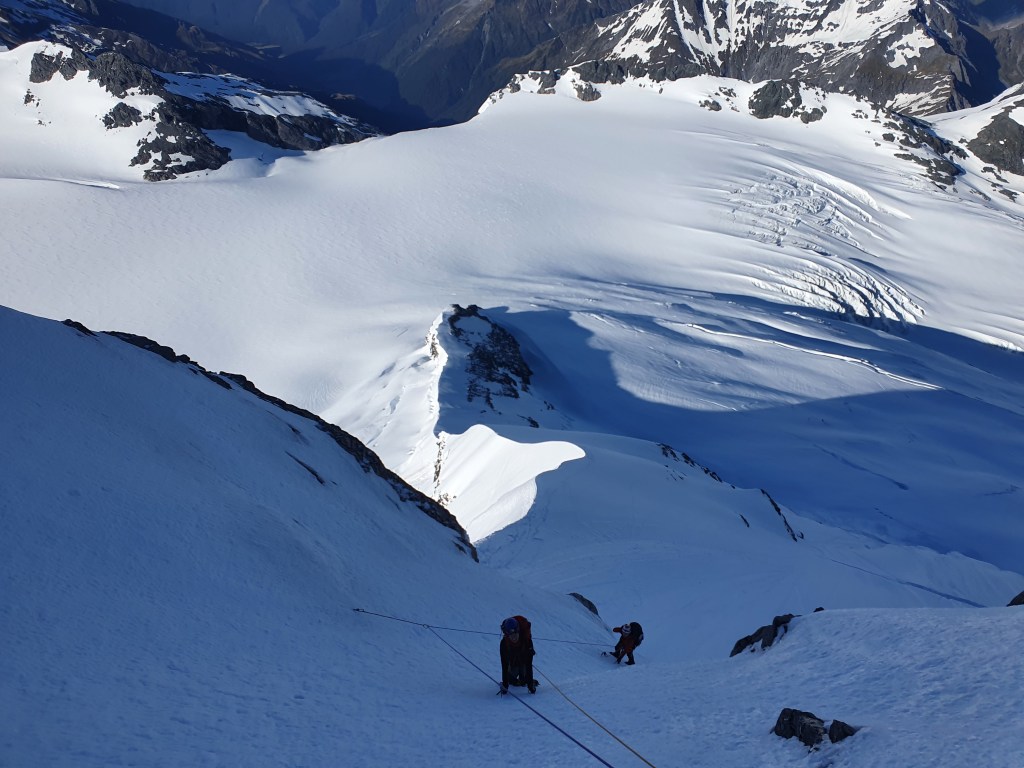
More snice cruising
climb

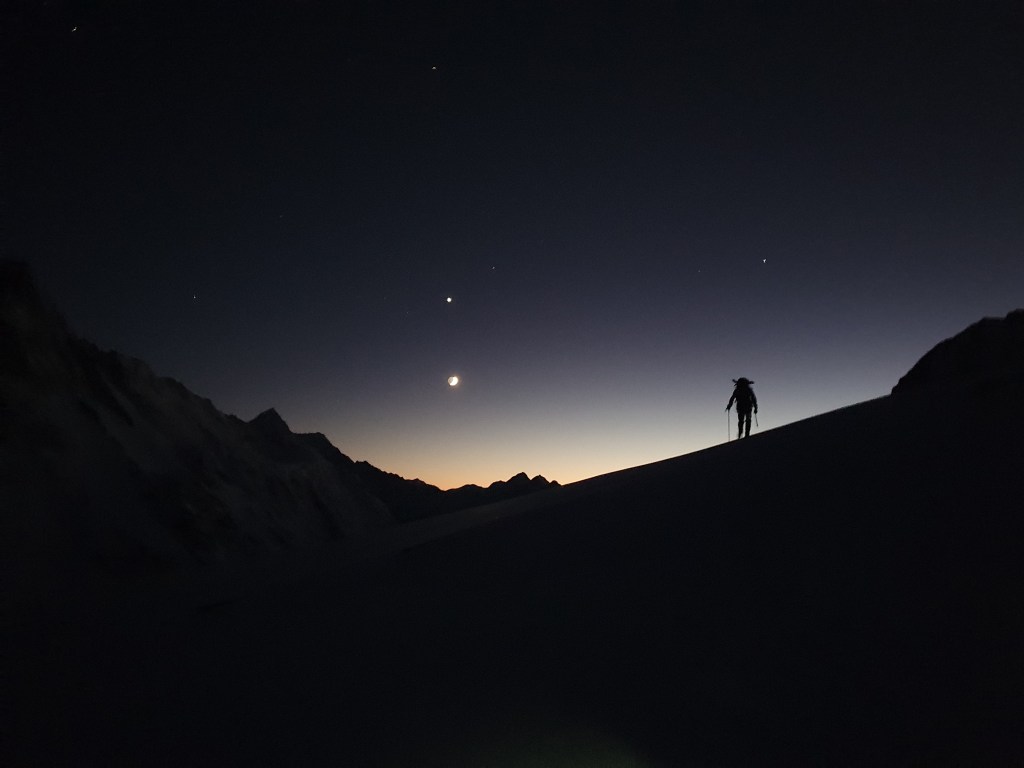
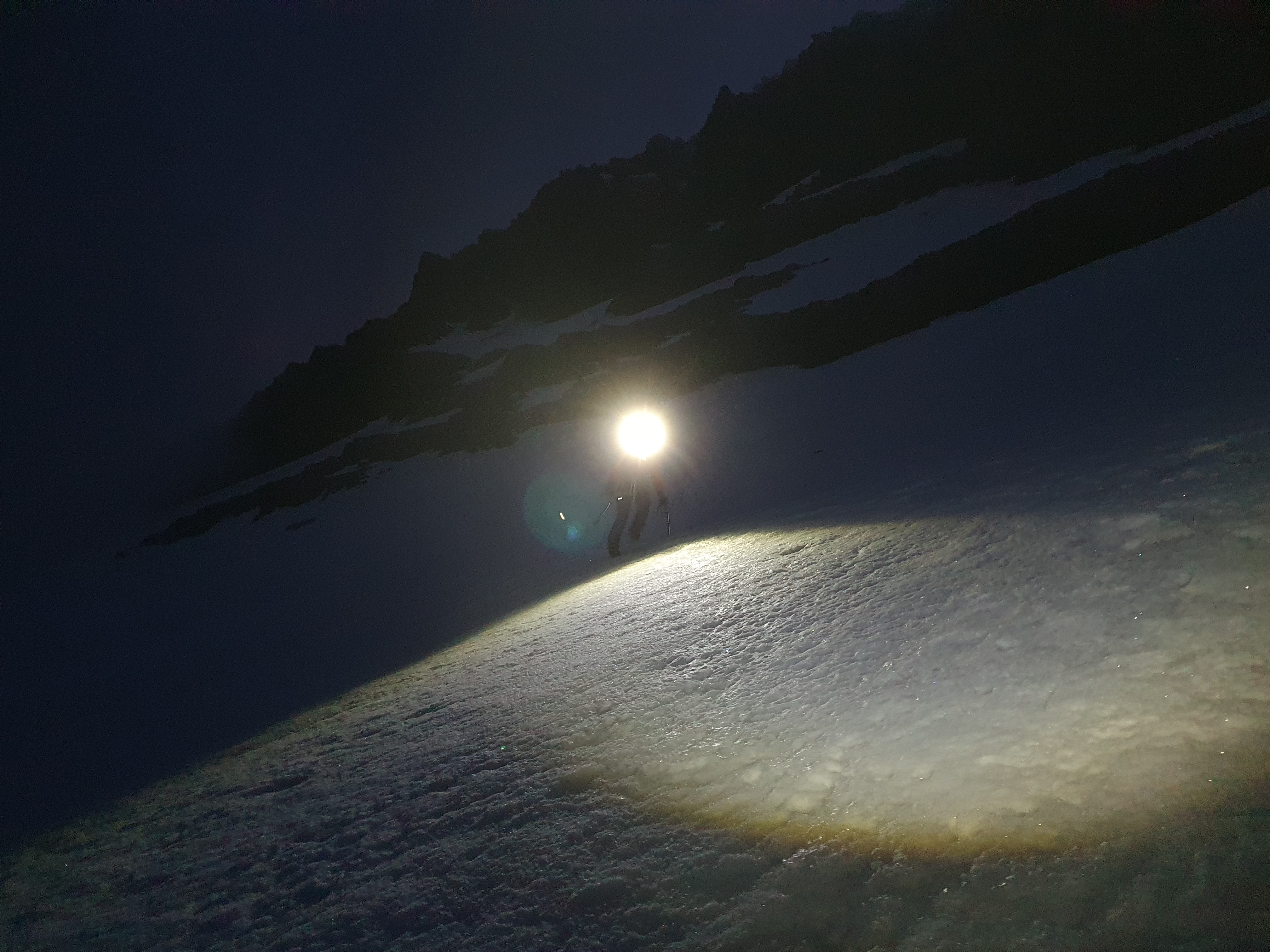
We were up at midnight, and left the hut at 1am.

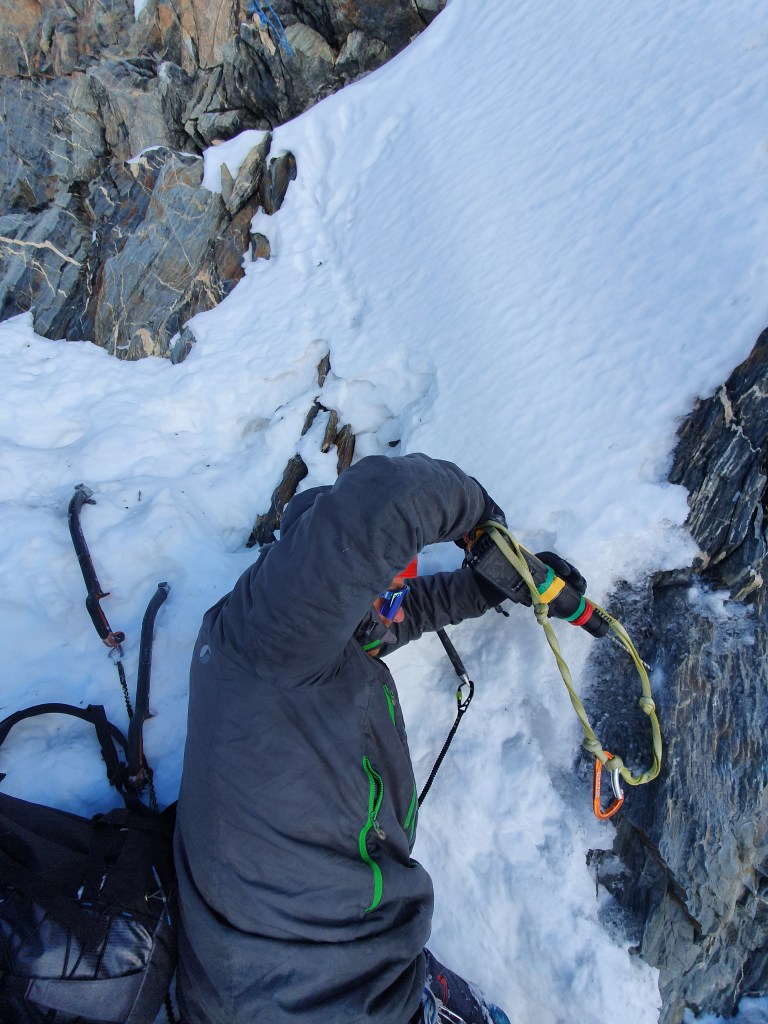
From the base of the route, there are 3x relatively low angle (50ish degrees?) pitches to get you warmed up. Some parties solo or simul this section to get to the water ice, especially it this section is snow. For us this section was hard snice, littered with small rocks and with a waist to overhead deep runnel straight down the middle where a fridge sized boulder had plowed its way down the bottom of the route. You definitely don’t want to be here when the rockfall starts! We pitched this whole section, but were able to move pretty quickly.

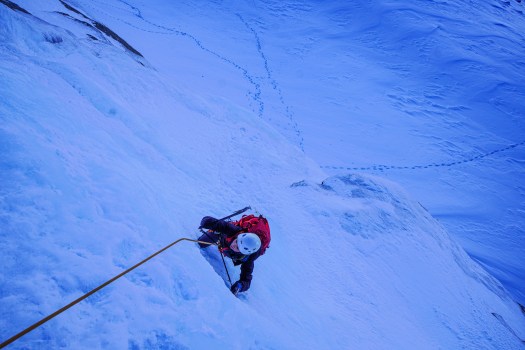
Pitches 4-8 were phenomenal – full pitches of fat water ice climbing, taking bomber screws at a sustained WI3. Multiple blobby bulges mostly in the 70-80 deg region. Pitch 6 was the definite crux (the 11.62 section in blue in the guide). Here the ice steepened up to just below vertical and became more technical, but this section was short, 20-30m. After the crux its back to the hero blobs for a couple more pitches until reaching the final headwall. The angle drops off to around 70 deg to the summit – we made a total of 12 pitches but these were all rope stretchers so could easily end up being a bit more than that. This time of year the sun effect on the top pitches was affecting the ice quality, but could still make reasonable picket anchors. If you were rapping the route this late in the year you would need to be leaving pickets for several raps as it was too soft for threads.
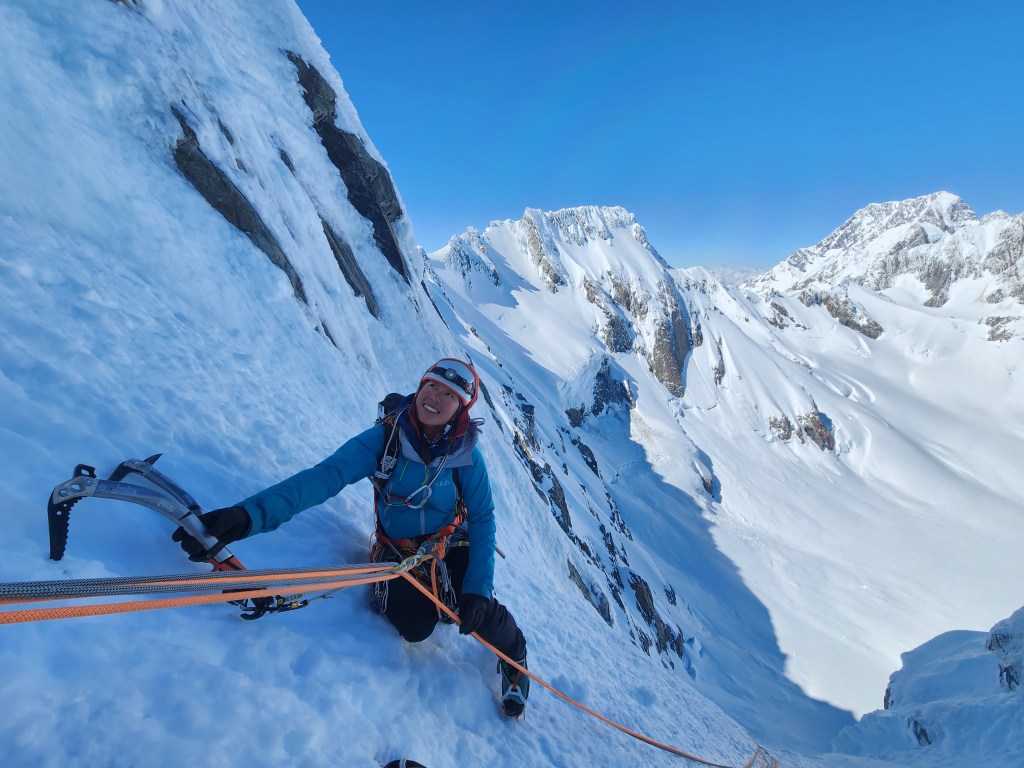
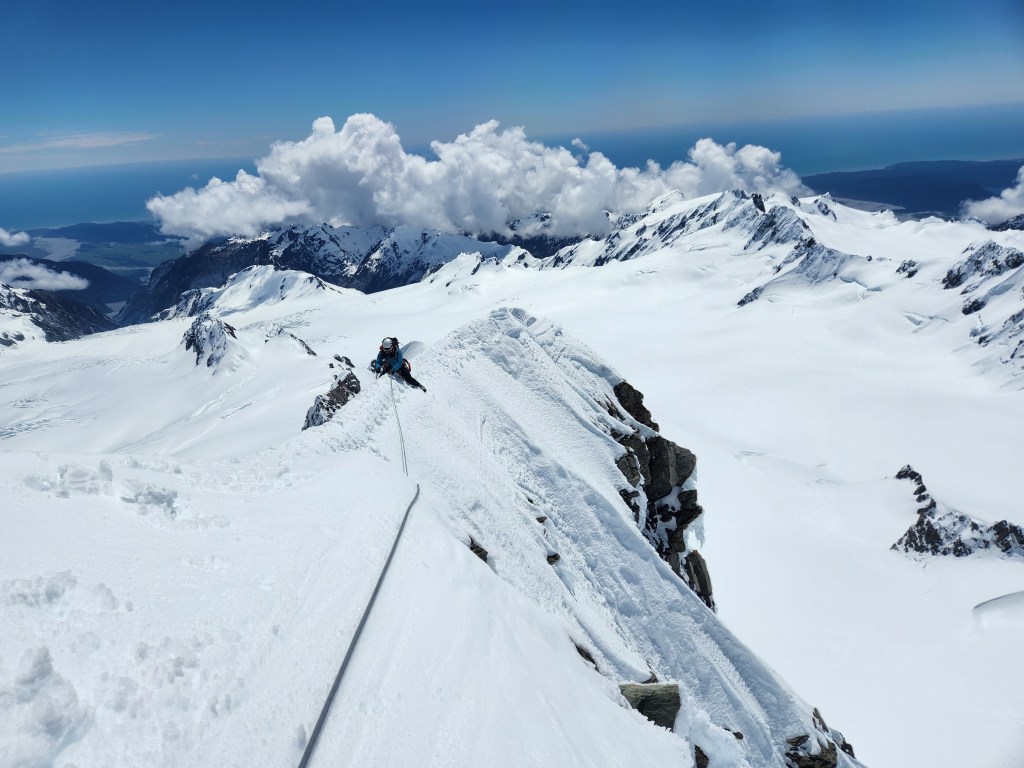
The summit is a knife edge ridge that extends towards a large block at the far climbers right side of the face, which is the true summit. The topos mostly show the route aiming up to the far climbers left of the face which is the route we took – this is a bit awkward as making a belay on the ridge is not the easiest. Genuine knife edge ridge with a lot of exposure on both sides, and the sun is blasting the other side of the ridge so going down there to make a belay wasn’t going to work for us. The top of the south face also catches sun so the snow / ice quality if pretty poor here – we made a 2x picket anchor just below the ridge, but there was a bit of messing around from me going up and down figuring out where best to make the anchor which wasted a bit of time. We then chevalled across the ridge to the true summit where theres a good belay rock you can sling. If we were doing the route again, on the final pitches would just trend climbers right to just top out at the block / true summit and avoid the messing around on the ridge.
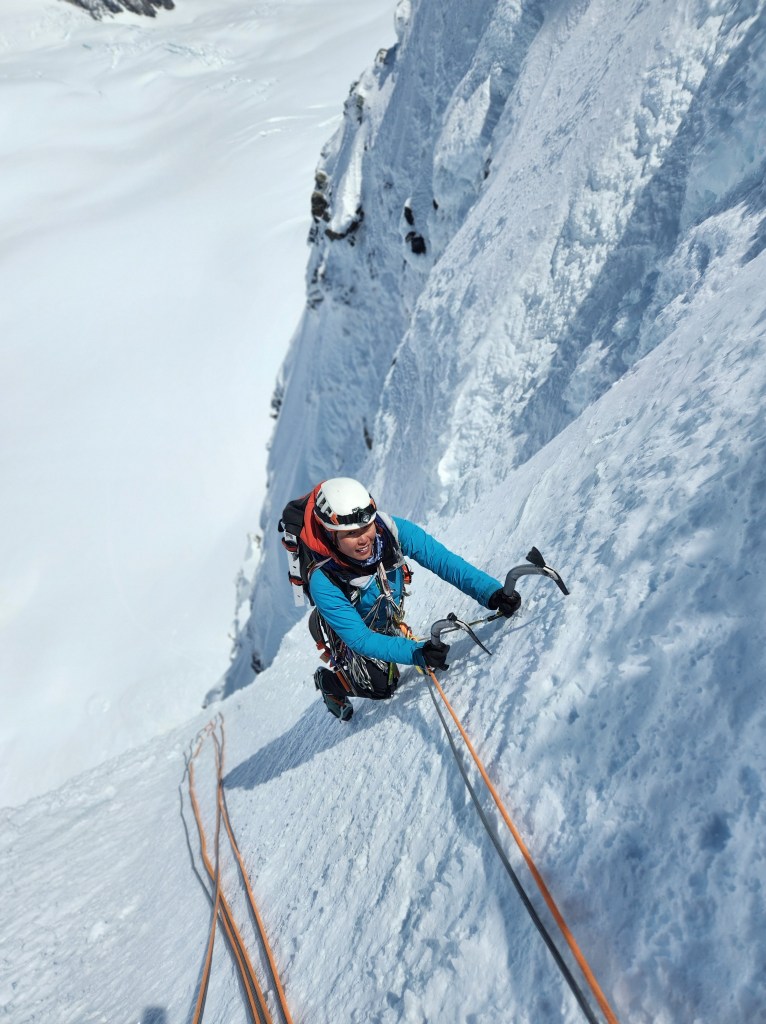
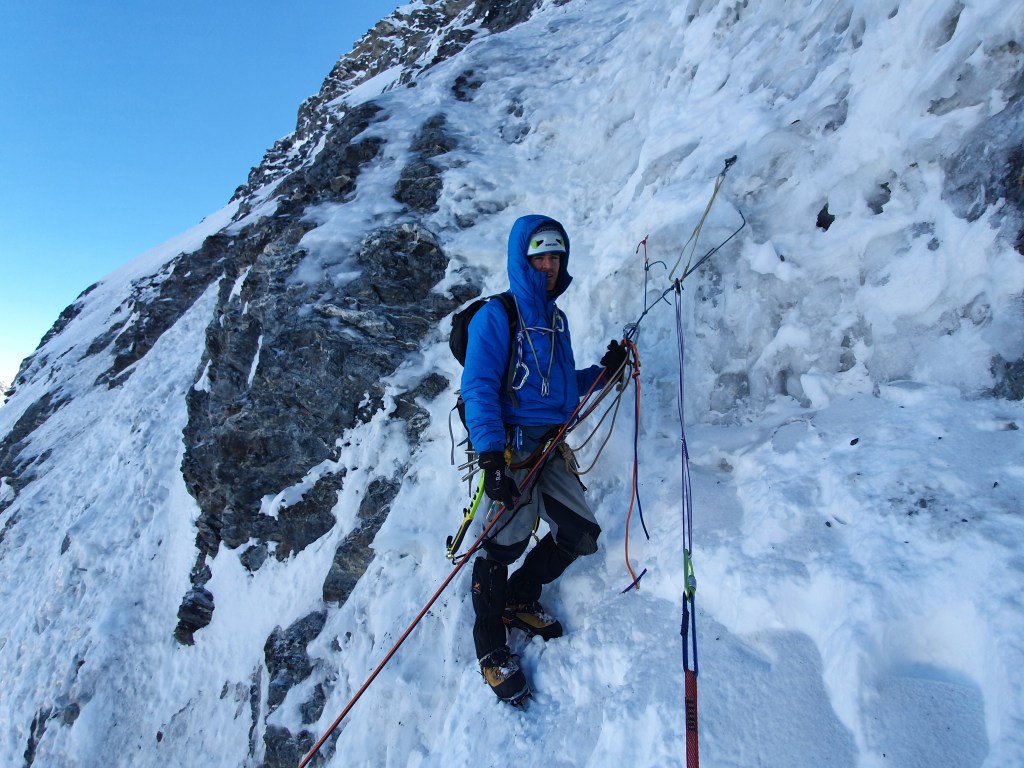
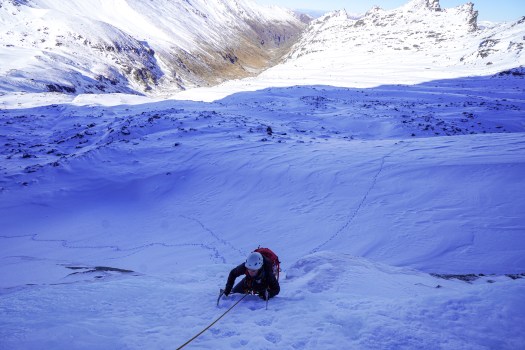
On the upper snowfields above the crux. The sun effect meant the ice was softer, quick and easy to climb but not taking screws without a lot of digging. Pickets were good.
descent

Rapping the route – a popular option, and espeically good in a team of 3 where one person can be equipping the threads as your going up. However probably wouldnt recommend it this late in the year unless you can move fast enough to be off the face by around midday or 13:00 due to icefall. Another party climbed a route to the left of us at the same time as us and ended up rapping through the heat of the afternoon, and it sounded like a fairly terrifying experience with a constant bombardment of ice and rock.
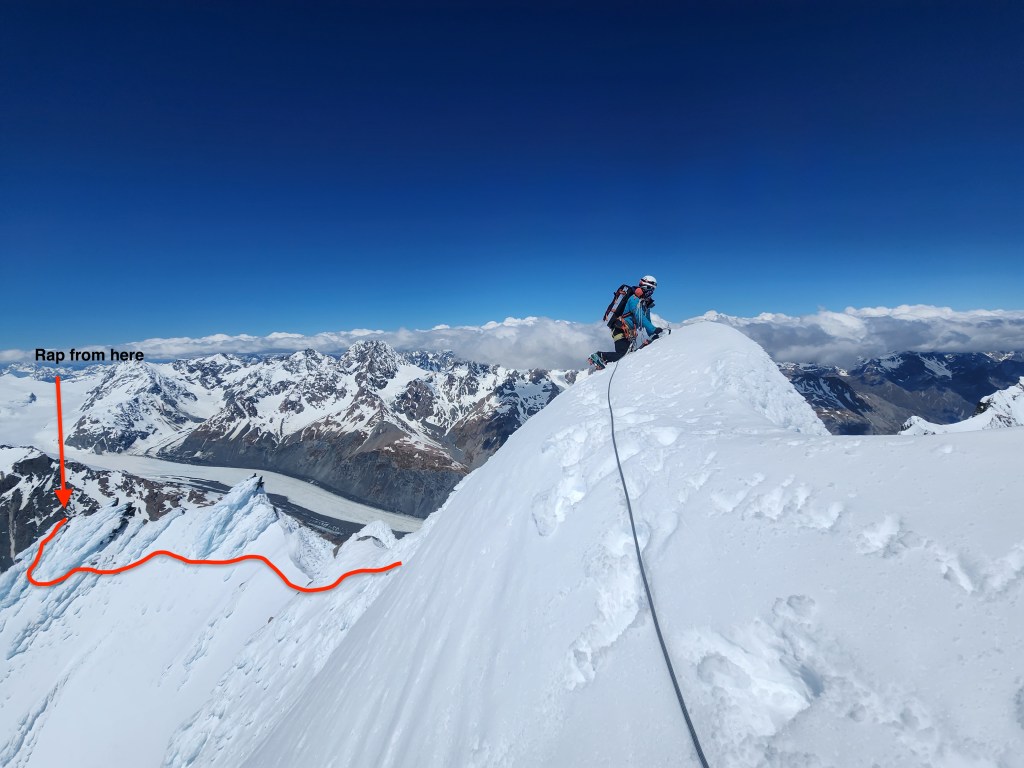
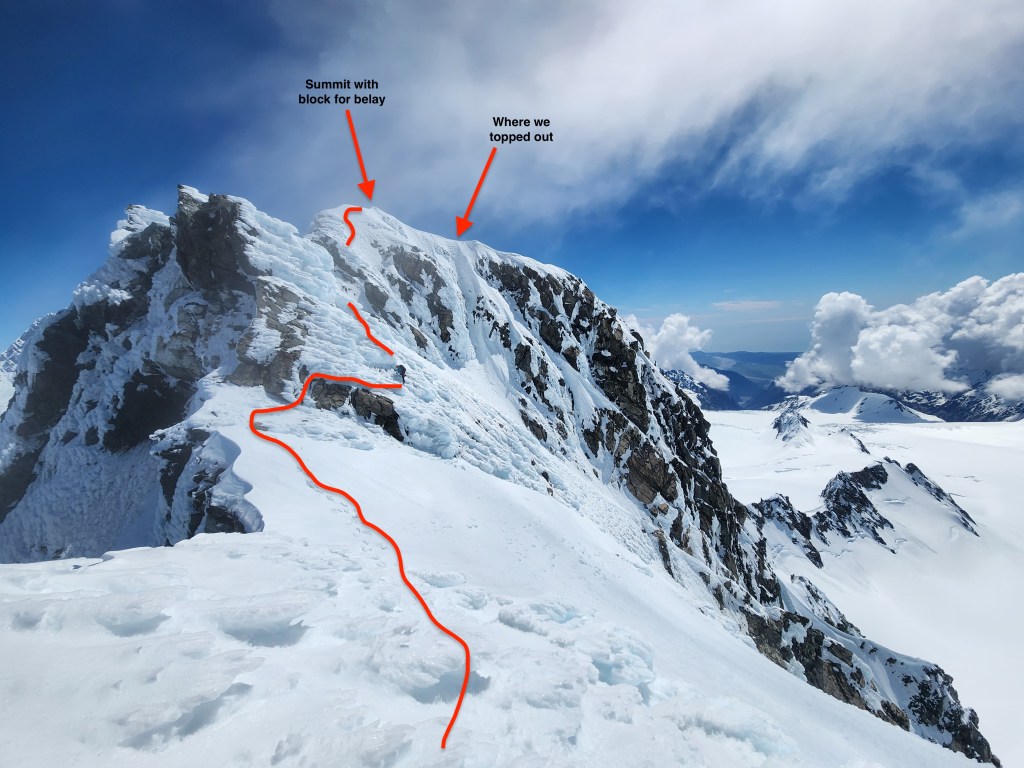
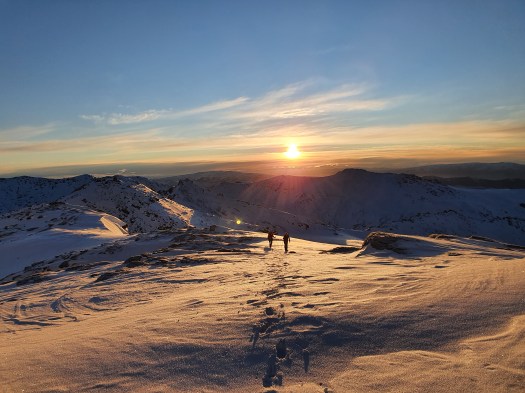
Me on the summit, Maria on the sub summit. You have to traverse a fair way to get to the rap, wouldnt be obvious in poor weather / the dark.
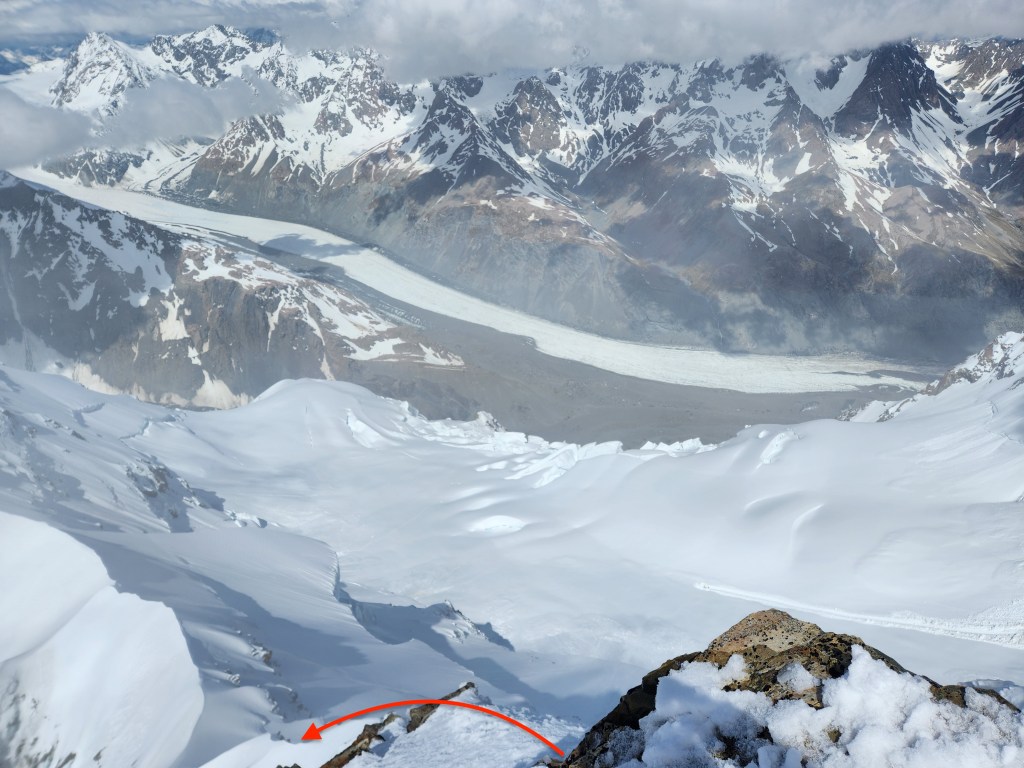
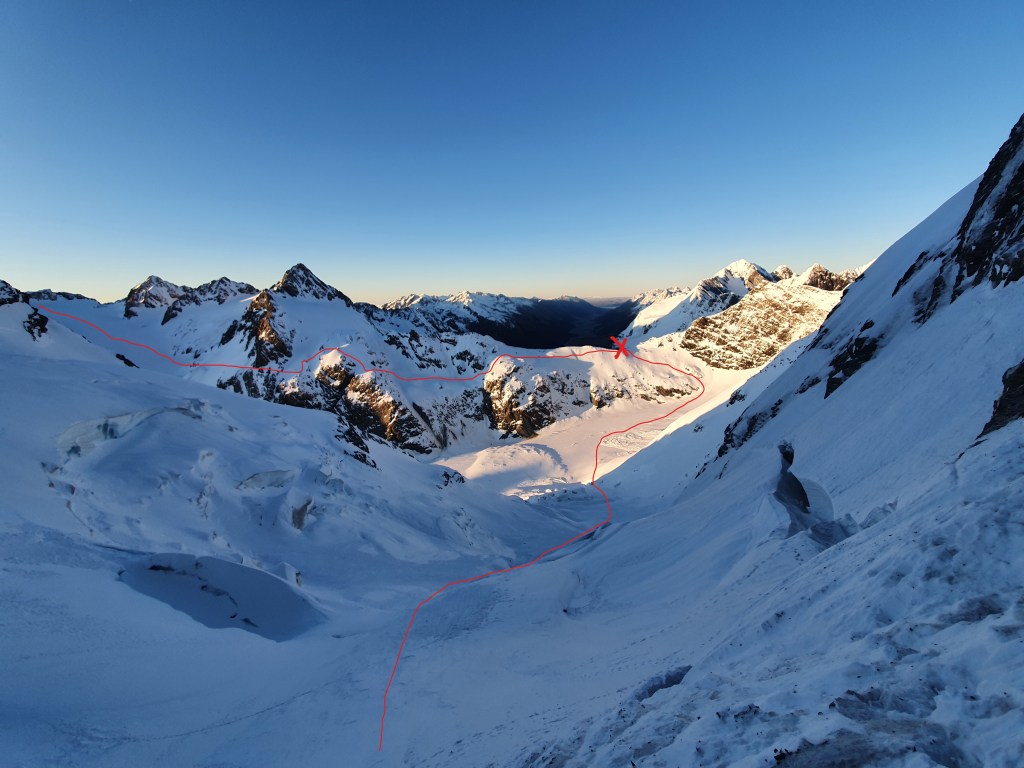
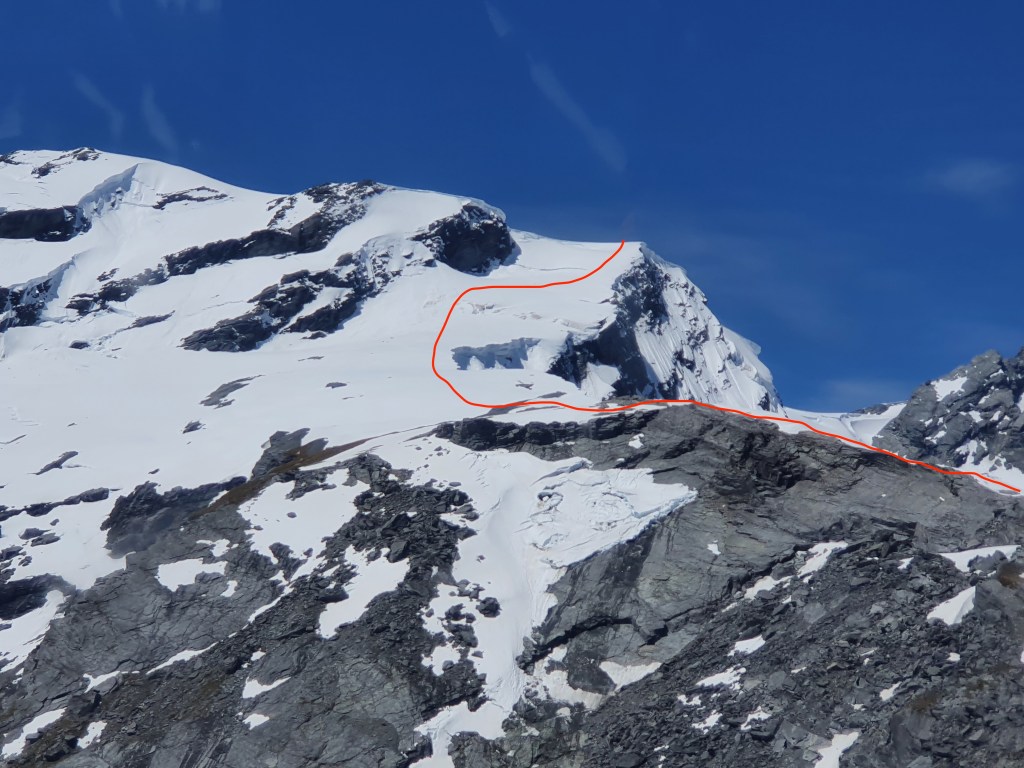
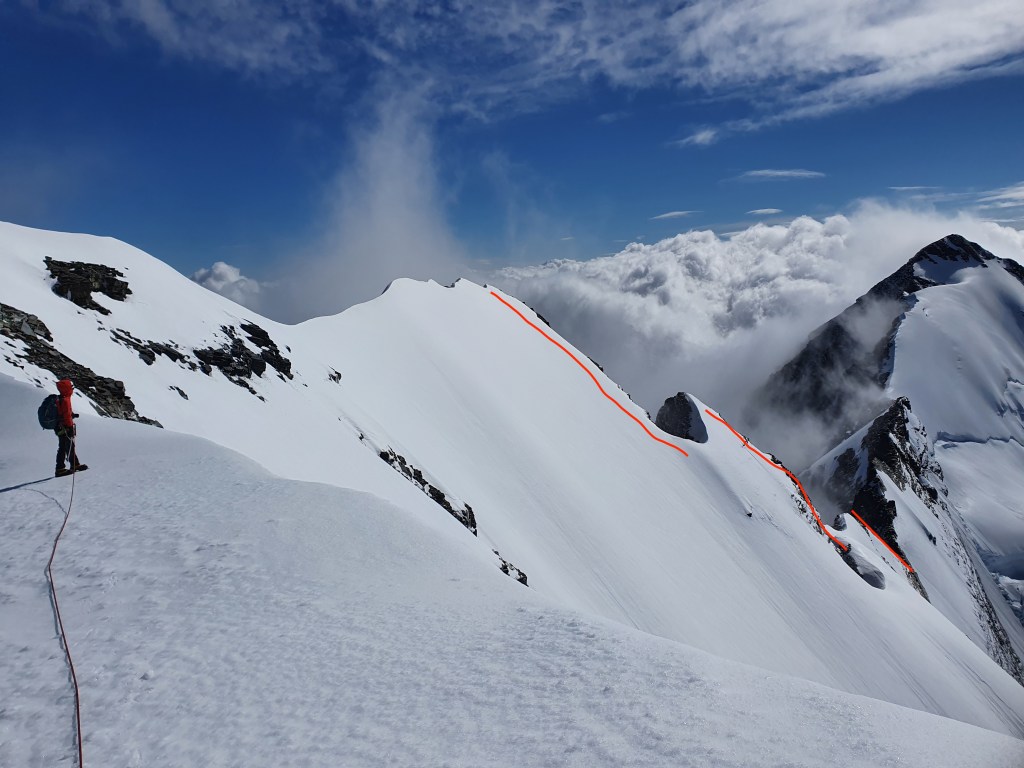
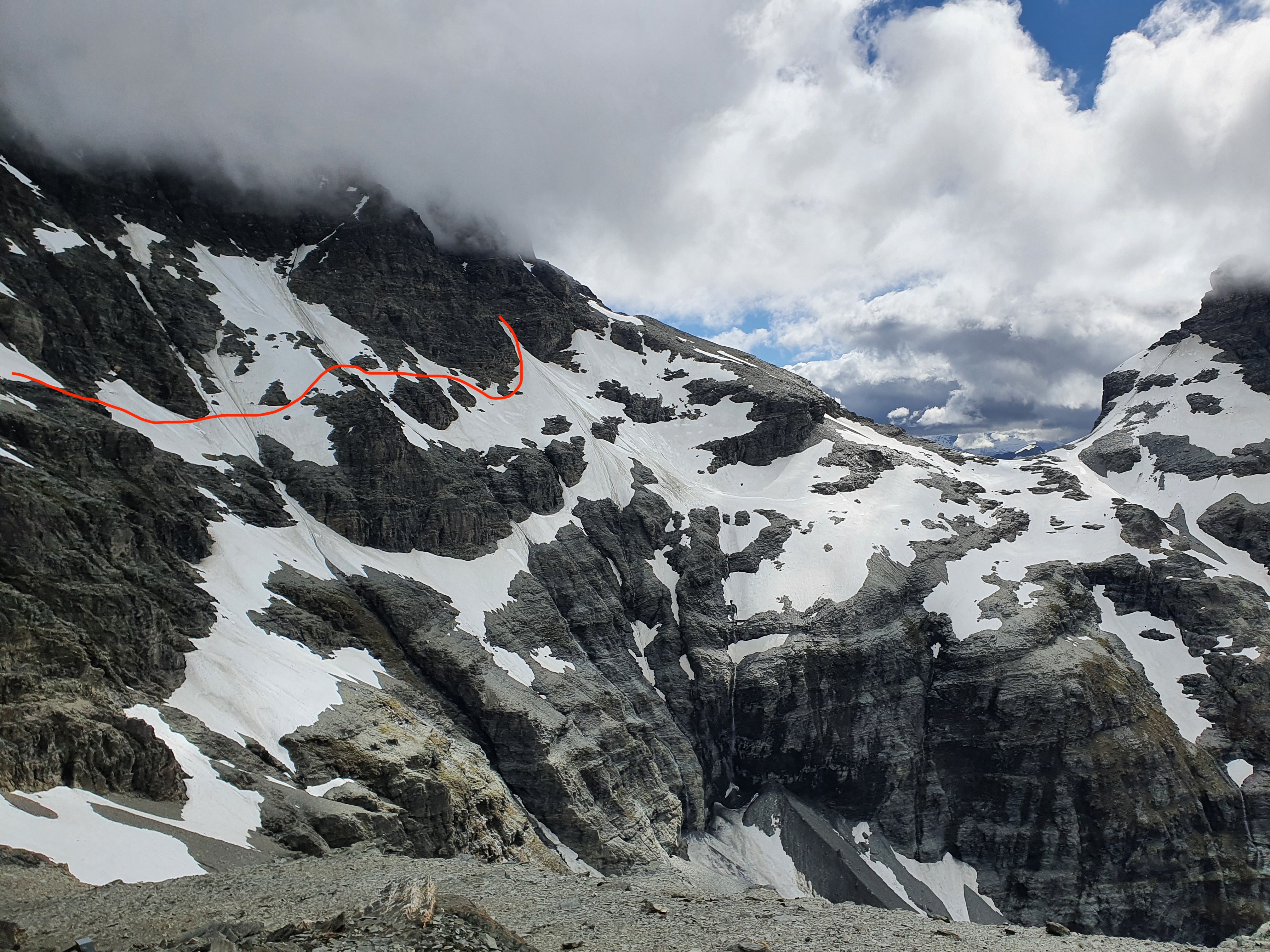
Looking back towards Douglas summit from the North. If you aim for the climbers left of the face you top out at the wrong side of the ridge and need to traverse. Sticking right puts you right at the summit / good belay spot. After short downclimb (first red line) we did a short rap to the snowfield then traversed around to the rap station


Standing at the rap station, Tasman glacier below. Go off the north side of the ridge to get to the Glacier Peak ridge

Preferring a loop, and because we had topped out after midday, we opted to descend via Glacier peak. On the summit of Douglas there is a decent rock that you can sling for an anchor. The first section of the traverse towards glacier peak is a little involved – we made one 30m rap from just below the summit to get to the lower snow field, and then traversed on the North side of the ridge around 2x large rime covered blocks for around 100-200m to get to the main rap. Stay on the north side of the ridge and go as far as you can until the ridge forms a point to find the rap station which may well be hidden by snow. From the end of the ridge aim to rap on the north side, around 50m, putting you onto the main ridge connecting to Glacier peak. See photo below.
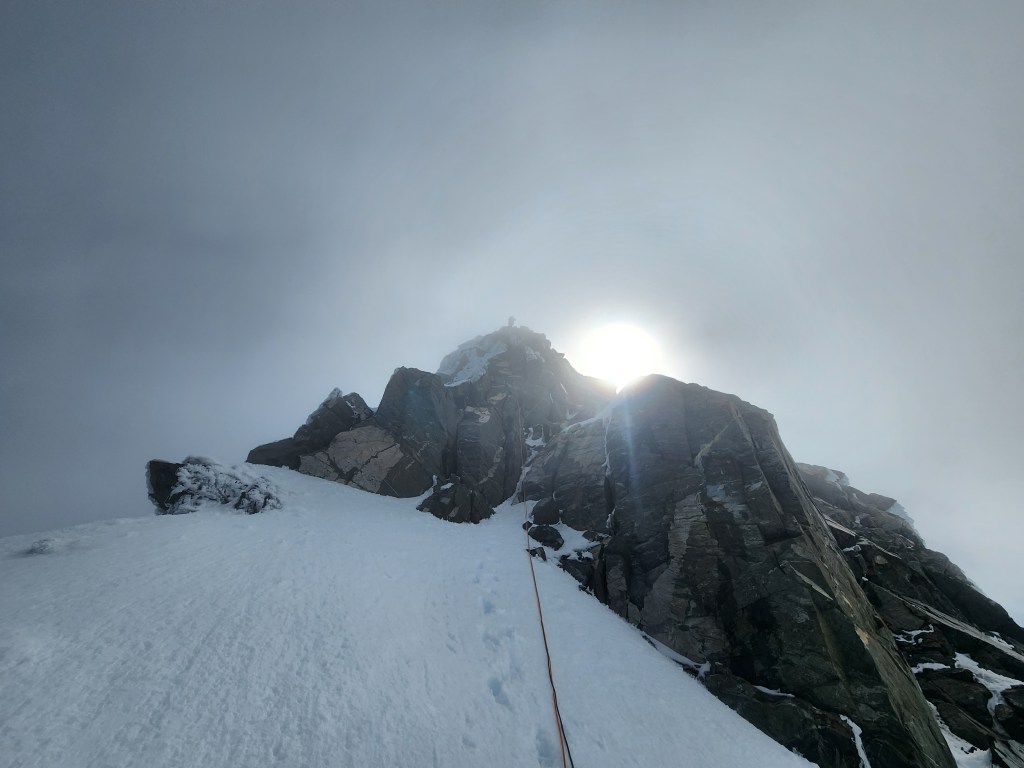
Then it’s a straightforward walk to the lowest point of the col between Douglas and Glacier peak. We descended from there onto Explorer glacier, and were glad for the photos we had taken the day before of the route down through the crevasses. By now it was 6-7pm and the snow was soft. We post holed once or twice along the way back, so again, we didn’t hang around and boosted back to the hut. The others at the hut spotted us returning, so the water was pre-boiled and ready – hallelujah.
Swiss Virgins, Vampire

A high quality 350m WI3/4 ice route with easy access from Baron Saddle hut. Unfortunately a large rockfall has affected the South face of Vampire since we were there and I havent heard of anyone going up there since so I have no idea how stable the rock is or if the line is even still there. Hopefully it will be climbable again as the whole zone is awesome

Swiss Virgins vampire ice climb mountaineering route
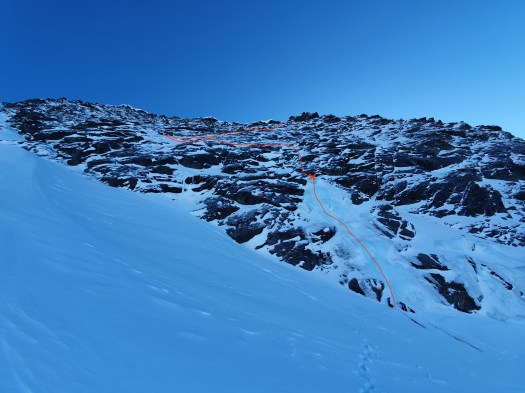
The climbing line with approx belays marked with yellow crosses. We linked the first 2 pitches into 1, but meant we needed a short simulclimb to get to the good belay ledge

Approach

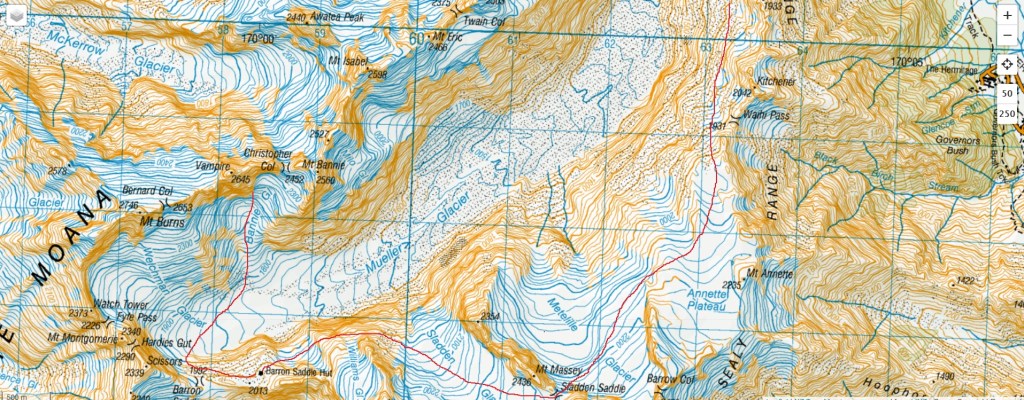
Base yourself at Baron Saddle hut. Access either via the Sealy Tarns track and Mueller hut then across the Metelline, Sladden and Williams glaciers, or a 5 min heli ridge from Glentanner. We flew in an hiked out as we only had a couple of days off work to get the trip done. I would avoid access via the Mueller glacier – the access around the Mueller terminal lake looks terrible, and then the glacier itself gets unrelentingly pounded by rockfall from above.

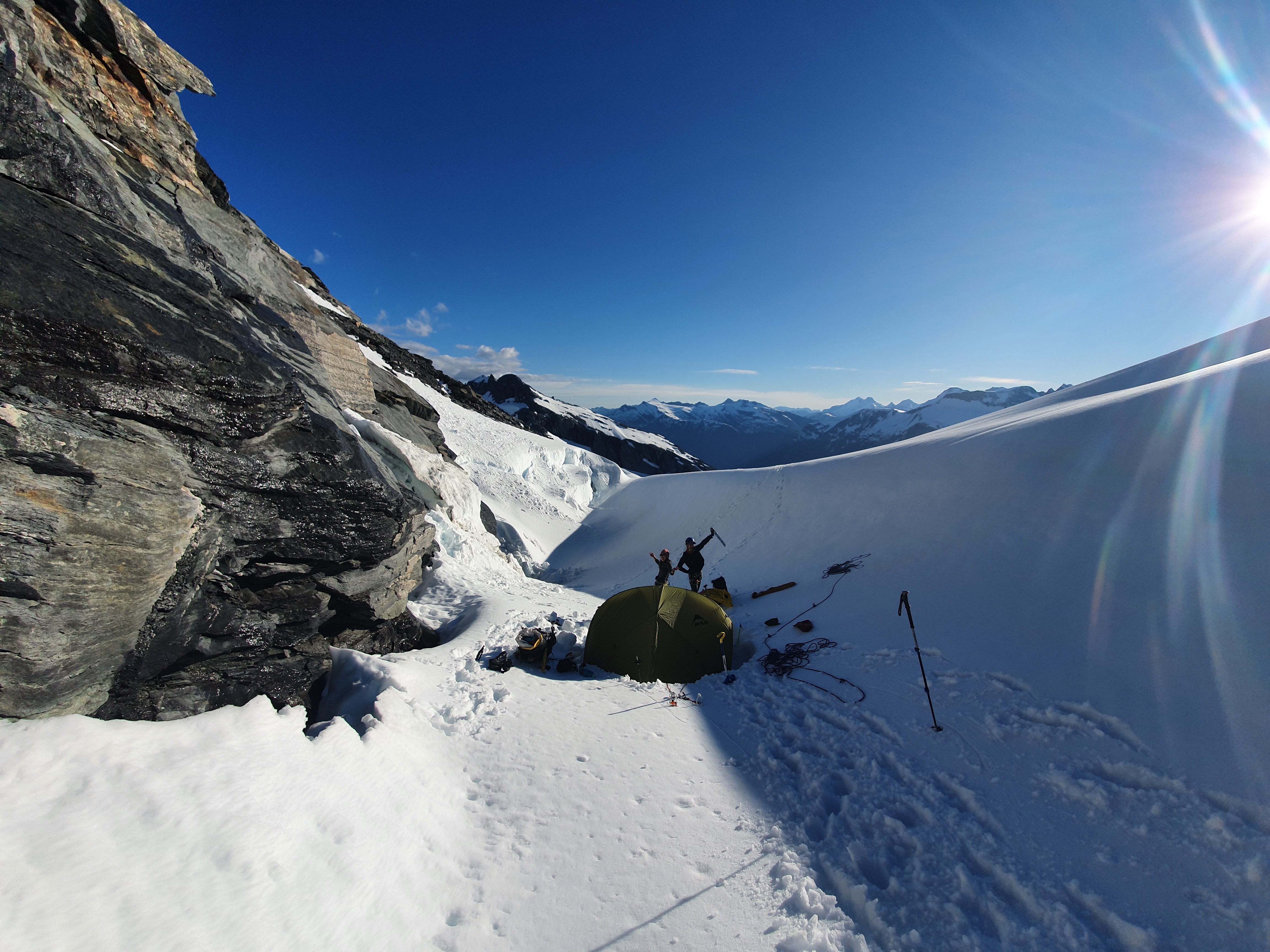
Baron Saddle hut with Vampire in the background. The approach to the route in red

Barron saddle hut is a compact little barrel with bunks, but no gas or cooking equipment so bring everything.

From the hut we headed to Barron Saddle and then across to the Bannie glacier. From here its a simple 3-400 vertical metre plod to the start of the route. We went up the night before to figure out the route in daylight, and left a bunch of gear at the base of the route. Skis would speed things up significantly but Sean was between skis at that point so we were booting it.

Climb

Crossing the shrund was a bit tricky and involved so traversing out to the west before sidling back in under the route.

Bottom of the 1st pitch

Pitch 1 : 2x 25m sections joined by a short low angle snow ramp. The first was WI3 but the second was near vertical for the second half, at WI4. Tubbs led this first pitch and did both sections in one long pitch. We ran out of rope and so had to simul a few metres to get him up to the snow ramp above to build a belay. To avoid the simul you could turn this into 2 pitches
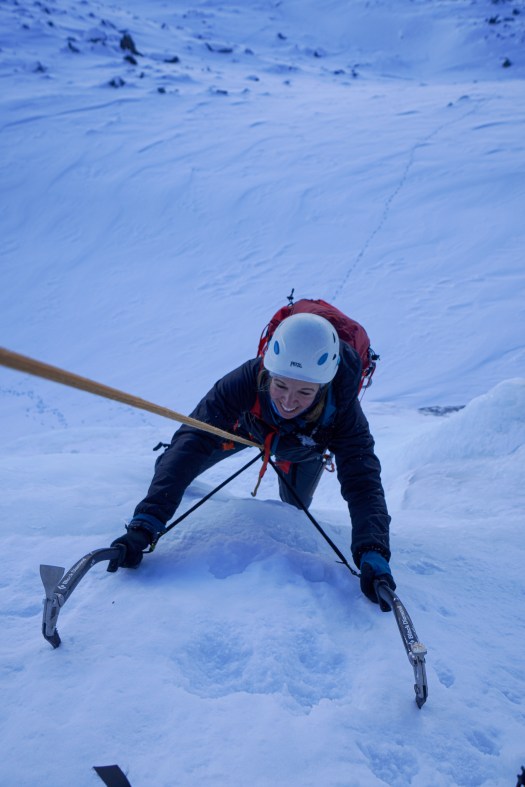
Sean coming up the 1st pitch

Pitch 2 : Snow ramp into WI3 ice traversing right up to a screw belay and the start of the next section of steep ice

Good ice climbing up the third pitch of Swiss Virgins, Vampire

Pitch 3 : Steepens up for the next WI4 pitch. The ice was a little thinner here with a few mixed moves thrown in. Culminated in a near vertical 2m pillar to get onto the low angle snow field
Pitch 4 : Another 40m of WI3 to another good screw belay

Mark leading up the crux 4th pitch.

Pitch 5 : 20m of WI3 into a steep snow gully up to the summit

Descent

Good V threads all the way up, except right at the very top where we threw in some bolts

There were excellent screw anchors the whole way up, and a team of 3 is ideal for prepping the V threads on the ascent to maximise efficiency on the descent. However when you reach the very top anchor options are slim. The unconsolidated loose snow meant a picket was no good and the ice runs out so threads arent an option. There is a big rock at the top which has a thin crack in it that can fit a knifeblade piton, but the direction of pull for the rap was straight out of the crack. We had spoken to a group that had climbed the route a few days earlier and told us about the top anchor situation and we decided to do a bit of a public service and bring a power drill up and install a nice shiny new DBA with rap rings. We were hoping this was going to becoming something of a classic ice route and would get a lot of traffic – after the big rockfall I dont know if these bolts are even still there. Im sure they are still securely in the rock, but the rock may now be at the bottom of the valleyโ€ฆ..

Heading home across the Sladden glacier

From the hut it took us around 5 hours to get to the car on foot – would be significantly faster on skis. The section getting to the Sladden glacier (passing under the Williams glacier) was quite thing and over some big exposure – take extra care if crossing this late in the day and a small wet loose could cause a big fall down to the Mueller. The same is true (but to a lesser extent) between the Annette and Mueller hut.

The route from Barron Saddle hut (x) back towards Mueller hut staying high on the terraces. Gets the sun later in the day so go early. Right from the hut it the way up to the route
Looking up the route
Im going to start bringing a power drill on all my alpine outings….

South Face Classic, Single Cone

We took Maia on this climb as a warm up for Aspiring SW ridge. An absolute winter delight. 

Bit of difficulty route finding at the top lead to a bit of time in stasis for me and Maia. The cold was character building! After the trip, Maia invested in some new gloves – and perhaps new friends…

Touch Down is a section on the S face of Single cone that consistently sees good ice year on year. It’s a great area for those learning/honing their ice climbing skills as there is a double bolt anchor at the top allowing you to top rope/rappel easily. If you’ve climbed here and feel confident, then the S face classic route is a natural progression. The route is 300m long. In reality, the hardest ice climbing is at the beginning and the rest is largely snow. The crux of the climb was definitely the routefinding.

To give you an idea of the route (in reverse), here is Joe skiing it. Note it is much later in the season with an exceptional amount of snow.


  • Difficulty: WI3
  • Equipment: 2x semi technical tools. Ice screws – enough for a full 60m pitch (depends on your tolerance of running it out; we brought 10). 1x picket each. We climbed on 2x half ropes as a team of 3 but as a 2 a single 60 would be fine.
  • Approach time: 2h from Lake Alta, 3h from Remarkables ski base
  • Climb time: 8h (we had some route finding difficulty, could be done in 6-7)
  • Season: mid-late winter allowing time for the ice to be established
  • Party: Joe, Maria, Maia 06/08/21

Approach

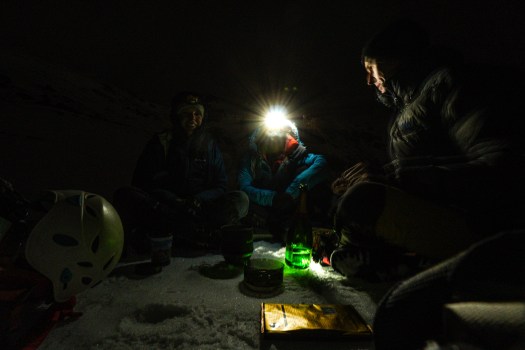
We chose to camp the night before to get an early start the next day. From the base building at Remarks, we walked up towards Lake Alta and chose a spot to sleep under the stars. Joe had recently finished exams so to celebrate we had lugged a bottle of bubbly up (courtesy of the Collinson parents!). After the fizz had settled, so did we.

Woke up at 7am – leisurely! Access is via the back of single cone. From Lake Alta walk up and over Wye Saddle then towards the E face of Single cone before heading down an obvious gully. As you go over, you’ll see Wye Creek for miles and the Doolans to the left. 

Walk another 150m across to get to the first of the routes on the South Face. A further 100m or so is where Touch Down, and the start of the route is.

Yellow marks our belay spots; blue marks where we initially tried to go up
Closer up shot of the route
The Climb

We started climbing at 10.30am.
P1: WI3, 60m. Straight up touch down, once over the edge the DBA is on the RHS 
P2: 60m. Up the snow gully trending left; we made an anchor just before the snow field 
P3: 50m. Trend left across the snow field until it narrows up a snow gully
P4: 50m. Head up through the rocks, squeezing through onto another snow ramp. Go up and left onto an obvious ledge.
P5: 50m. We wanted to head straight up (blue line below), but there was just a thin layer of snow on bare rock (yeesh) so we came back down and traversed 50m out to the right before heading up another snow gully towards the ridge
P6: 30m. Up the rock step to the ridge

We reached the ridge just after 6pm. Too tired we forgot to take a group summit pic. Boosted down towards Lake Alta, picked up our camping gear then retraced our steps down to the carpark at remarks. Down in 1h or so. Time for curry.

Such a fun winter trip. Would do it again!

Tititea/Mt Aspiring, SW Ridge

Stoked to have climbed this iconic mountain! It was a strong introduction to the mountain for me, having never climbed it before, but when Joe offers to lead all the ice climbingโ€ฆ Why not? One of my more memorable trips in the NZ alps. It really is a classic climb.


  • Difficulty: Grade 3+
  • Equipment: 2x semi technical tools, screws (depends on your tolerance for running it out! we brought 8), 1 x picket each. The amount of rock gear needed depends on the time of year – we didnt need any but later in the season a small set of nuts and set of cams would be needed. Rap tat. We climbed on 2x half ropes as a team of 3 but as a 2 a single 60 would be fine.
  • Approach time: with only a short weather window (excuses, excuses) we flew into Bevan Col and set up camp at the base of the SW ridge, at around 2100m – see attached gpx file.
  • Climb time: 6.5h to summit, 11h descent to French Ridge hut
  • Season: Summited on 1 Dec and the ice was still fat. Earlier in the year expect ice, once it gets much later though the crux turns into a rock step
  • Party: Joe, Maria, Maia 30/11/21 – 2/12/21

Approach

An easy drive from Wanaka up the Mt Aspiring road, which is gravel past the TC turn off. Has a couple of fords but unless there’s been a ton of recent rain they are no problem crossing in most veichles (Juicy vans regularly make it to the end). If you’re flying in, Aspiring helicopters is just past the TC turn off. They have a slightly unusual pricing structure – as of 2021 its $1170 for 2 people (585 each) or $1560 for 3 (so 520 each), so getting more people to share the flight doesn’t actually make it much cheaper. After checking in with them you drive down to Raspberry Creek Car park and the Heli lands in the field just next to it so you don’t get stuck without your car on the walk out. The only landing spot possible is Bevan Col. We were limited for time due to driving up after a night shift so went for fly in hike out, but the hike in really isn’t too bad, just time consuming. Generally takes around 3 hours ish to get to the French ridge turn off and 1.5-2 hours up to French ridge hut (path is steeeeep) with very well marked track the whole way. You can shave the first 6km or so off that if you have a decent 4WD and ask permission of the land owners – they often will let you drive as far as Cascade hut (call to ask permission! 03 443 7155).

The two most common approaches are to either stay at French Ridge Hut, or to bivvy at the base of the route on the Bonar. If you’re flying in, I think its a no brainer to bivvy but if you hike in, it may make more sense to get a good nights sleep at French ridge and go from there. Allow 2-3 hours from French Ridge hut to the start of the route. It doesn’t really make much sense to go from Colin Todd Hut, its 1-2 hours in the wrong direction.

It was around 3.30pm when we waved goodbye to the heli at Bevan col. We cruised across the Bonar to the base of the SW ridge. Navigation is easy but take care for crevasses in early season. The Bonar can become totally disorientating in bad weather so if there’s any chance of dodgy weather its worth putting in a few GPS points to get you from the base of the SW back to the Quaterdeck on the descent. The other option from the Bonar to French Ridge is via the breakaway – while we were there the ice cliffs threatening this route were extremely active and this route would have been very dangerous. If the shrund at the top of the quarterdeck is cut off then your only option is to go via Bevan Col.

We found a nice sheltered spot to set up camp at 2220m just under the foot of the SW ridge. It was reasonably flat – once we used our shovels to make it so – and there was even running water off the rocks (this might not be the case earlier in the year). It took us around 4h to get here from Bevan Col. Sacrificed the sunset views for an early night – bed by 9pm.

Home for the night
Climb
Our campsite was where the line starts

Woke up at 2am, packed up the camp and hid everything to keep away from cheeky keas! We were away by 3.30am. Our starting elevation was 2220m. The snow was in good condition for the climb – a solid overnight freeze made for an efficient climb up the 45 deg slopes. It looks quite intimidating from afar but once you’re on the ridge its actually pretty straightforward. Some groups would solo this part especially if the snow is soft and you’re making footprints. With the freeze a slip would have meant a long slide down to the Bonnar so we used running belay with microtraxions on pickets allowing 200m pitches on our 70m ropes. After 2 pitches and 2 hours we were at the base of the crux couloir at around 2800m.

From the colouir was the crux – we made 2 pitches. The hardest climbing is as the start, with 20-30m or so of WI3, with short/less than body length near vertical bulges on a generally 80 degree ish slope. Pretty similar in difficulty to Altered States at the Remarkables. After this the angle eases off to low angle ice slopes, and after another 10m we found 2 fresh shiny pitons that had just been put in the day before in the rockband on the left which made an excellent belay. For us the ice was good enough for screw anchors, otherwise you would need a selection of small to very small rock gear. The second pitch gets you to the summit snow cap, and was more low angle ice sticking just to the right of the rockband which takes small gear.

First section of the crux. 30m or so of WI3. Short less than body height vertical bulges but mostly 80 degrees-ish. Pretty similar to Altered States at the Remarkables.

This crux section is highly variable depending on the season – we got the ice in fat condition and had good screws the whole way.

The second pitch of the crux. Low angled ice

When I skied the line with Sam a few years ago we were there in September and the ice was good but was steeper and harder with less snow built up. Later in the year there is bare rock and some mixed climbing is needed (never done it so can’t comment!). Depends what your preference is but personally I love ice so wouldrecommend getting there early in the year! Try and get some recent beta to work out what to expect before heading up.

From the top of the crux it was an easy walk up to the summit where we were rewarded with an incredible panorama of the southern alps.

Delicious summit shot
Descent from the summit to the top of the ramp. Mellow snow slopes

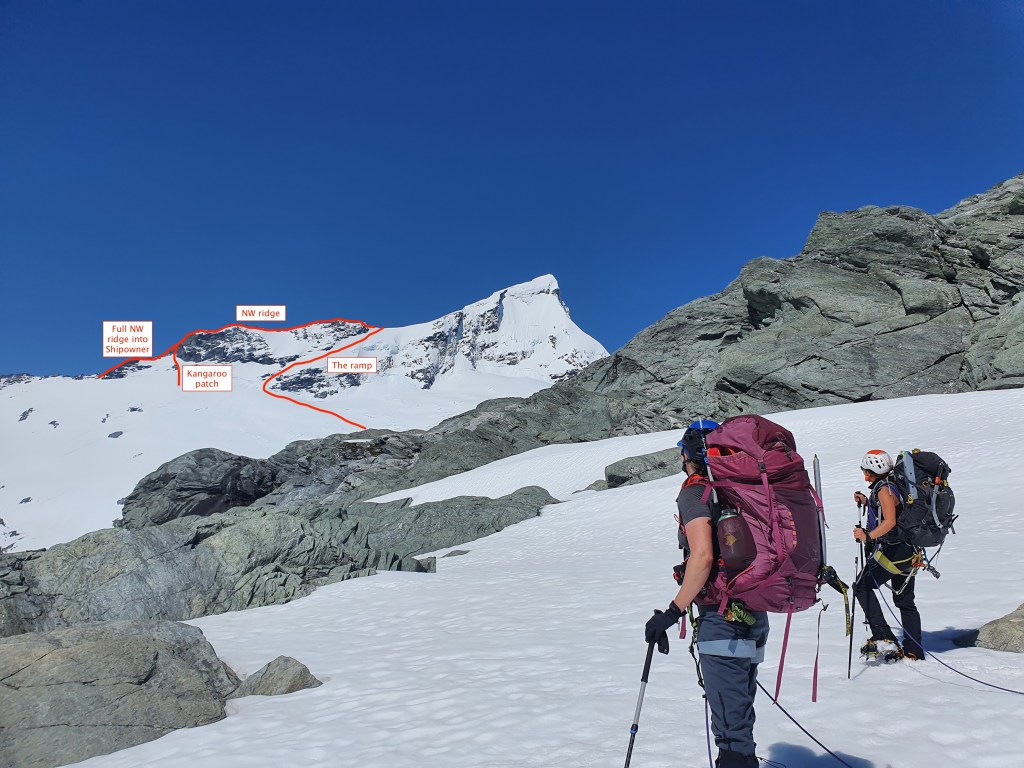
We went down the NW ridge via the ramp. It was cold enough that the snow wasn’t too soft so this was the quickest way down, as it also allows you to cut east at the base of the ramp back down towards the campsite and the Quaterdeck. The other option is to continue along the NW ridge down to the Shipowner ridge, where you can rap down to the kangaroo patch (near the start of the ramp) or continue on to French Ridge hut.

If you take the ramp as your descent route take care – it has been the site of several fatal accidents. It’s prone to wet loose slides and rockfall late in the day, and is exposed almost the whole way. The group on the route the day before us started descending the route but started getting bombarded by rockfall part way down and took shelter in a cave until it got dark and froze up. It was cooler and firmer for us but even so we had a couple of blocks shoot past us as well, and given we were in cloud at this point and couldn’t see them coming this was especially stressful. If its soft at the top of the ramp by the time you start your descent its only going to get worse and is probably best avoided….sticking to the NW ridge is probably overall safer than the ramp and we would probably go that way if doing the route again.

Route from the quarterdeck down to French Ridge hut (another few 100m past end of the line). The shrund at the top was very filled in but the one half way was rapidly opening, we descended the next day and it was a solid metre jump across. Those ice cliffs to the left of quarterdeck were pretty active as well so watch out

The walk along the Bonar glacier to Quaterdeck felt like a long slog. We went back towards the SW ridge to pick up the camping gear we’d stashed 12h prior. Here, we had a soup stop – never underestimate how much a salty beverage can boost energy levels. Feeling rejuvenated we headed towards Quarterdeck – the clouds were coming in thick and fast at this stage, making the vis terrible, but we just followed our GPS points from the previous day, and were lucky enough that there were footprints of a prior party heading in that direction! From the quarterdeck there is a large shrund right at the top – its generally easiest to pass on the far skiers left, and also means you avoid the ice cliffs threatening the other side. There are a couple more crevasses on the way down to French ridge hut – try and get a look on the way in to establish if this way will go before committing to it as its a long long way to walk back round to Bevan Col. If you fly in you get a great view of it, or take a peek from the Matukituki. By the time we were walking down French ridge, the snow was pretty soft and we were aware not to linger. We saw a huge cornice collapse from the ice cliffs between the Breakaway and Mt French – the ensuing wave of debris including car sized chunks of ice that came thundering down went on for a good 45 seconds.

When the iconic red French ridge hut came into view, I was beyond relieved – soon I could stop moving!! It was 8.30pm when we reached the hut. We chatted to other hut stayers in good

spirits, and when they saw Joe licking the inside of his dehy packaging, kindly offered up more food to us.

The next day it was a cruisey walk out the Matukituki. With the sun beating down certain members of the party stripped down to undies – giving the day walkers a show! We went for a dip in the river en route and were back to the car within 5.5h. And as all good trips should end finished with a feed at the Big Fig.

The different descent options. The ramp can be fastest and lets you cut back towards the SW ridge earlier but can be dangerous in the wrong conditions. NW ridge has less objective hazard. Once you get to the big steep buttress, there easiest down climbing is on the north side, and you can usually make a rap down to the Kangaroo patch. The full NW ridge route takes you along the shipowner ridge on the skyline back towards Colin Todd Hut

Mt Earnslaw, West to East Traverse

The weekend warrior’s grand traverse! One of the most fun 2 day trips I’ve had in the NZ alps – 4 pitches of WI2 ice up to West peak onto a spectacular knife edge snow ridge high above the Whakatipu, followed by exposed rock scrambling along the 1km long ridge to East peak. Big mountain terrain just a few hours from Queenstown with no heinous moraines to cross like in the bigger ranges. If you’re fast you can get it done in a weekend and be back in Queenstown for a beer on Sunday night. Highly recommended!


  • Grade: 3+
  • Equipment: 3 season mountain boots. 1x 60m rope. 2x ice axes each. 2x snow stakes, 6x ice screws, 1x set of cams up to yellow, small set of nuts, long slings, tat to rappel. NB. Later in the year, you probably wouldn’t need ice screws.
  • Approach time: 9h to esquilant bivvy (6h on the way out!)
  • Climb time: ~10h biv to biv
  • Season: conditions will be highly dependent on time of year. We went late December and it was perfect, good ice up to W peak and clear rock on the summit ridge
  • Team: Joe, Maria 28/12/2022

Approach
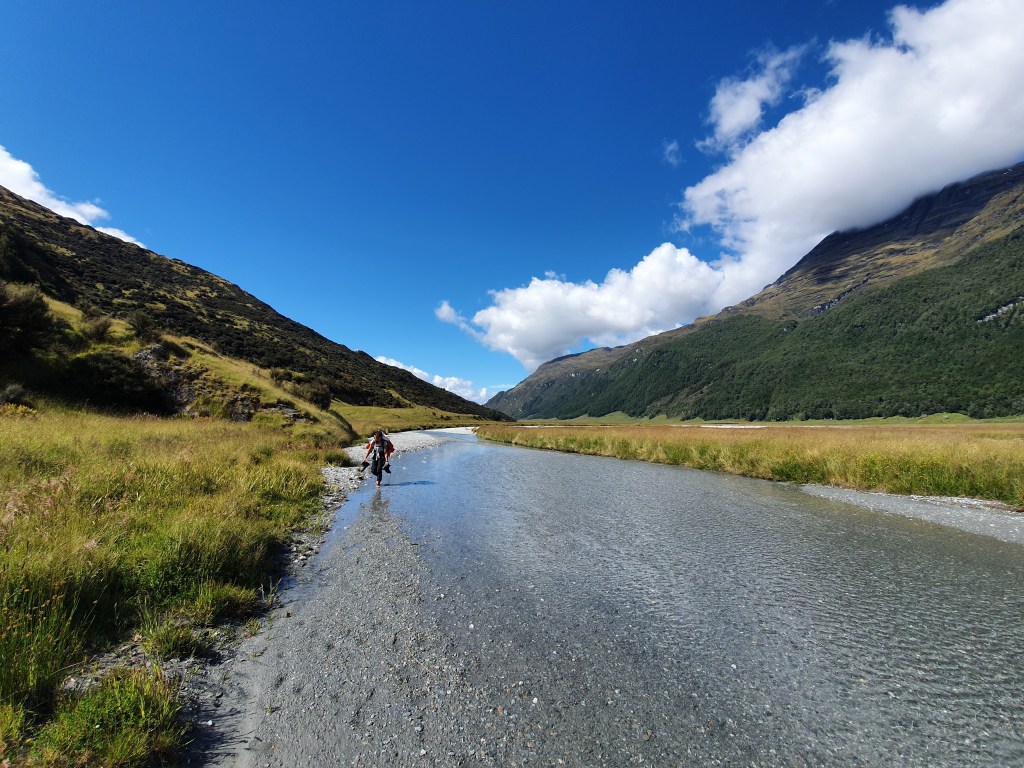
The boggy Rees valley

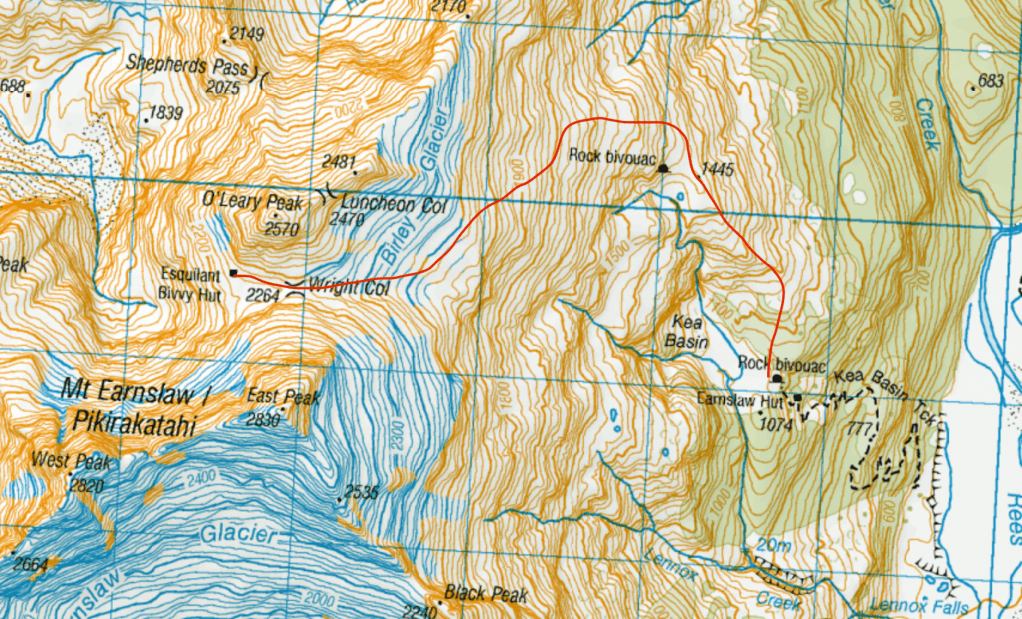
Drive from Queenstown to Glenorchy and head up the Rees valley track. Theres a car park just under cone hill but you can get a fair bit further that that (you will be glad on the way out!). As far as Fords Fall is easy (saw a Hiace make it there), but further than that requires a proper 4×4 plus snorkel. Access all the way to base of kea basin track is possible with a 4×4. Make sure you ask the land owners permission before driving up there! The Rees track is marked with orange poles all the way up on the true left of the river. After the first couple km we found it super, super boggy (wading through shin deep slop in bare feet, not a lot of fun). The valley is much drier and higher on the true right (near where the 4 wheel drive track is) and we came back this way and found it much easier ground. Be aware its a working station so don’t cross anywhere you’re not meant to! Cross at 663, there is an obvious orange marker at the top of a grassy bank marking Kea Basin track. Follow this up to the rock biv. From here on up, it’s really easy to lose the track and find yourself bashing up steep, horrible tussock which is time consuming and tiring – have attached our gpx file and photos to help keep you on track. From the 1st rock biv trend right onto the ridge which takes you to 1445 above a tarn. You should be approaching point 1445 along the ridge from directly south. Go round the 2nd rock biv staying NE of it then curve back round SW until you gain the Birley glacier and Wright col. Total of 2,339m vertical and 16.8km, took us almost 9 hours (but only 5-6 on the way down).

The hut is very cool – tiny and perched in a totally epic spot! Small though – has a top and bottom layer with mats provided, 3 people on each level. Little cooking area. No water tank – had to go hunting for water, ended up having to go all the way back to wright col and up to the slabs on the S face of E peak to fill up. Multiple flat areas in the scree that have been cleared out to pitch tents on

Climb

We set off at 4am. From the biv, traverse around under East peak to the bottom of the couloir at the base of West peak. This is a roughly 40 degree slope which as you can see from the photo has some serious exposure under it. Even a small avalanche would be bad news and when firm, a trip would result in you sliding down off the cliff so be careful. The exact route across depends on the state of the snow – the route we took is marked in red below.

Once you get to the base of the couloir start heading straight up. 40 deg steepening and narrowing up to 45ish at the top. For the final 250m we had 4 pitches of good quality solid WI2 ice up to the top, protected with a combination of screws and rock pro on the couloir wall on the right.

We were surprised how good the ice was in there at this time of year, but the couloir is so deep it obviously never gets the sun. That being said, the walls and the top most definitely do get the sun and once it started getting warm the gully turns into a shooting gallery and was filled with old rockfall so aim to be out of the couloir by then.

Also bear in mind if you decide to bail and come back down this way, you’re going to have to wait until it gets cold again and freezes up before you descend. We left the hut at 4am and were at the top of the couloir by 9:15, which was perfect. From the top of the couloir turn left and scramble up the rocky ridge to West peak and soak up the epicness of the views.

Popping out the couloir onto the West peak

We wandered SW from here to point 2664 (partly because it looked cool but mainly because we got confused and thought that was the way to East peak… Which sounds pretty dumb but is not as obvious as you might think). Cruise along the snow ridge from West peak until you get to a col where you need to descend around 100m to the rocky part of the ridge. This is slightly E facing and so it catches the sun – was bulletproof first thing but had slightly softened so was a nice easy down climb for us but has some serious exposure so be careful – this spot is also very prone to avalanche. Some good bollards to rap if the conditions are more difficult.

Maria contemplating the ridge along towards East pk

Now onto rock for the next km. Generally sound rock (but some very loose, very big blocks) around 3 large gendarmes. Really fun section of the route – easy scrambling which we simulclimbed with a running belay, but needed a couple of raps to descend several sections, especially from the first 2 gendarmes. From the 3rd gendarme, it’s a cruise to the final snow slope up to East peak. Soak up the views from East peak before descending the south face.

Descent

The descent can be tricky from a route finding perspective if you haven’t gone up that way. It pays to take a good look at the face from the hut and take some pics before you set off to avoid getting bluffed out. There’s a big gully in the middle of the face that you come down with bluffs on both sides. From the summit, stick to the ridge to the east of the summit and follow this down heading NE for around 100m before turning to head north down the face. Keep some spare tat for if you go wrong and need to make an extra rap here.

We had a dirty soup/noodle stop at the biv before bracing ourselves for the walk out. By the time we got down to Kea basin, our boots were not our friends so we hiked the rest of the way out barefoot!

To do the traverse and the walk out to the car took us 17hours 30 min.

Our GPS track available below in GPX format to download!