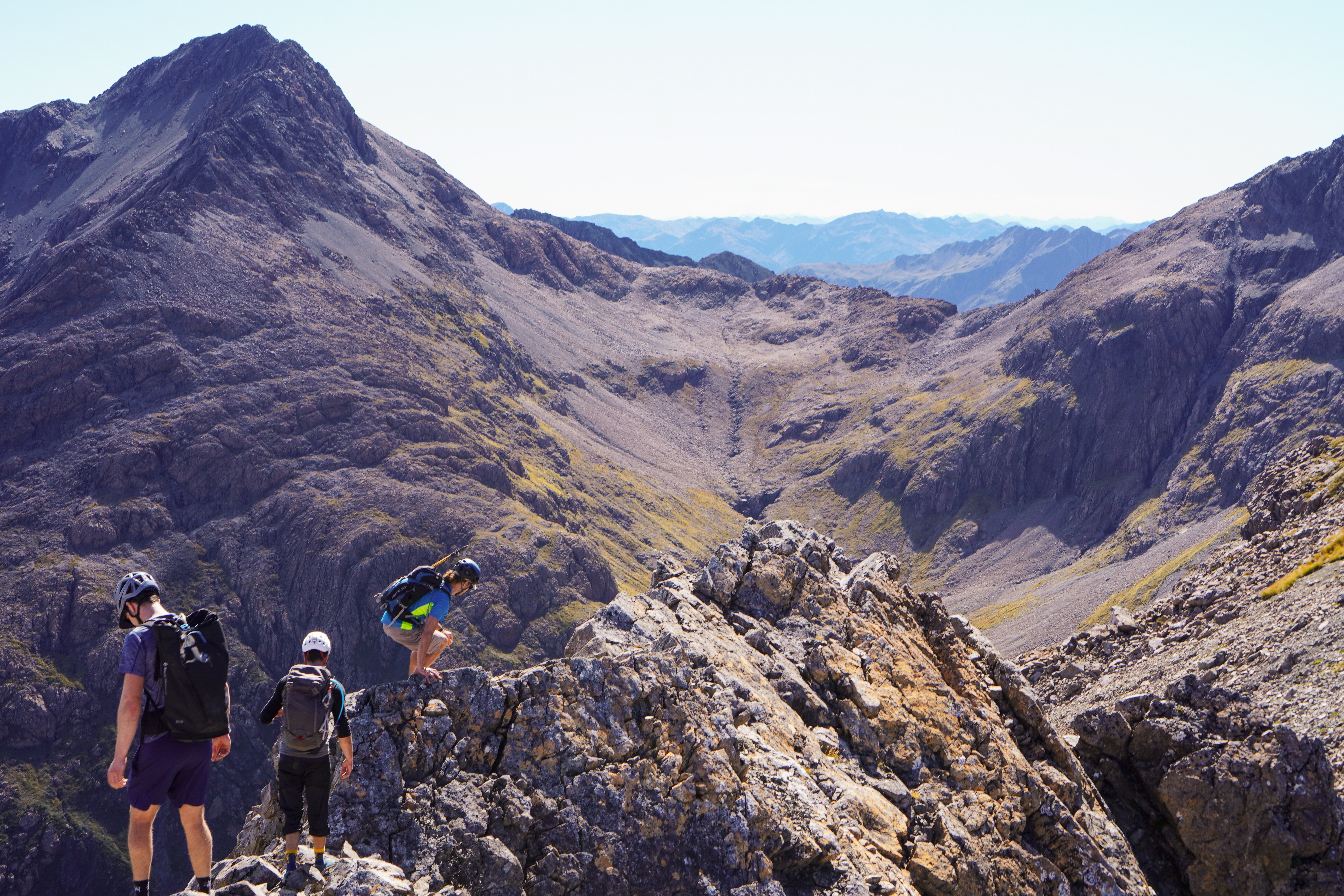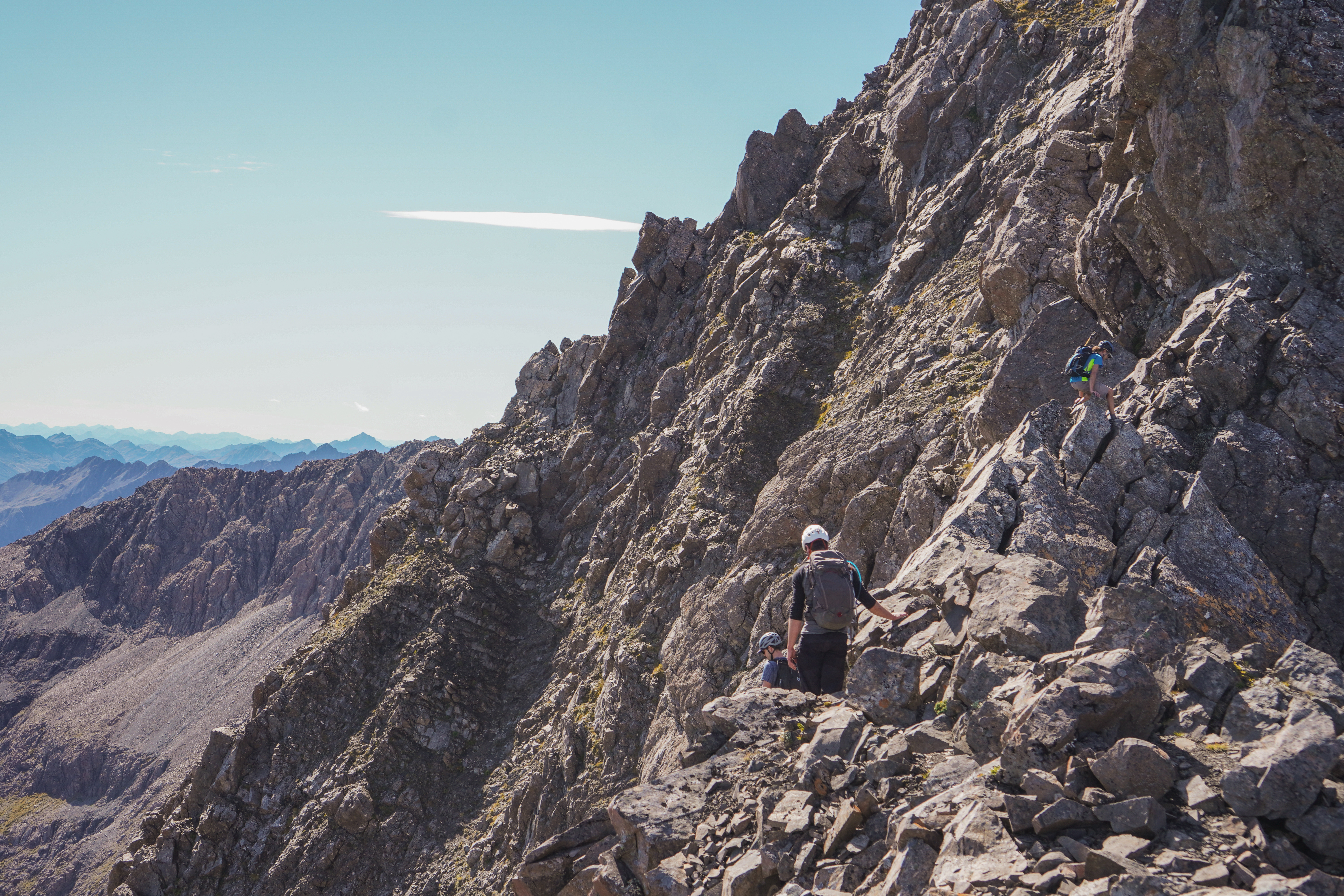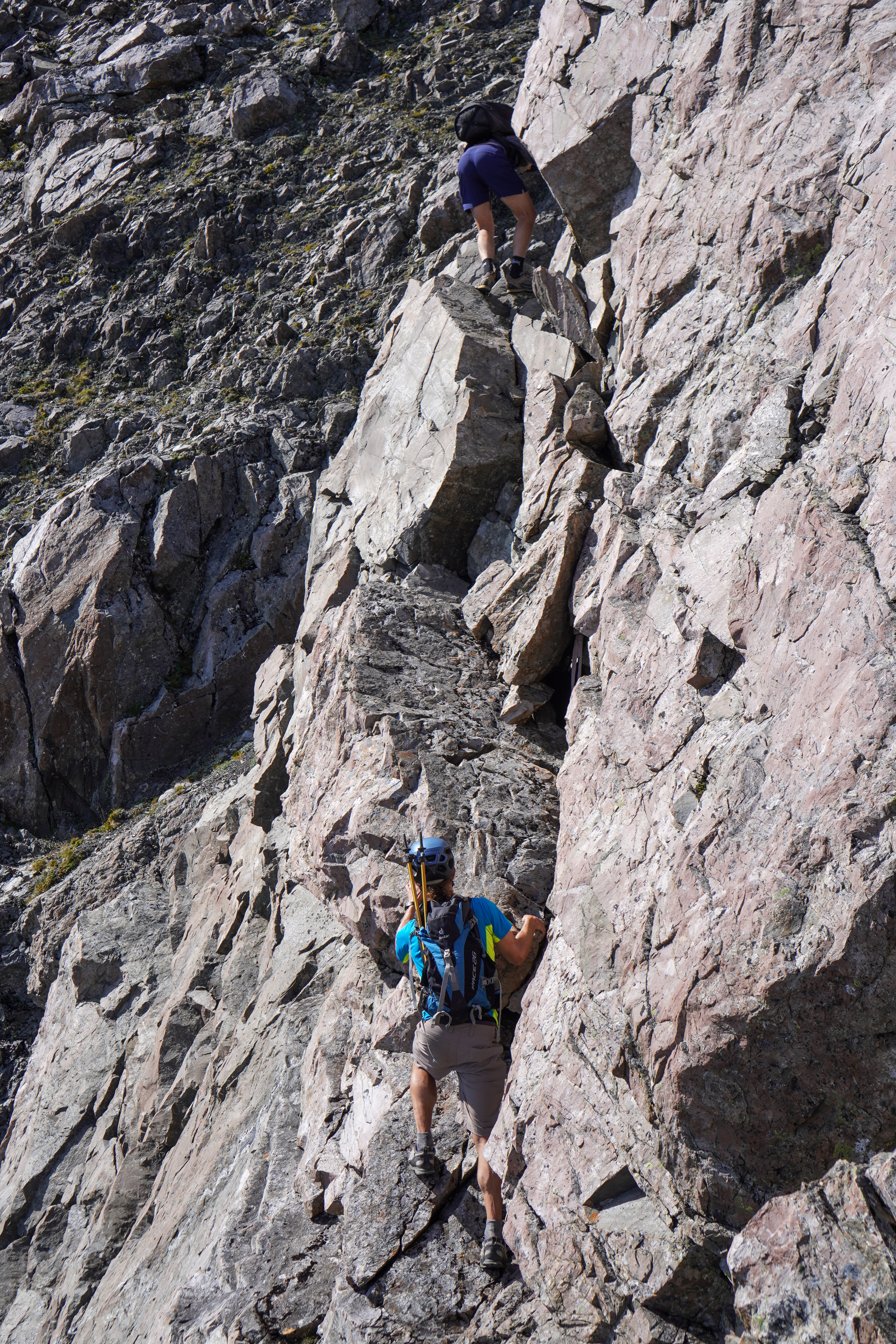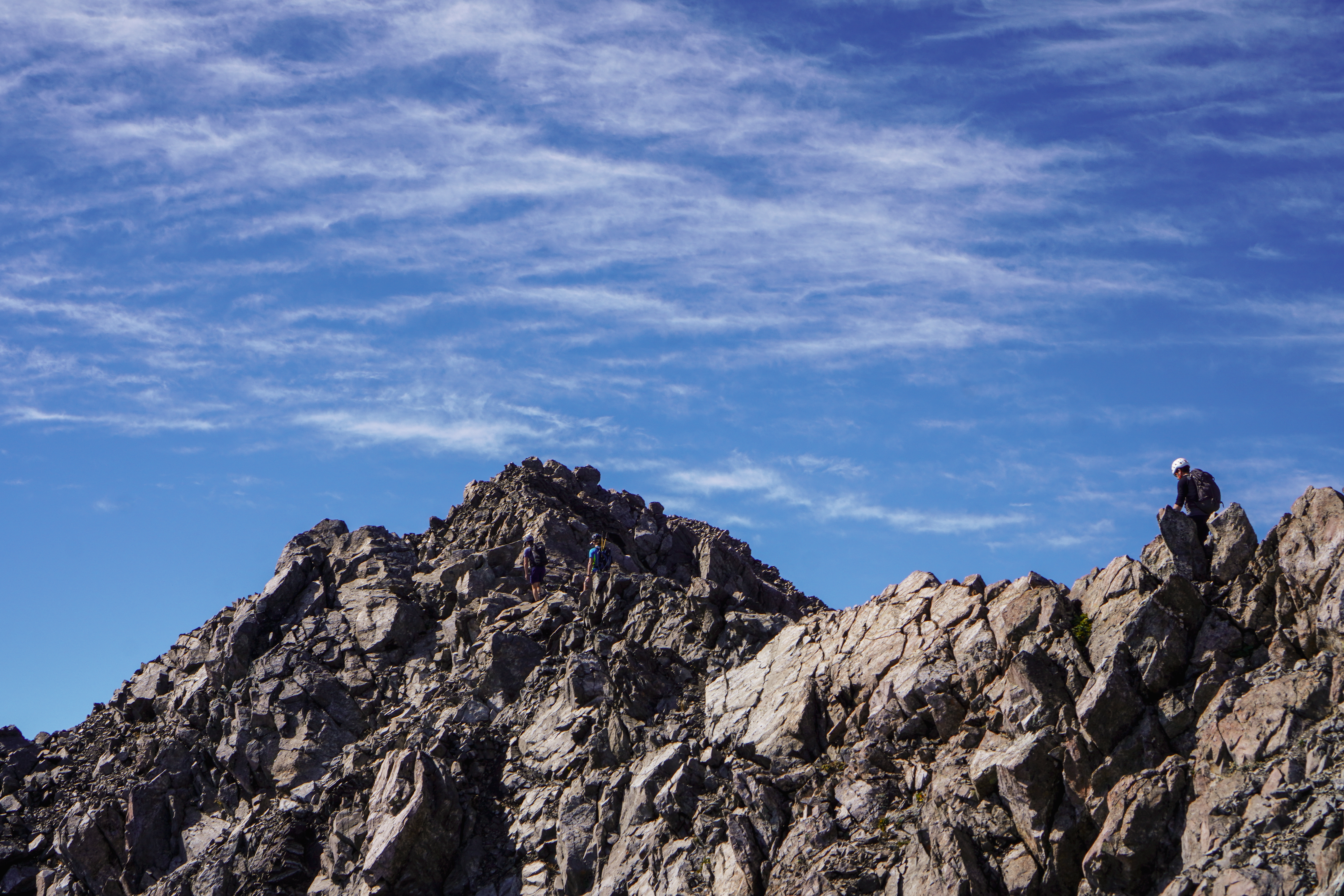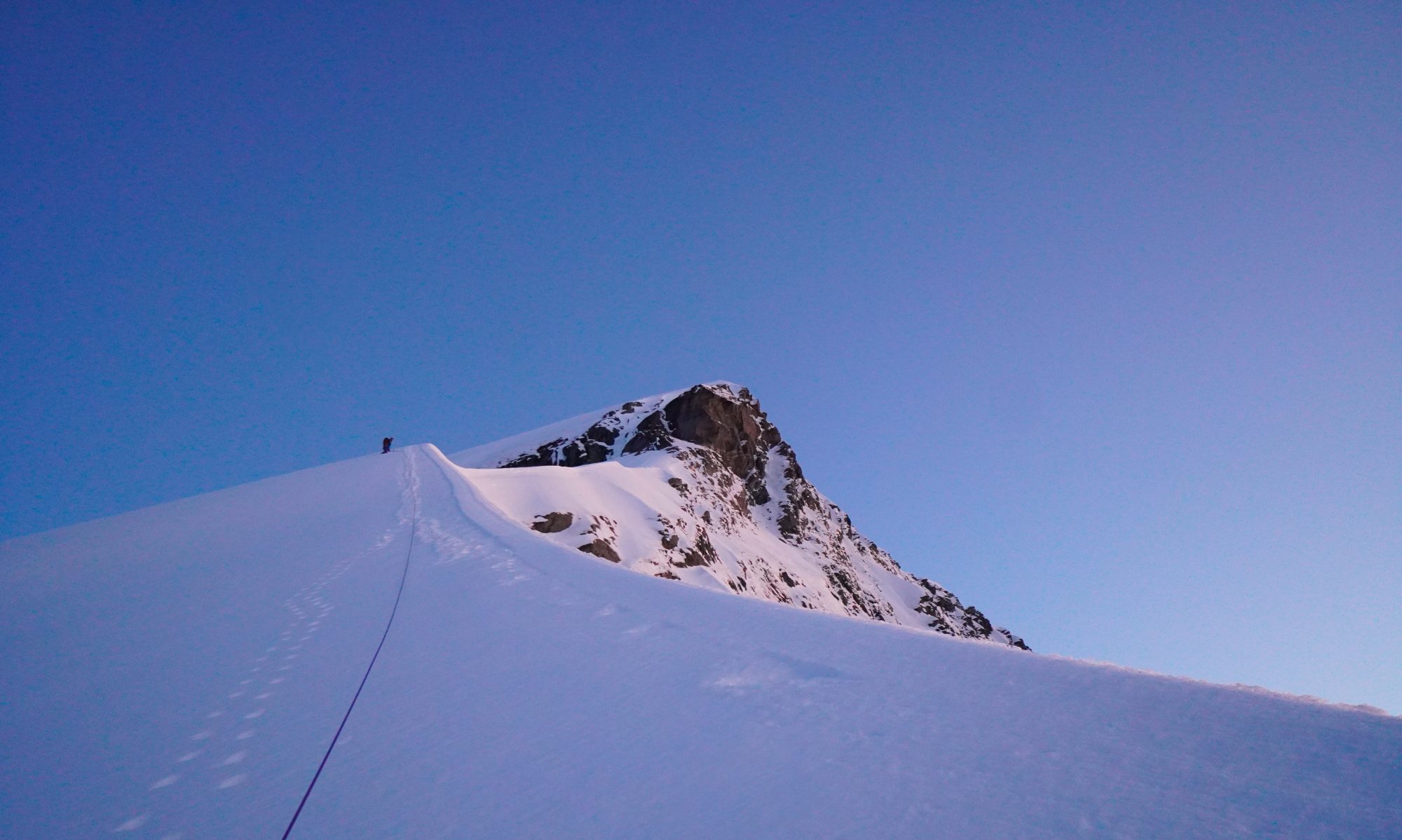
Crow Face, Mt Rolleston

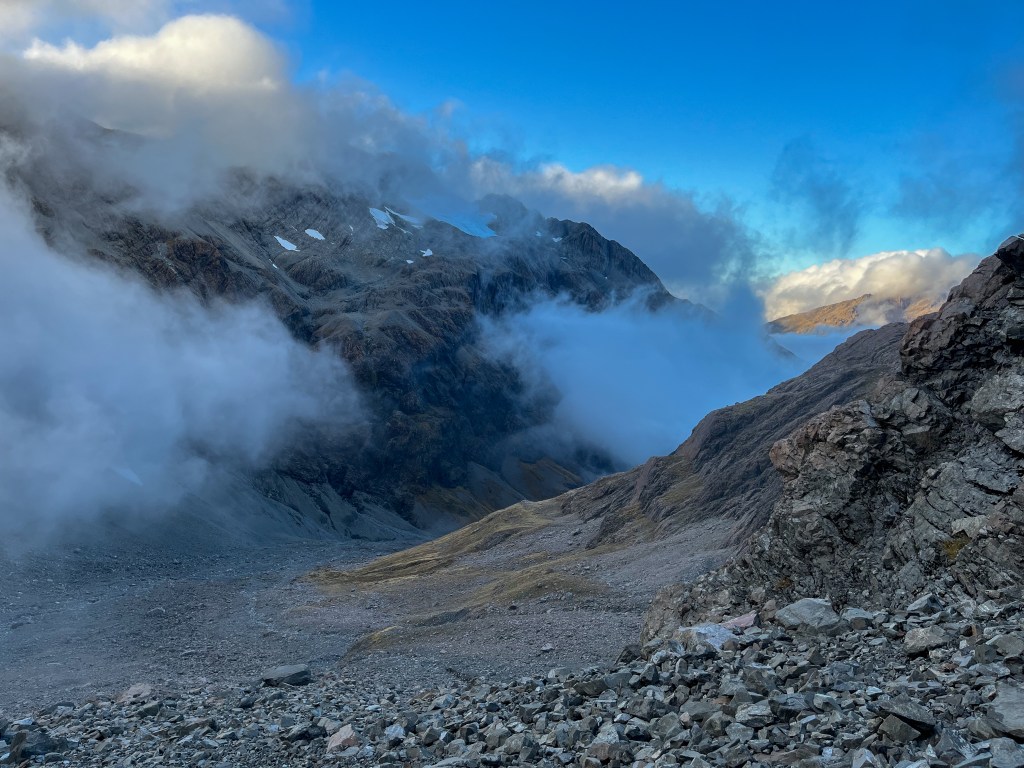
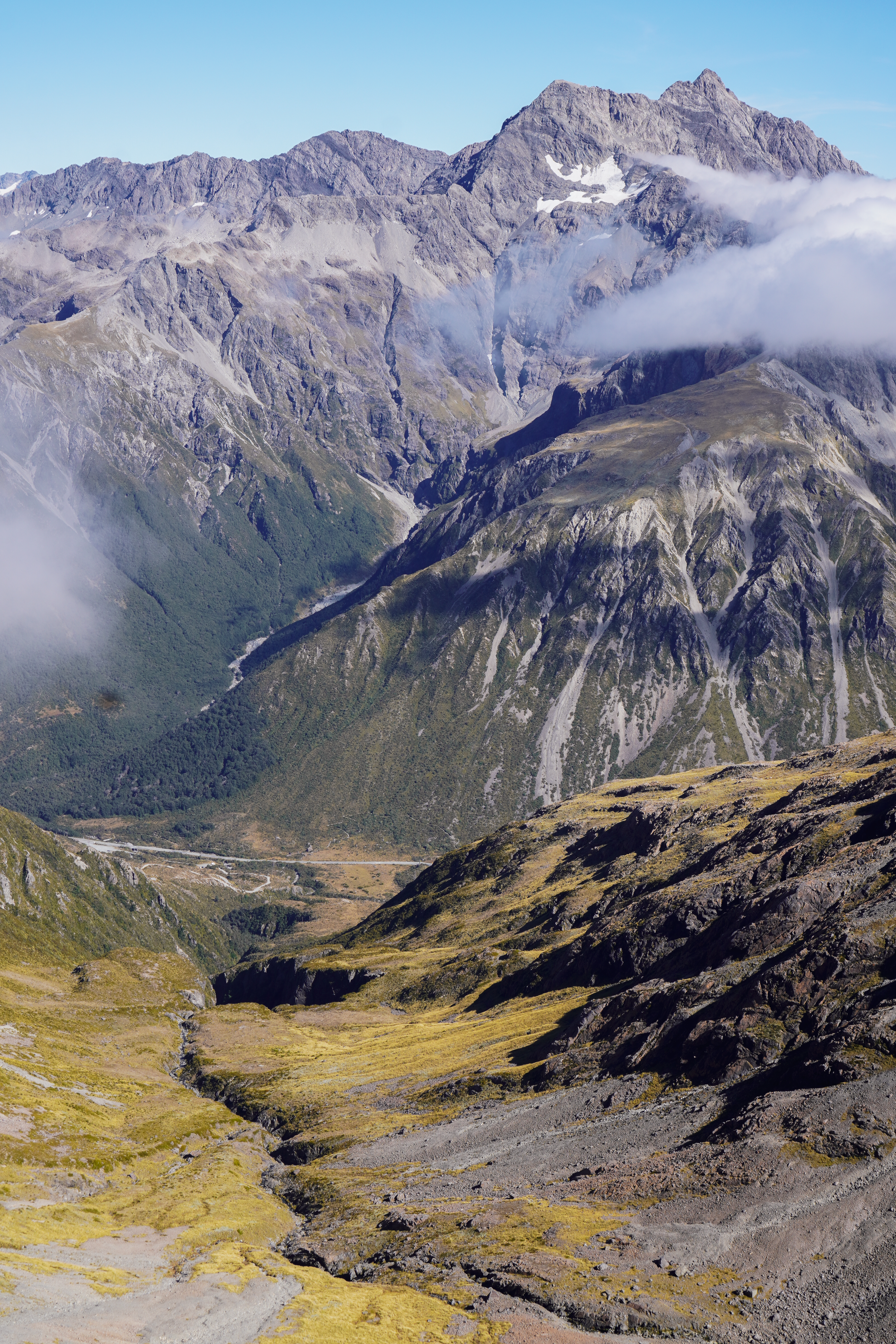
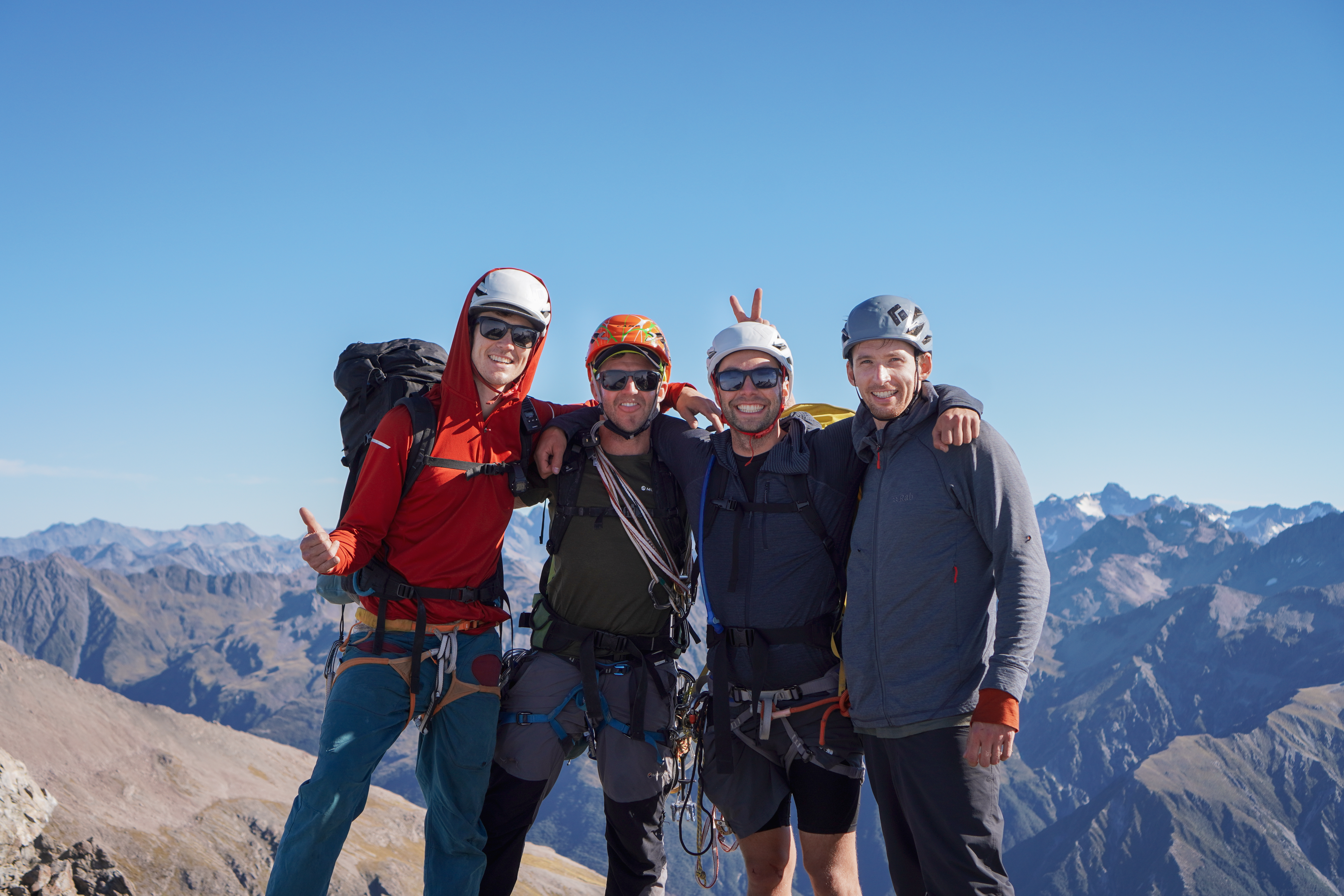
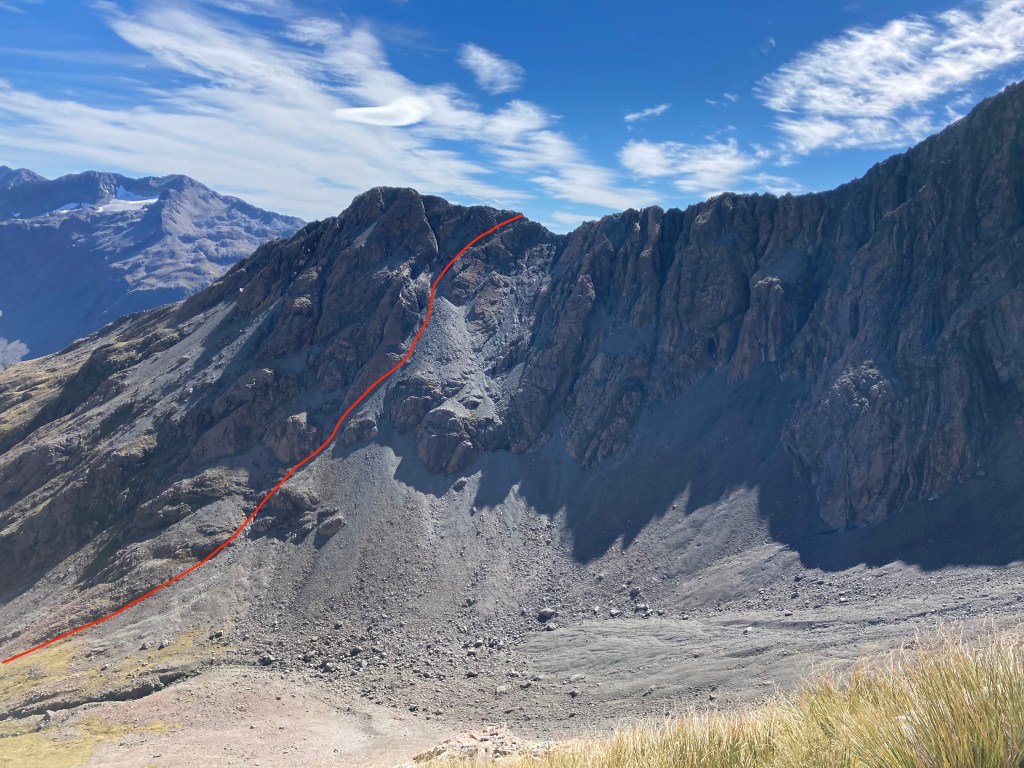
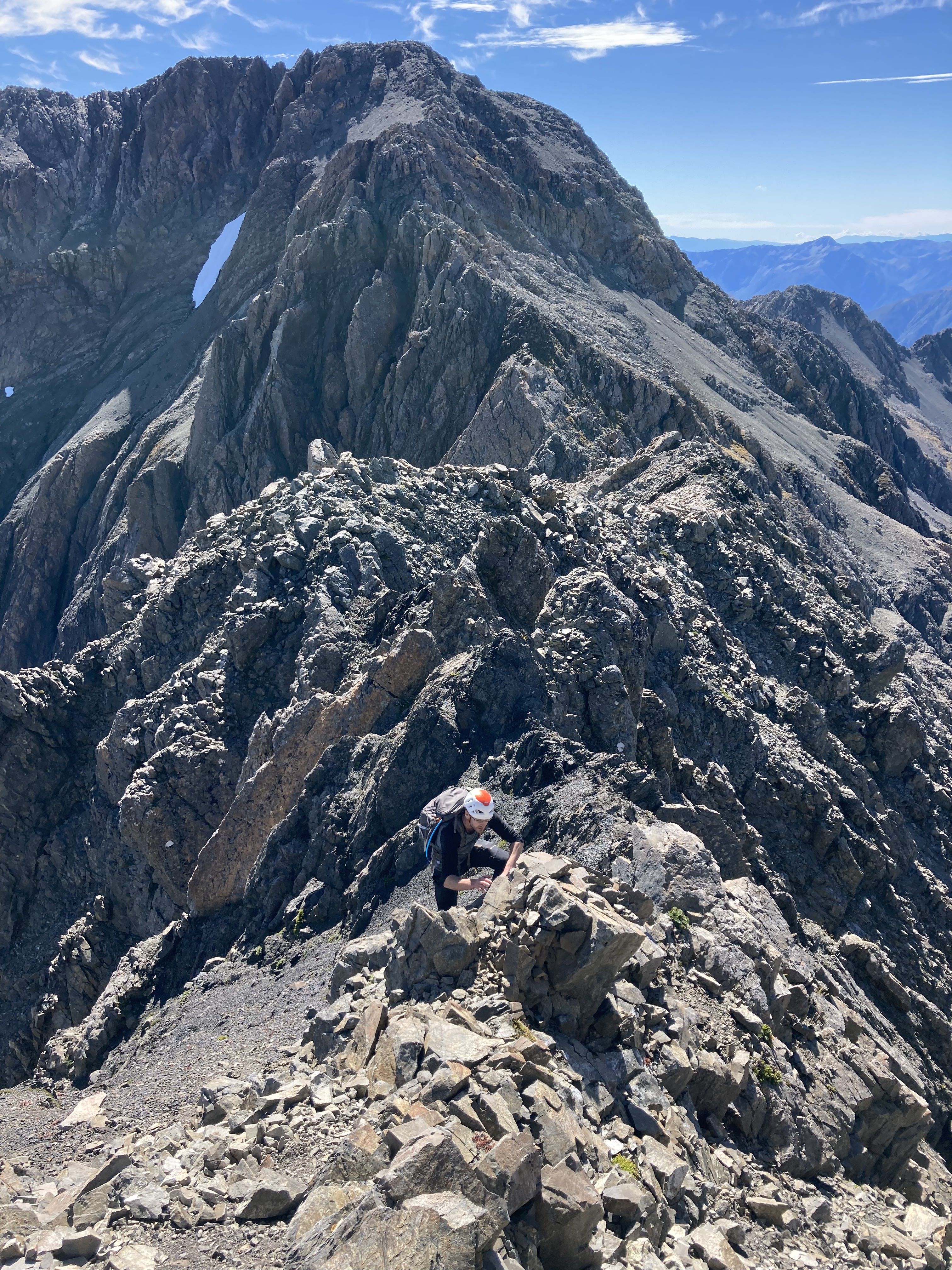
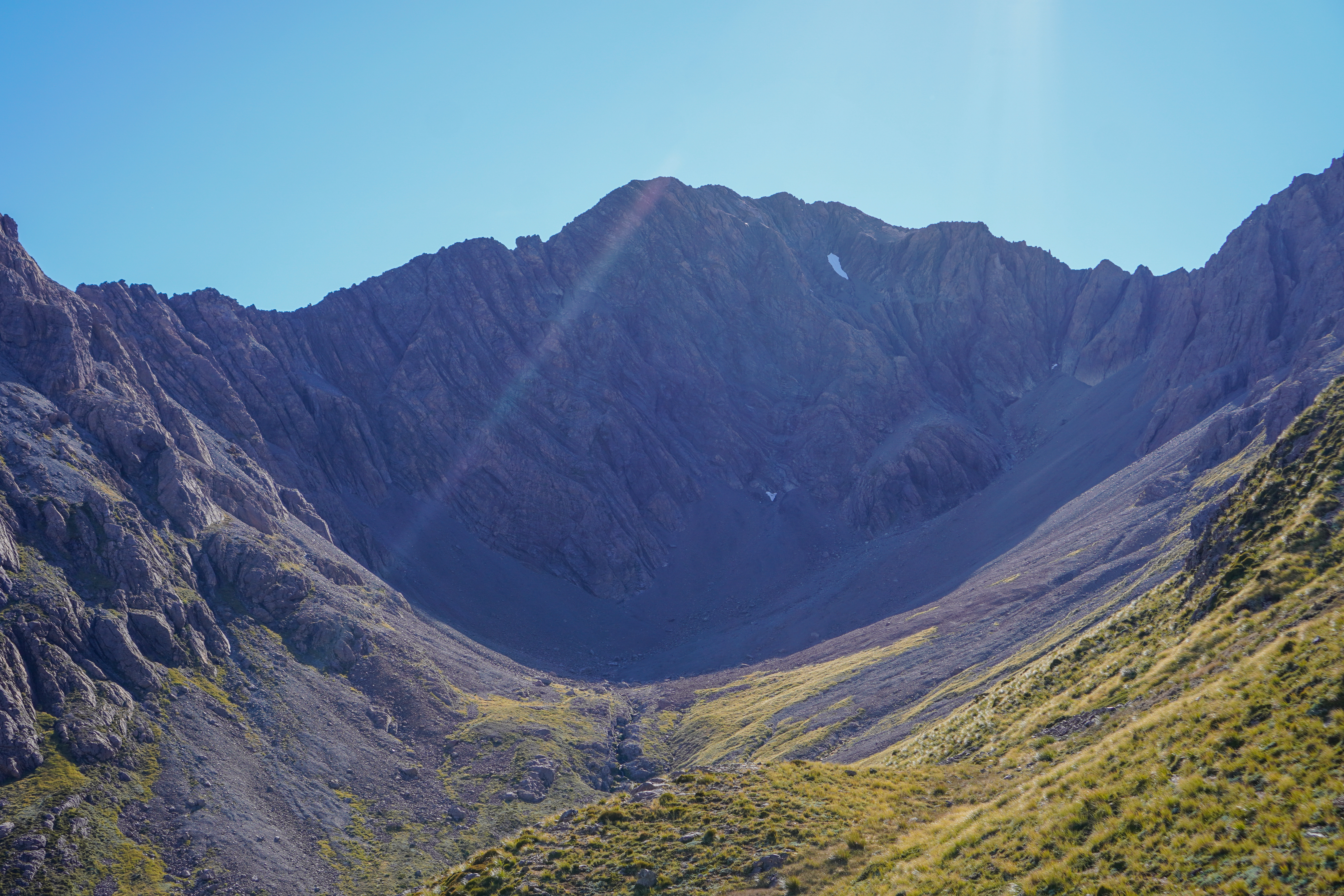
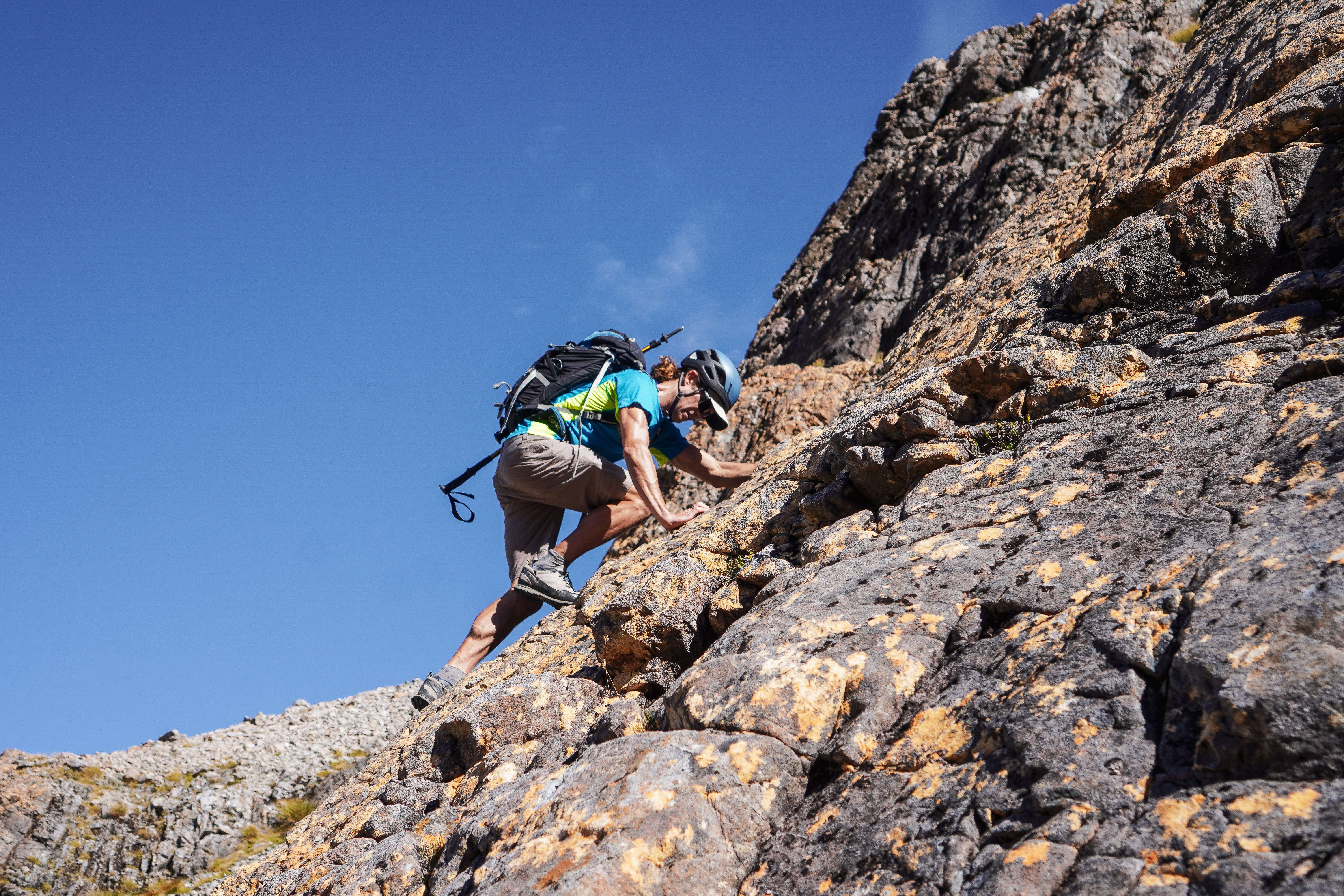
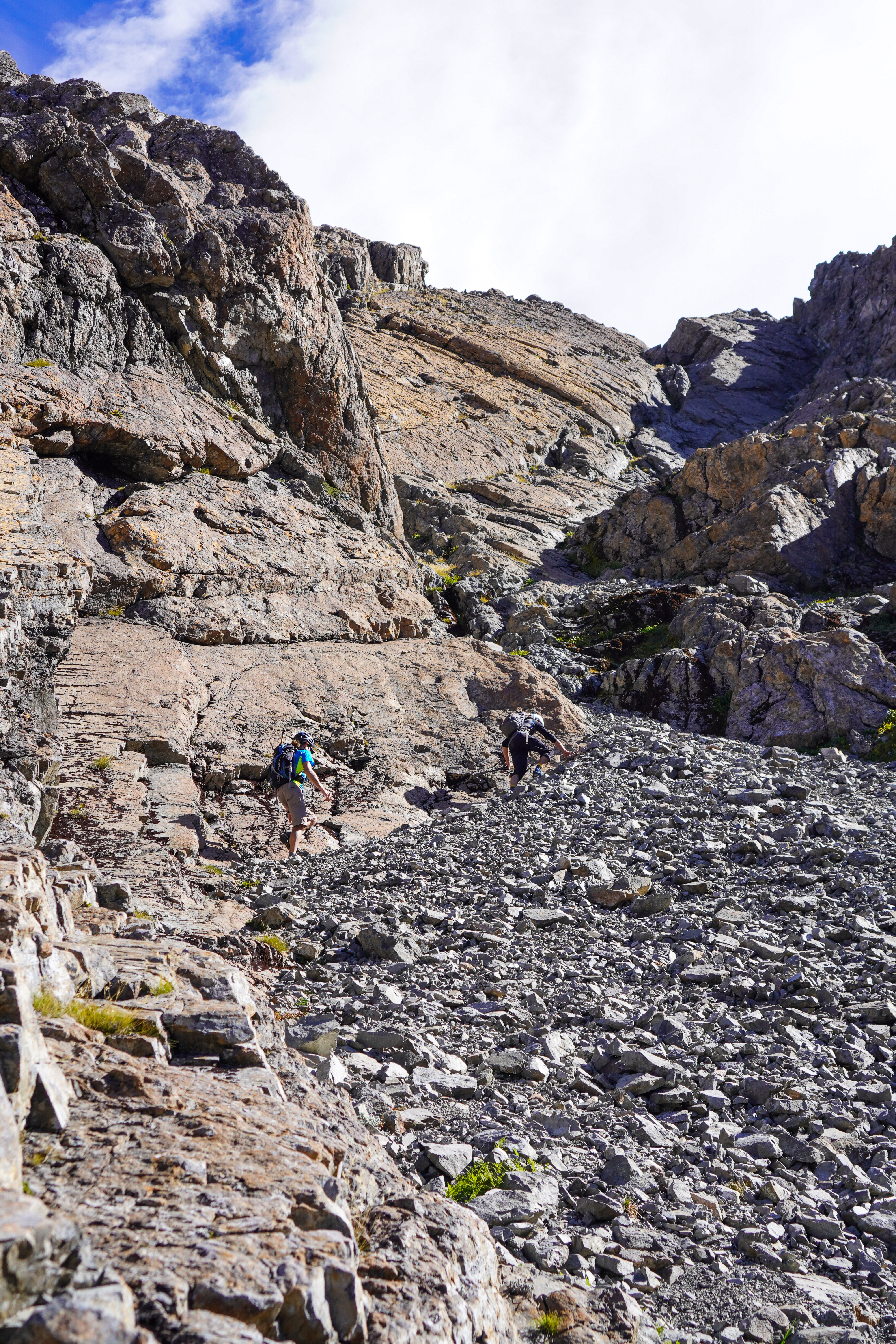
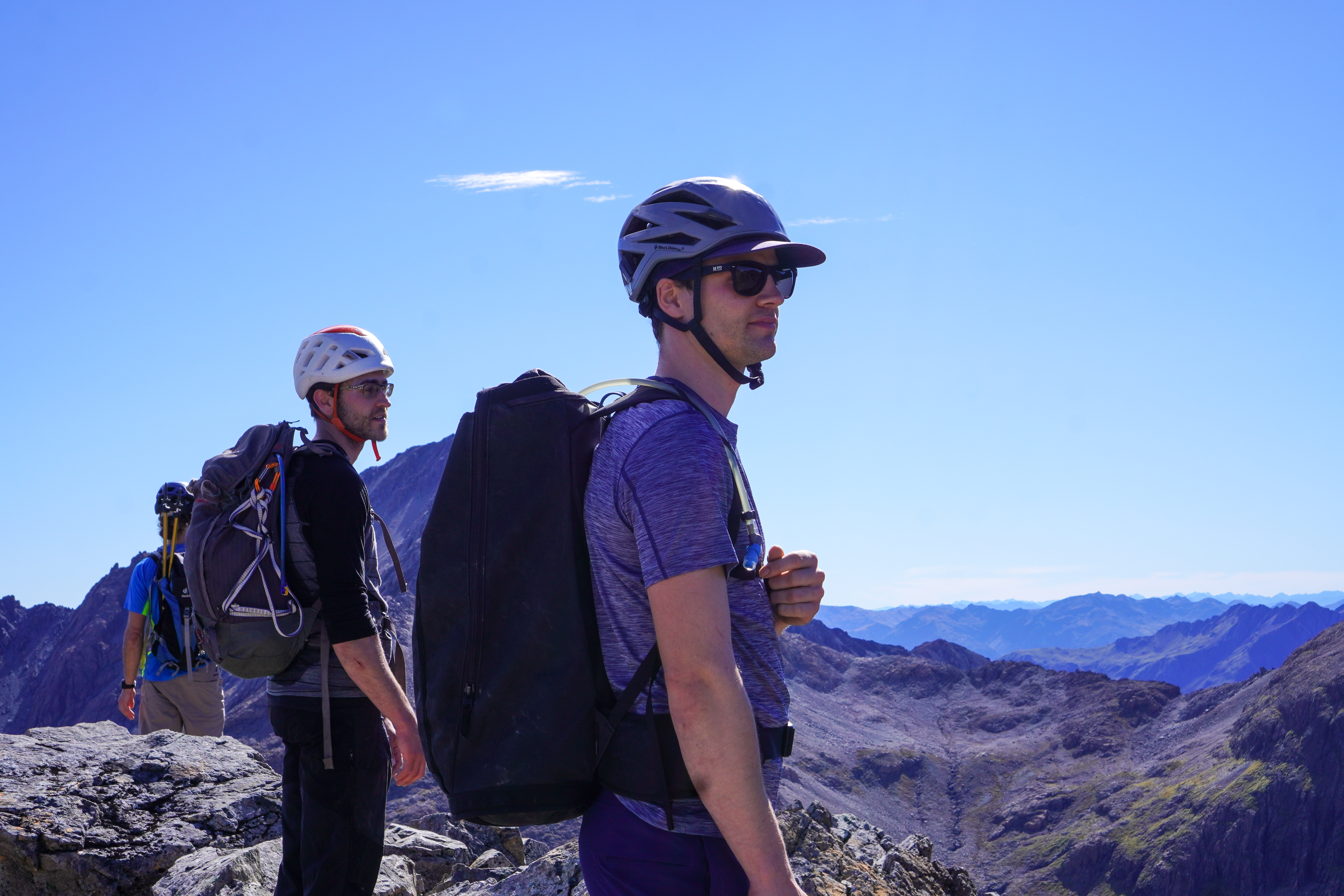
A classic climb on the proudest peak in Arthurs Pass, or a steep and technical ski mountaineering line easliy accessible as a day trip from Christchurch. Up there in terms of the steeper and more sustained lines Ive skiied in New Zealand, and with big exposure the whole way this is a serious ski. I went with Maria, Sean and Marije in early September 2023 to climb the route. I’d been thinking about the possibility of skiing the face for a while, but had no recent beta on conditions and it had been a particuarly thin winter so almost didnt bring my skis, but once we hit Rome Ridge and found cold dry snow on the shady aspects it became apparent it was on! Firm windpressed powder and some breakable crust – not dream conditions, especially on such a steep line, but edgeable enough to make it work. Would be an incredible line to ski in powder!

Length โ€“ย 400m of steep ground with optional further 500m down towards the crow rived
Steepness โ€“ย Very steep and sustained. Opwards of 55deg at the top
Exposure โ€“ย Constant serious exposure the whole way
Aspect โ€“ย S
Extras โ€“ย Picket for rap. Rad line. Screws – 3-4 to protect the climb. Threads may be possible for the descent

Difficulty โ€“  Climb 2. Ski 5.3 E4
Equipment โ€“ Glacier equipment.

Approach

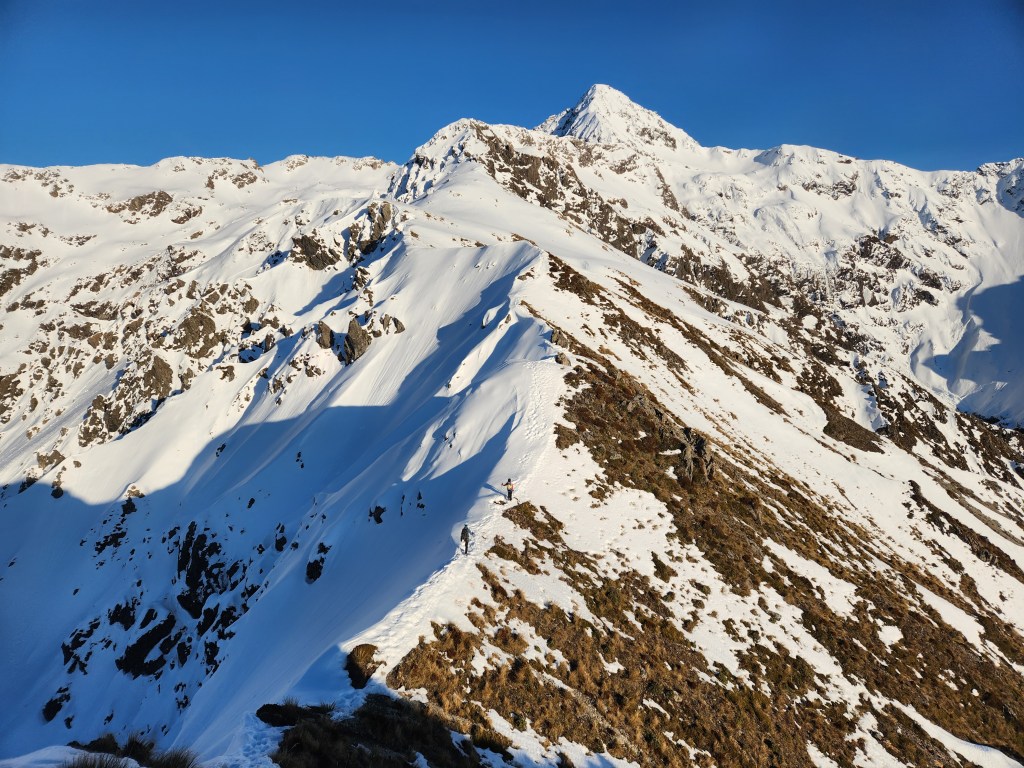
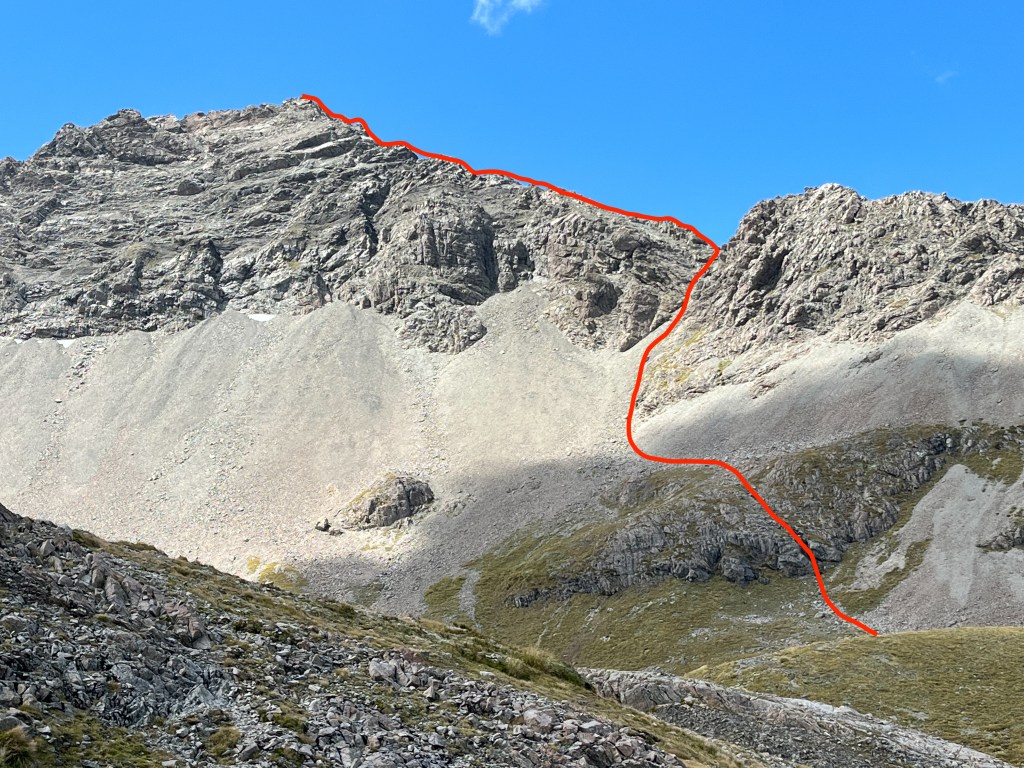
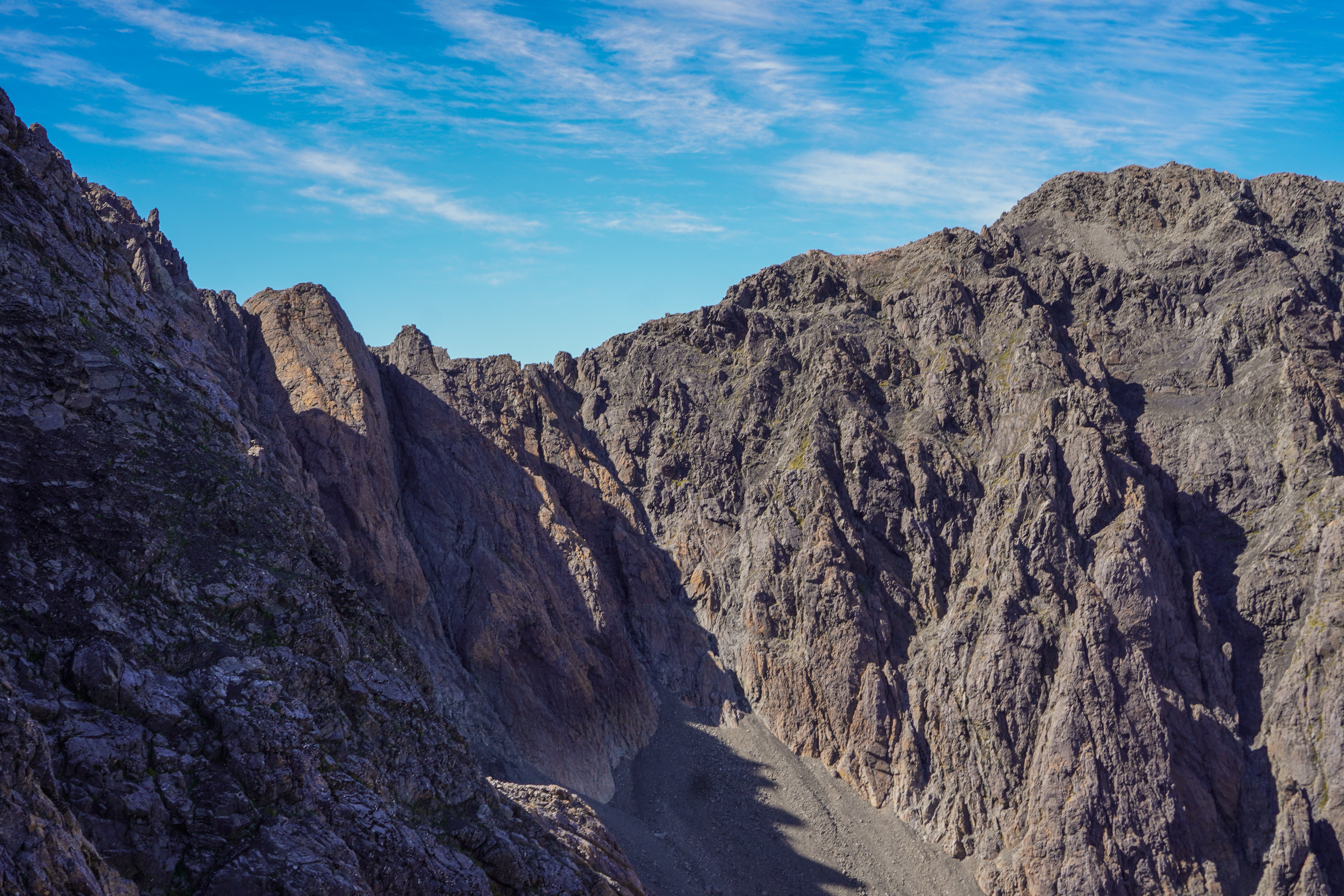
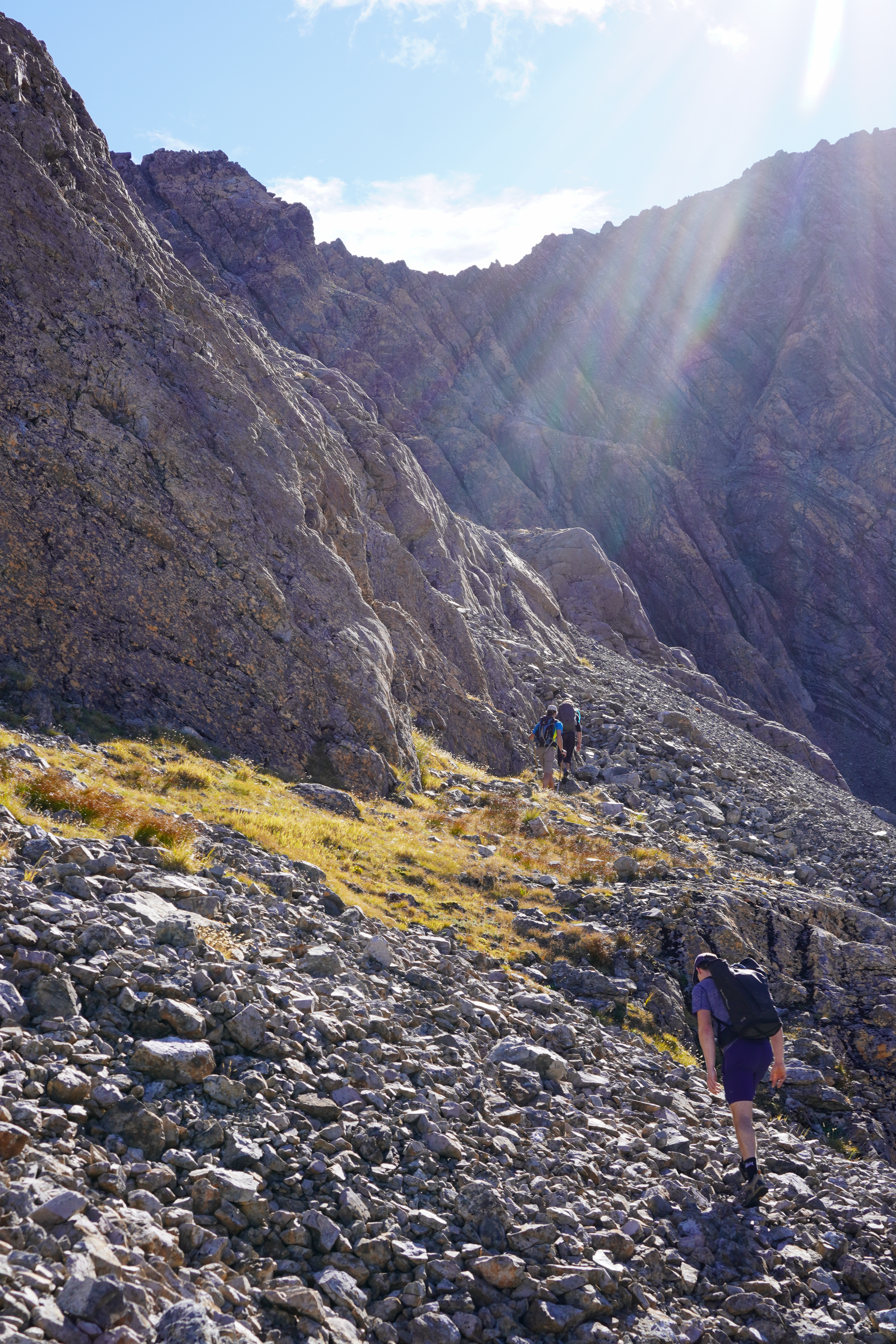
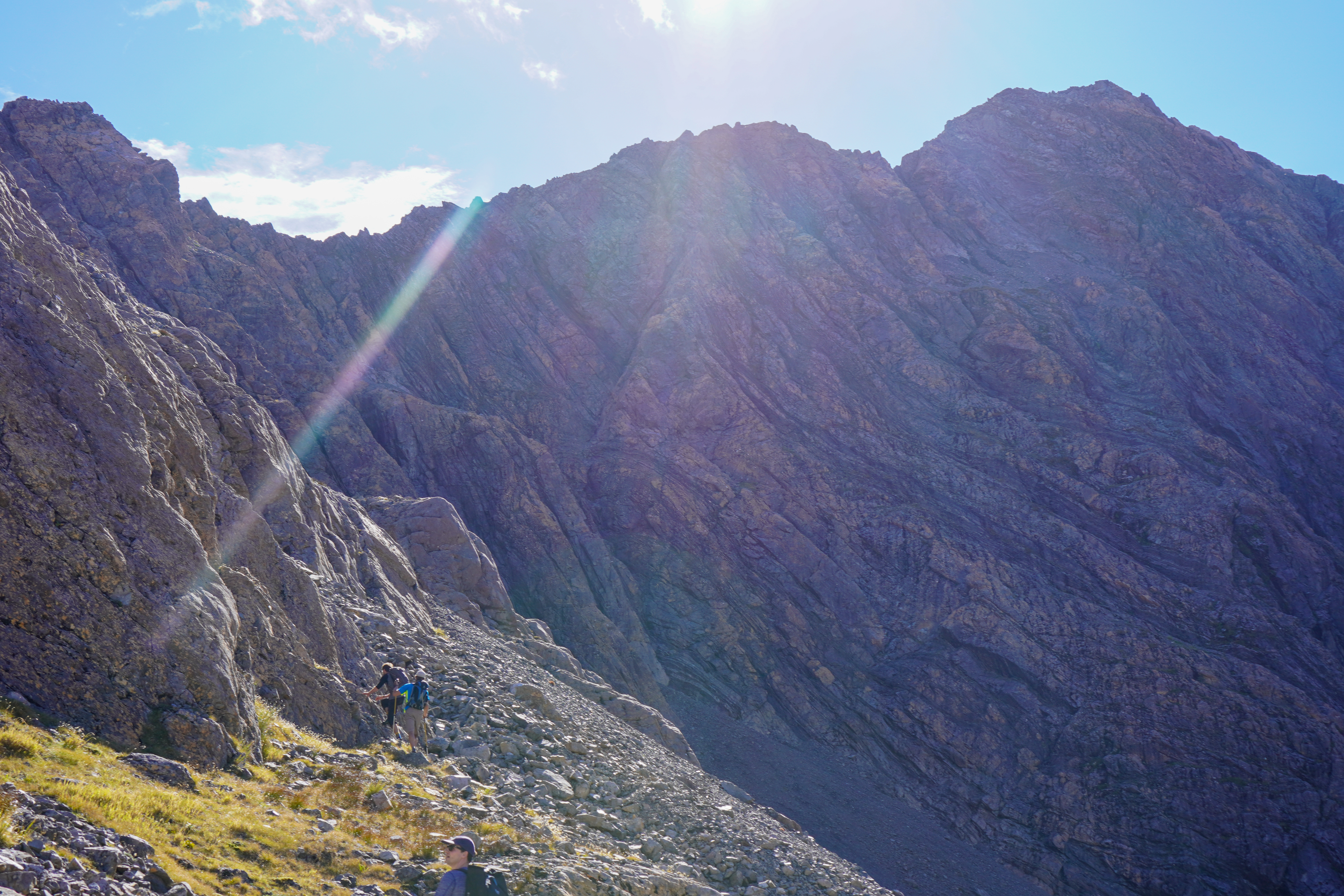
We went up Coral track to Rome Ridge, along Rome Ridge to the Sharks tooth / the gap – the end of the flat section of ridge just before the final ascent to low peak. From here theres an obvious gully that drops you down directly under the Crow face, and continues down into the Crow valley.

Travel along rome ridge when the conditions are good is fast and straightforward, but if coverage is thin and you end up on rock it would become a lot slower.

From the car it took us around 1 hour to the treeline, and 3 hours to the sharks tooth, then another 20 minutes to the base of the route.
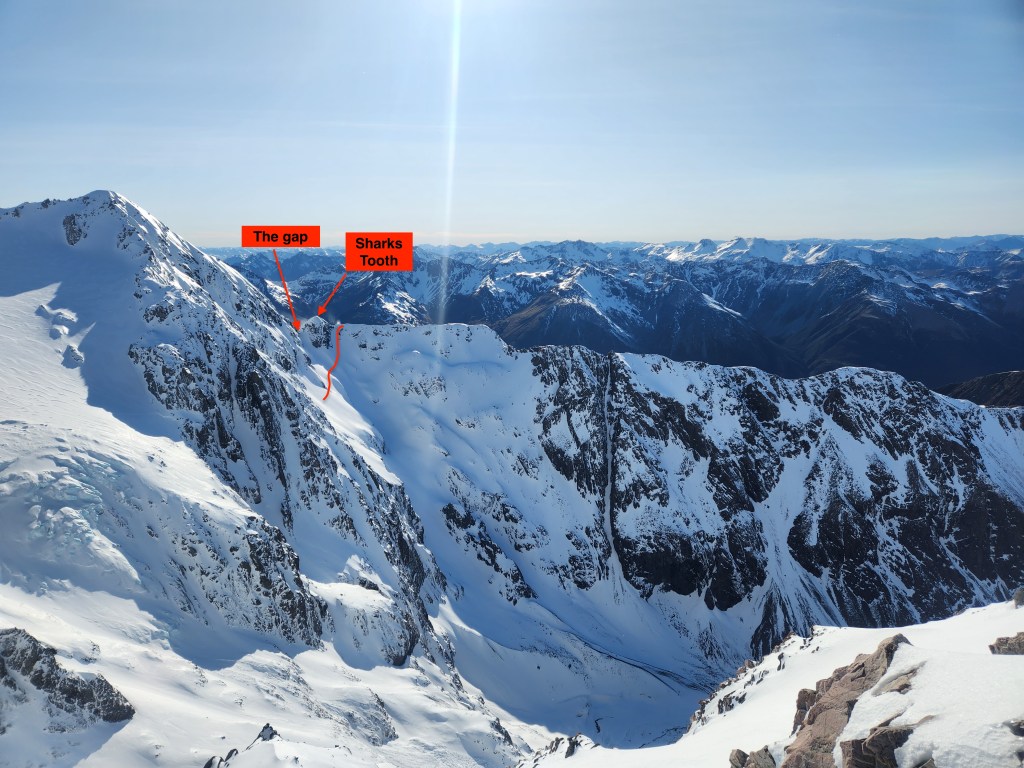
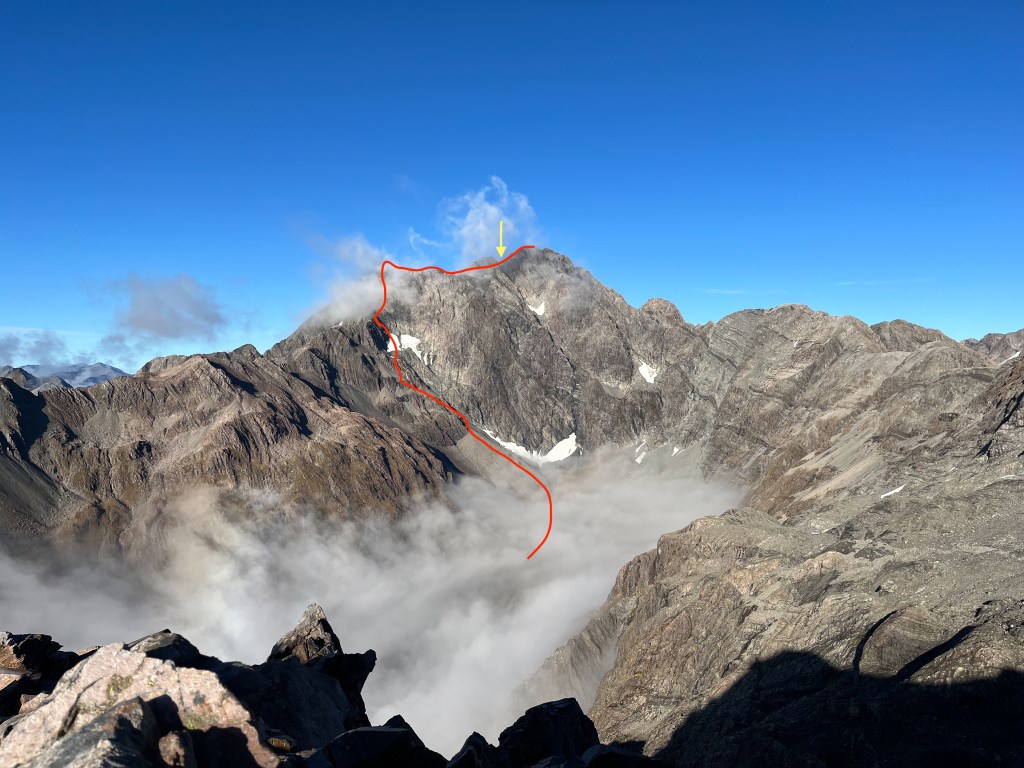
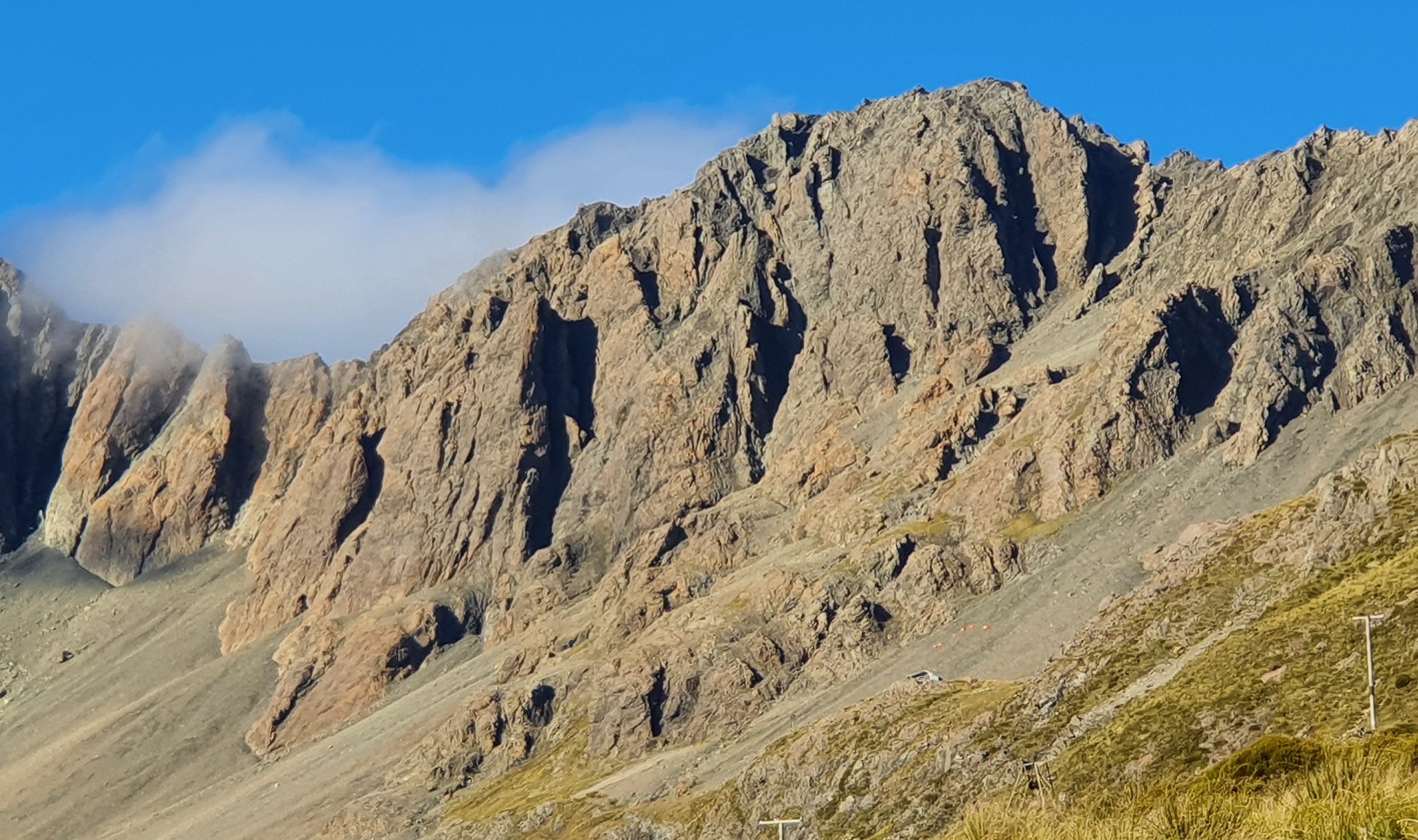
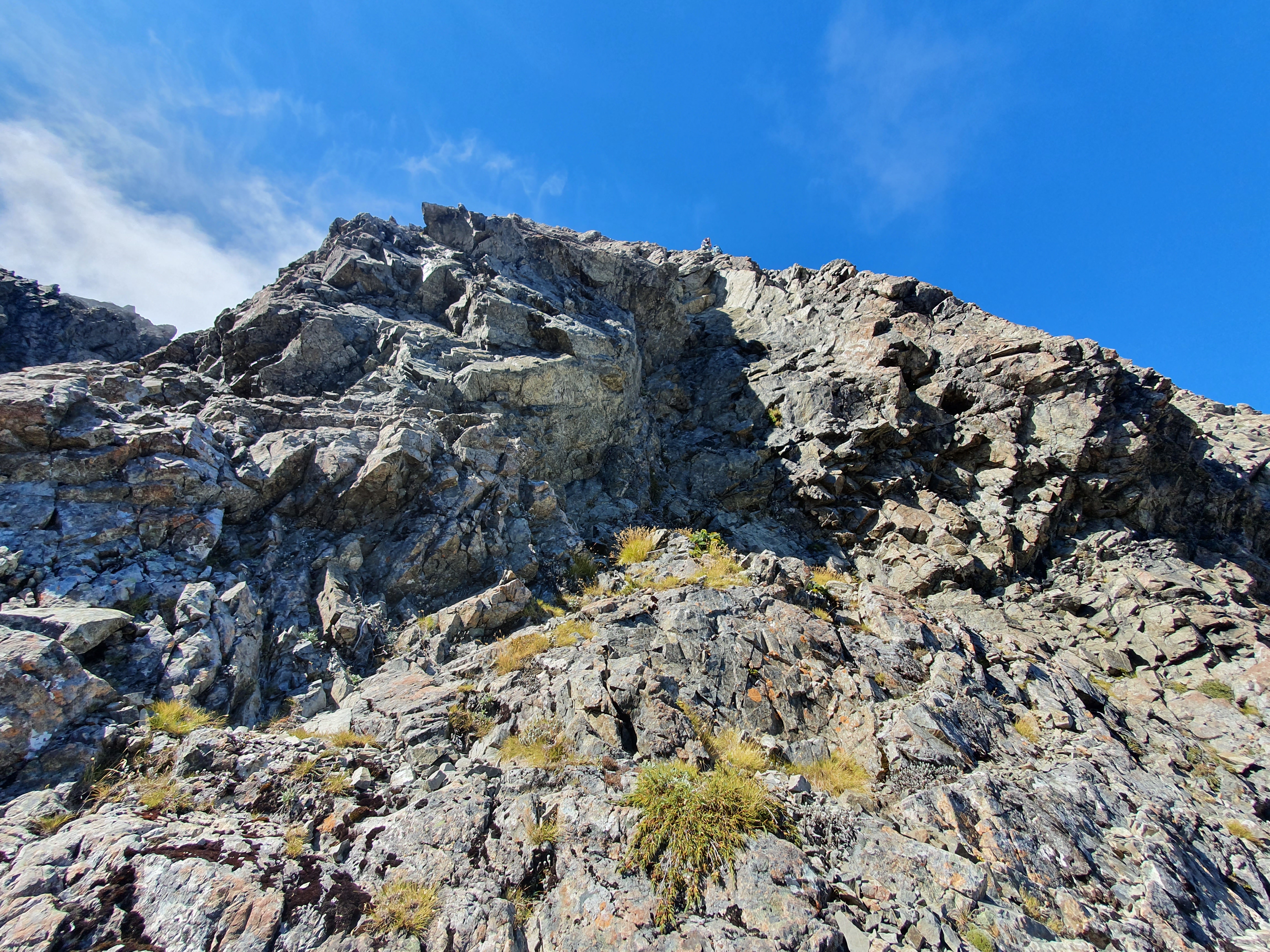
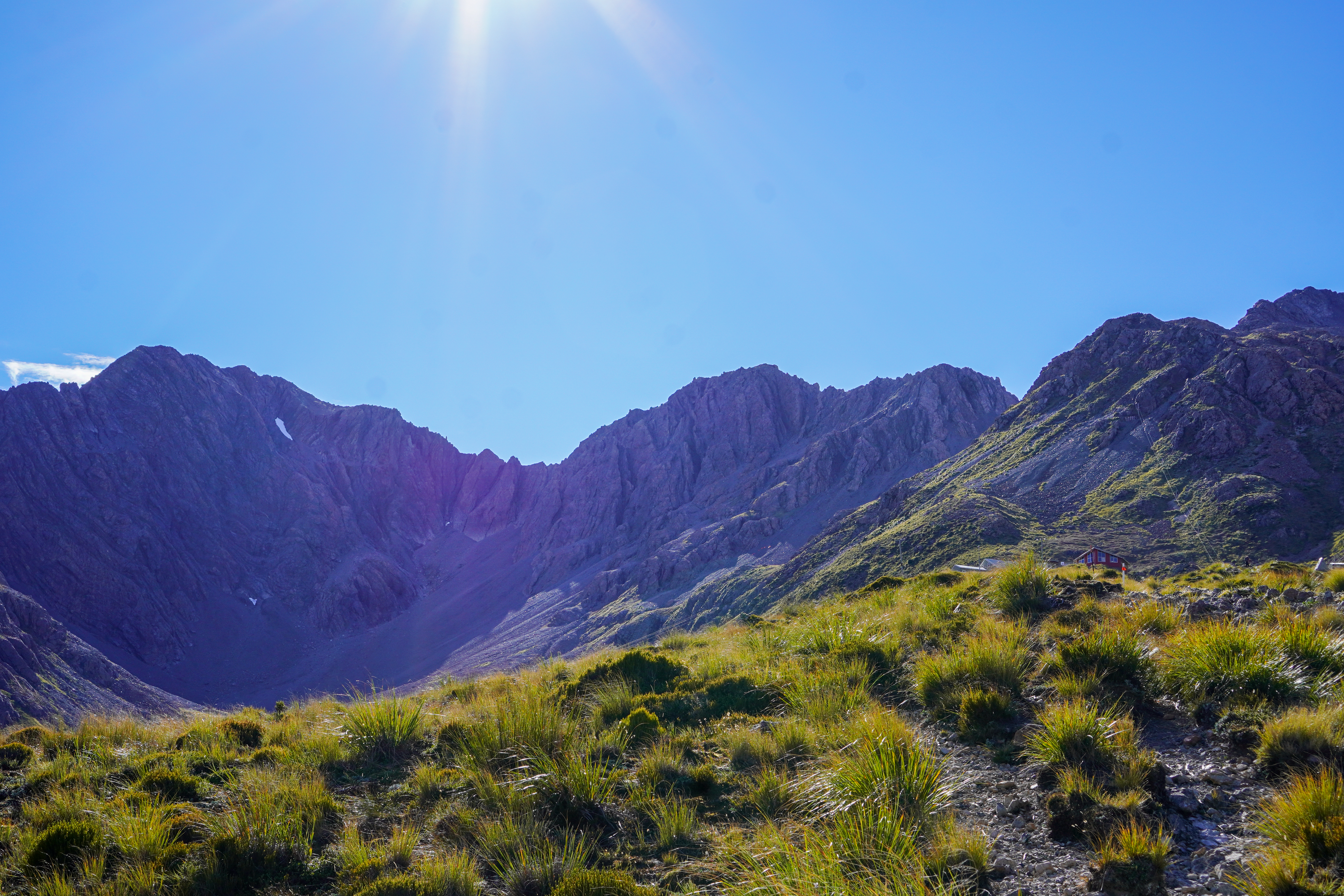
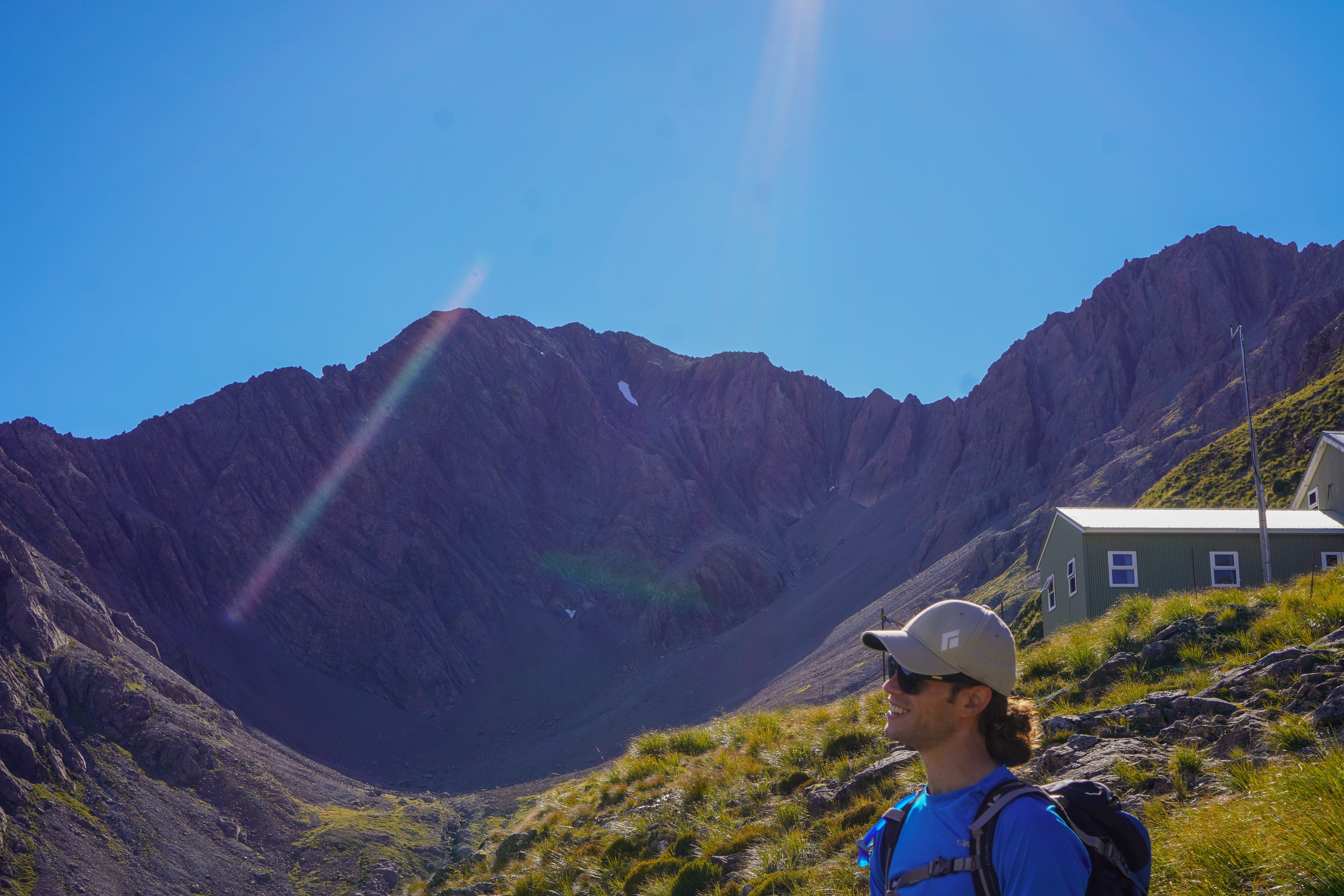
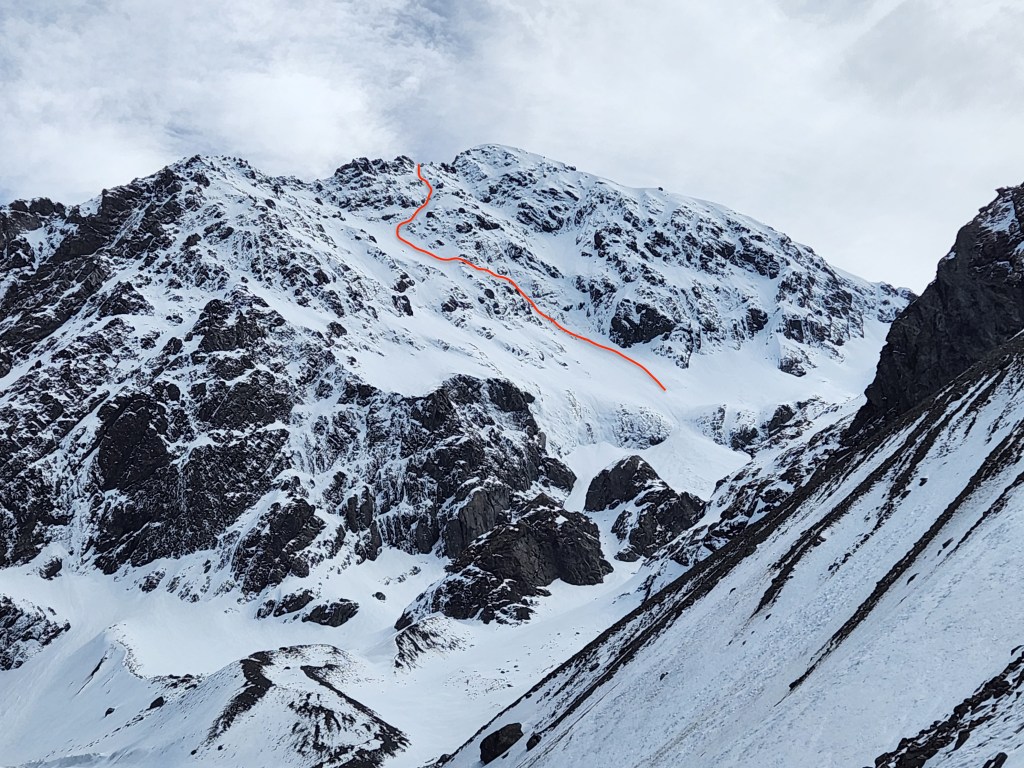
From Rome Ridge you get a reasonably good view of the face to pick a line – although its not possible to see the bottom section in its entirety to figure out the best way through the lower rock band.

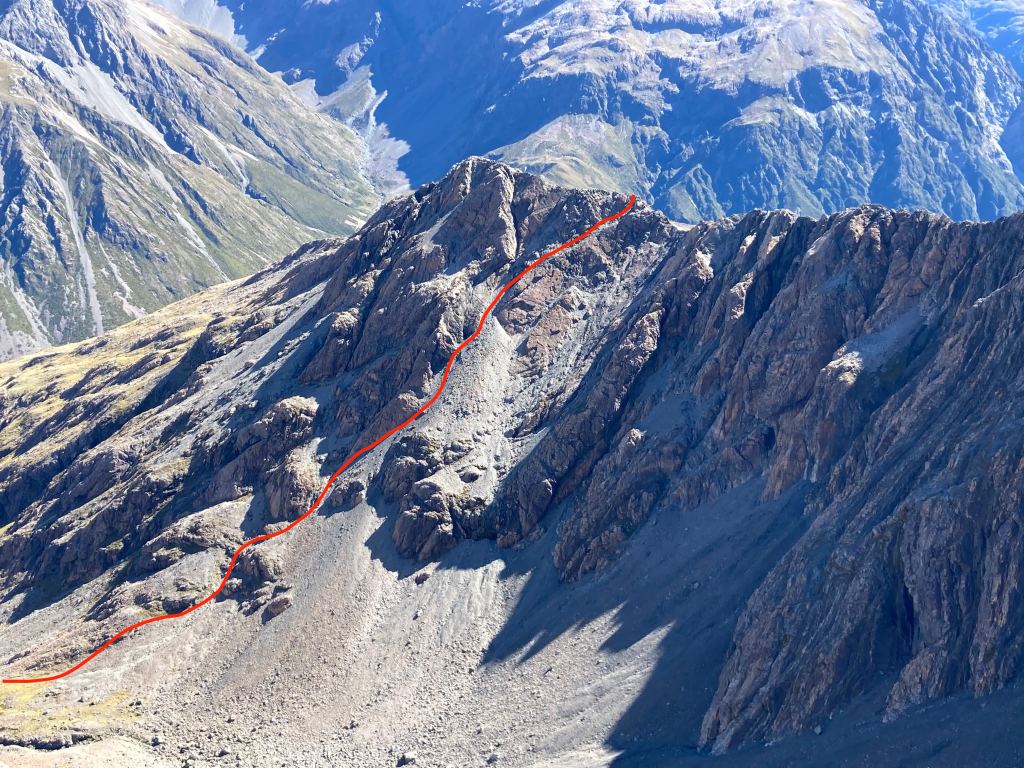
We chose a line starting on the left side of the face following the most obvious line of weakness to the summit ridge, but multiple variations exist. When we were there the other lines would have involved some scratchy mixed climbing to get establihed on the face

Climb
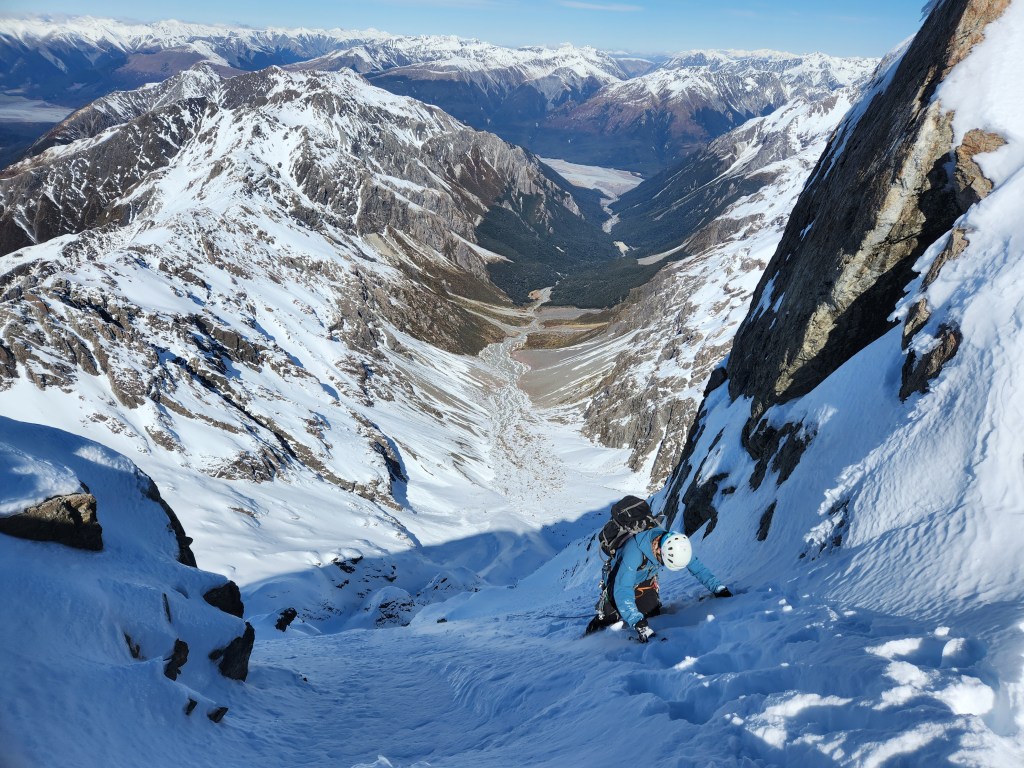
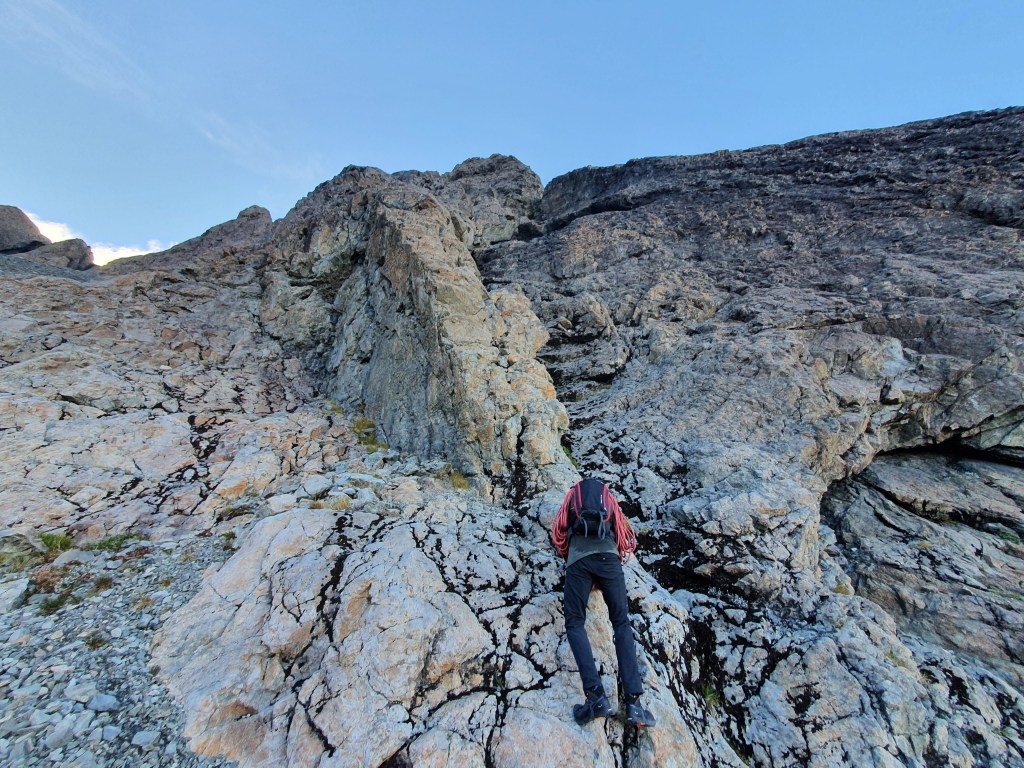
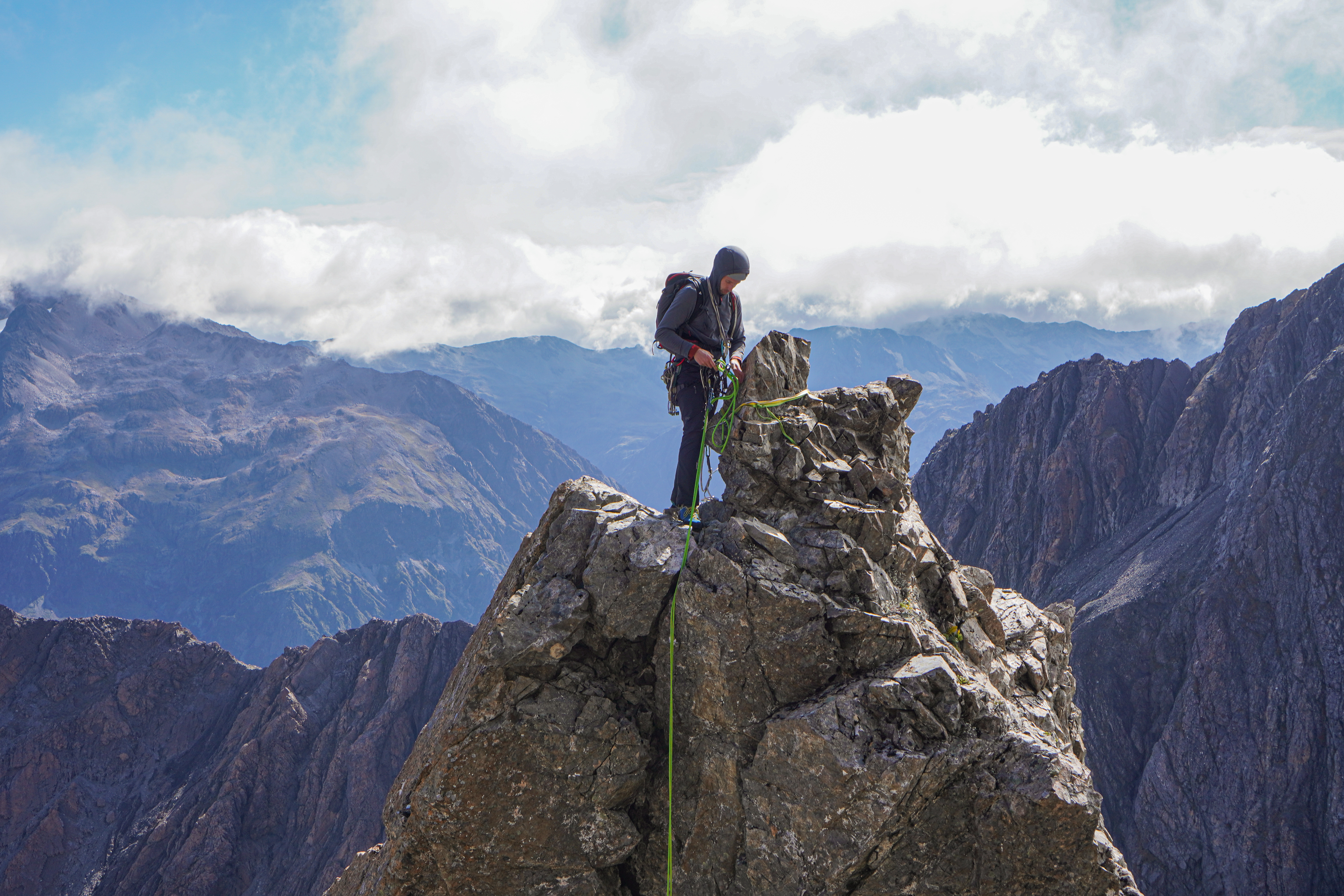
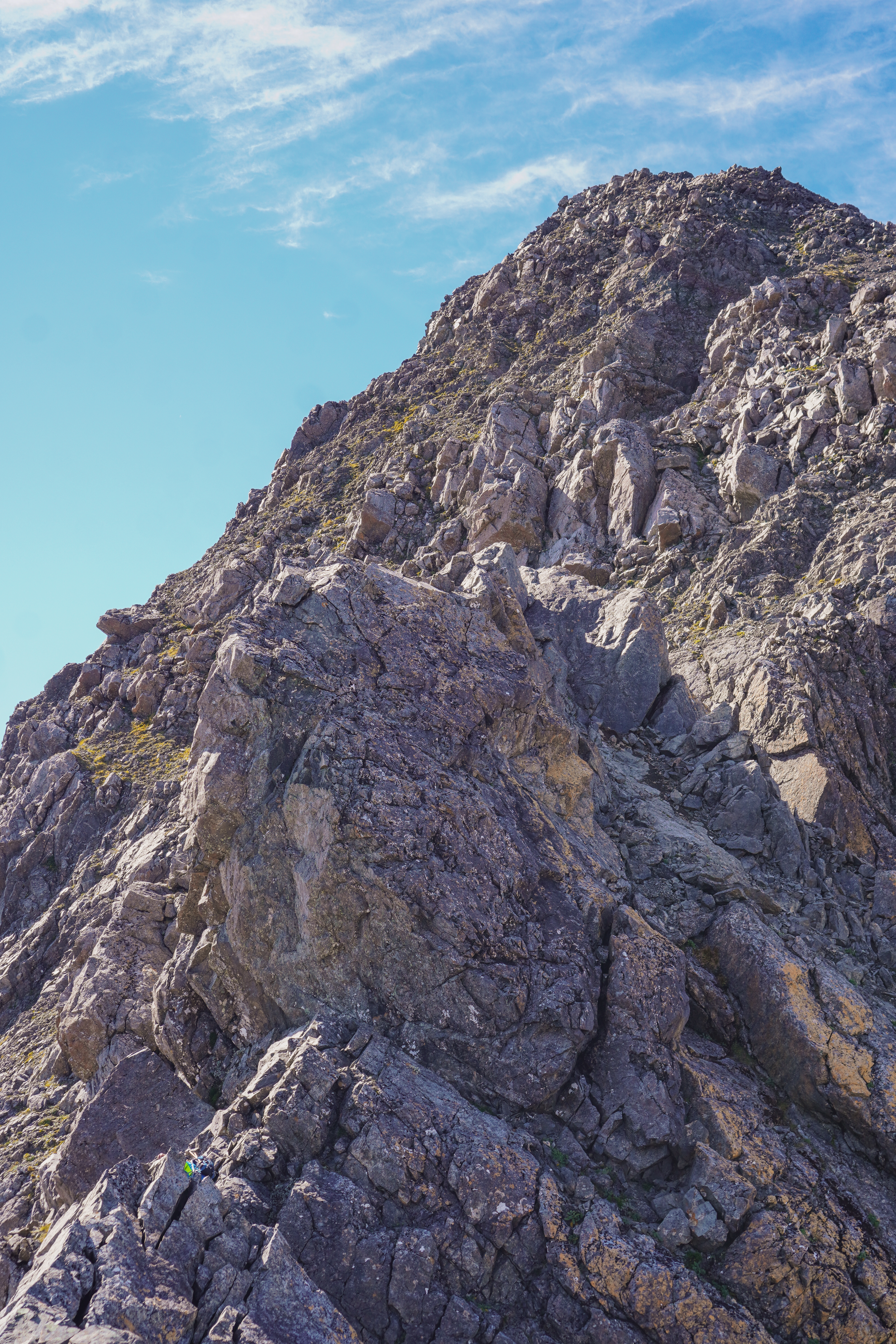
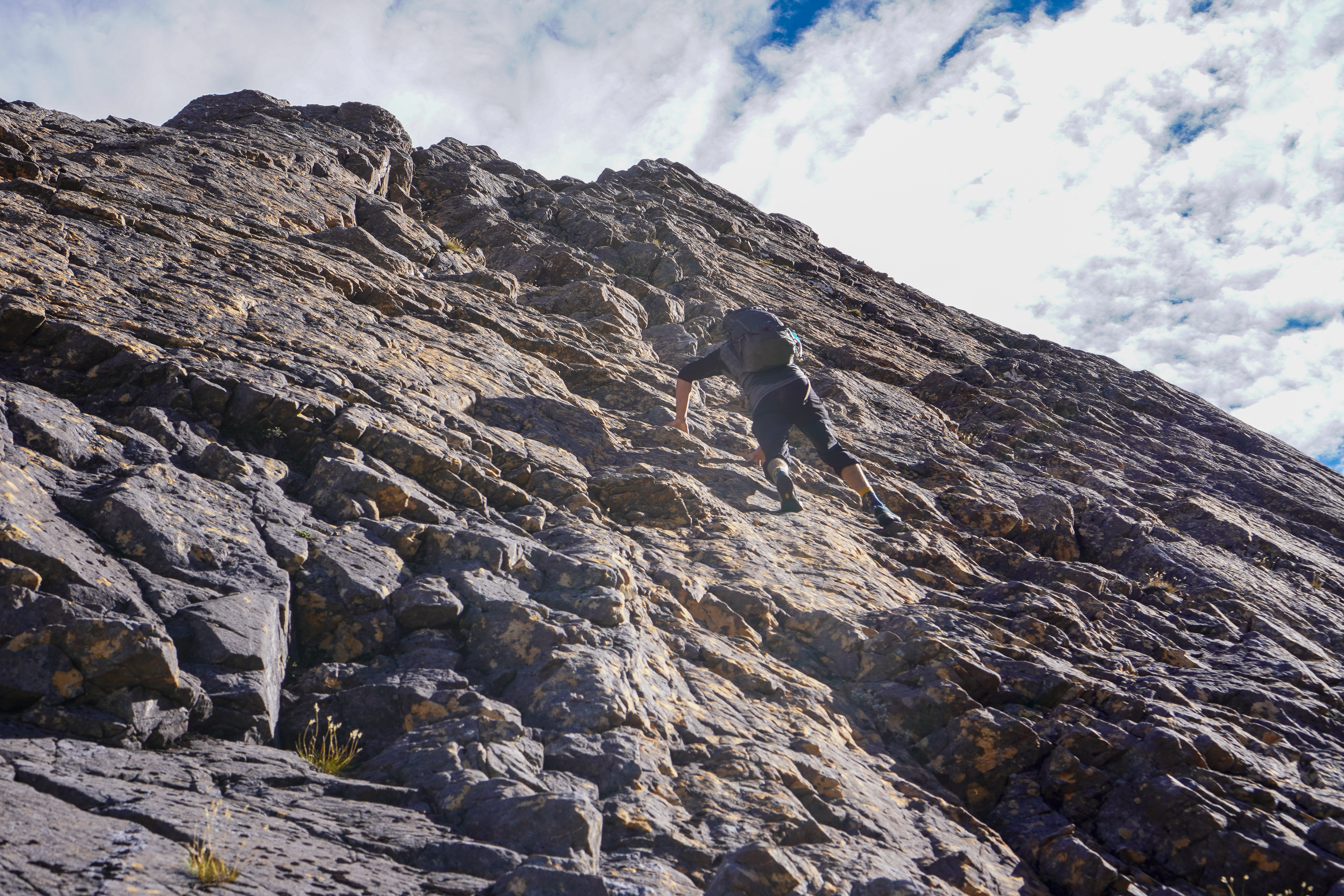
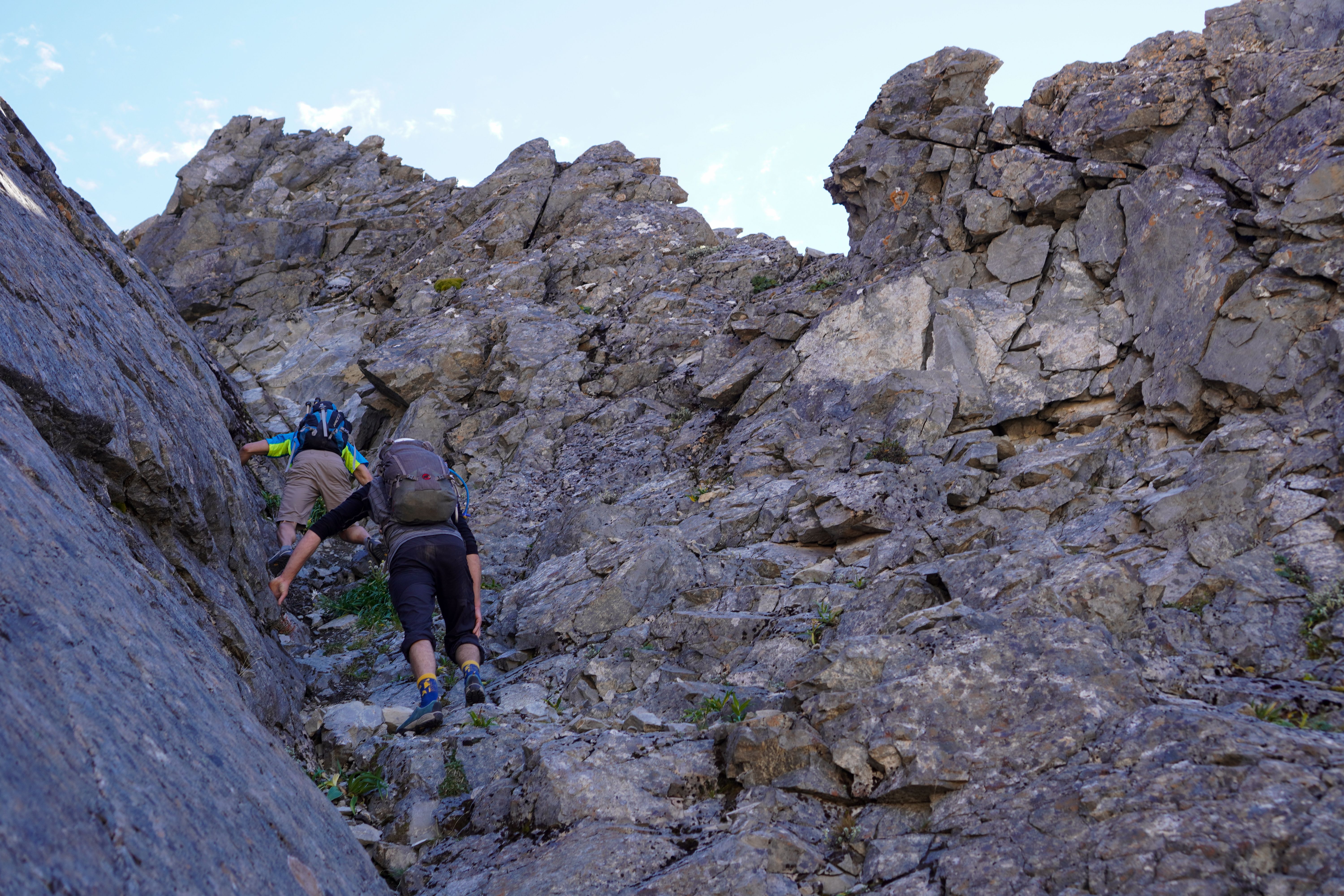
Will vary massivley year to year, but for us we found mostly pressed powder and breakable crust the whole way up the face which made for fast progress. There was a 30 section of WI2 at the very bottom of the route which we pitched, and took reasonable screws. There was another short rock step to negotiate near the summit, only a couple of metres long and no more than M2. There were plenty of oppurtunities for rock pro along the way if needed, and the pickets were solid.

Apart from those 2 sections we simulclimbed and it took us just under 3 hours to climb the route – expect longer if pitching the whole thing.
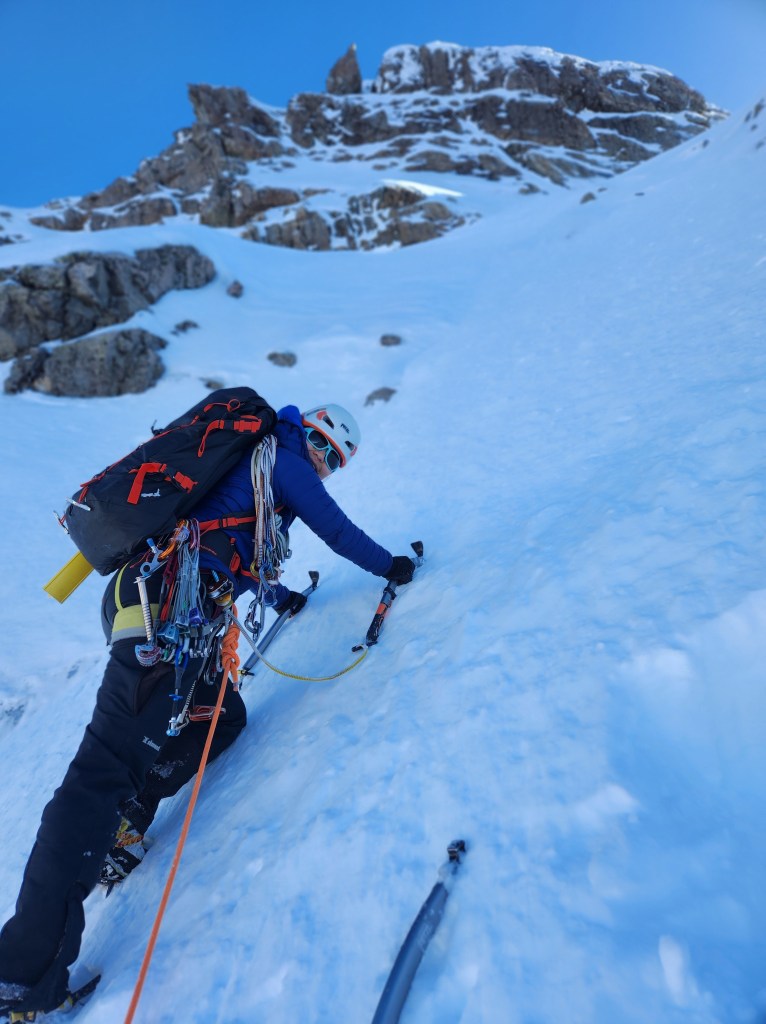
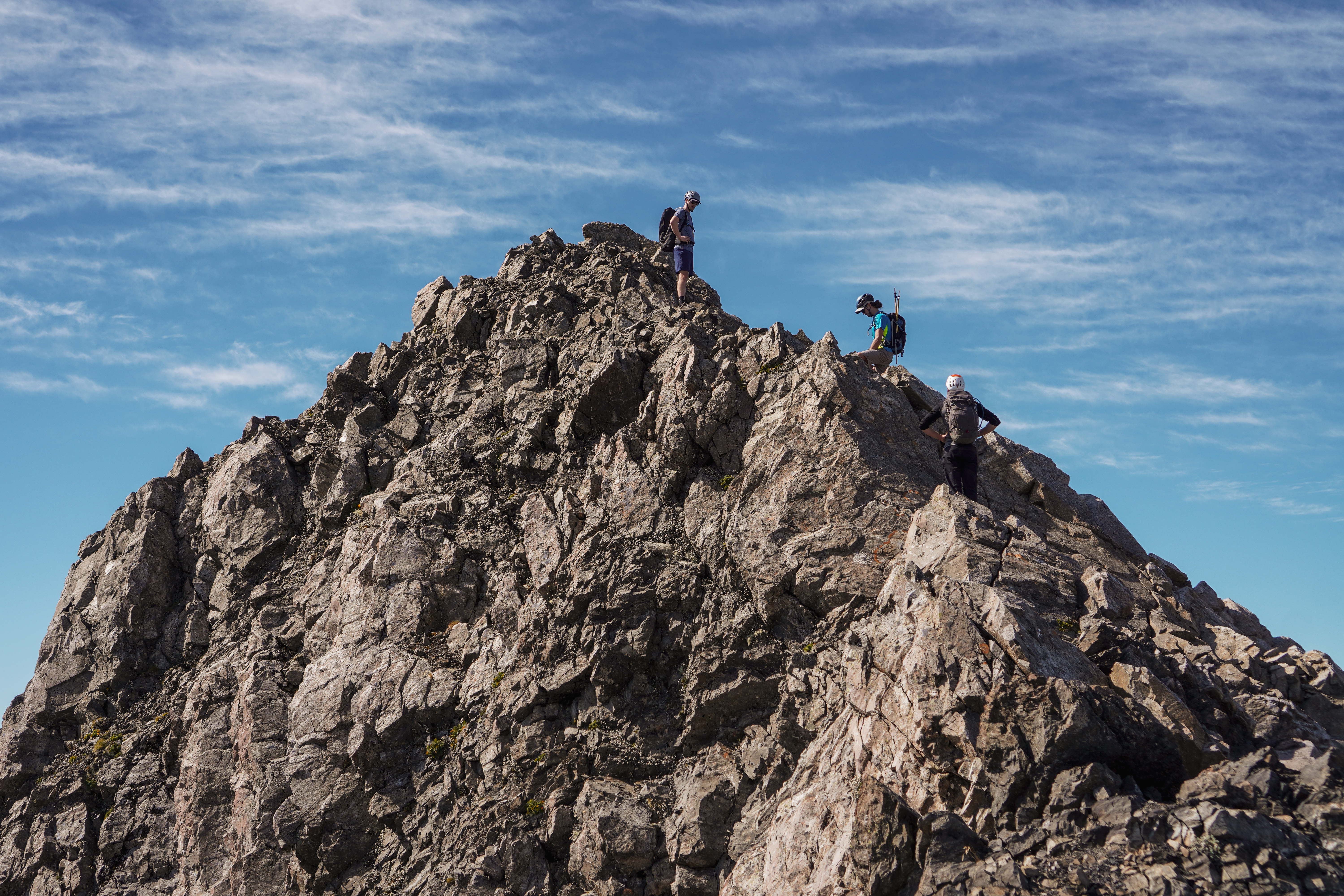
We followed the snow ramps to the summit ridge, just below low peak. The final section to the top was hard rime and rocky, but with the right conditions does look like it would go.

The climb is a really fun day out in itself, with a real sense of remoteness and scale despite only being a day trip from Christchurch, and well worth it even without the ski.

Ski
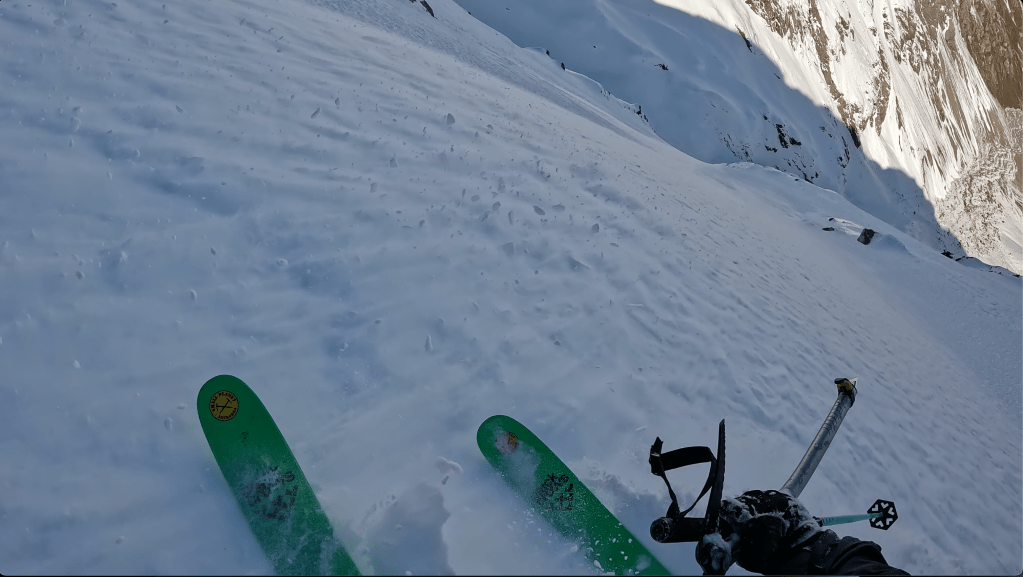
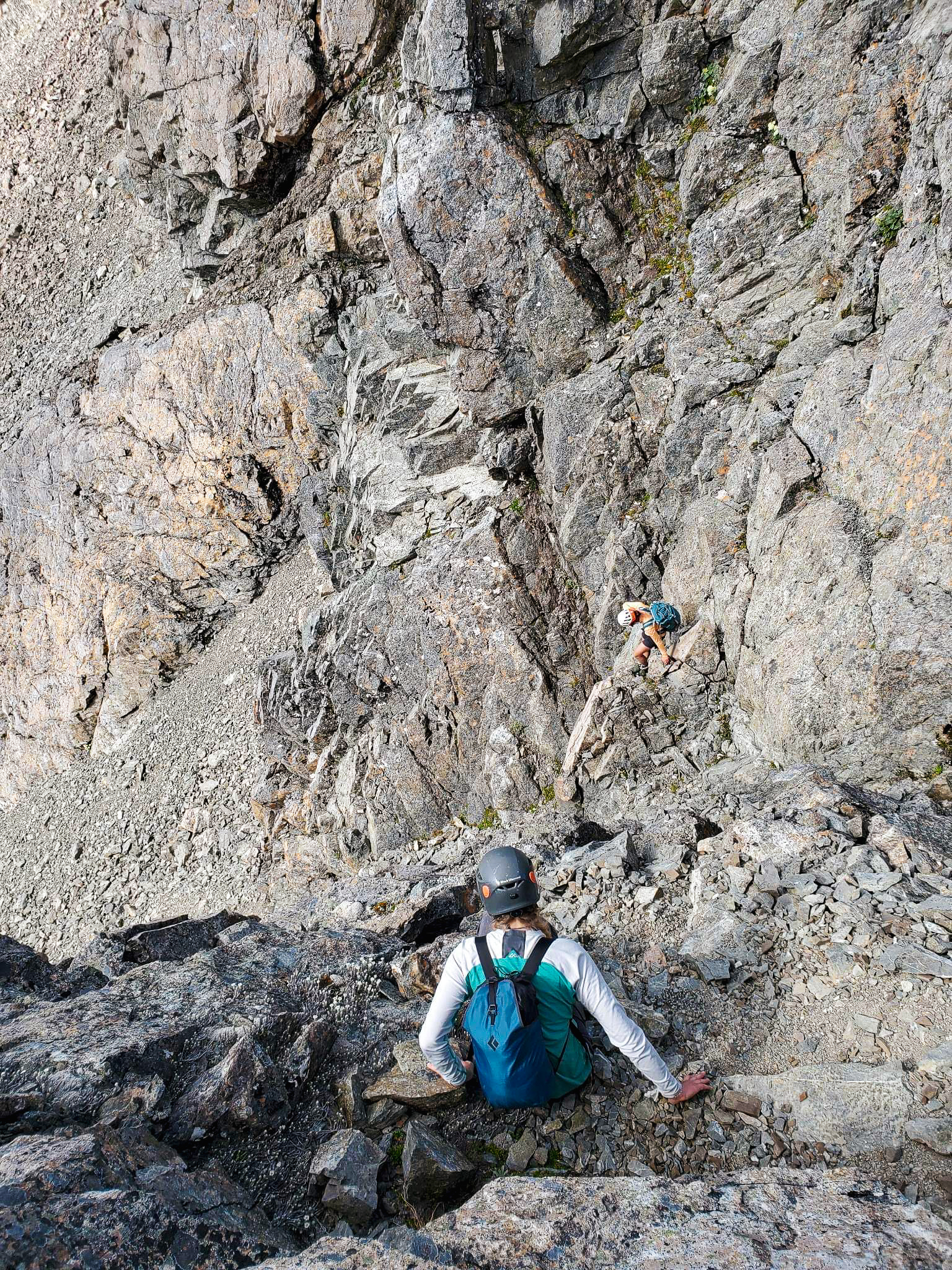
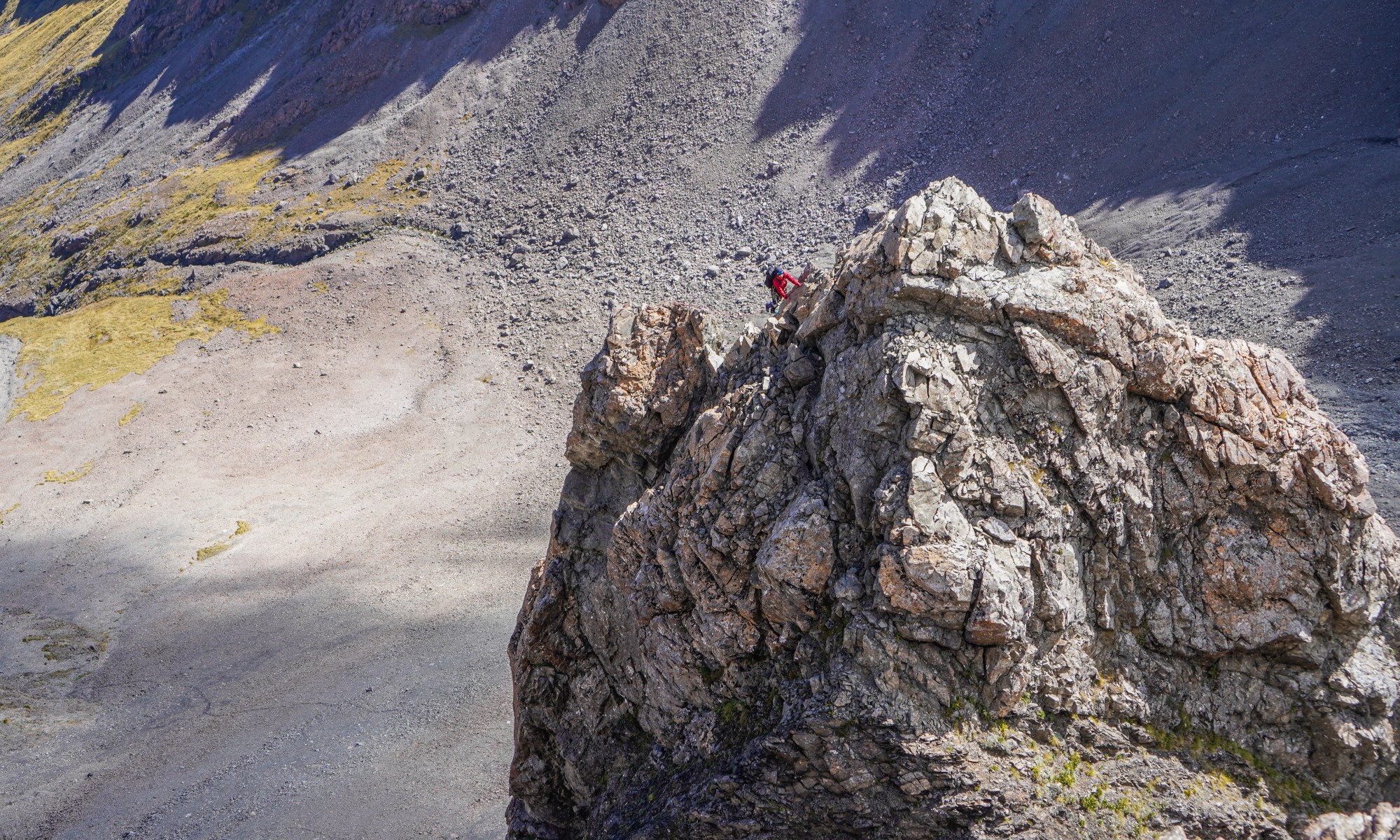
I followed the exact climbing line back down – especially on a face with such fickle conditions this gives a lot of confidence your not going to hit an unexpected chunk of ice and get thrown off the face. Starting at the obvious notch on the ridge, drop into the super steep and narrow right trending gully. This section is really steep and sustained, and the exposure is right in your face so its full focus time. This funnels you into the first rockband – I transitioned to crampons and downclimbed through this to save on loosing a picket. Once through this rockband theres a rightward traverse on a narrow terrace that puts you into the large open snowfield.

Once into this the exposure isnt quite as heinous and the angle eases off and you can open it up a bit more. I then tucked back left for the final section, which funneled me back into another steep and narrow gully ending in the WI2 section. I left a picket here and rapped 30m back to the snow.

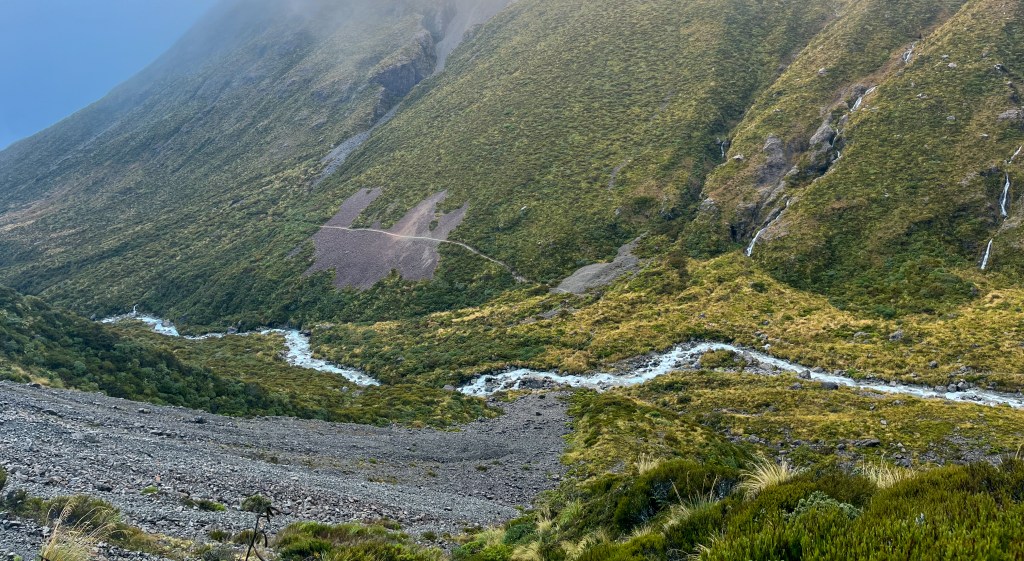
From here its all go : mellow angle and no exposure = hoon time! You can go all the way to the snow line in the Crow Valley – an option is to then walk out via the Crow Valley to Klondyke corner (about 3 hours and a bunch of river crossings, but a good way to avoid the late in the day soft snow on Rome Ridge). I was meeting the others back at the village so instead retraced my steps exactly back up to Rome Ridge and the back down Coral Track to Arthurs.
Philistine-Rolleston Traverse

An awesome day on the ridge between two stunning peaks in Arthur’s Pass. I can see why it is so popular! Easily do-able in a day trip from Christchurch. We did this in Autumn, but I think it would make for a great winter day out as well – perhaps even better given you would avoid travelling on loose rock. As Marije said “we’ve given it a good go trying to kill each other today”…


  • Grade: II, 3+ (grade probably comes from doing it in winter)
  • Time: 11h total (including breaks and a quick swim in the Otira River secondary to peer pressure)
  • Equipment: can be done in trail runners/approach shoes. We took a 60m rad line for 1x 25m rap. Tat and a few nuts – didnโ€™t end up using. Lightweight crampons – didnโ€™t use as there was no snow on the route. 
  • Season: summer/early autumn; also a popular winter route but more objective risk. 
  • Team: MJ, MK 22/04/2023

access

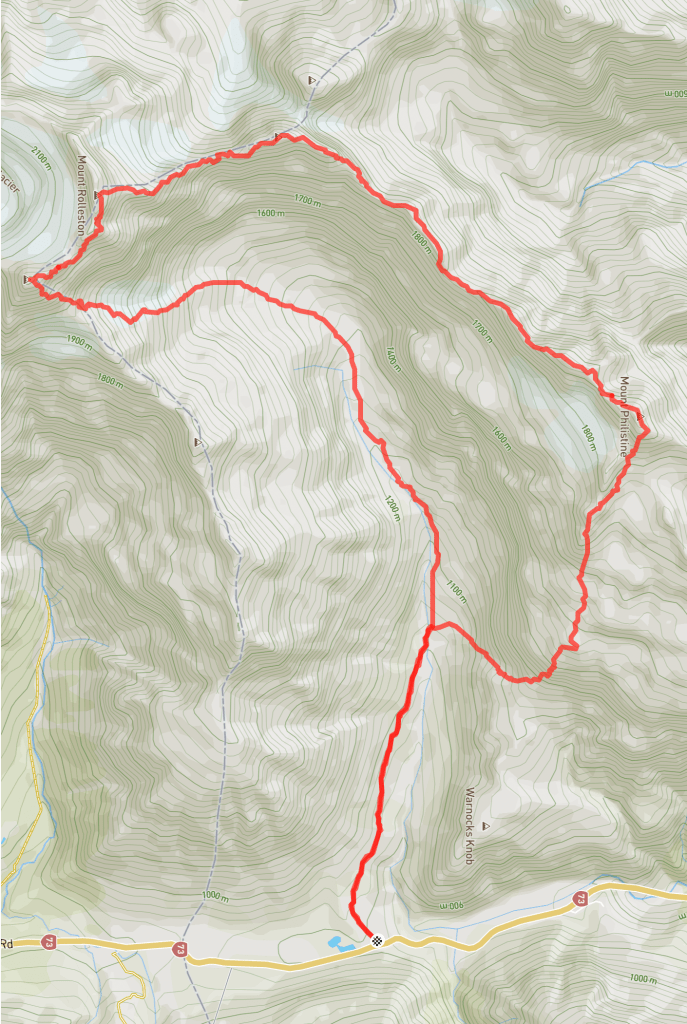
Park at the small carpark at the start of the Otira Valley Track. We stayed in MJ’s van the night before, allowing for a lie-in… 6am alarm.

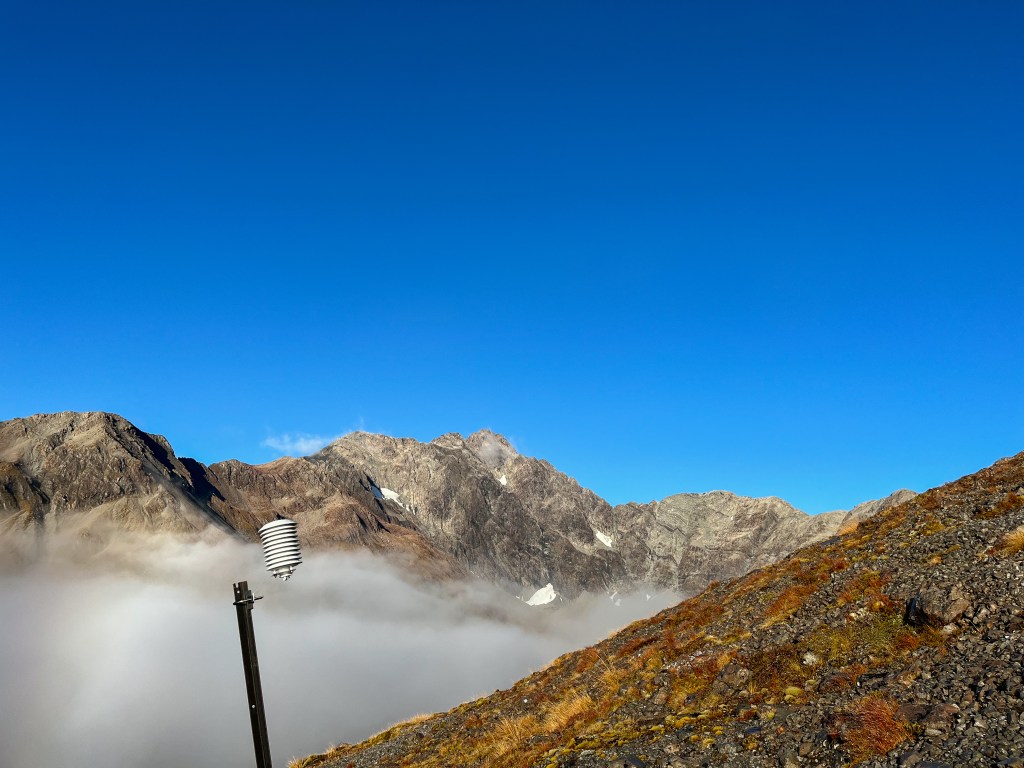
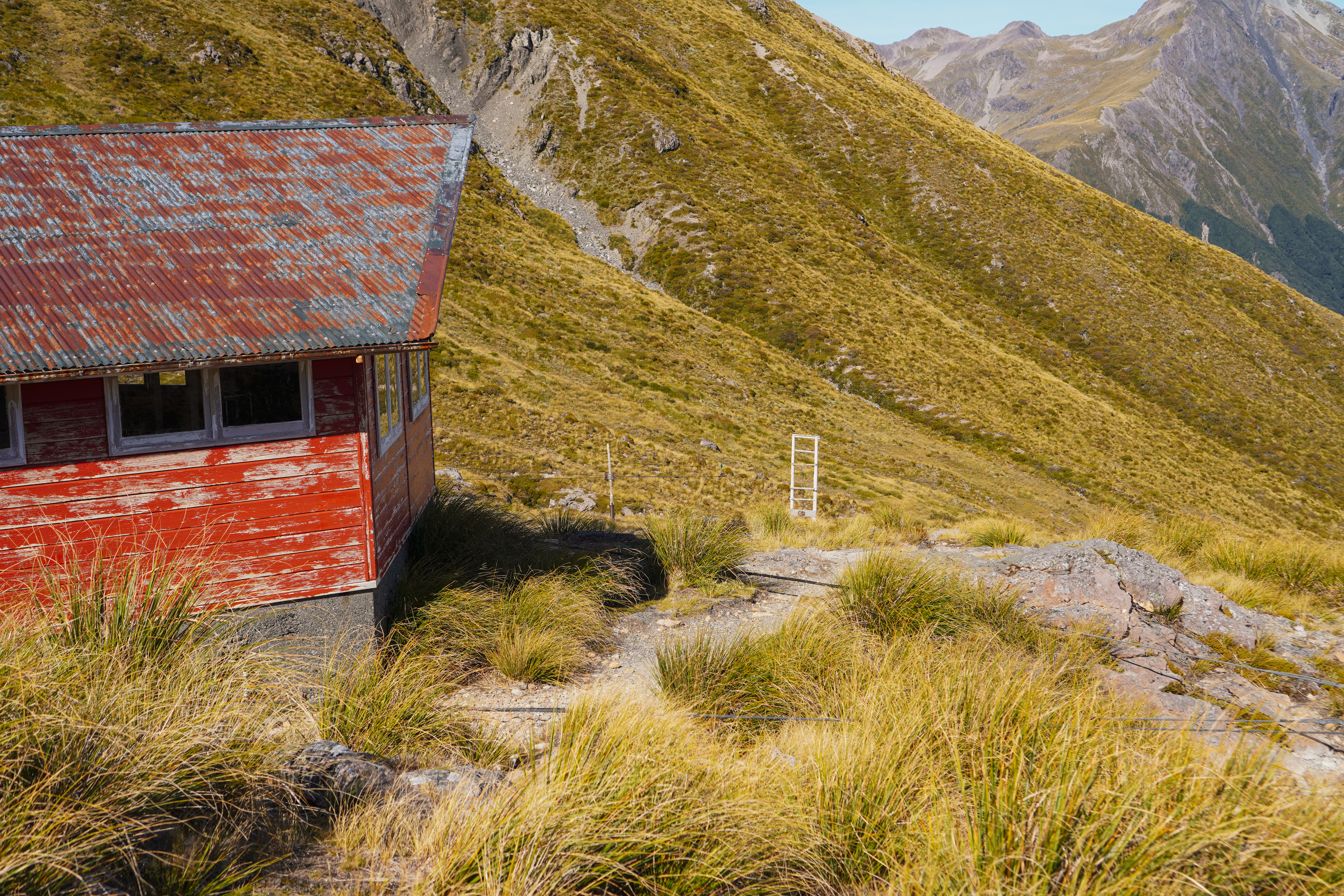
Follow an easy marked trail along the river for about 2km – this took us 30 minutes. Cross the bridge and boost up around 1000m elevation up to Philistine. This took around 2h – thereโ€™s a dug in trail through the moraine then head up left through Warnock’s bluffs, passing a marker/pole (see below pic – ?karaoke mic).

climb

From Mt Philistine you get stunning panorama views of the national park and the southern alps. Here the ridge travel begins!

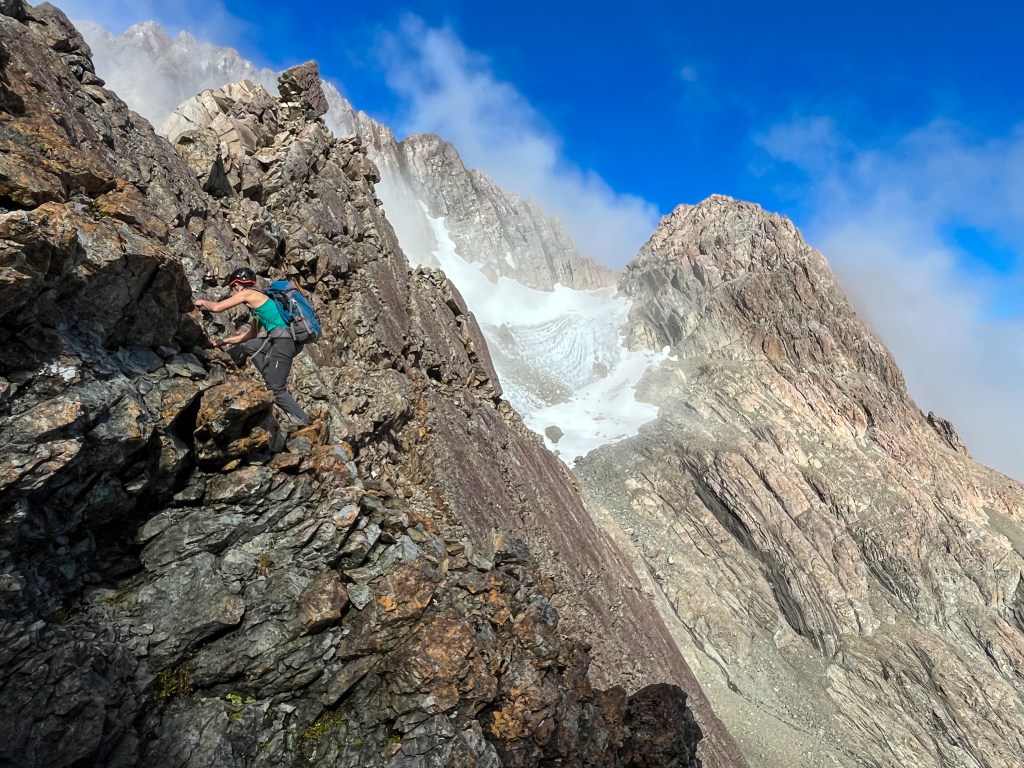
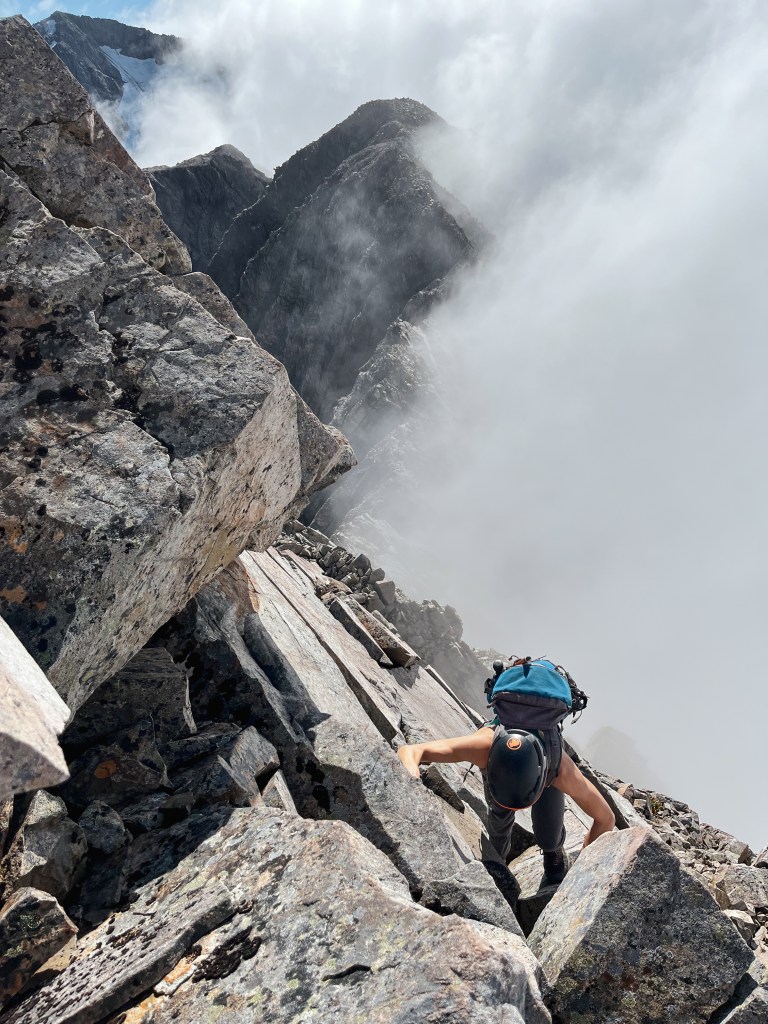
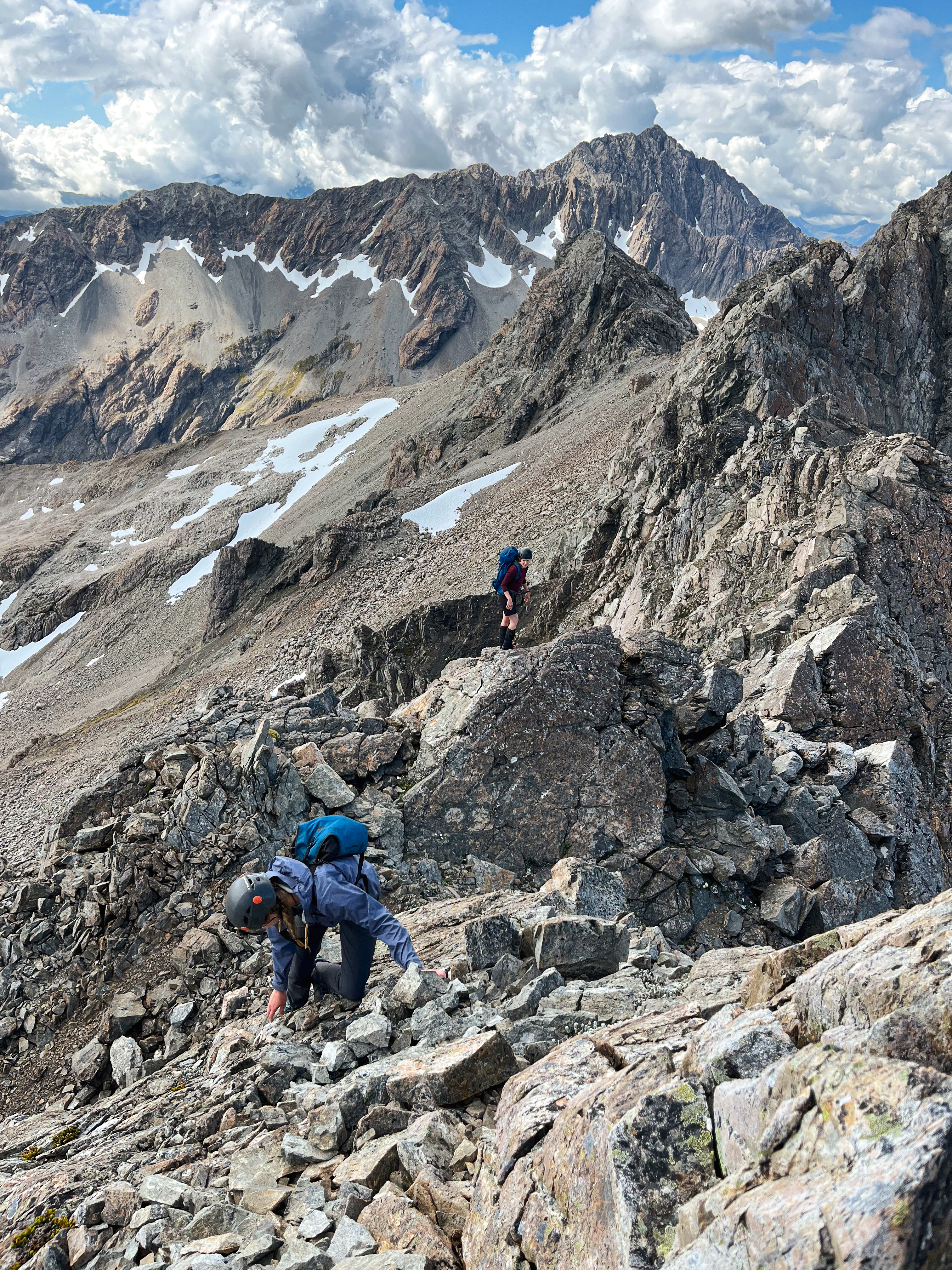
Sidling left, sidling right we navigated the gendarmes – it is pretty intuitive most of the time, but with the heavy clag that came in, we couldnโ€™t see what the best way ahead was so made a couple of errors making for trickier climbing. Some of the rock was slick from the previous nights rainfall which also added to the spice. I found it a harder/more exposed than the Phipps-Temple traverse but still felt happy enough without a rope. 

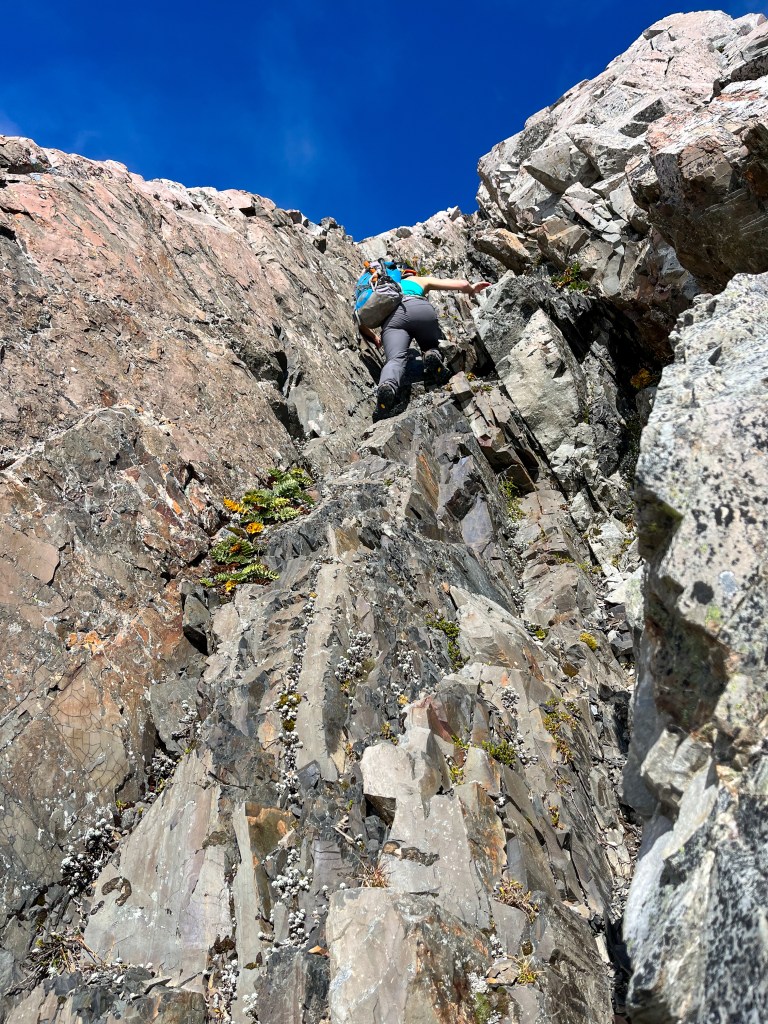
As you approach the high peak of Mt Rolleston there is an obvious gully straight ahead and then some orangey/red slabs to the left. Both ways looked okay but the latter more exposed so we chose the gully – it was loose so we went 1 by 1 but was fine otherwise.

Overall from Philistine to Rolleston the ridge took us around 4.5-5h.

From high peak walk 50m East to a rap station – lots of tat and a mallion. It was around 25m long and drops you into a gully. From here sidle left following the vague trail/cairns. This puts you on low peak (2212). There’s a good biv spot here but no water.

descent

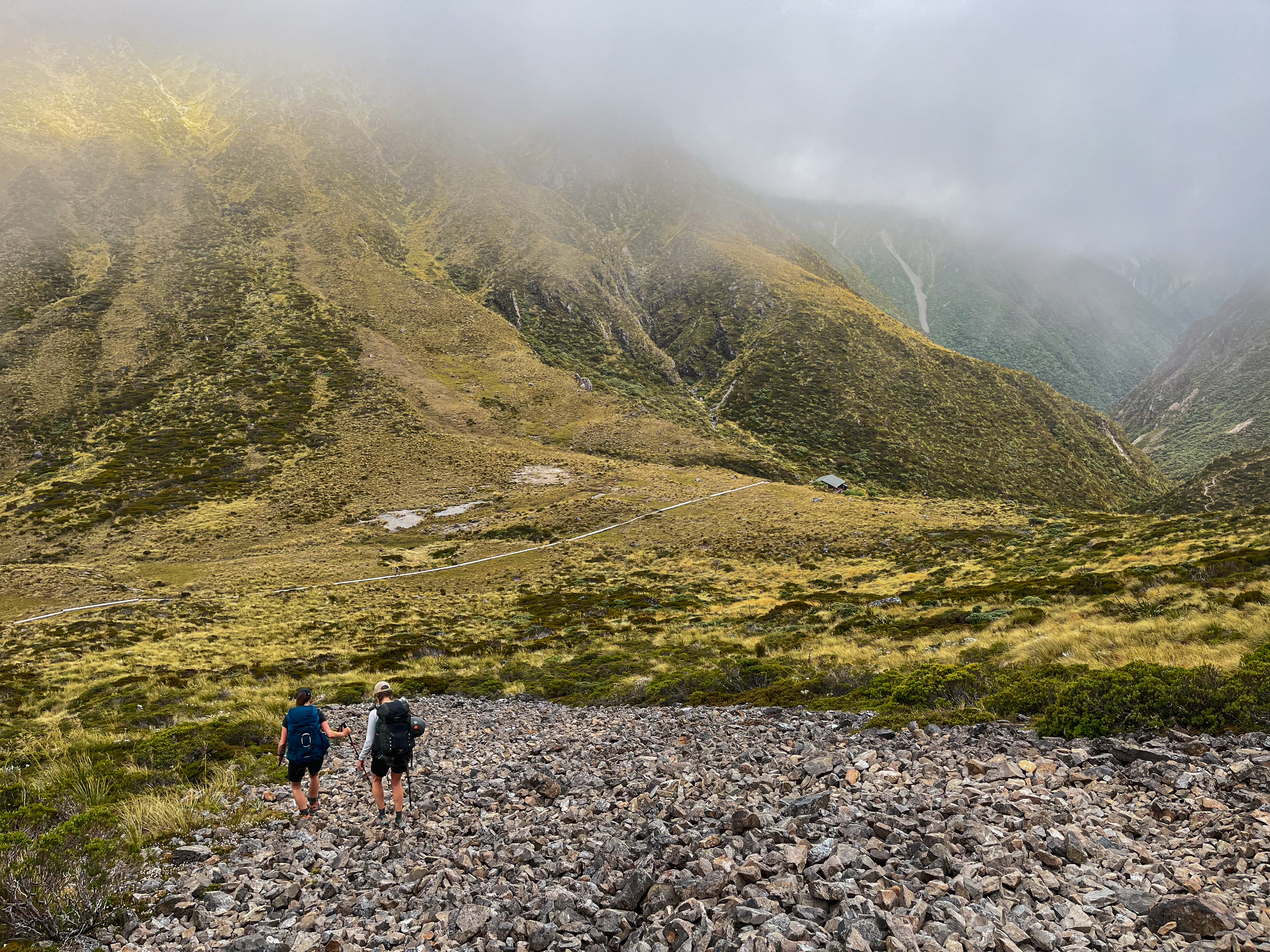
Initially follow the ridge for 250m of descent then veer left onto the Otira slide. Variable quality scree but mostly good. We followed some cairns but there were multiple options to pick your way down.

At around 1950m we used a steep gully to descend but this was avoidable in retrospect if you stay left. We found a bit of snow to glacade down which was a brief but welcome respite from the scree! 

From here just follow the cairns into the valley floor. Stay left of the river and youโ€™ll meet the trail. Boost back out the way you came – optional swim in the river for bonus points!

Mt Oates, West Ridge via Lake Mavis

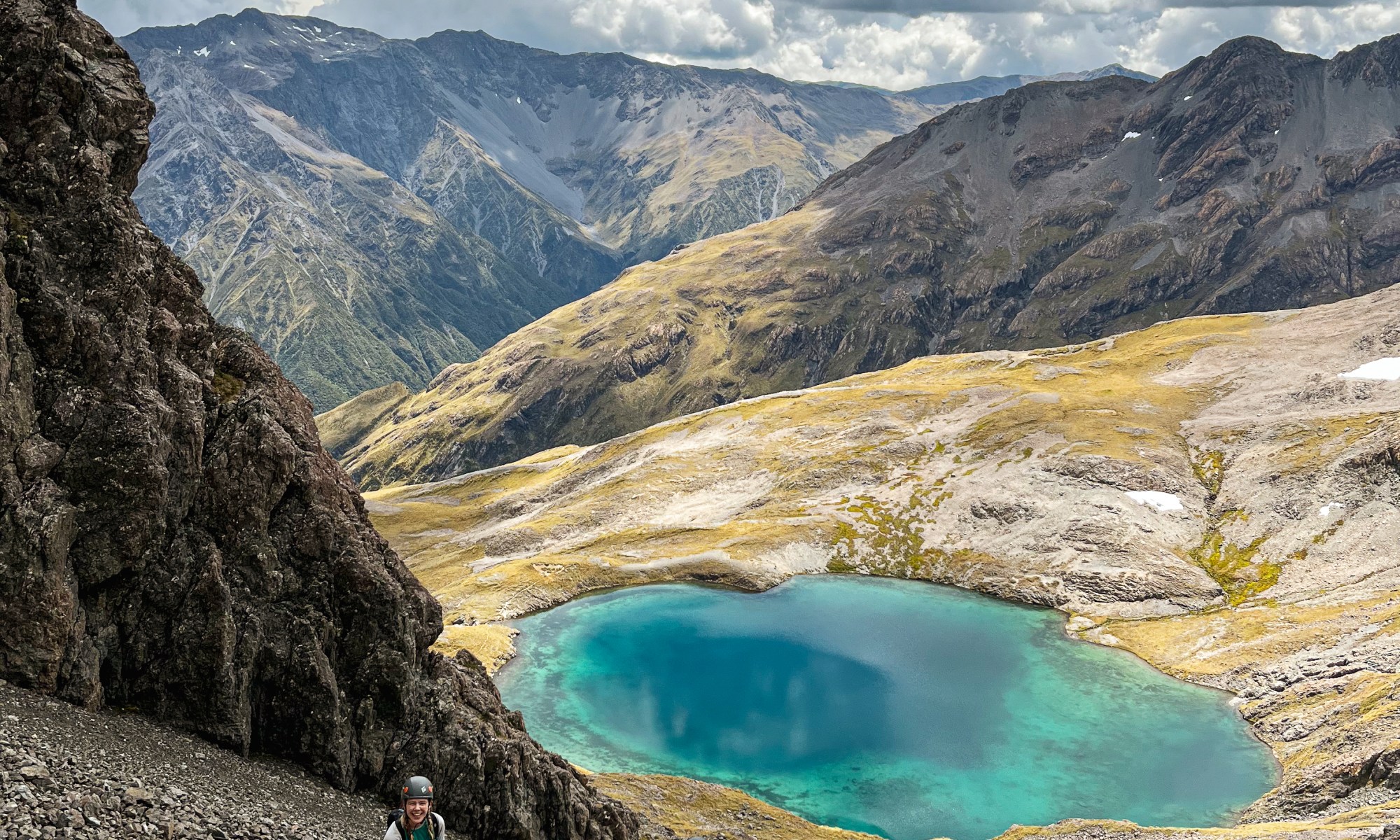
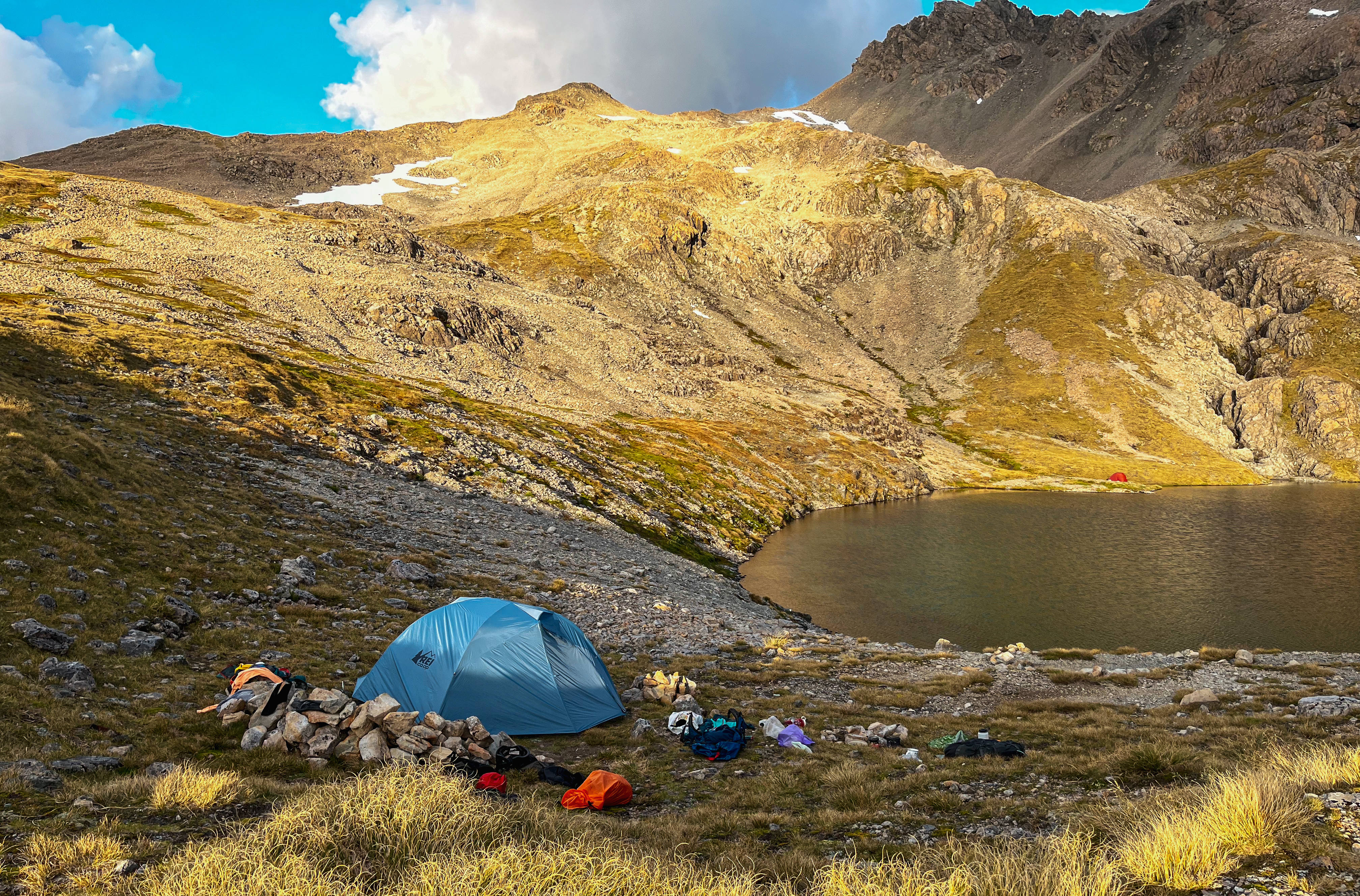
I do love an open body of water. And this one is a goody. A beautiful camping (and skinny dipping) location – albeit not as remote as you might hope as we had the company of 5 other tents, a raft and a glider! Mt Oates also provides an opportunity for some spicy scrambling. The walk up the Mingha takes you along the running segment of the coast to coast race so we bumped into lots of people training for it – so much lycra!


  • Grade: II, 2
  • Time: 5h to Lake Mavis (4h to Goat’s Pass then 1h to the lake); 1.5h to low peak of Mt Oates, 3.5h along the N ridge / back to the lake.
  • Equipment: can be done in trail runners/approach shoes. We didnโ€™t take a rope/rack, only helmets. Easy scrambling to low peak but between low and high peak we wanted a rope; instead we decided to go along the N ridge which was mostly fine.
  • Season: Lake Mavis would be snow-free in spring/summer; you would want to do Mt Oates in summer to ensure the rock is dry
  • Team: Laudi, Abbey, Maria 14-15/01/23

Access

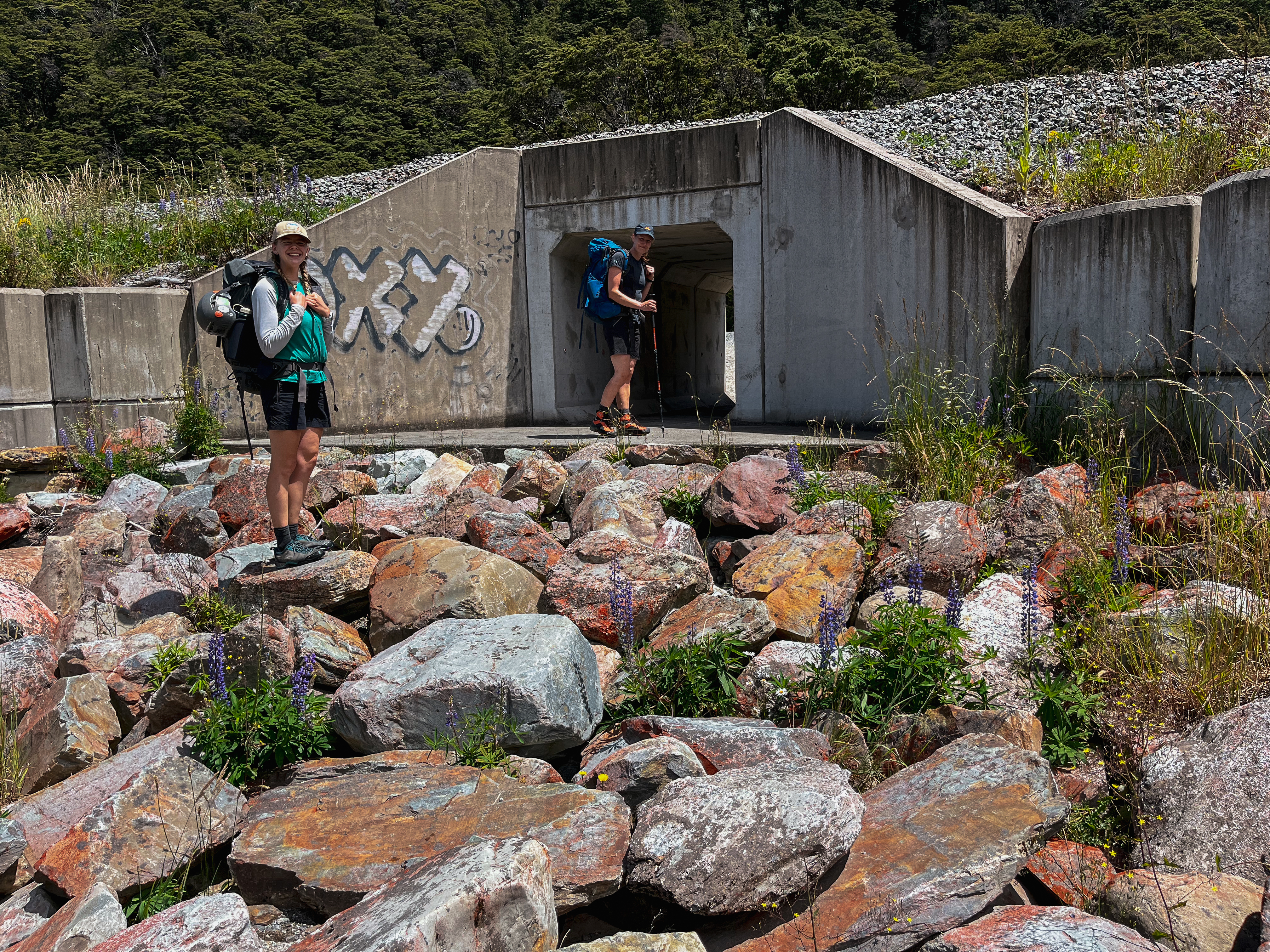
Park at Greyney’s Shelter. We stayed at Kennedy Lodge the night before allowing for a bit more of a lie-in! From the Doc sign at the N side of the carpark cross the road and go through a tunnel which puts you on a doc trail. Follow the orange markers. The Waimakariri river level varies significantly, so worth checking this before going as you need to make a few river crossings. It’s just over 11km to the point where you want to take a right up towards Lake Mavis. Don’t be tempted to turn off early – from the stream draining from Lake Mavis continue another 500m on the track. The turn off is marked with cairns. Head up the sparse scrub/scree, following the cairns up to Lake Mavis.

climb

Cross the outlet of the lake then head up the scree gully just left of the buttress that extends the lowest on the scree. Don your helmets! The climbing is easy but the rock is a little crumbly. It was great fun scrambling up to low peak but on traversing the summit to have a look over to high peak, we weren’t too inspired. There is a drop of around 20m then quite a steep climb, which looked pretty gross to down climb.

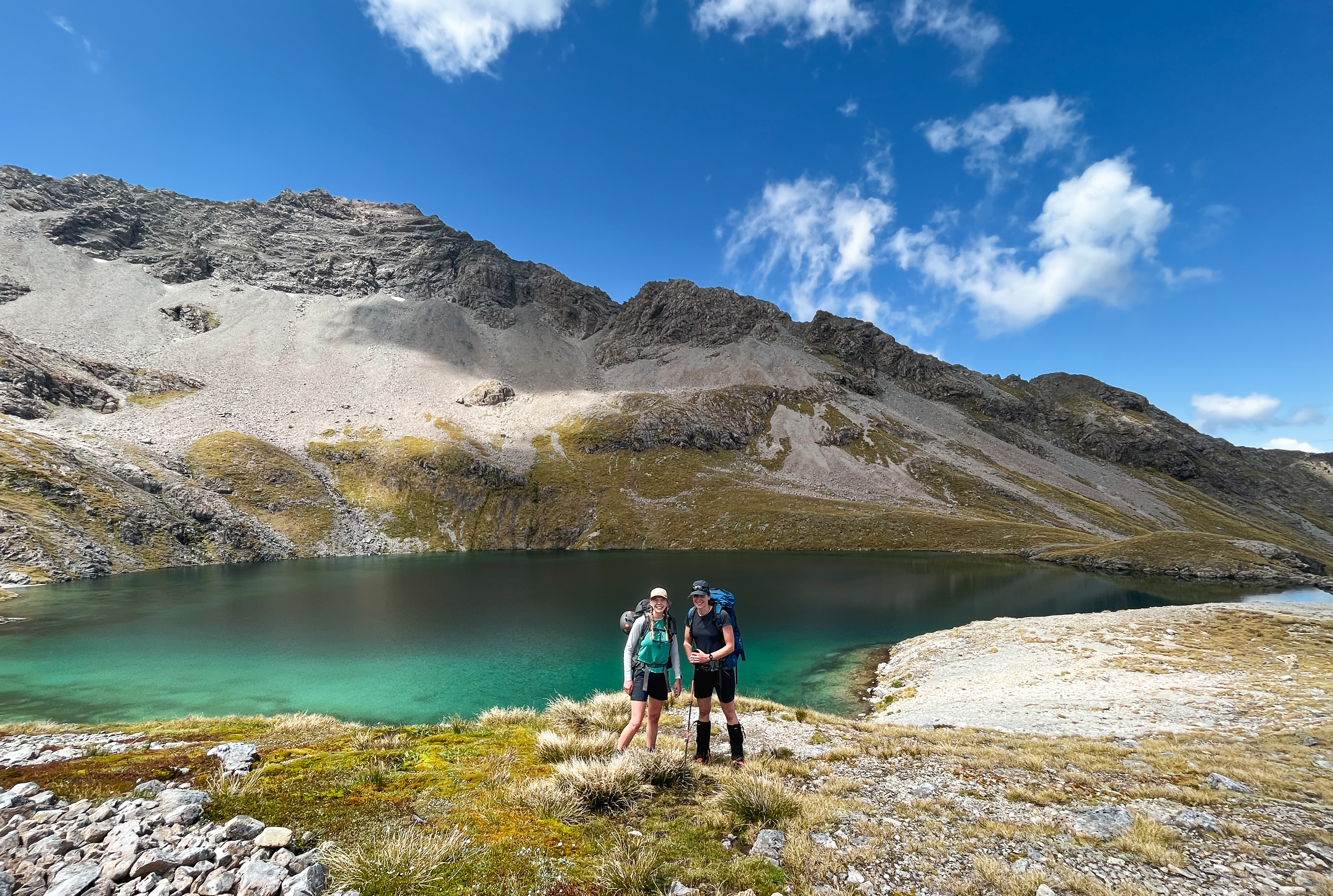
From Lake Mavis looking up to Mt Oates, low peak. Our route along the West ridge.

Instead, we opted to go along the N ridge towards point 1978. There are multiple opportunities to drop down from the ridge onto scree, but we were enjoying the scrambling so continued so far as we felt comfortable then dipped down. Towards the end we were increasingly sketched out by the level of choss so were relieved to be on safer ground – “oh blessed scree”. From here it was a quick/easy descent down to camp. Even found a 50m stretch of snow to glacade down! The next day we went out the same way due to time (and food constraints) – but another option would be to go over the ridge N of Oates, descend to Taruahuna Pass then to Edwards Hut and out (approx 9h). Great weekend trip, completed with ice-cream!

Mt Temple, Central Buttress

A fun day out that’s easily accessible as a long day trip or cruisey overnighter from Christchurch. We made a weekend of it staying at CMC’s Kennedy Lodge the night before, then staying on for canyoning down Agility Creek the next day (what was supposed to be our ‘rest day’ but turned into a borderline quest – but that’s another story).

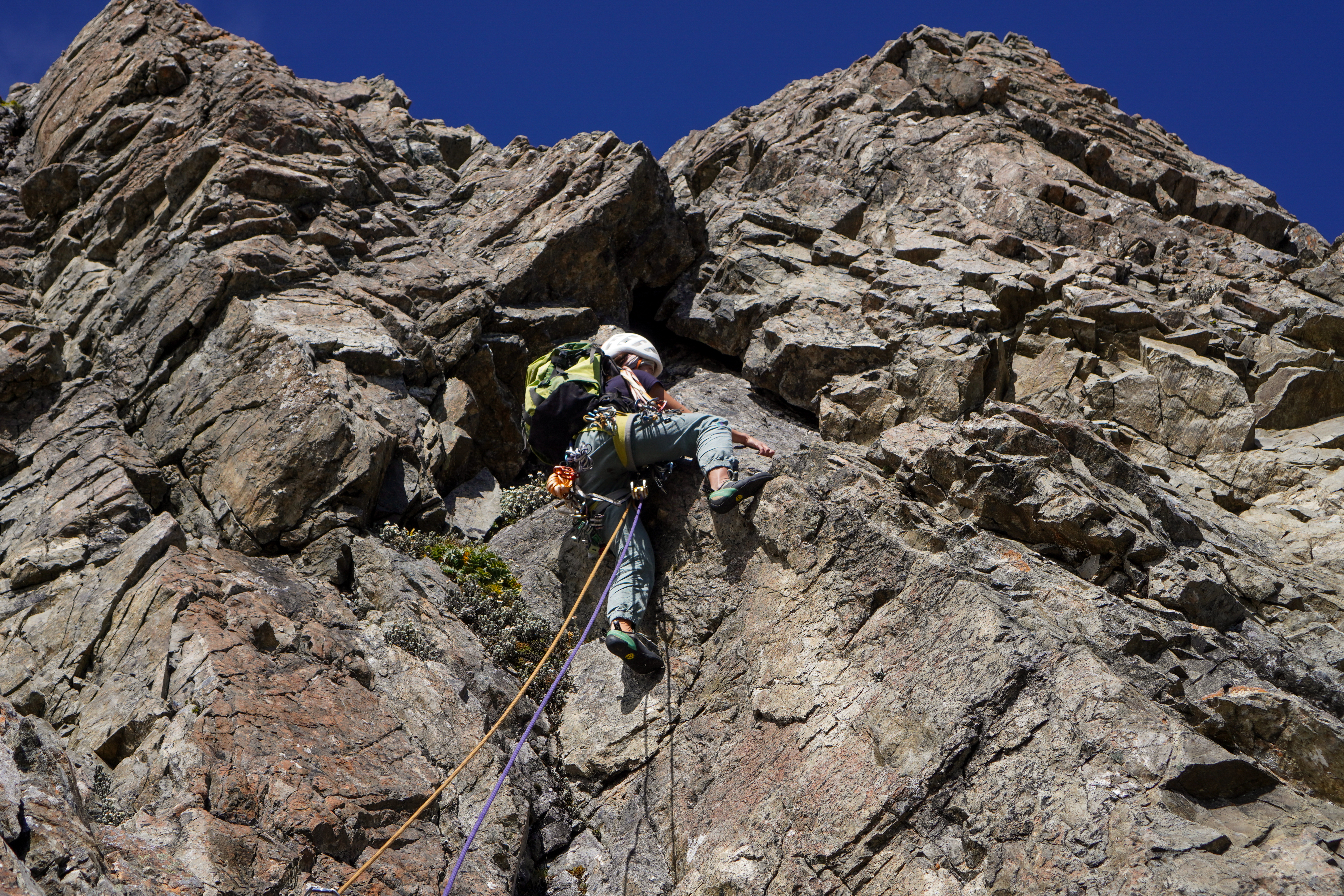
Generally low easy scrambling (grade 12 ish) but with 2 well defined overhanging cruxes that I reckon are more like 16 than the topo 14. You can avoid these if you want to. Rock is loose in places but generally decent and the gear is spaced but not as run out as I was expecting from the climb nz description. Crucially the anchors are bomber, with big spike belays for 240cm slings on all 4 pitches. Easy scree descent.


  • Grade: III, 4+, crux 14 according to topo; I think this is a bit of a sandbag, the overhanging crux is more like 16 but is short. All trad, no bolts including anchors.
  • Equipment: full trad rack – singles of cams up to #3, full set of nuts (RPs were very handy), tat, 2x 70m half ropes
  • Approach time: 1.5-2h
  • Climb time: 4.5h
  • Season: Summer into autumn. West facing so gets the afternoon sun.
  • Team: Joe, Tom, Alex, Dave, Maria 02/04/22

approach

Park at Temple Basin ski field carpark and head up the 4WD track that turns into a well maintained walking track to the lodges. Central buttress is flanked by a left and right buttress. It extends into the scree further than the Left/Right buttresses do making it easy to spot.

The route

It isn’t really obvious from the Climb NZ topo that this route is actually a series of pinnacles, and so you need to make 2 short raps during the climb to link them together. Multiple variations to the route exist – the Climb NZ topo shows 3 alternative starts, coming together towards the top. We chose the line on looker’s left of the buttress. Other routes start further right.

Note the 2 raps required mid-route
Scramble the first 40m

Pitch 1: (10 40m) Scramble up the detached stand alone block in front of the buttress to get to the scree platform at the base of the buttress. We went up just to the right of the obvious deep crack. We soloed up this section in approach shoes, pretty limited options for gear if you want to pitch it. Is easy to just walk around this section to the base of the main buttress if you want to avoid it.

Pitch 2: (12 50m) We chose to climb the arete on the far lookers left of the buttress which starts from a small grassy patch. Either stay left in the groove for easier climbing but looser /mossier ground, or right on the face for better rock but more difficult and run out climbing. About halfway up is a small overhang which is easier to get through on the left. Some pretty loose rock on the overhang so watch out. After almost a full rope length you get to a large grassy platform about 5m wide with a big boulder you can sling as a belay.

Pitch 3: (16 50m) We climbed up the right hand side through the small overhang (see pic) which has some cool stemming moves. There was some loose rock and average gear just on the crux move which made this a bit stressful. If you stay left sticking to the ridge you could avoid this section. Once over this is you scramble up grade 10 blocks to a ledge on top of the first pinnacle and make an anchor with a sling over the very top of the pinnacle. There were a few slings and a maillon left there when we were there. From here you need to make a short rap (5m or so) onto a small ridge and walk along this above steep gullies to the start of the next pitch. Very loose rock on the ridge so take care.

The crux

Pitch 4: (12 30m) There’s a small area you can tuck into at the base of the next buttress to belay from. Head up the groove on the right hand ride of the buttress. The angle then eases off up to a spike belay at the top of the second pinnacle. Another sling/maillon was insitu here. Make another short rap to the start of the final pitch.

Pitch 5: (15 30m) Generally easy climbing but with a well defined crux half way up. Step right into the overhang. Great gear (#2 cam just below the crux) and huge jugs to haul on to get you through. Then scramble up to the top where you can make another good sling anchor around a boulder.

From here we took the ropes off and scrambled through the shingle to the cairn on the summit.

Descent

From the summit, head South along the ridge towards temple col then drop down into one of many scree gullies back down to Temple Basin ski field. We cut off halfway between the summit and the col down a scree couloir, and then trended left picking our way through the bluffs to get down to the ski field base building in around 1.5 hours. The scree is pretty hard work and Maria stacked it losing a phone and cracking her camera so watch out!
Phipps Temple Traverse

Canterbury’s answer to the Remarkables Grand Traverse they say! Located on the Main Divide of the Southern Alps, this traverse is spicier than a hike, but not as committing as a full climb. A great day tickling the spine of the South Island.


  • Grade: II, 2+
  • Time: 5h 40mins (moving time 5h)
  • Equipment: can be done in trail runners/approach shoes (although I wore boots due to my gammy ankle). We didn’t take a rope/rack, helmets only. If you’re used to exposure and can confidently climb grades 15+ you should be ok (nothing harder than a grade 8). Some parties have used a running belay along the ridge.
  • Season: we didn’t come across any snow on the route doing this in late summer, just a small patch on the S face of Phipps. In the shoulder seasons would take crampons/ice axe. Can be done as a winter route also.
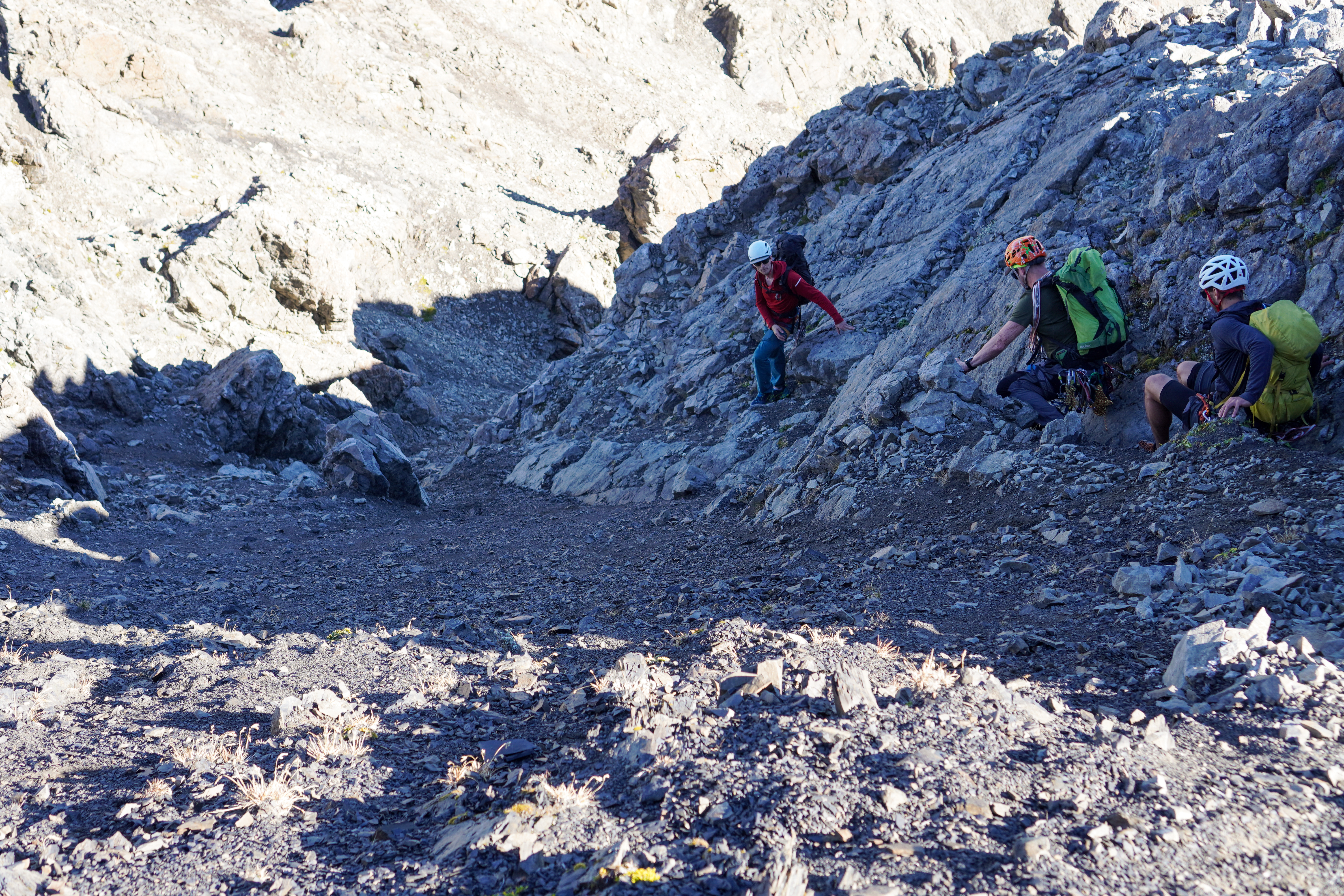
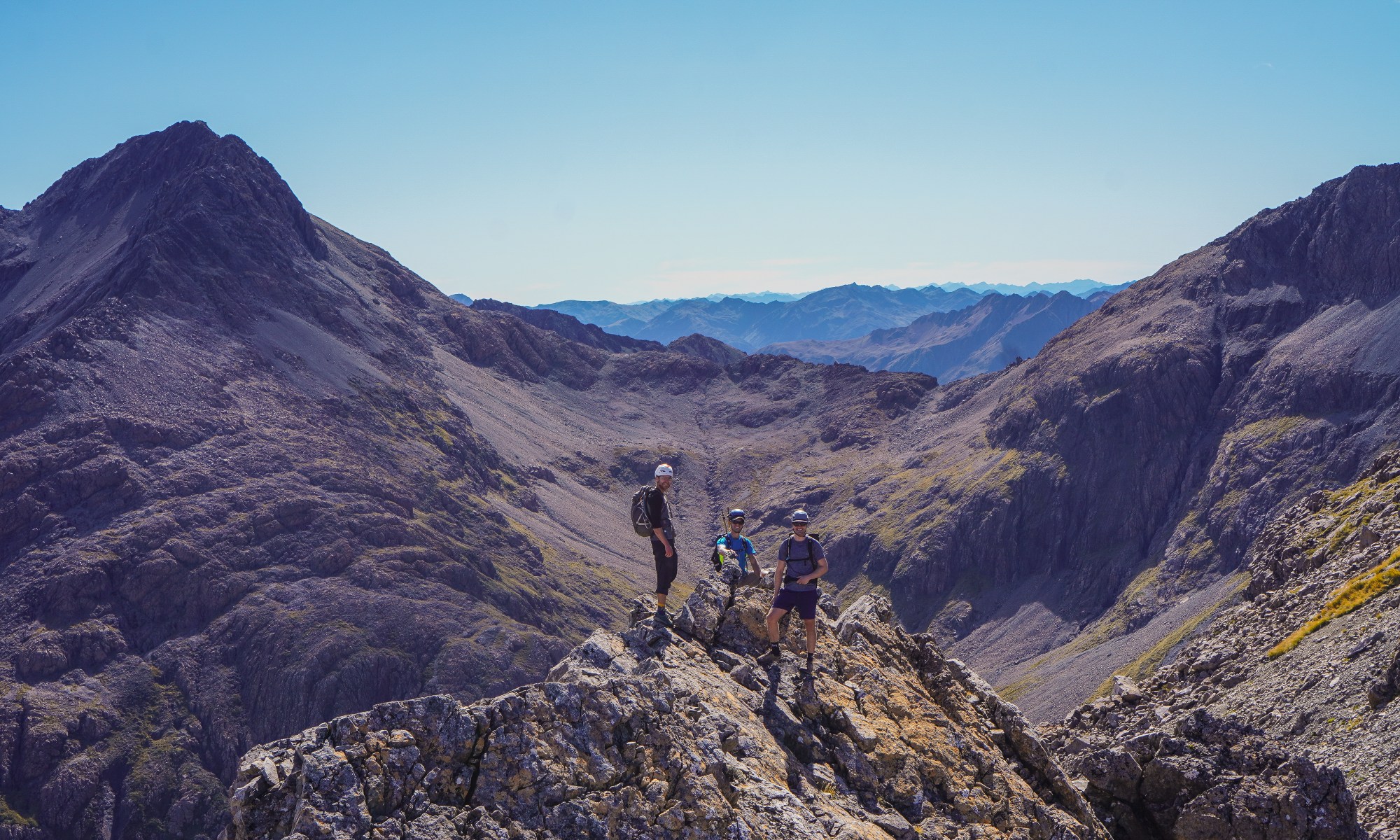
  • Team: Maria, Andy, Rich, David 26/03/22

access

Park at temple basin ski field carpark and head up the 4WD track that turns into a well maintained walking track to the lodges. From the red building (CMC’s Lockwood shelter) at around 1380m cut across the basin NE. There is a faint trail. We aimed for a spot in the basin that would put you underneath the lowest col visible on the west ridge of Phipps (see route below). Many variations to this route possible.

climb

From the basin there some slabs to scramble up and over. Then stick to the margin of the scree along one of the buttresses heading diagonally right. This leads you to a thin narrow gully 15m shy of the ridge – rock was a bit loose here so watch for rockfall, was better slightly to the left of the gully staying high on the buttress. We were on the ridge within 2h.

Our route up to Phipps, seen from Mt Temple
Our route up to Phipps, as seen from Temple Basin

The ridge travel definitely takes a little time and focus as the rock quality is average. There are a few gendarmes forcing you to dip down low from the ridge, usually to the left but not very often and 95% of the time the easiest route was staying on top of the ridge.

From Phipps peak (1965) its a gentle declining ridge to Temple (1913). It looks pretty hectic when you initially look at it but travelling on it was pretty fast and we got across in 40 minutes.

descent

Just beyond the cairn on Mt Temple there is a steep gully – initially the ground is pretty compact and slippy but further down turns into 10/10 quality shingle/scree! We were down to Page shelter within 15 minutes. From there you can see a trail cut out heading down to Lockwood shelter. From there retrace your steps back to the car.

We took 5h 40 with a couple of leisurely stops, but speedier parties have done it in 4!