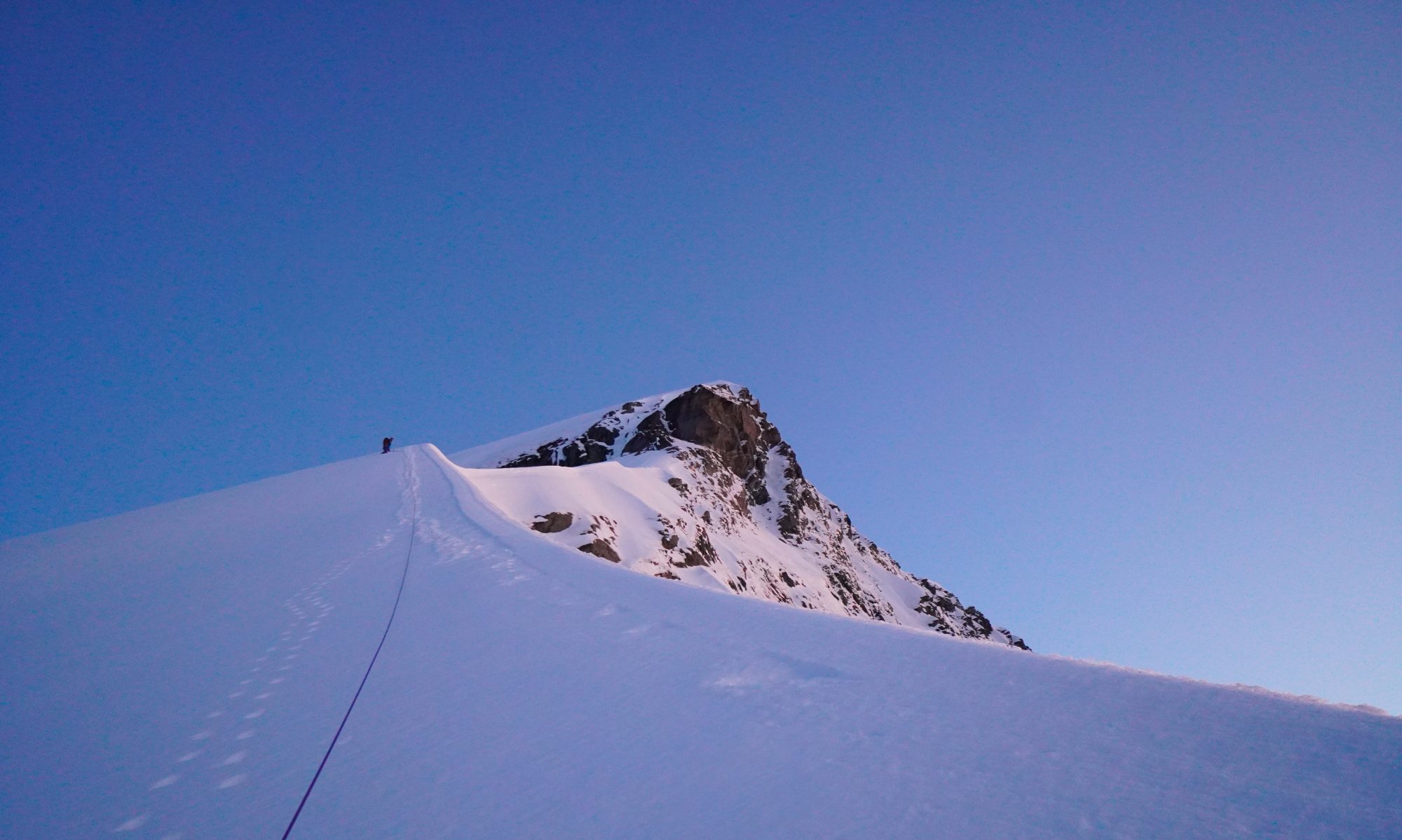
Aoraki/Mt Cook, East Face

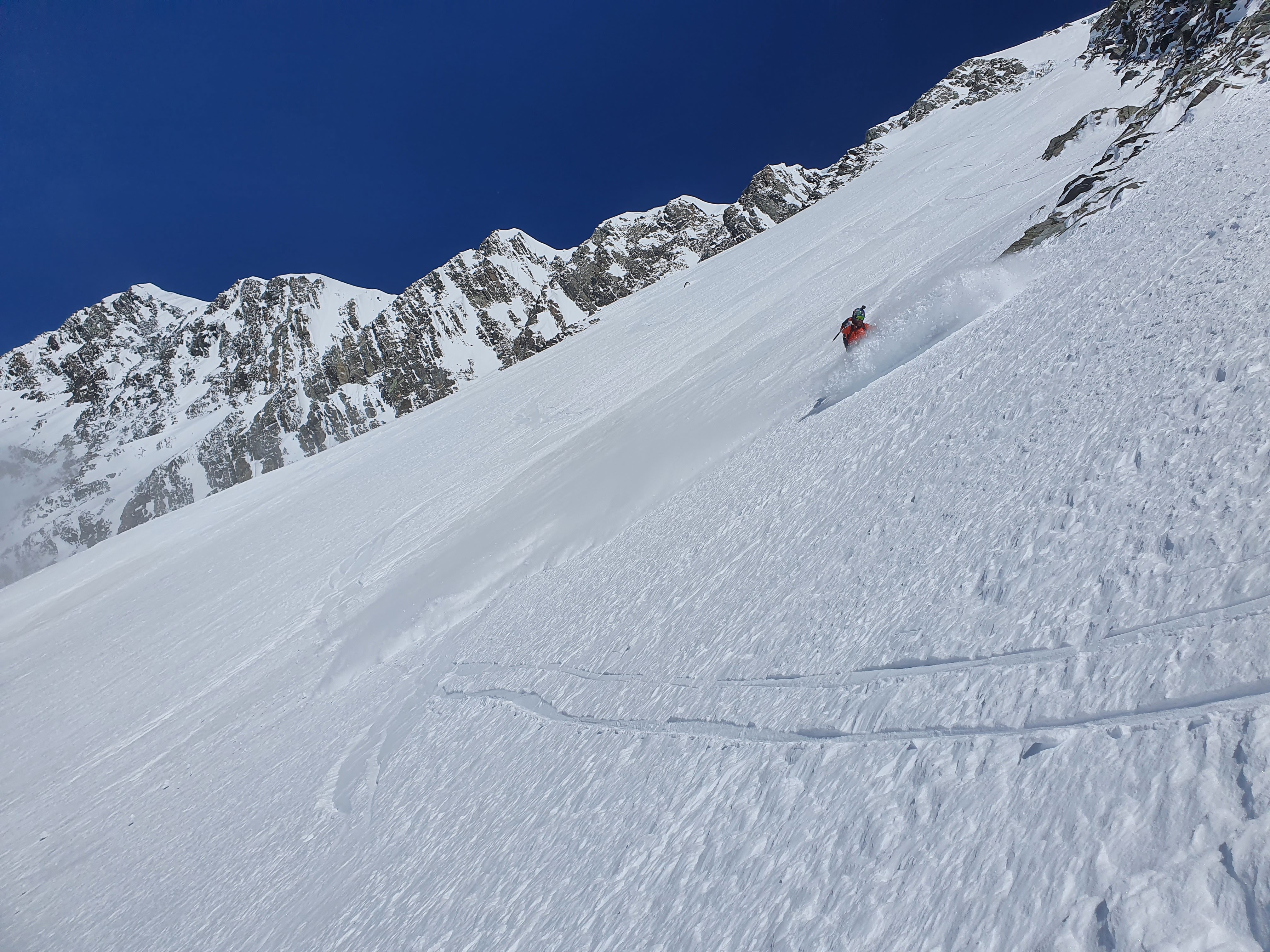
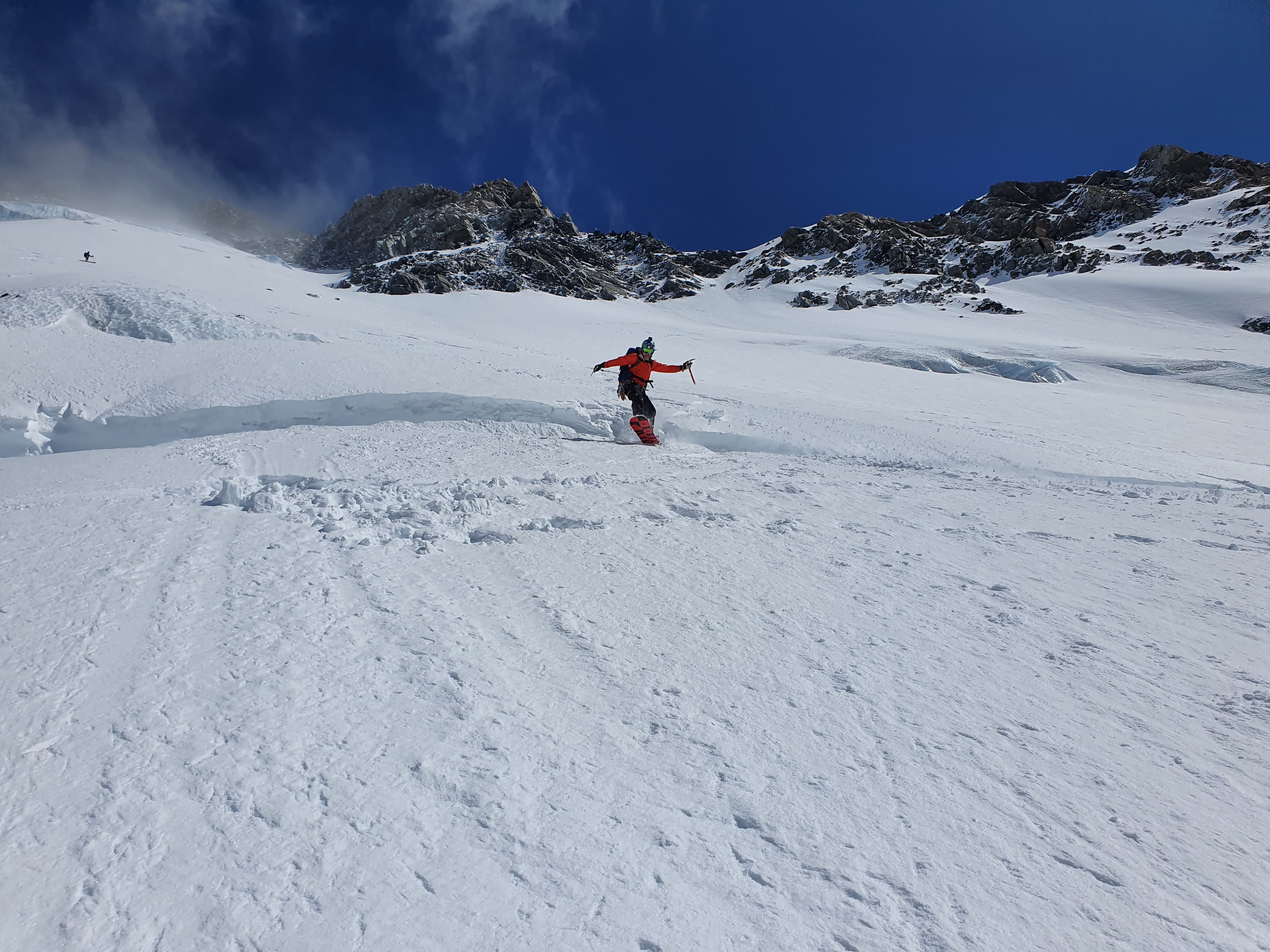
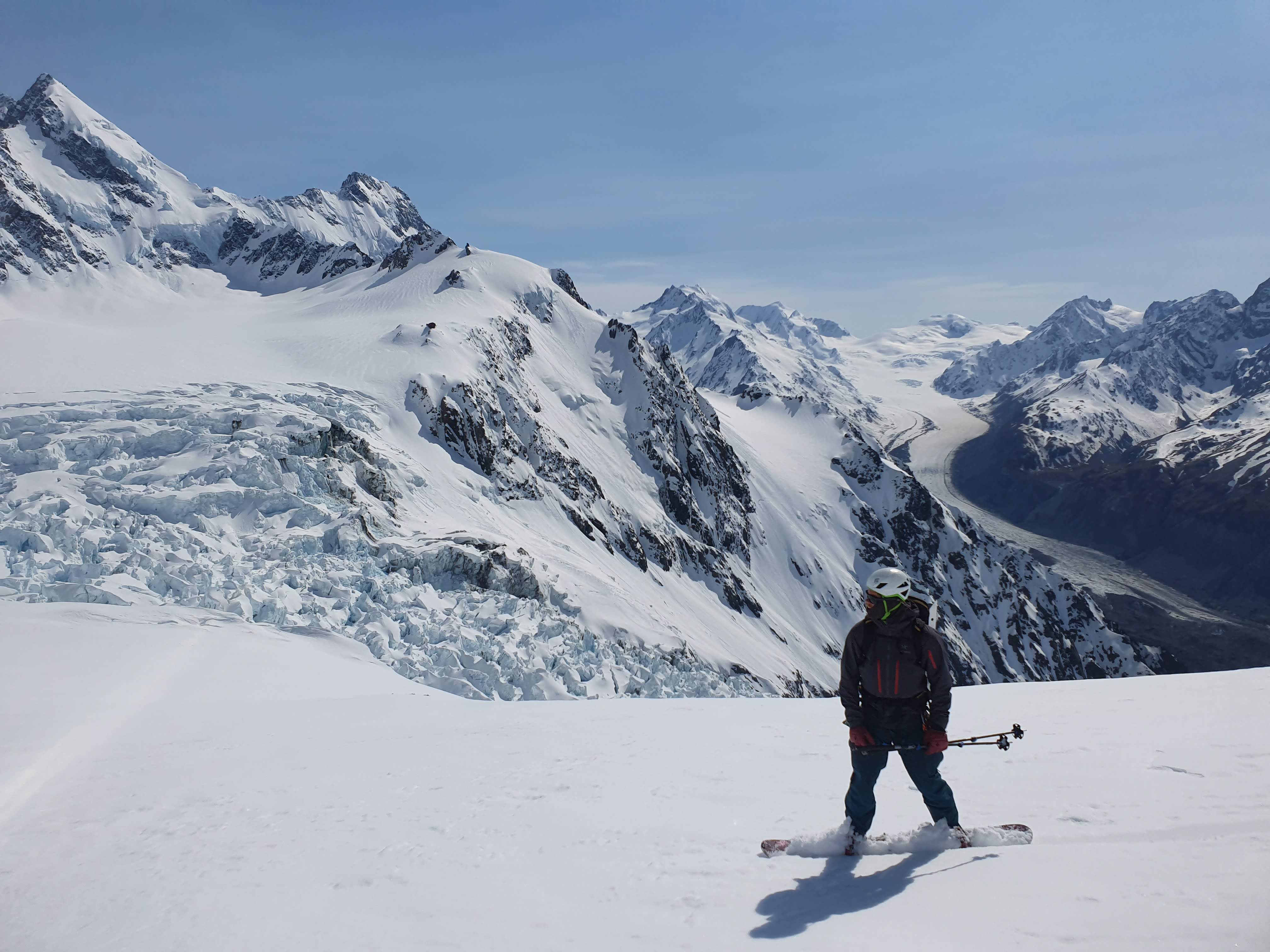
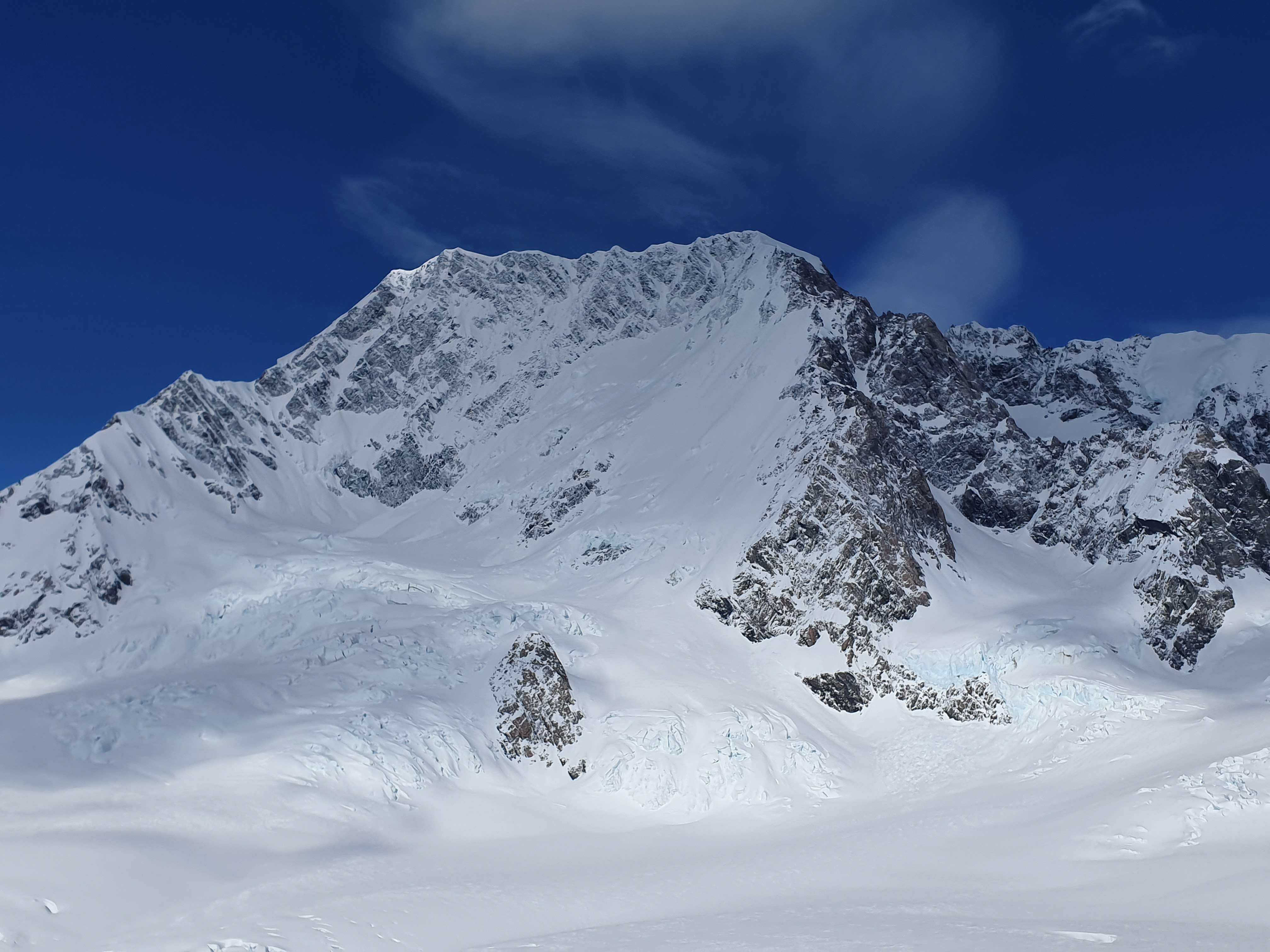
What a line! A huge alpine face, with 1200m of continuous 45 degree skiing that regularly holds good snow just half an hour from Plateau Hut. It’s really a testament to how New Zealand ski mountaineering has developed over the last decade that this line, which only saw its first descent in 2011 and at the time was viewed as the domain of only the top skiers in the world, now sees multiple descents per year and is a classic right of passage. The first time I skied it there were 14 people in total on the face! It felt more like being in Chamonix than in the Southern Alps. But don’t underestimate this line – it is serious alpine terrain and deserves to be taken seriously.
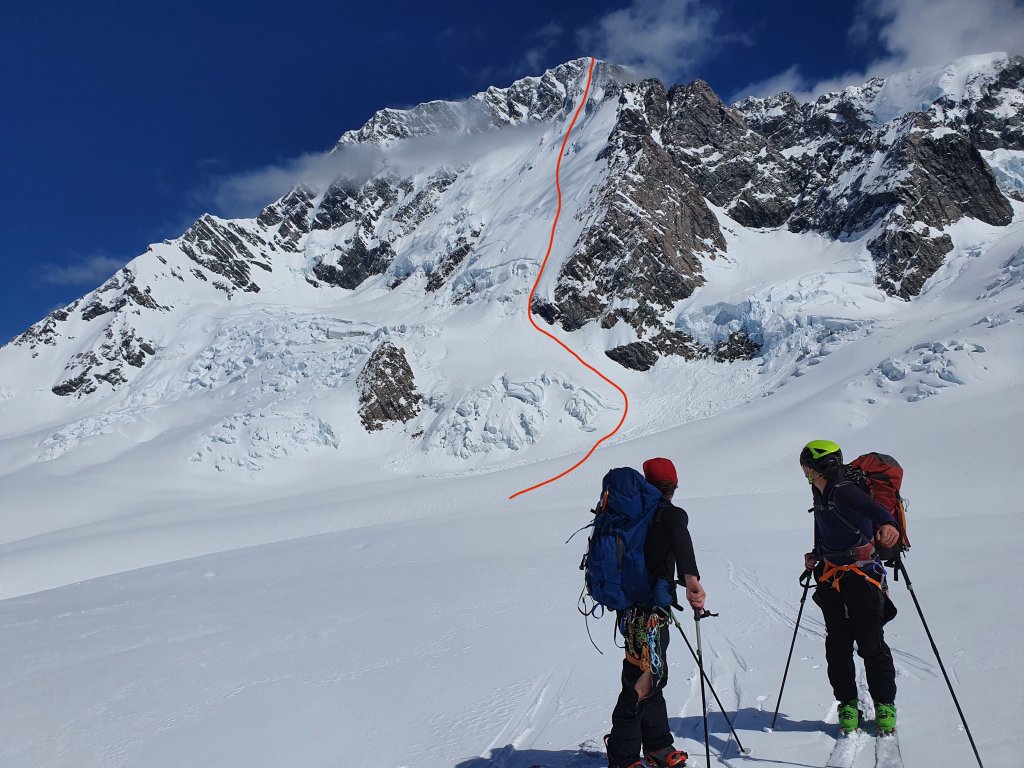
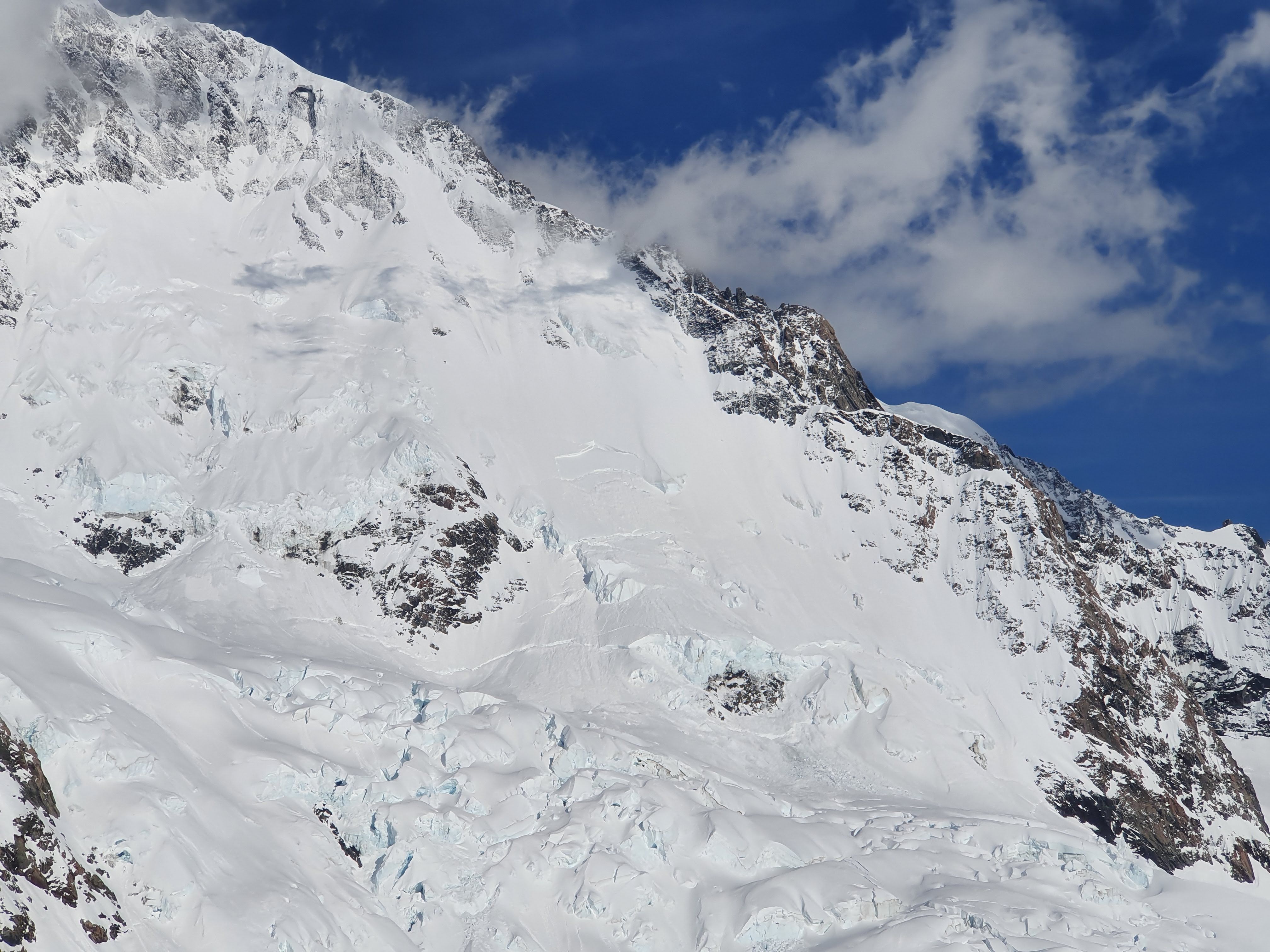
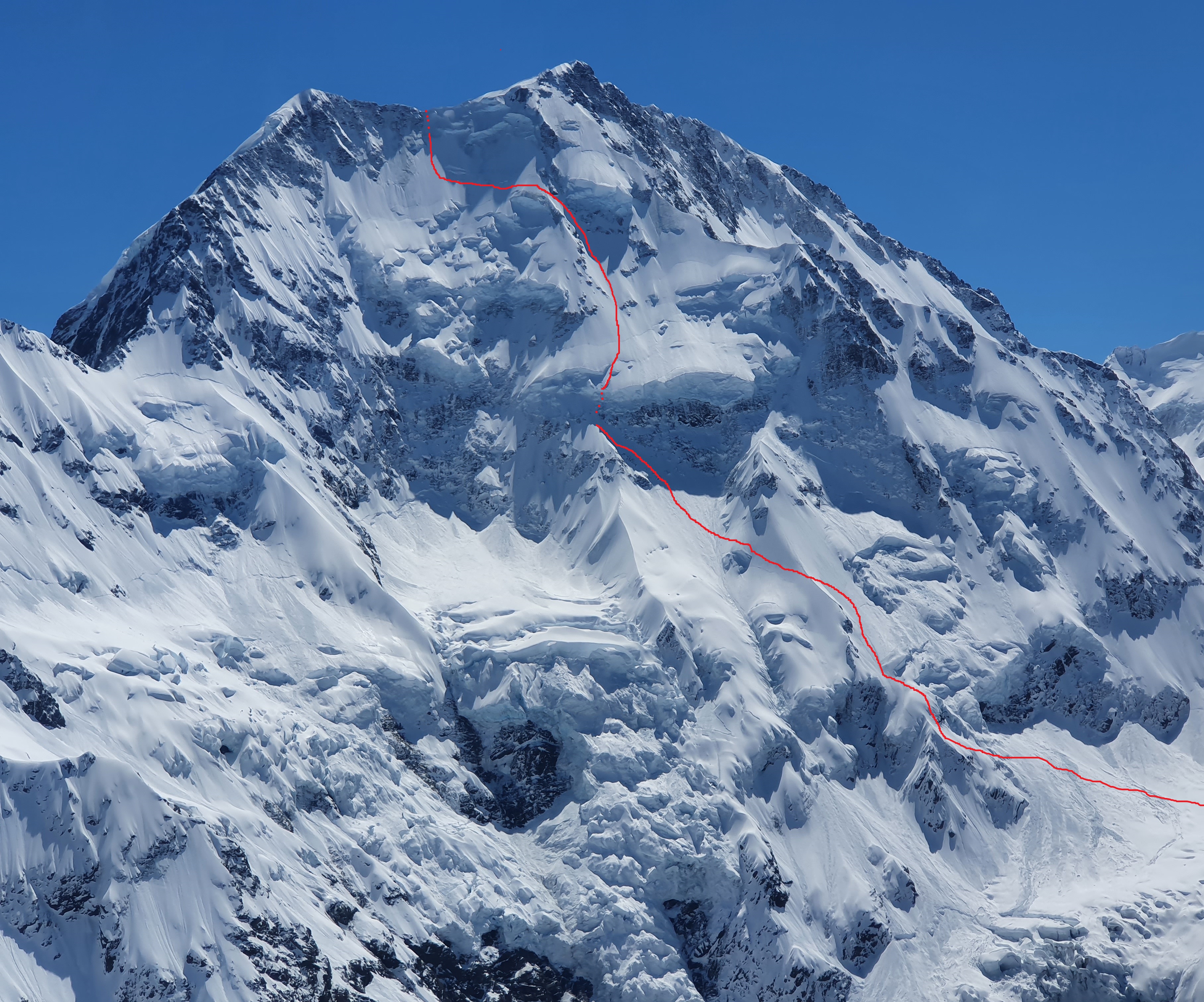
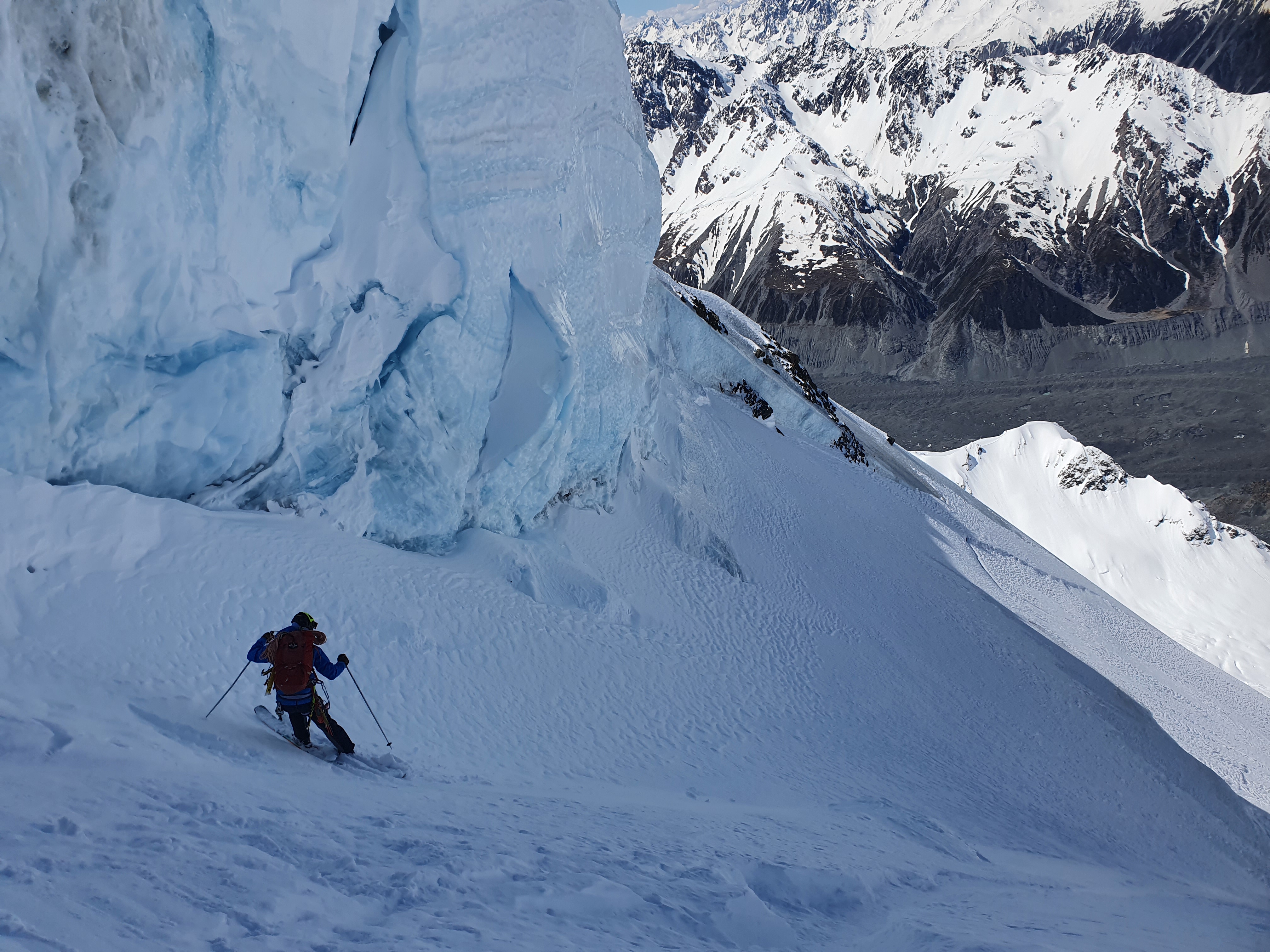
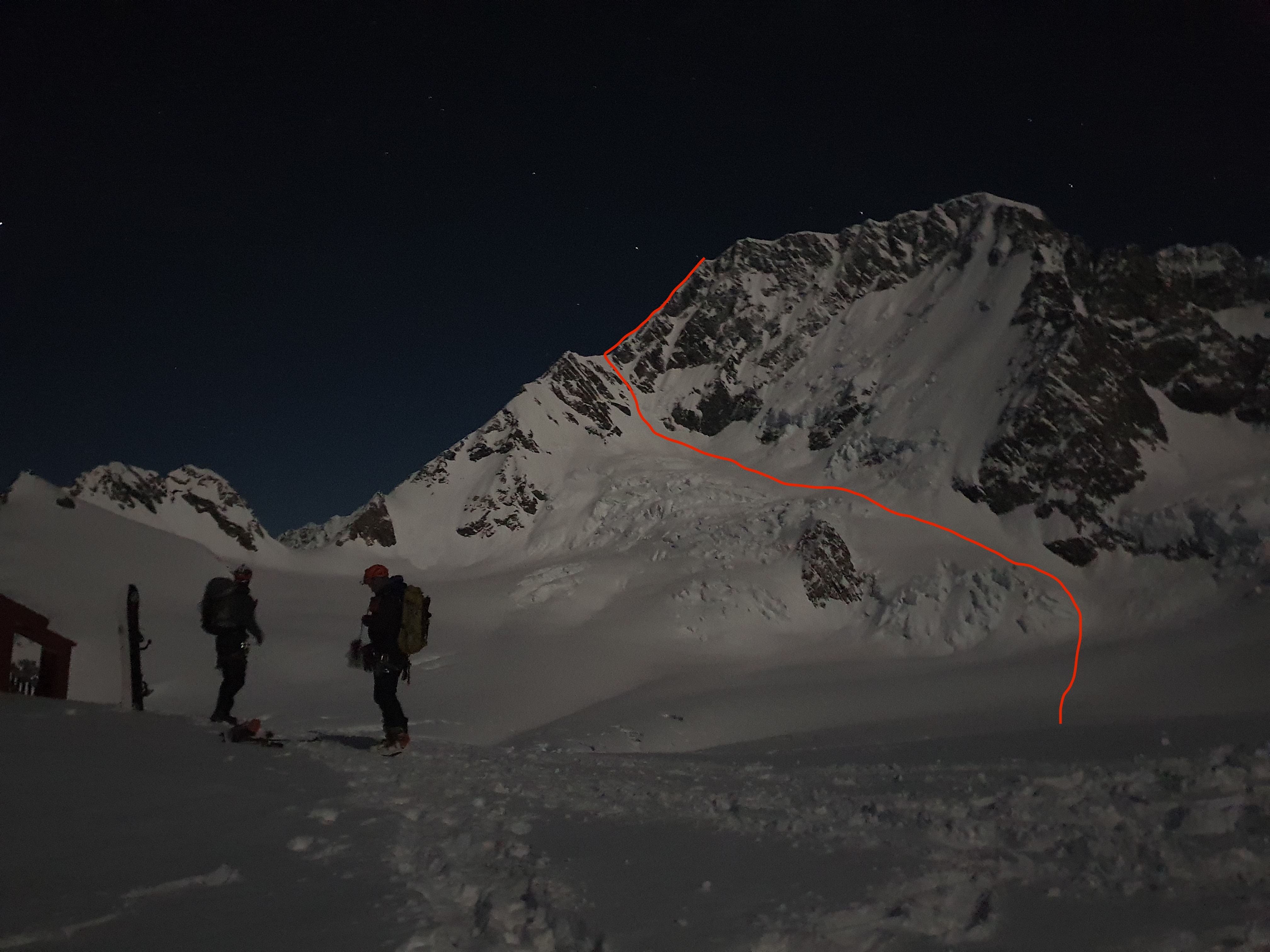
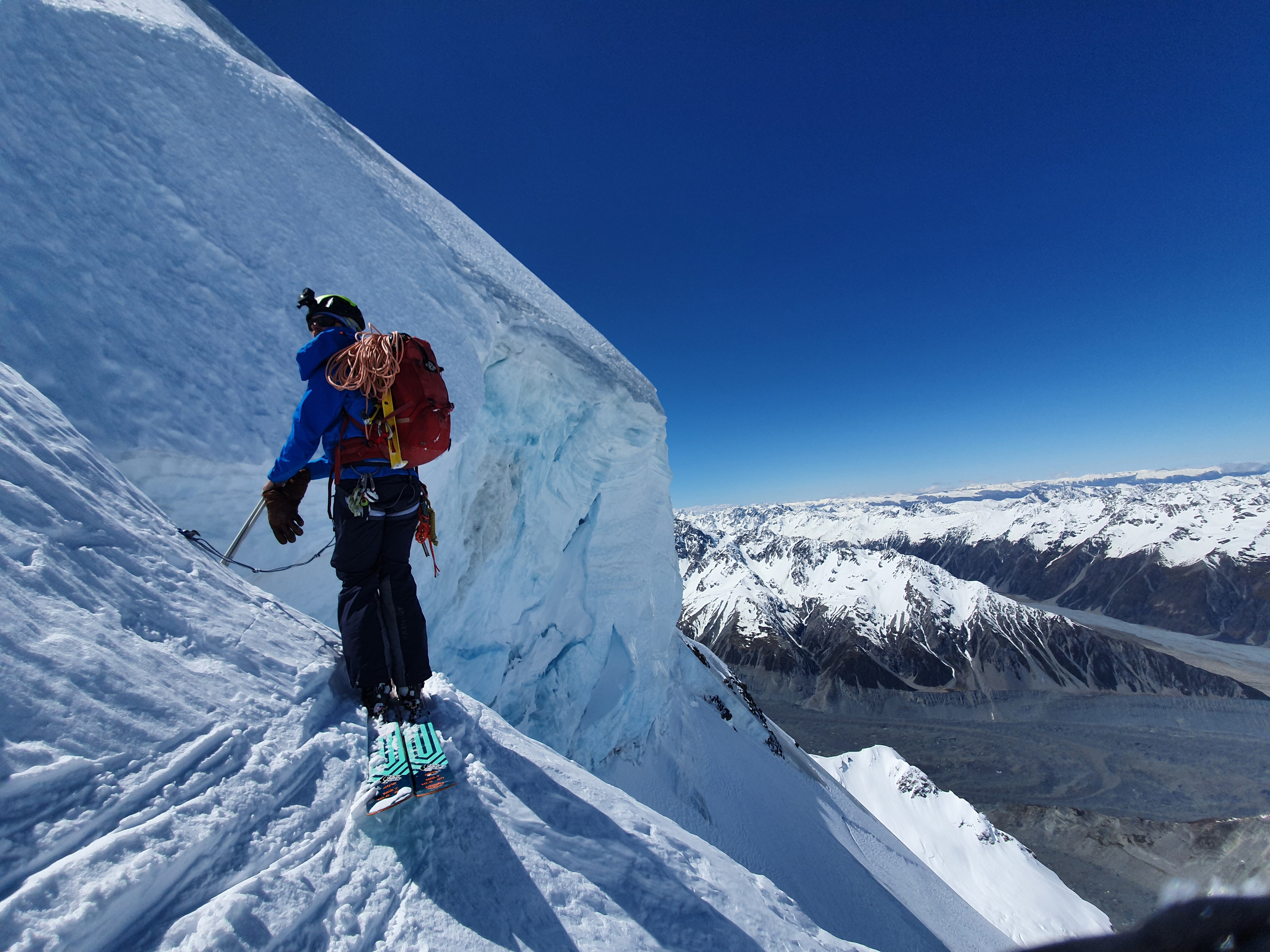
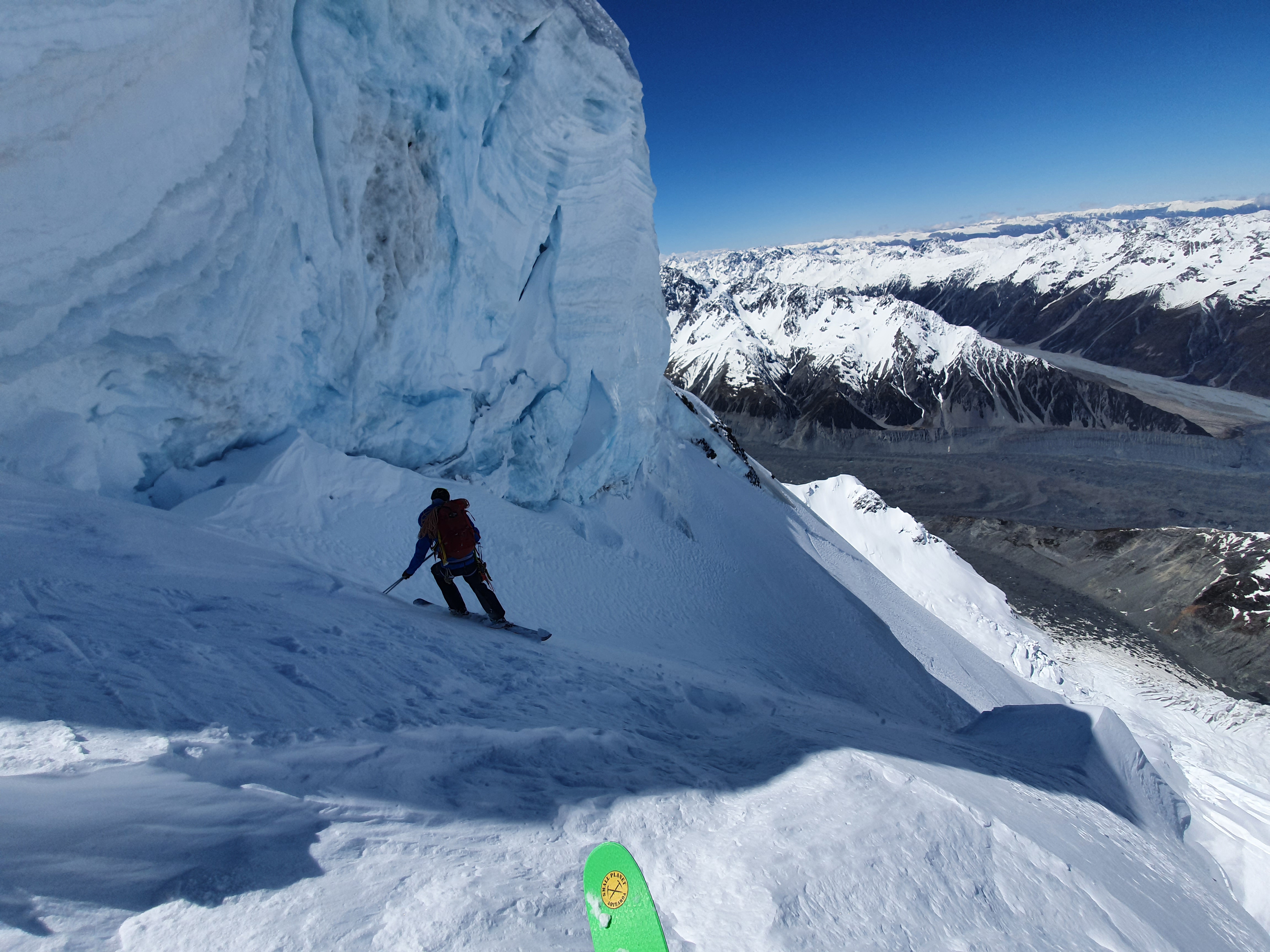
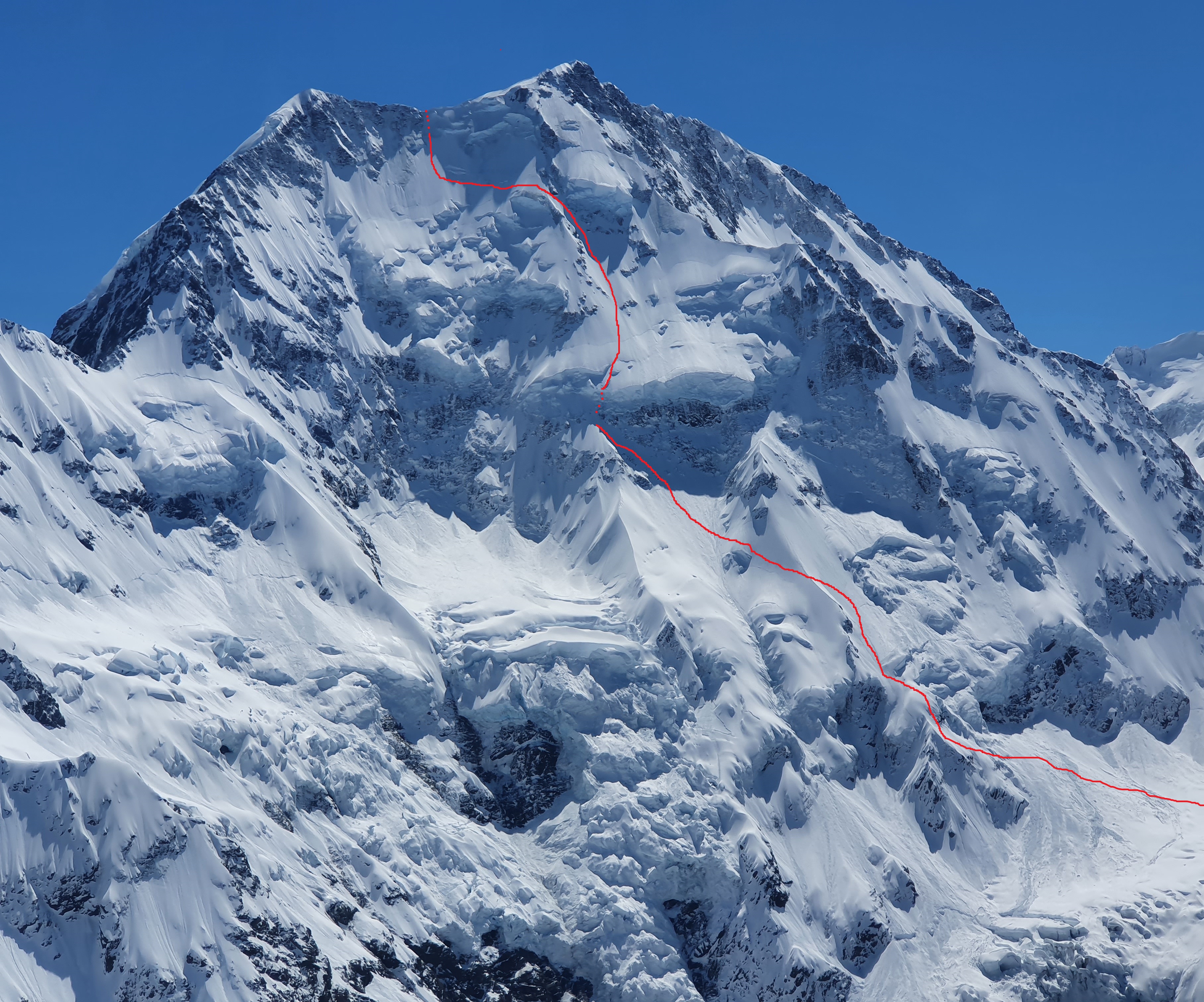
Pretty straightforward route finding. Note the ice cliff on the right at the bottom – this is very active and you want to stay out from under this as much as possible

I’ve skied this line twice, first on 3rd November 2019 with Sam McGrath and Zack Wentz, and again on 11th October 2020 with Pete Deytrick and Graham Dawson. It seems like a waste of a weather window in some ways to ski the exact same line twice, but it’s such a fun line when it’s in condition I would happily ski it a third time (plus me and Pete had been talking about skiing this line together for years… He couldn’t make the 2019 trip so I owed it to him to go up again!). This is definitely the time of year to go for your best chance of good stability and good coverage. Both times I skied the face in powder, which is super fun but means you’ve got to be especially careful with stability.

Approach
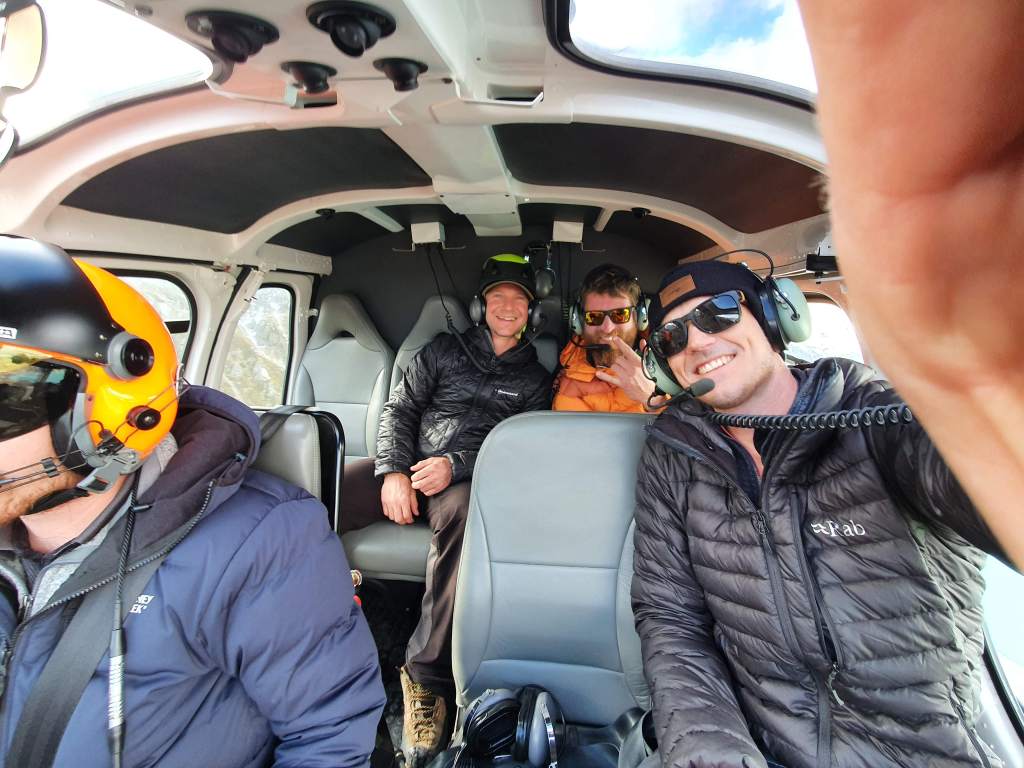
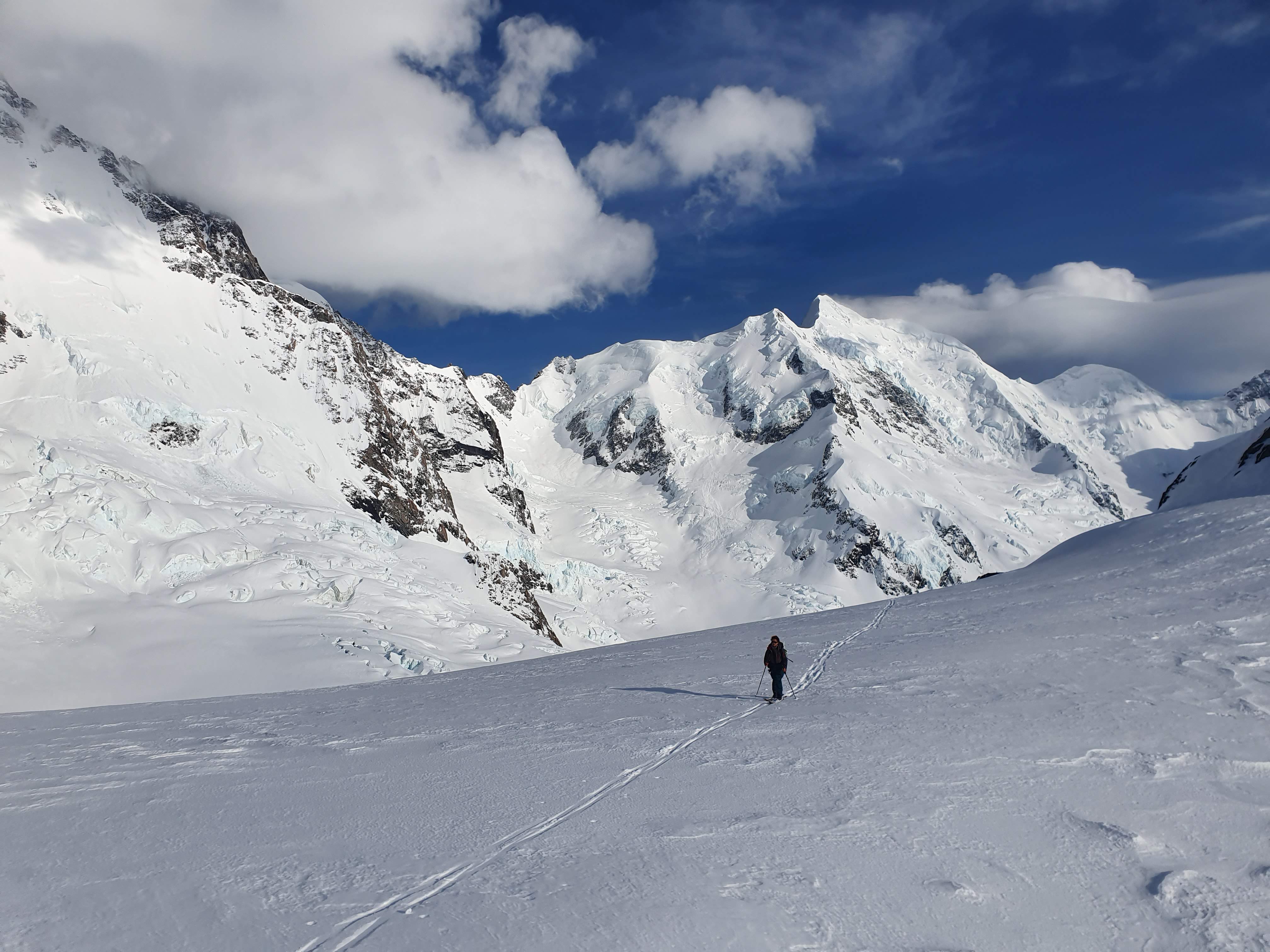
Taking the easy way in to Plateau

I’ve always gone for the fly in option – a flight from Cook airport takes about 15 min and there are almost always other climbers or skiers around willing to split the flight to keep the costs down (and a ski plane is cheaper again). If you can get a back flight so customers both coming in and out its even cheaper, you can get it as low as 100ish bucks per person. The hike in is getting progressively more difficult due to the moraine washing out and collapsing along the ball shelter track.

Once you’re past the ball hut, you have to descend to the confluence of the Tasman and ball glaciers and then climb up to boys glacier to Cinerama col. Rock fall and wet slides are common on the boys so don’t be there too late in the day.

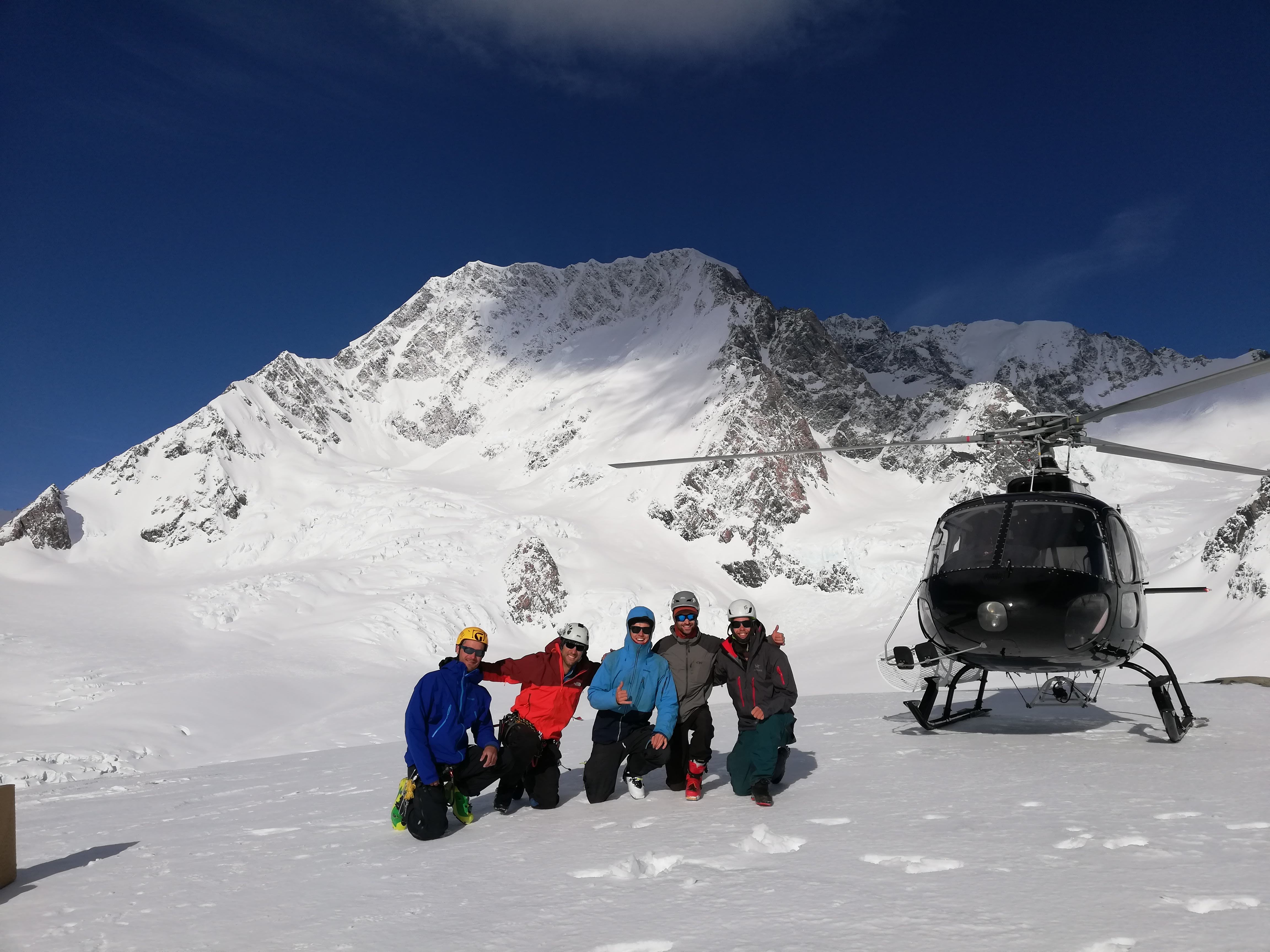
Plateau hut is incredible – 33 bunks in 4 different room, with plumbed in gas and cookers in the kitchen plus all the pots / pans / cutlery you could need. The heli drops you about 20m from the hut so bringing food in a big cardboard box or bin bags is a good option. If you take the ski plane it lands about an 45 min skin from the hut so you have to pack properly.
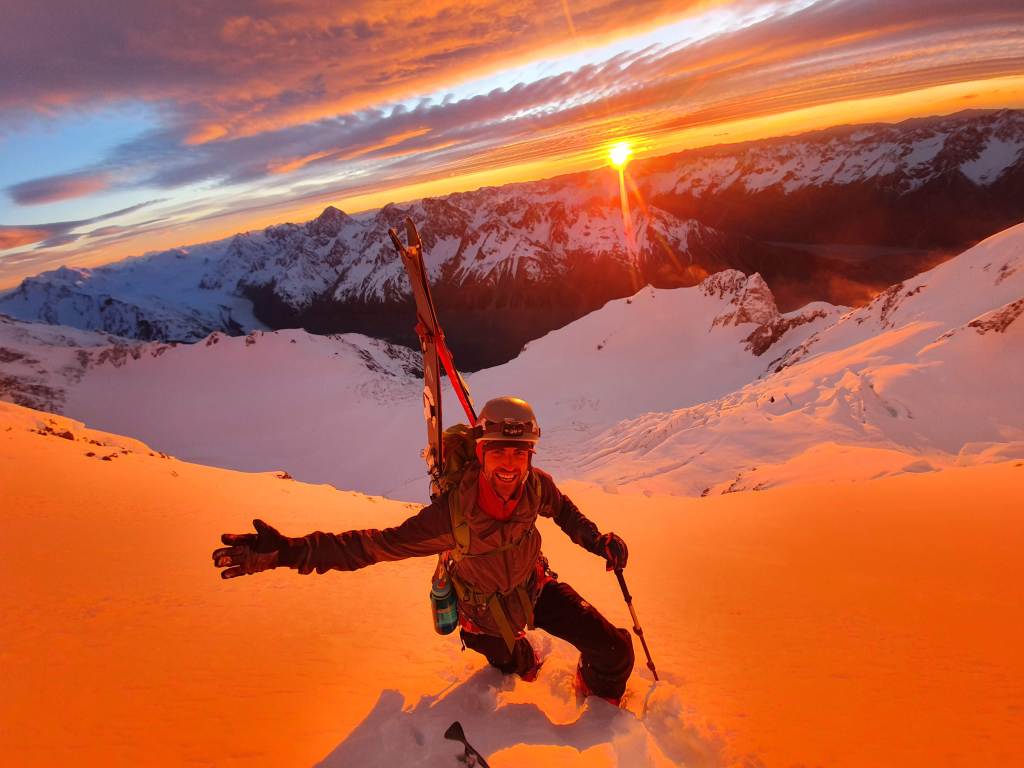
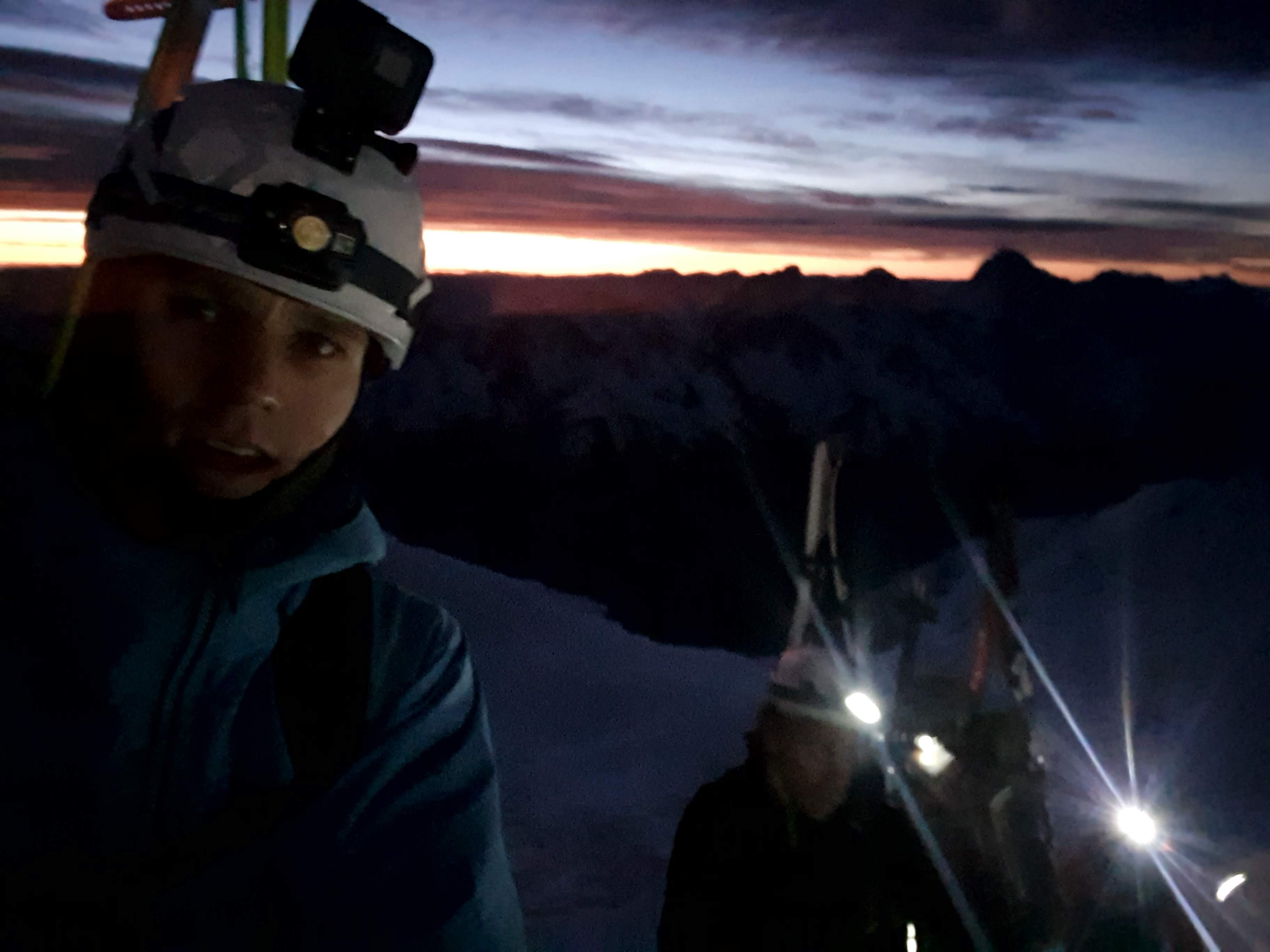
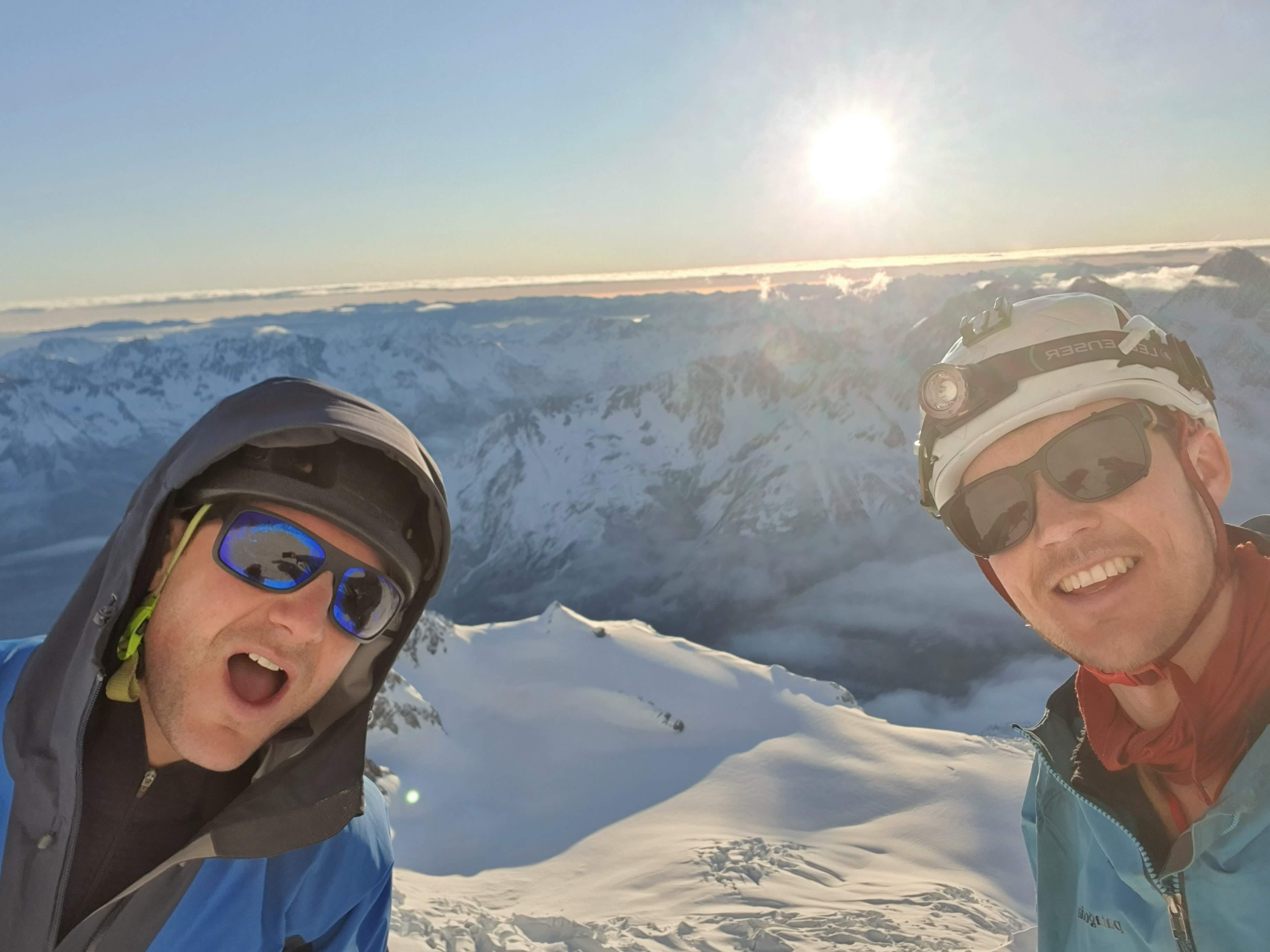
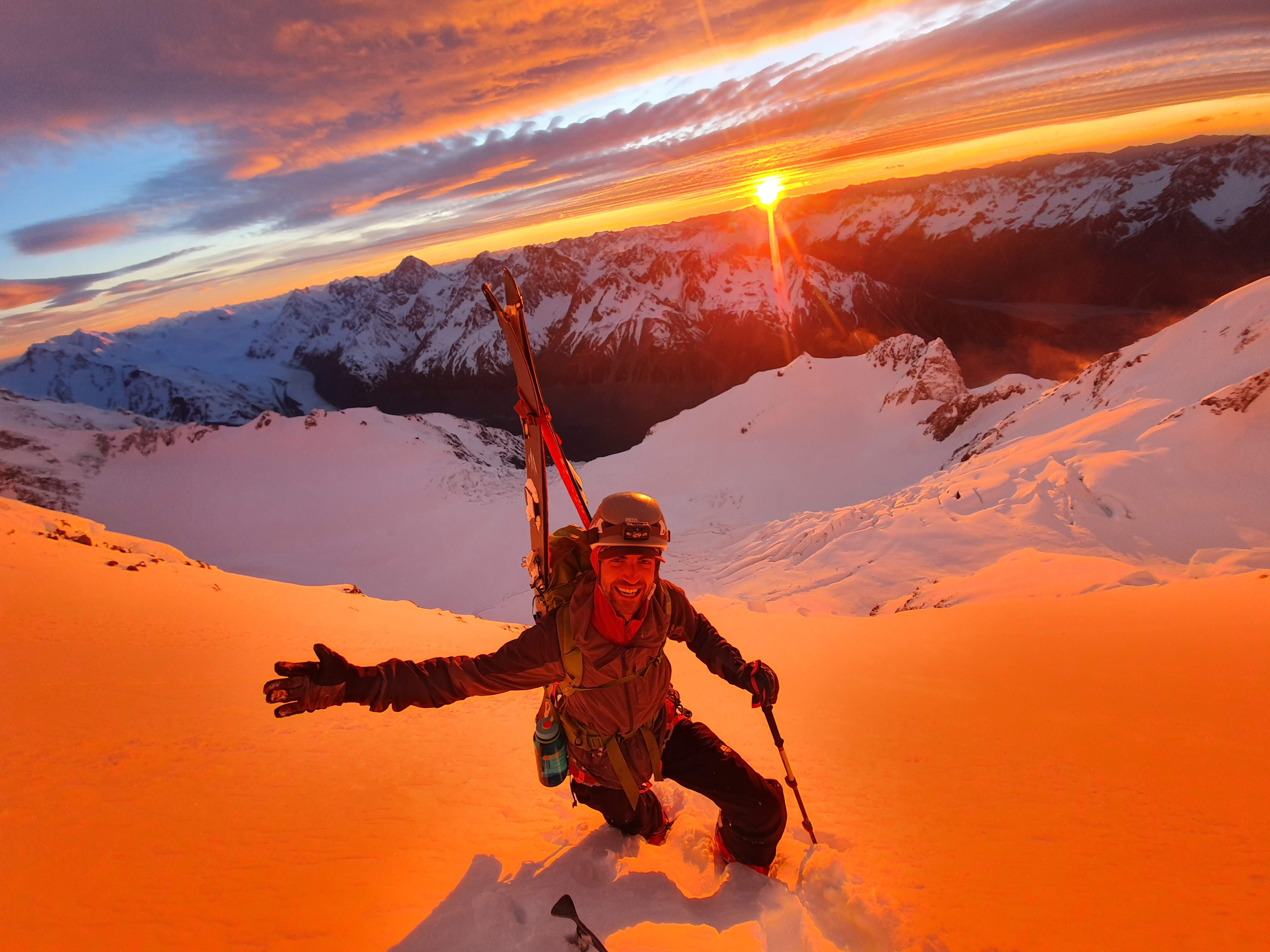
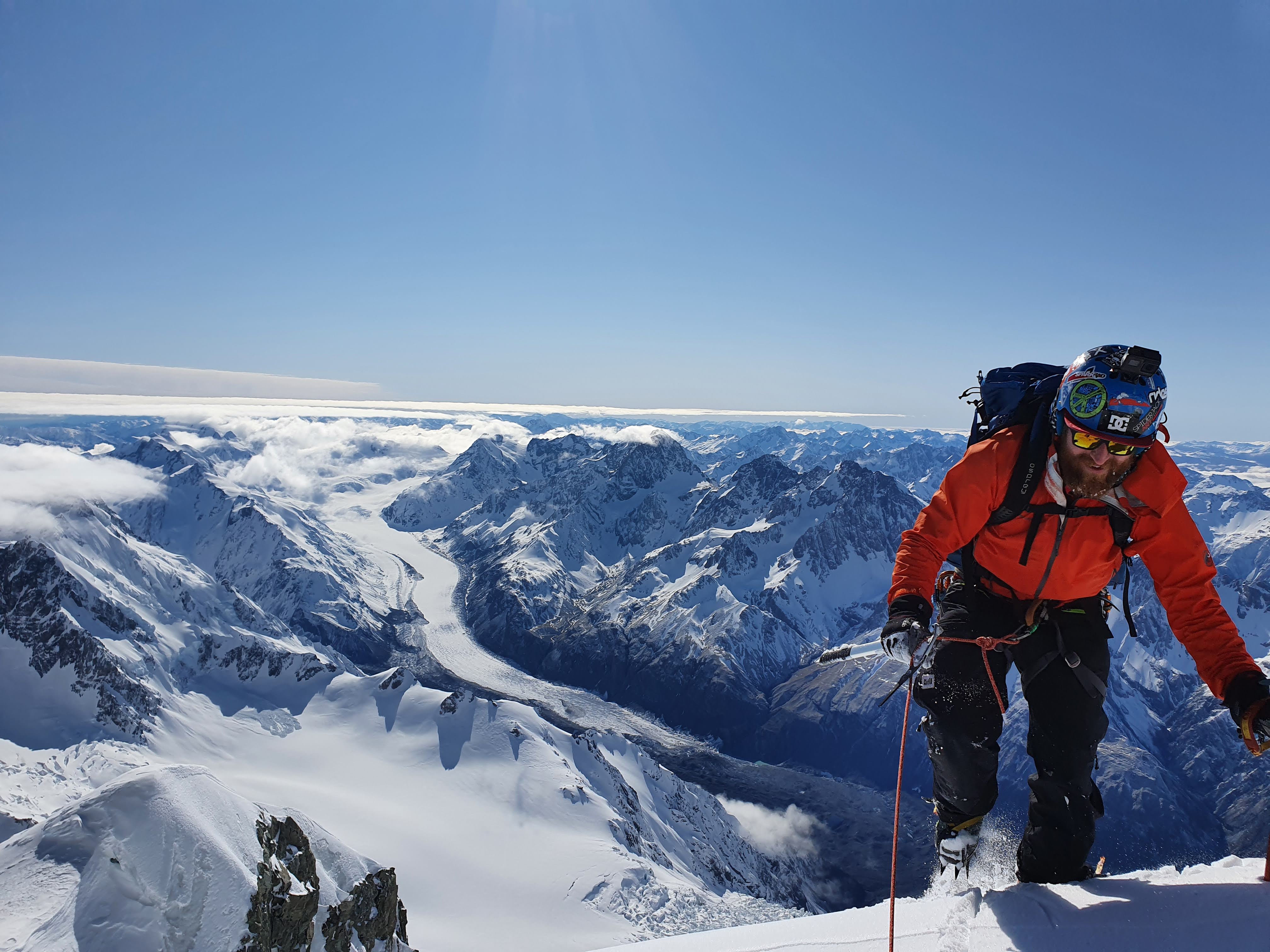
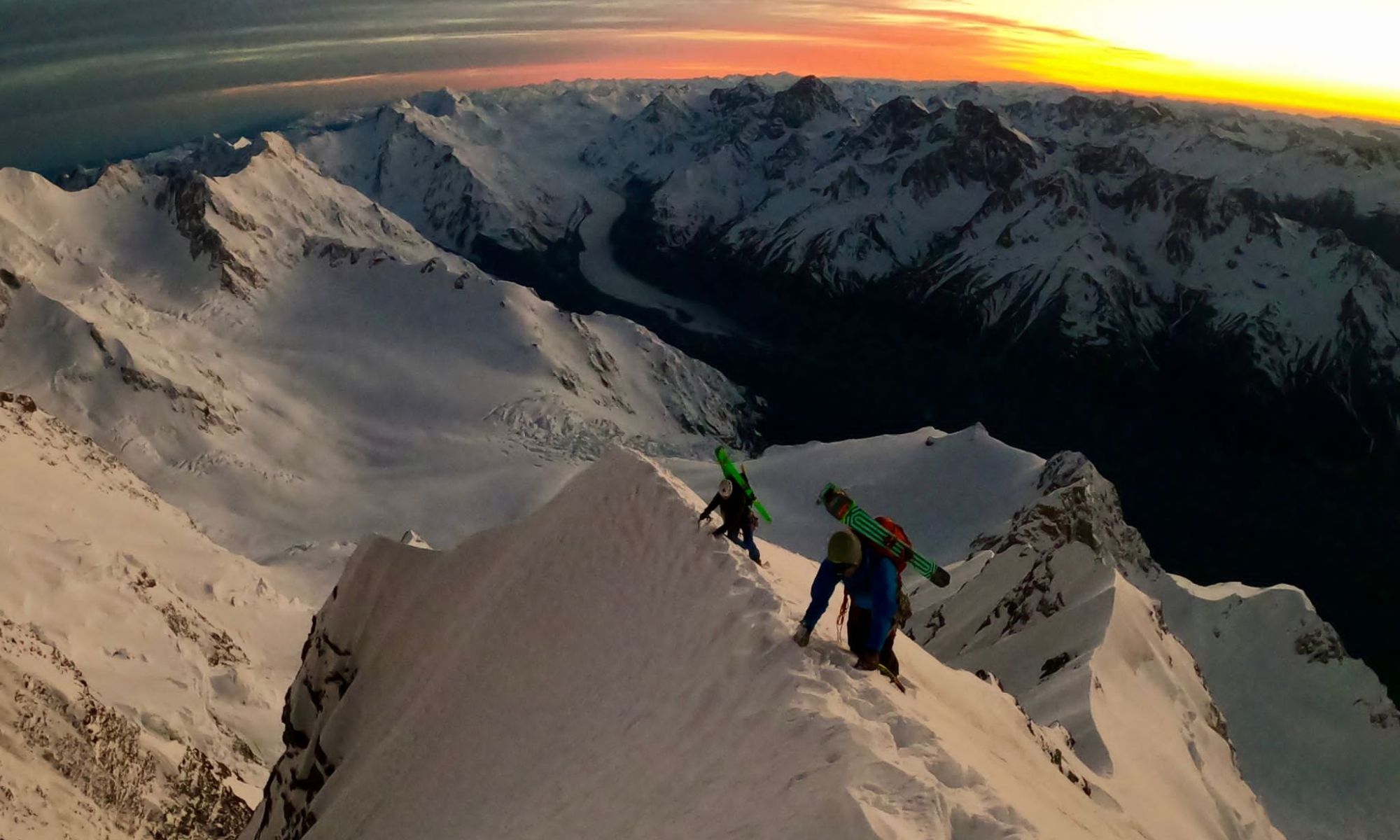
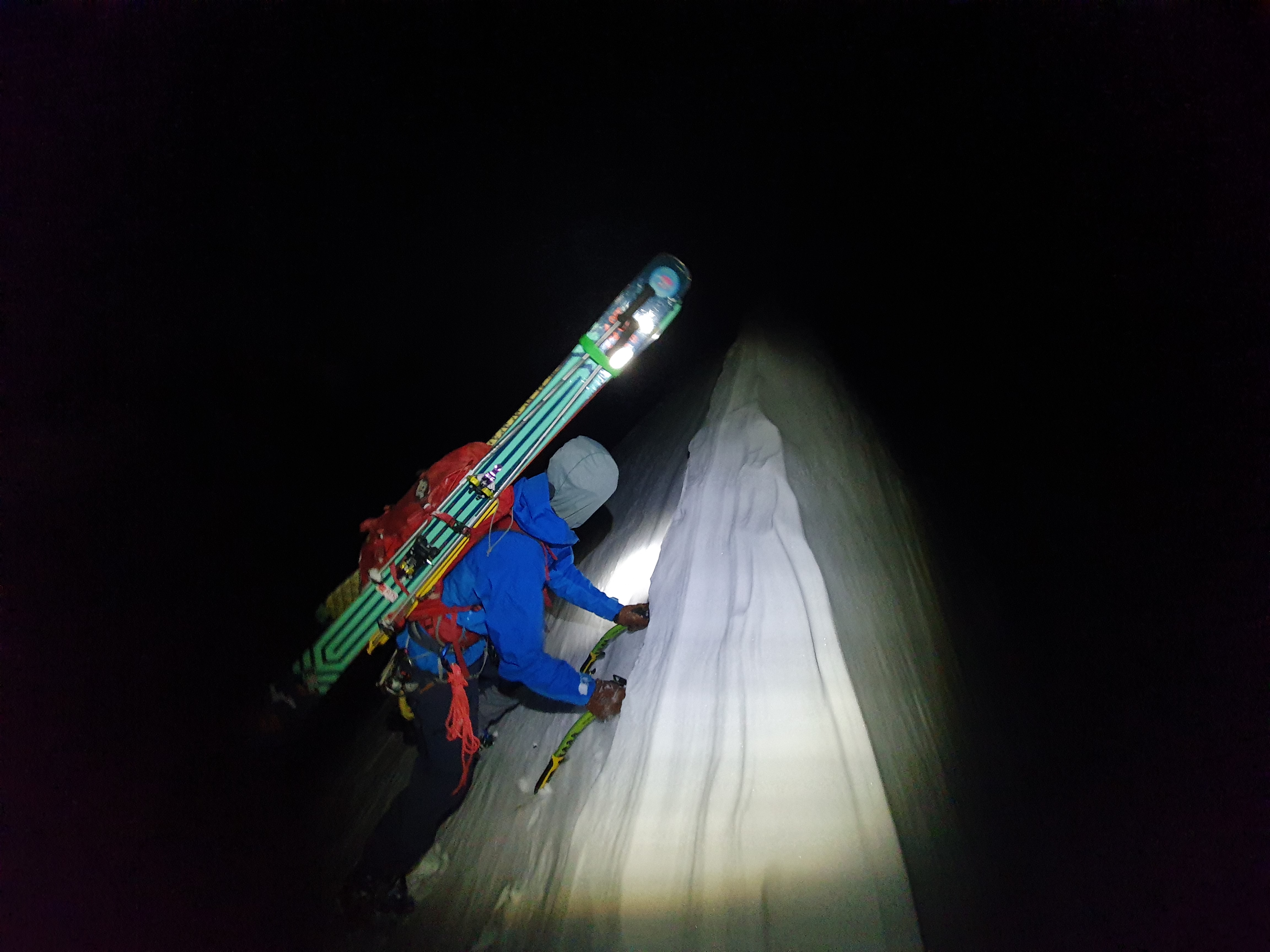
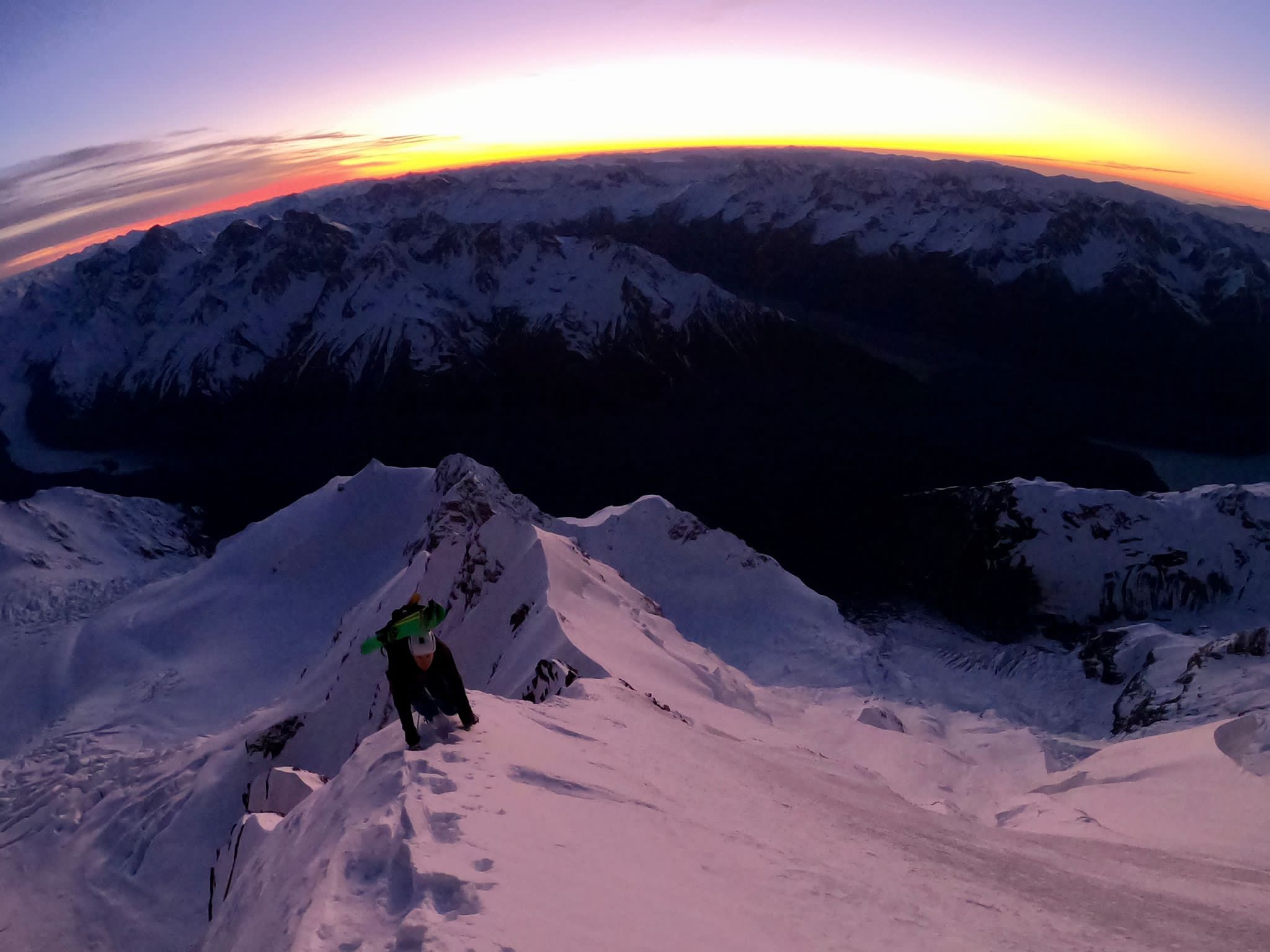
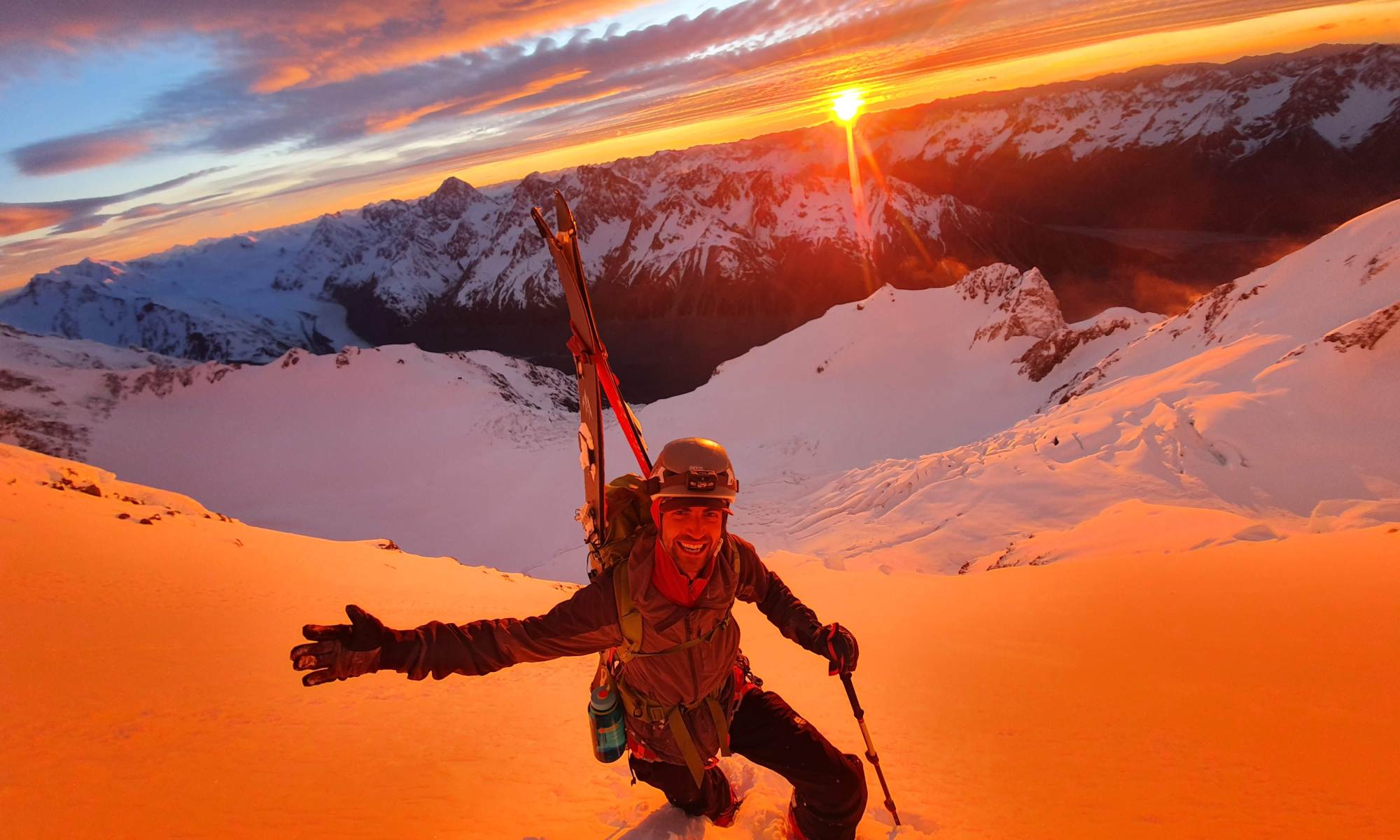
Zack catching some wild sunrise rays half way up the East face
Climb

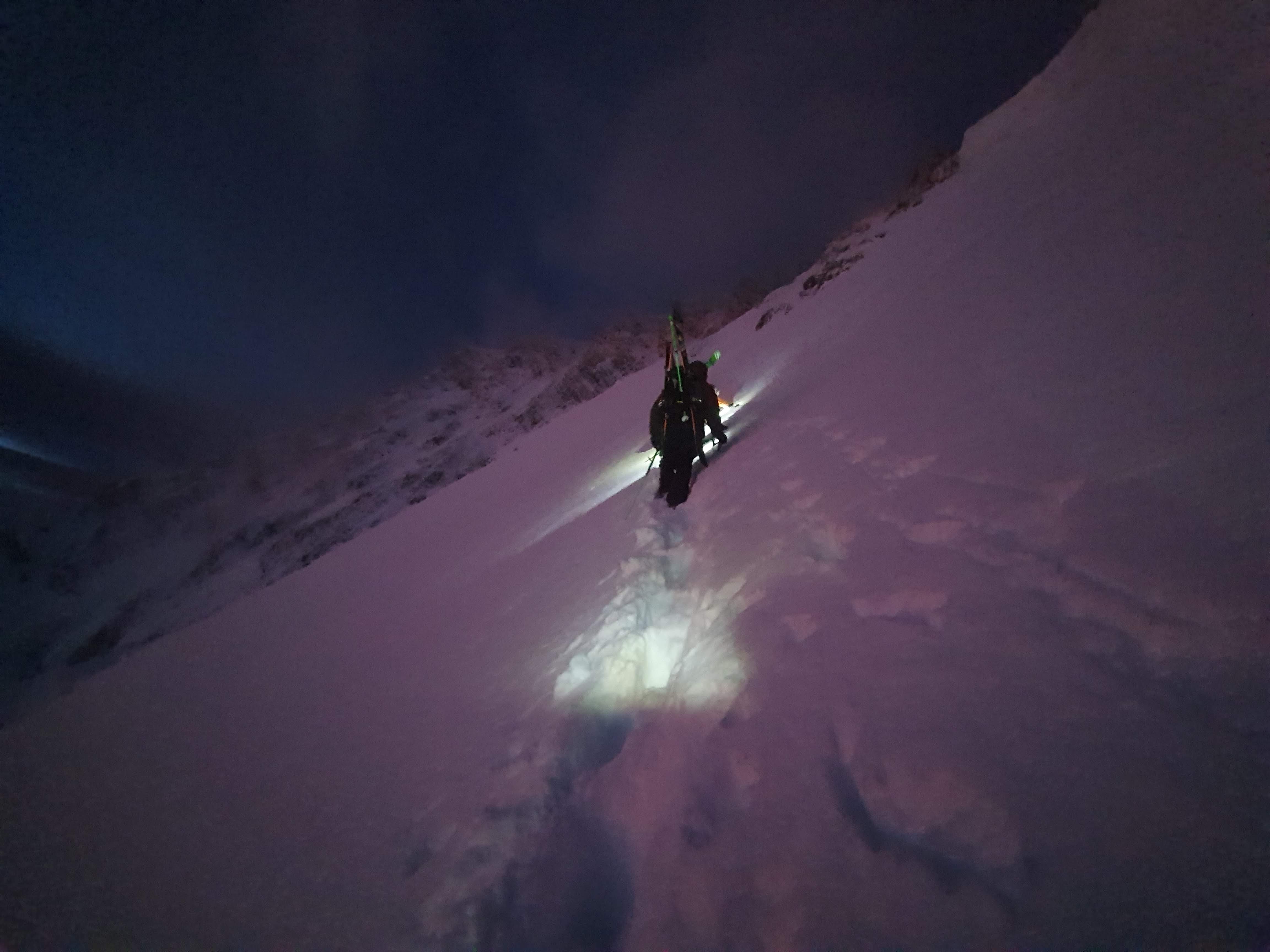
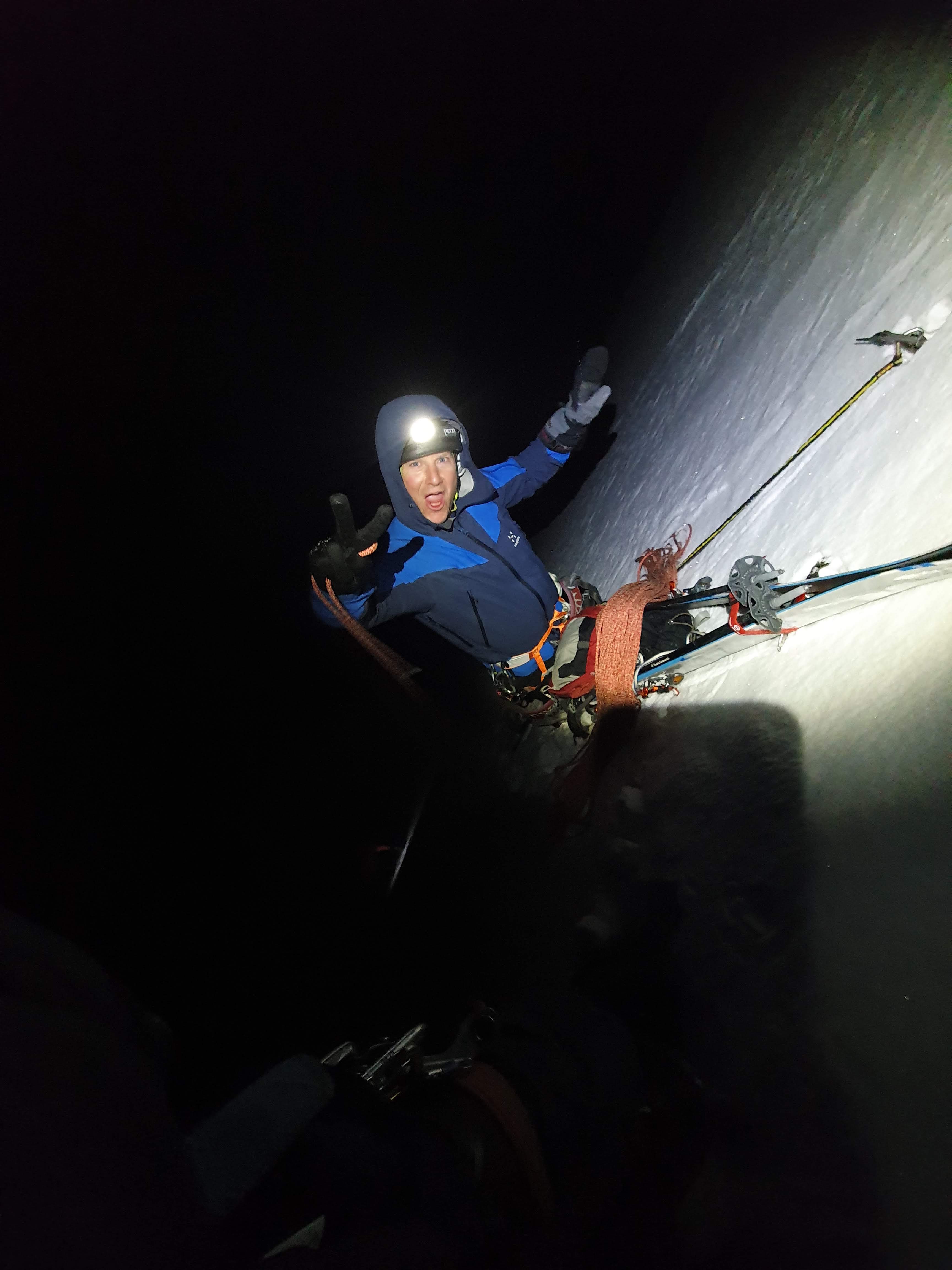
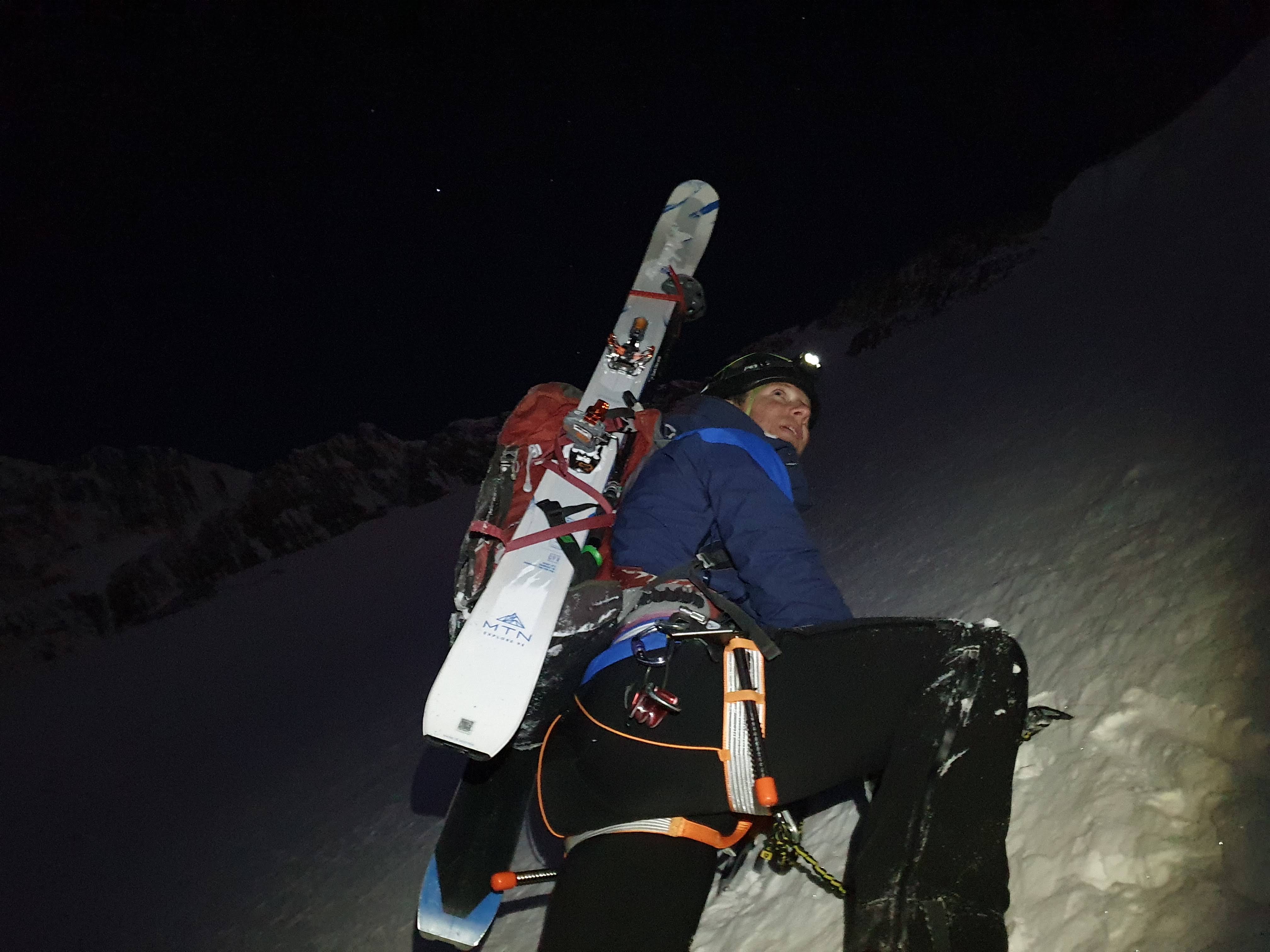
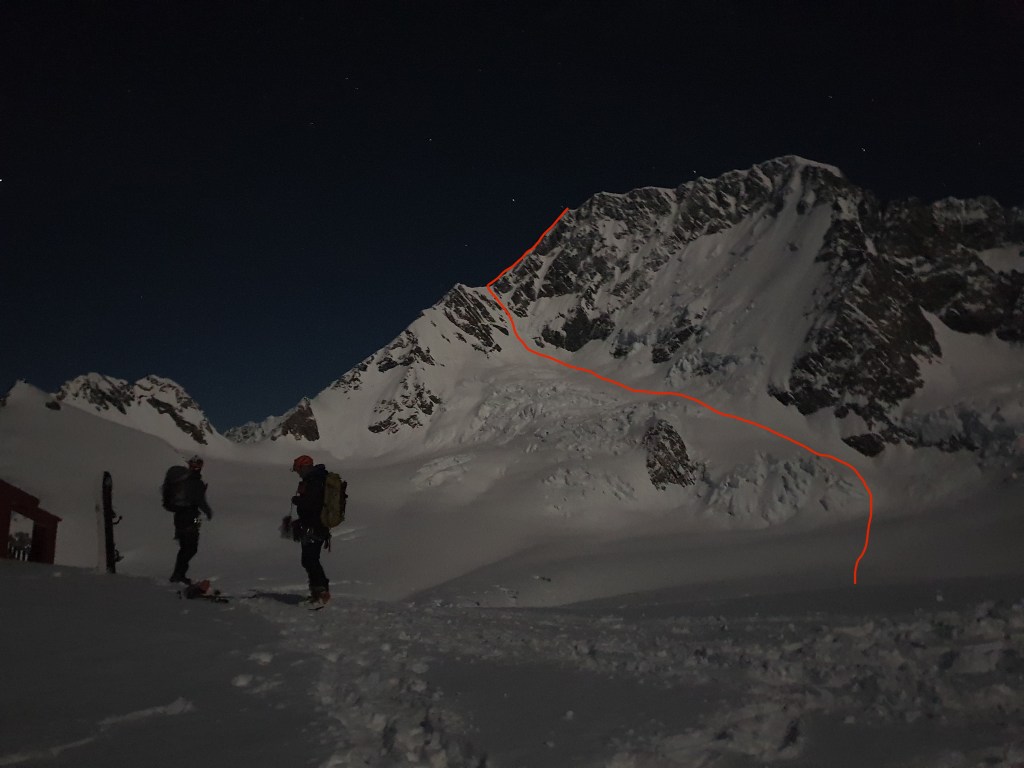
The East face gets hot fast as soon as the sun hits so you need to be out early. We got up at midnight and out of the hut at 0100. It’s worth skiing over to the base of the route the day before to figure out the best way through the shrund at the bottom because it can be a bit confusing in the dark.

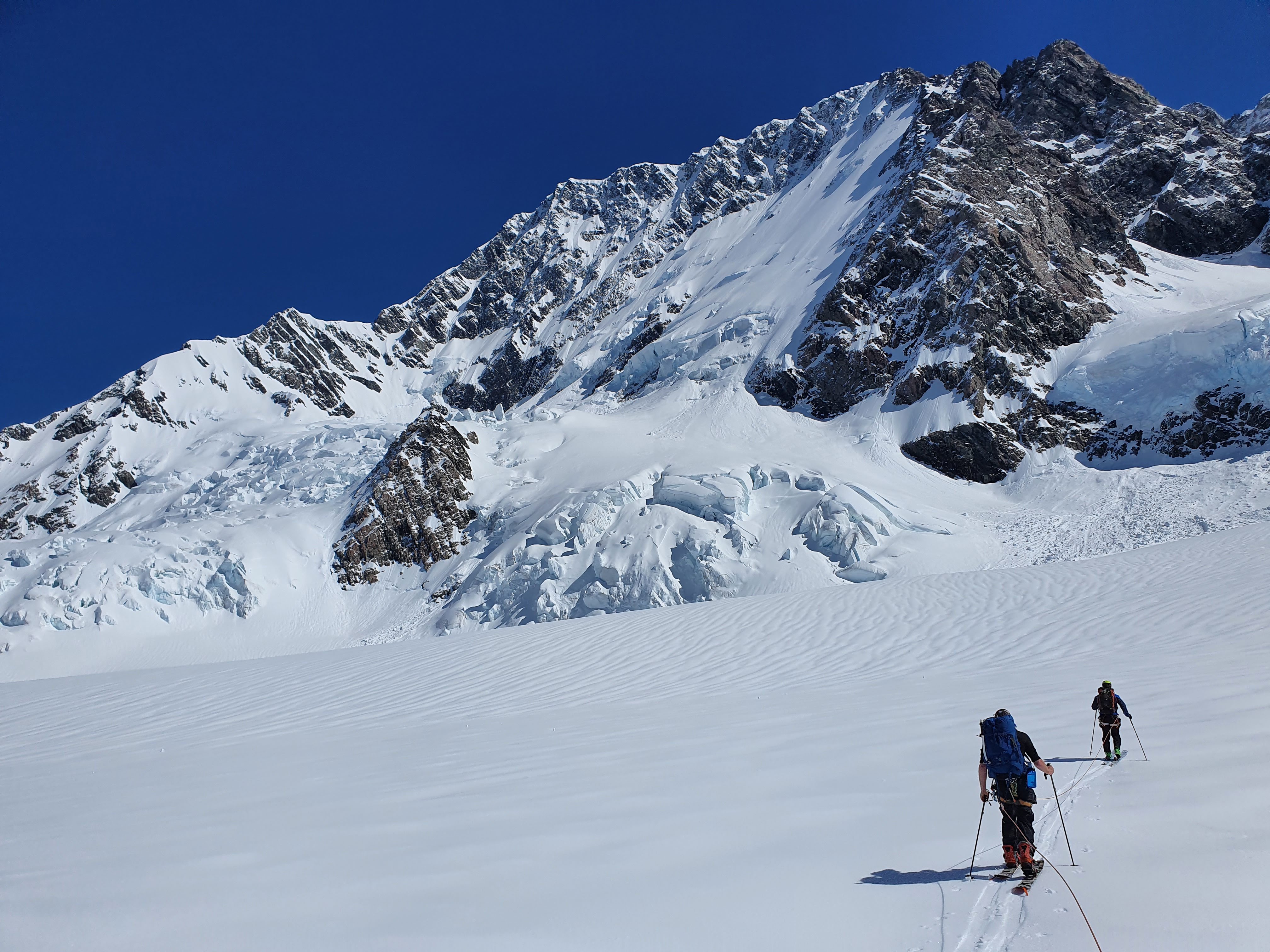
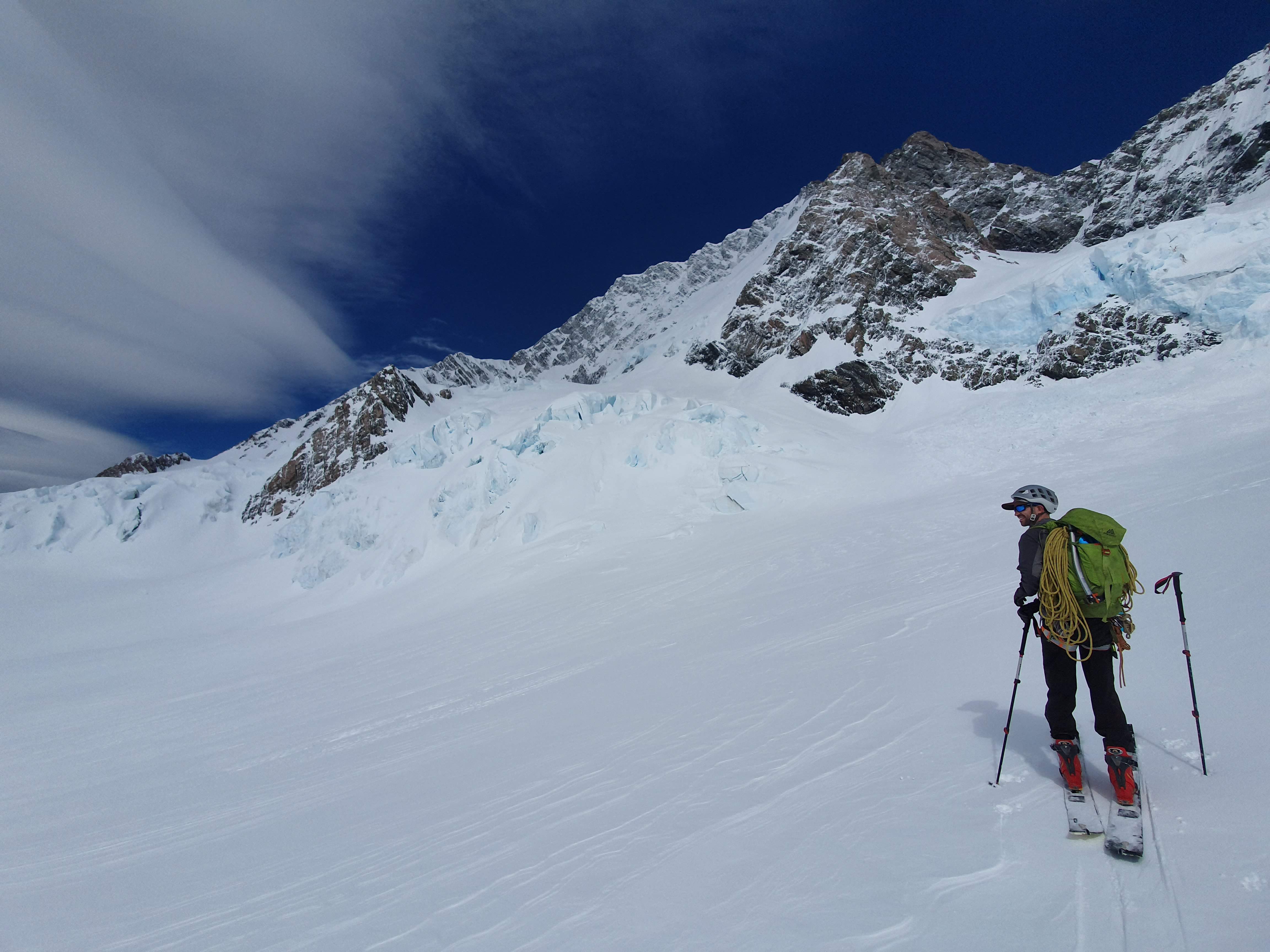
From the hut it’s a quick ski to the flat part at the base of Zurbriggens Ridge. There is a big active ice cliff at the base of the ridge – don’t linger under here and get up to the base of the East face out of the firing line ASAP.
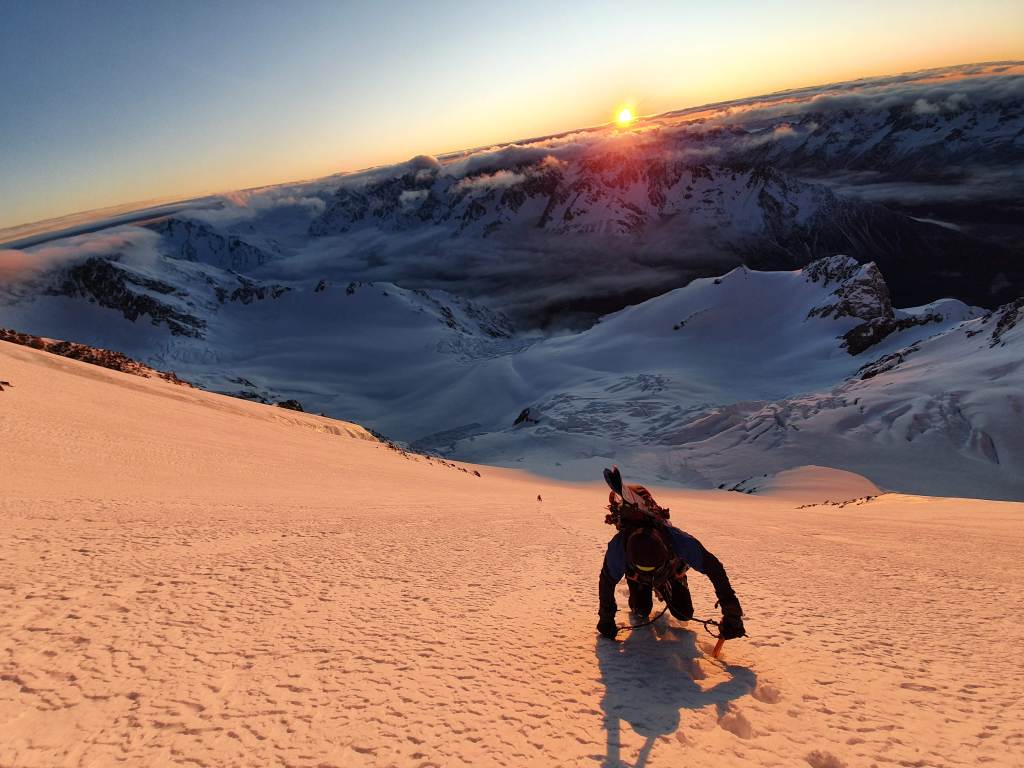
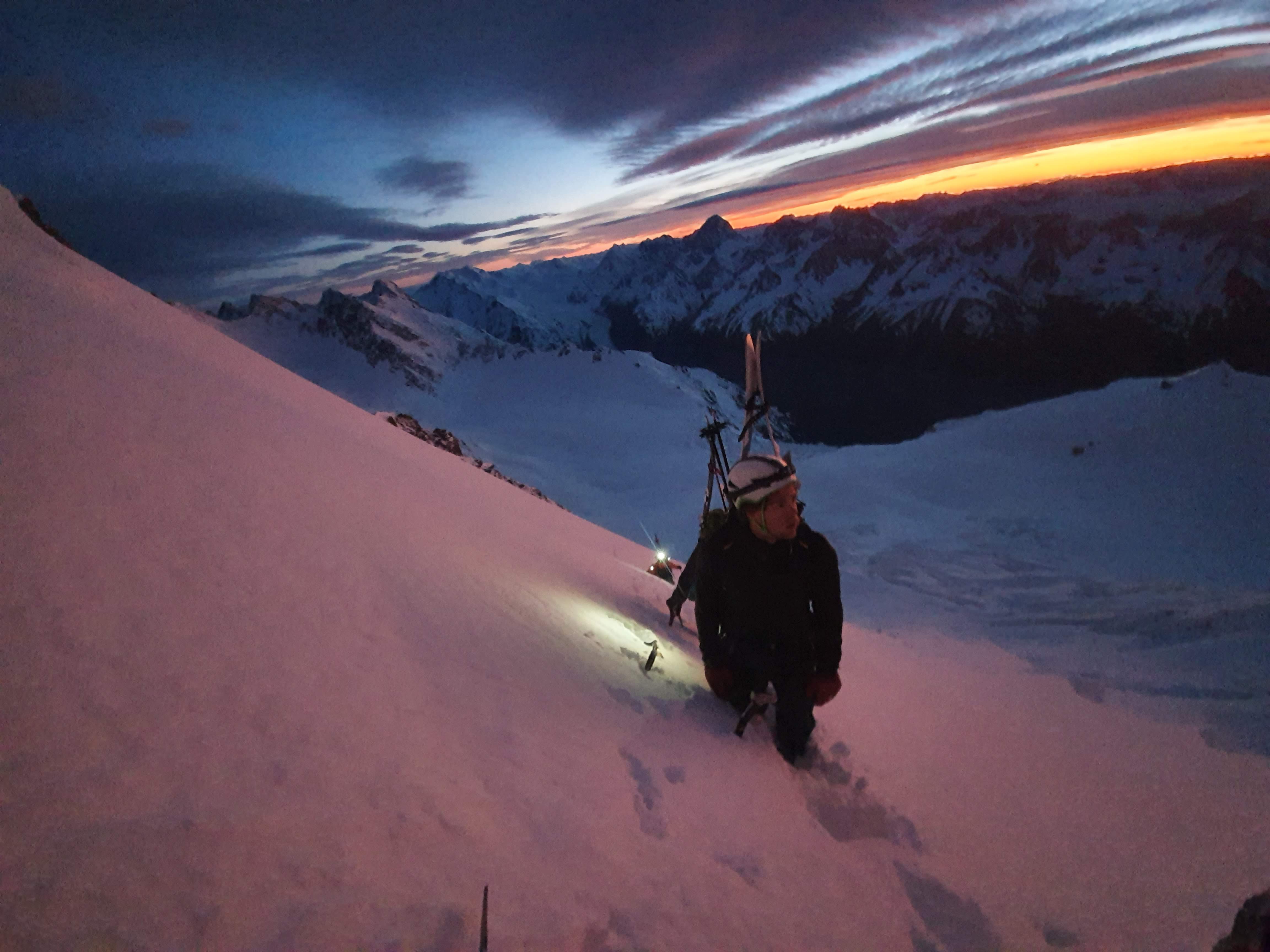
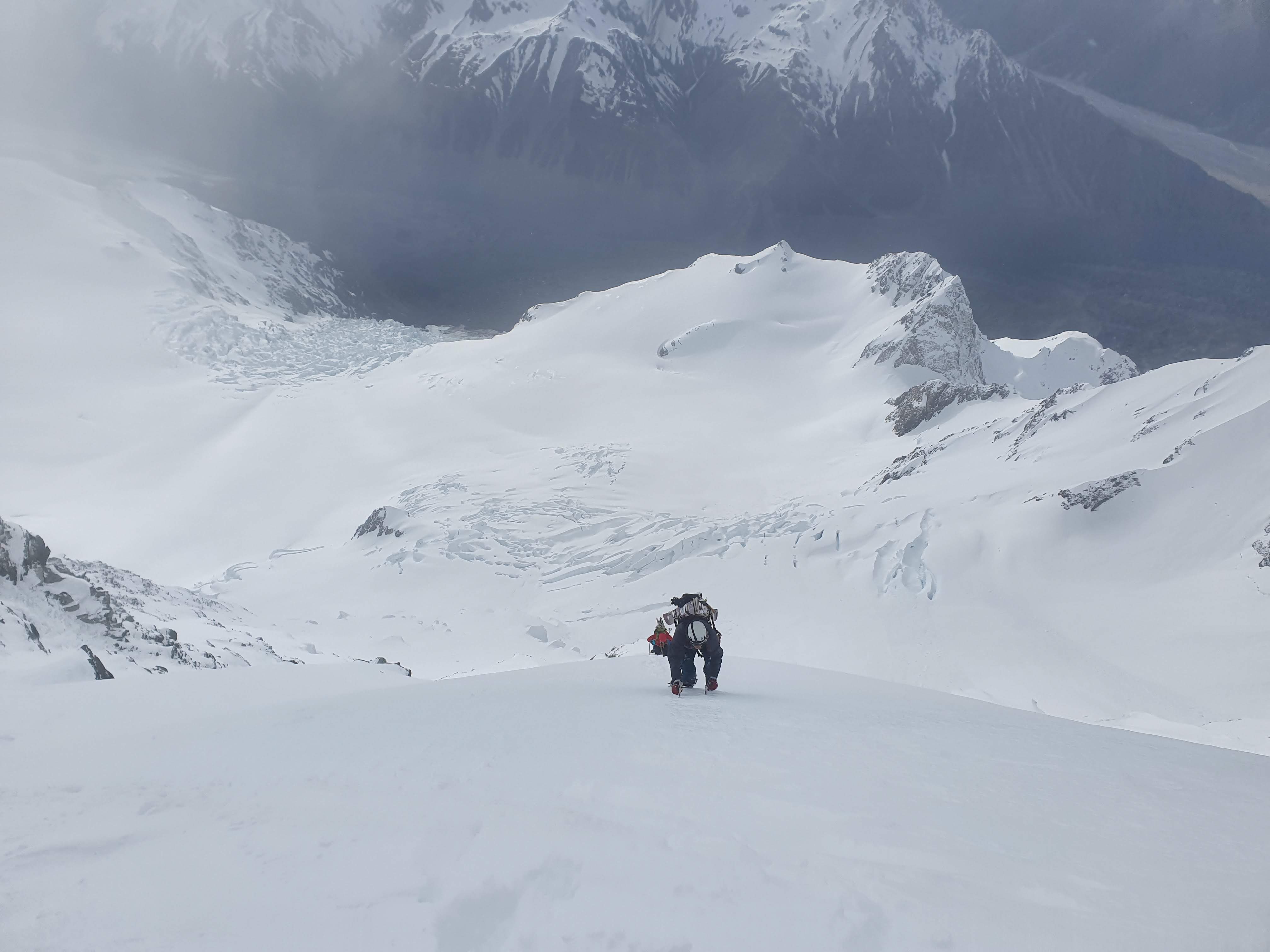
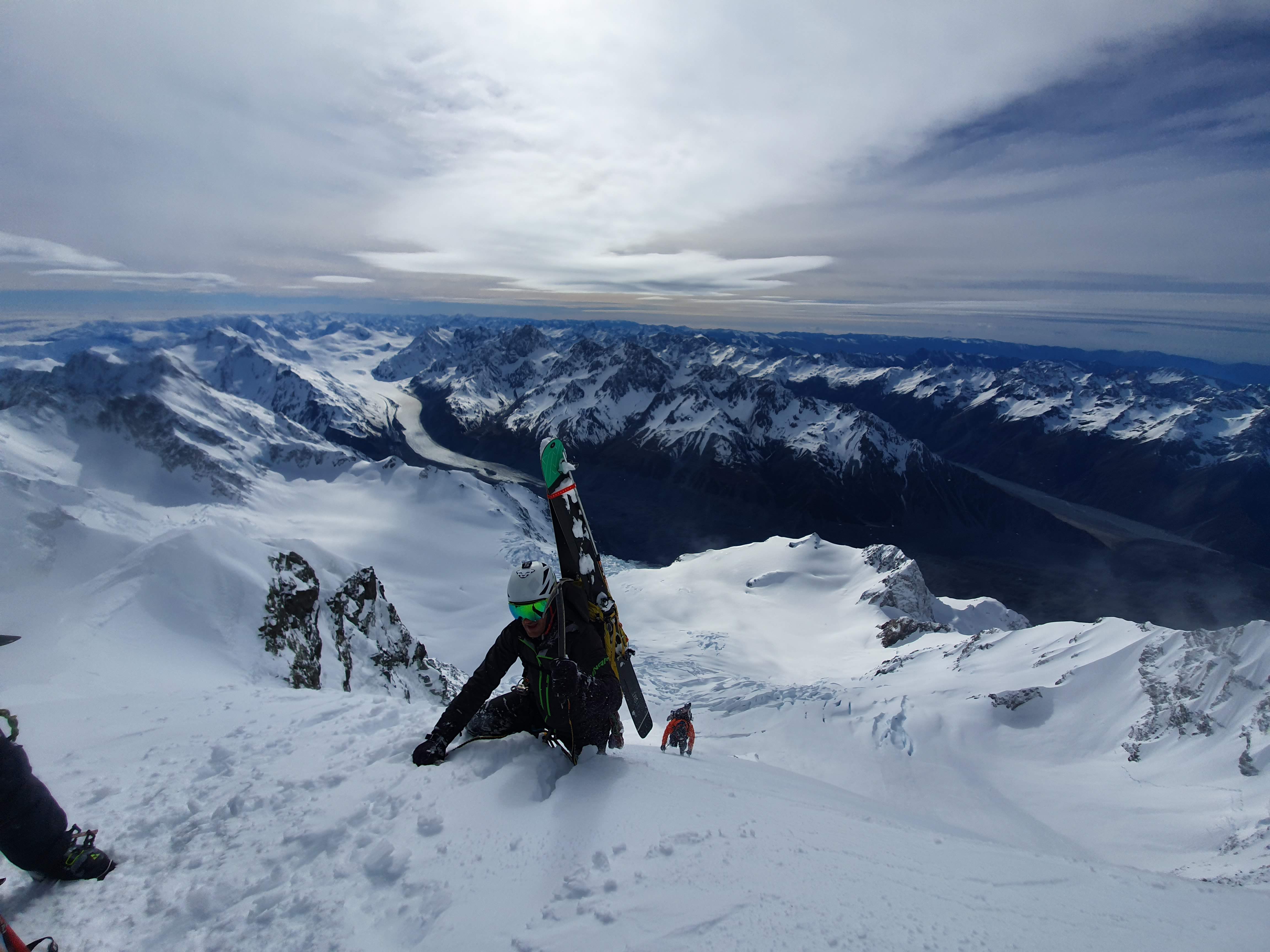
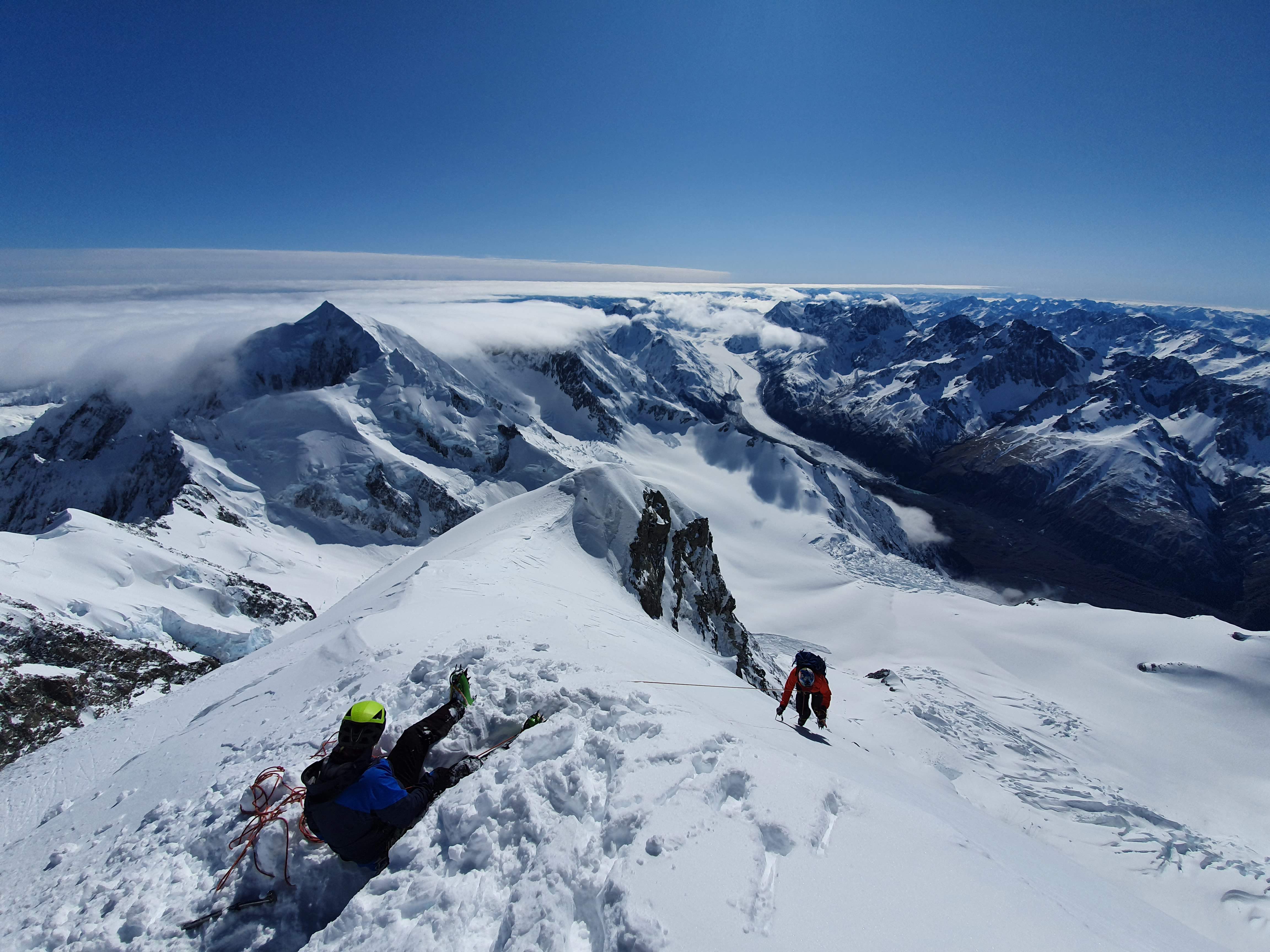
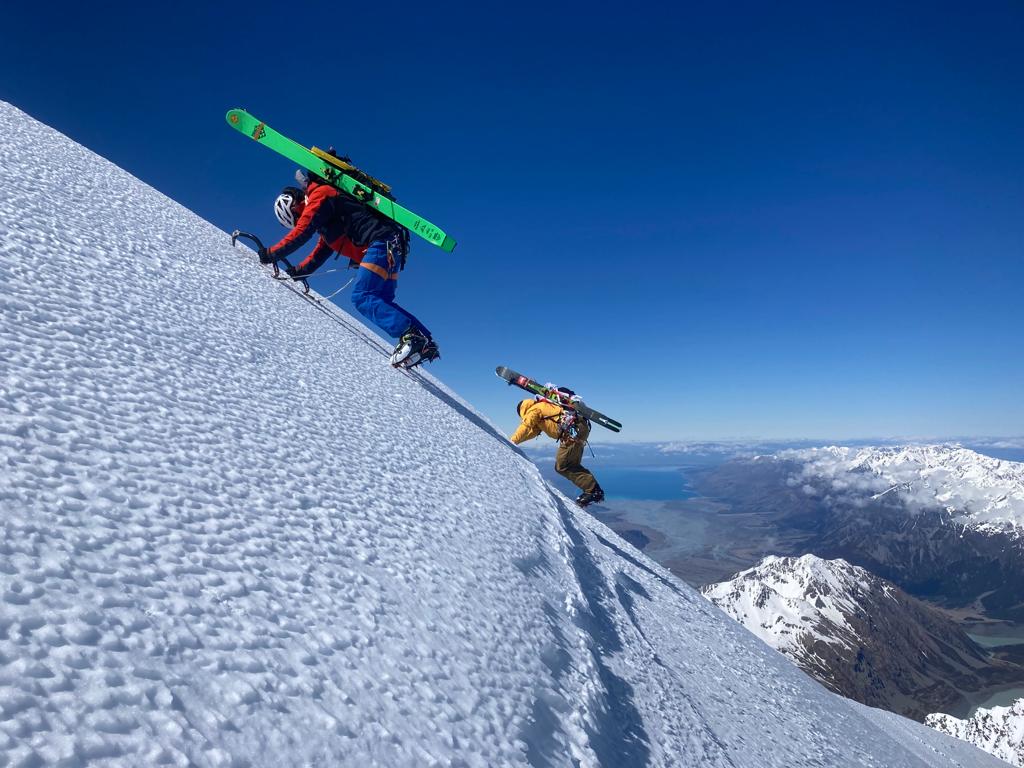
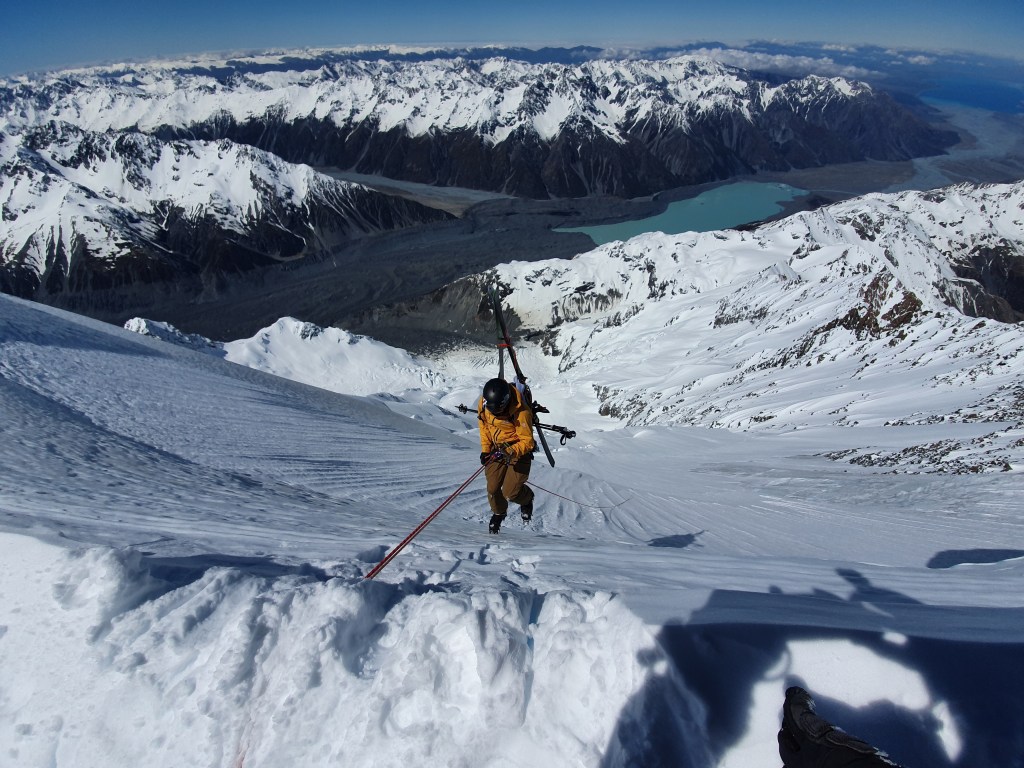
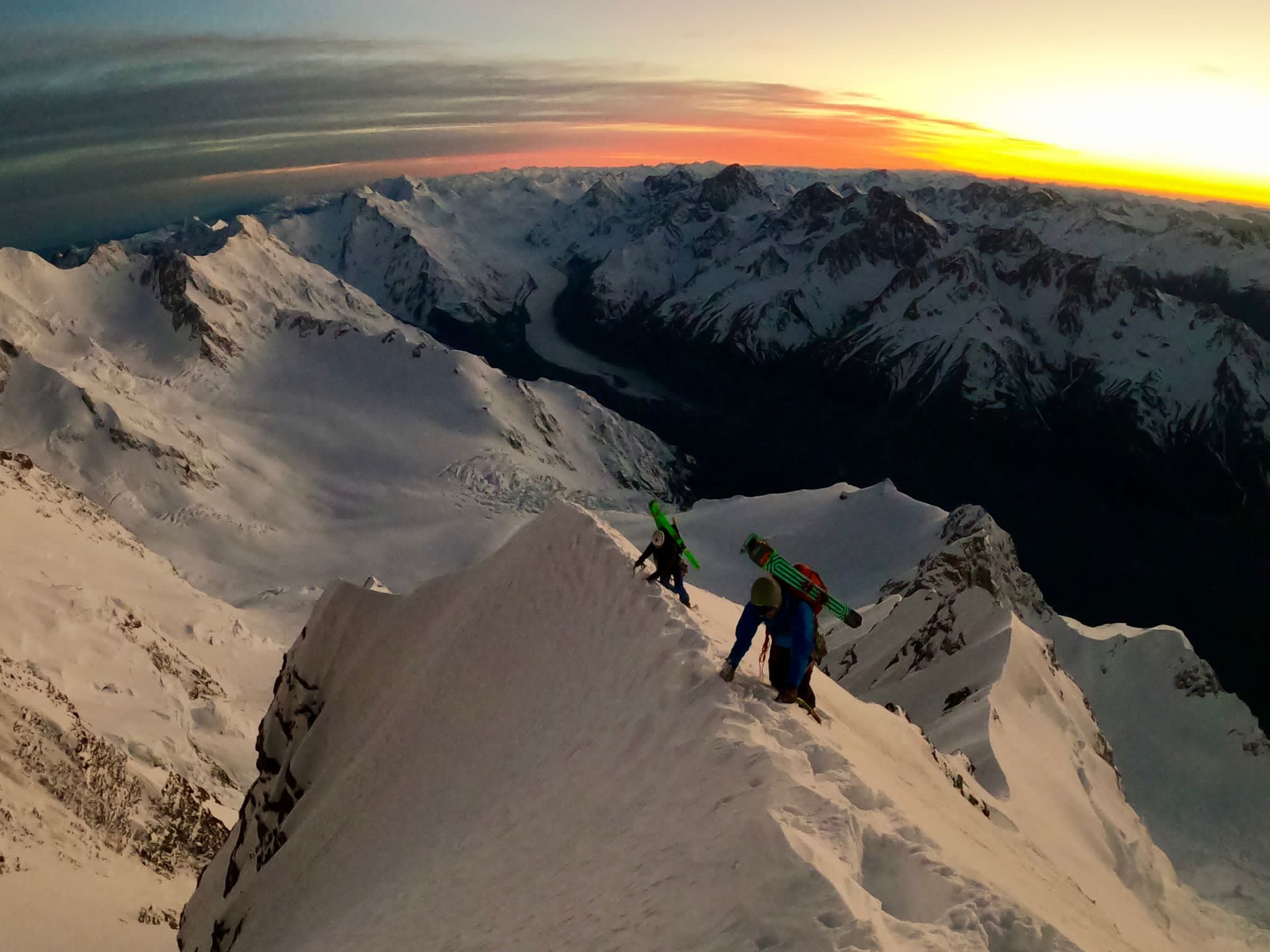
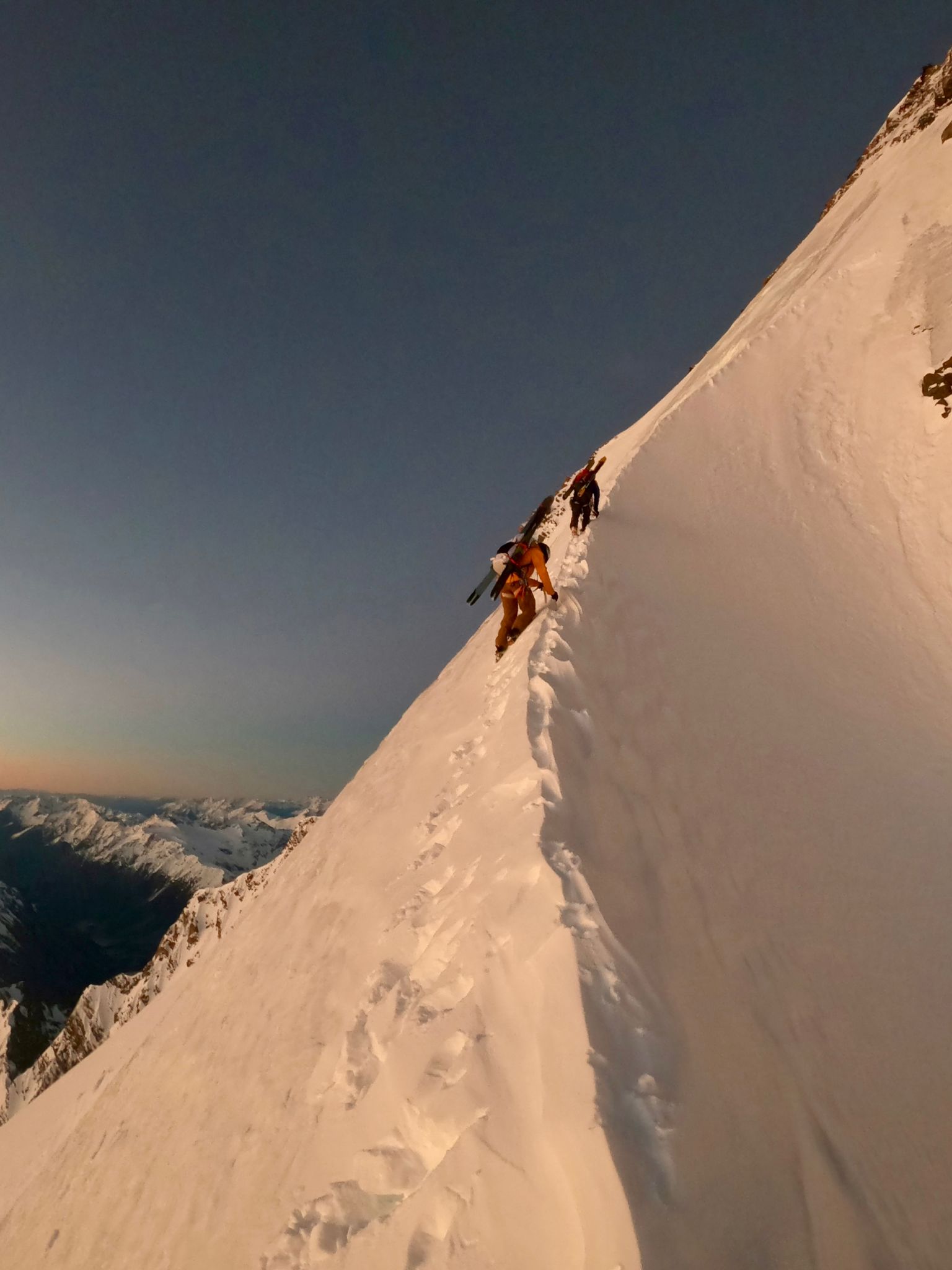
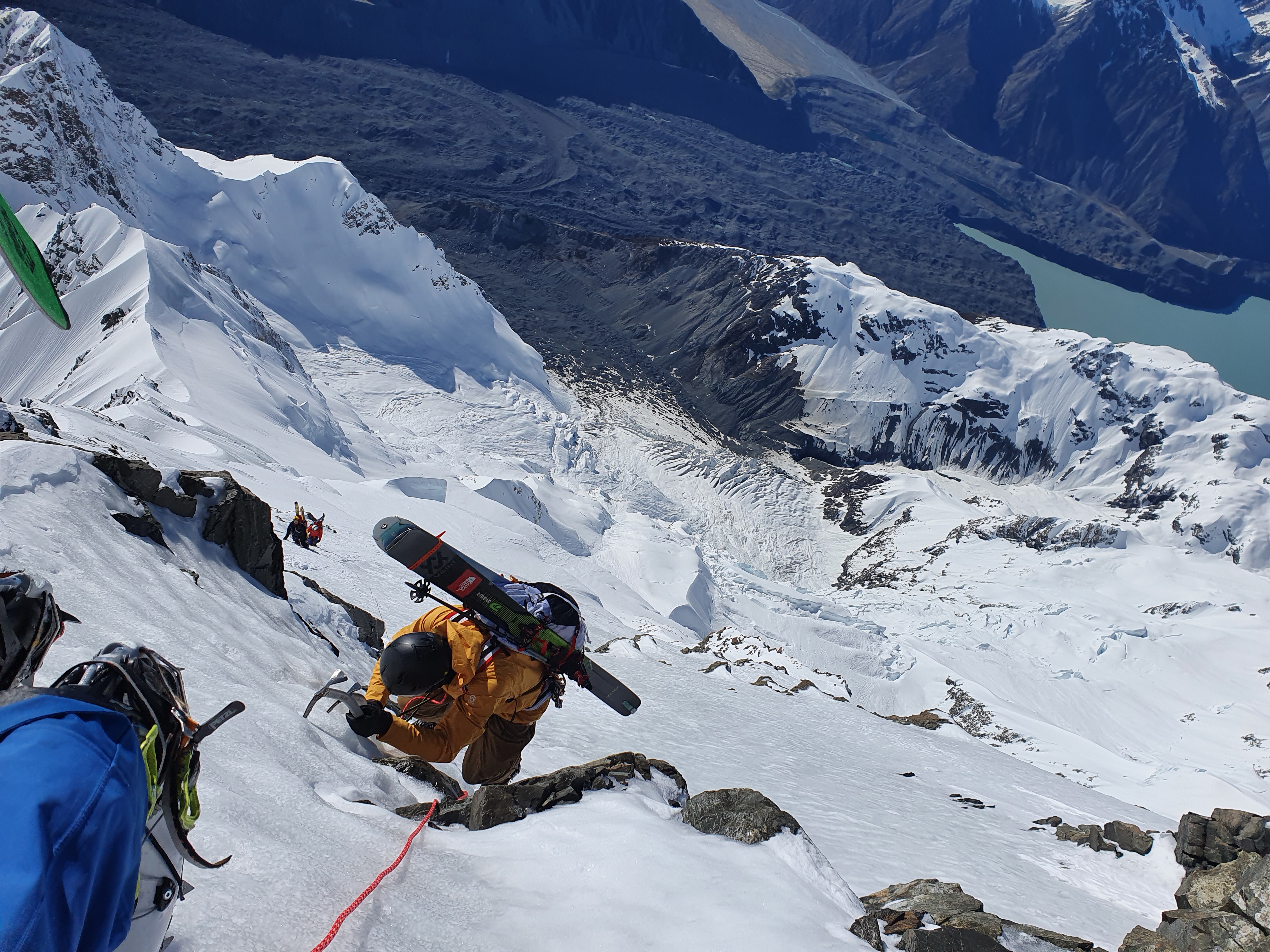
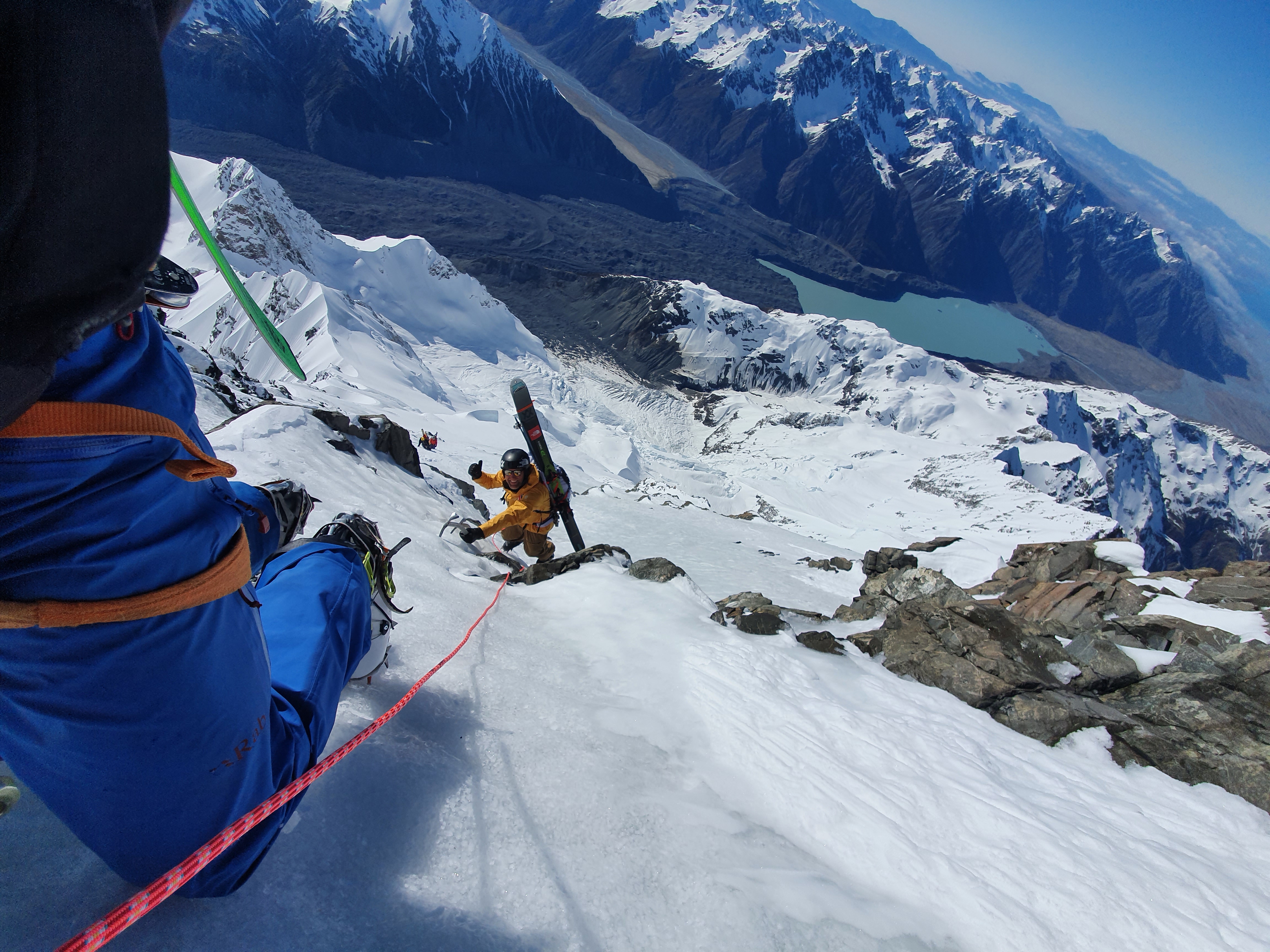
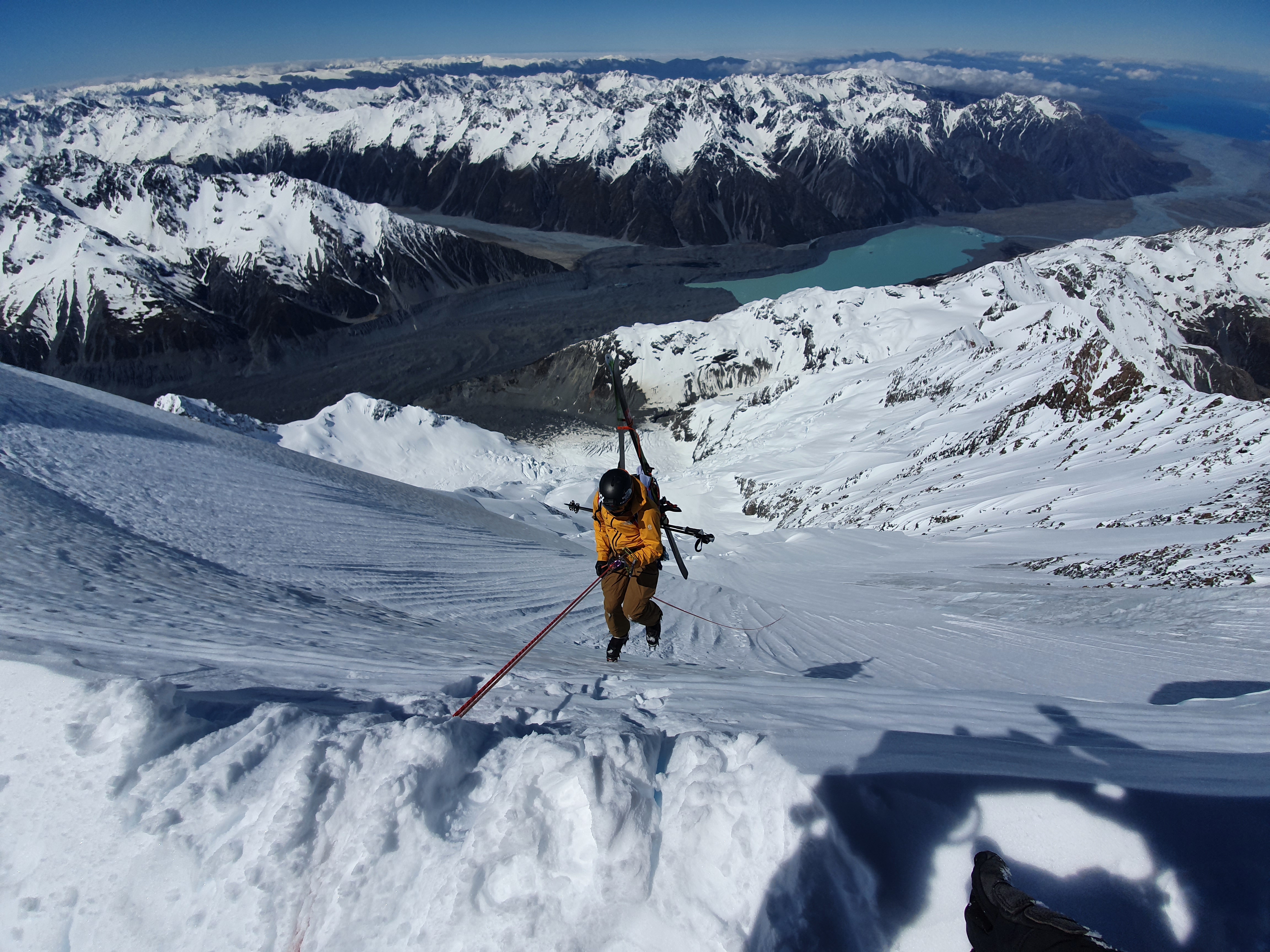
Graham and Peet heading up the East face

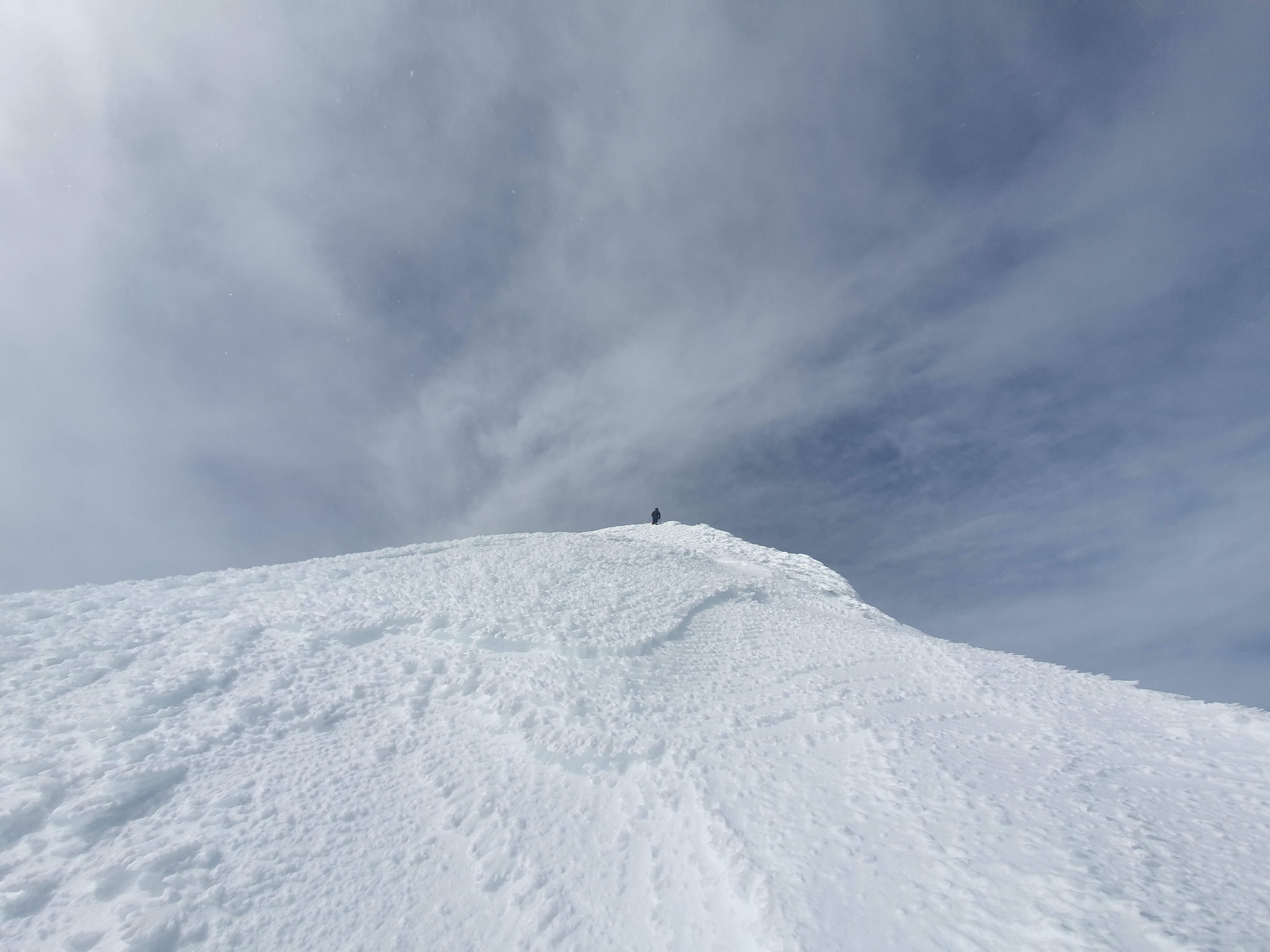
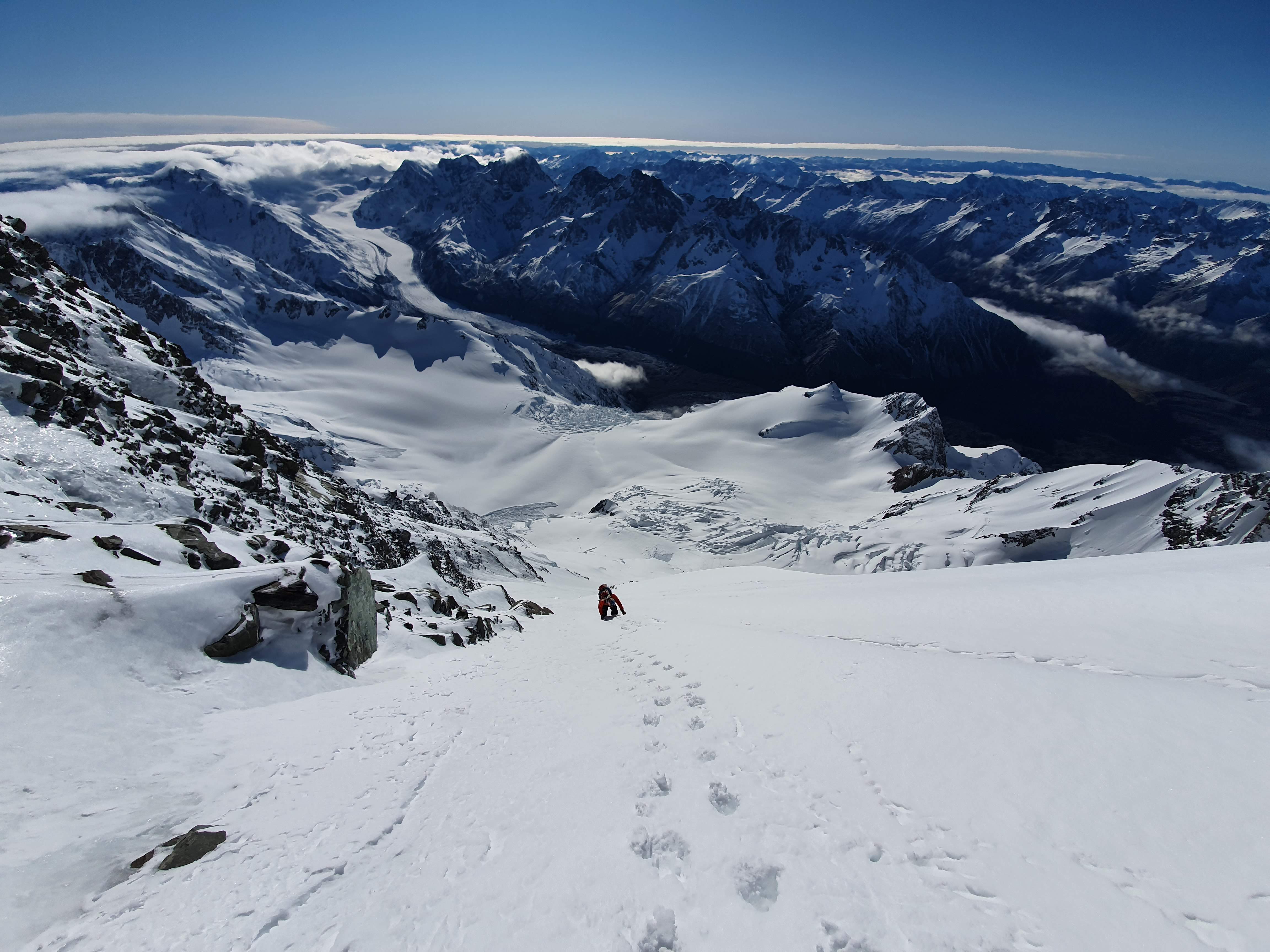
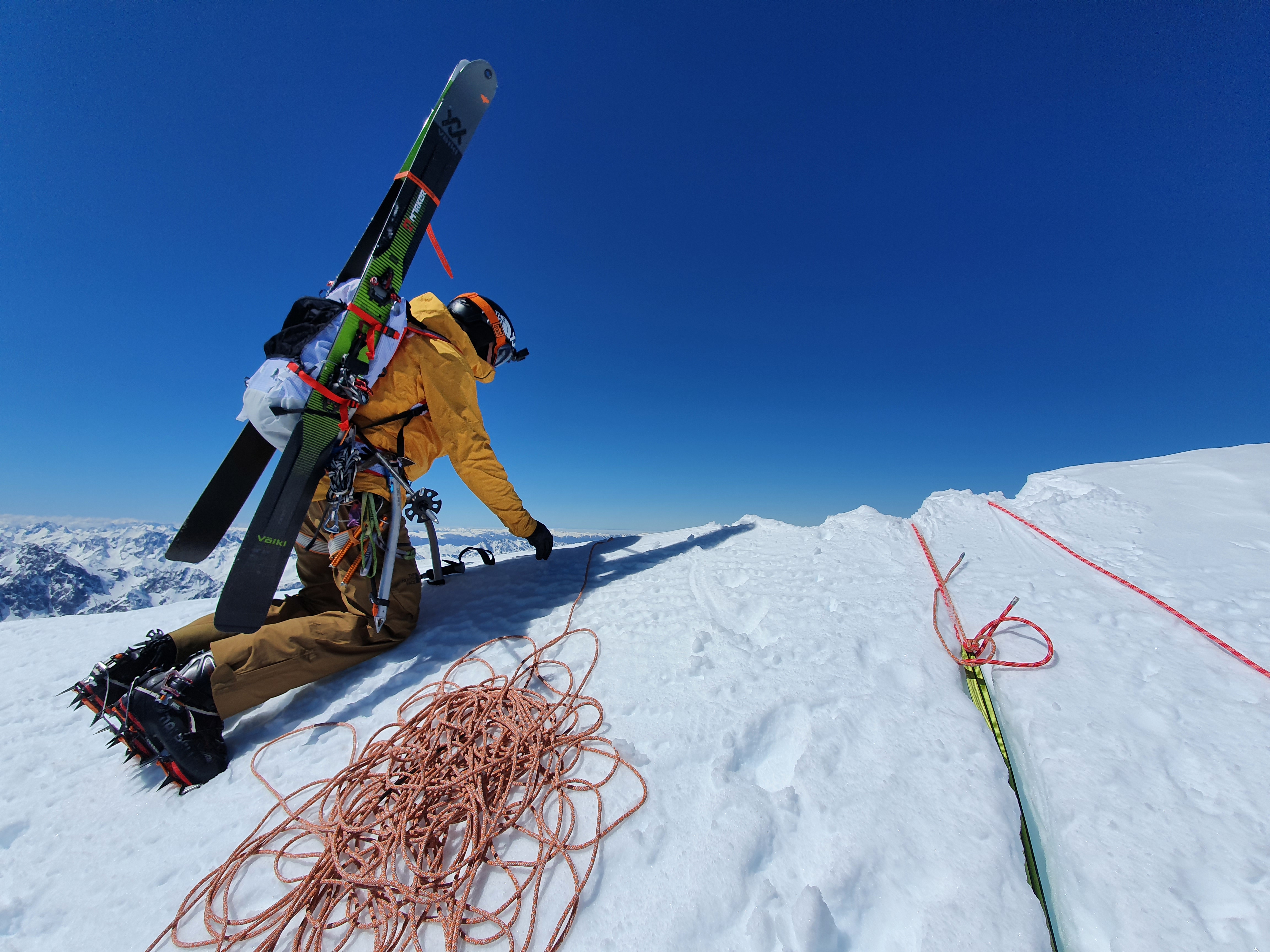
We roped up to cross the bottom schrund, quick stability check and then the rope went away and we soloed the majority of the face. It’s a bit of a slog, plugging steps for 1000m, but you’re rewarded with the most epic sunrise you’ll ever see as the first light hits the face. You need to trend left while you’re climbing – a bit more than you might expect. Once you get to the final couloir to the summit ridge, the snow quality generally deteriorates.

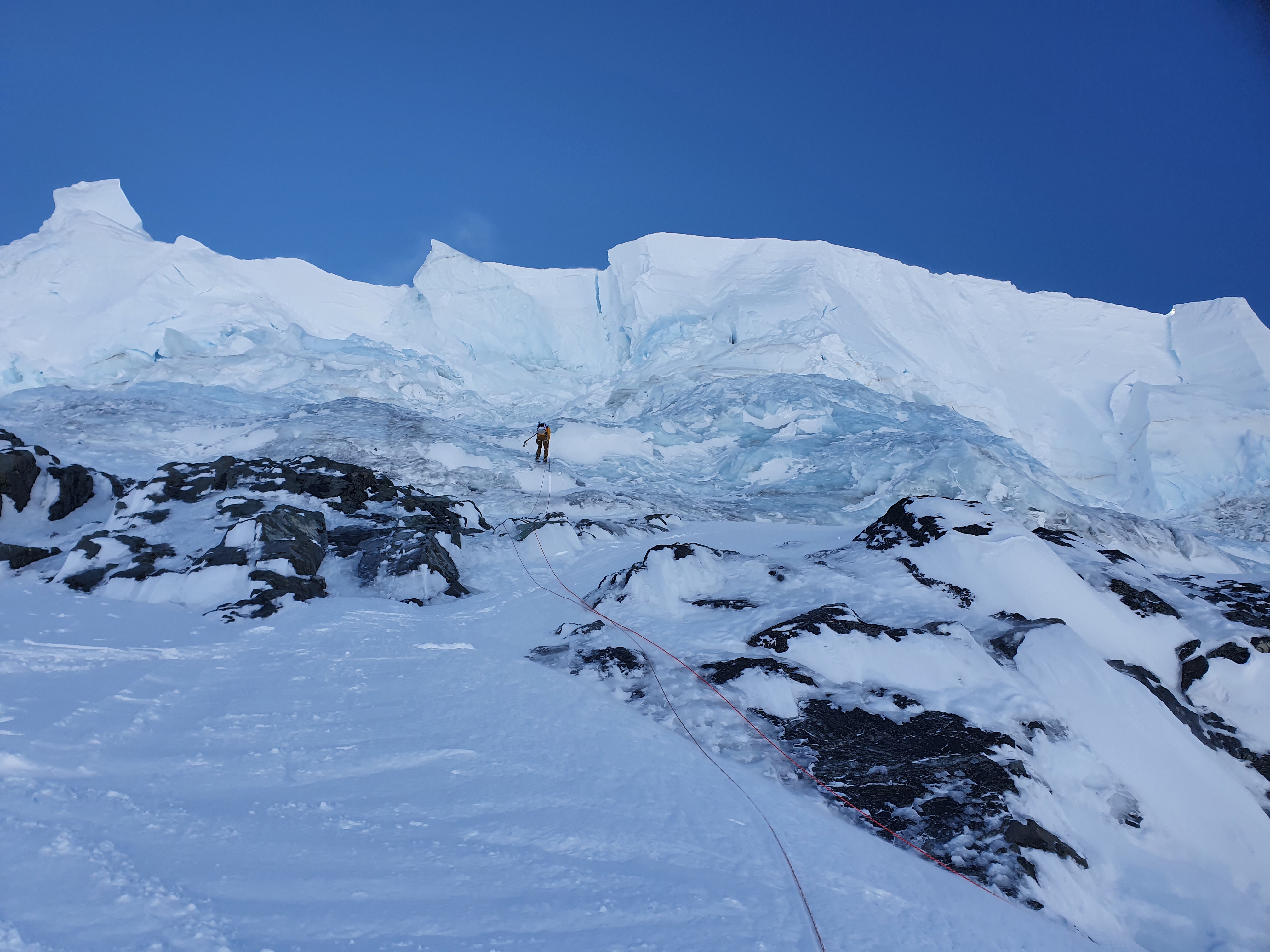
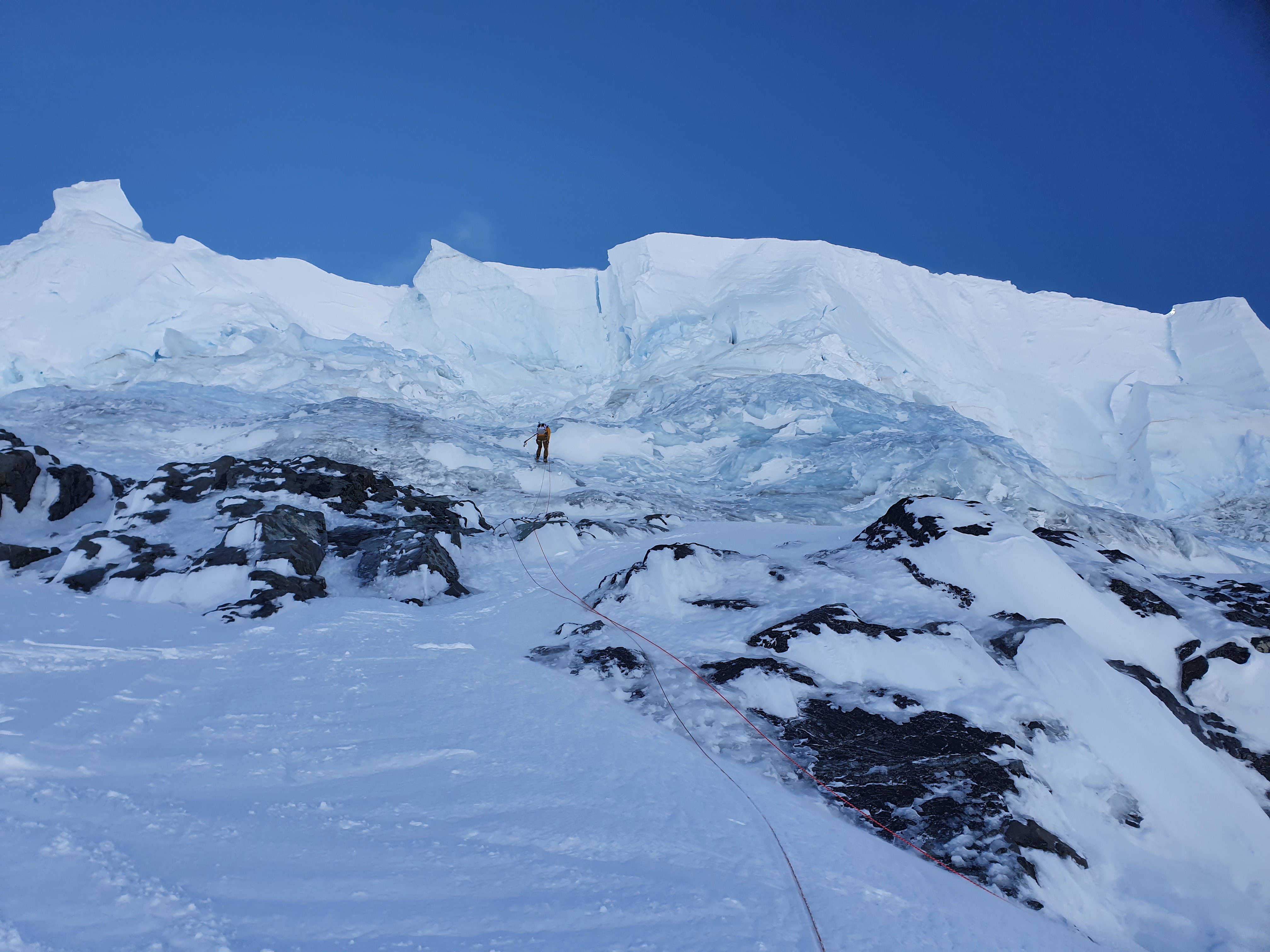
While this section was skiable on my first trip, on my second time it was bare ice so we made 1x rappel

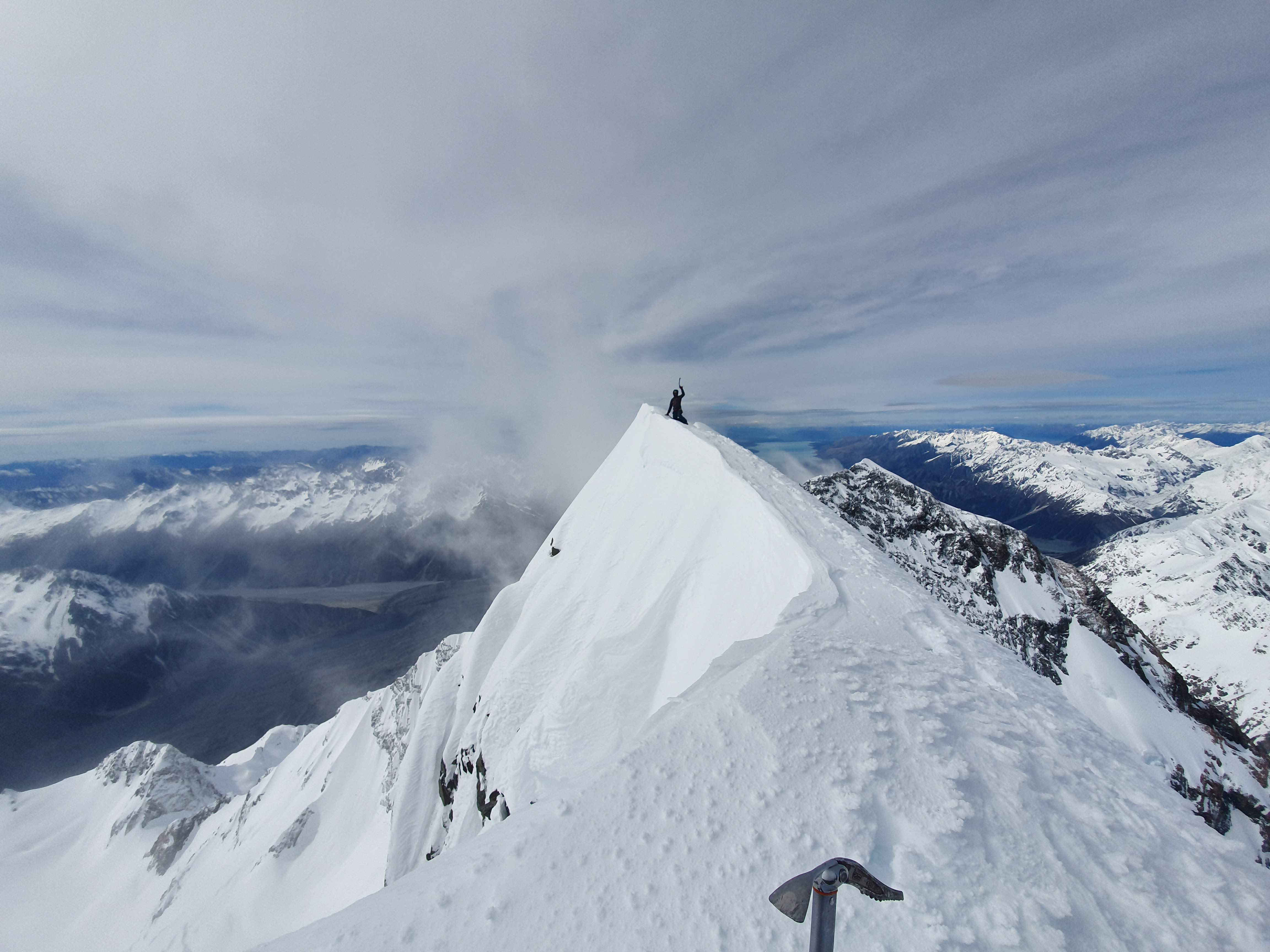
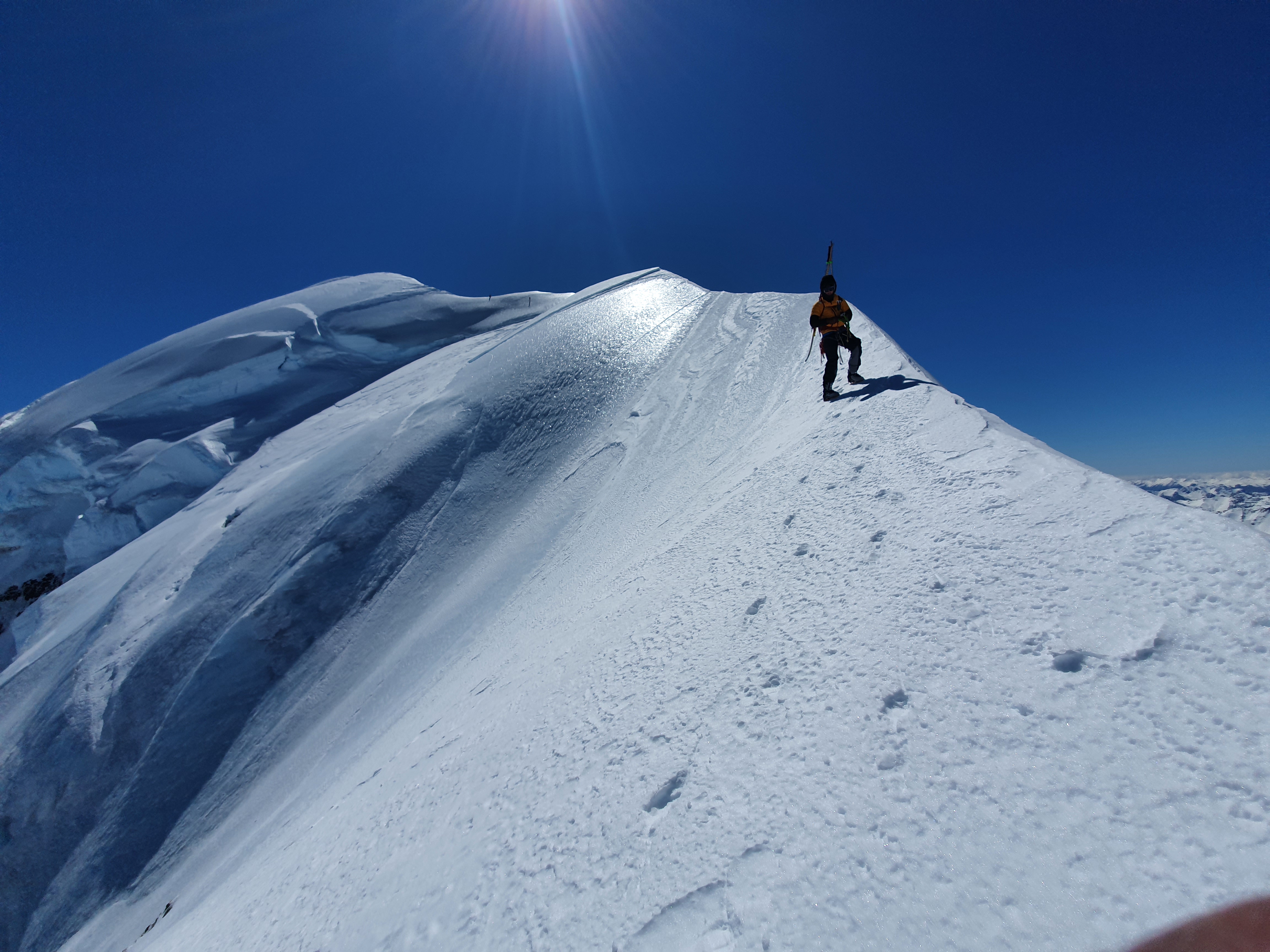
When I was there in 2019 it was firm breakable crust overlying ice, just about skiable – we soloed up and we able to ski back down to make a full descent of the E face. But in 2020 it was bare glacier ice, we put the rope on for the final climb (55 deg) and rapped back down to where the snow quality got better. From the top of the E ridge it took us 45 min to the summit. It’s low angle and relatively mellow compared to what you’ve just been climbing, but was wind scoured sastrugi the whole way and we left our skis and the top of the E ridge to get the summit and walked back down.

Descent
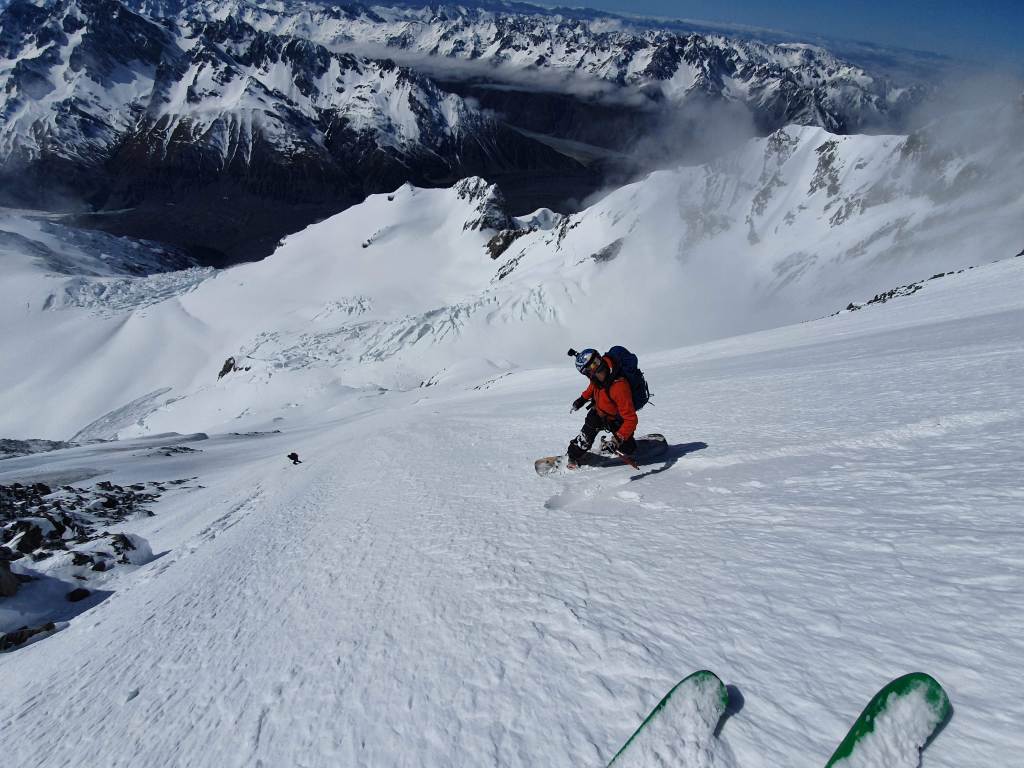
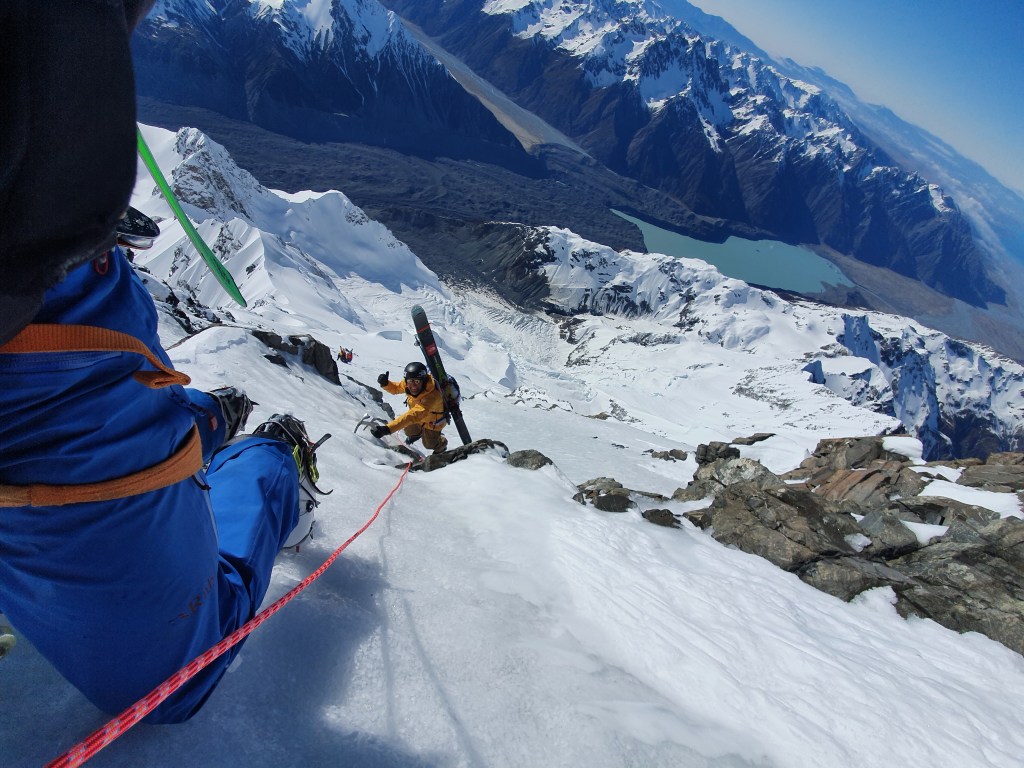
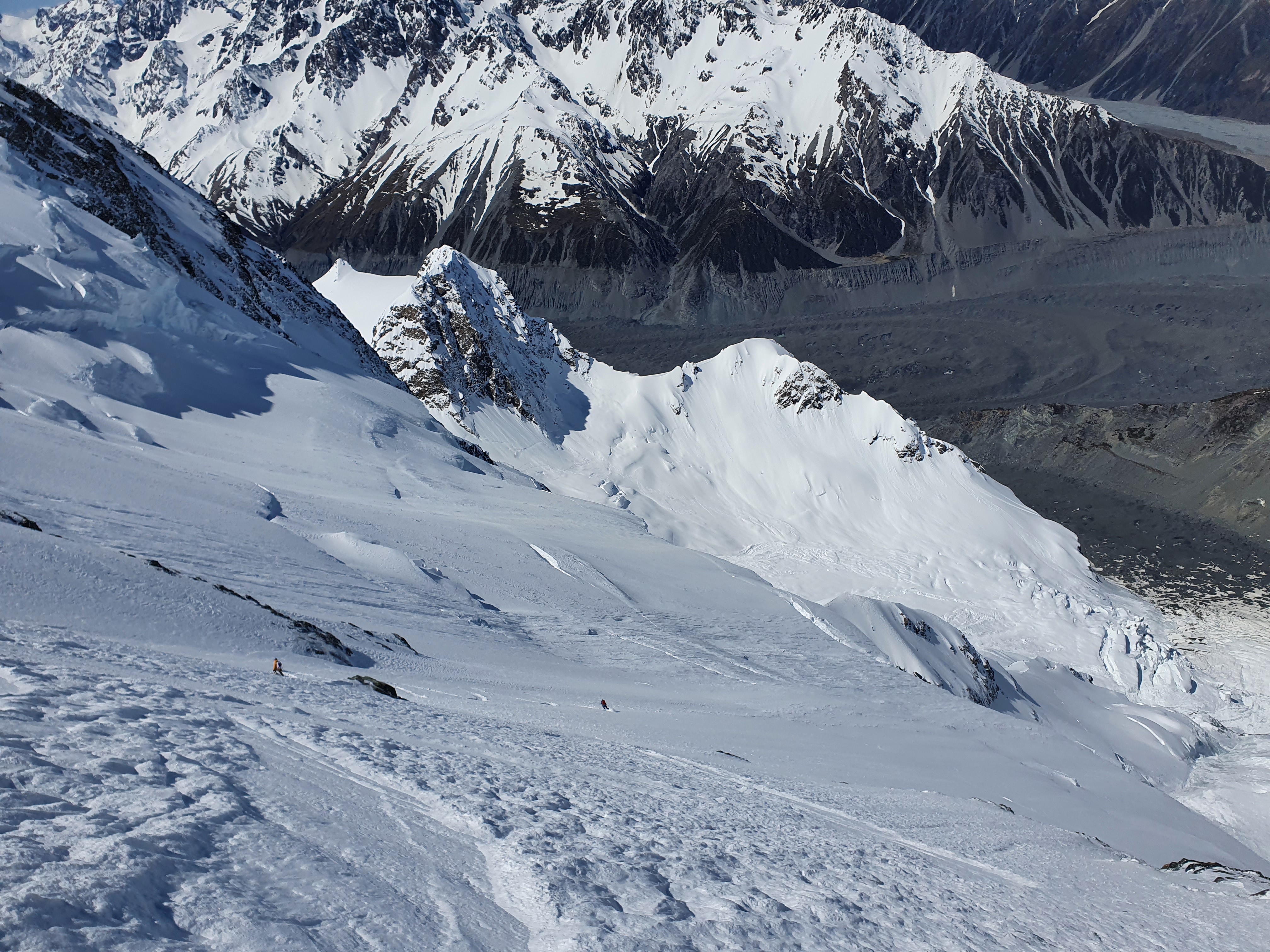
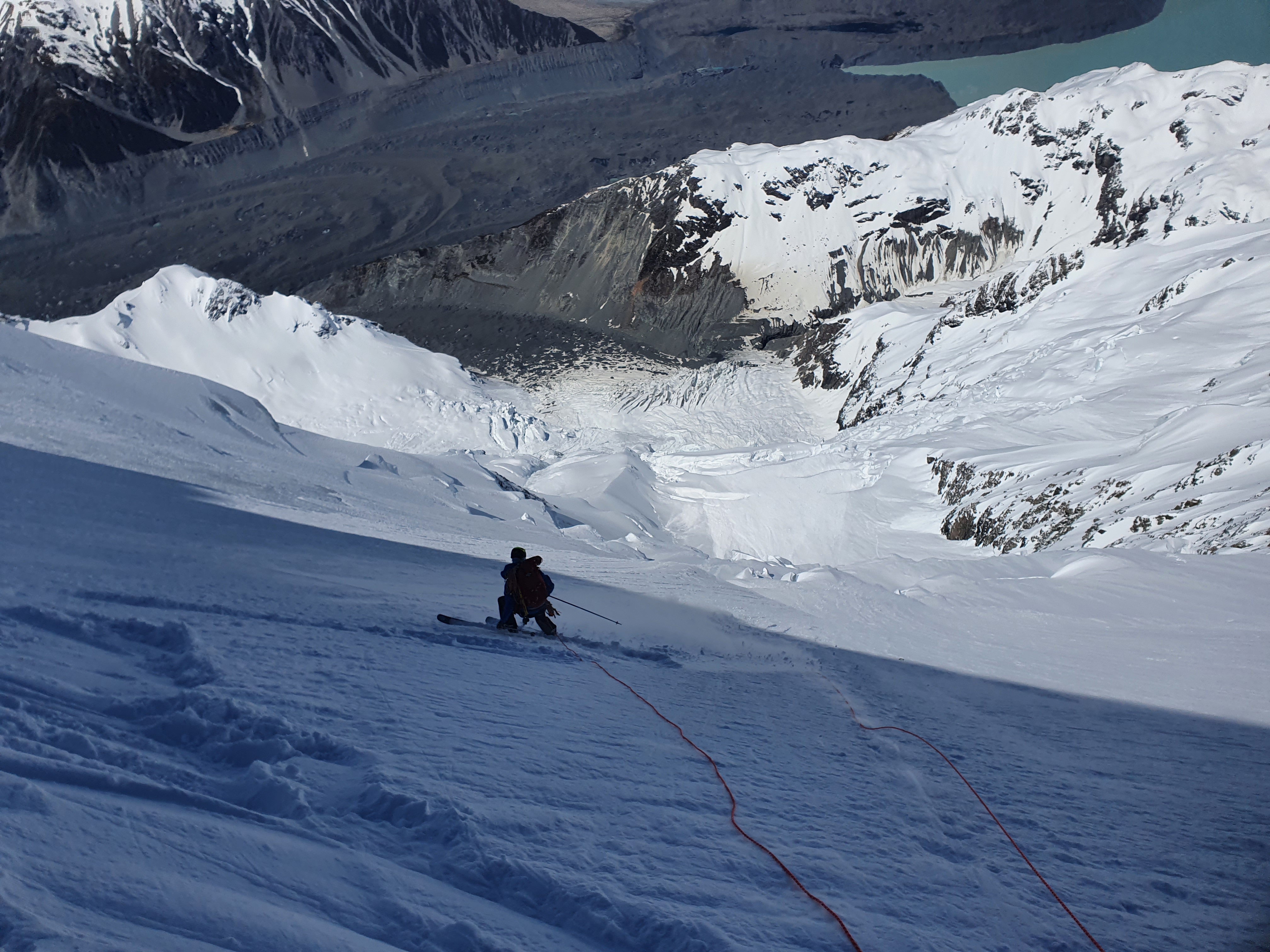
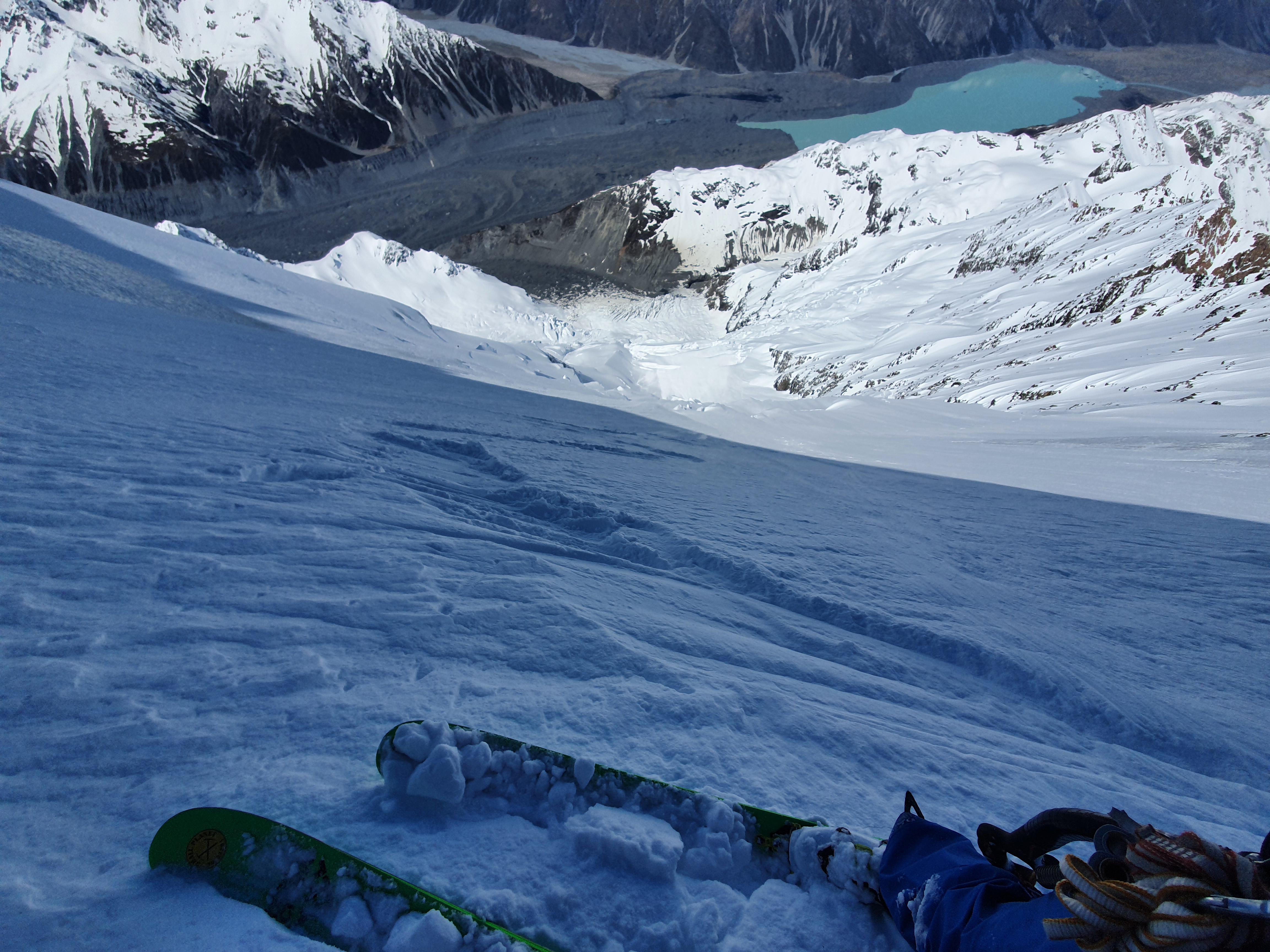
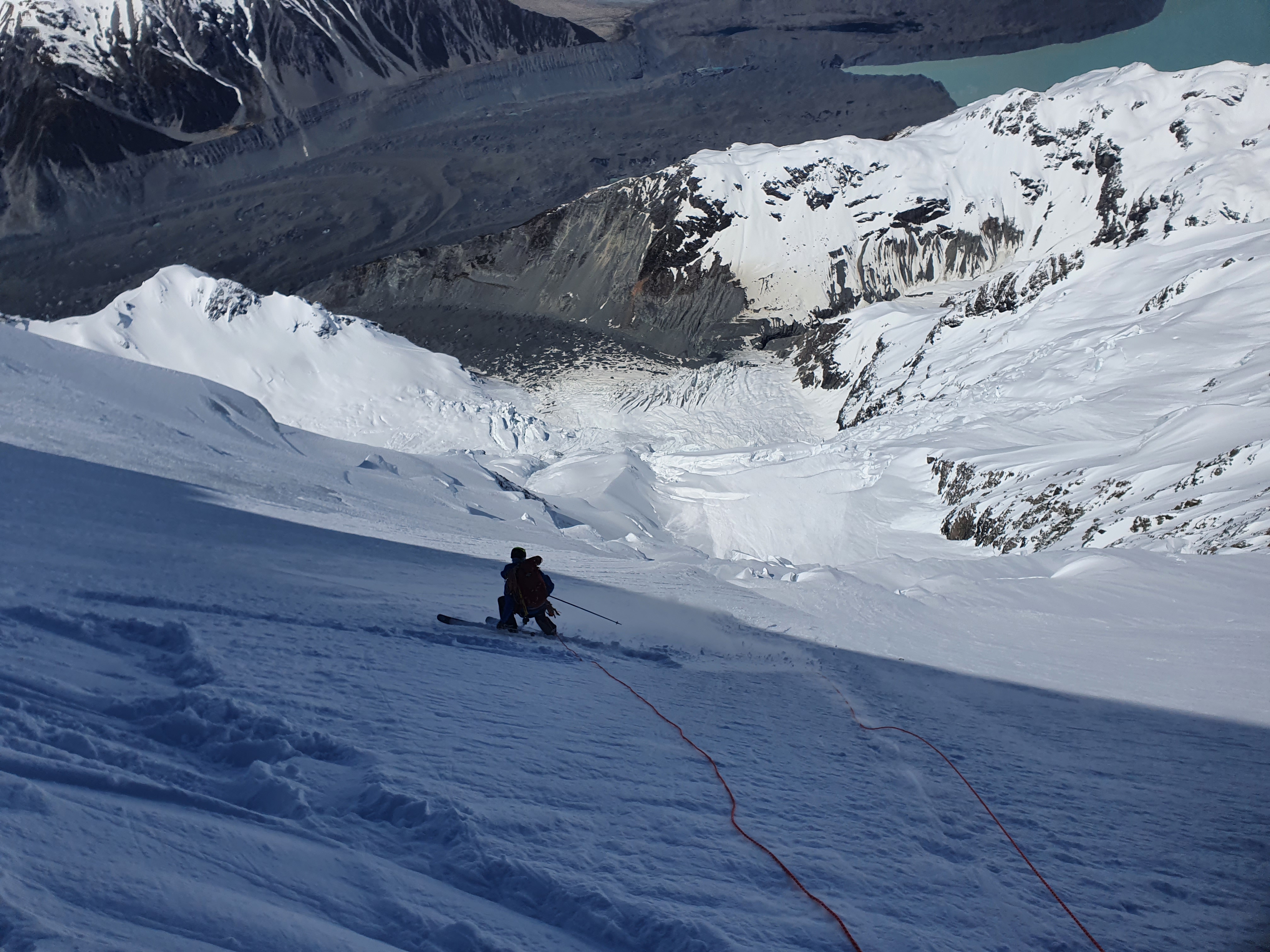
Looking down the top section of the face with the plateau 1000m below

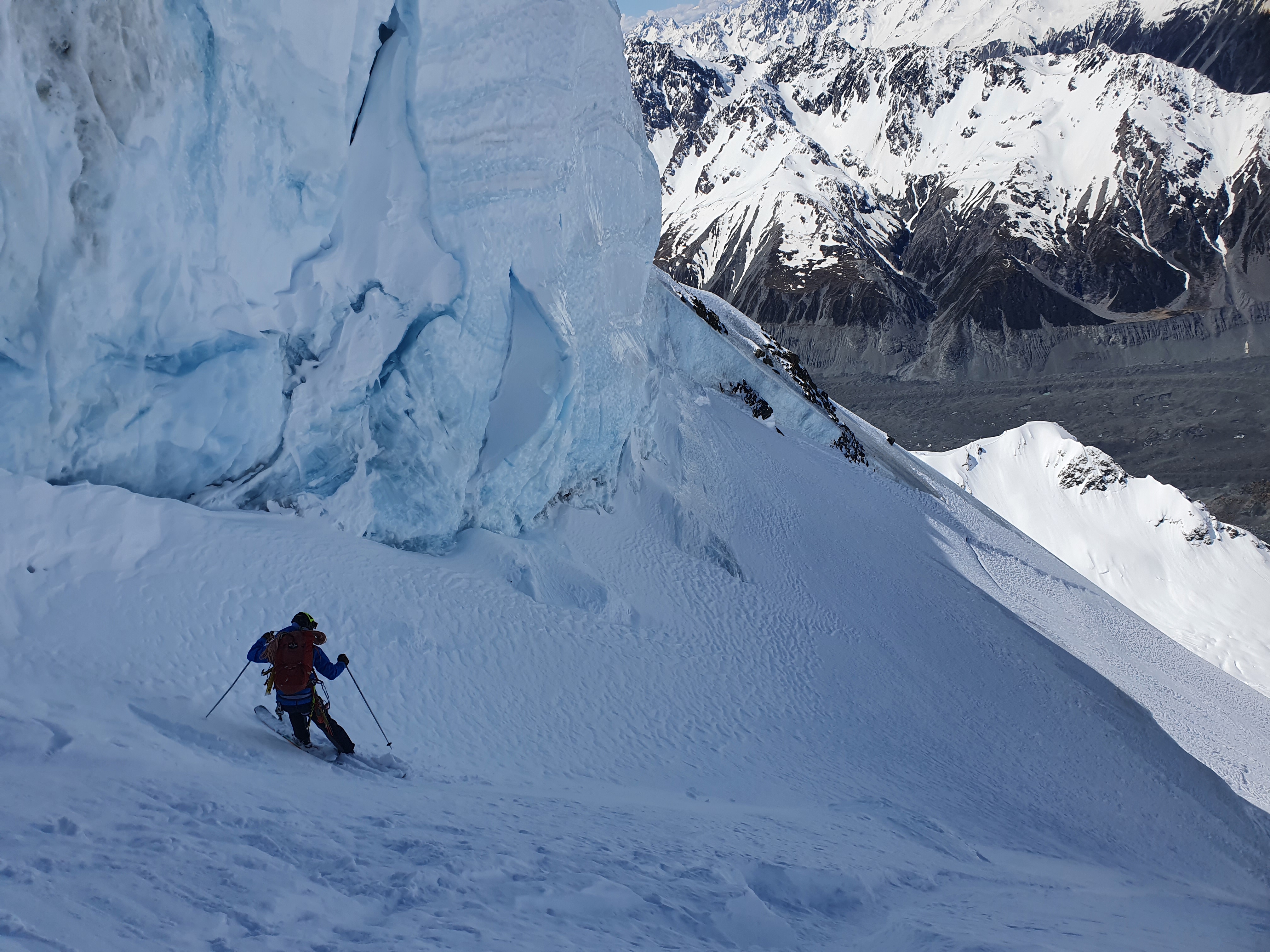
From the ridge the top couloir is fairly full on, 50-55 degrees on a narrow spine which is very exposed and often has wind affected snow / ice. Luckily you’re coming up this way and can make a full assessment of whether or not you’re going to ski this part or not. We made cautious jump turns down this top section. About 50m or so down from the summit the line tucks round to skiers left under an ice bulge and the snow generally improves here and you can start opening it up and tearing up the face!. The first few turns here are steep at around 50 degrees, but after another 100m or so it mellows out to 45 degrees and then stays like this all the way down to the plateau.
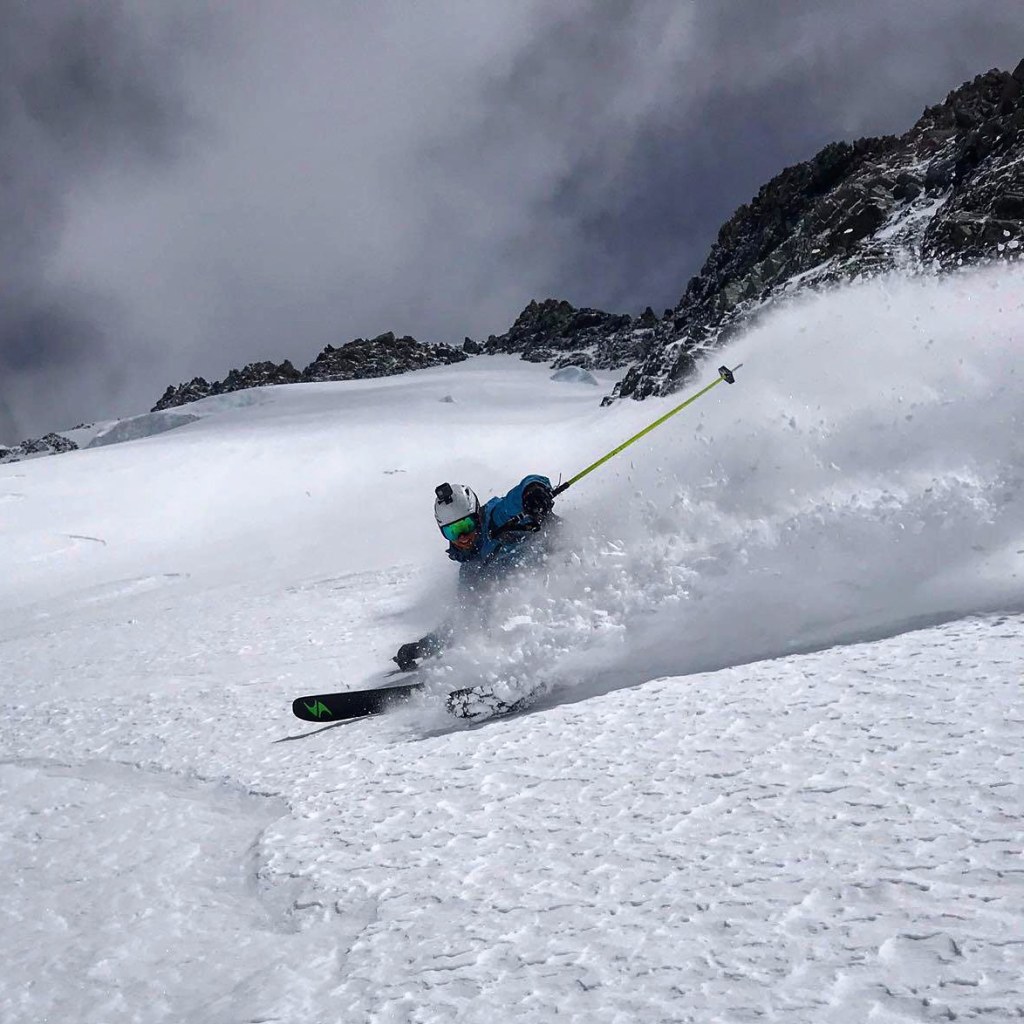
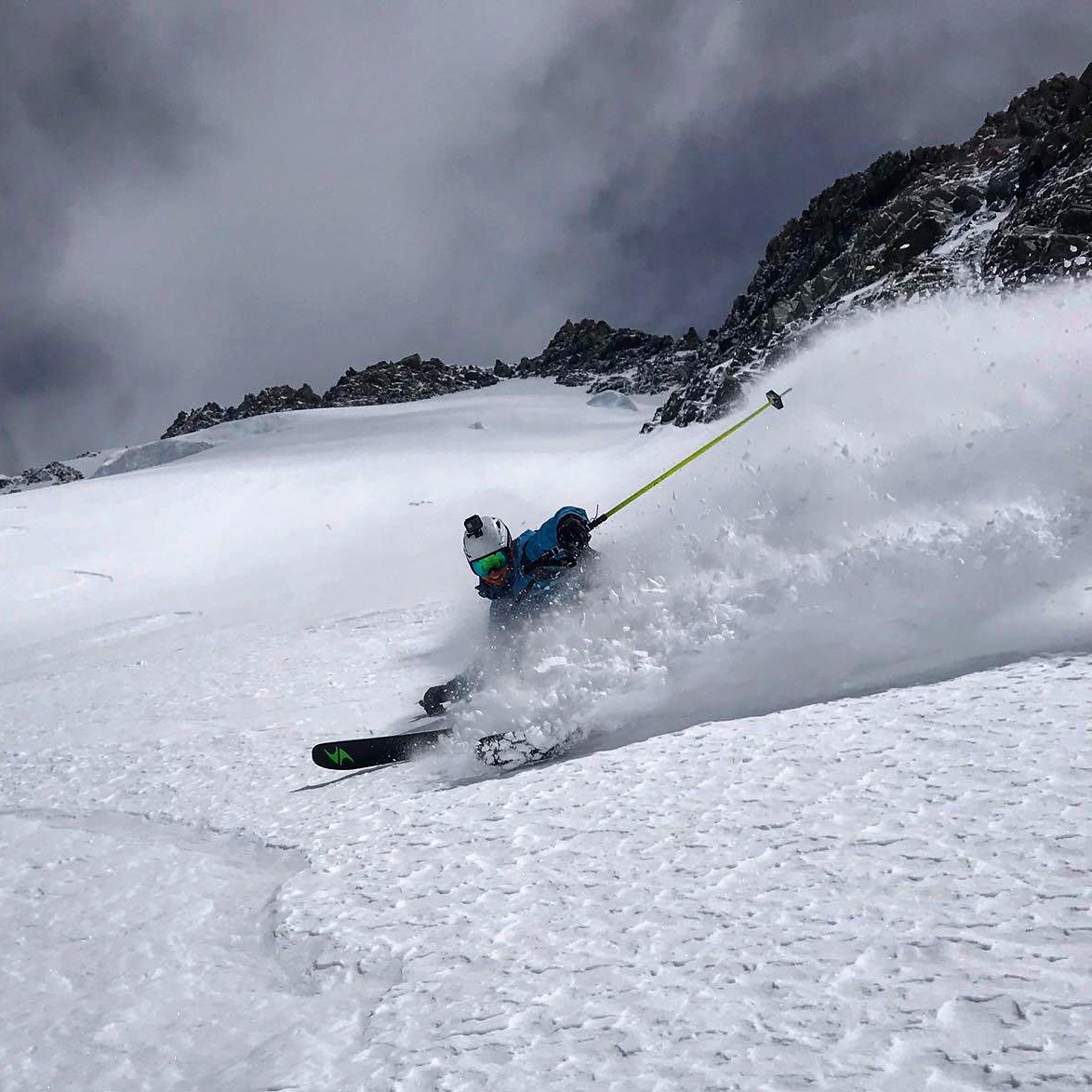
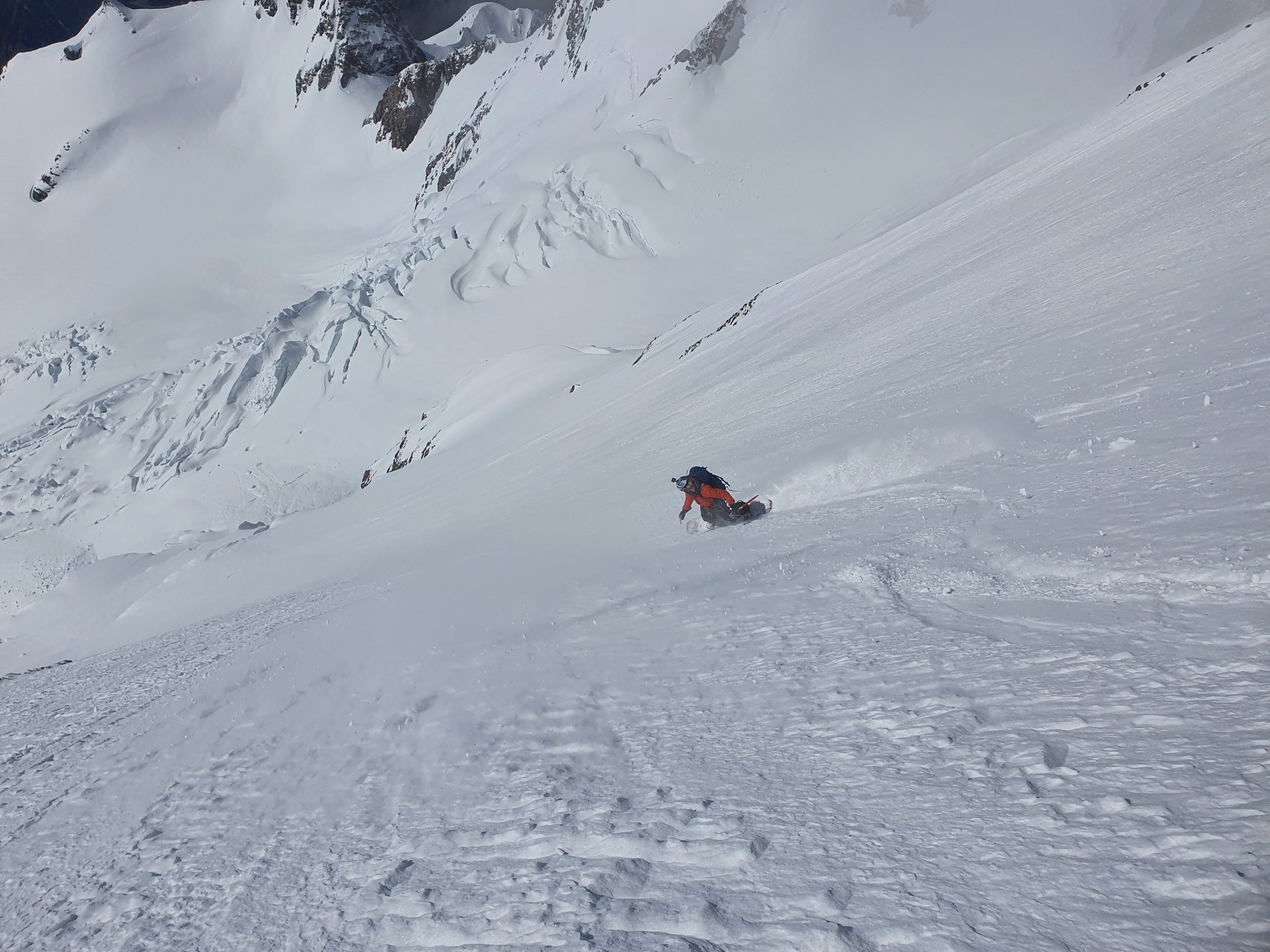
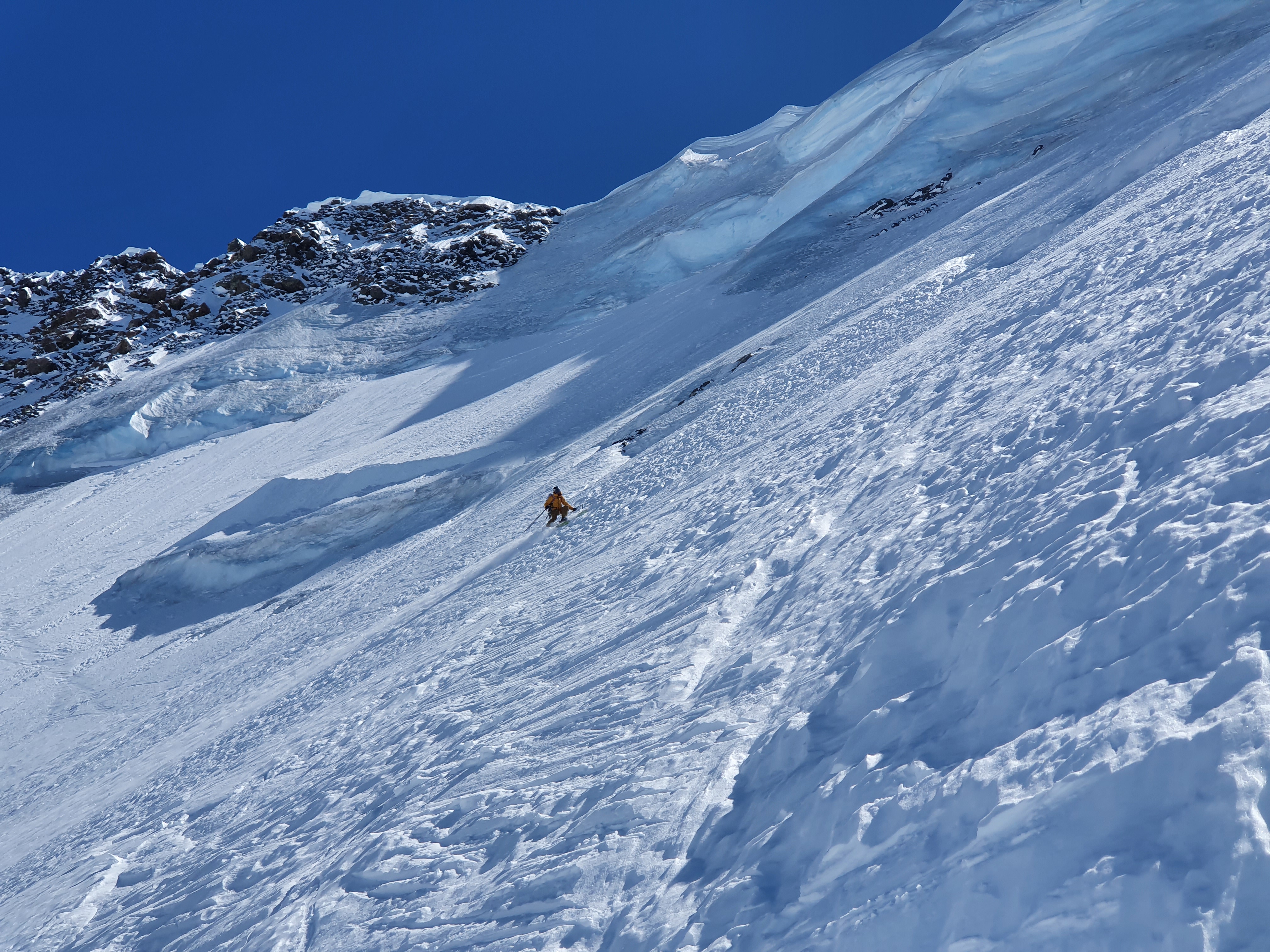
Sam got this sweet shot of me getting deep
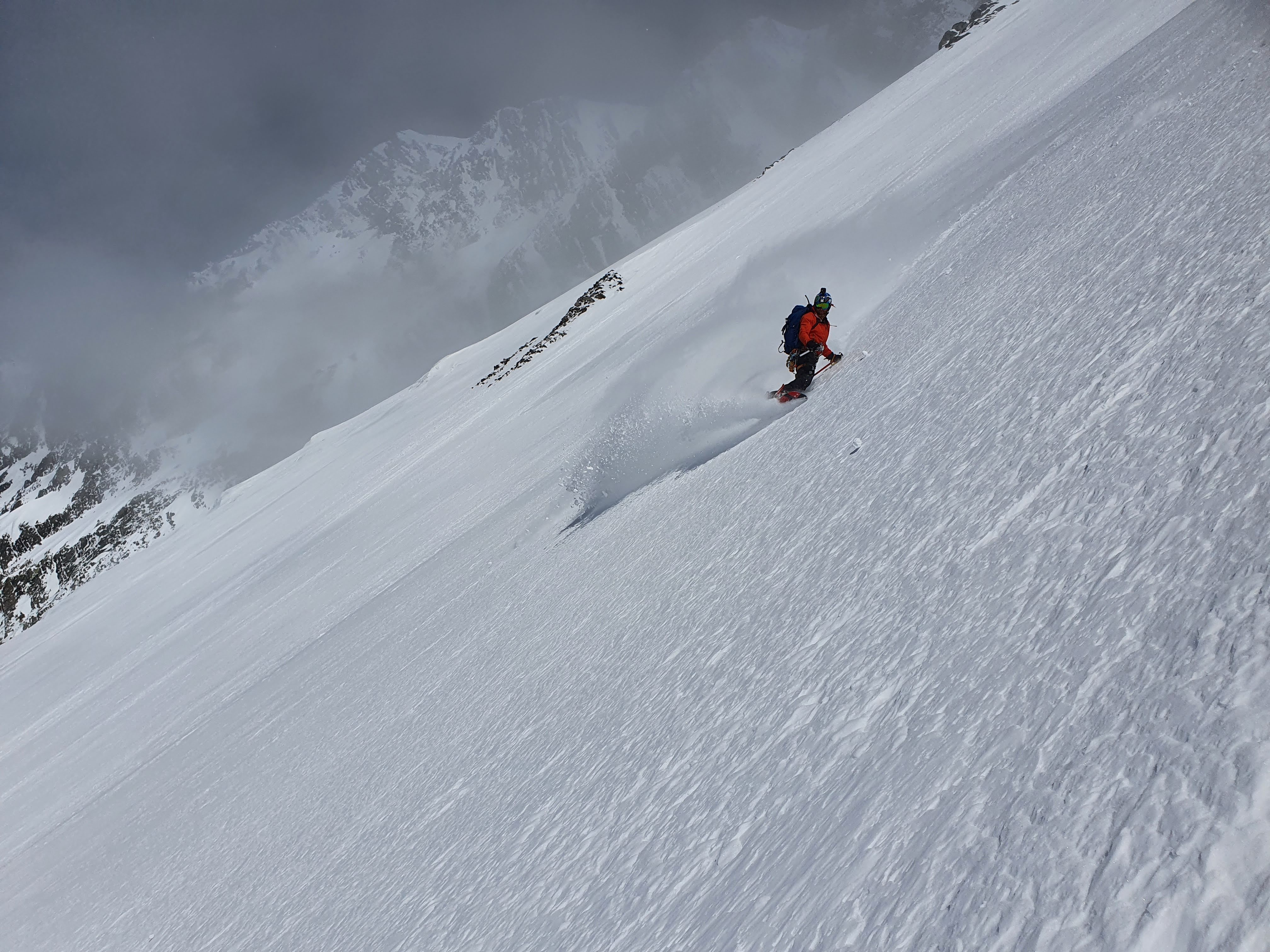
Peet getting into the white room

The snow was unbelievably good for us on both trips, and we made big fast slashes and slarves getting face shots the whole 1200m down to the plateau. You trend left the whole way down the descent which is useful for dodging your stuff. Drop the schrund at the bottom and cruise back to plateau hut for the celebration beer!

If you’re skiing the face in powder be especially careful of the sun warming up the face – on the 2019 trip we had 24 hours of cold still weather after the storm for settlement and then another cold 24 hours to ski the line. The next day the temps went up to a FAFL of 3000m and we sat at the hut watching big avalanches ripping out on the face all day exactly where our tracks had been.
Edit from my trip with Sam and Zach (and 11 other people on the face that day!)
Edit from my trip with Peet and Graham

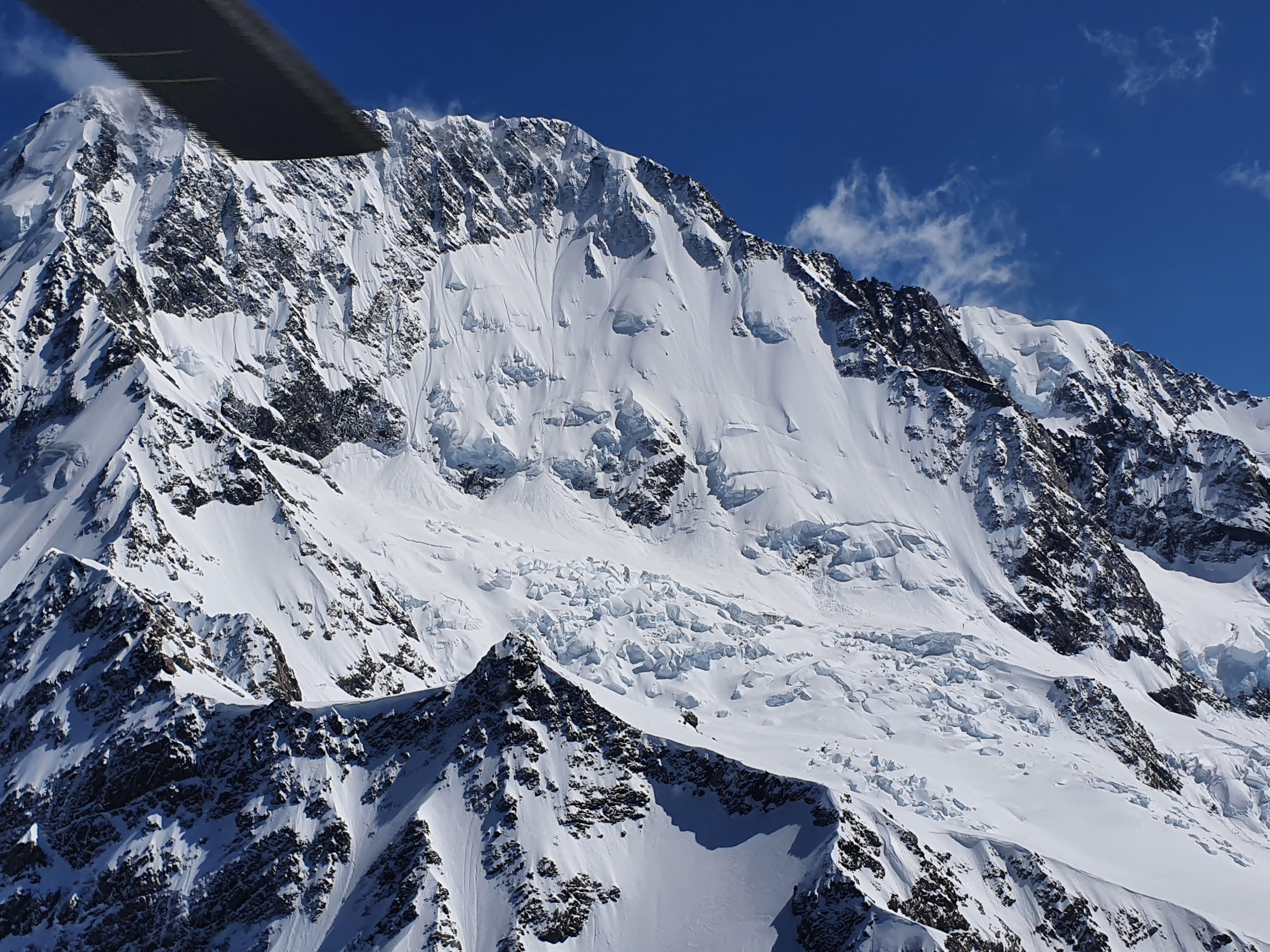
Aoraki/Mt Cook, the Caroline face

An iconic line in New Zealand mountaineering history – described as ‘the last great problem of New Zealand mountaineering’ when first climbed, it took another 40 years for its first ski descent in 2017.

This 2000m monster of a face is not to be undertaken lightly. Fickle conditions, complex route finding, objective hazard and sustained 45-50 degree skiing above serious exposure combined with a serious mountaineering route just to get to the starting gates, means you need to bring your A game for this line. For the majority of the line, a fall is likely to be fatal.

It took several years of planning, preparation and patient waiting for myself, Will and Sam to get the second descent in 2021. Without a doubt one of the most incredible lines I have ever skied, and the euphoric feeling stayed with me for a long time afterwards. But I don’t think I would ever skin the line again; the objective hazard from the constant serac threat is on the wrong side of that line separating acceptable and unacceptable risk. Even moving as fast and efficiently as possible, 2 hours spent under those ice cliffs is a roll of the dice and balancing the reward against that risk is a very personal decision.
Conditions

Really this is the crux of the route, and can be broken down into the condition of the ice cliffs and the condition of the snow.
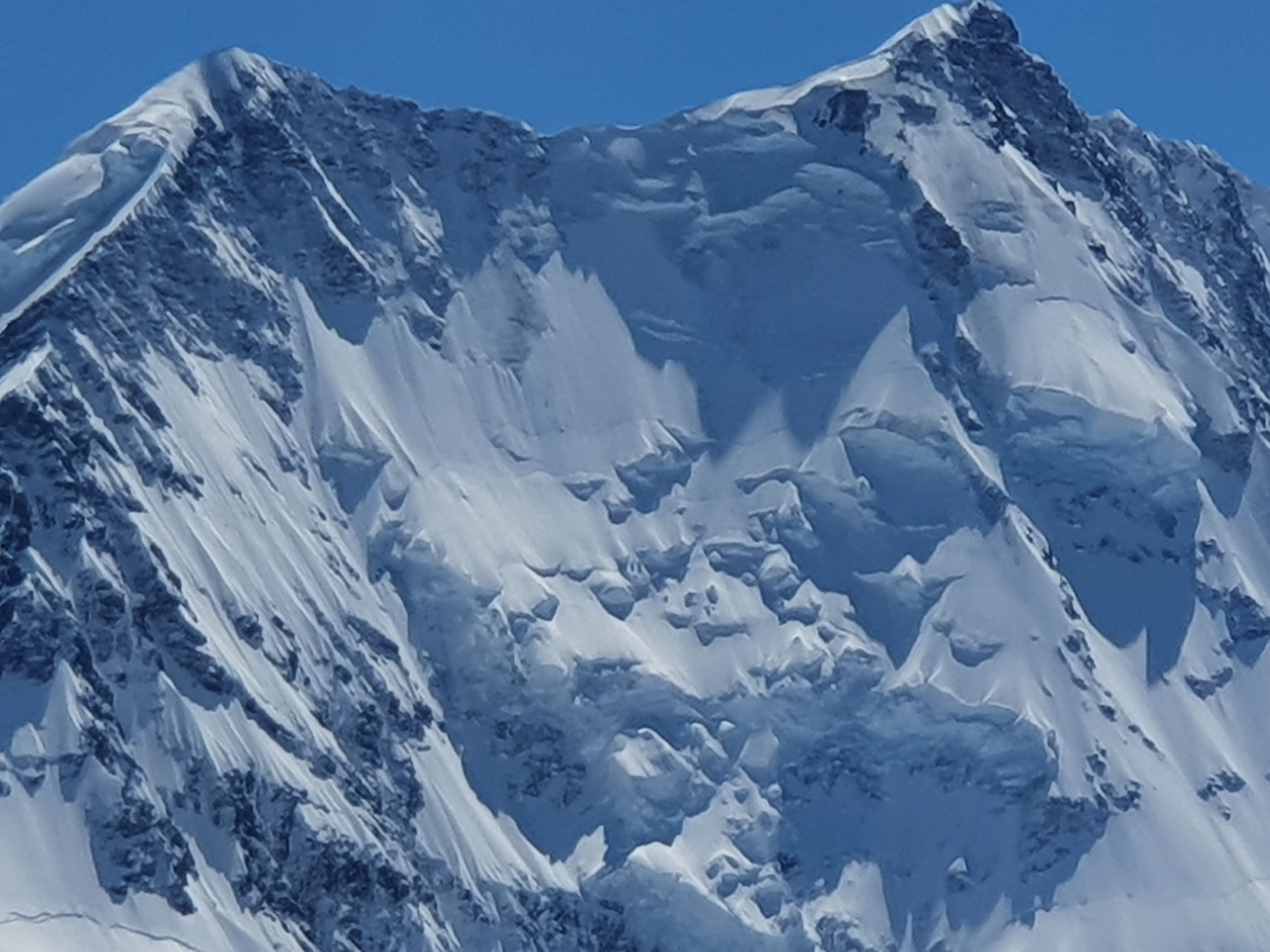
Ice cliffs – the state of the face changes significantly year on year, and also throughout the year. While the basic line that Ben Briggs and co took in 2017 is the same as our line, we crossed the 2 main serac bands in different places, and the next descent is likely to cross somewhere else again. Regularly following the state of the face through the year is key, and thankfully climbers and skiers are constantly flying past the face generating a beta stream. Once it looks like it’s in, the pilots will give you a really good fly by on the way to plateau. Multiple photos from multiple angles is crucial to get the line dialled, choose rap spots and make an assessment of coverage. We spent an hour or so zooming in on different spots on the face trying to find tell tale grey / blue shine that might suggest bare ice.

Snow – we wanted to ski the face in powder. Corn is the other option, but your time window between the top section softening, which is steep and super exposed, and the bottom section becoming dangerous is going to be pretty narrow given the complexity and length of the route. The biggest concerns here are avalanche risk, and hitting a section of hidden ice just beneath the surface which would knock you off your feet and you’d be gone. For a line like this I would normally climb the ski line and get a good look at conditions and identify any ice patches on the way up. Given the serac threat this isn’t an option of the Caroline so you have to ski the line top down, and back yourself that you’ve assessed correctly and can deal with the conditions you encounter. Our approach was to wait until late spring and generally stable conditions, and then wait for a system that was going to bring in warm precip turning cold during the storm, hopefully providing well bonded right way up snow sticking to the underlying ice. We wanted at least 24-36 hours of cold still weather for settlement and then another day of the same to ski the line. This is not common in New Zealand but in November 2021 everything seemed to be lining up so we flew in to take a look.

Approach

Plateau hut is incredible – the majority of New Zealand 3000m peaks within a 30 minute skin. The best approach to the Caroline is to head towards the East face and traverse high, climbing the snow gullies to reach the East ridge. This means you miss the first 400m or so of the East ridge, significantly speeding the climb. Once on the ridge, the soft confidence inspiring snow meant we made pretty fast progress by soloing the majority of the route. It also gives the opportunity to sidle onto the Caroline and assess the stability for the first time.

With everything looking good we continued up the East ridge. Once we hit the last couple of hundred metres it turned from soft to bare glacier ice so we put in 4 pitches up to middle peak. The climbing was super fun, easy WI2 , mostly 50ish degree ice with short steps up to WI3 over outrageous exposure. Halfway up the climb we saw a massive 500m wide avalanche rip down the face to our left reaching all the way down to the Ball Glacier. From the ridge you don’t get a full view of the face and it was impossible to see exactly where this had started – if it was on our line then either it was a slab avalanche and we had totally misjudged the avalanche risk, or if a serac collapse (the most likely thing) it would have cleared all the snow off the line leaving bare ice. Either way not good. We decided to carry on to the top of the east ridge and asses and discuss – if we were not happy then the bail out options from there would be the Grand Traverse and down the Linda, or down the NW couloir to Empress.

From the top of the East ridge, Porter Col is just a short distance South West. We took particular care here – the ice was totally bulletproof and a slip would mean a fall all the way down to the Empress Shelf. This was the spot that Magnus Kastengren tragically died in 2013 attempting this line, and that thought was in the forefront of our minds while crossing this section. From Porter Col for the first time we got a full view of the top section of the line – it was clear the avalanche we had witnessed earlier had come from serac collapse on the far lookers left side of the face, and had not affected any part of our line. The snow looked incredible from the top and after a long final discussion we decided to rap in and commit to the line.

The Line

Routefinding is key – have photos of the face on standby on your phone to reference, and have a mental image of the major landmarks on the face. Climbing back up under those seracs is not a position you want to be in!

Rap entry – I can’t imagine there would ever be a time when this top section would be skiable. A stretch of blue ice just below the ridge where it has been blasted by high winds, leading to the snow. We rapped around 80m in 2 raps, leaving a snow steak on the summit and a V thread half way down.

This is fairly committing – be ready for some WI4 ice to reverse this if the snow isn’t what you expected when getting to the face. Once at the snow we built another anchor for another stability assessment – while everything looked perfect we decided the first person down would ski 50m on the rope as a final assessment. Will took one for the team and dropped in first – a test of belaying skill to let slack out fast enough! With everything looking primo the rope went away and it was on.

The first pitch is the steepest, around 55 degrees for a couple 100 metres. We then cut hard left for a long traverse to the feature we called ‘The Nose’. The traverse is pretty critical – from the photos we had some concern about ice on this section. A tool in each hand and screws ready to go to make an anchor and switch back to crampons if needed. The traverse takes you to the top of the nose.

This section wasn’t how it looked from the photos – was a lot wider and less sketchy than we were worried it might be, and the angle eases off to be similar to there E face at around 45 degrees. But it does mark the start of the serious overhead hazard which just gets worse from here on down. There are also a couple of bail out options here. If you can’t get through the nose, you can climb back up and right towards middle peak following the top part of the Clit Route. Or if you get through the nose but its looking bad underneath that, you can cut hard skiers left and could traverse back to the East ridge.

The skiing from the nose to the middle serac band was really incredible – shin to knee deepcold powder on consistent 45 degree slopes. Be sure to cut right at the bottom – finding the correct spot to rap the middle serac band is critical. Too for to skiers left and the cliff is 100s of meters of overhanging ice, too far right and you under the much more active and dangerous seracs.

2 V thread raps from here got us down to the lower snowfield. Speed is really of the essence from here on in, as you’re now under the maximum serac exposure. We managed to get our rope stuck on the final rap – knowing this was the last rap we just left one of our ropes behind in the interest of reducing time spent under the seracs. A momento left on the face and a good talking point for the scenic flights for the next few weeks! The last section involves cutting left to the major rib and then cutting down through the final cliff band. There are a few options to get through this and is another point to ID before starting down the line. Then straight-line down through the debris field across the Caroline Glacier and out of the firing line! It took us 2 hours from the summit to the bottom, and then a cruisey skin back up to ANZAC col and across to Plateau Hut, and some celebration beers.