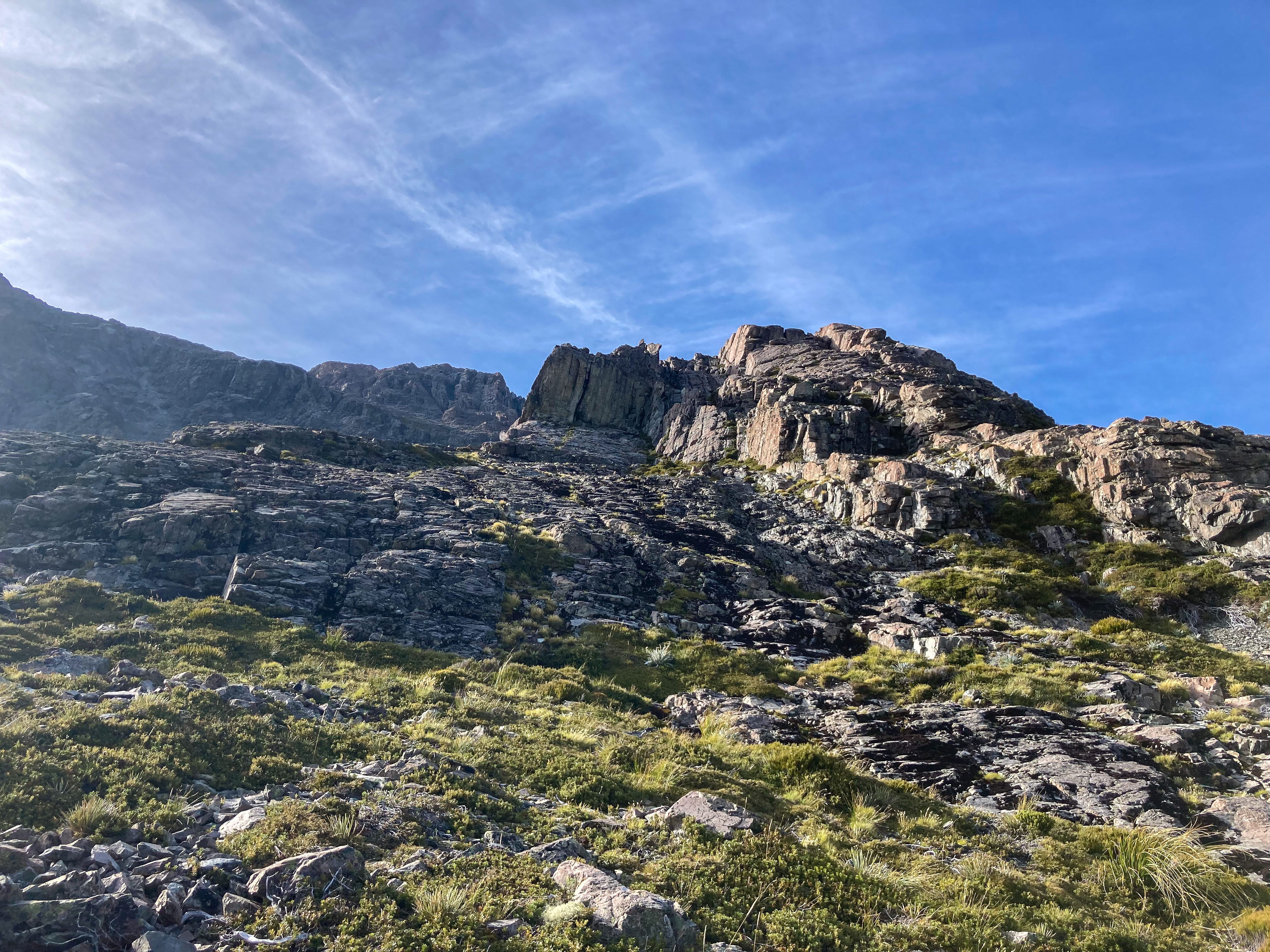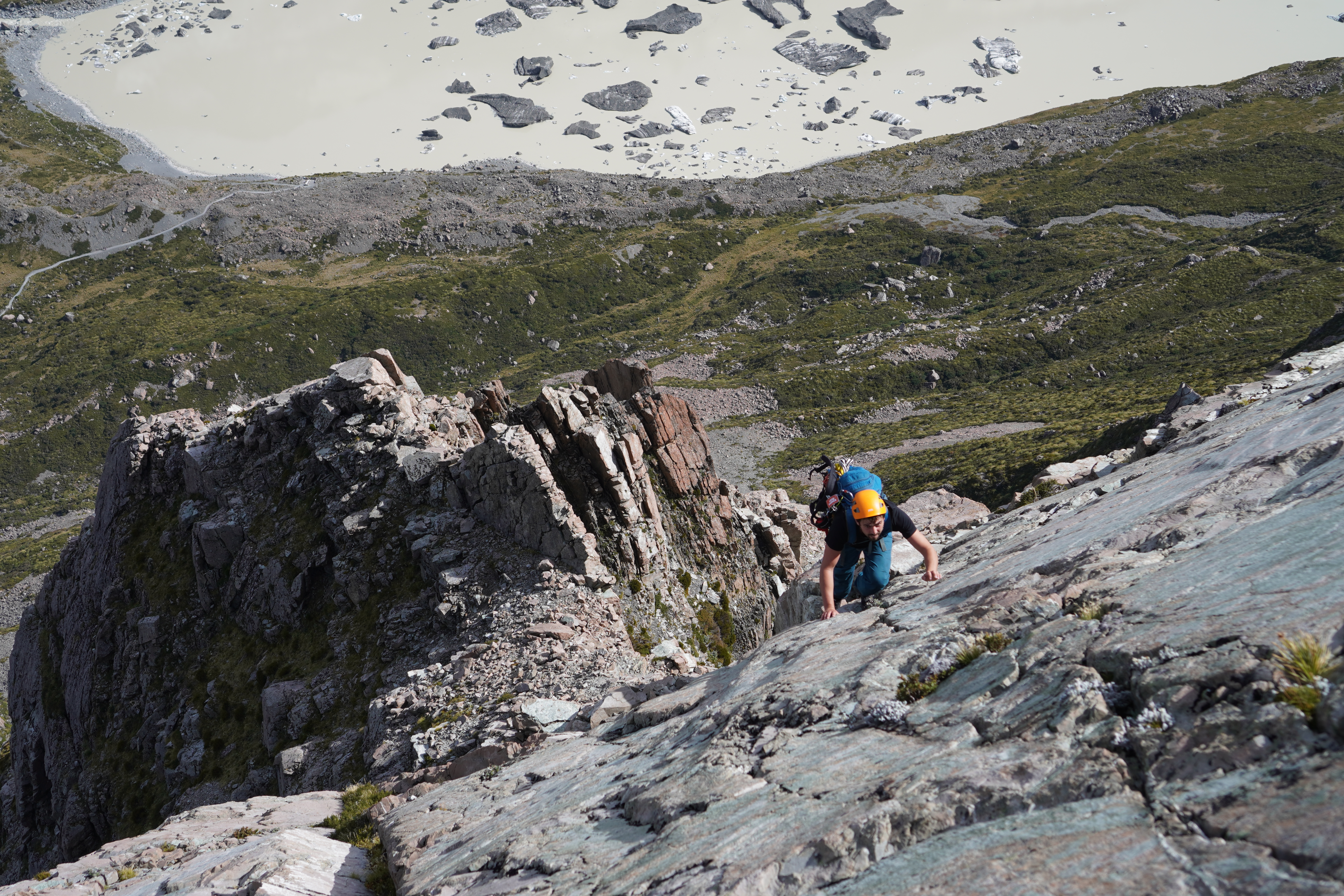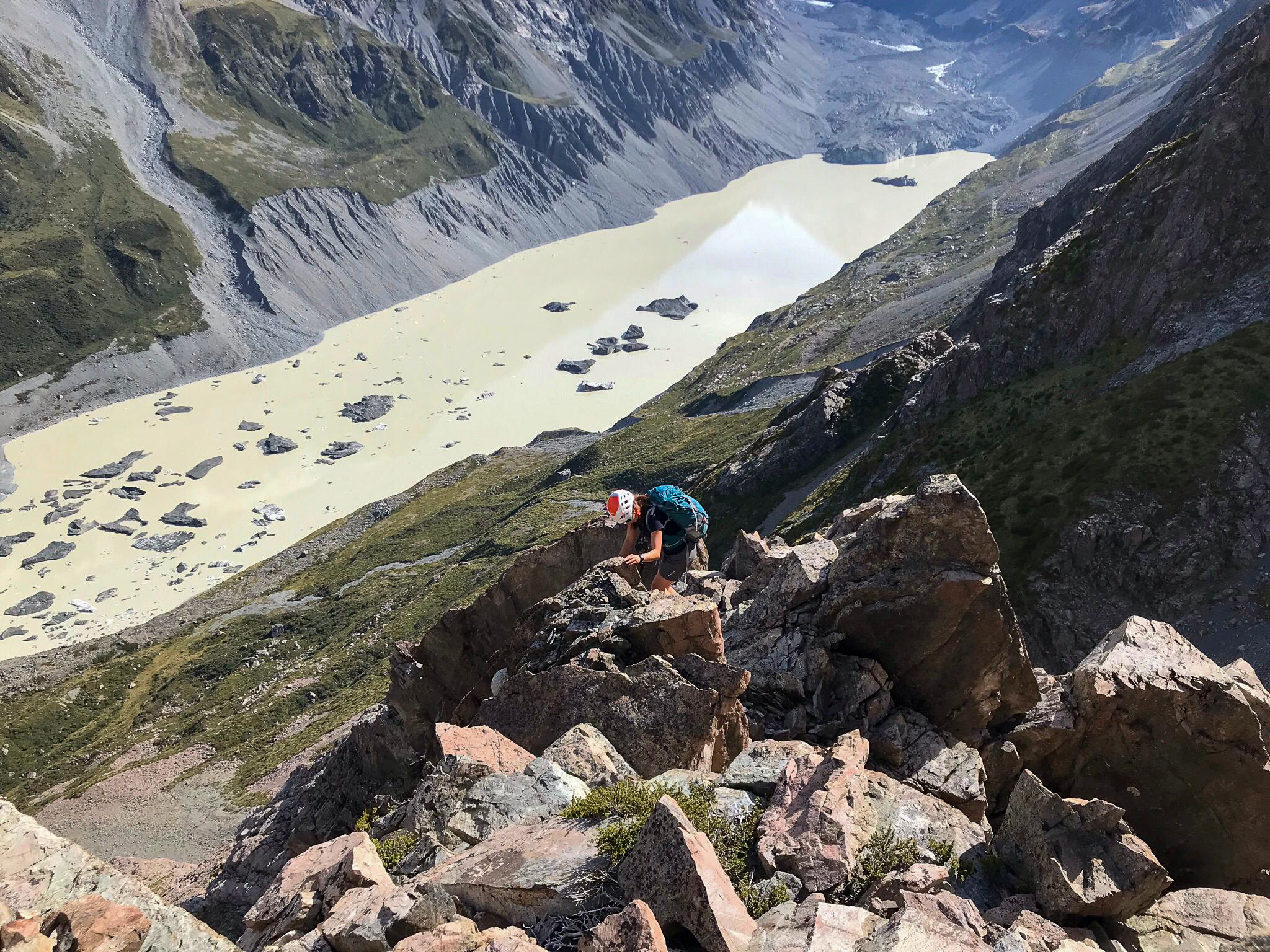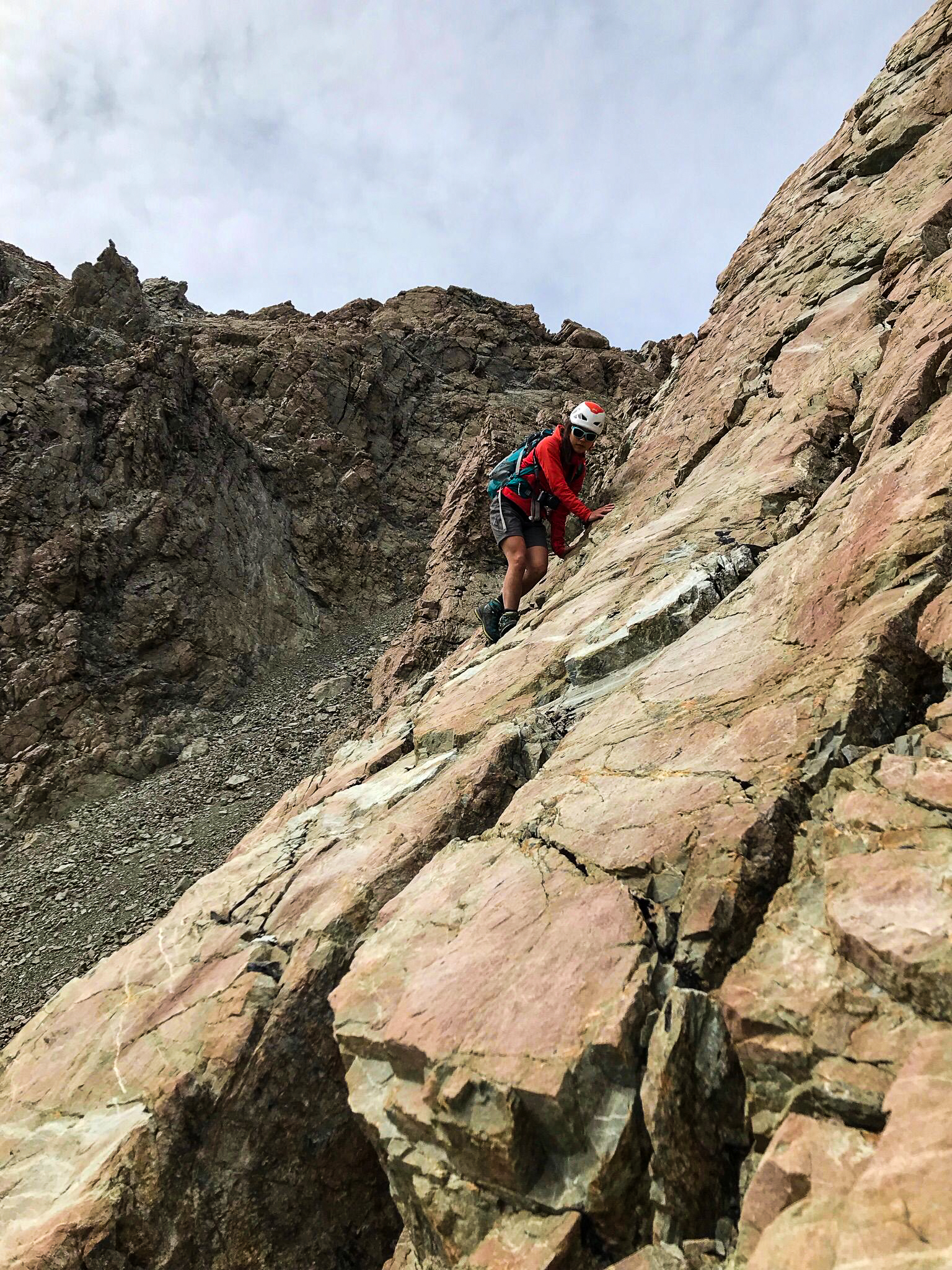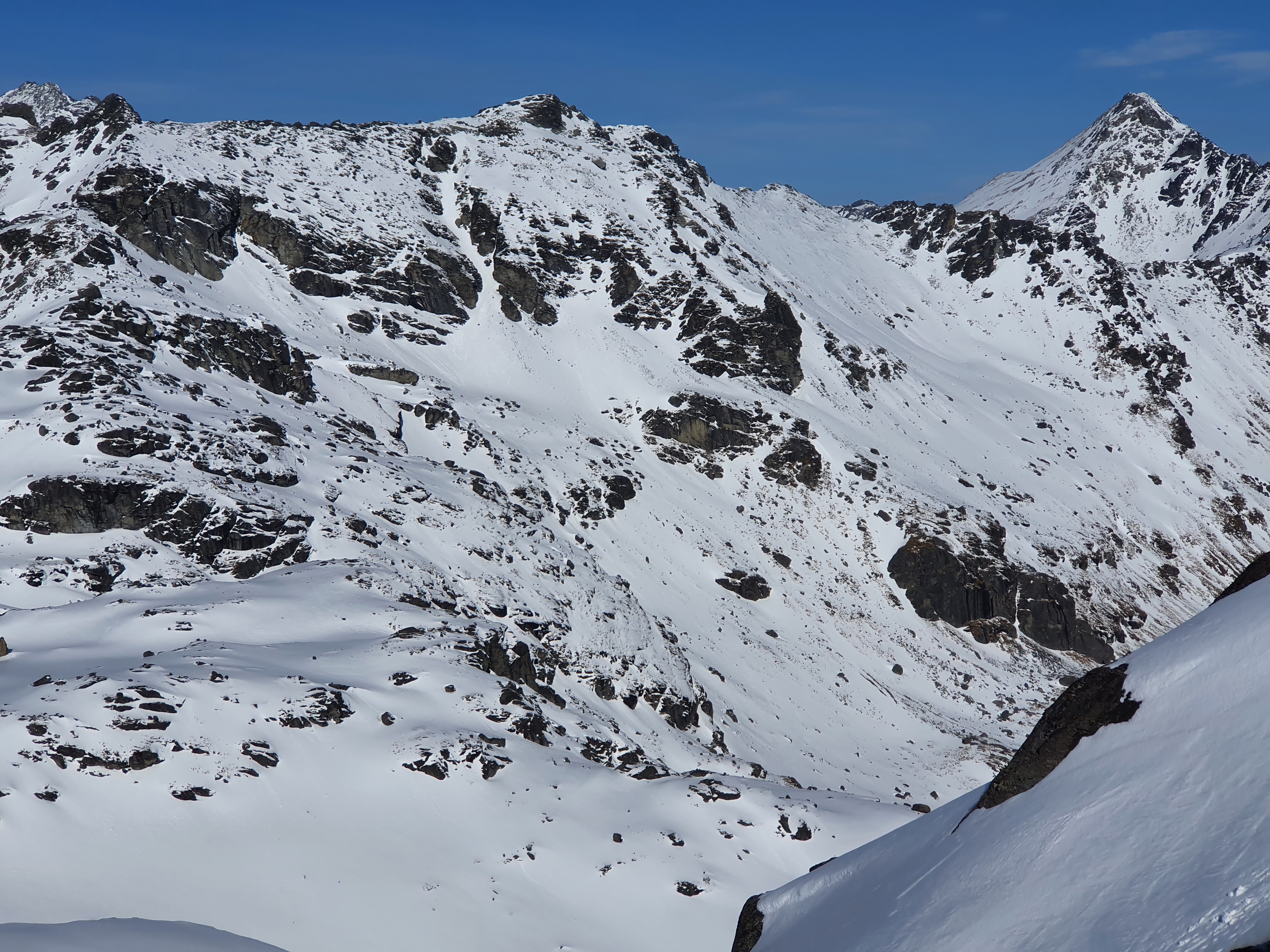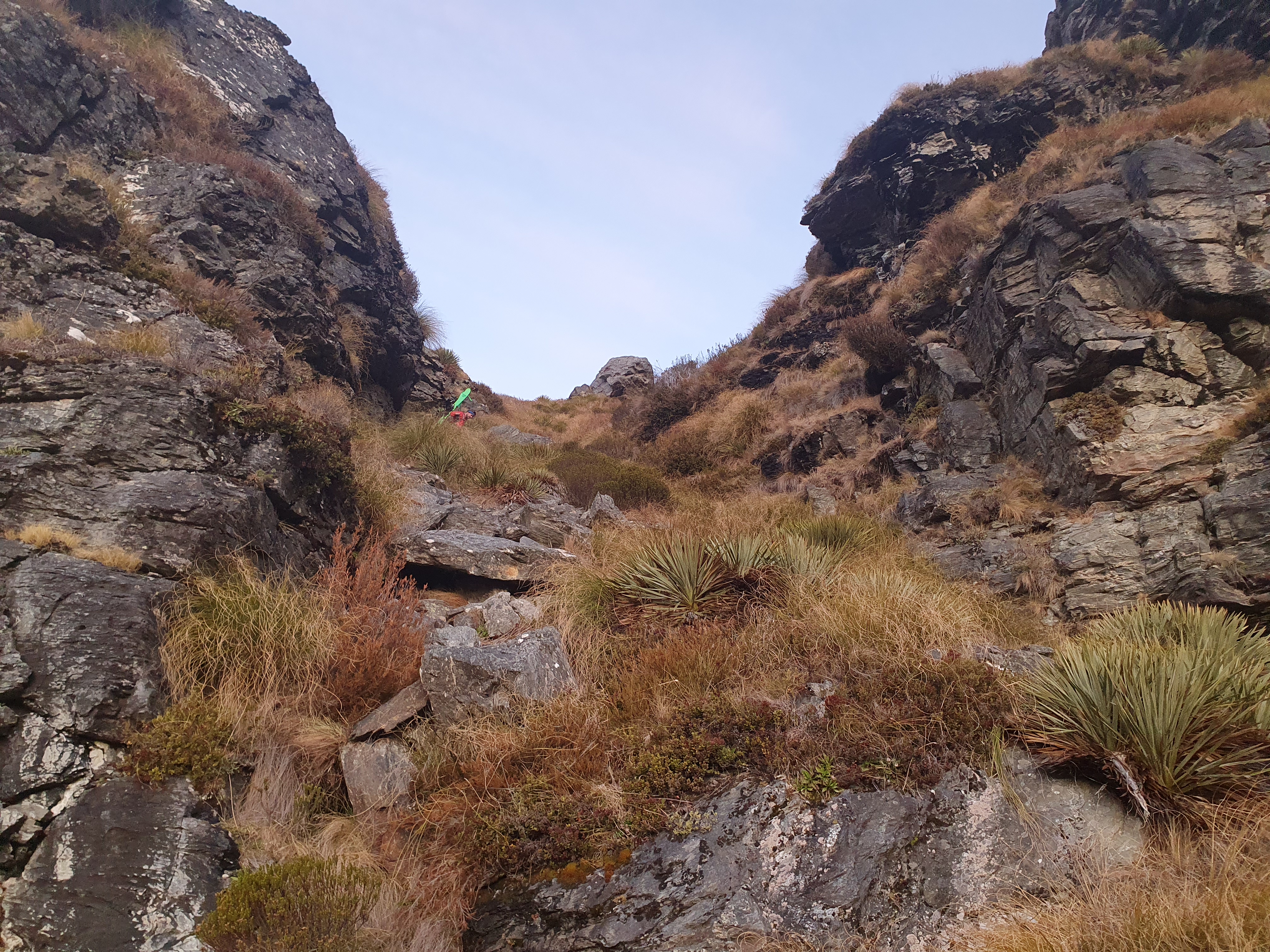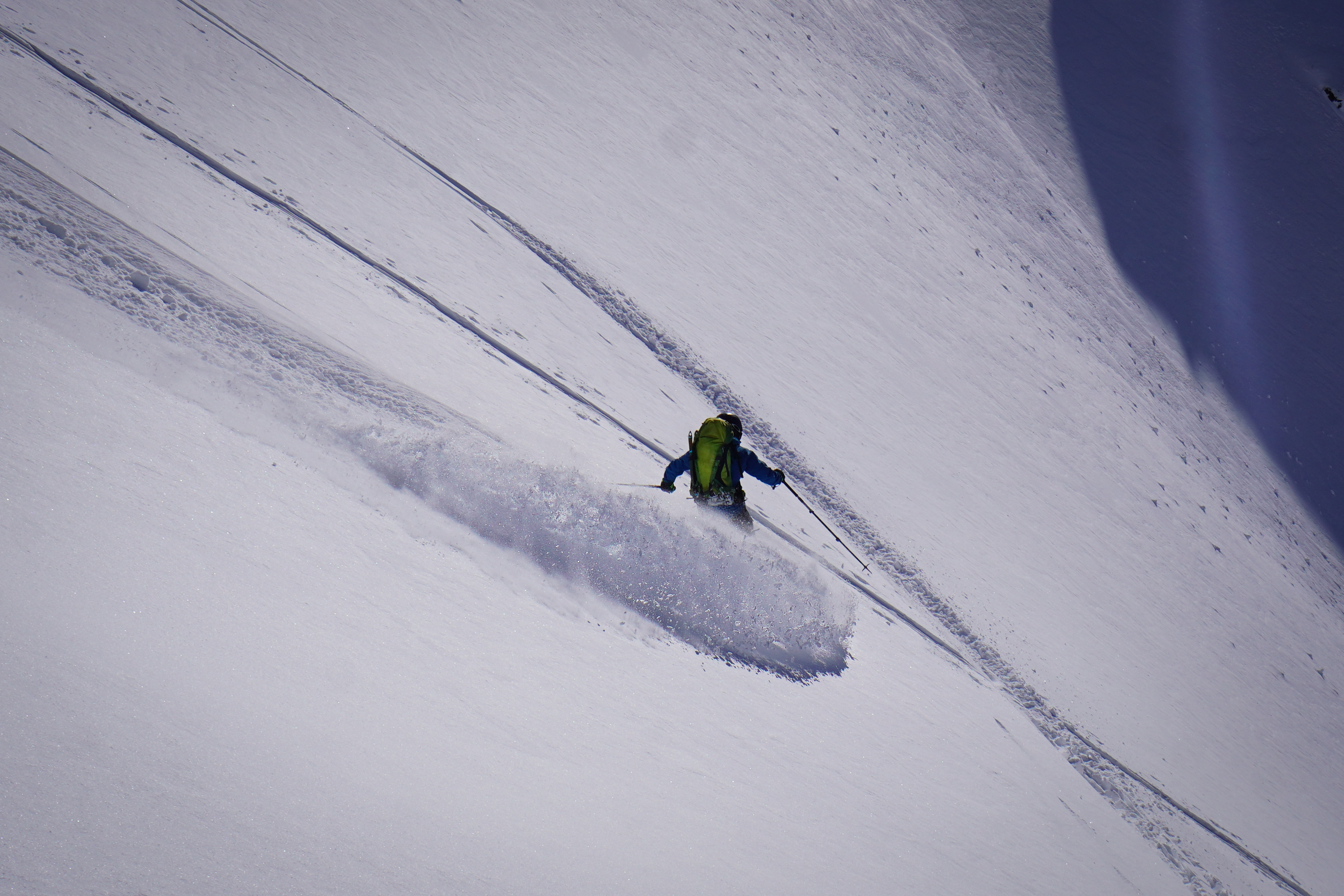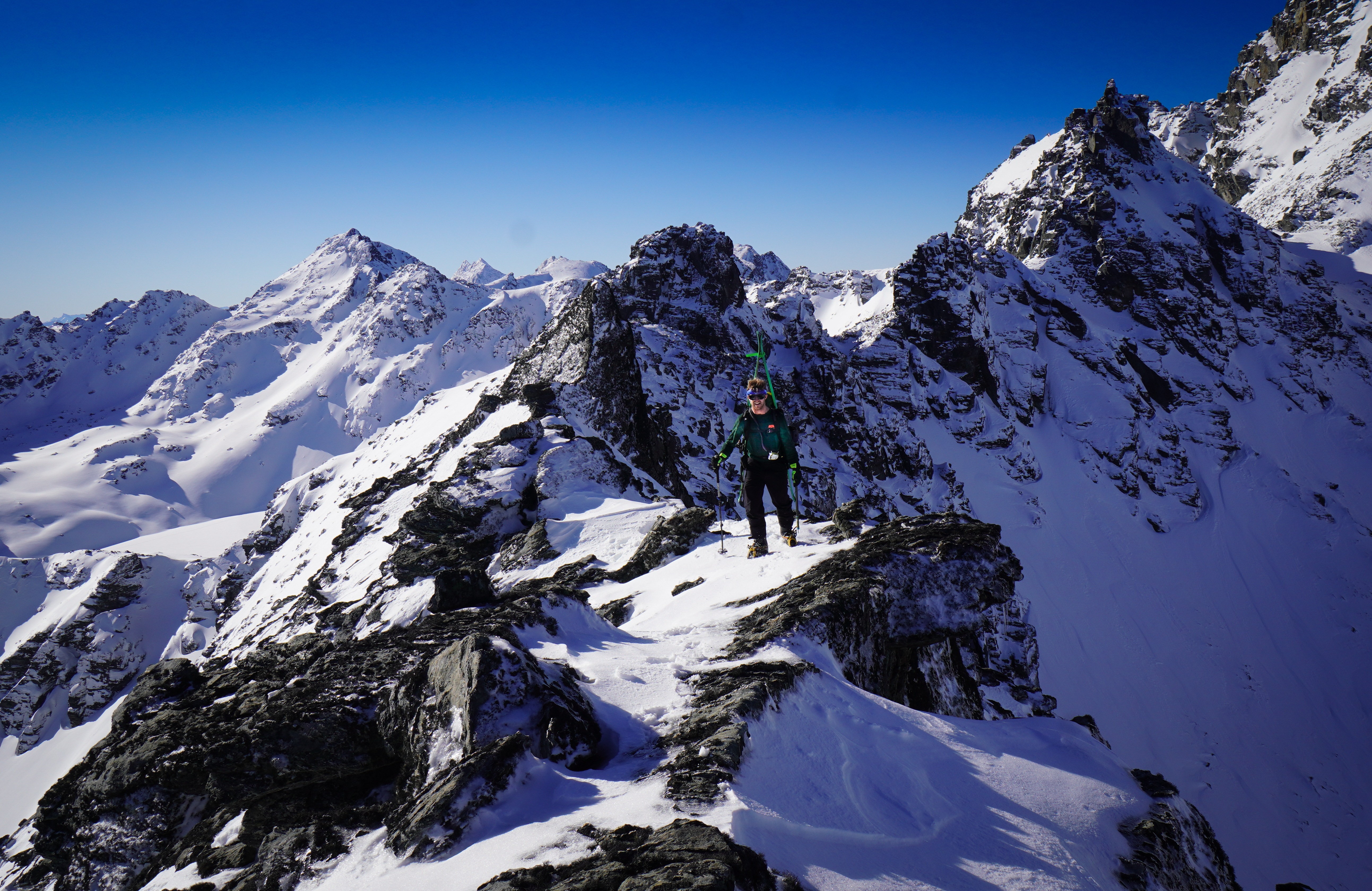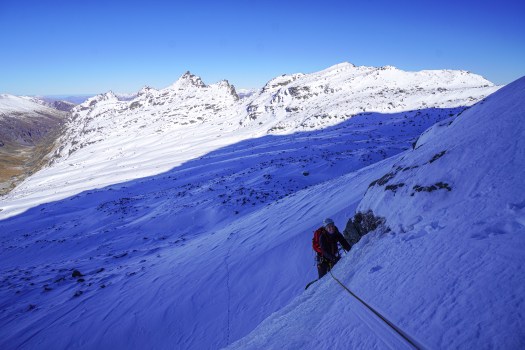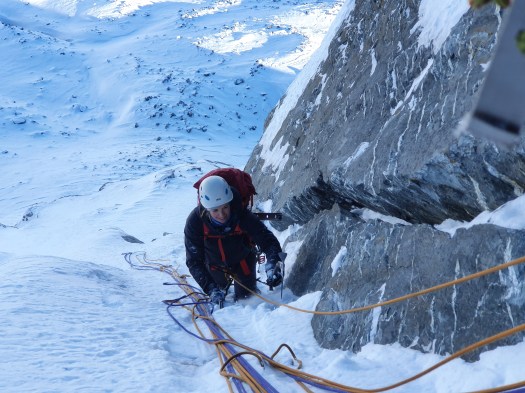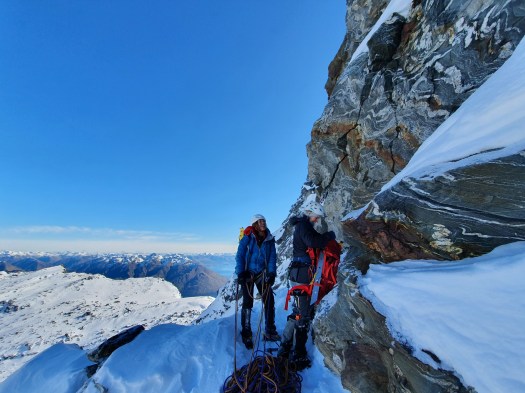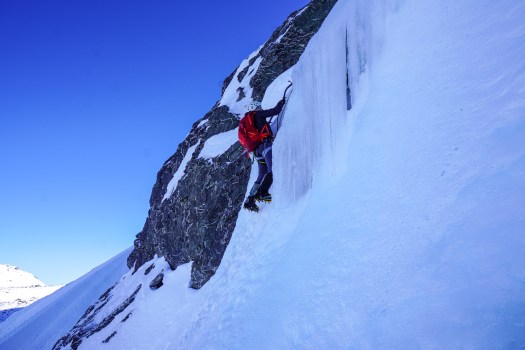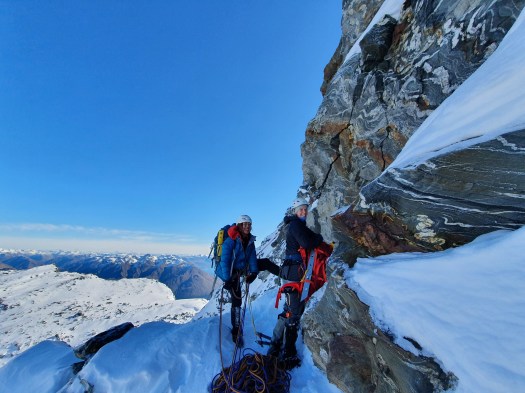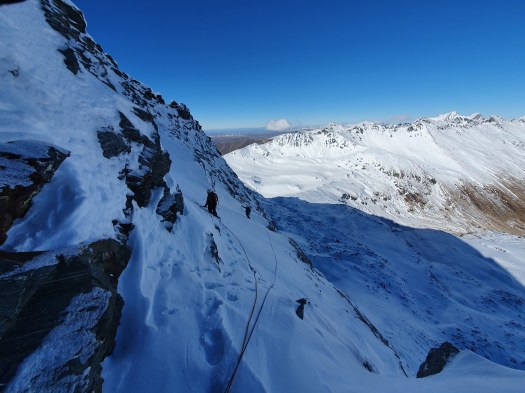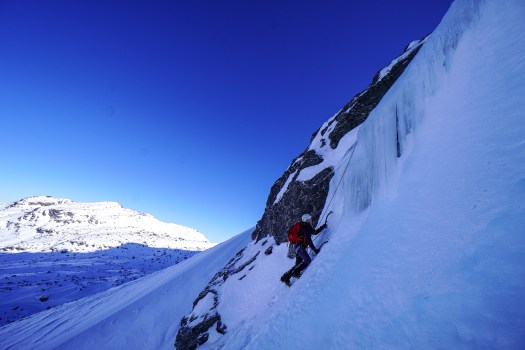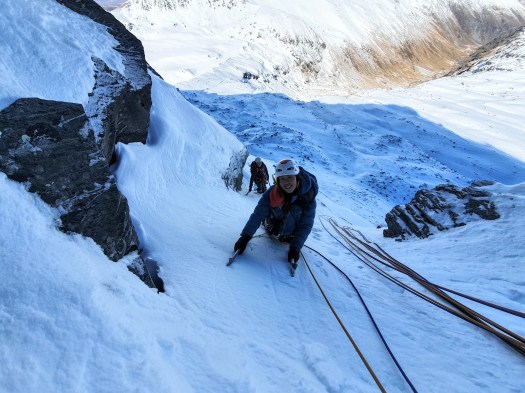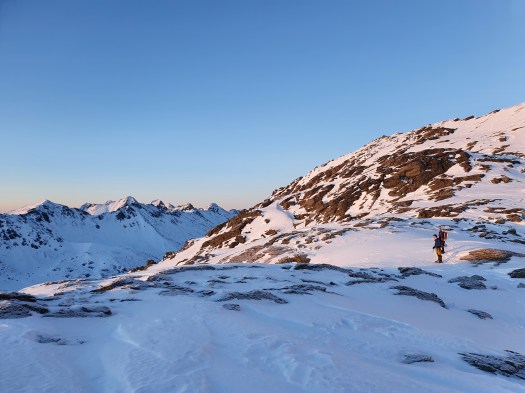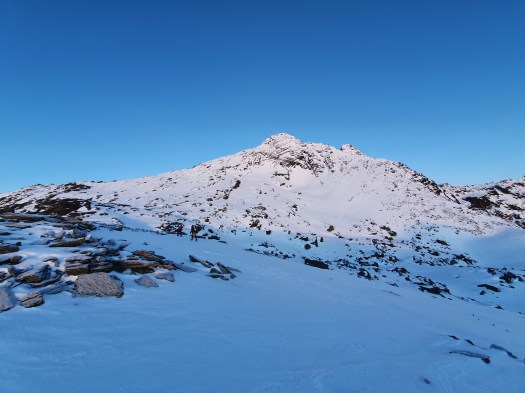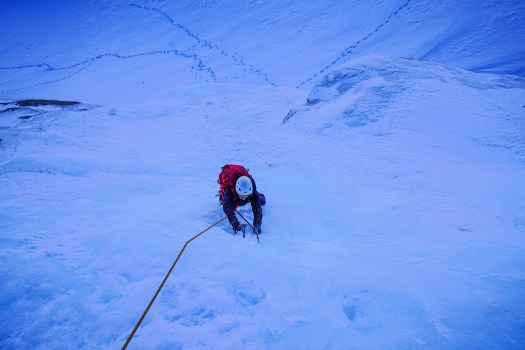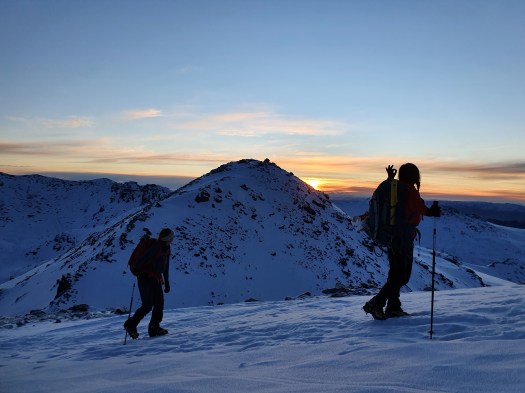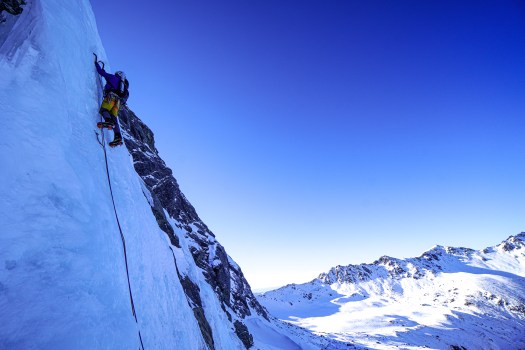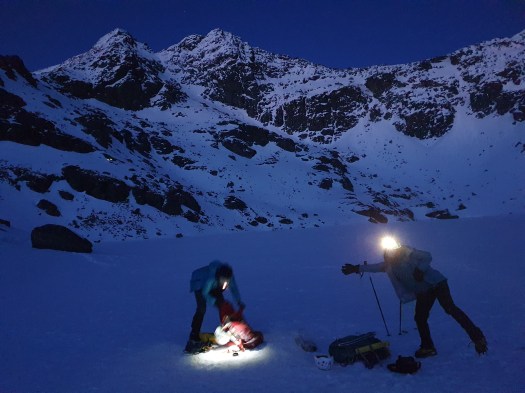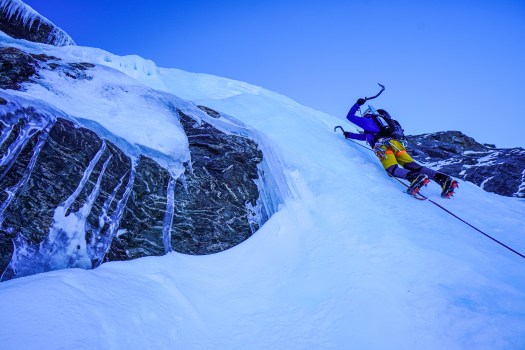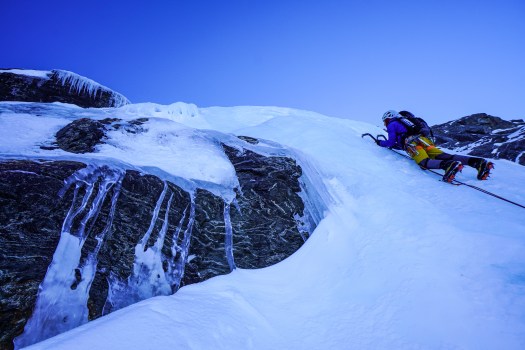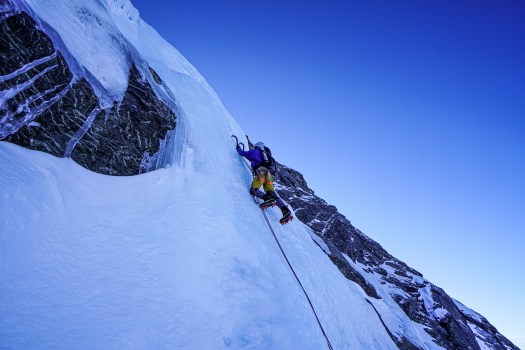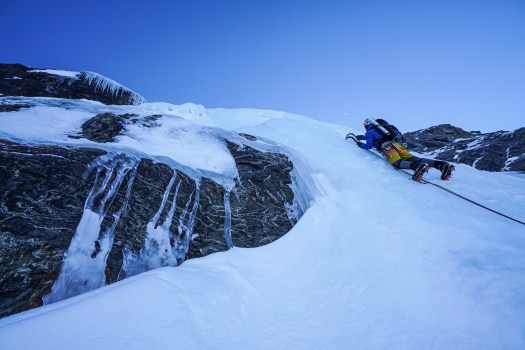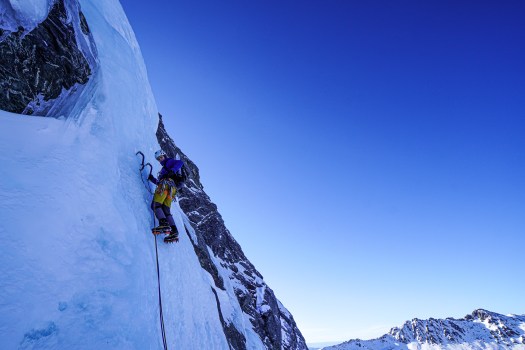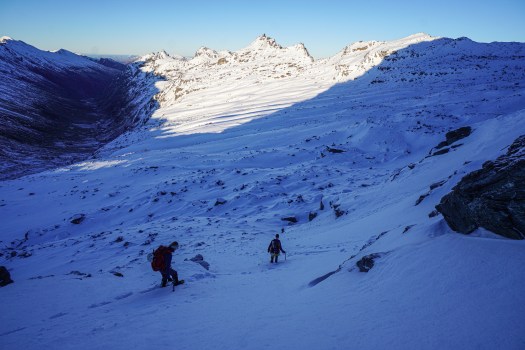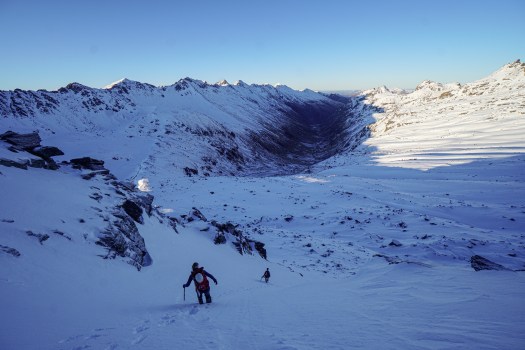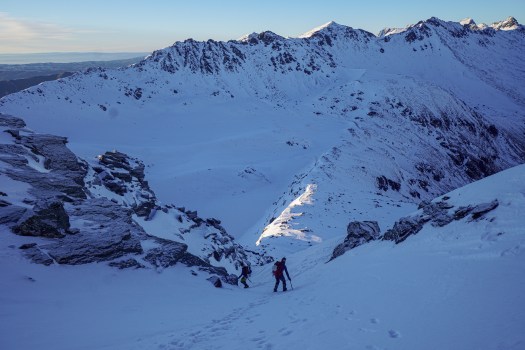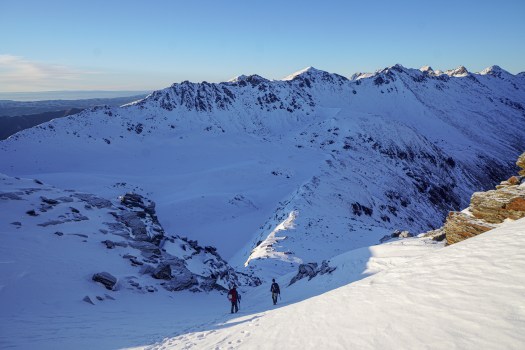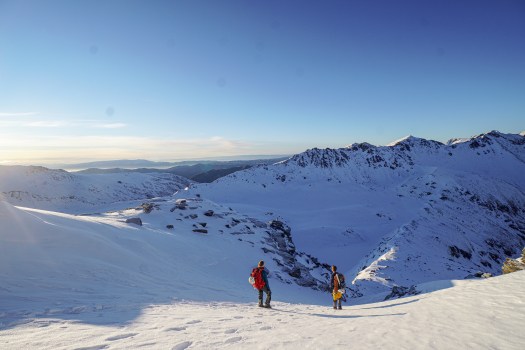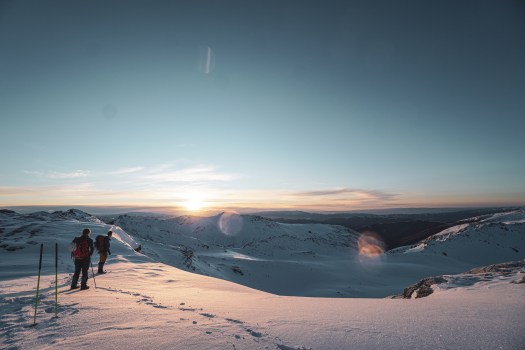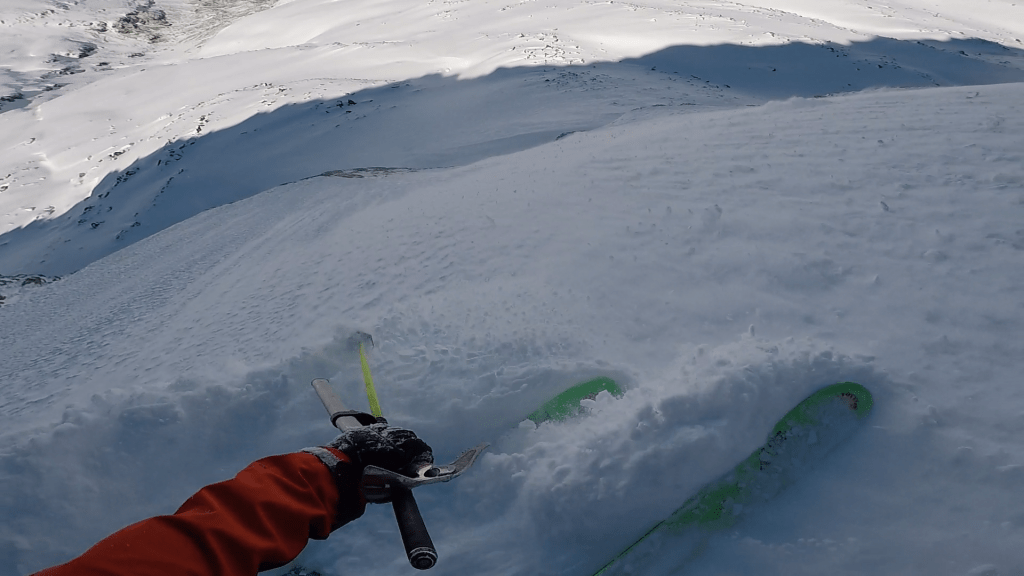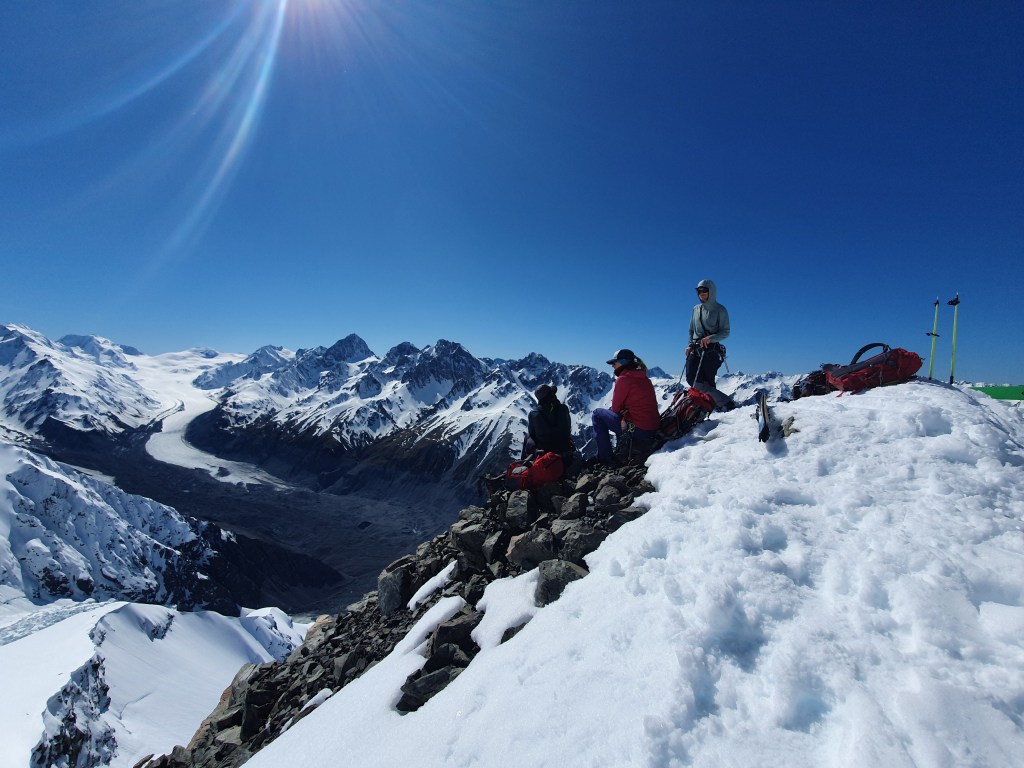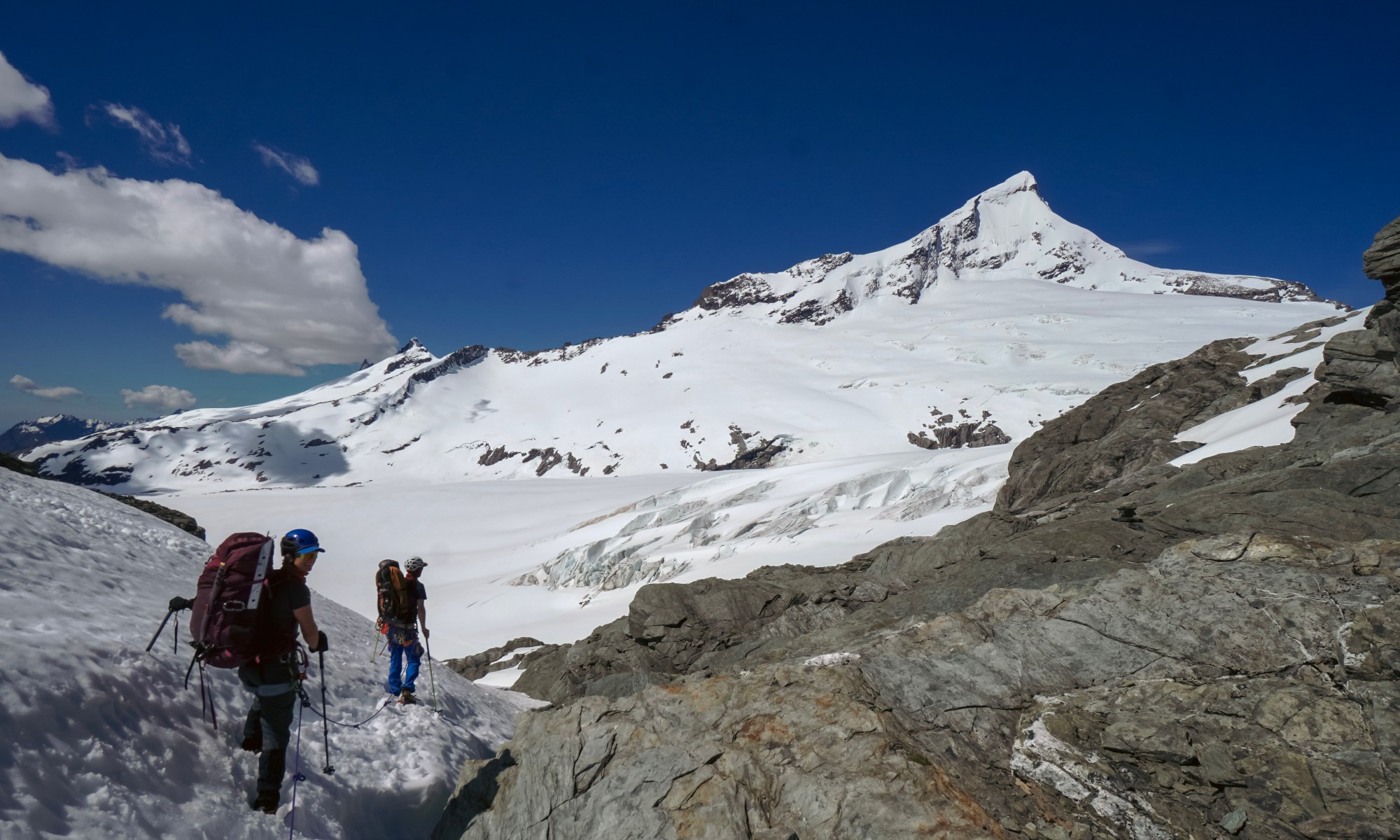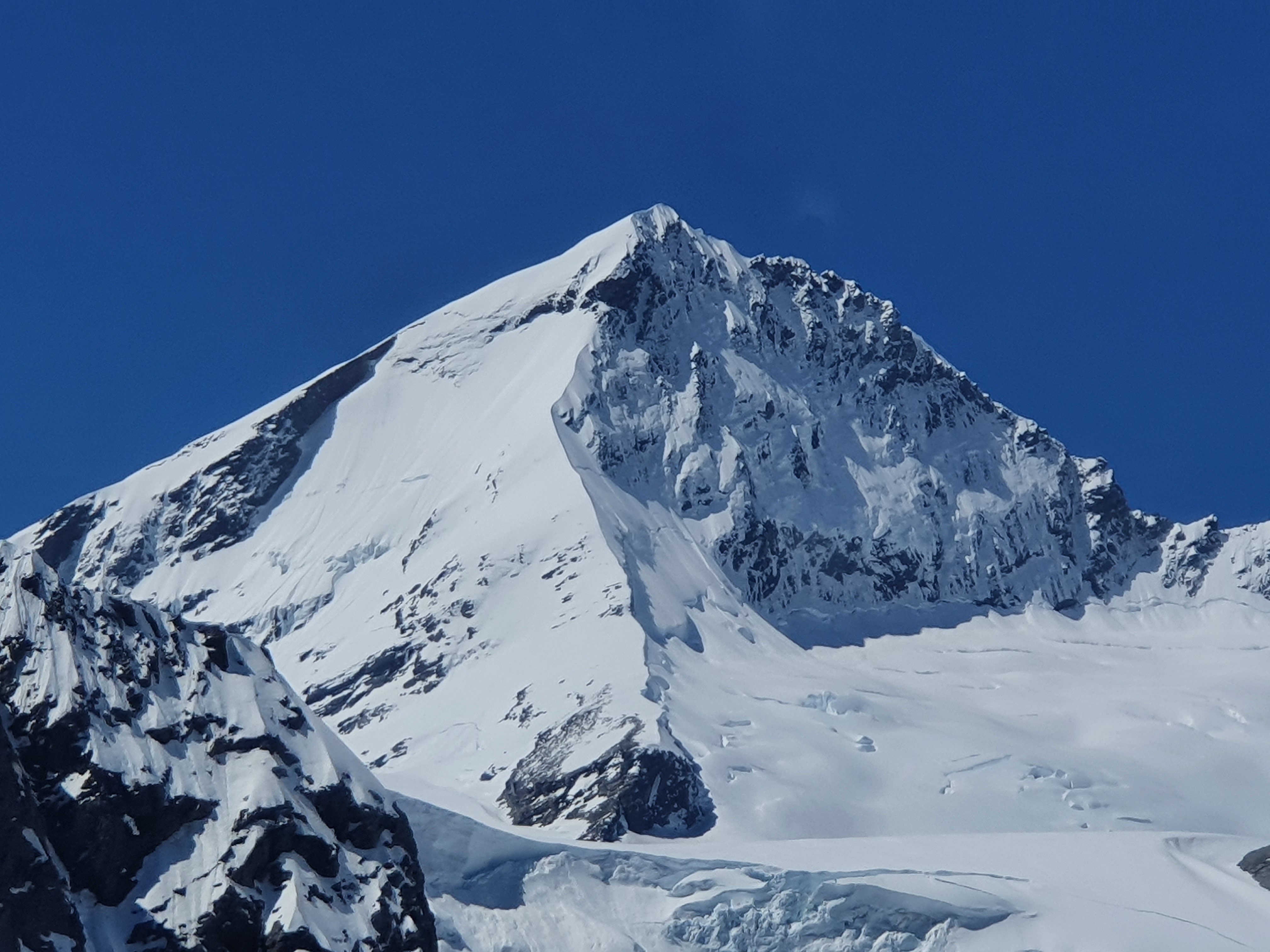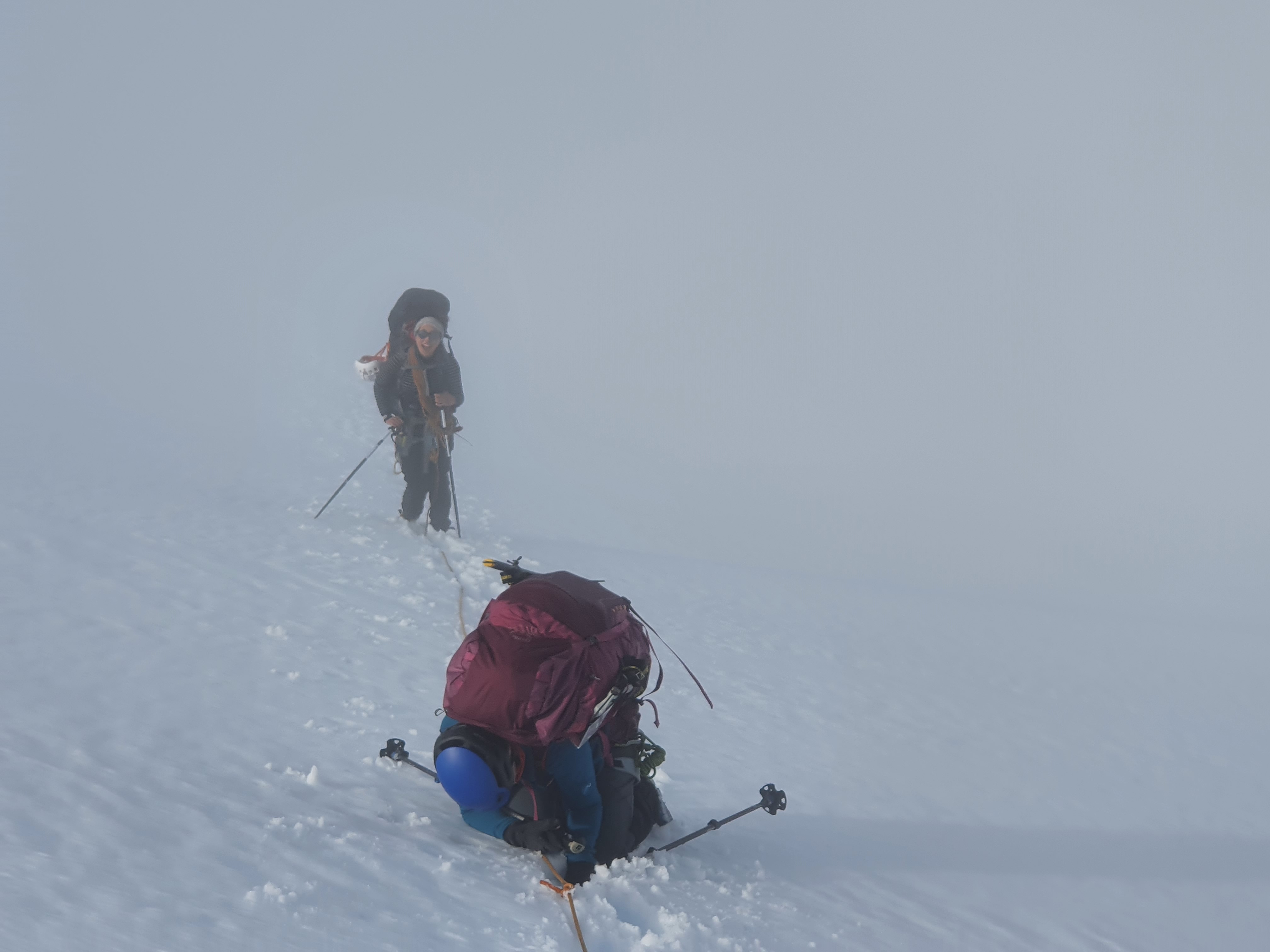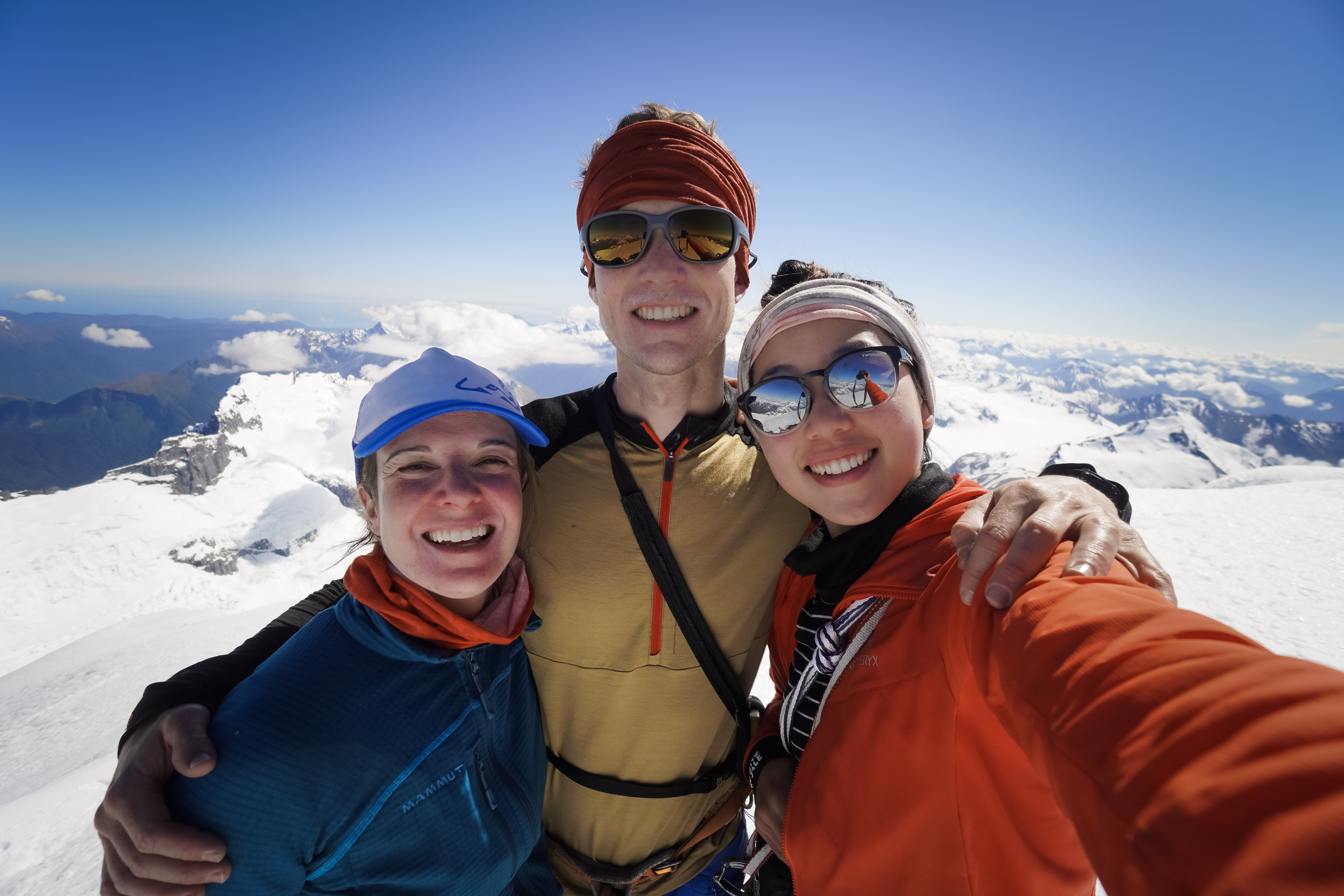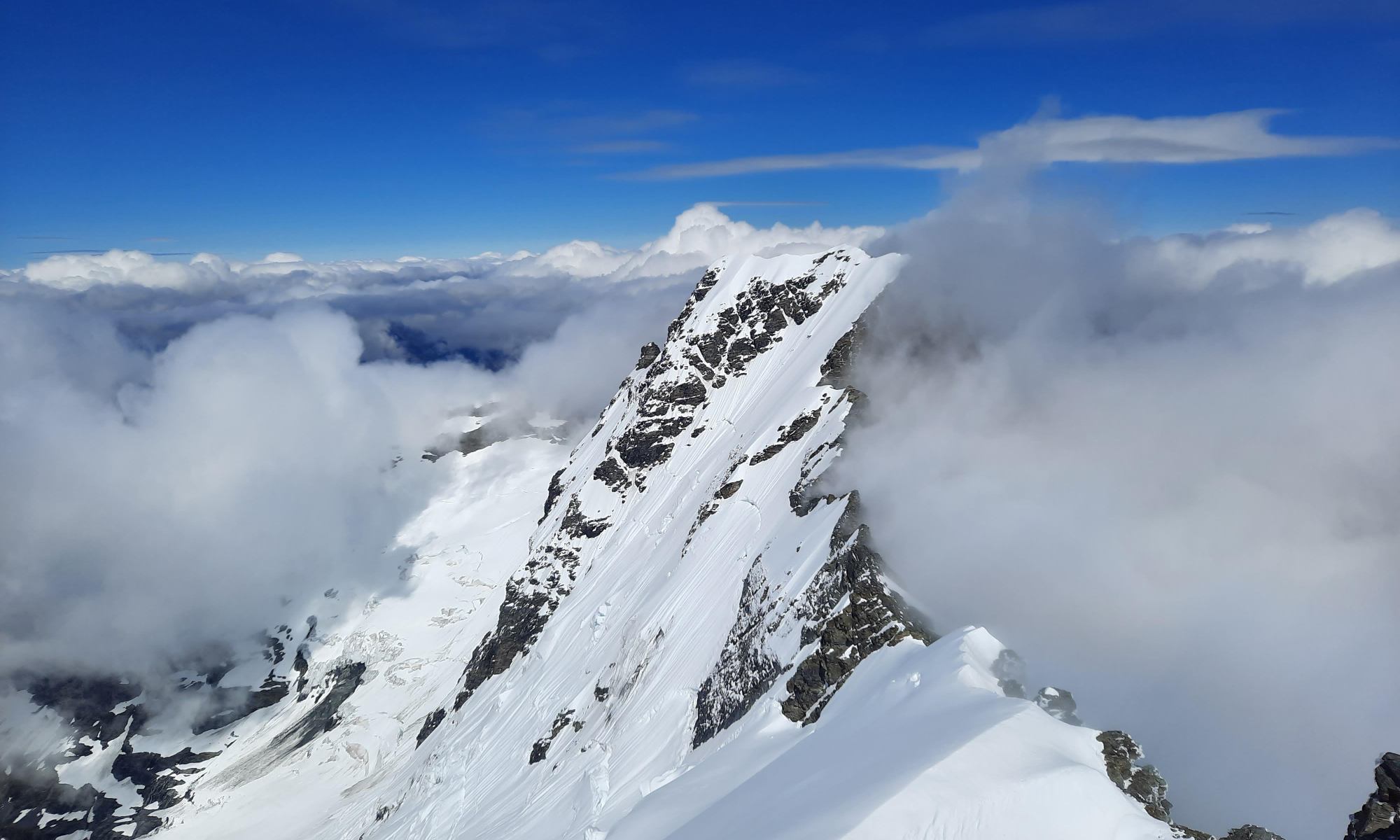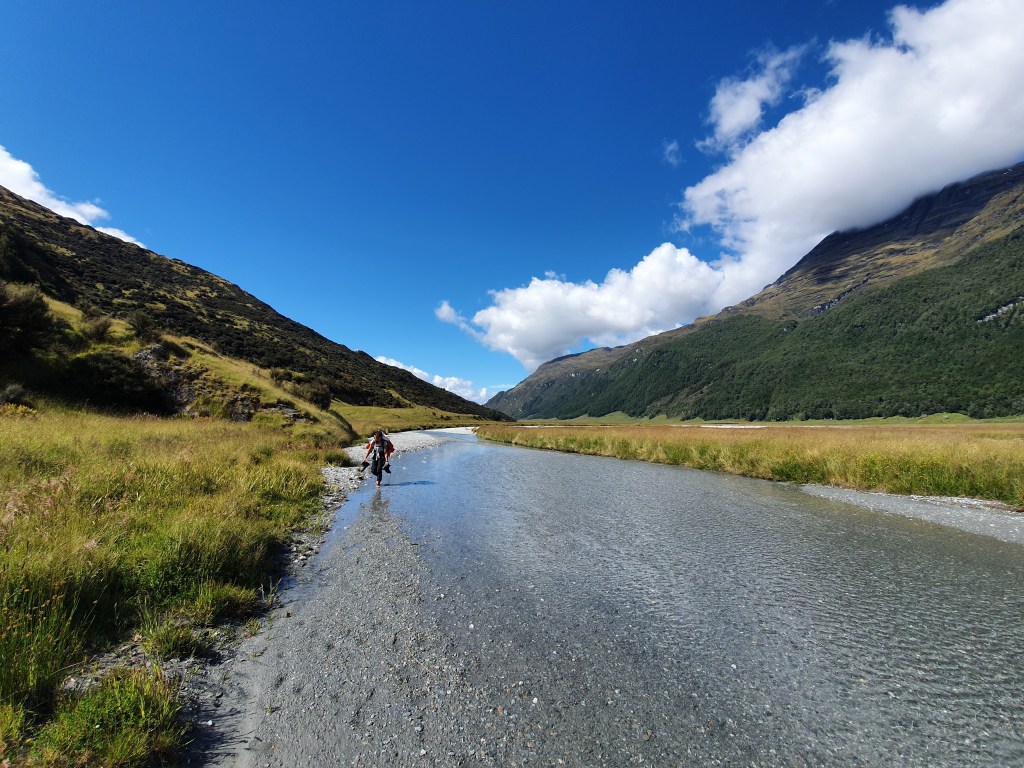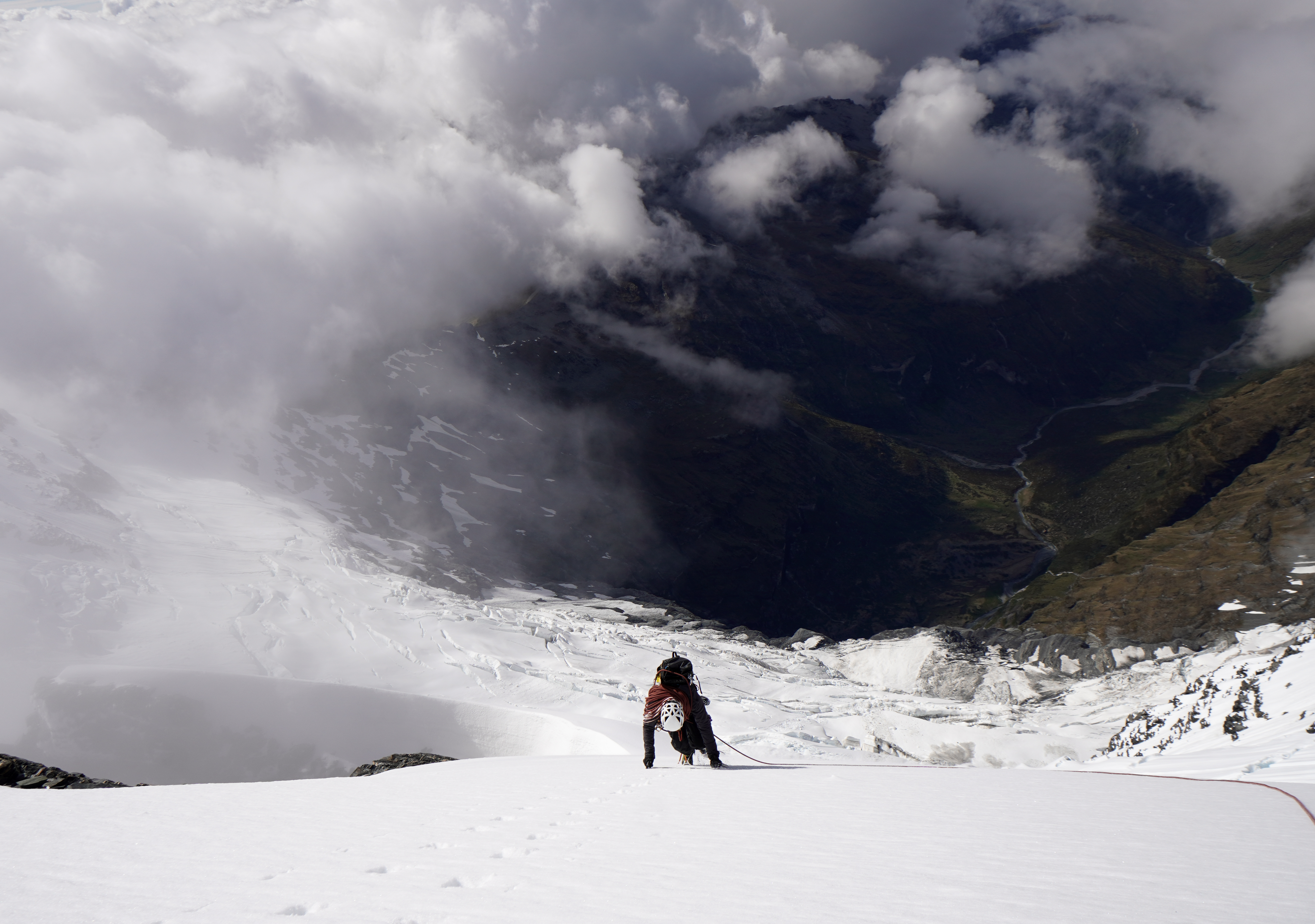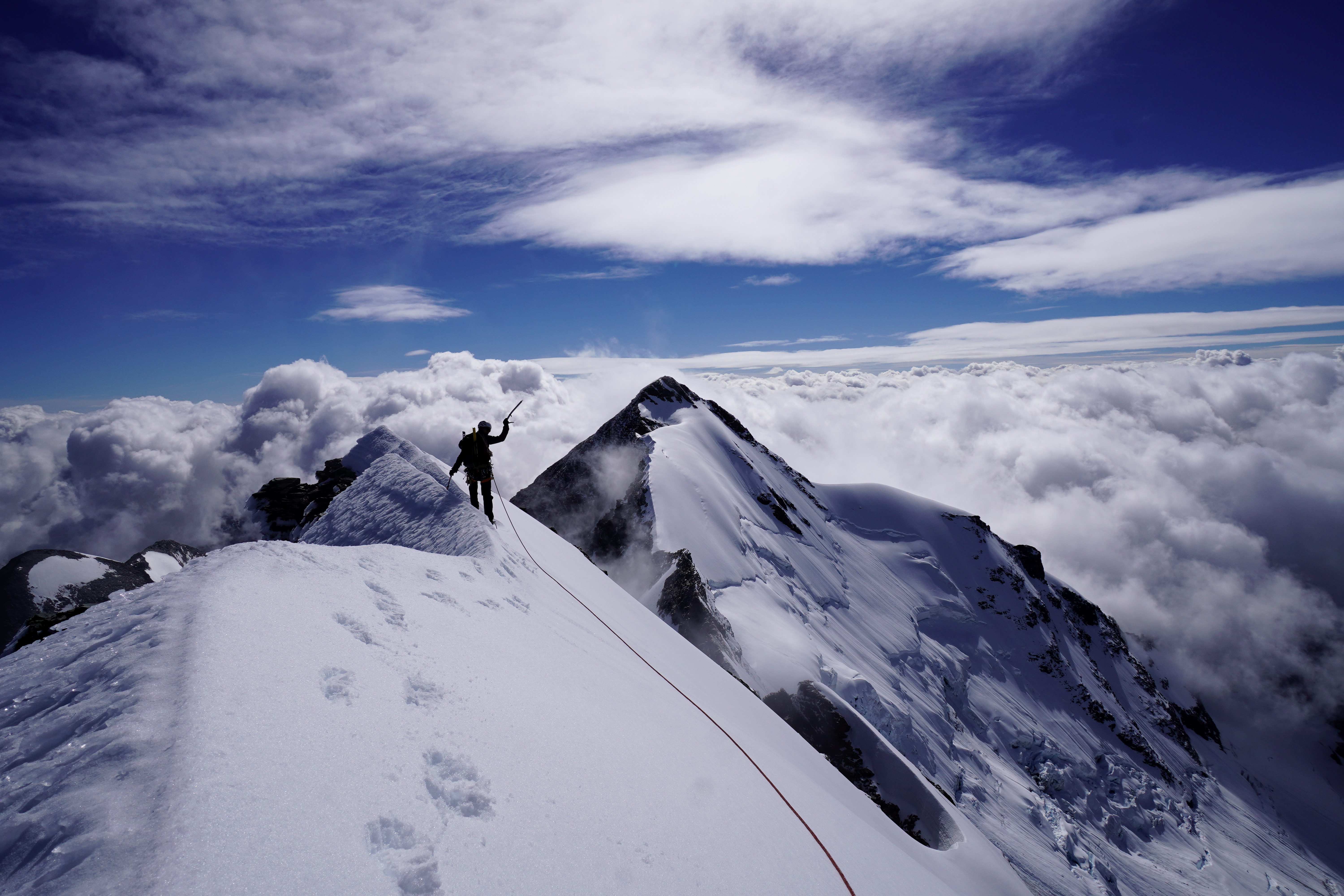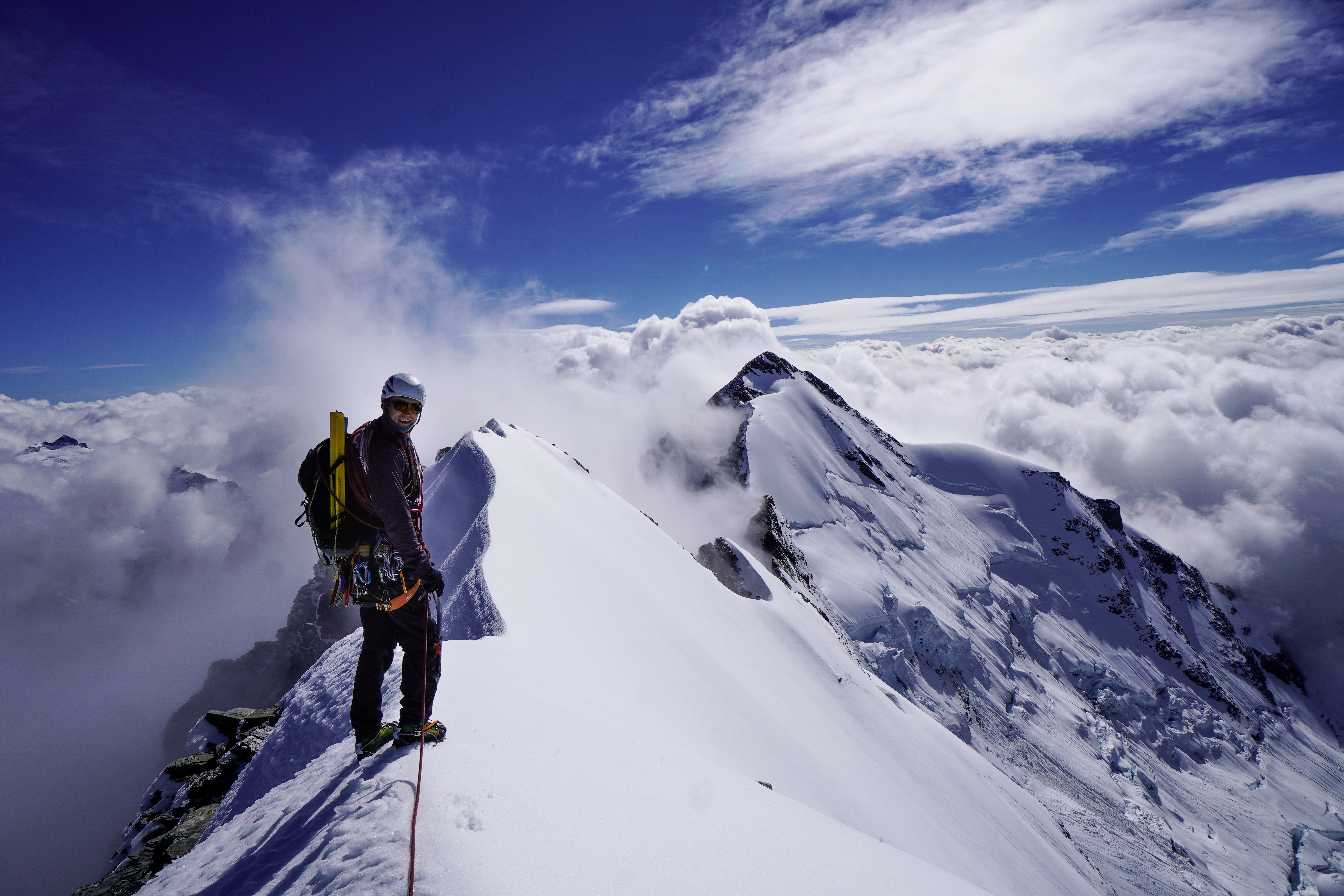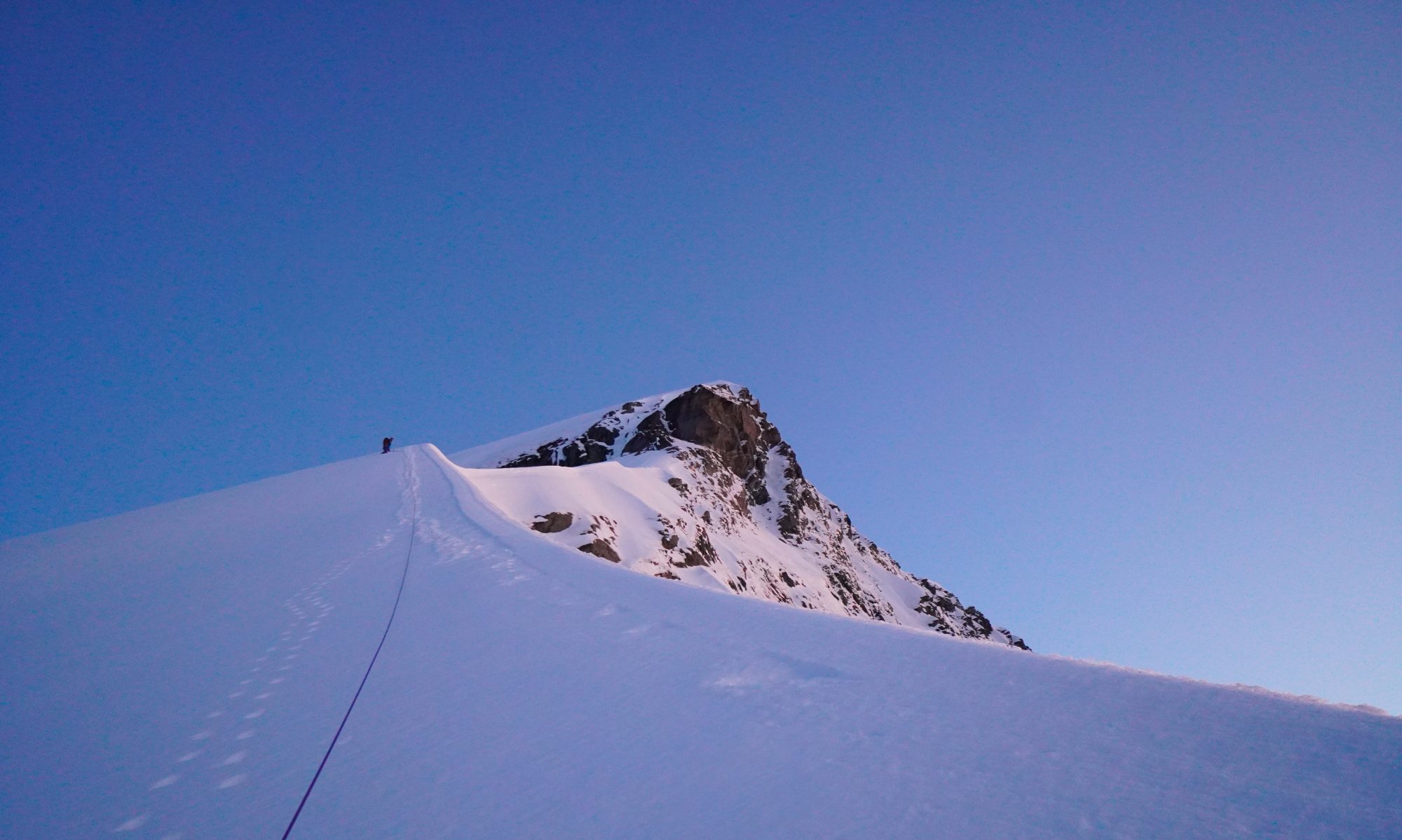
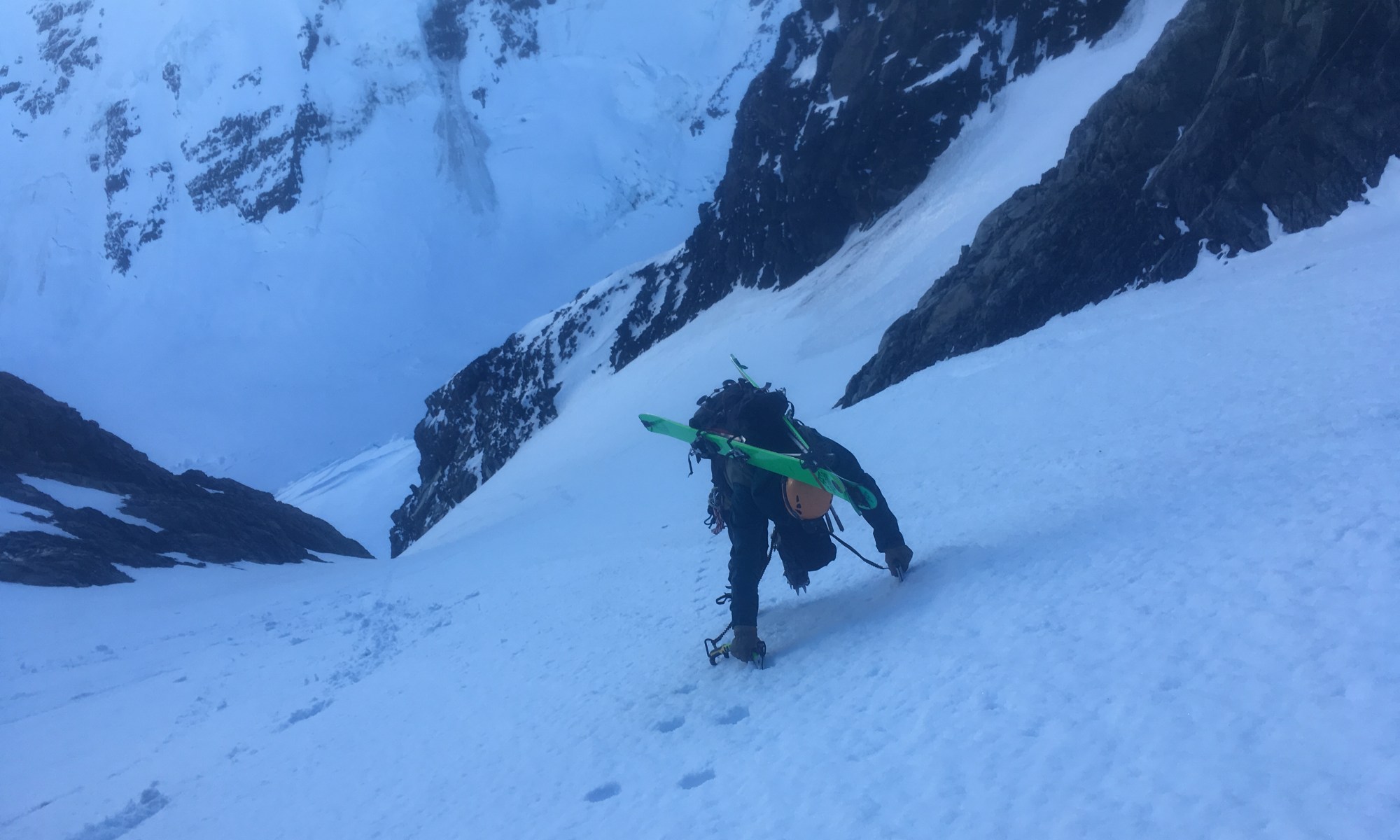
Aoraki / Mt Cook NW Couloir – Ski Descent

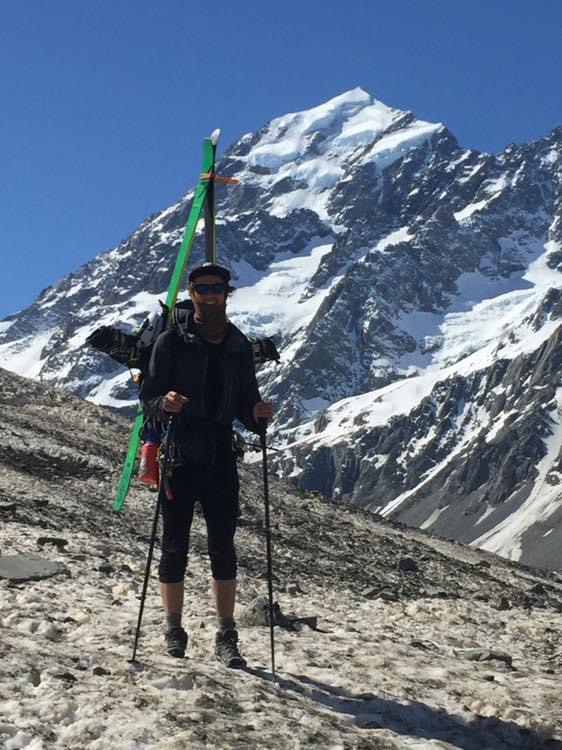
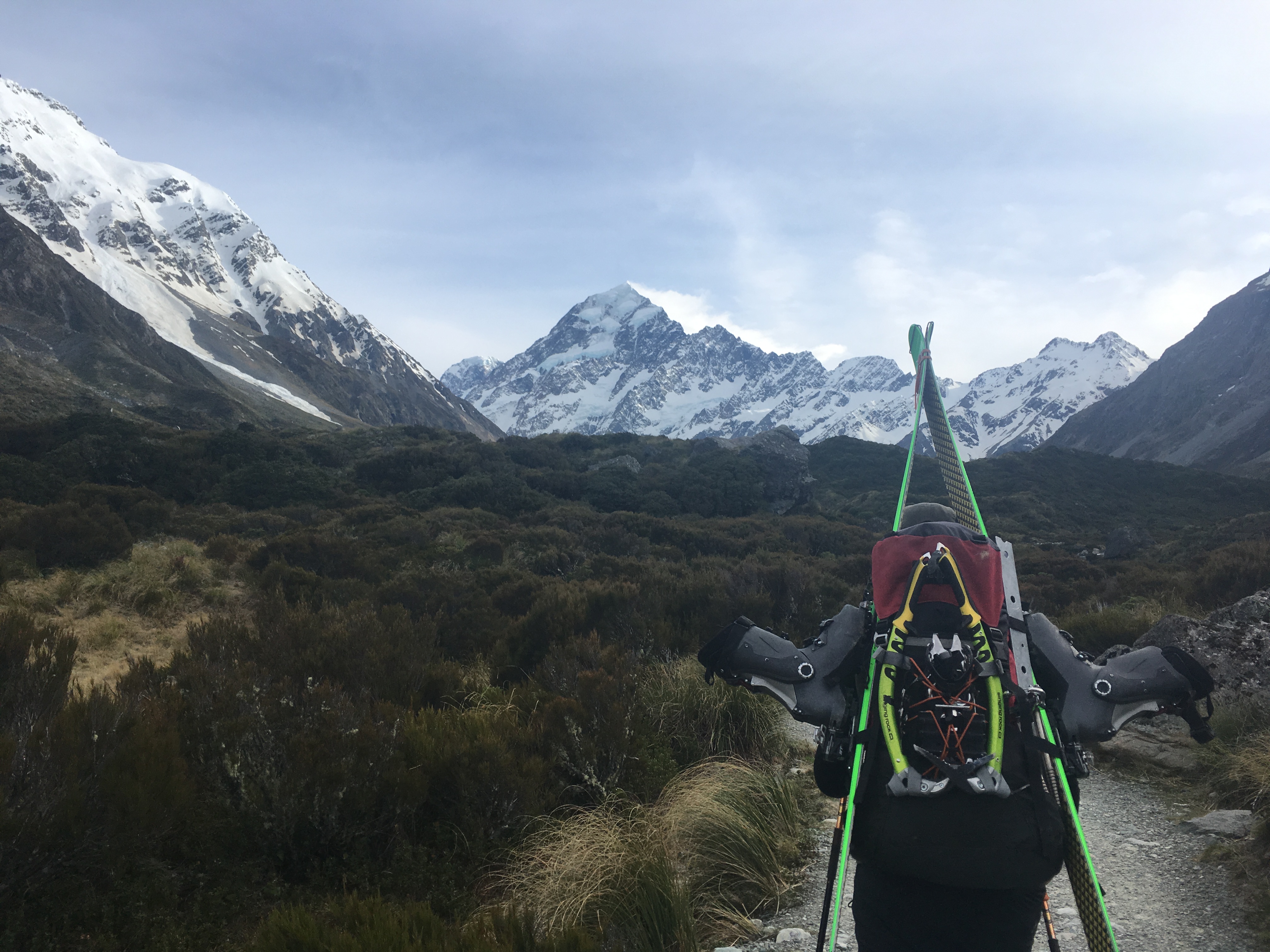
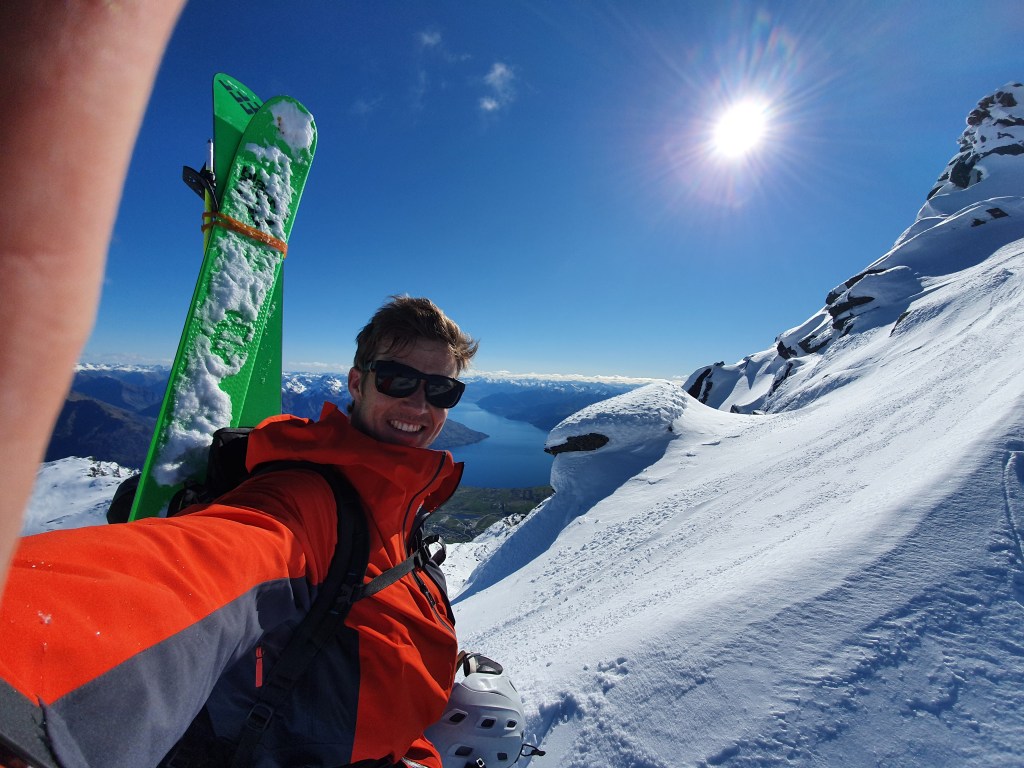
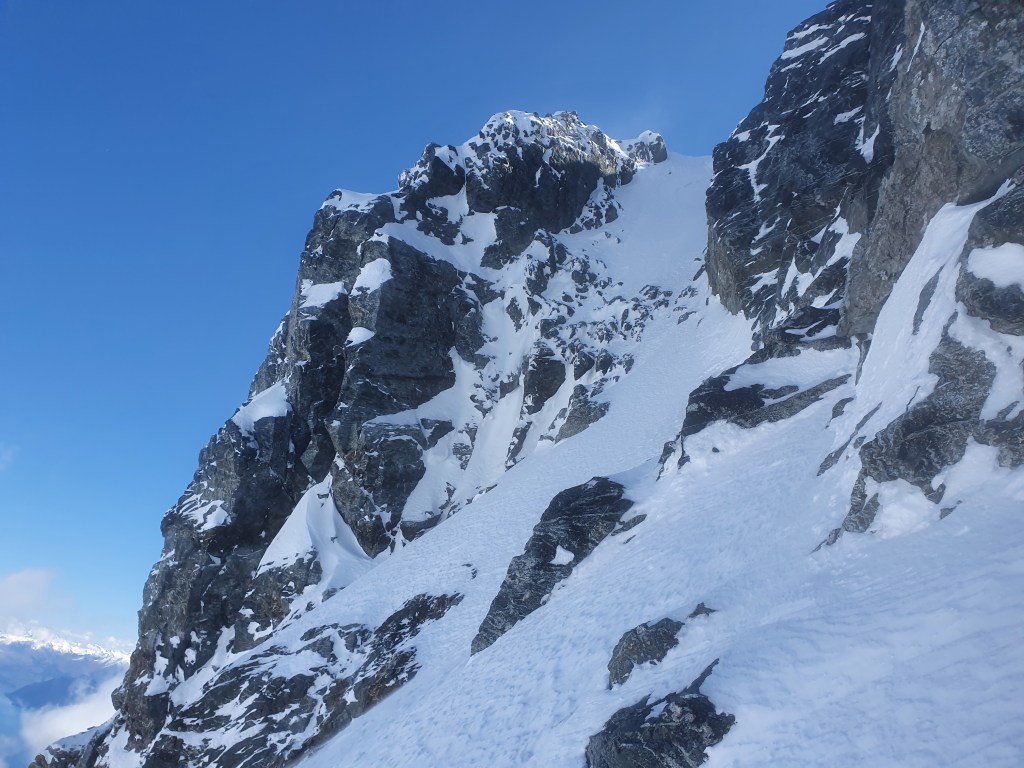
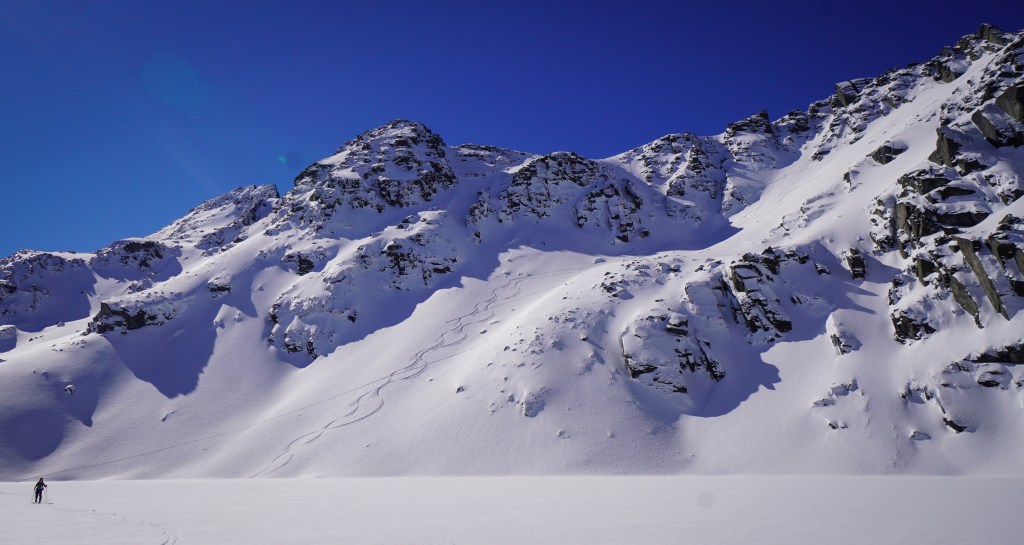
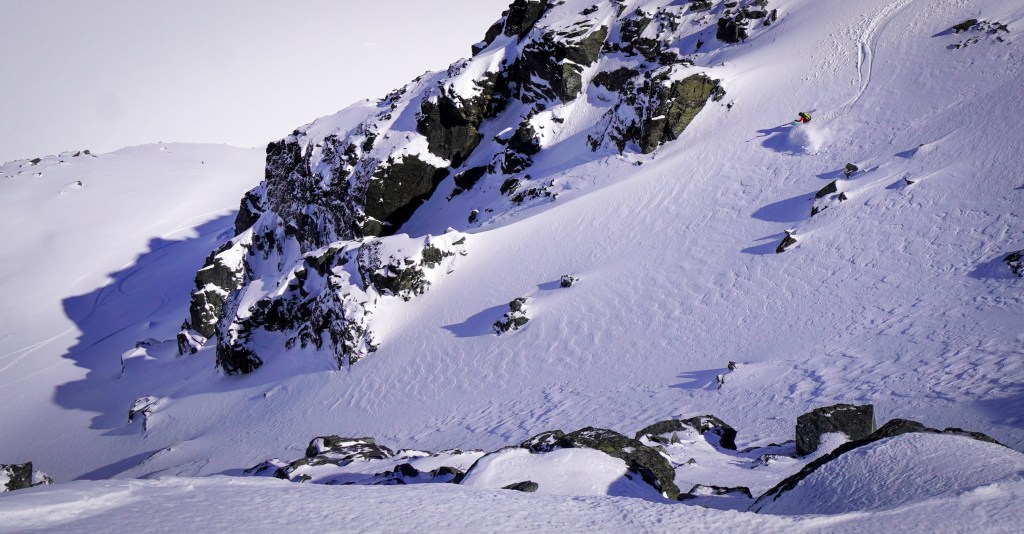
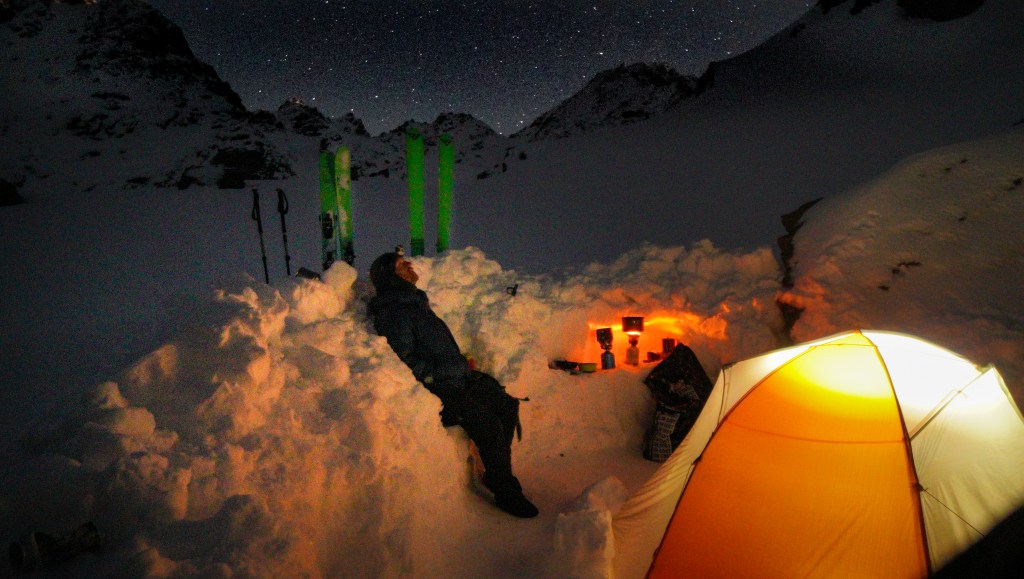
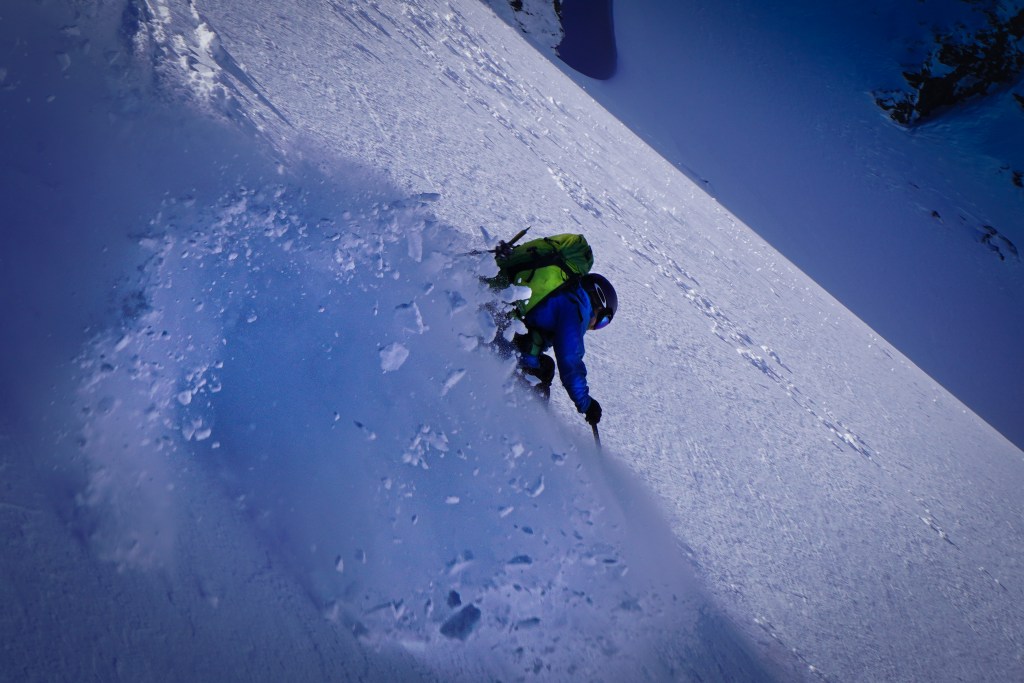
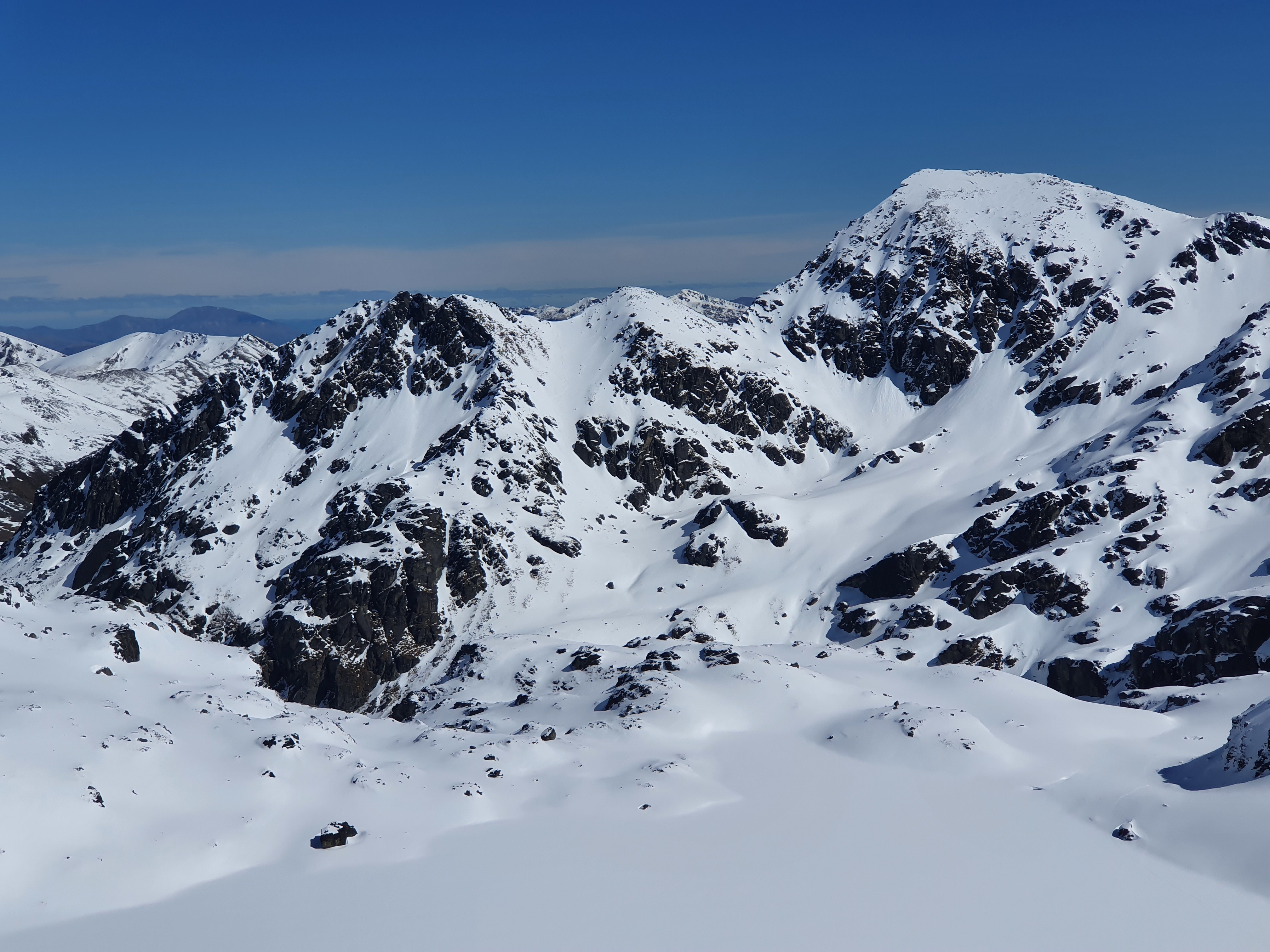
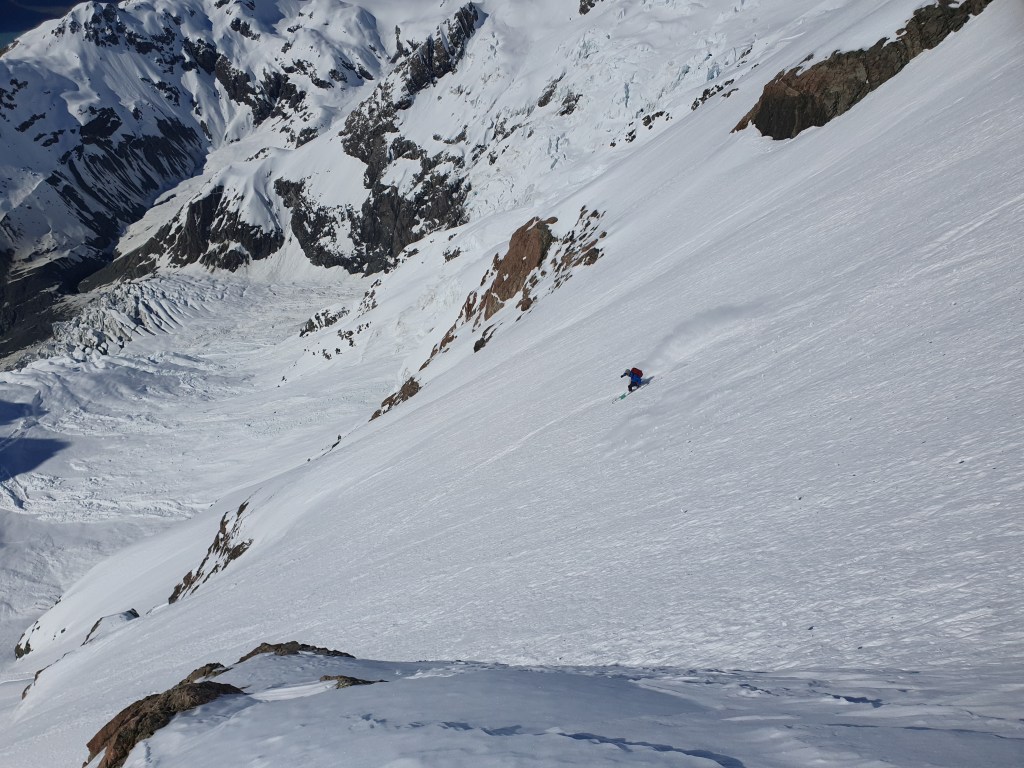
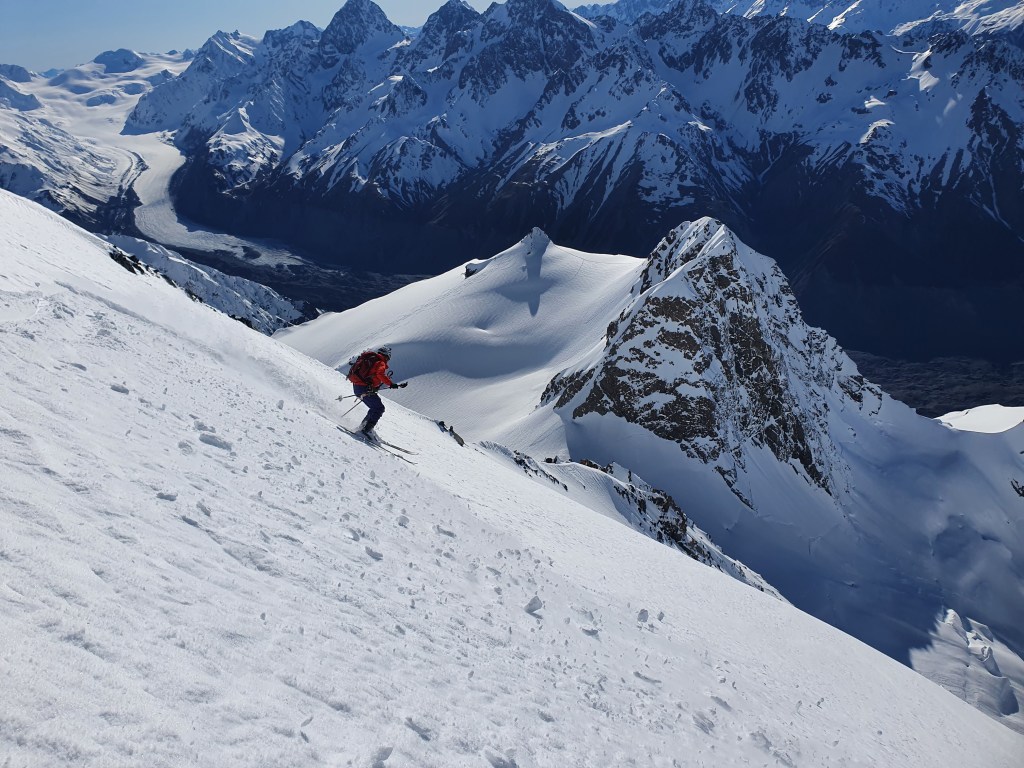
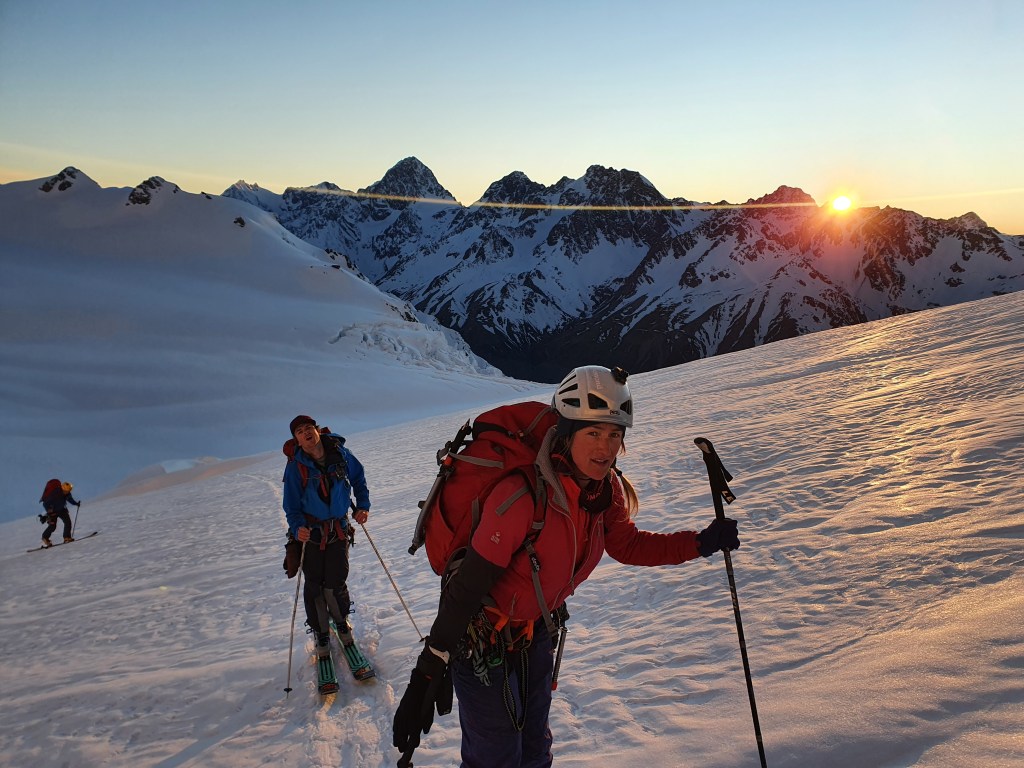
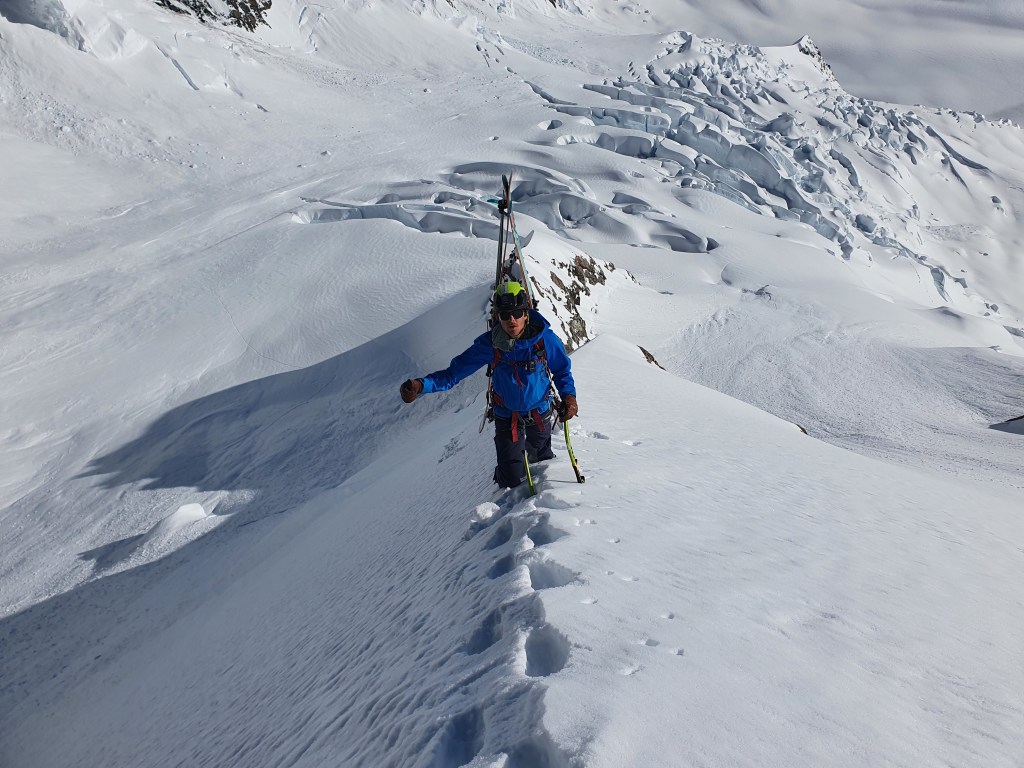
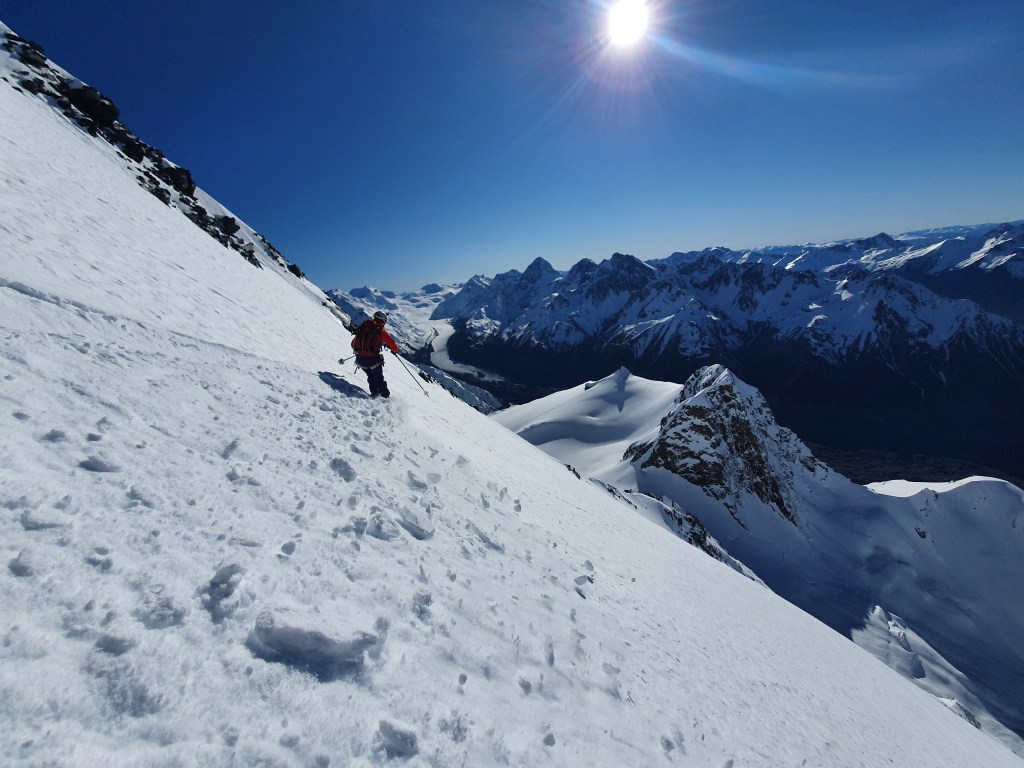
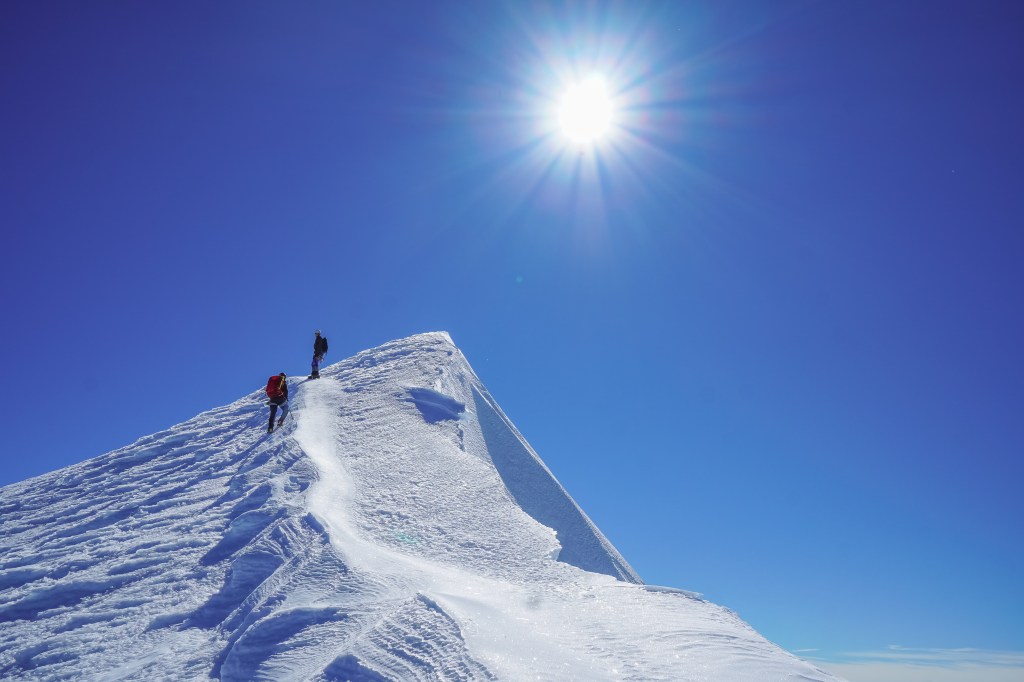
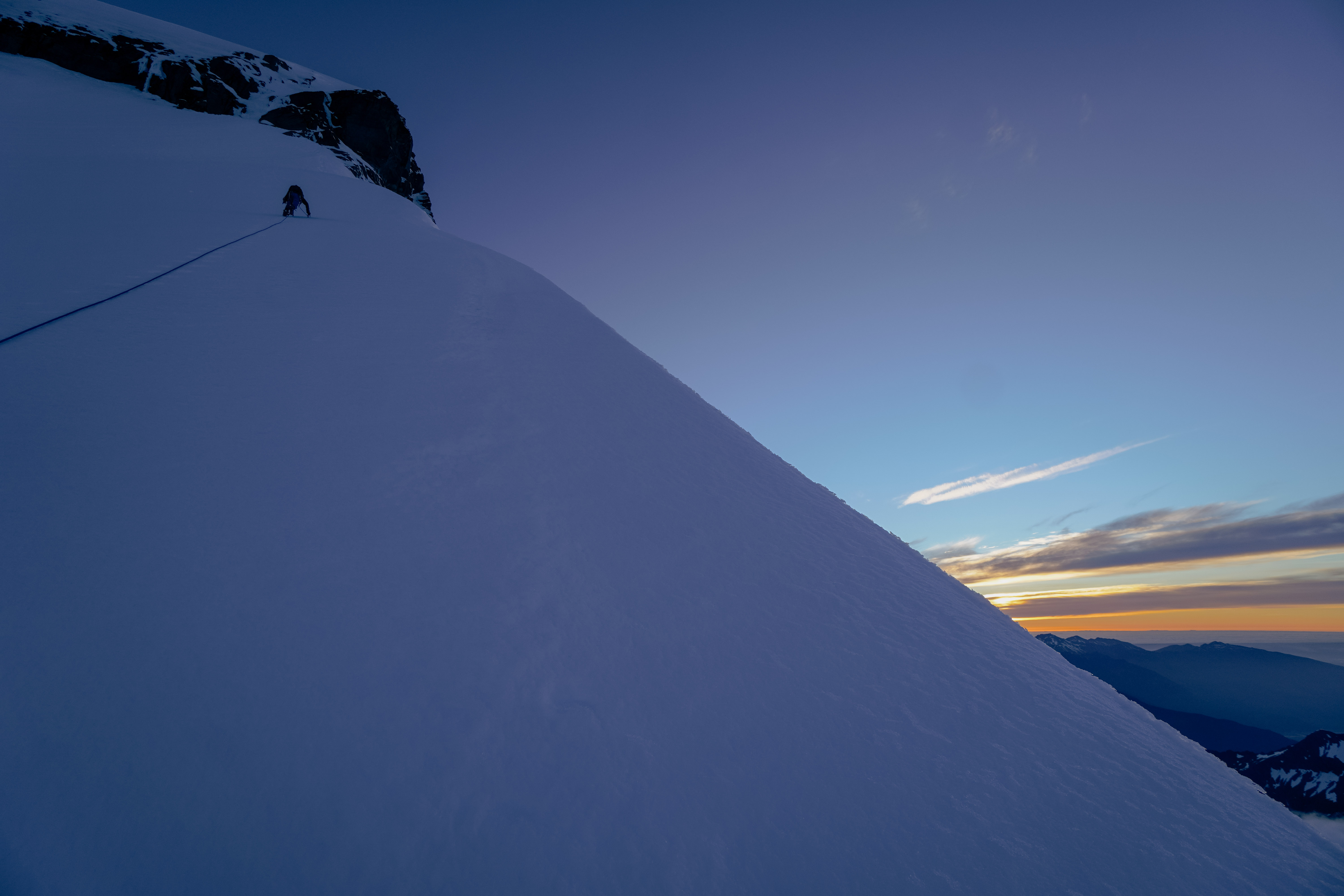
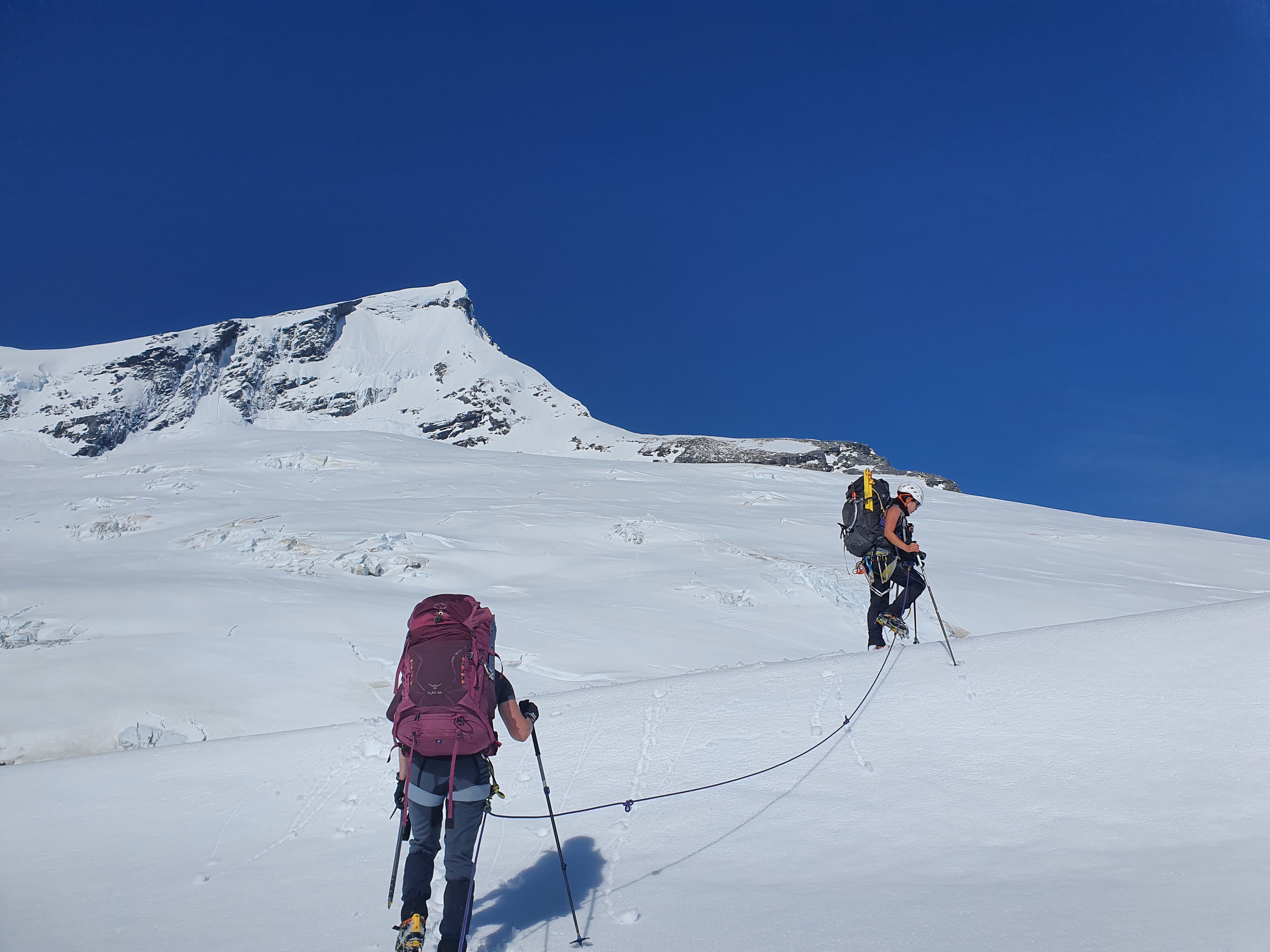
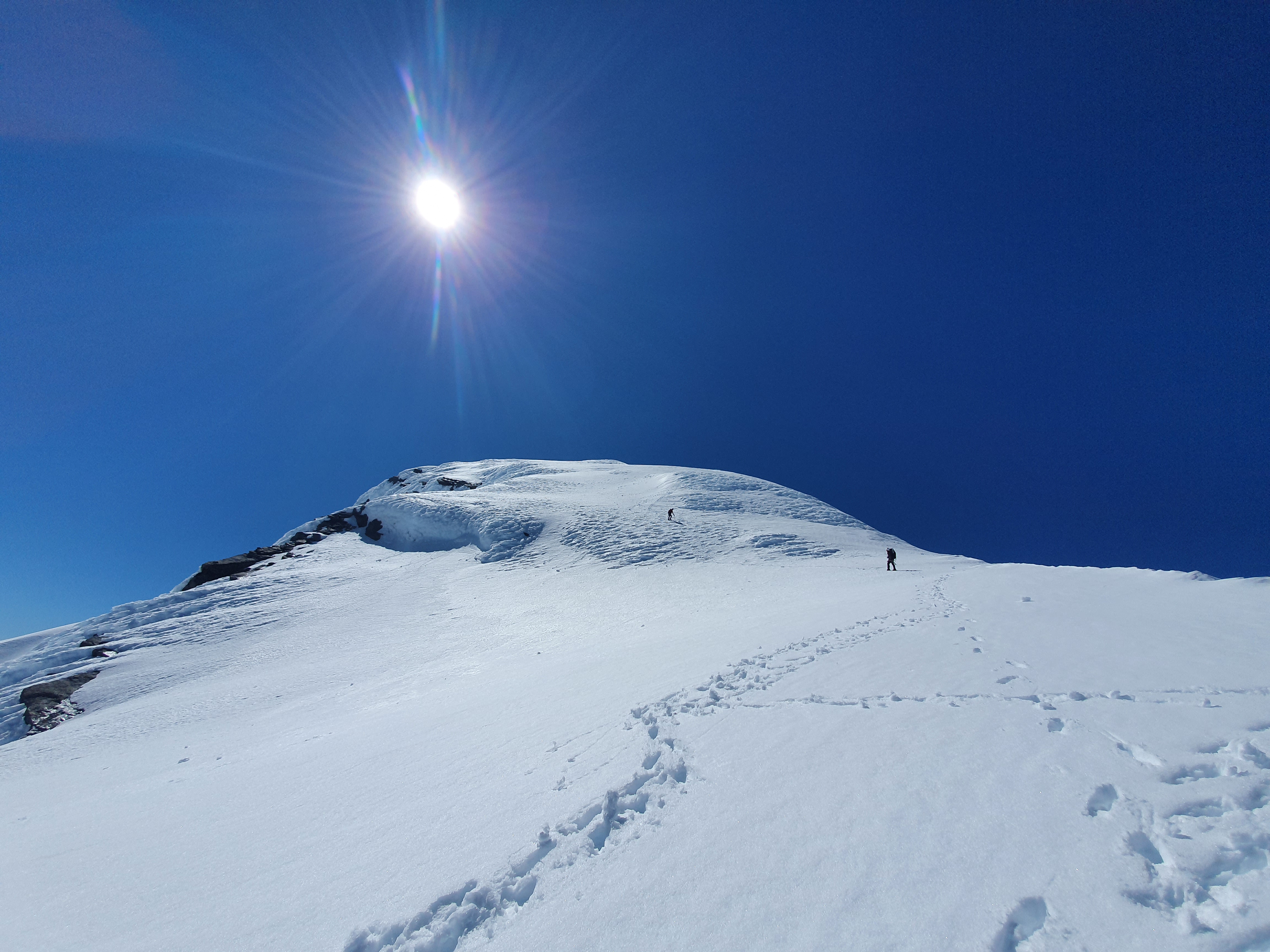
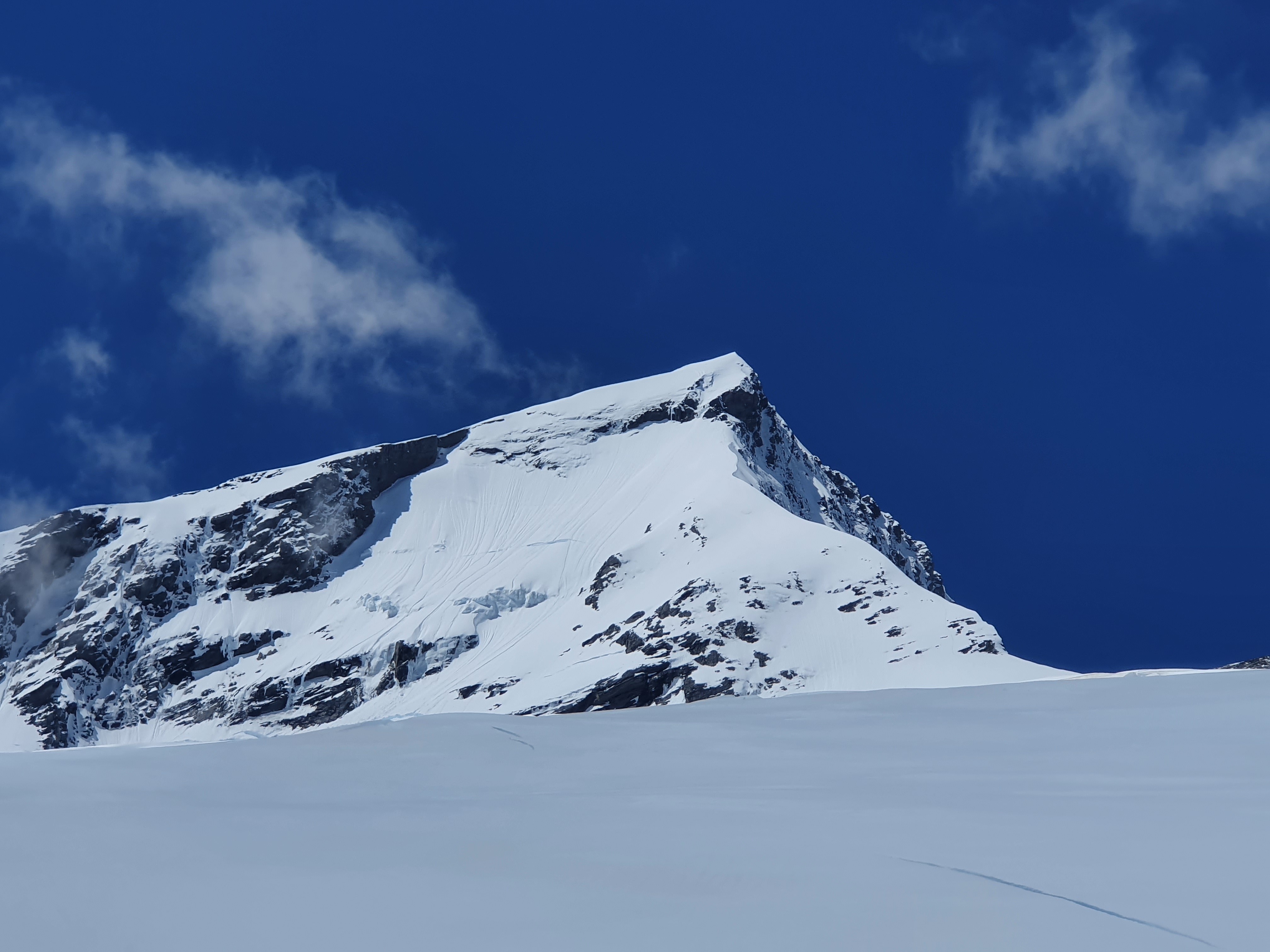
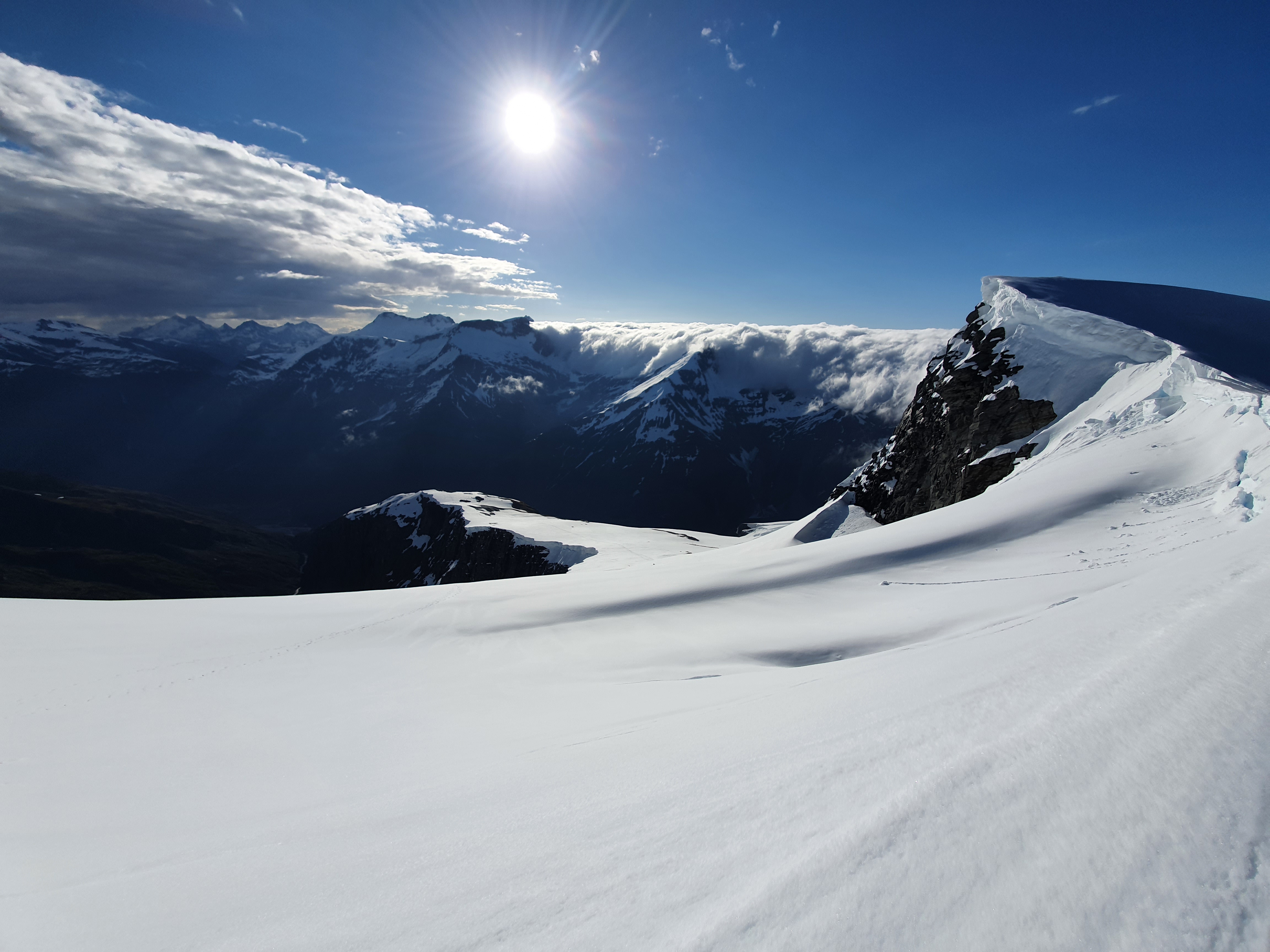
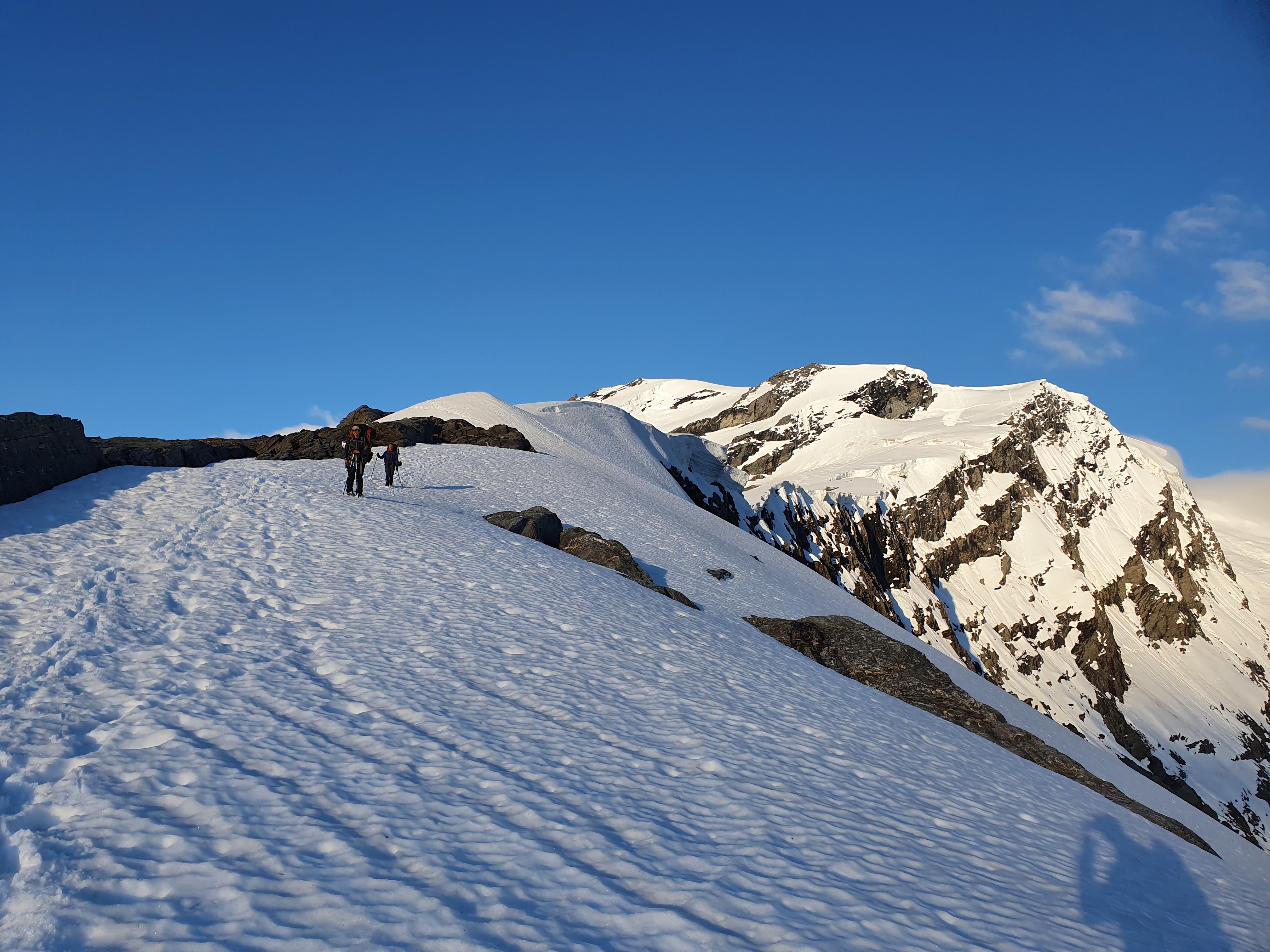
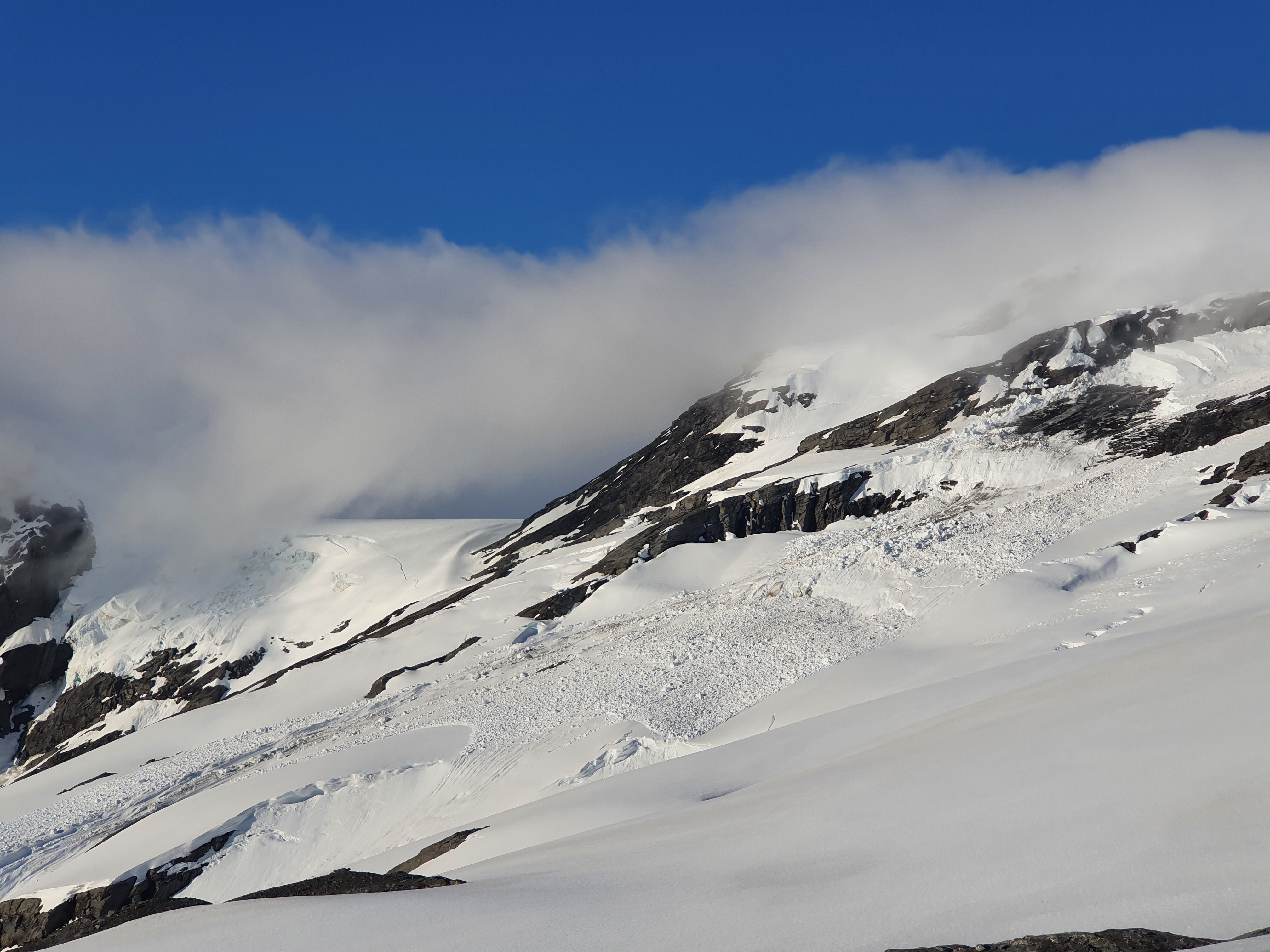
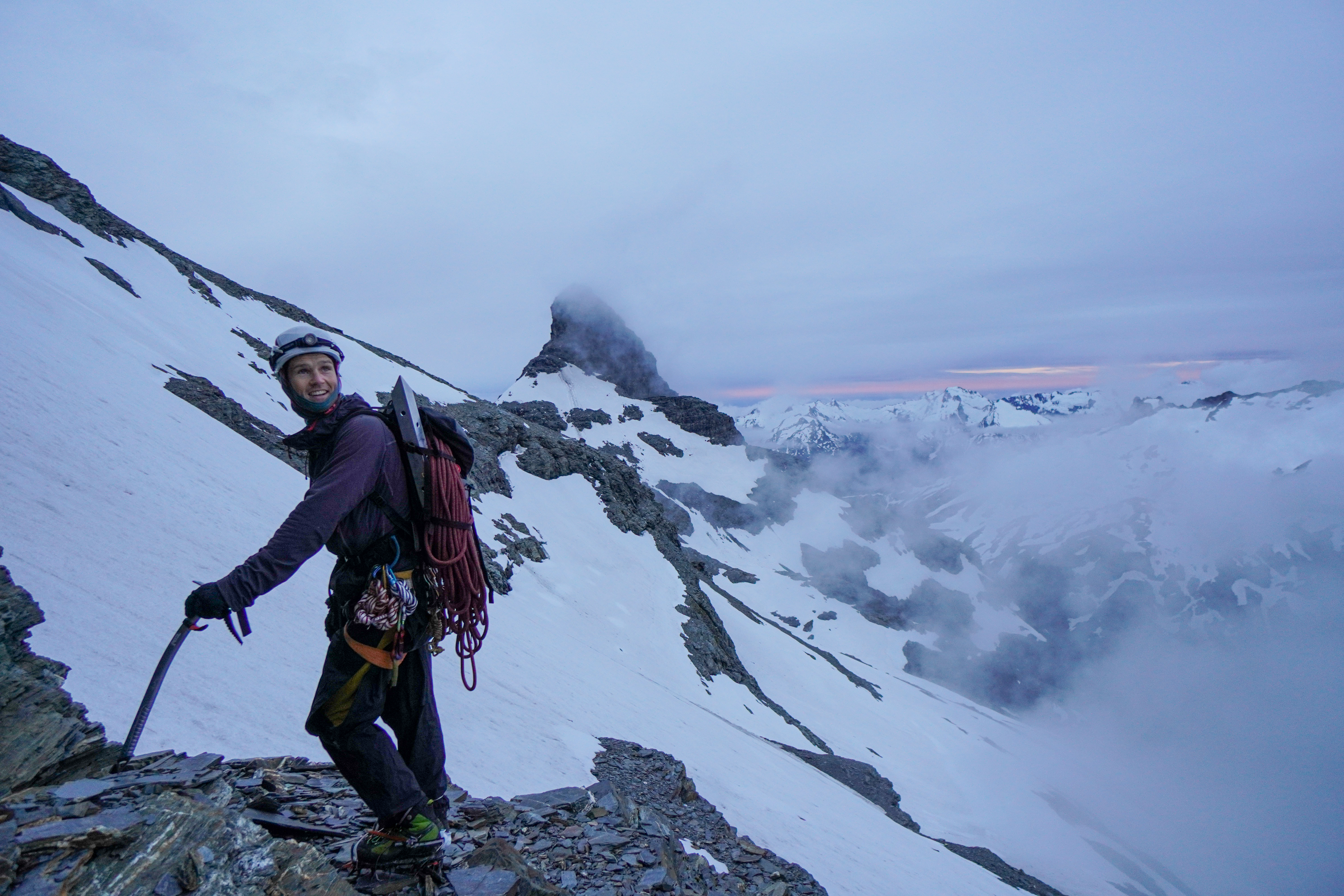
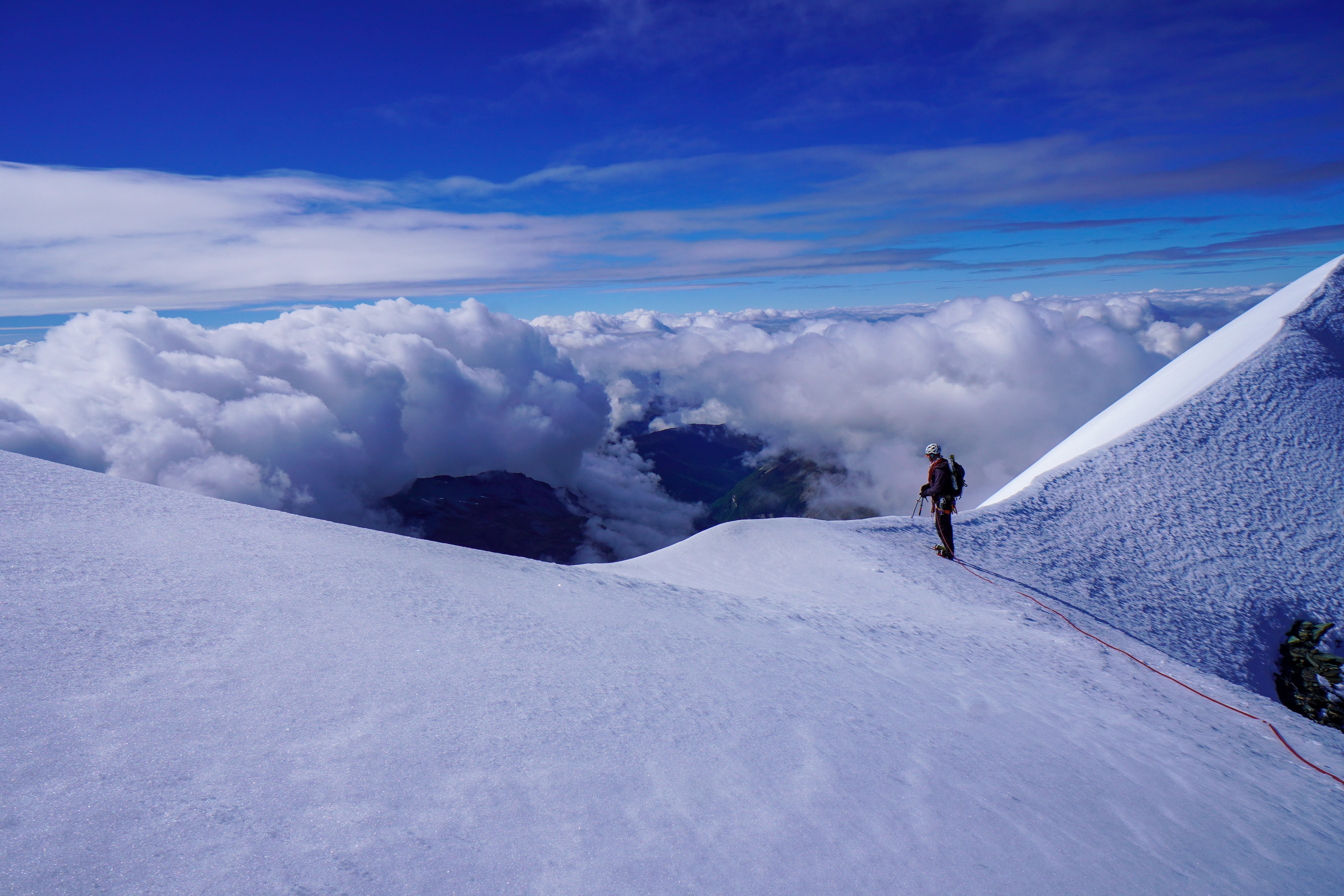
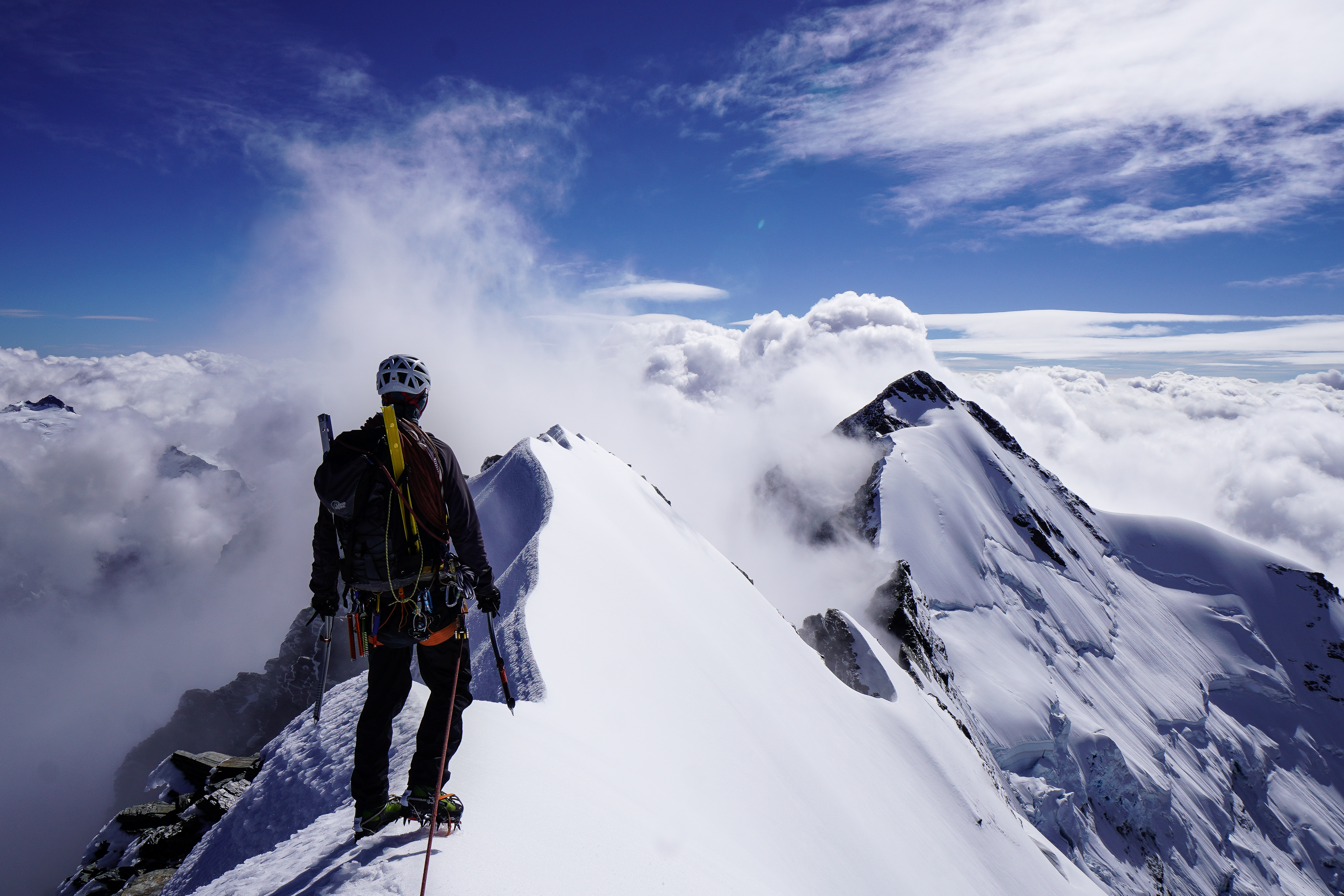
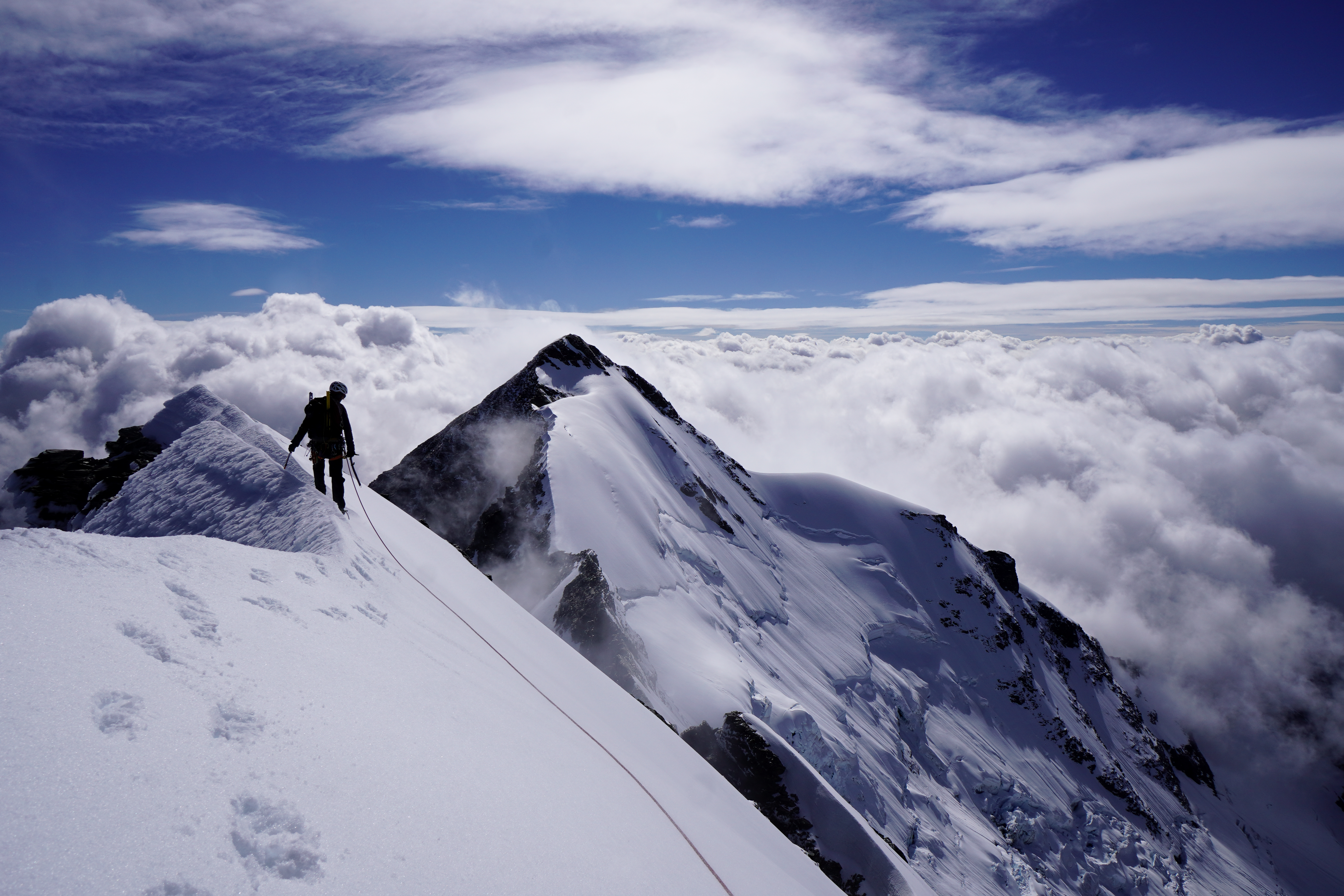
The wild side of Aoraki! A long and serious approach with no heli access gives the Hooker a wild and remote feel. This was my first trip to Aoraki back in 2018 and it was definitely jumping in at the deep end. While not too much steeper than the East face the NW couloirs is winding, technical and exposed nature make it a much more serious undertaking, and as such it is sees far fewer descents. Youโ€™ll be rewarded with an incredible ski line and a feeling of isolation that is definitely missing on the Plateau side. We climbed to the top of the skiiable line and turned round, but some easy mixed climbing would take you to Low Peak a couple of hundred metres higher. You would then need to make a couple of raps to get back to the line.
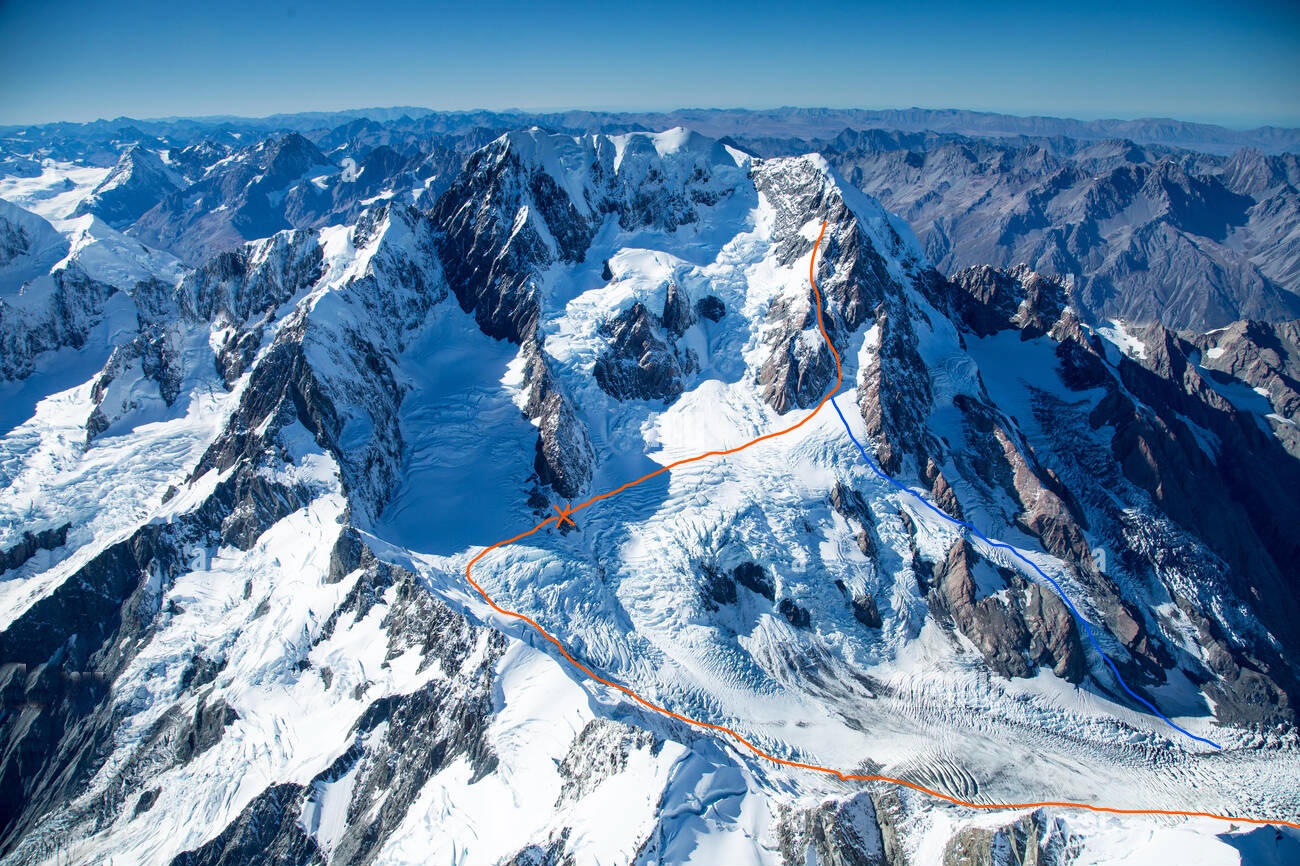
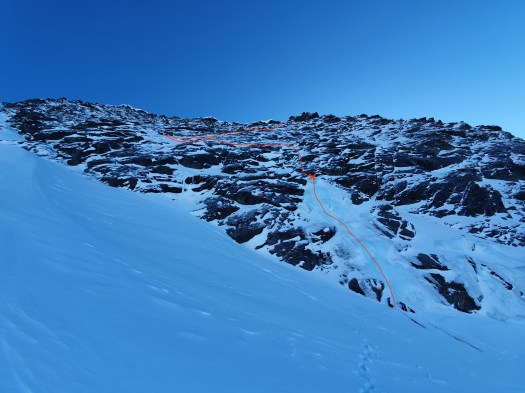
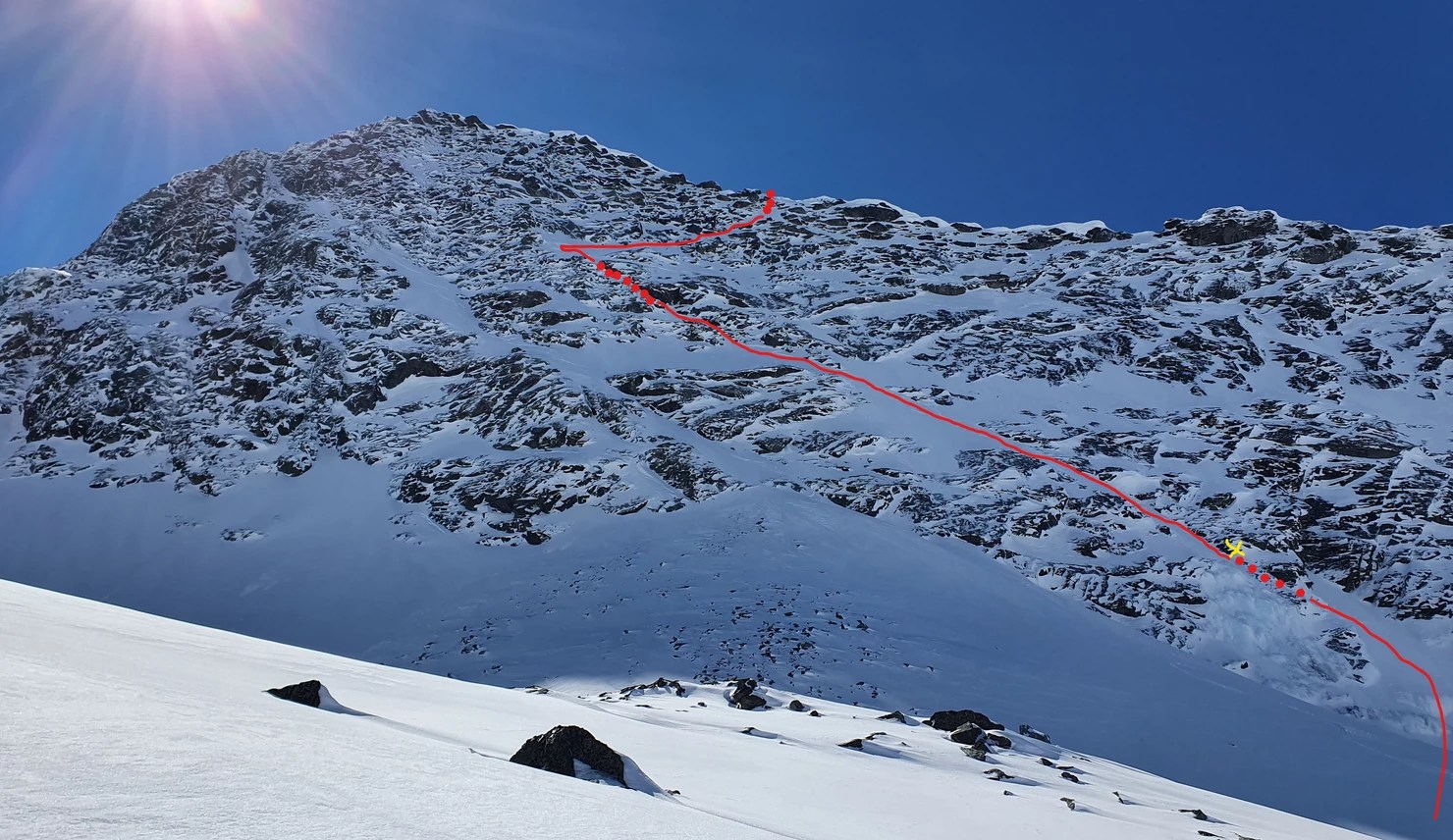
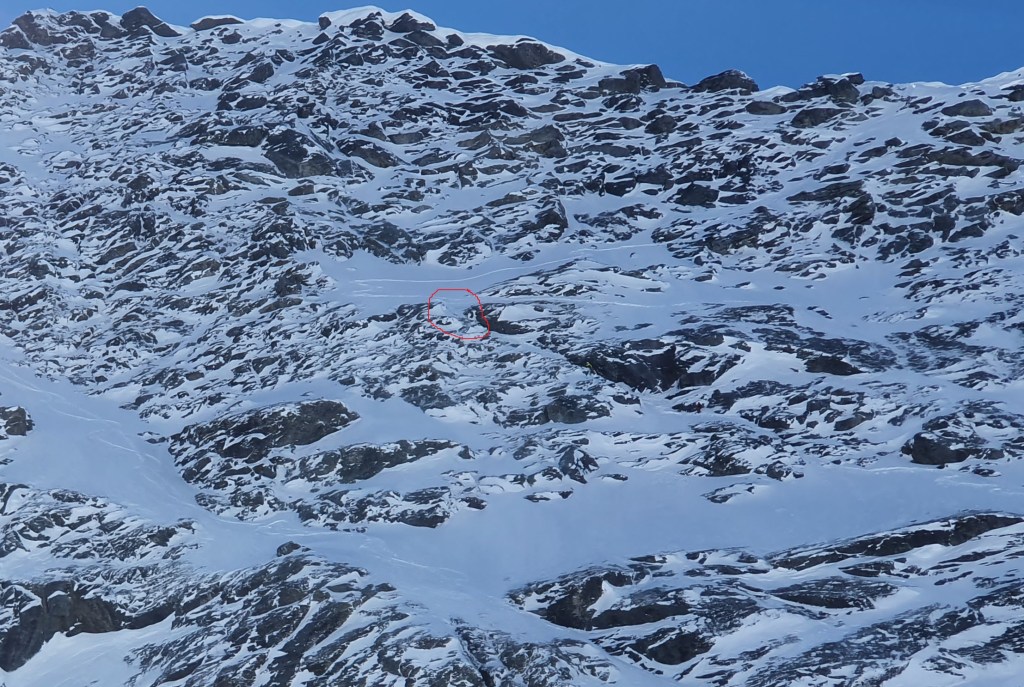
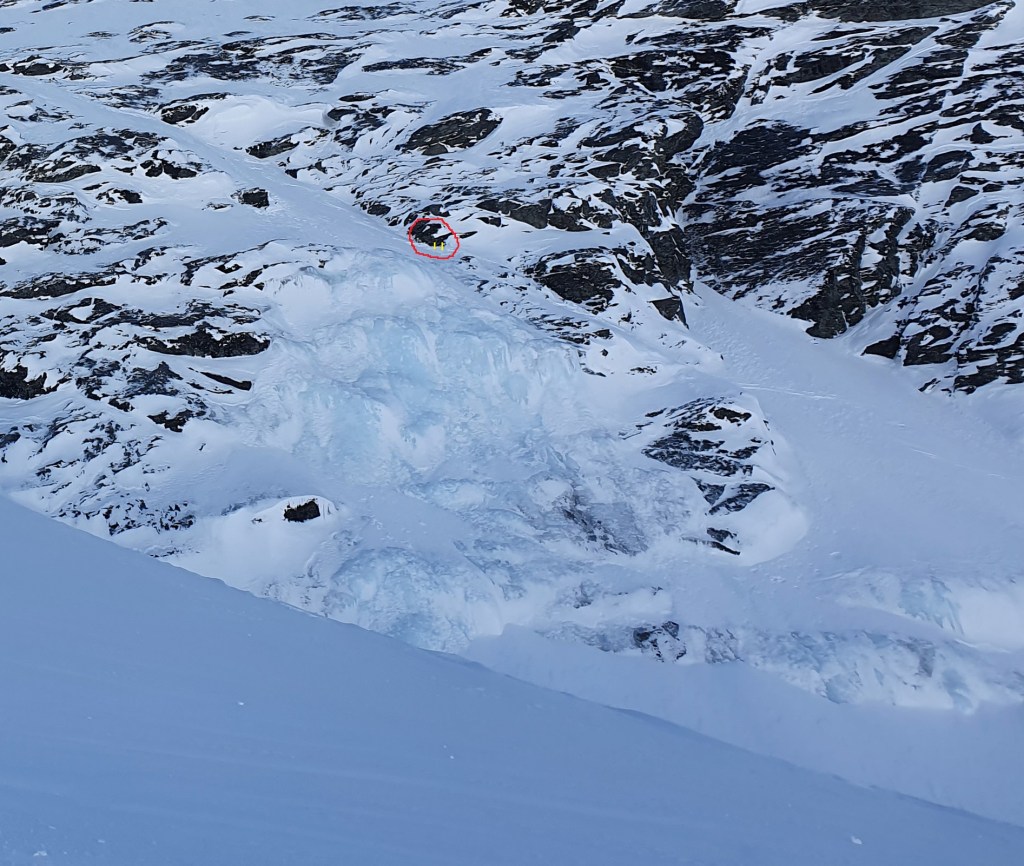
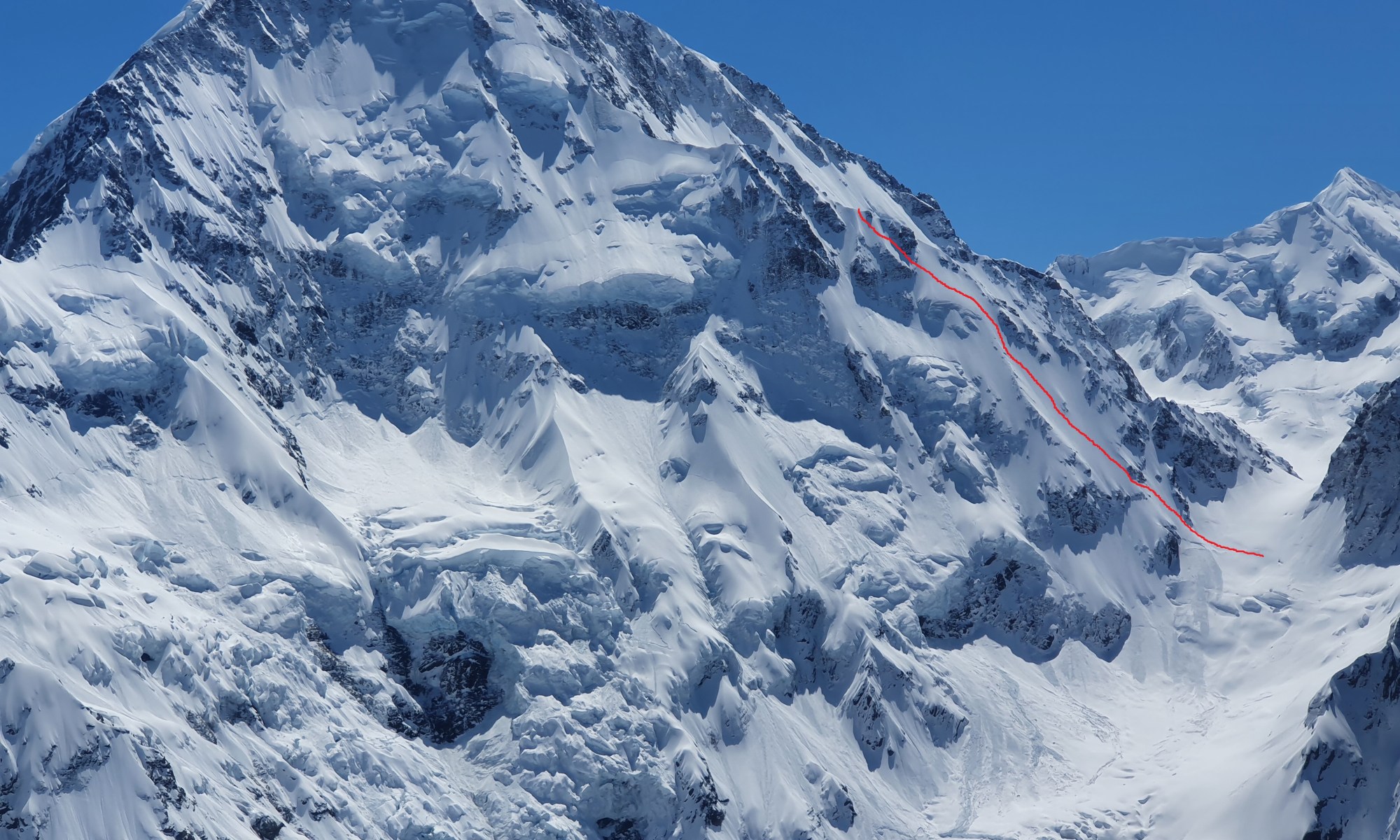
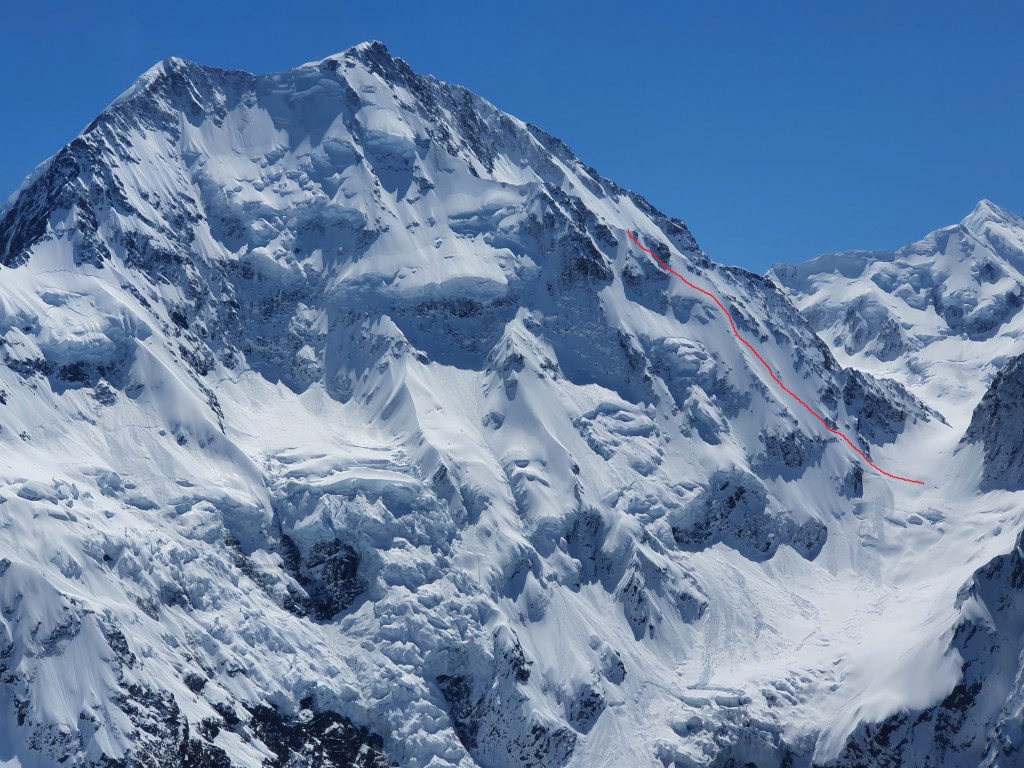
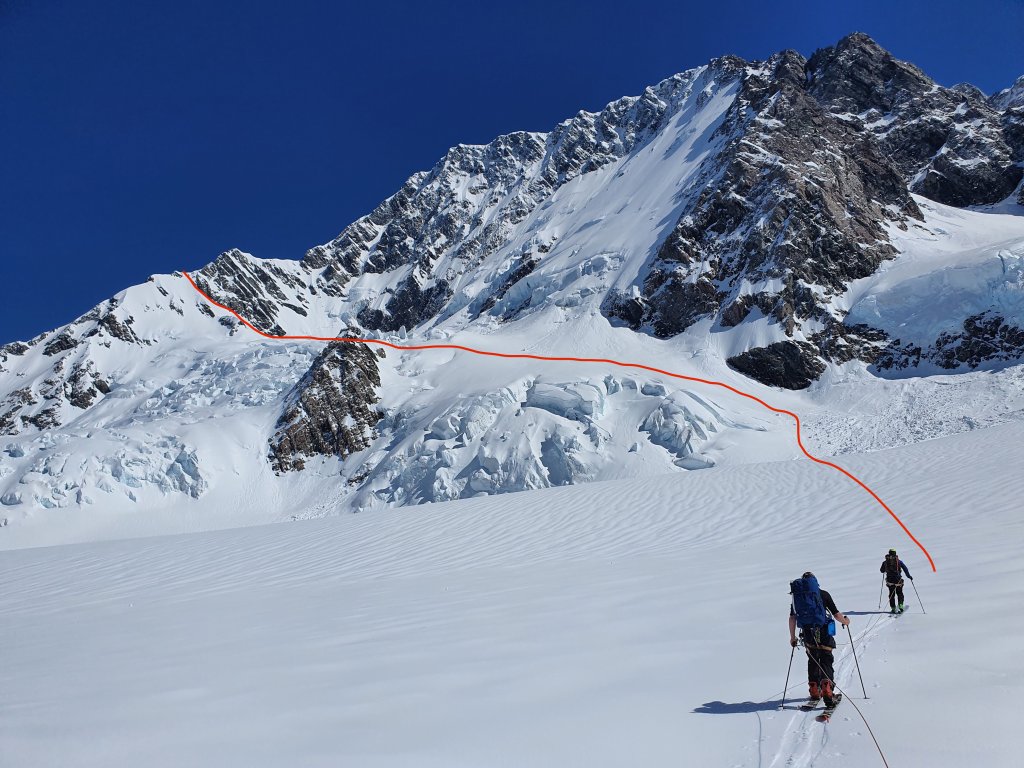
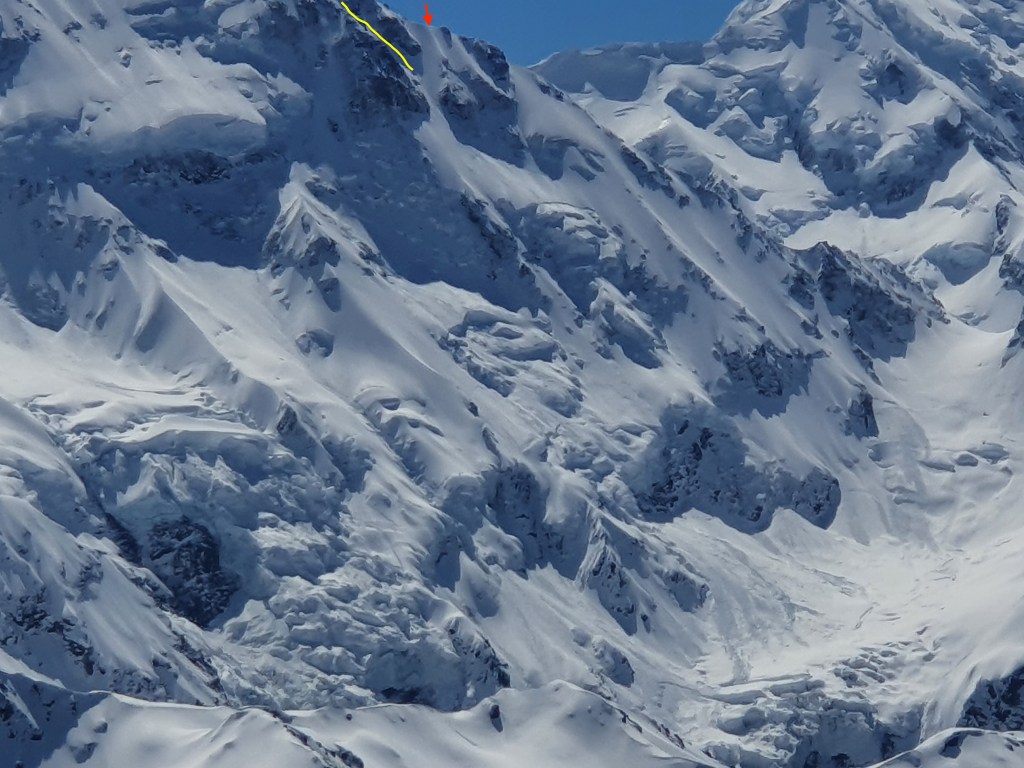
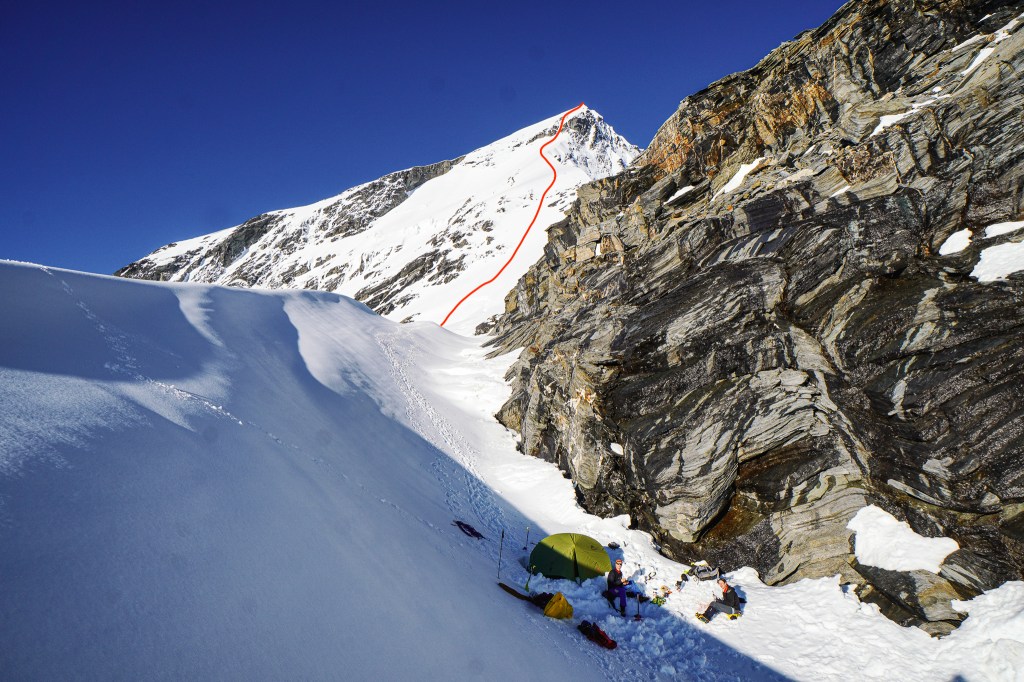
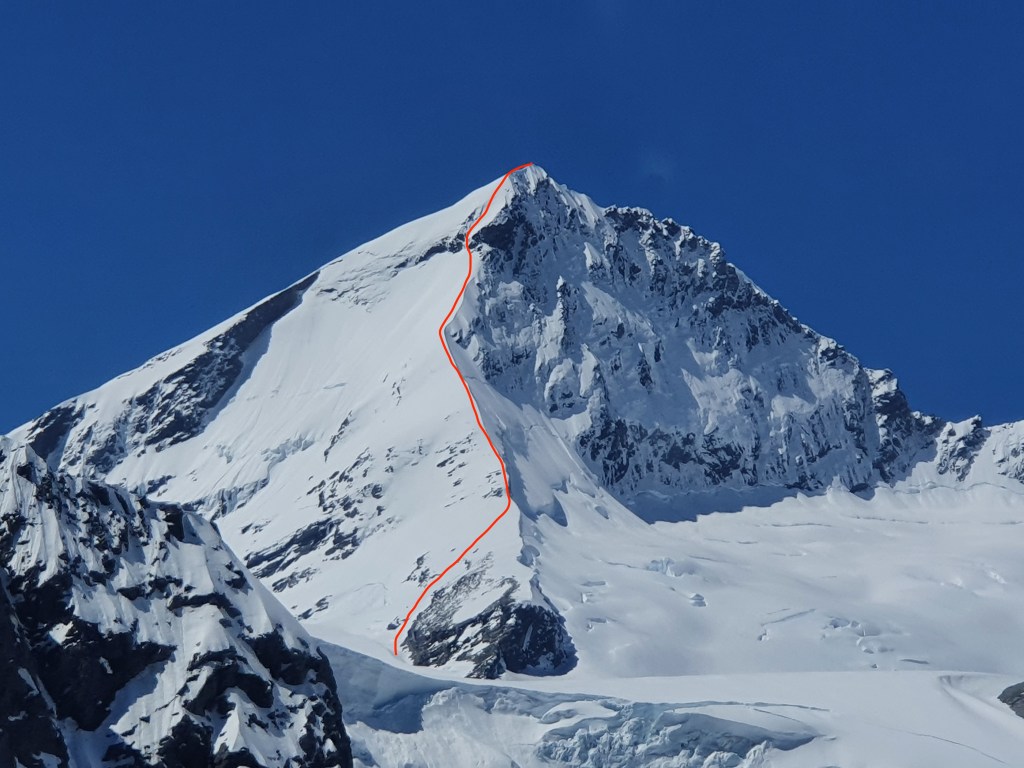
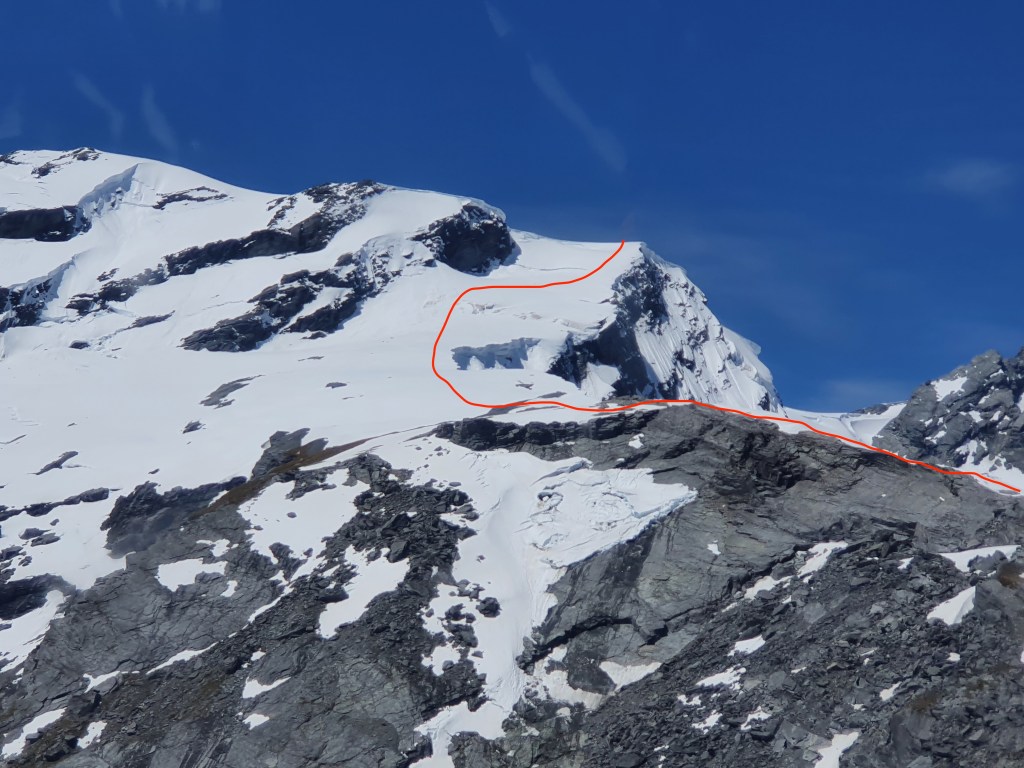
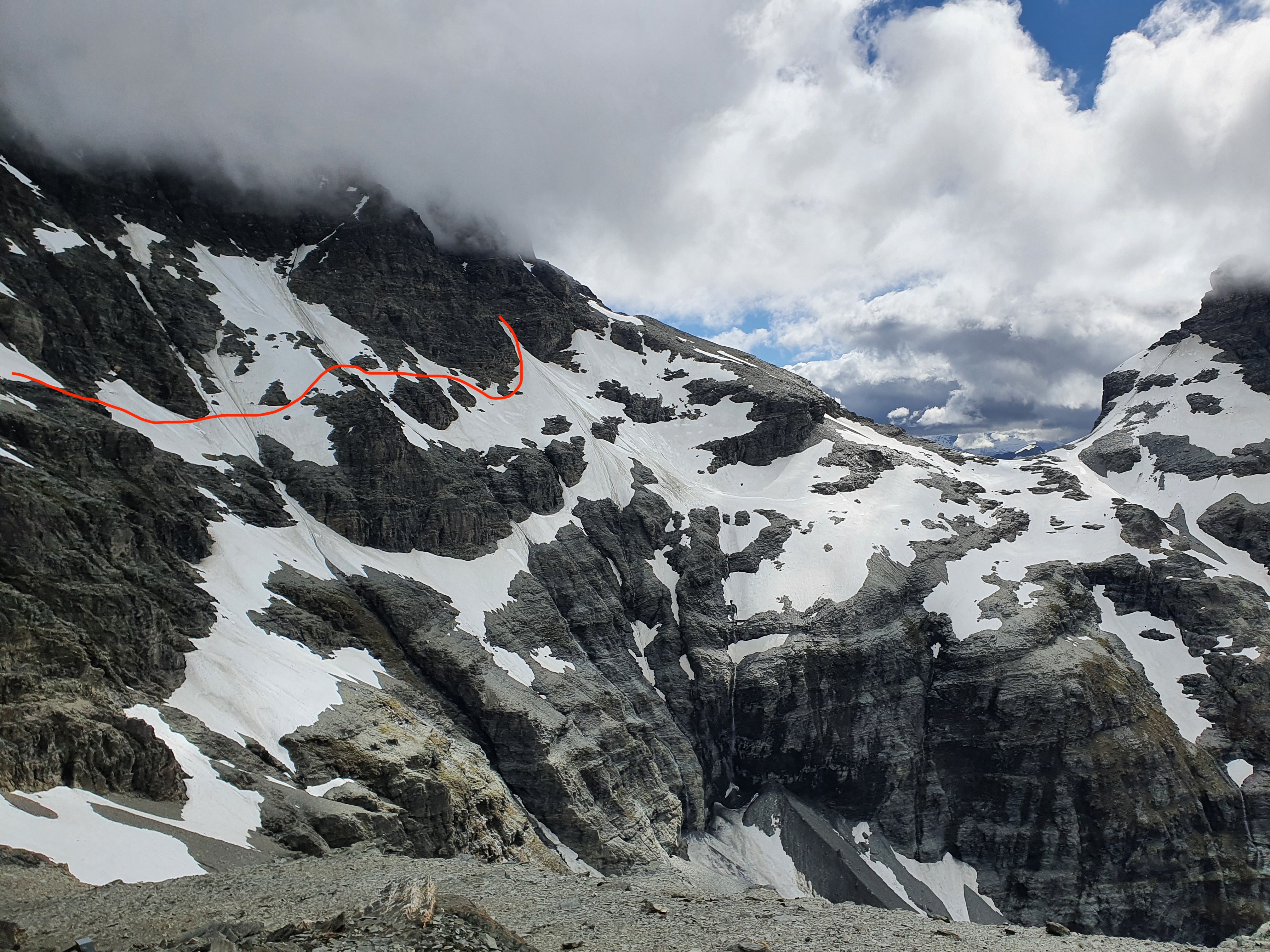
The line we skiied in red – we stopped at the rock just below the summit. Empress hut at the X. Alternate descent in blue from the base of the couloir to save you a trip back to the hut – wasnt in condition when we were there.
  • Length โ€“ From Empress Hut (2500m) to Low peak (3593m) is just over 1000m. Then around another 1700m down to the car park at 880m. When we were there the couloir was skiable from around 3300m
  • Steepness โ€“ Crux at the top of the couloir. 50-55 deg for 100-200m. Remainder of couloir 45 deg. Once on the Empress glacier eases to 35-40 deg
  • Exposure โ€“ Very exposed at the top, as the couloir winds over some big cliffs. Once you reach the Empress shelf this improves. Couloir prone to significant rock fall once it warms up, particularly late in the season. Very large crevasses and active ice cliffs on both sides of the Hooker.
  • Aspect โ€“ NW. Good corn skiing late season, but significant loose wet and rockfall risk late in the day
  • Extras โ€“ย We needed to make 1x 15m rap right at the bottom of the couloir to cross a small rock band
  • Difficulty โ€“ย  Climb 3. Ski 5.3 E3
  • Equipment โ€“ Glacier equipment. 30m half rope. Tat and snow stake for raps. Screws x2 each and V thread equipment.

Approach
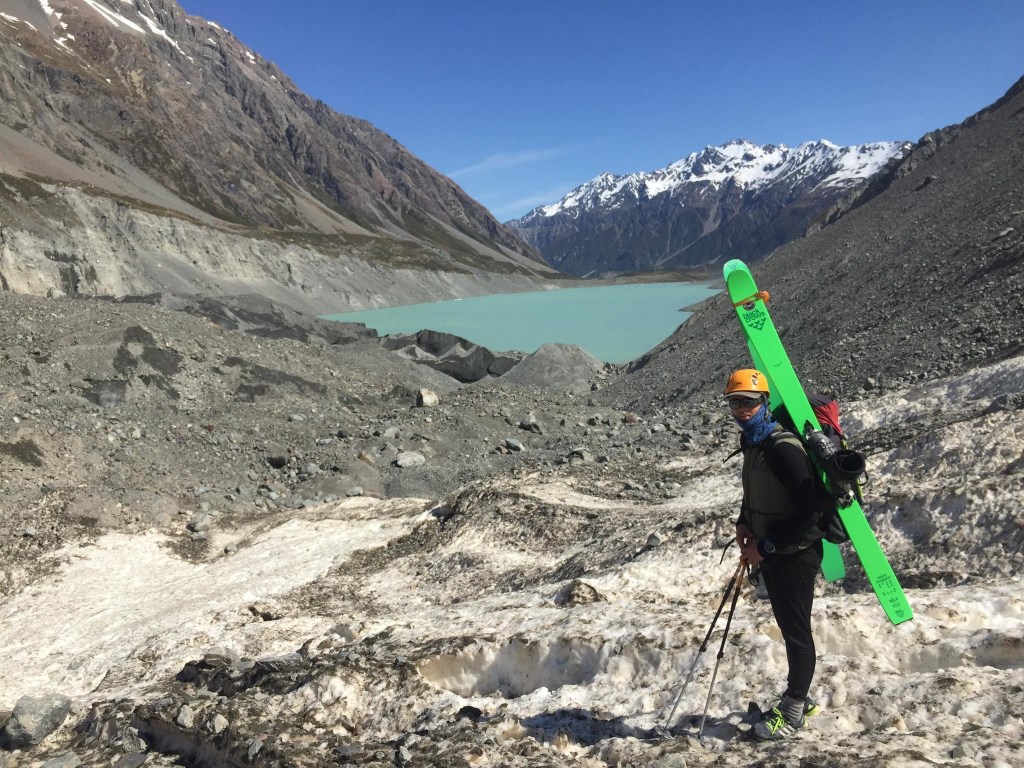
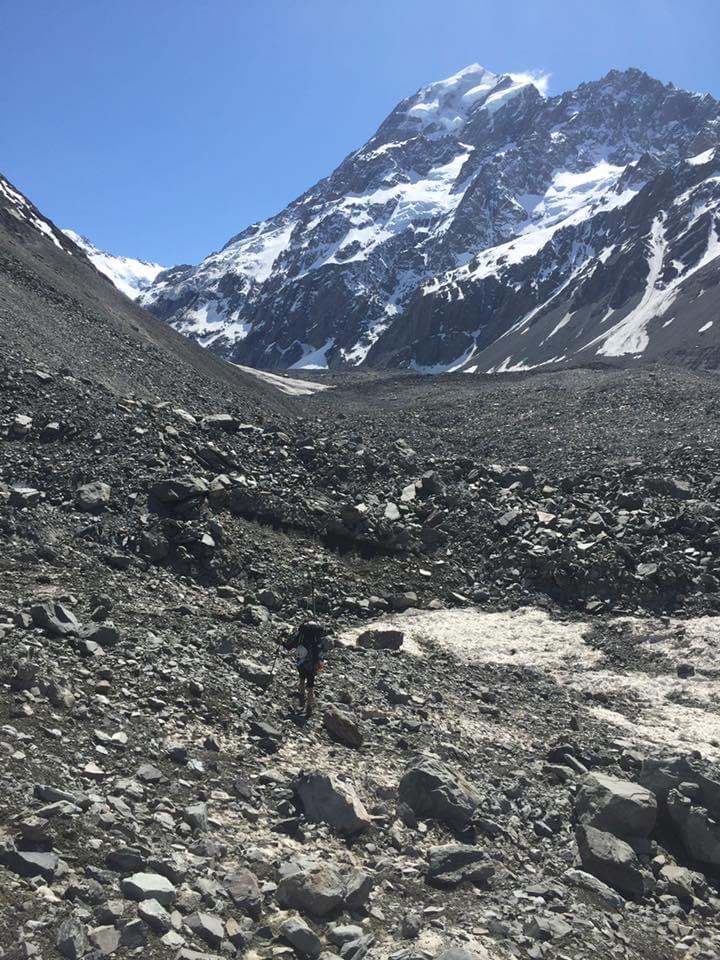
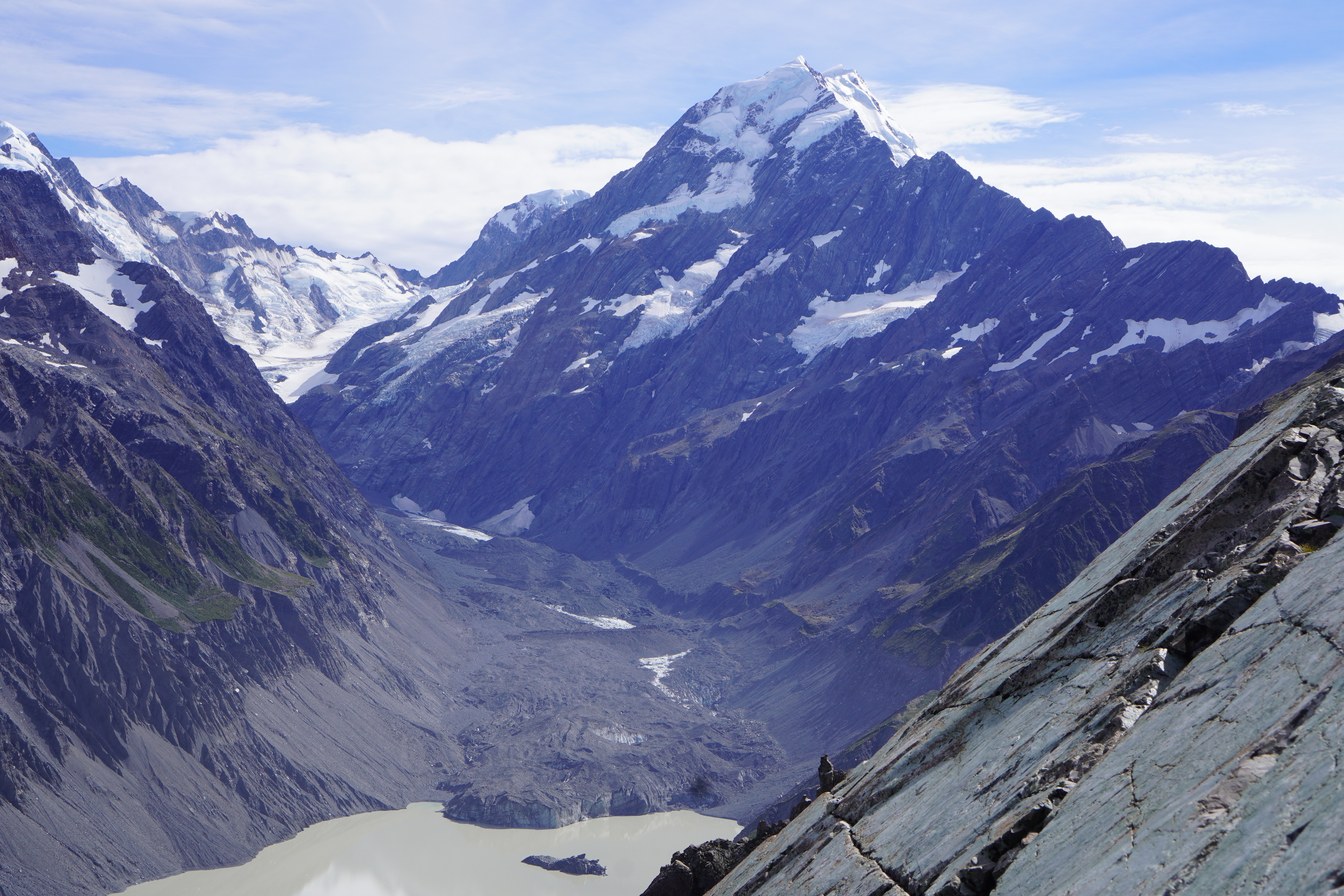
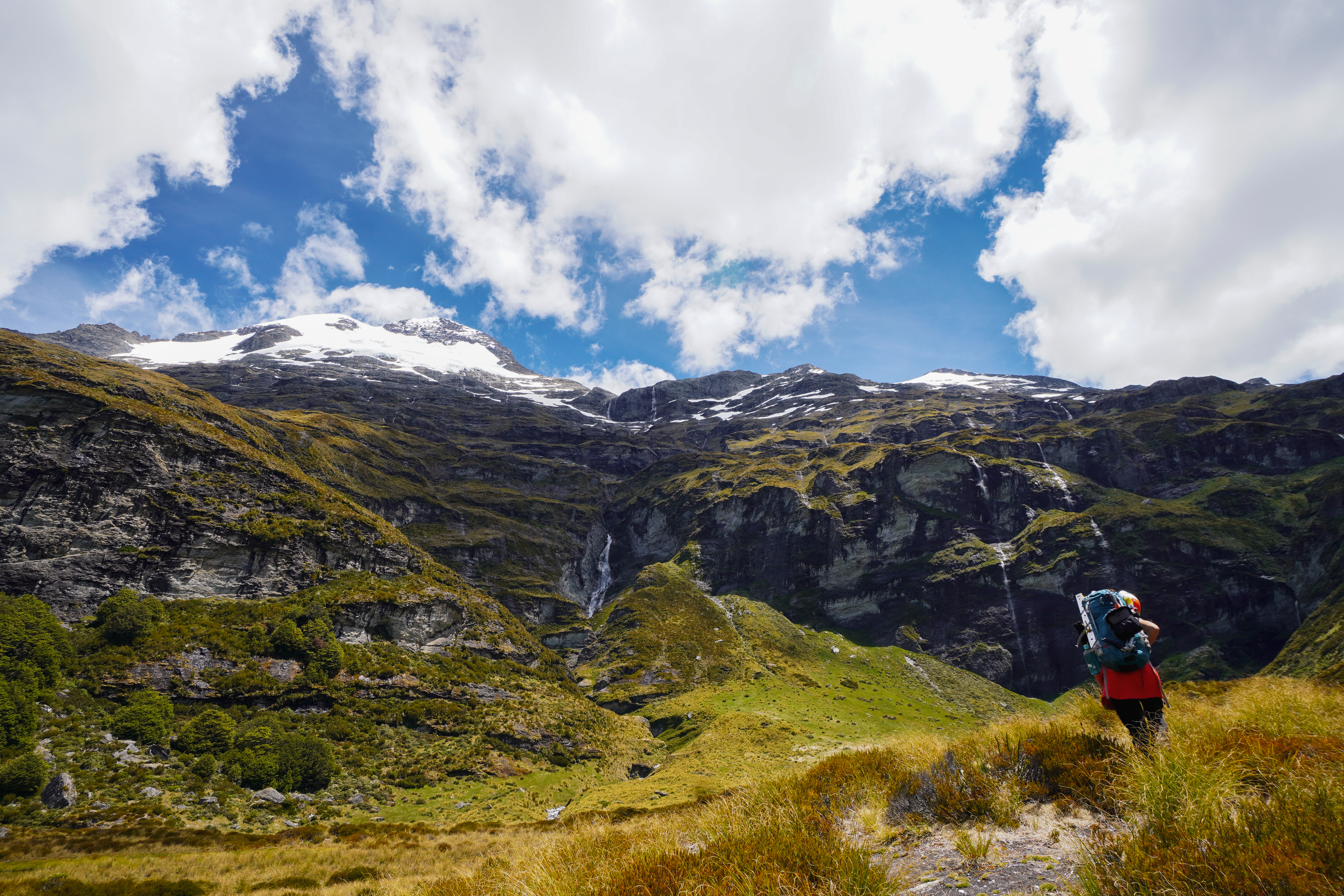
Looking back down towards the Hooker lake from the Hooker glacier

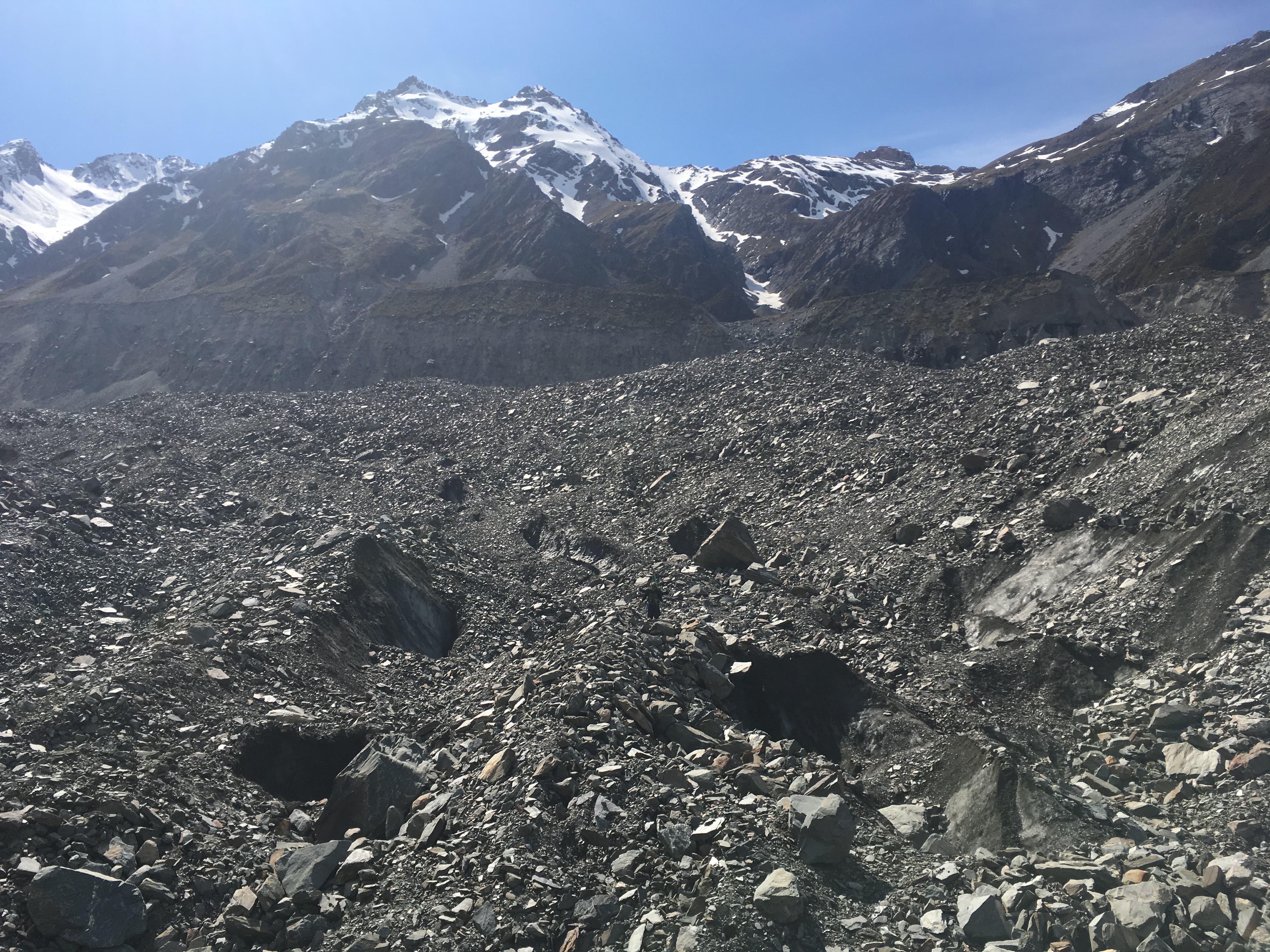
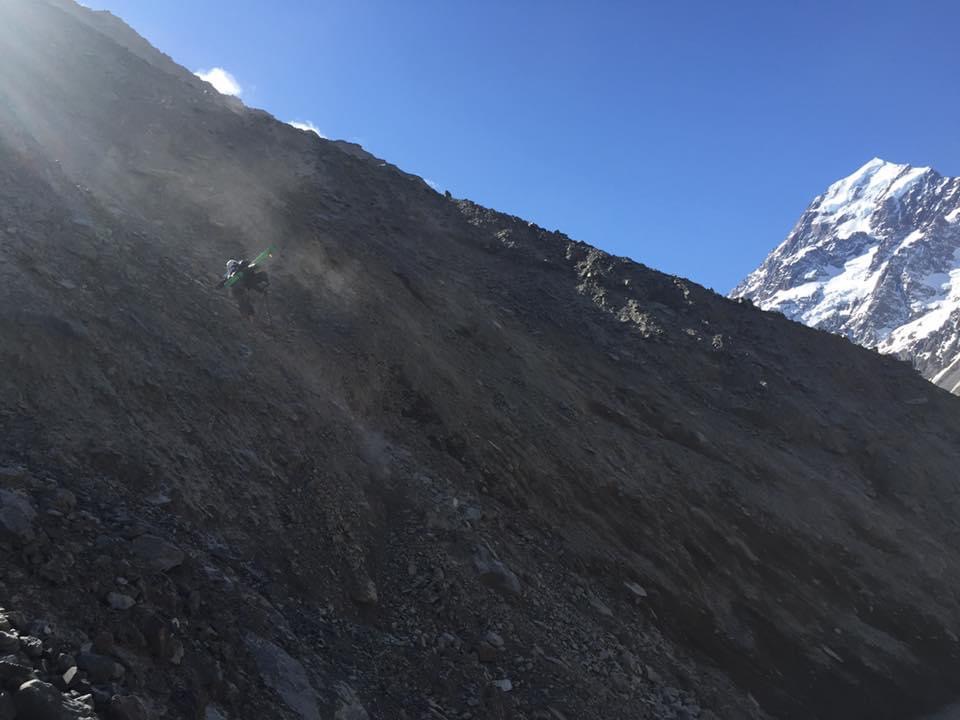
It took us just under 12 hours in total to get from the car to Empress hut. Head up the Hooker track to the Hooker lake. We then rock hopped at the shore line most of the way up the west side of the lake. Just before after Stewart stream the moraine got too steep due to a washout and we had to climb vertically up the moraine wall to around 1200m before traversing along flatter ground and then dropping back down to the main Hooker glacier. This section was really difficult especially with heavy packs. The morraine was incredibly loose and you constantly had to be looking above you for spontaneous rockfall coming down to the lake. Taking a step into the loose morraine would cause everything to shift and would cause rocks 30m above you to start moving and coming down. It would also be easy to slip and fall all the way down into the lake which would be suboptimal while strapped into a heavy pack. Overall we felt this was the most dangerous part of the trip and we were super stoked when it was over.
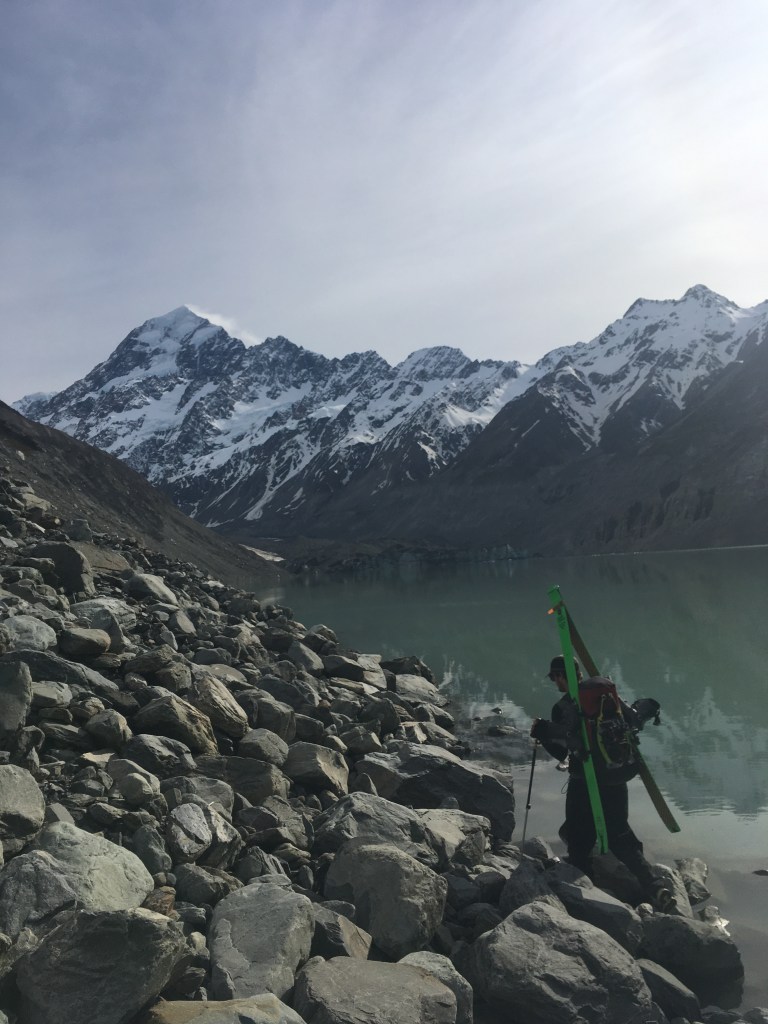
Easy rock hopping up the side of the Hooker lake, before the moraine walls got steep and sketchy
Towards the top of the lake you get into this terrain – steep and loose moraine wall which is pretty sketchy. Stay a long way away from you partner and the inevitable stream of rocks they knock down

Much easier ground on the flat moraine between the lake and the Hooker glacier. South face of Mt Cook ahead

From the top of the lake we headed north staying pretty much in the middle of the glacier until we reached snow. This was the same loose moraine but on flatter ground. Tiring but safe. After a few hours of this it was a relief to be finally able to put the skis and boots on and start skinning.

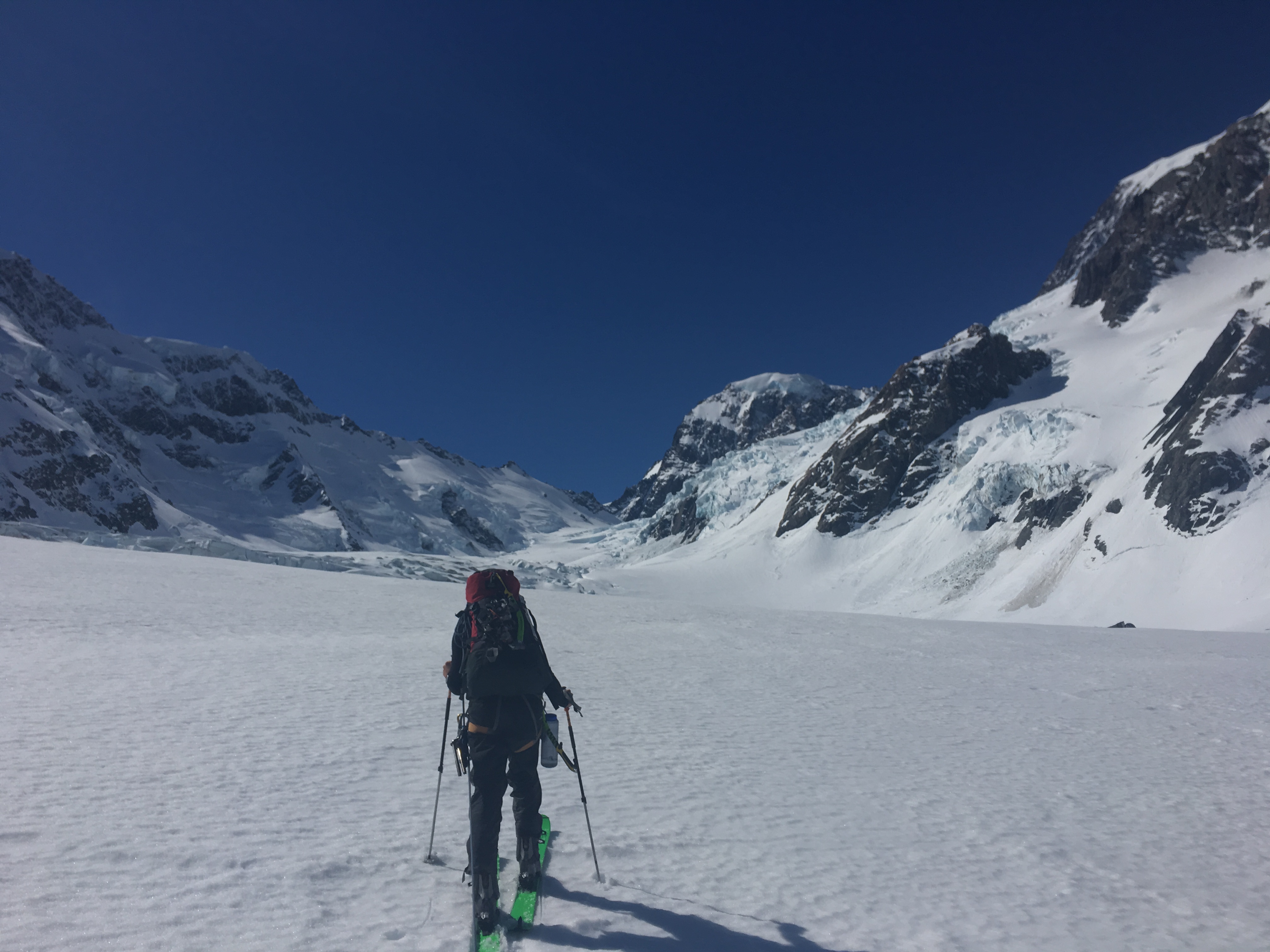
The way you pass the lower ice fall on the Hooker is very condition dependent. When we were there the true left (Pudding Rock) was completely cut off and so the only option was the true right. We were tucked right into the far west of the glacier and skinned up under Dilema peak, the end of the Straunchon glacier and finally under La Perouse. Everything was very open here and we were picking our way through the crevasses over winding and narrow snow bridges (check out the end of the video below to get an idea). Complex route finding but relatively safe as what you see is what you get. From around the 2000m contour things open up and we were back to skinning straight up the glacier for the remainder to the hut.
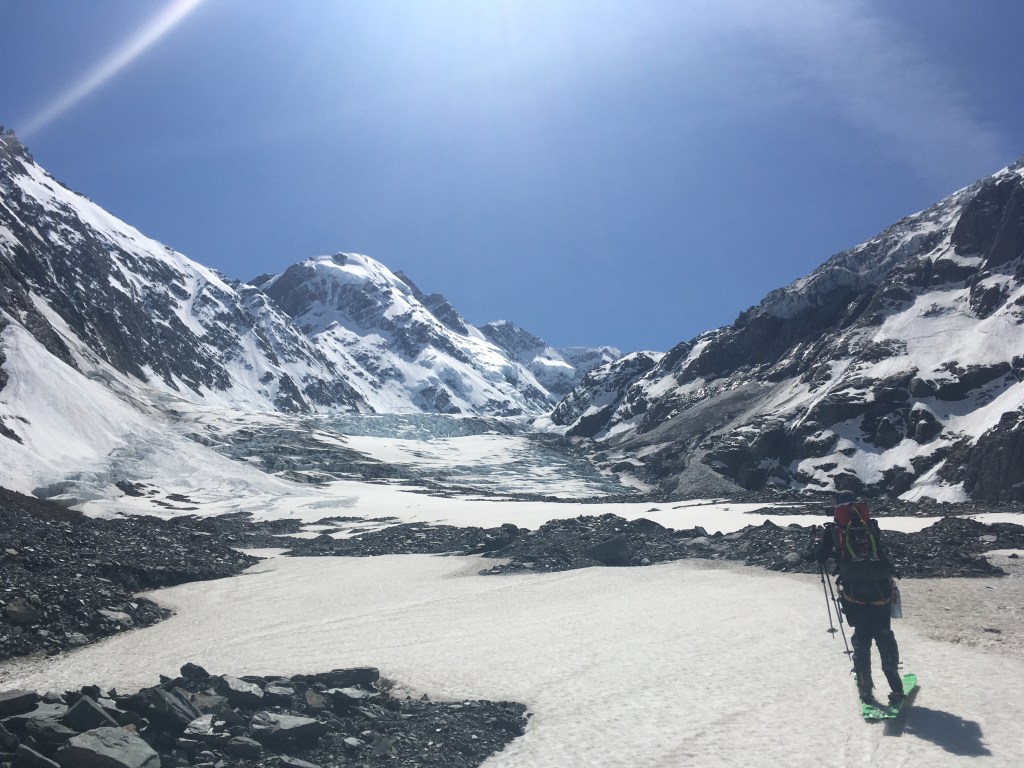
Looking up the Hooker. The way you get past the major icefall will depend on the state of the glacier. We stuck to the far left of the picture but when its more filled in you can stick to the far right (Pudding rock)

The crevasses here are humongous – we would regularly cross 20cm wide cracks in the snow, and only when directly on top of the crack get to look straight down to see that in fact we were on a snowbridge spanning a gaping monster that disappeared down into the depths of the earth. Several times the 10m of rope between us was barely enough to keep us from both being on the same bridge at the same time. In addition the ice cliff on the east of the glacier at 2200m (just below the words Empress Glacier on the map) was highly active, regularly throwing off car sized chunks. We were thankfully able to stay far enough west to be out of the firing line. However the east faces of Dilemma and La Perouse had regular rockfall once the morning sun started warming them up and there was no way to stay clear of both and get through the crevasse maze, so we had to move fast and keep our fingers crossed.
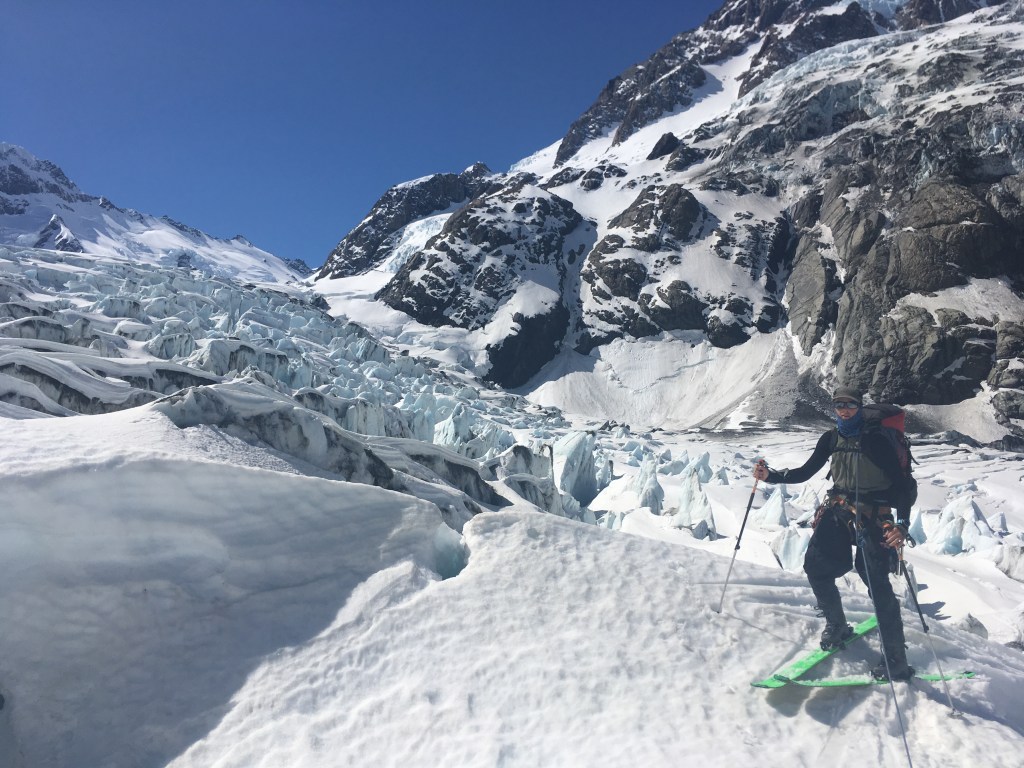
Skinning up through the maze of crevasses on the Hooker icefall

All in all this was a pretty hectic experience and I got to the hut feeling like I never wanted to come up the Hooker again. From speaking to friends who have been up to Empress I think it was especially scary when we were there and this isnโ€™t a typical experience – later in the year and everything would be more open with no hidden surprises, earlier everything would be more filled in. Either way it put me firmly into the โ€™we should open the Hooker to heli accessโ€™ camp, especially as the whole way in we could hear the buzz of scenic flights overhead in anycase. Maybe not a popular opinion with the purists, but Im sure would increase the number of people who would enjoy the epic terrain above the Empress hut.
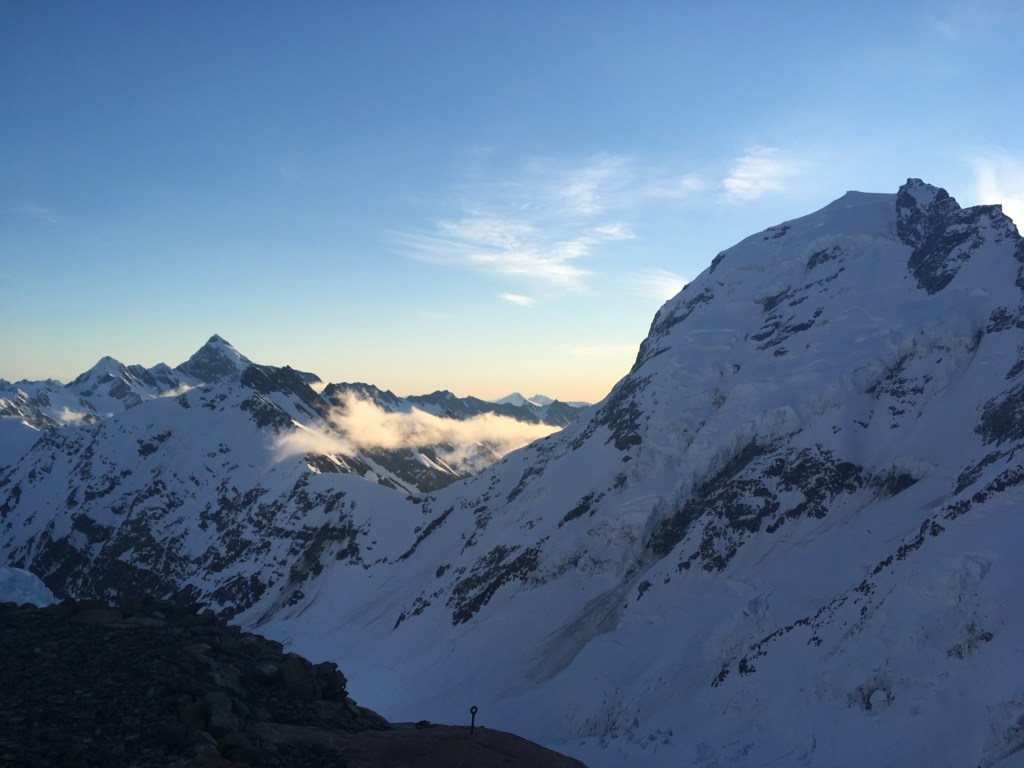
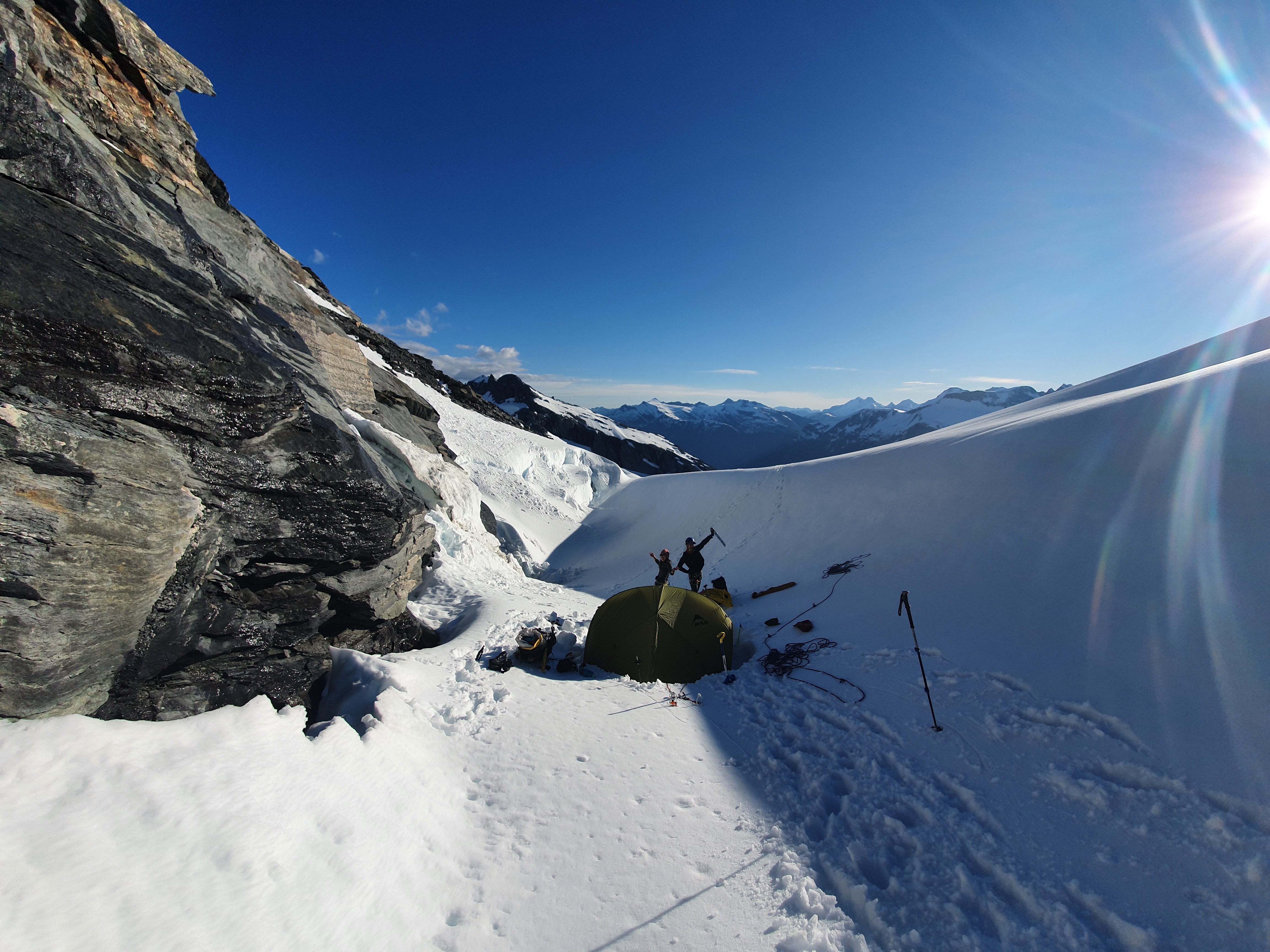
View out from Empress hut, La Perouse on the right

Empress Hut is a pretty special place – the difficult access means it not many people make it up there and so you can flick through decades of entries in the hut book and soak up the history of the area.
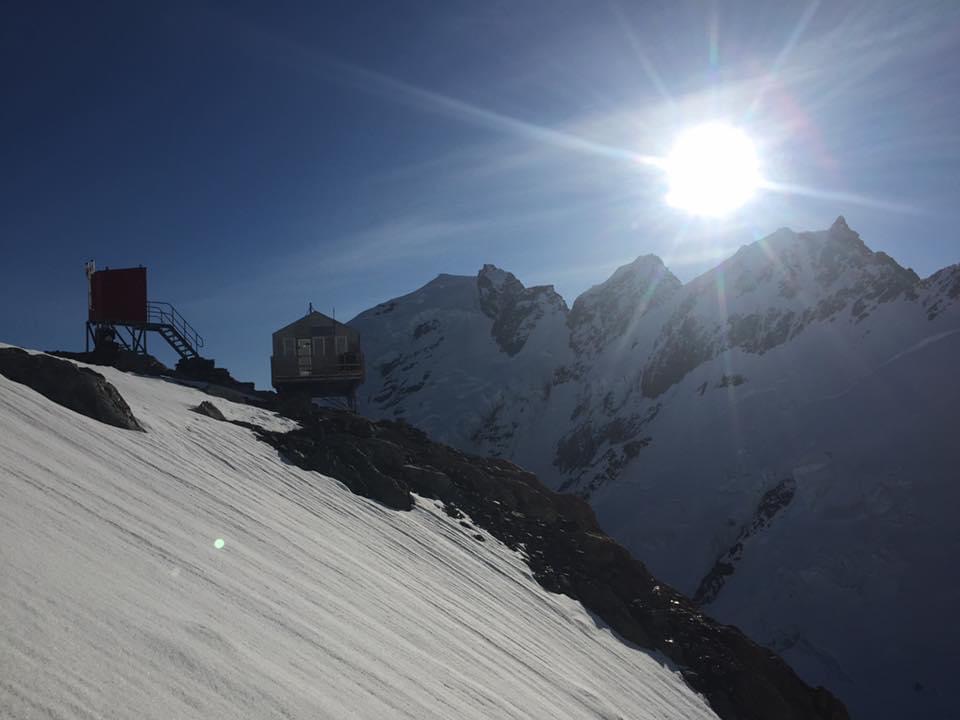
Empress hut

Climb

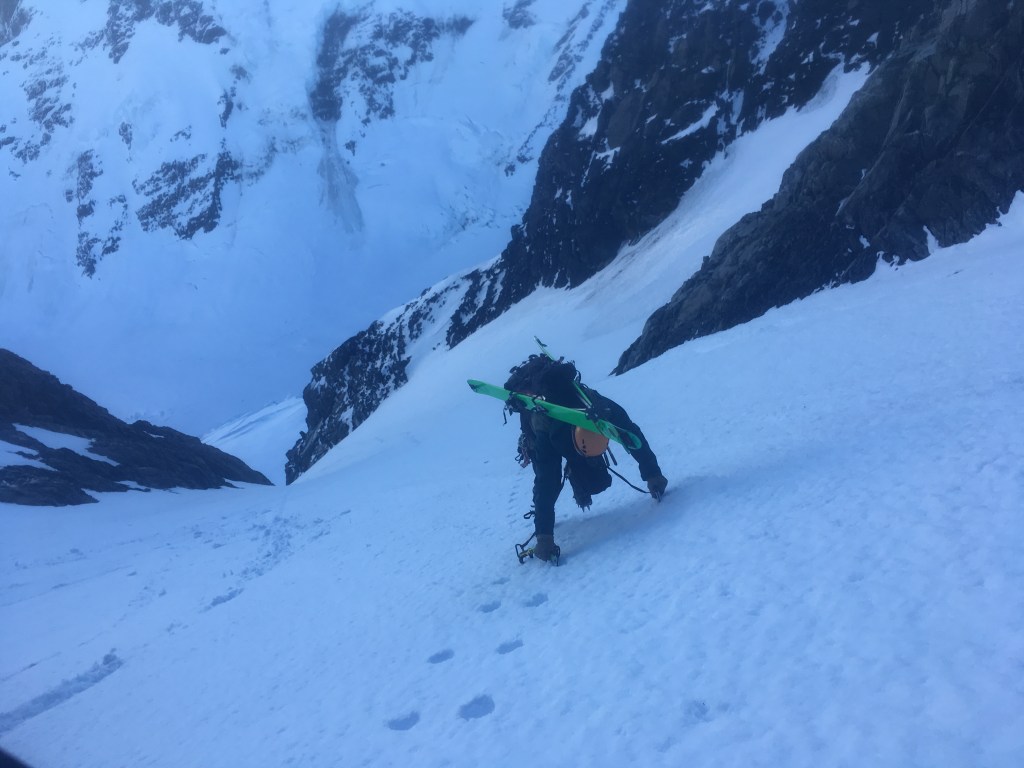
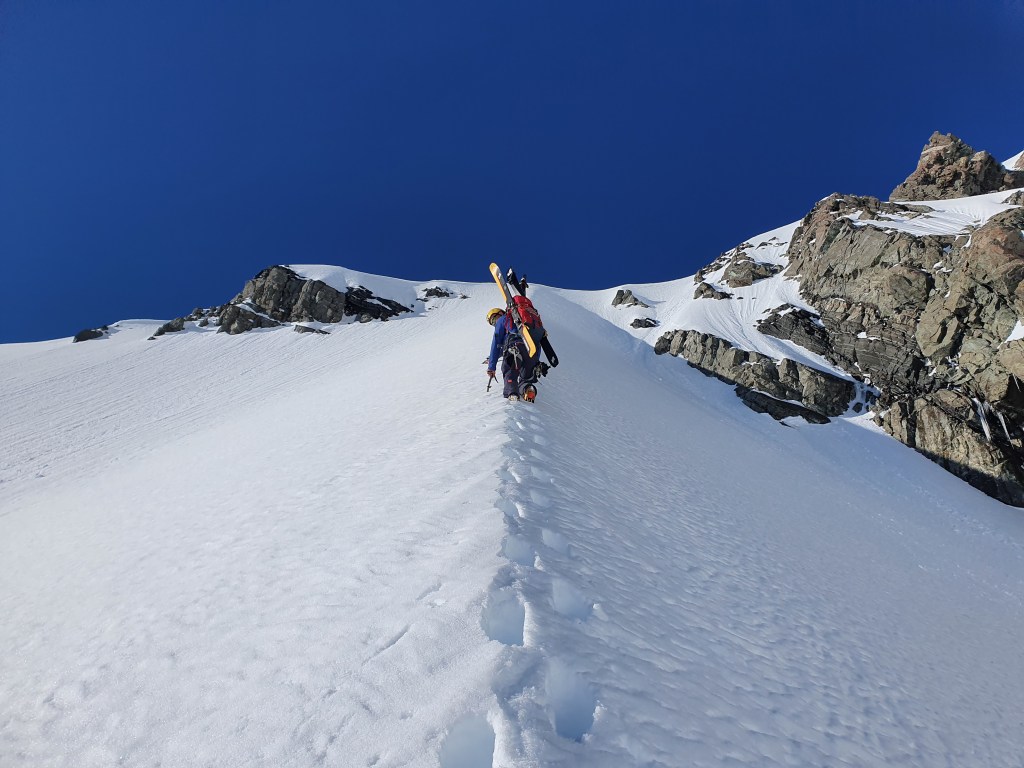
Will booting up the lower section of the couloir. This part is wide and straight and is the easiest skiing meaning yo ucan open it up a bit

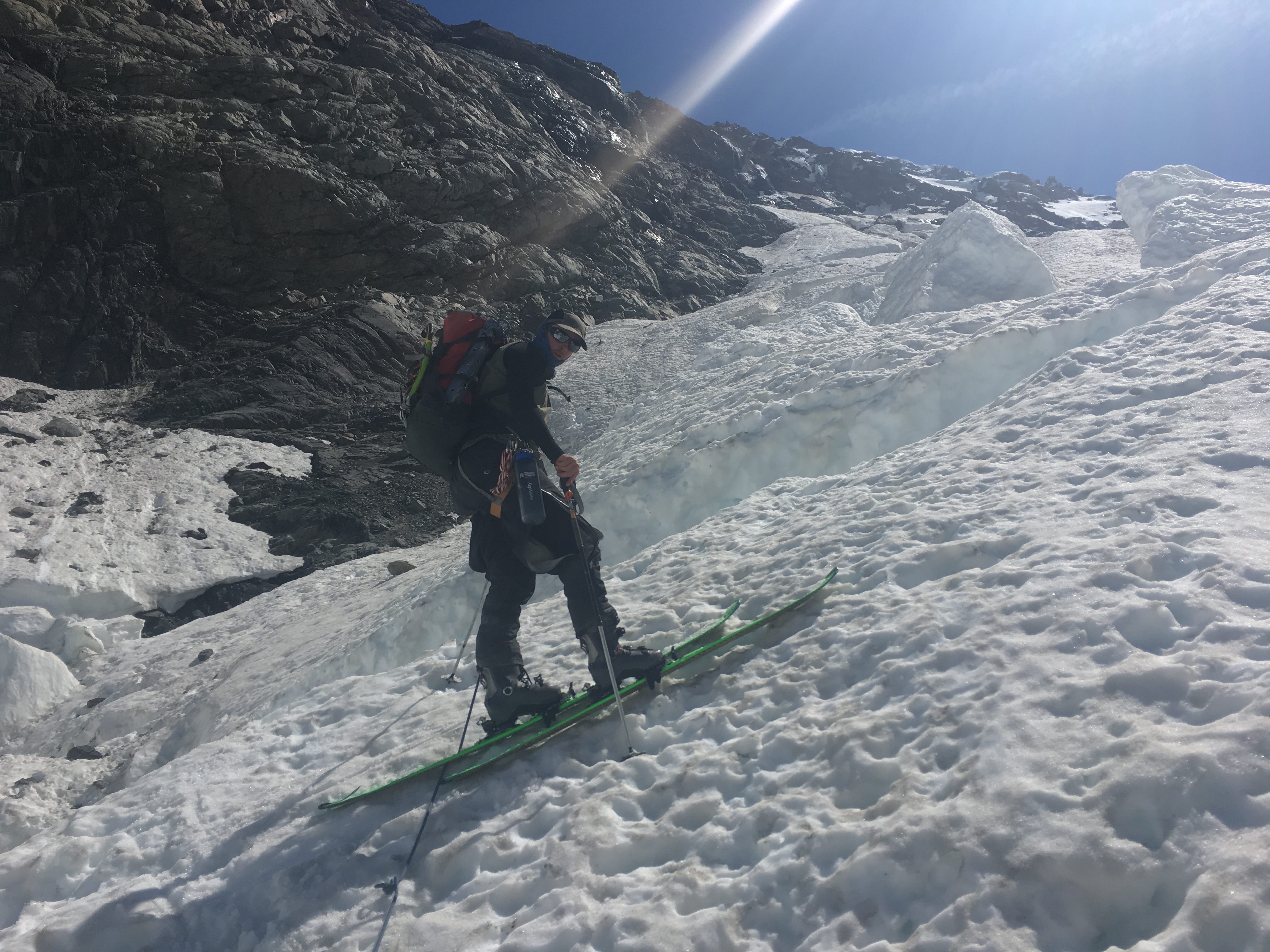
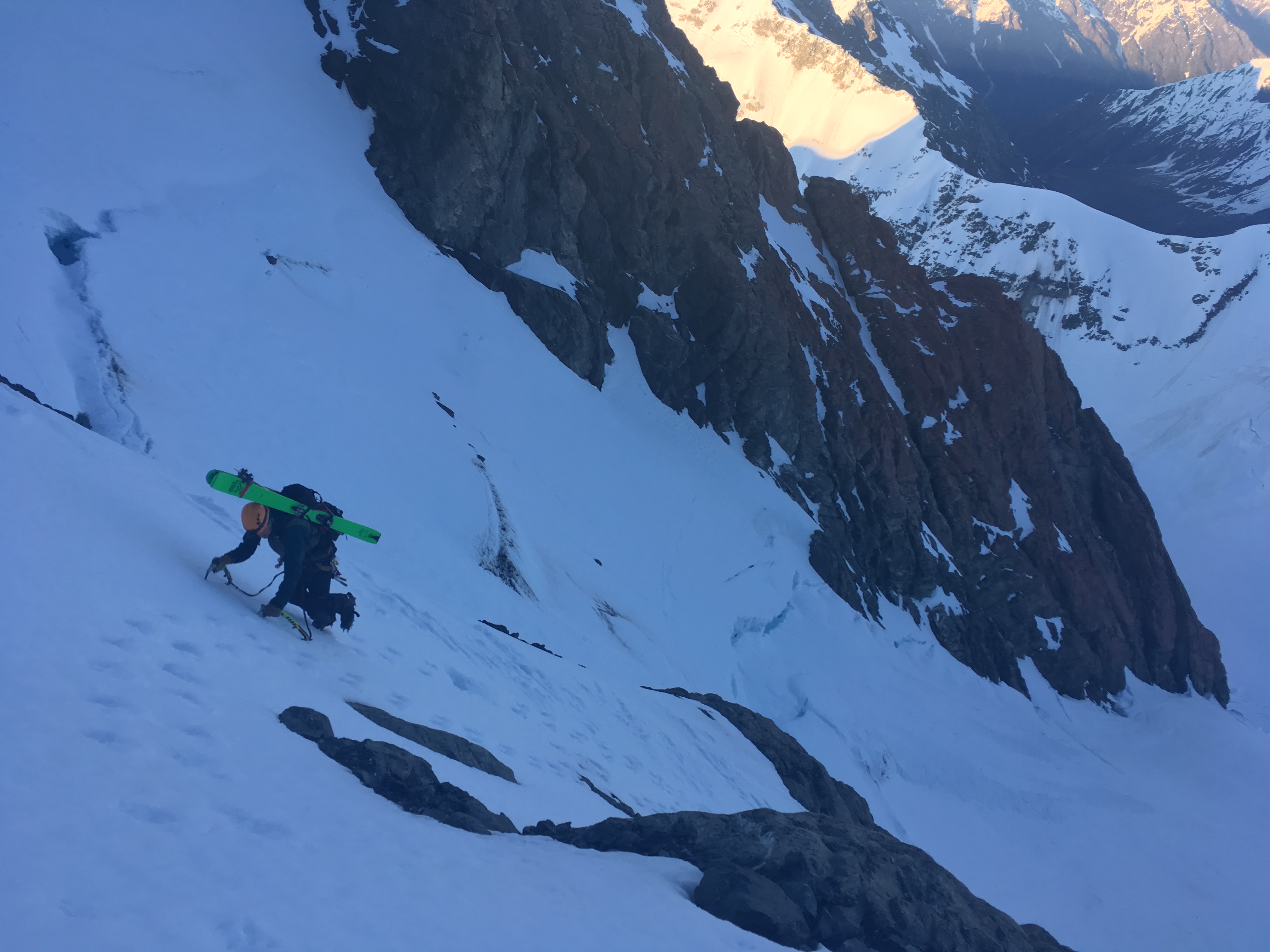
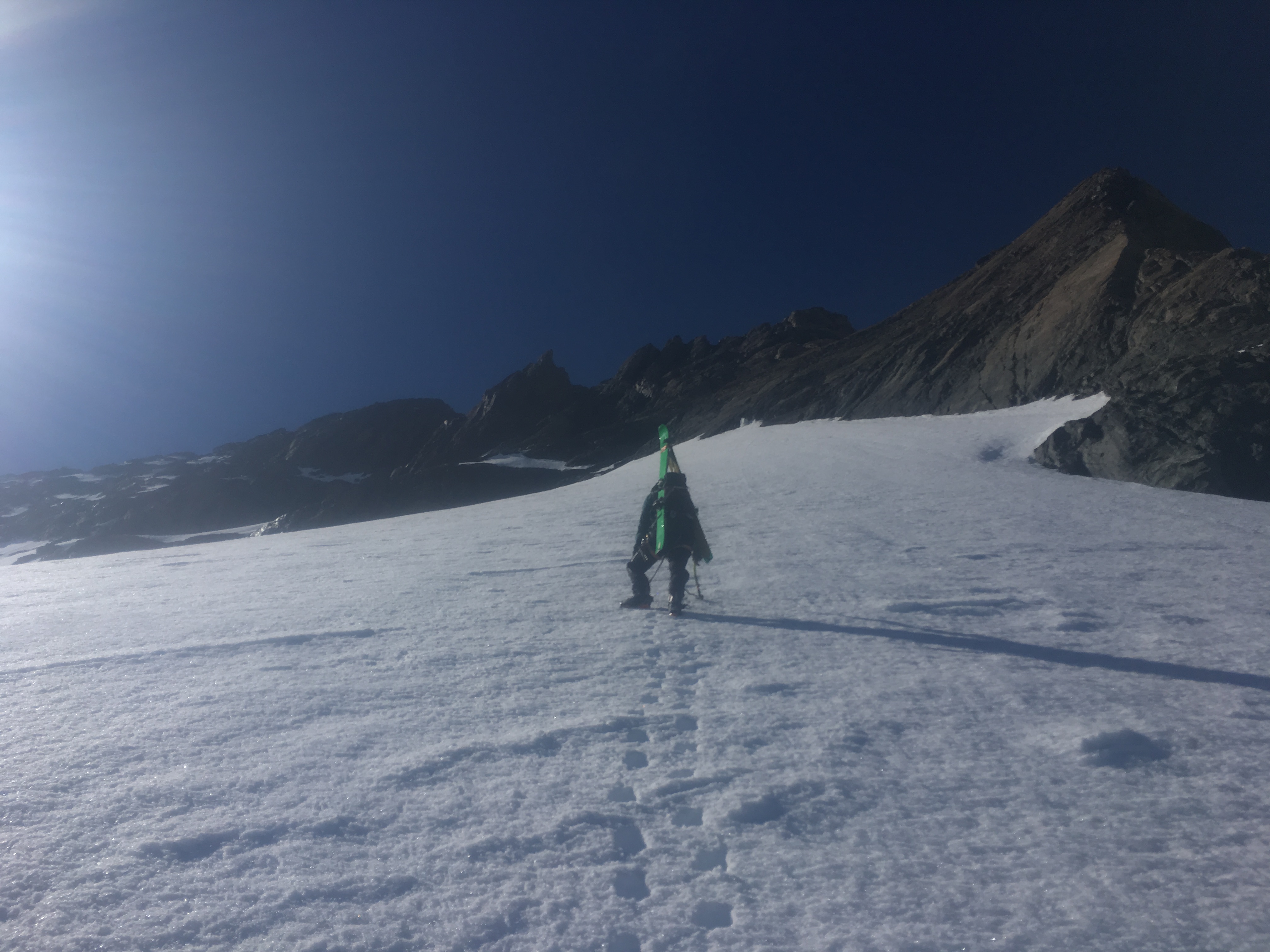
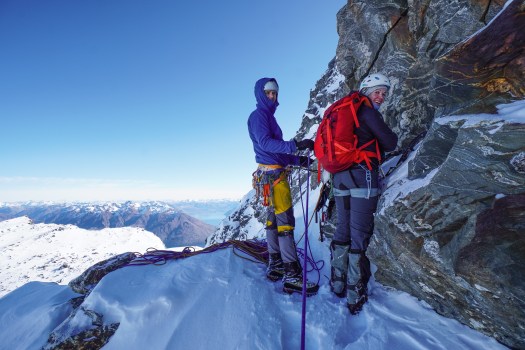
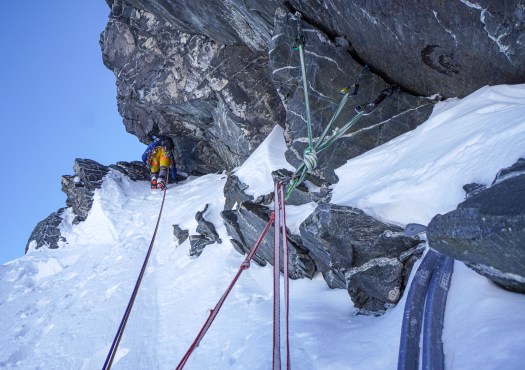
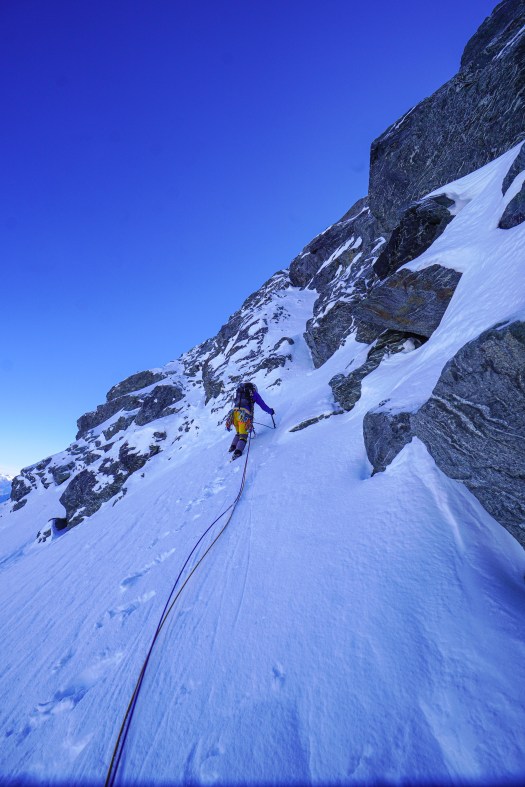
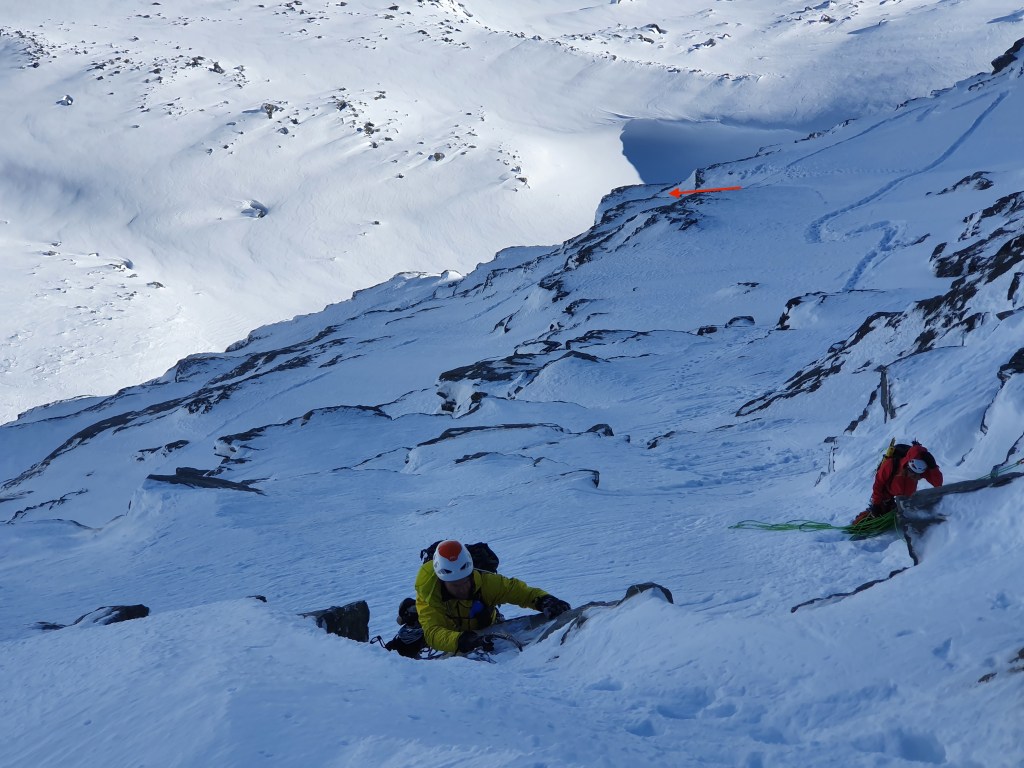
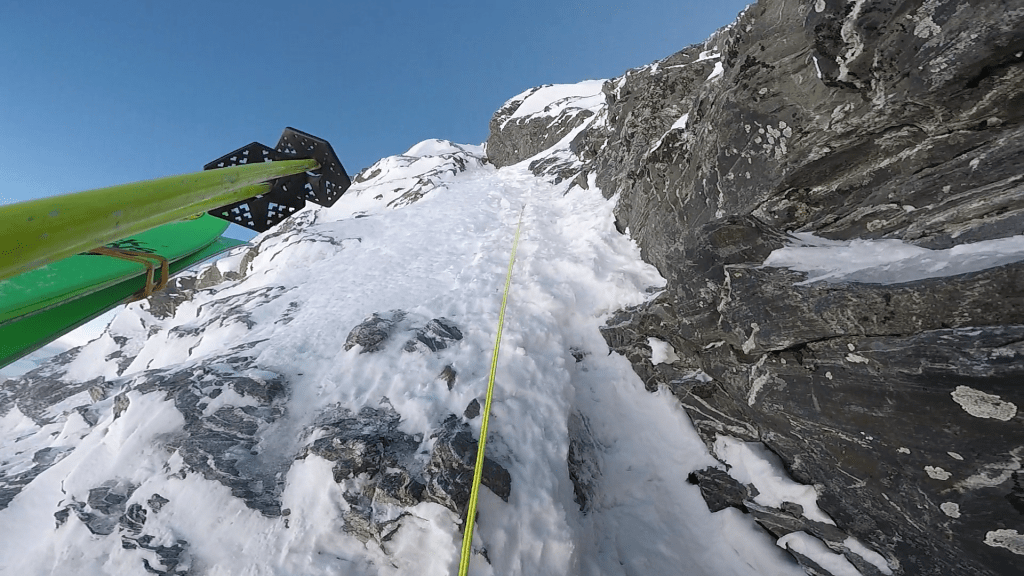
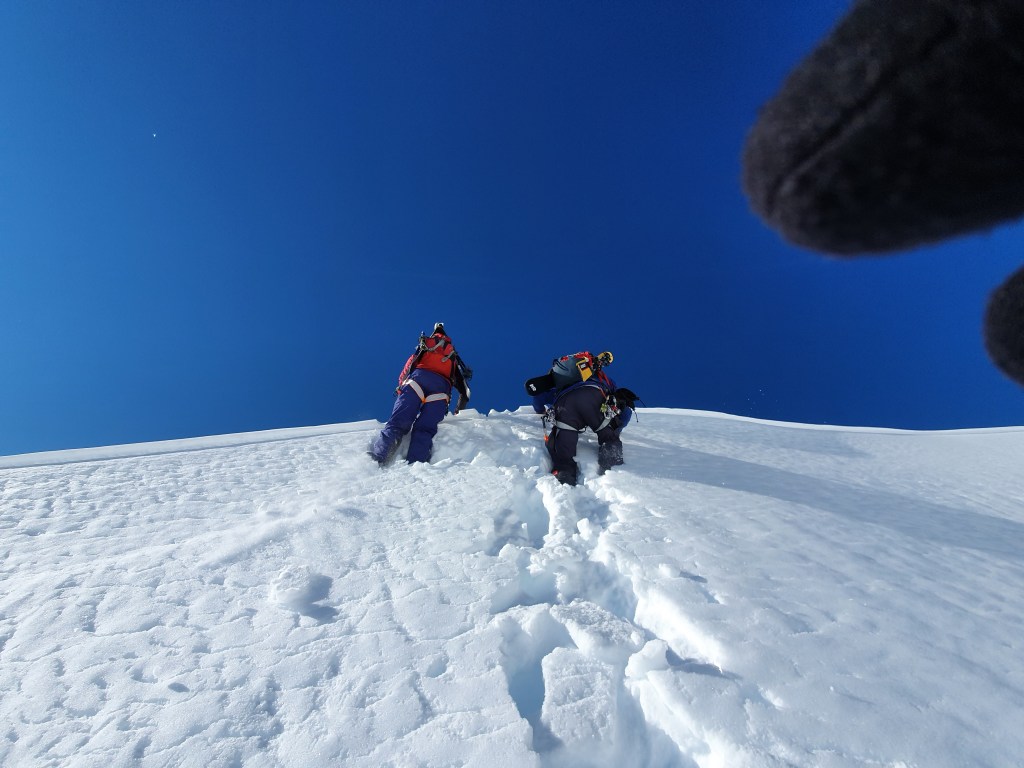
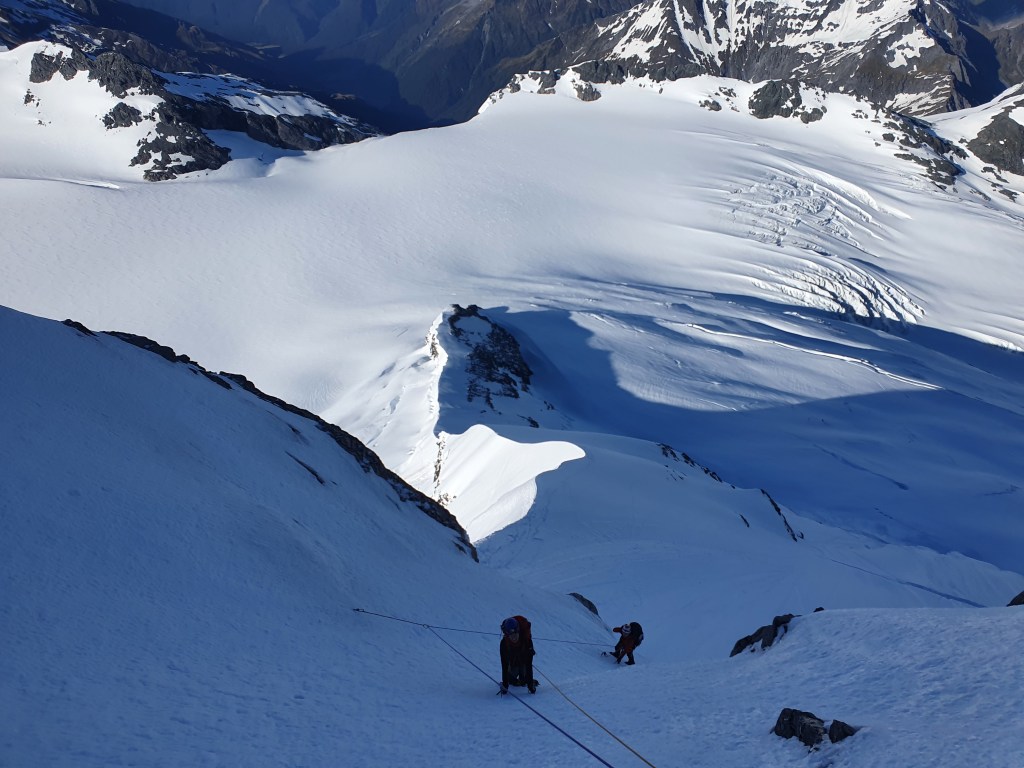
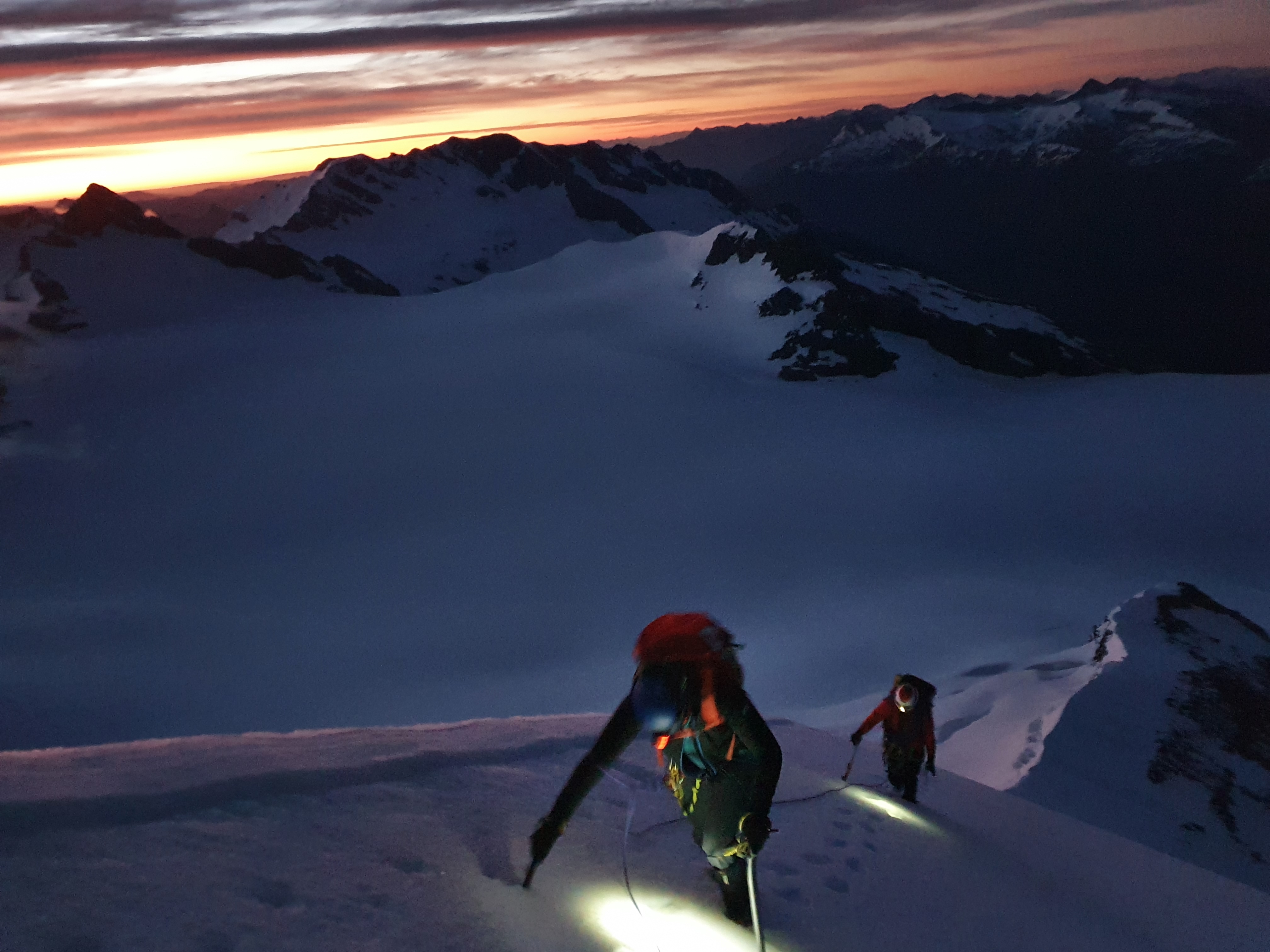
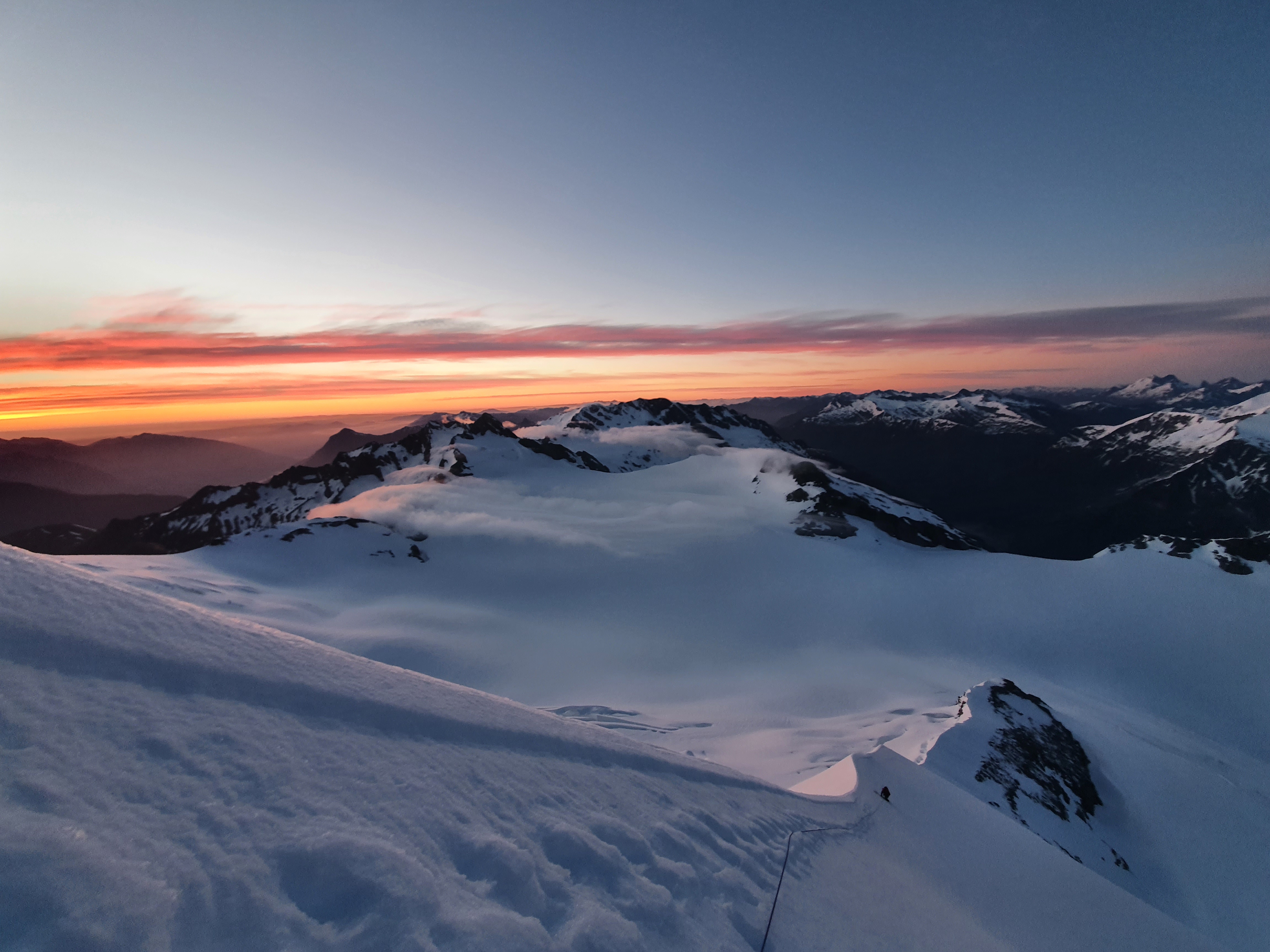
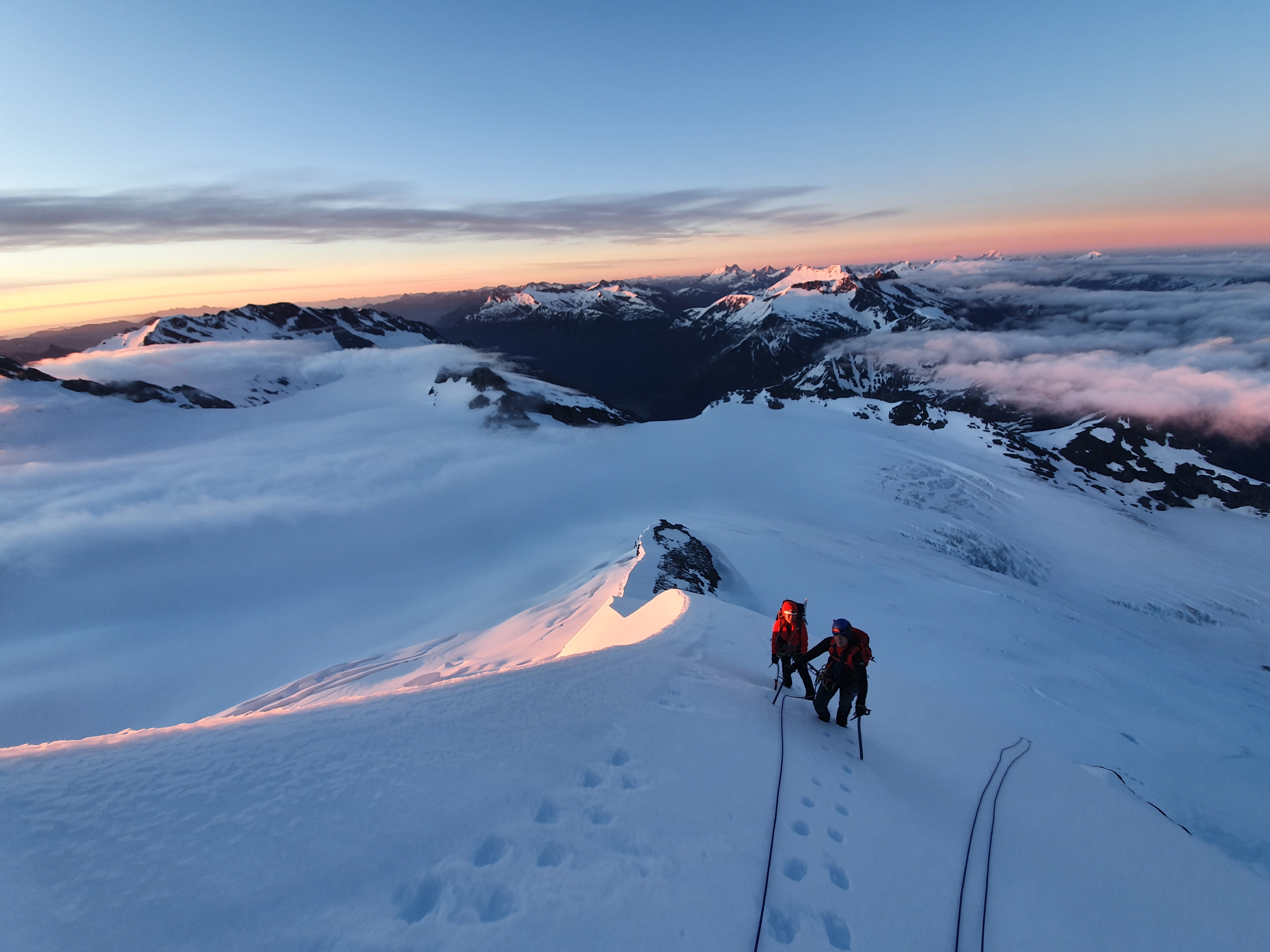
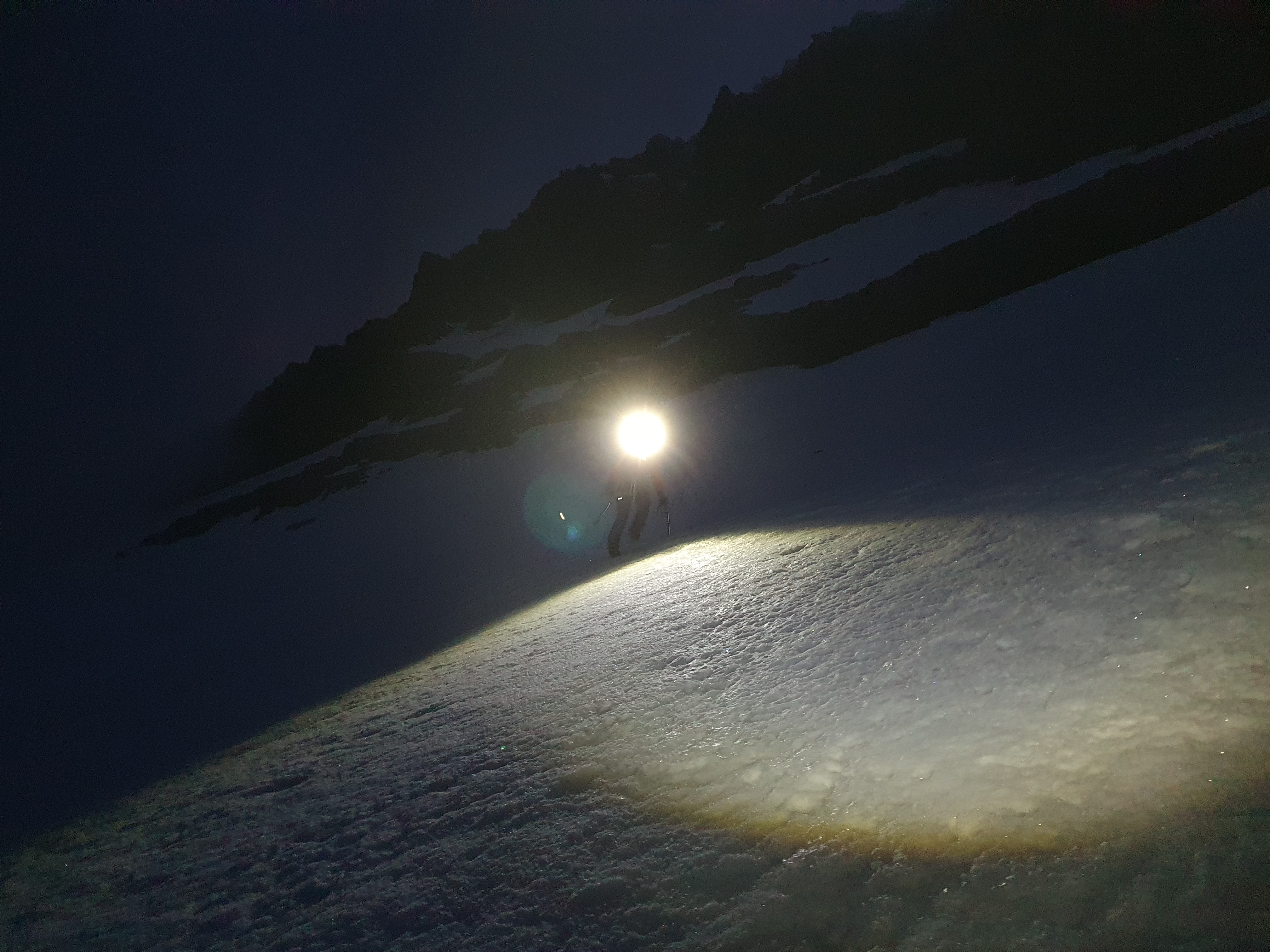
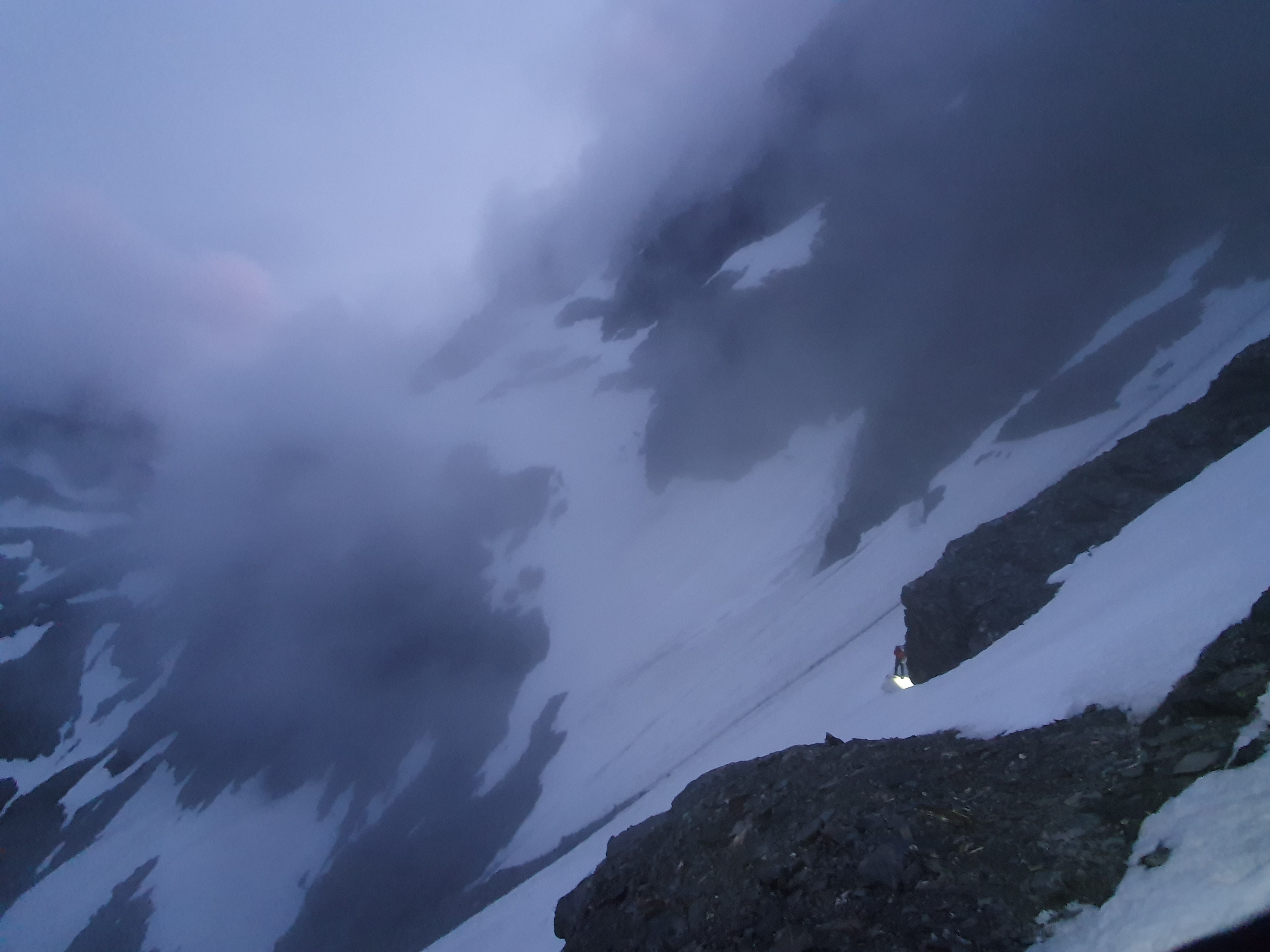
Pretty straightforward when the conditions are good. We had a good overnight freeze and so fast efficient cramponing conditions. We skinned (ski crampons were essential) south from the hut to the base of the couloir just south of the NW ridge. From here we transitioned to crampons and booted up the route. We used the rope to cross the shrund at the base but otherwise we soloed the whole way making fast progress. The couloir fans out into a couple of possible exits at the top – if you continue directly up fall line it turns into some M2 mixed climbing up to the West ridge and Low Peak. We wanted to just maximise the amount of skiing and so didnt bring equipment for mixed climbing or raps, and headed to climbers left up a narrow couloir onto an open snow fan at around 3300m. Another option from here would be traversing north to Porter Col if you wanted the summit without any mixed climbing. For us that would have been bare ice on this section, so once the snow ran out we transitioned to skis. This was a technical transition, on very steep exposed and firm snow, and any equipment (or people) dropped at this point would end up on the Empress shelf 1000m below. We protected it with a snow stake belay.

It took us around 3 hours from the hut to climb the route. We had perfect conditions and soloed the whole route so it may take longer than this

Ski Descent

We started skiing at 9am. This was too early and the snow was still pretty firm, which given the exposure made things pretty spicy. We had to be back in the village that evening though and didnt want to be coming back down over those snowbridges too late in the day. Time to put the edges through their paces!
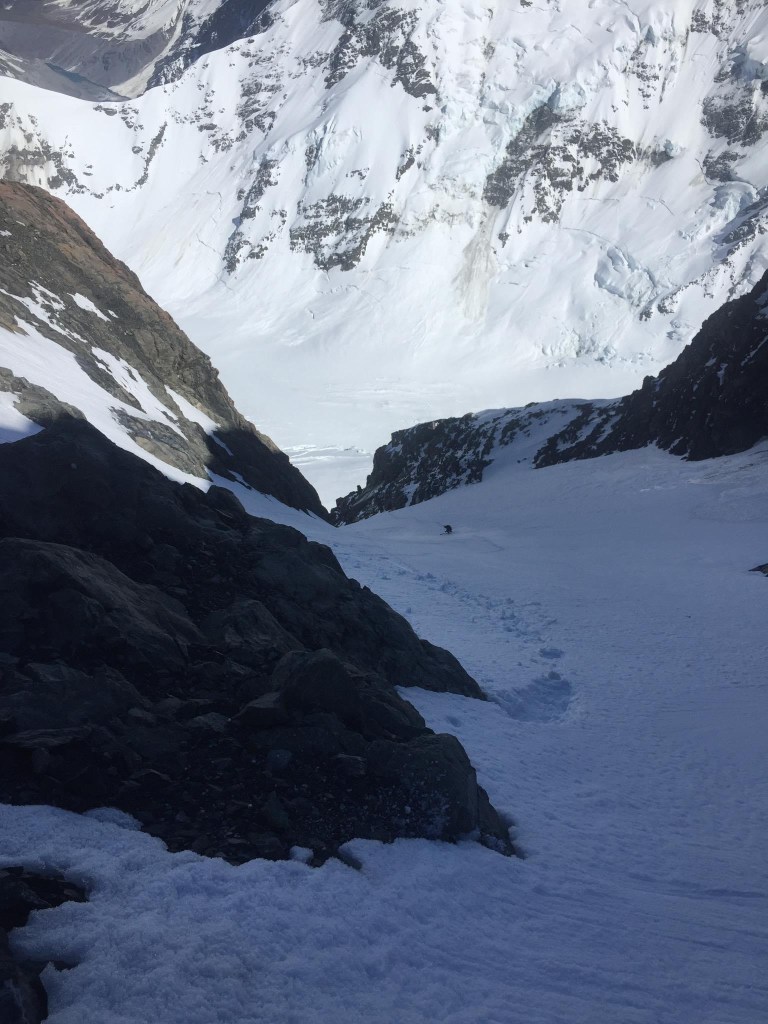
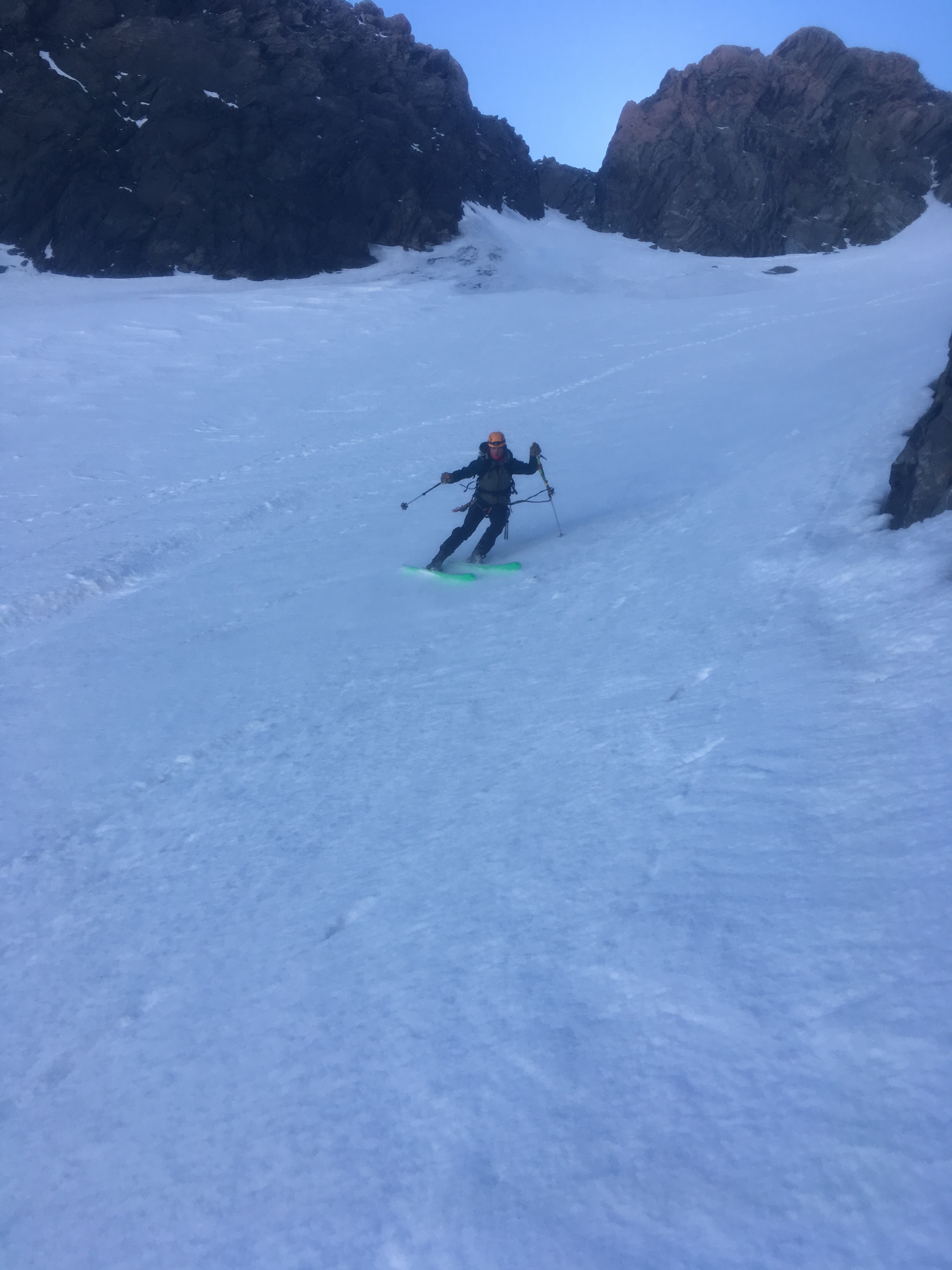
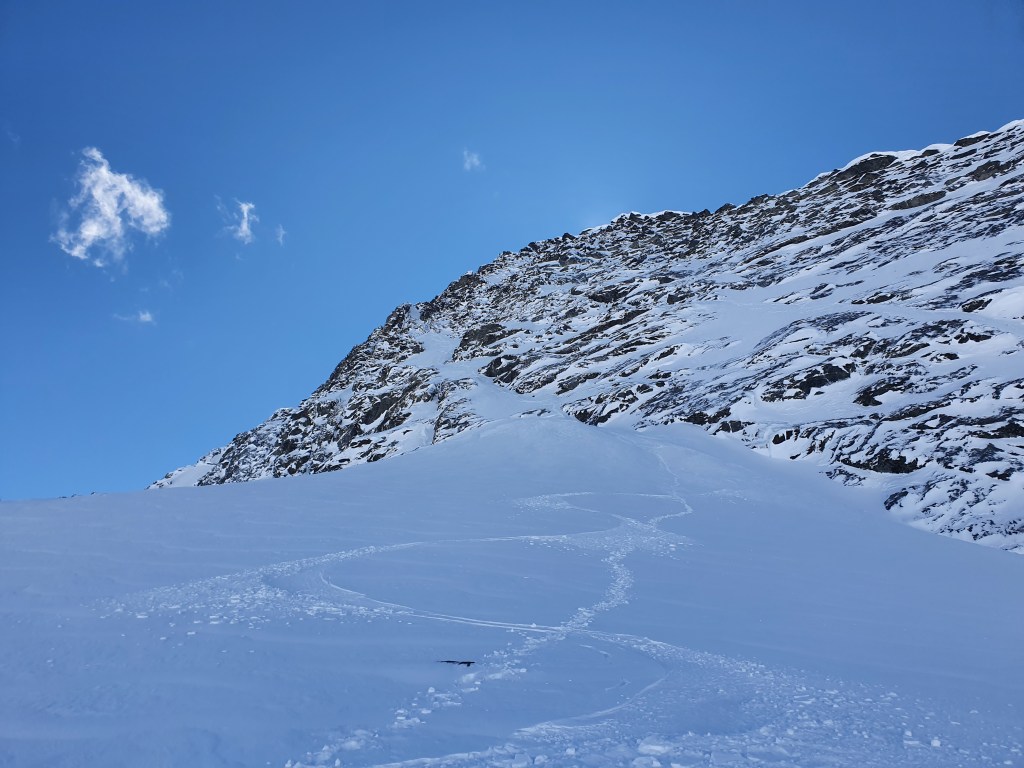
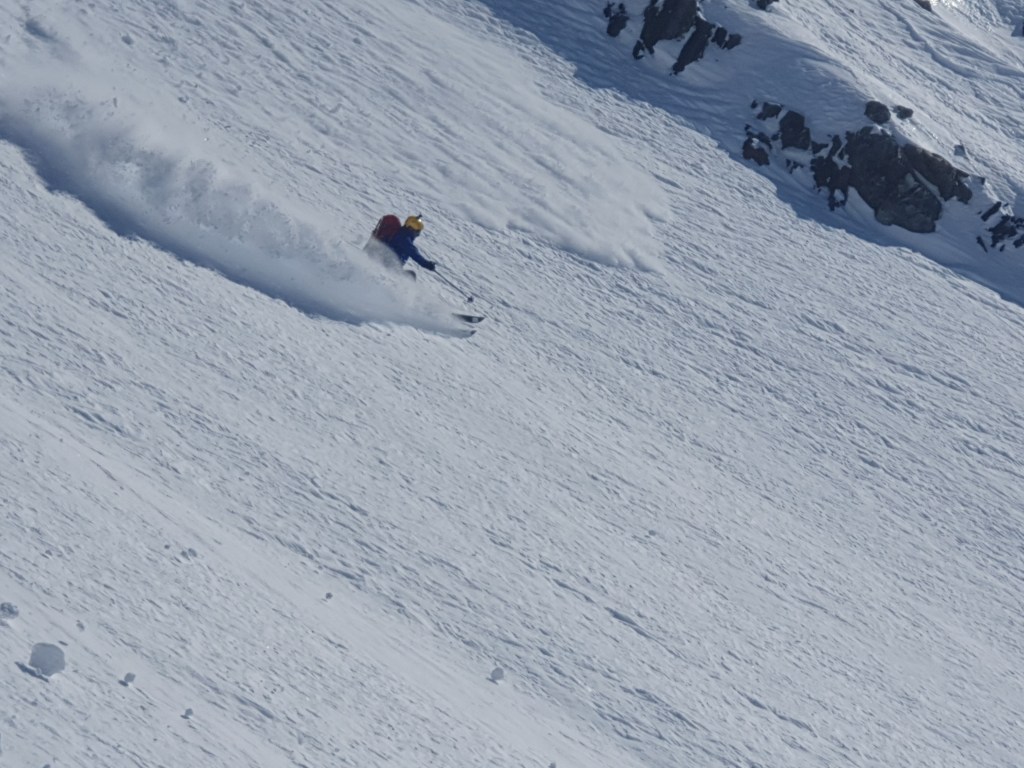
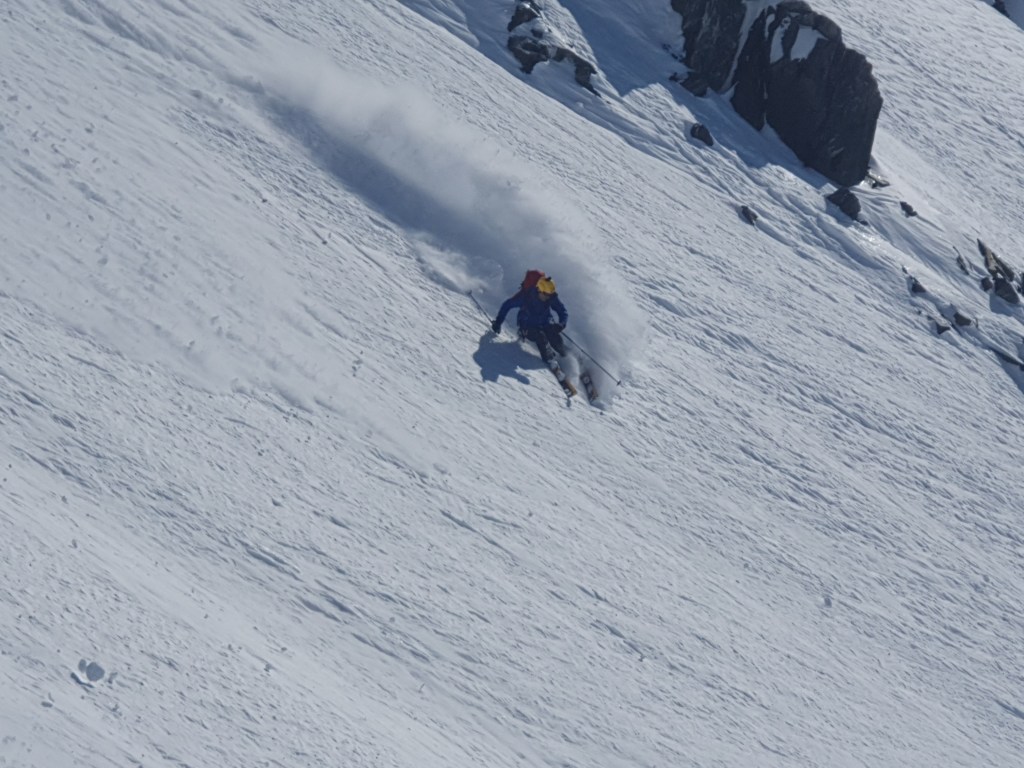
Joe making turns on the lower part of the couloir

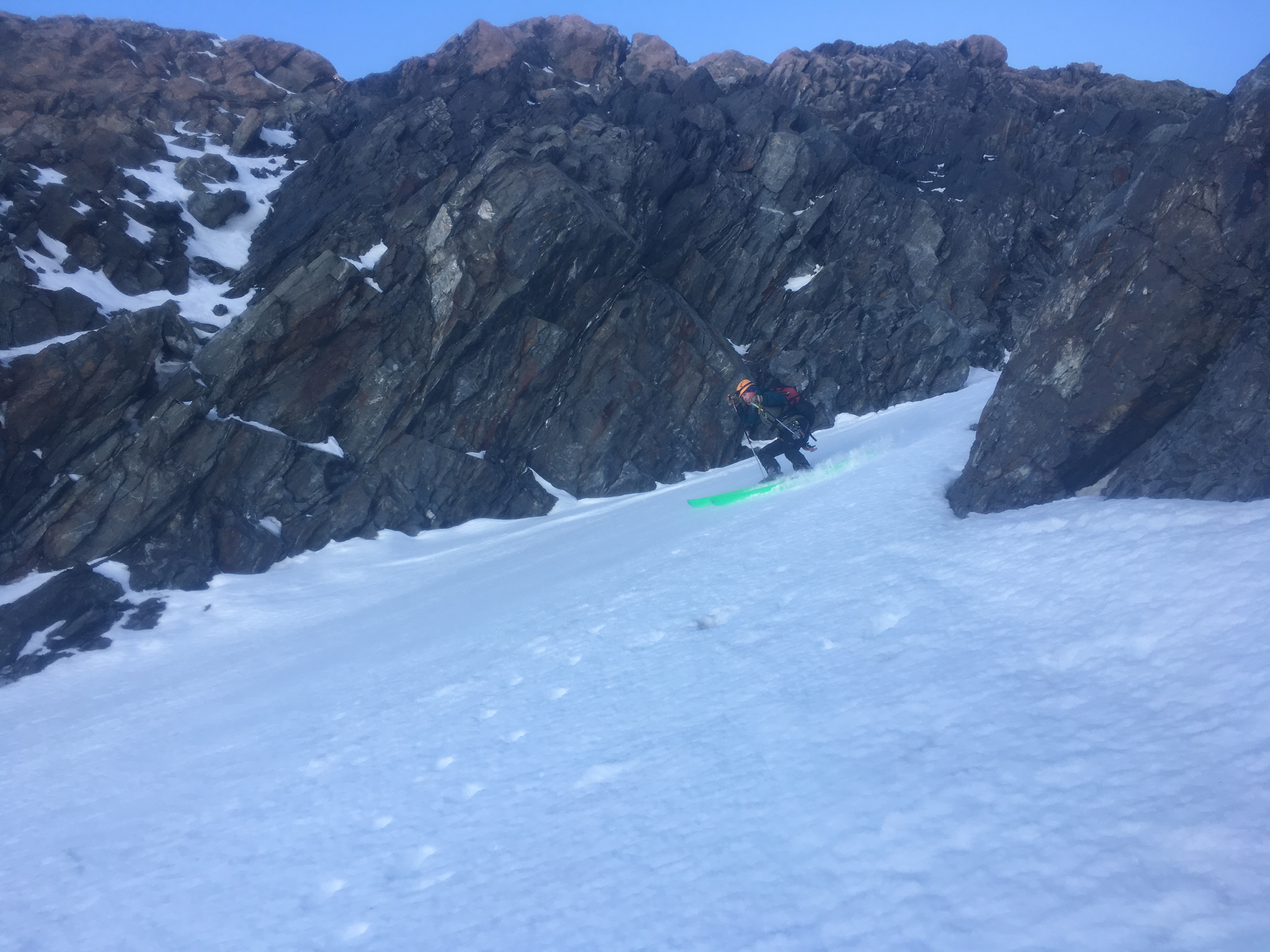
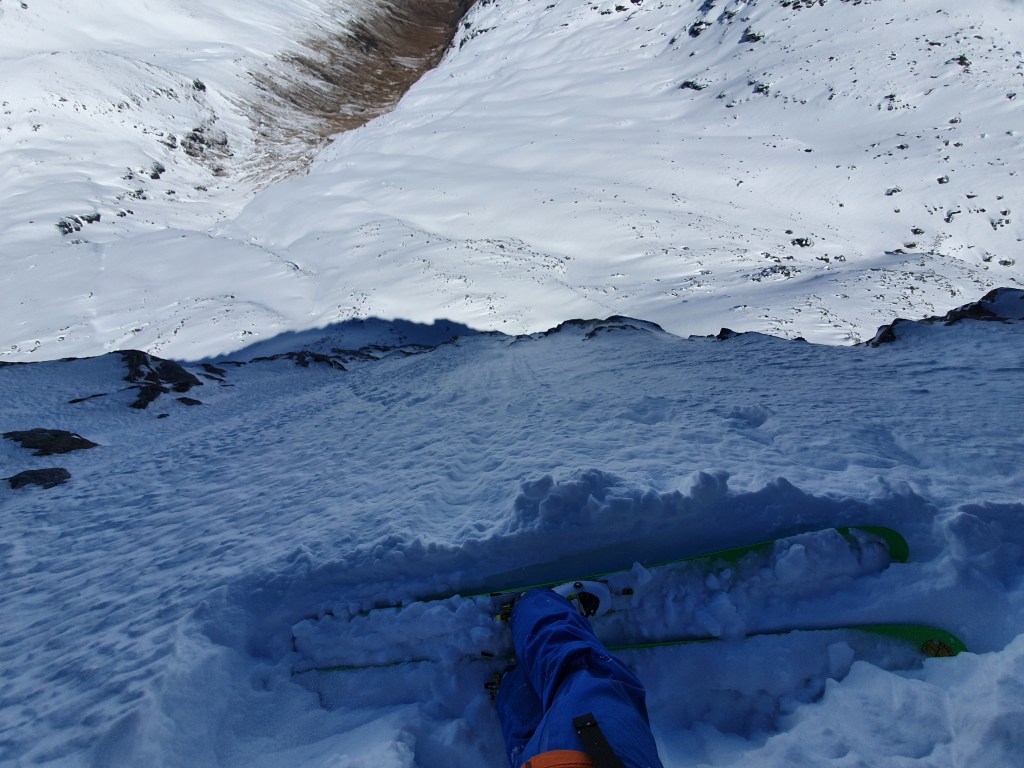
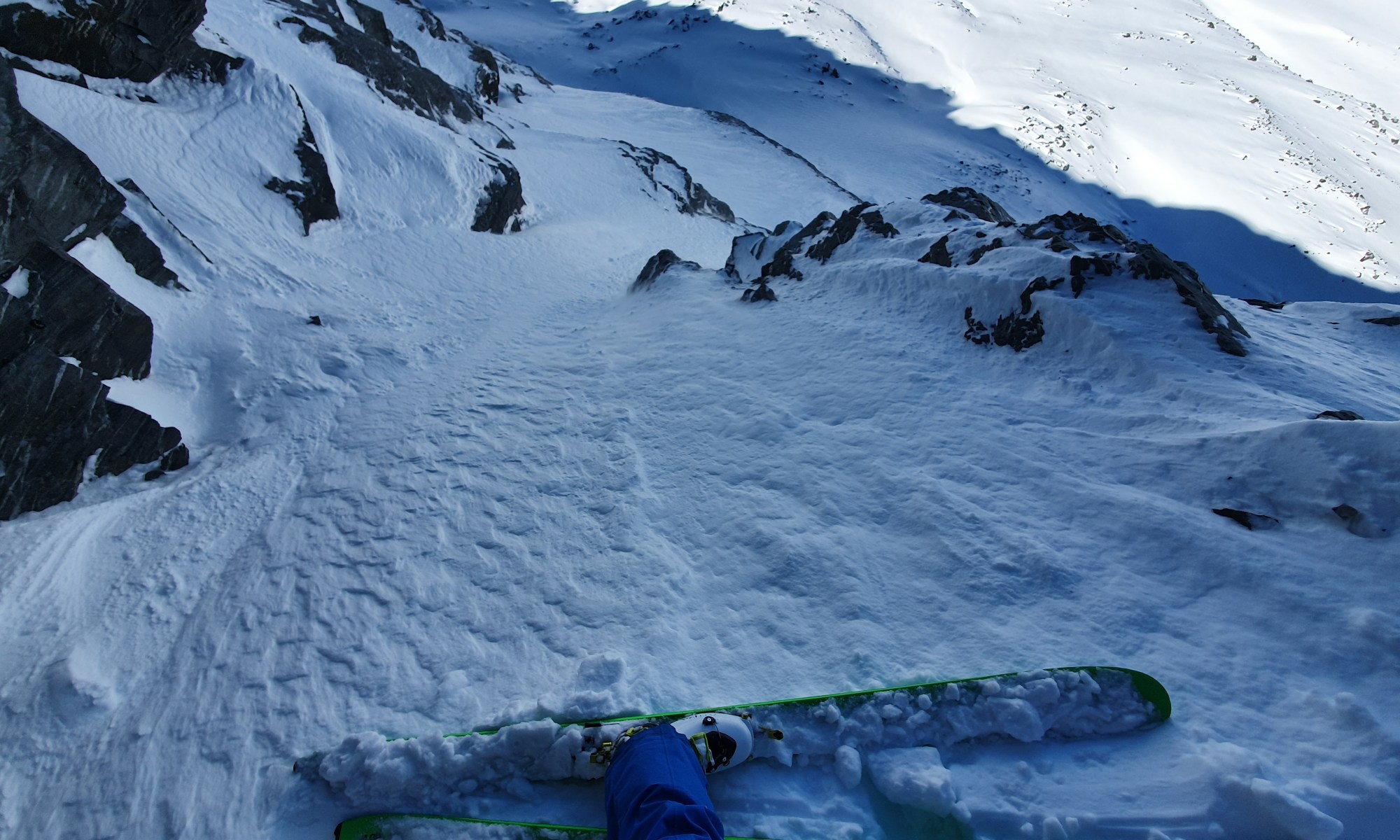
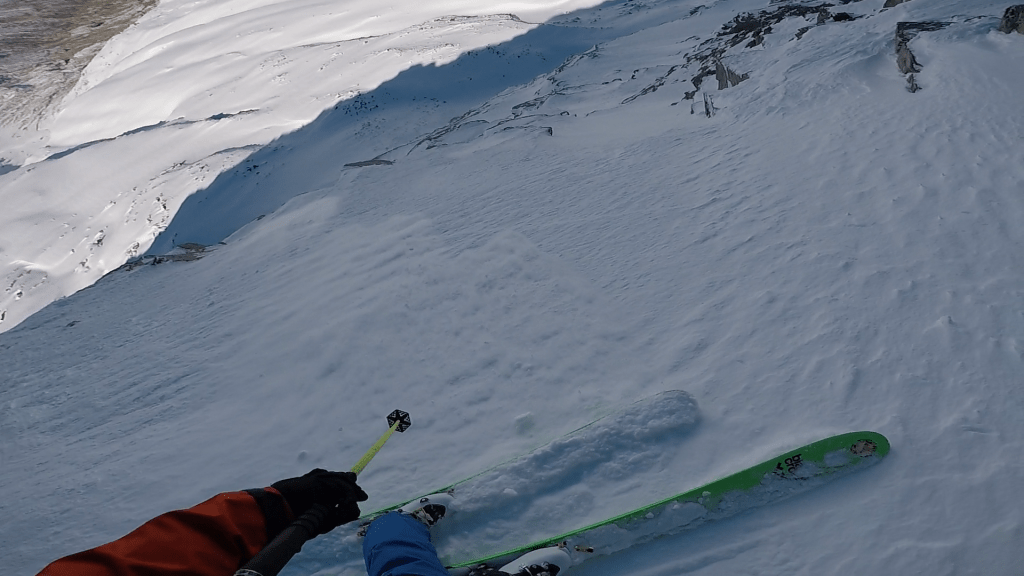
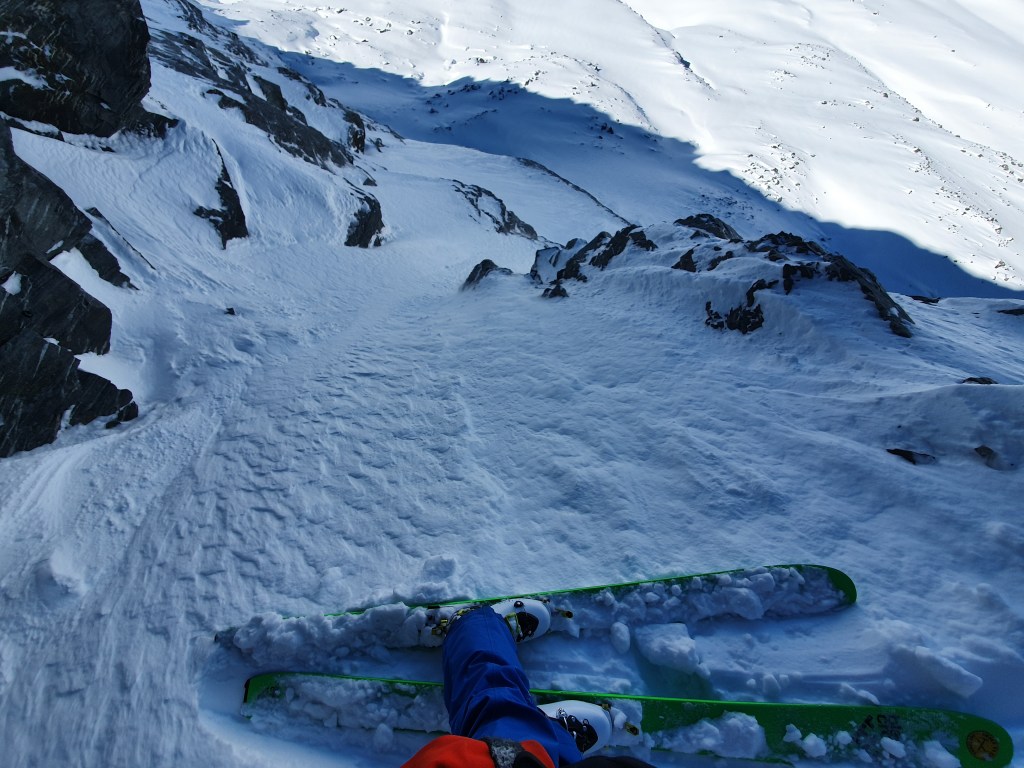
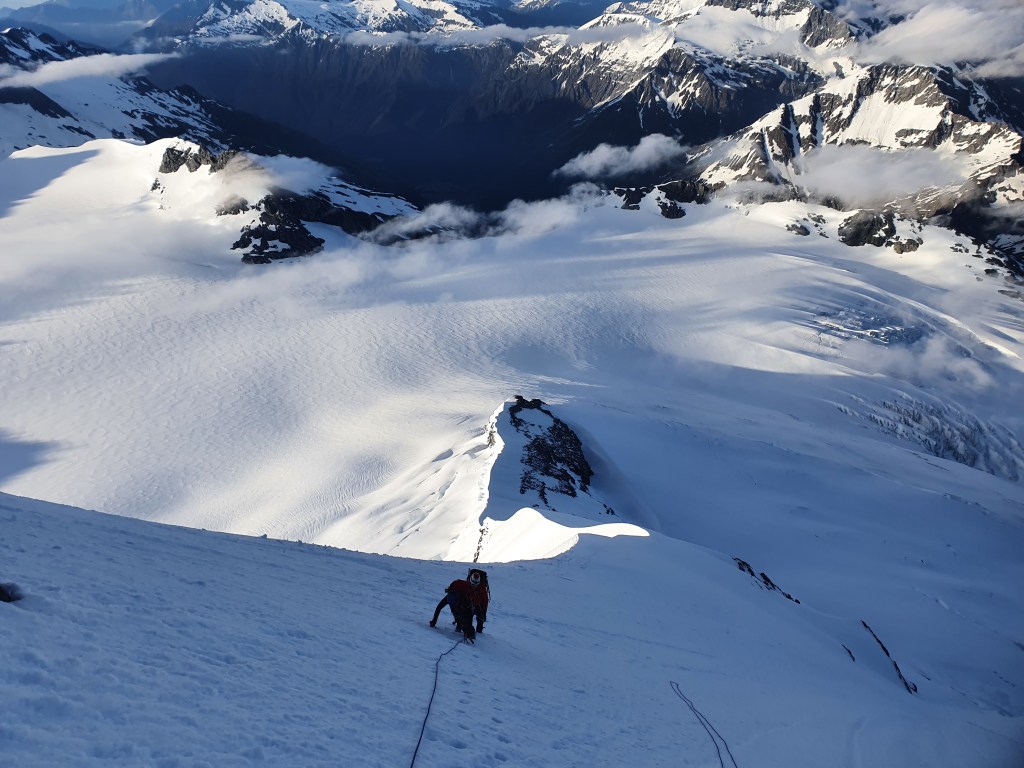
The initial snow fan was a touch under 50 degrees, and wide and open (but with serious exposure to the right). Once we hit the couloir the steepness ramped up to over 50 deg, and initially only just wider than a ski length. Cue cautious high pressure jump turns. This steep technical skiing lasted around 100-200m before the couloir gets much wider and the angle eases slightly and we opened it up a little bit more. Your still pretty exposed in this section as there is a dog leg and small cliff right at the bottom of the couloir to negotiate.
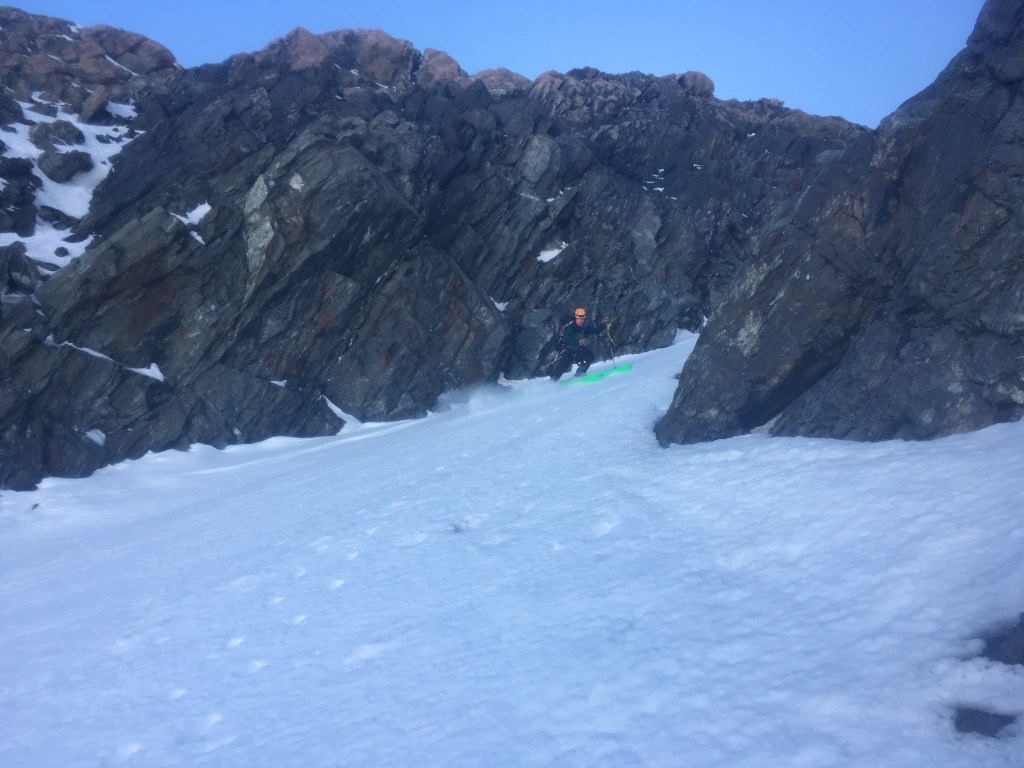
Will coming out through the crux, the choke at the top of the couloir.

Right at the bottom we made a 15m rap to get through the dog bone, putting us just above the shrund. There was a good spike to leave tat around for the rap. From here we just had to make the obligatory shrund send to get into the sun and beautiful corn on mellow 35 degree slopes. Sometimes a route might go from here south crossing the Noeline Glacier to drop you at the bottom of the Hooker (passing just to the left of the W of West ridge on the map) but we had scoped this on the way in and it was a no go. So we skiied back to the hut, grabbed the rest of our kit and headed down the same way we came.
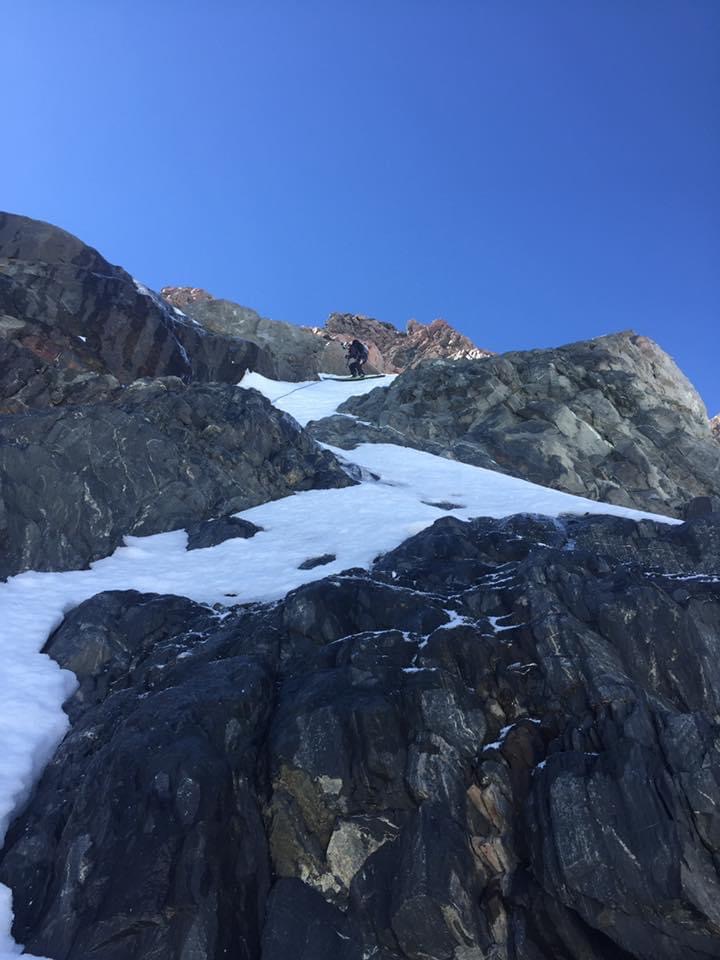
The dog bone at the bottom of the route. We made a short rap here

We blasted it down the top section of the glacier until reaching the ice fall under Baker saddle. Given how open this section is we decided to ski down through it while roped together. This is pretty difficult and theres a real risk of it causing more harm than good – if you dont have perfect timing and very clear communication as you cross the gaps you risk just pinging your partner off balance and throwing them into the crevasse. We had our system dialled and were moving slowly carefully and precisely through the crevasses – until a rock fall released from the Baker Saddle area 200m directly above us. Caution had to go out the window and we started straight lining it through the maze of narrow snowbridges to a safe spot out of the firing line. Probably one of the scarier experiences Ive had in the mountains!

Picking our way through the lower ice fall

Once through this it was a case of reversing the Moraine slog. It was pretty scorching by this point, but there are a couple of hidden water sources on the morraine to get us through. We made it back down in time for a feed and post mission beer in Twizel before hitting the road back to Chch
Cookies and Cream, Single Cone South Face, Remarkables

A really fun steep technical ski mountaineering line just 15 min skin from the top of the Curvey chair life in Remarkables ski area. Like the South Face Classic it is better known as a M2 winter climbing route, but I think it deserves to become a classic ski line! Warm up on the sunny west facing slopes before rapping into the steep and rowdy south face. You want fat conditions before venturing onto this face. I skiied this line in Sept 2021 after a series of late season storms had left the S faces of the range coated in well bonded stable powder and had boot-top pow the whole way down. This was the first time the line had been skiied, and Will Rountree and myself had been eyeing it up for a while. When the weather window came around Will was stuck at work so I had a moment of guilt and considered waiting and getting on it together…that didn’t last long though and I headed out to get the first descent solo. Sorry Will!

Looking down the South face just below the rap. Incredible skiing

  • Length โ€“ 300m
  • Steepness โ€“ 40 deg initially on the west face. The main ramp on the S face is around 50. The step connecting the two is extremely steep, around 60
  • Exposure โ€“ Not too bad on the first section, but severe and continuous on the south face. Left trending ramp over large cliffs, a fall here will likely be fatal
  • Aspect โ€“ West and then South
  • Extras โ€“ Rap from the West face to the south face. Currently you need to leave a picket or some rock gear but Im planning to put a DBA there this winter. Another short downclimb or rap part way down the S face
  • Difficulty โ€“ 5.1 E4
  • Equipment โ€“ 60m rad line. Crampons, 2x tools. Snow stake, rap tat, nuts for anchor if needed.

The South Face portion of the line.

While not as popoular as the South Face Classic, this is still a climbing line so be super aware of climbers beneath you that will not be expecting a skiier to come down on top of them. This line is pretty safe from that perspective as once on the S face you can see the whole way down, and as it trends left your sluff goes off the cliff and not down the line, but still take care

APPROACH

Taken at the top of the line. On the far right is the summit couloir of Single Cone. I dropped in by the rock just to my right but the entry point will vary depending on conditions

Two options

  • Top Down
    • Quicker, but doesnt give you the option to scope out the conditions. As for the South Face Classic, jump on Curvey chair or skin up from the base aiming for Wye Saddle. Skin up the East Face of Single Cone to the ridge and then head up almost the whole way to the big rock band where the couloir up to Single Cone summit starts. This is where you drop into the West facing start of the line. There are a bunch of large boulders on the ridge and youll have to peek over and find the best way in. Ive marked my drop in point in red on the photo
  • Bottom up
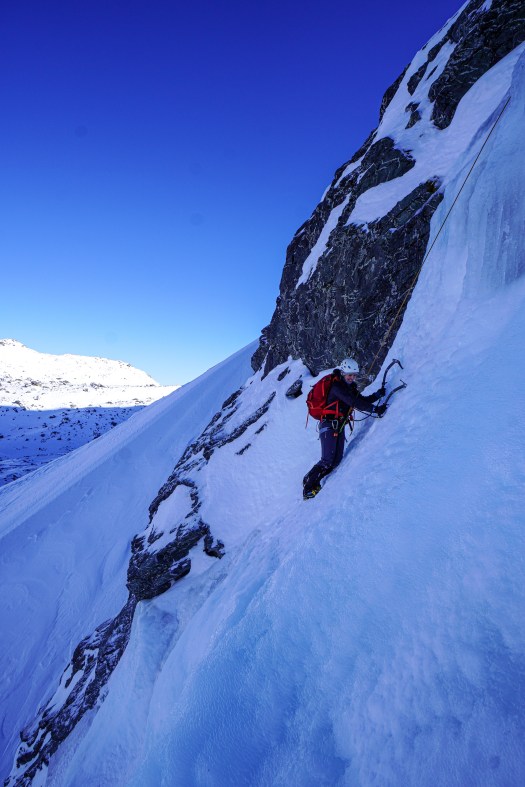
    • What I would recommed unless youre very confident of the conditions on the route. Skin to Wye Saddle as above, and at the point you would start heading up Single Cone instead head West aiming for a snow gully that takes you down to the base of the South Face. Traverse back across for a few hundred metres to the base of a large snow fan at the bottom of the route. The climb up is generally straightforward when the conditions are fat – booting up steep snow. There is a narrow rock band to get through towards the top of the first ramp which isi pretty straightforward. The crux however is the section joining the South and West faces which steepens up significantly to around 60 deg. When I was there this section was poorly bonded to the underlying rock and crampons were going straight through onto scratchy steep slabs and is above seriouos exposure. It was too much for me without a rope, so I skiied from here back to the base, and then skinned back around to Wye Saddle and up the East Face to the top, and dropped into the first section top down. The skiing here is much easier and so I was happy skiing it top down armed with the knowledge the conditions lower down were good
DESCENT

Pick your way down through the top section between the boulders, sticking to the right side of the face. The gradient is easy and so you get a good warm up before the serious stuff starts. After a 150m or so you come to a small flat section which drops off steeply to the left down onto the south face. The snow is often icy / firm here and the exposure down the south face is serious, so I transitioned to crampons to go up to the edge and scope it out. As above, this section is extremely steep and exposed and had poor snow when I was there so I didnt attempt to ski it (but in the right conditions it would be possible – the first full descent is still up for grabs!). Im planning to get back here this winter and put some rap rings here to make this a bit more accessible as a ski descent but currently you need to either leave a snow stake or some nuts (no decent sling spots). A rap from here gets you to the main couloir on the south face.

The section linking the West and South faces. Very steep and exposed, and very thin onto rock when I was there. Possibly skiiable in a mega snow year but generally needs a rap

Once your in the main couloir the skiing is heroic – 45-50 degrees, narrow but wide enough to make good turns, and holds good snow when the conditions are on. About a third of the way down theres a narrow gully that I downclimbed before skiing the remainder of the line. Theres no collecting feature on the downhill side of the couloir, and as you cut across the face your sluff falls off the line beneath your feet – a constant reminder of where your going to end up if you fallโ€ฆa good way to help focus your mind!

At the bottom the line opens up onto a large snow fan and you can hoon it all the way down to the base. I linked it up with a ski down to the lake at the base of the Wye Creek Route before skinning back up to Wye saddle.

Mt Temple, Central Buttress

A fun day out that’s easily accessible as a long day trip or cruisey overnighter from Christchurch. We made a weekend of it staying at CMC’s Kennedy Lodge the night before, then staying on for canyoning down Agility Creek the next day (what was supposed to be our ‘rest day’ but turned into a borderline quest – but that’s another story).

Generally low easy scrambling (grade 12 ish) but with 2 well defined overhanging cruxes that I reckon are more like 16 than the topo 14. You can avoid these if you want to. Rock is loose in places but generally decent and the gear is spaced but not as run out as I was expecting from the climb nz description. Crucially the anchors are bomber, with big spike belays for 240cm slings on all 4 pitches. Easy scree descent.


  • Grade: III, 4+, crux 14 according to topo; I think this is a bit of a sandbag, the overhanging crux is more like 16 but is short. All trad, no bolts including anchors.
  • Equipment: full trad rack – singles of cams up to #3, full set of nuts (RPs were very handy), tat, 2x 70m half ropes
  • Approach time: 1.5-2h
  • Climb time: 4.5h
  • Season: Summer into autumn. West facing so gets the afternoon sun.
  • Team: Joe, Tom, Alex, Dave, Maria 02/04/22

approach

Park at Temple Basin ski field carpark and head up the 4WD track that turns into a well maintained walking track to the lodges. Central buttress is flanked by a left and right buttress. It extends into the scree further than the Left/Right buttresses do making it easy to spot.

The route

It isn’t really obvious from the Climb NZ topo that this route is actually a series of pinnacles, and so you need to make 2 short raps during the climb to link them together. Multiple variations to the route exist – the Climb NZ topo shows 3 alternative starts, coming together towards the top. We chose the line on looker’s left of the buttress. Other routes start further right.

Note the 2 raps required mid-route
Scramble the first 40m

Pitch 1: (10 40m) Scramble up the detached stand alone block in front of the buttress to get to the scree platform at the base of the buttress. We went up just to the right of the obvious deep crack. We soloed up this section in approach shoes, pretty limited options for gear if you want to pitch it. Is easy to just walk around this section to the base of the main buttress if you want to avoid it.

Pitch 2: (12 50m) We chose to climb the arete on the far lookers left of the buttress which starts from a small grassy patch. Either stay left in the groove for easier climbing but looser /mossier ground, or right on the face for better rock but more difficult and run out climbing. About halfway up is a small overhang which is easier to get through on the left. Some pretty loose rock on the overhang so watch out. After almost a full rope length you get to a large grassy platform about 5m wide with a big boulder you can sling as a belay.

Pitch 3: (16 50m) We climbed up the right hand side through the small overhang (see pic) which has some cool stemming moves. There was some loose rock and average gear just on the crux move which made this a bit stressful. If you stay left sticking to the ridge you could avoid this section. Once over this is you scramble up grade 10 blocks to a ledge on top of the first pinnacle and make an anchor with a sling over the very top of the pinnacle. There were a few slings and a maillon left there when we were there. From here you need to make a short rap (5m or so) onto a small ridge and walk along this above steep gullies to the start of the next pitch. Very loose rock on the ridge so take care.

The crux

Pitch 4: (12 30m) There’s a small area you can tuck into at the base of the next buttress to belay from. Head up the groove on the right hand ride of the buttress. The angle then eases off up to a spike belay at the top of the second pinnacle. Another sling/maillon was insitu here. Make another short rap to the start of the final pitch.

Pitch 5: (15 30m) Generally easy climbing but with a well defined crux half way up. Step right into the overhang. Great gear (#2 cam just below the crux) and huge jugs to haul on to get you through. Then scramble up to the top where you can make another good sling anchor around a boulder.

From here we took the ropes off and scrambled through the shingle to the cairn on the summit.

Descent

From the summit, head South along the ridge towards temple col then drop down into one of many scree gullies back down to Temple Basin ski field. We cut off halfway between the summit and the col down a scree couloir, and then trended left picking our way through the bluffs to get down to the ski field base building in around 1.5 hours. The scree is pretty hard work and Maria stacked it losing a phone and cracking her camera so watch out!

Mt Wakefield, Guideless Buttress

I first heard about this route from my guide on a mountaineering course; he had recommended it as a classic ‘must-do’ for the region.
That was 2 years ago, but I finally got round to it in March 2022. A really great day trip from Cook village. Easy access, long route (800m), non committal. And the rock quality was pretty good! She says, surprised.

Very solo-able. Some parties may want to take a rope but expect a long day if that is the case; it is an 800m route! As a frame of reference, it was more exposed than the Phipps Temple Traverse, but similar in parts to the access to Moir’s mate.


  • Grade: III 3, crux 8
  • Equipment: we took a 30m rope and a minimal rack just in case
  • Approach: 2h up the Hooker Valley track from White Horse Hill Campground
  • Climb time: 4h to top ridge then further 1.5h scrambling up to Mt Wakefield
  • Season: best in summer/early autumn when dry rock is guaranteed
  • Team: Jack, Maria 5/3/22

approach

Woke up at the very reasonable time of 7 after driving down from Christchurch the night before to stay at the NZAC’s Unwin Lodge – email ahead to book a spot and bring cash for fees.

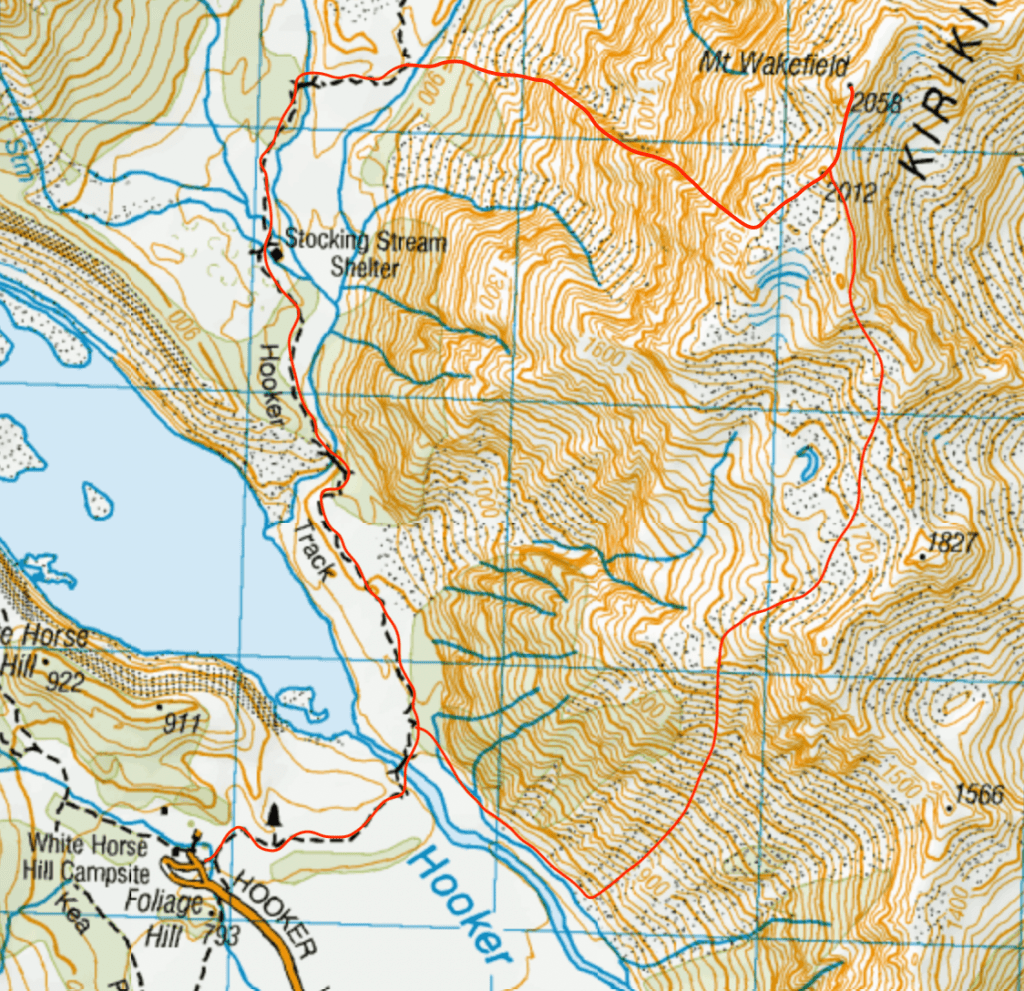
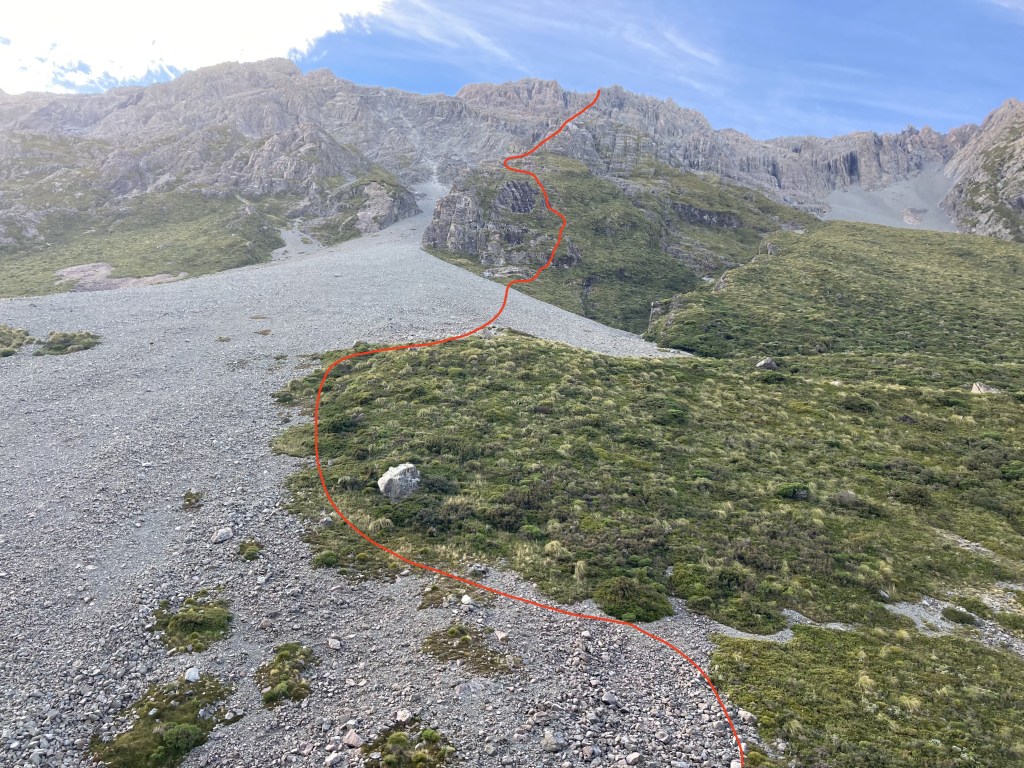
Easy walk along the marked Hooker Valley track. Cross all 3 suspension bridges. Just nearing the end of the track, turn off the path right towards the scree field. There are two large scree fields, it is the one closest to the Hooker lake. Fatmap has a really handy route overlay.

From here scramble up to looker’s right of the scree field. The direct start (18/19) is on the left sticking to the arete. We started further right. Initially a bit vegetated (I was in head high bush briefly), but the route comes into its own the higher up you go. Soon you’re scrambling over decent rock with stunning views of Aoraki the whole way up. Route finding was pretty straight forward; generally we stuck pretty close to the arete.

Guideless route; direct start (18/19) follows the arete just left of our line
Our route closer up

The route pops you out at around 1960m on to a very Mars-esque plateau. Walk left and scramble up to Mt Wakefield. Soak in the 360 panorama before taking care going down -there was more loose rock on this section than on the actual route.

Ridge South of Mt Wakefield

We initially thought we’d walk south along the ridge until we met the Tasman Valley Road, and had dropped a car off there in the morning, but the ridge looked quite involved (see photo on left) and it was already mid afternoon so we dropped down into the scree field west of 1566m. Scree quality was average but this saved us a good few hours. At the bottom head right and within a km you’ll hit the Hooker Valley Track again.

Type 1 fun all the way. Would climb again, next time via the direct start or via the other Wakefield gullies!

Lake Hope, Remarkables backcountry

A really fun zone just out the back of the Remarkables in Queenstown. Wasn’t really on my radar, but in Sept 2021 Alex Bewick and I had a week off work and wanted to get some skiing done. We had been planning on going up high somewhere but the forecast looked pretty terrible everywhere apart from Queenstown so we looked a bit closer to home. Lake Hope offers a large safe easy campsite with a ton of easy to moderate terrain of every aspect in the immediate vicinity offering 200-300m faces and couloirs. Also gives easy access to the biggest peaks in the range, Mt Tuwhakaroria and Ben Nevis

Taken from the top of 1986 looking north towards Lake Hope showing the south faces just to the north of the lake – all with excellent skiing!

Approach

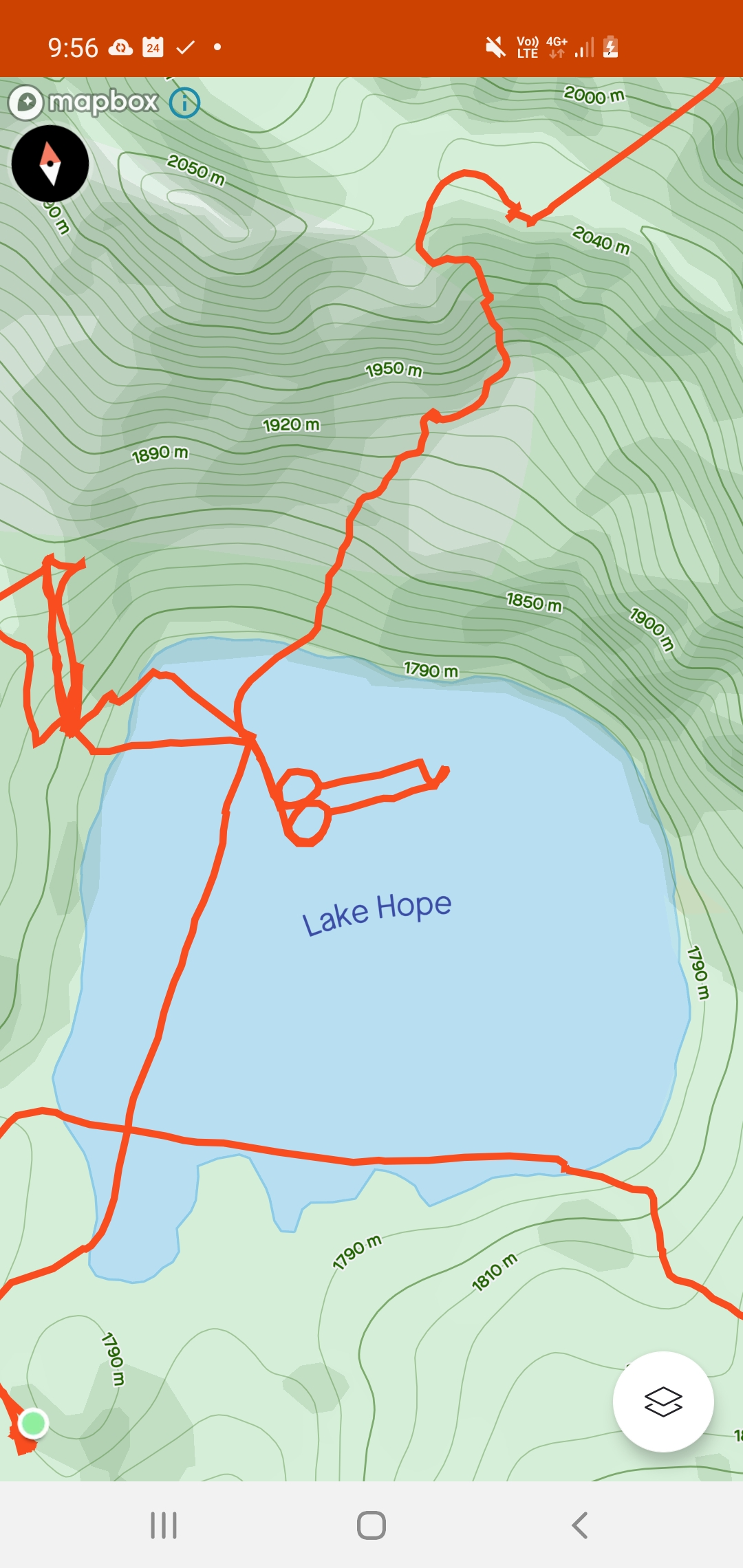
We went for fly in hike out and split a heli in from Frankton airport. For this kind of trip this makes it a lot more comfortable as you dont have to skimp on gas, food, beers and can make your campsite extra comfy. We split the heli 2 ways for $170 bucks each, would be even cheaeper with more people. If you skin in, start up Curvey chair and up to Wye Saddle. On a subsequently trip I’ve skinned to the base of Tuwhakaroria from Remarks (GPX attached). Follow the Wye Creek route down to the lakes then stick left aiing for the col between point 2115 and 2122. Drop down towards Doolans Left Branch then head up aiming at the col between 2130 and 1964. You drop down the other side of this col into the valley just one over from Lake Hope (my GPX track goes from here to Tuwhakaroria). Aim up towards point 2087 and cruise down to Lake Hope. This is 11km and 1000m of vert, and would be pretty savage with a weeks camping supplies – I reckon the flight is a no brainer! The other options would be to stay in the Wye Creek valley and stay high and sidle the whole way along to Lake Hope. Ive never done this route and think it looks pretty tough the further along you get.

We were expecting some NW winds so found a sheltered spot to the south of Lake Hope behind a big boulder, pretty much where the two tiny lakes on the map are, and dug the tent in. By staying south of the lake your also comfortably out of avalanche paths for the surrounding peaks.

Super fun line from 2080 heading South West down to Lake Hope. We also skiied a couple of the south facing couloirs in the shade above our tracks which were holding some good cold powder

Skiing

So many options! Is quite similar to the area around Lake Alta, but less steep, with excellent skiing on all sides. We had a good freeze overnight and were skiing in corn and so chased the sun all day. We started with the east and north facing slopes from 2090, and once that was getting too warm worked clockwise around the slopes surrounding the lake. There were some excellent south facing couloirs down from 2071 and 2087 that were still holding good powder. Then to finish of we headed back across lake hope heading south east and up towards the col south west of 2096. We traversed along the ridge heading towards point 2071 to access the top of a west facing couloir that dropped all the way down to the Wye Creek South Branch underneath our campsite. It was afternoon by this point and the west facing slopes and nicely softened up for a 500m corn descent down to the river. It was shady and cold down in the valley and the snow was starting to lock up so we cruised back up south branch back to the campsite to get dinner on the go and celbrate with some beers.

Alex in one of the couloirs from 2080 down to Lake Hope

The next day with skiied N face Tuwhakaroria which Ive written up seperately. It gave us a view of the south faces in the next valley, esp of 1986, which looked super sick – ones for the next trip! Things were getting pretty dangerously soft on the north faces by the time were coming back up towards camp, but we were able to find a line up to the ridge between 2087 and 2080 which was entirely on rock and kept us safe from the afternoon loose wet.

Sadly the weather window was closing at this point and we had to hike out the next day. But theres easily enough skiing to keep a mixed ability group occupied for a week, especially if you venture into the Nevis Burn or Stewarts Creek. Will definitely be back!

Checking out some epic stars from the campsite

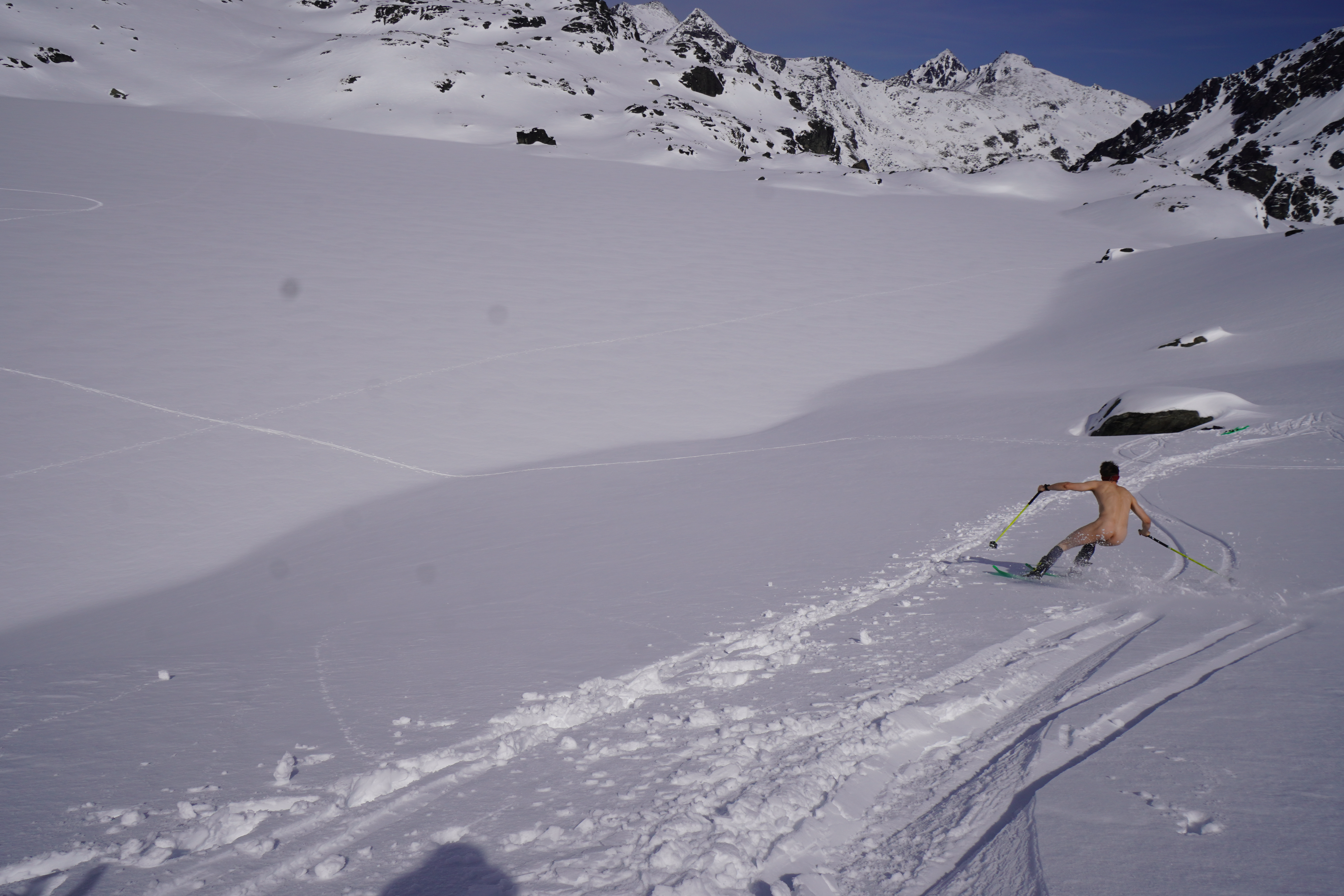
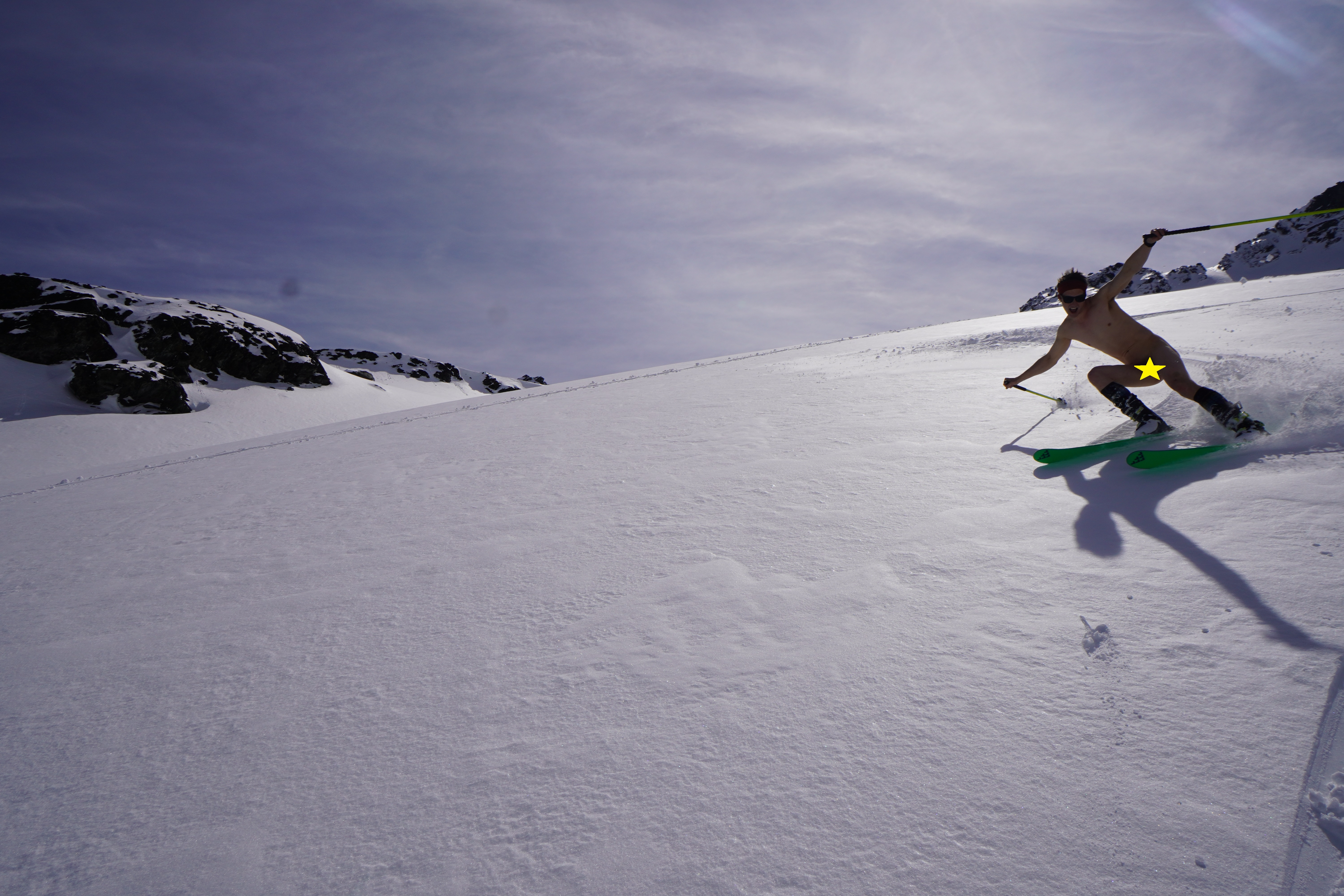
On hike out day it was bluebird and scorching (before the afternoon storm came in), and having recently re watched game of GNAR we saw a perfect oppurtunity to fulfil a life goal. We skiined up the east facing low angle slopes above lake hope and smashed out a few butt naked laps in some creamy corn. Cant recommend it enough! The stoke was at an all time high at this point (thankfully nobody took a nut busting bail) and put us in a good mental state for the hike out

Slash on one of the south facing couloirs

The Hike Out

From the lake we skinned west up to the col halfway between 2090 and 2103, which was a bit of a grunt with heavy packs. From here your above Wye creek and need to descend down to the valley floor to hit the well marked DOC track that takes you down to the carpark. It seems to make sense from here to try and traverse skiiers left as far as you can to save yourself some distance. We ended up regretting this approach because we got bluffed out at the west end of the valley. Thankfully we did find a way down through a gully but it was pretty heinous, with steep muddy slippy tussock and we both stacked it repeatedly and the gear took a bit of a thrashing. If I was doing it again I would head right from the high point and keep trending right. From where we turned left theres an easy scree slope going right and down to the valley floor. While it adds a few kms too the walk out on the DOC track Im sure it would have been way faster than the sketchy traverse and down climb we ended up doing.

Campsite beers

South Face Classic, Single Cone

We took Maia on this climb as a warm up for Aspiring SW ridge. An absolute winter delight. 

Bit of difficulty route finding at the top lead to a bit of time in stasis for me and Maia. The cold was character building! After the trip, Maia invested in some new gloves – and perhaps new friends…

Touch Down is a section on the S face of Single cone that consistently sees good ice year on year. It’s a great area for those learning/honing their ice climbing skills as there is a double bolt anchor at the top allowing you to top rope/rappel easily. If you’ve climbed here and feel confident, then the S face classic route is a natural progression. The route is 300m long. In reality, the hardest ice climbing is at the beginning and the rest is largely snow. The crux of the climb was definitely the routefinding.

To give you an idea of the route (in reverse), here is Joe skiing it. Note it is much later in the season with an exceptional amount of snow.


  • Difficulty: WI3
  • Equipment: 2x semi technical tools. Ice screws – enough for a full 60m pitch (depends on your tolerance of running it out; we brought 10). 1x picket each. We climbed on 2x half ropes as a team of 3 but as a 2 a single 60 would be fine.
  • Approach time: 2h from Lake Alta, 3h from Remarkables ski base
  • Climb time: 8h (we had some route finding difficulty, could be done in 6-7)
  • Season: mid-late winter allowing time for the ice to be established
  • Party: Joe, Maria, Maia 06/08/21

Approach

We chose to camp the night before to get an early start the next day. From the base building at Remarks, we walked up towards Lake Alta and chose a spot to sleep under the stars. Joe had recently finished exams so to celebrate we had lugged a bottle of bubbly up (courtesy of the Collinson parents!). After the fizz had settled, so did we.

Woke up at 7am – leisurely! Access is via the back of single cone. From Lake Alta walk up and over Wye Saddle then towards the E face of Single cone before heading down an obvious gully. As you go over, you’ll see Wye Creek for miles and the Doolans to the left. 

Walk another 150m across to get to the first of the routes on the South Face. A further 100m or so is where Touch Down, and the start of the route is.

Yellow marks our belay spots; blue marks where we initially tried to go up
Closer up shot of the route
The Climb

We started climbing at 10.30am.
P1: WI3, 60m. Straight up touch down, once over the edge the DBA is on the RHS 
P2: 60m. Up the snow gully trending left; we made an anchor just before the snow field 
P3: 50m. Trend left across the snow field until it narrows up a snow gully
P4: 50m. Head up through the rocks, squeezing through onto another snow ramp. Go up and left onto an obvious ledge.
P5: 50m. We wanted to head straight up (blue line below), but there was just a thin layer of snow on bare rock (yeesh) so we came back down and traversed 50m out to the right before heading up another snow gully towards the ridge
P6: 30m. Up the rock step to the ridge

We reached the ridge just after 6pm. Too tired we forgot to take a group summit pic. Boosted down towards Lake Alta, picked up our camping gear then retraced our steps down to the carpark at remarks. Down in 1h or so. Time for curry.

Such a fun winter trip. Would do it again!

South Face Classic, South Face Single Cone

untitled image
The South Face Classic, Single Cone, Remarkables. DBA in yellow.

Hectic line which is up there in terms of New Zealand steep skiing, and only half an hour from a chair lift. Best known as a winter mixed climbing route, the south face is very steep and has continuous exposure meaning you can’t afford any mistakes on this line. Id been wanting to ski the South Face for at the last few years but never thought the conditions were really right. In late September 2021 a couple of good storms came through, and I headed out on a couple of trips into the Remarks backcountry to ski Lake Hope and Tuwhakaroria, and all the S faces were absolutely coated and stability was good. Seemed as good a time as ever to take a look, and the conditions on the face did not disappoint. The conditions were so good that after skiing the S face classic I climbed back up and skied a second line, Cookies and Cream, straight after. Dave MacLeod who is my local oracle of all mountain things says the South Face Classic has been skiied before but reckons that Cookes and Cream was a first descent….get in!

The first turn. Not a place to fall

  • Length – 300m
  • Steepness – Very steep at the top. 55-60 degrees for 50m. Then roughly 50 deg for remainder
  • Exposure – Extreme and unrelenting. Your on narrow traversing terraces above large cliffs continuously. A fall or small avalanche almost certainly fatal
  • Aspect – South facing
  • Extras – I made 1x 15m rap to enter the face. Good large block to sling. 15m rap to connect top and bottom snow fields – I left a snow stake. DBA at bottom for final rap, 60m to ground. If you traverse skiiers left from this DBA there is another one at 30m so a single 60m rope is ok. I was able to ski the bottom section from this lower DBA but this is unusual (normally WI3 ice route)
  • Difficulty – 5.3 E4
  • Equipment – 60m rad line. Crampons, 2x tools. Snow stake, rap tat, nuts for anchor if needed.

Looking down from the top of the line. I rapped to where Hamish (in yellow) to start the ski. You can see the tracks down – the entrance to the lower ramp is the red arrow ( not where my tracks go, I went too far and had to turn back)

When skiing a climbing line like this its your responsibility to make sure your not going to knock any climmbers off the route. Its a climbing line first and nobody is going to expect a skiier to come down it – even small sluffs can knock the leader off the face and cause a serious accident. This line and Cookies and Cream are relatively safe from that perspective as the line traverses the whole way across the face so your generally not above the climbing line – but still take extra care and wait for the climbers if needed.

Approach

Jump on Curvey chair lift (or if your feeling keen skin up from the base) and traverse across to Wye saddle. Skin up the East face of Single Cone as if you were heading up to the starndard couloir route. You want to drop in right at the top of the snow slope which is just to the East of the notch. Theres a nice big boulder you can put a sling round to rap.

Descent
Rapping down from the top to bottom snow ramps. 60m total, I left 2x pickets (which I luckily got back from Hamish and Beate!)

The first rap gets you past some rocks at the very top of the line and establishes you on the face. Also gives a chance for some final assessment of the stability and snow conditions before pulling the rope. If you have any doubts at all just ascend the rope and bail. This starting spot is very steep and exposed, and was the one spot on the route for me with firmer snow. I transitioned to my skis while still on the rope and made some very cautious jumpturns and had to side step over a couple of rocks, before jumping over one final small rock into the main upper snowfield. Here the snow was much better, confidence inspiring boottop poweder, and the angle eased off to around 50 deg.

Steep and narrow just after the middle rap

Cut diagonally right across the face towards a big boulder at the far skiiers right of the face. From here cut left and find the entrace to the lower snow ramp. I sound it easily as Id climbed the route just a few weeks earlier, but this could be a tricky spot to find otherwise. Your looking for a narrow rock and ice gully that trends sharply to lookers left and is around 40m long, so 1 rap is only going to get you part way. I left 2x snow stakes so I could rap this section, but in the interests of developing steep skiing in the Remakables I’m planning on putting in a few DBAs next year – watch this space.

Immediately at the bottom of the gully there is another short section of very steep narrow skiing, pushing 55-60 degrees. Few more jump turns here and your into the lower left trending snow ramp which takes you all the way to the DBAs at the top of touchdown ice. This was the best skiing, the angle eases off to 45-50 deg and the snow was superb, light boottop powder. Just before the DBA the angle increases a little. Take extra care here – at some point it transitions to ice, you dont want to take one turn to many and find yourself falling off touchdown.

Getting into some excellent skiing on the lower ramp

I bumped into Hamish and Beate at this point who had just started climbing the route – was becoming a bit of a running joke that we had keep running into each other in slightly outlandish spots throughout the season! Hamish was brining Beate up to the top of touchdown ice just as I got to the final gully above the DBA. I waited at the top of the section for them to get past me, and after a quick catch up and conditions chat I headed on down (as a bonus also meant I could ask them to retrieve my snow stakes, win!).

The DBA can be completely buried late season, and I had to go digging to find it. If you dont know exactly where to look this is impossible. See photos!

The location of the gully to link the two snow fields – difficult to spot from above

I was assuming I was going to have to rap a full 60m down to the snow but it was so filled in I actually only made a 15m or so rap to skiiers left onto a snow ramp and could then ski down to the base. In more normal conditions if you only have 1 rope, either expect to make a V thread or rap down and across to skiiers left where theres another DBA at 30m (again hard to find late season)

To get back to civilization , head east. Either climb the access gully to get back to the East face of single cone, or enjoy a cruisy ski south east to the lake just below the 1700m contour and then skin back up the Wye Creek route.

Location of the DBA at the top of touchdown. 60m to the ground. I was able to just rap 10m out to the right and then ski the rest. If its not this fat then there either make a V thread or there is another DBA to the right of this pic

Aoraki/Mt cook, The mini Caroline/baby Caroline

Caroline face Aoraki mini ski line
Don’t be put off by the fact this line is on the Caroline – it has none of the objective danger, super easy route finding and a quick easy climb to get to the start of the line from Plateau. Probably the best bang for buck ski line I’ve skied in NZ, deserves to be more popular! We spotted this line while skinning back up to Cinerama col after skiing the Caroline and thought it looked epic, so booted back up the next day with Will Rowntree, George Millets and Clem Cadario.

Length โ€“ 800m
Steepness โ€“ 45 deg
Exposure โ€“ Above some cliffs initially but once your on the main body of the line its a straight line down to the Caroline glacier. You are exposed to some overhead hazard on the approach under the East face but you can skin quickly through this section
Aspect โ€“ SE
Extras โ€“ nil
Difficulty โ€“ย  Climb 2. Ski 5.1 E2
Equipment โ€“ Glacier equipment.

Climb

Aoraki Caroline face baby ski line climb route
The icefall on the right of the photo is very active so move fast! We skinned all the way to the base of the ridge, then bootpacked up from there

From Plateau, it’s really quick and easy to get to the start of the line. Ski across the plateau towards the base of the East face and skin up and along the shelf under the East face to the East ridge. The ice falls at the base of Zubriggens and the East face are active so don’t hang around. From here boot up the snow ramp, staying on the spine until you reach the ridge. There is a large obvious rock band that splits the E ridge in two, just to the right of our line above. This puts you at our start point marked with the red arrow on the pic below. Harder and easier variations are possible. For a harder variation, you could climb up to the right of the big cliff, as if you were headed up to ski the full Caroline. This would put you on top of the yellow line – a steep and technical looking couloir which the joins up to the normal line. As of writing hasn’t yet been skied! An easier option is to climb up even further left of our line putting you right at the edge of the E ridge. This would miss the first section of the descent which involves some skiing above exposure and puts you straight onto the fall line section.

Caroline face baby ski line
Red arrow is where we dropped in. Other options would be staying further left on the way up with a mellower line starting to the right of the big rock right of the red arrow, or on the climb staying right of the big cliff band putting you at the top of the yellow line, which is a steep technical couloir

Take a look on the flight in at which route will go best. When we were there the line in yellow was looking a bit thin with some patches of ice and rock to negotiate, and after the previous days antics on the Caroline / post celebration goon head we were wanting something a bit more chilled. We left the hut at 0600 and were dropping in at 08:30.

Caroline face Aoraki Mount Cook climb to east ridge
The spine up to the ridge.

Ski
Ski Caroline face Aoraki mount cook
Will sending it down the top section, cutting left from the red arrow. It look narrow in the top pic but you can see here its actually super wide

Really incredible skiing. We had perfect shin deep cold powder the whole 800m down the line, and we opened it up cutting big fast turns getting face shots from top to bottom! From our starting point there was an initial super fun spine which was holding great snow. You are over some exposure on this top section. From there, we cut left between two rock bands to get onto the fall line section down that takes you down to the glacier. From here its consistent 40-45 degree skiing, with a selection of small spines and plenty of good safe spots to wait for each other. The angle steepens up a little for the final pitch down to the bottom and the shrund send.

Ski Caroline face Aoraki mount cook baby ski line
Clem with the Tasman in the background

Routefinding is easy and by staying high on the face you avoid all the ice cliffs and objective serac hazard. The spot you get to on the Caroline glacier is above the large crevasses so the skin back up to Cinerama col is cruisy and straightforward

It took us around 45 min to ski the line and another half hour skin back up to Cinerama col, and we were back at the hut by 11:30. Clem and George then nipped up Mt Dixon and speed flew back down to land at Plateau in time for an afternoon heli pickup – pretty heroic stuff.

Tititea/Mt Aspiring, SW Ridge

Stoked to have climbed this iconic mountain! It was a strong introduction to the mountain for me, having never climbed it before, but when Joe offers to lead all the ice climbingโ€ฆ Why not? One of my more memorable trips in the NZ alps. It really is a classic climb.


  • Difficulty: Grade 3+
  • Equipment: 2x semi technical tools, screws (depends on your tolerance for running it out! we brought 8), 1 x picket each. The amount of rock gear needed depends on the time of year – we didnt need any but later in the season a small set of nuts and set of cams would be needed. Rap tat. We climbed on 2x half ropes as a team of 3 but as a 2 a single 60 would be fine.
  • Approach time: with only a short weather window (excuses, excuses) we flew into Bevan Col and set up camp at the base of the SW ridge, at around 2100m – see attached gpx file.
  • Climb time: 6.5h to summit, 11h descent to French Ridge hut
  • Season: Summited on 1 Dec and the ice was still fat. Earlier in the year expect ice, once it gets much later though the crux turns into a rock step
  • Party: Joe, Maria, Maia 30/11/21 – 2/12/21

Approach

An easy drive from Wanaka up the Mt Aspiring road, which is gravel past the TC turn off. Has a couple of fords but unless there’s been a ton of recent rain they are no problem crossing in most veichles (Juicy vans regularly make it to the end). If you’re flying in, Aspiring helicopters is just past the TC turn off. They have a slightly unusual pricing structure – as of 2021 its $1170 for 2 people (585 each) or $1560 for 3 (so 520 each), so getting more people to share the flight doesn’t actually make it much cheaper. After checking in with them you drive down to Raspberry Creek Car park and the Heli lands in the field just next to it so you don’t get stuck without your car on the walk out. The only landing spot possible is Bevan Col. We were limited for time due to driving up after a night shift so went for fly in hike out, but the hike in really isn’t too bad, just time consuming. Generally takes around 3 hours ish to get to the French ridge turn off and 1.5-2 hours up to French ridge hut (path is steeeeep) with very well marked track the whole way. You can shave the first 6km or so off that if you have a decent 4WD and ask permission of the land owners – they often will let you drive as far as Cascade hut (call to ask permission! 03 443 7155).

The two most common approaches are to either stay at French Ridge Hut, or to bivvy at the base of the route on the Bonar. If you’re flying in, I think its a no brainer to bivvy but if you hike in, it may make more sense to get a good nights sleep at French ridge and go from there. Allow 2-3 hours from French Ridge hut to the start of the route. It doesn’t really make much sense to go from Colin Todd Hut, its 1-2 hours in the wrong direction.

It was around 3.30pm when we waved goodbye to the heli at Bevan col. We cruised across the Bonar to the base of the SW ridge. Navigation is easy but take care for crevasses in early season. The Bonar can become totally disorientating in bad weather so if there’s any chance of dodgy weather its worth putting in a few GPS points to get you from the base of the SW back to the Quaterdeck on the descent. The other option from the Bonar to French Ridge is via the breakaway – while we were there the ice cliffs threatening this route were extremely active and this route would have been very dangerous. If the shrund at the top of the quarterdeck is cut off then your only option is to go via Bevan Col.

We found a nice sheltered spot to set up camp at 2220m just under the foot of the SW ridge. It was reasonably flat – once we used our shovels to make it so – and there was even running water off the rocks (this might not be the case earlier in the year). It took us around 4h to get here from Bevan Col. Sacrificed the sunset views for an early night – bed by 9pm.

Home for the night
Climb
Our campsite was where the line starts

Woke up at 2am, packed up the camp and hid everything to keep away from cheeky keas! We were away by 3.30am. Our starting elevation was 2220m. The snow was in good condition for the climb – a solid overnight freeze made for an efficient climb up the 45 deg slopes. It looks quite intimidating from afar but once you’re on the ridge its actually pretty straightforward. Some groups would solo this part especially if the snow is soft and you’re making footprints. With the freeze a slip would have meant a long slide down to the Bonnar so we used running belay with microtraxions on pickets allowing 200m pitches on our 70m ropes. After 2 pitches and 2 hours we were at the base of the crux couloir at around 2800m.

From the colouir was the crux – we made 2 pitches. The hardest climbing is as the start, with 20-30m or so of WI3, with short/less than body length near vertical bulges on a generally 80 degree ish slope. Pretty similar in difficulty to Altered States at the Remarkables. After this the angle eases off to low angle ice slopes, and after another 10m we found 2 fresh shiny pitons that had just been put in the day before in the rockband on the left which made an excellent belay. For us the ice was good enough for screw anchors, otherwise you would need a selection of small to very small rock gear. The second pitch gets you to the summit snow cap, and was more low angle ice sticking just to the right of the rockband which takes small gear.

First section of the crux. 30m or so of WI3. Short less than body height vertical bulges but mostly 80 degrees-ish. Pretty similar to Altered States at the Remarkables.

This crux section is highly variable depending on the season – we got the ice in fat condition and had good screws the whole way.

The second pitch of the crux. Low angled ice

When I skied the line with Sam a few years ago we were there in September and the ice was good but was steeper and harder with less snow built up. Later in the year there is bare rock and some mixed climbing is needed (never done it so can’t comment!). Depends what your preference is but personally I love ice so wouldrecommend getting there early in the year! Try and get some recent beta to work out what to expect before heading up.

From the top of the crux it was an easy walk up to the summit where we were rewarded with an incredible panorama of the southern alps.

Delicious summit shot
Descent from the summit to the top of the ramp. Mellow snow slopes

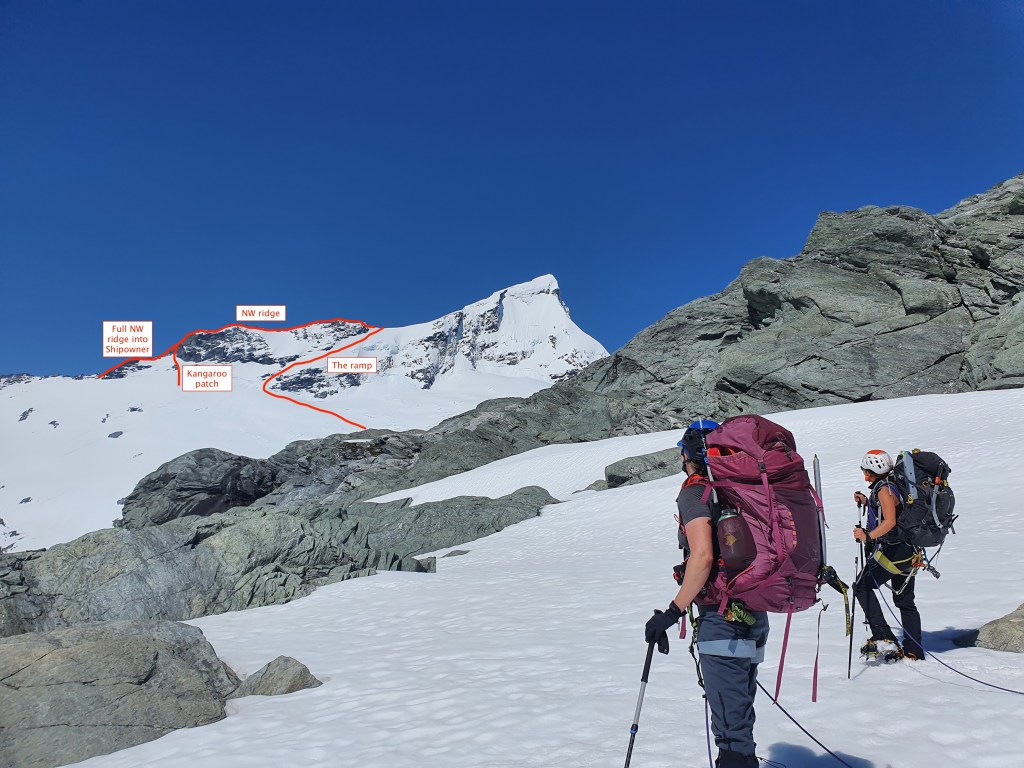
We went down the NW ridge via the ramp. It was cold enough that the snow wasn’t too soft so this was the quickest way down, as it also allows you to cut east at the base of the ramp back down towards the campsite and the Quaterdeck. The other option is to continue along the NW ridge down to the Shipowner ridge, where you can rap down to the kangaroo patch (near the start of the ramp) or continue on to French Ridge hut.

If you take the ramp as your descent route take care – it has been the site of several fatal accidents. It’s prone to wet loose slides and rockfall late in the day, and is exposed almost the whole way. The group on the route the day before us started descending the route but started getting bombarded by rockfall part way down and took shelter in a cave until it got dark and froze up. It was cooler and firmer for us but even so we had a couple of blocks shoot past us as well, and given we were in cloud at this point and couldn’t see them coming this was especially stressful. If its soft at the top of the ramp by the time you start your descent its only going to get worse and is probably best avoided….sticking to the NW ridge is probably overall safer than the ramp and we would probably go that way if doing the route again.

Route from the quarterdeck down to French Ridge hut (another few 100m past end of the line). The shrund at the top was very filled in but the one half way was rapidly opening, we descended the next day and it was a solid metre jump across. Those ice cliffs to the left of quarterdeck were pretty active as well so watch out

The walk along the Bonar glacier to Quaterdeck felt like a long slog. We went back towards the SW ridge to pick up the camping gear we’d stashed 12h prior. Here, we had a soup stop – never underestimate how much a salty beverage can boost energy levels. Feeling rejuvenated we headed towards Quarterdeck – the clouds were coming in thick and fast at this stage, making the vis terrible, but we just followed our GPS points from the previous day, and were lucky enough that there were footprints of a prior party heading in that direction! From the quarterdeck there is a large shrund right at the top – its generally easiest to pass on the far skiers left, and also means you avoid the ice cliffs threatening the other side. There are a couple more crevasses on the way down to French ridge hut – try and get a look on the way in to establish if this way will go before committing to it as its a long long way to walk back round to Bevan Col. If you fly in you get a great view of it, or take a peek from the Matukituki. By the time we were walking down French ridge, the snow was pretty soft and we were aware not to linger. We saw a huge cornice collapse from the ice cliffs between the Breakaway and Mt French – the ensuing wave of debris including car sized chunks of ice that came thundering down went on for a good 45 seconds.

When the iconic red French ridge hut came into view, I was beyond relieved – soon I could stop moving!! It was 8.30pm when we reached the hut. We chatted to other hut stayers in good

spirits, and when they saw Joe licking the inside of his dehy packaging, kindly offered up more food to us.

The next day it was a cruisey walk out the Matukituki. With the sun beating down certain members of the party stripped down to undies – giving the day walkers a show! We went for a dip in the river en route and were back to the car within 5.5h. And as all good trips should end finished with a feed at the Big Fig.

The different descent options. The ramp can be fastest and lets you cut back towards the SW ridge earlier but can be dangerous in the wrong conditions. NW ridge has less objective hazard. Once you get to the big steep buttress, there easiest down climbing is on the north side, and you can usually make a rap down to the Kangaroo patch. The full NW ridge route takes you along the shipowner ridge on the skyline back towards Colin Todd Hut

Mt Earnslaw, West to East Traverse

The weekend warrior’s grand traverse! One of the most fun 2 day trips I’ve had in the NZ alps – 4 pitches of WI2 ice up to West peak onto a spectacular knife edge snow ridge high above the Whakatipu, followed by exposed rock scrambling along the 1km long ridge to East peak. Big mountain terrain just a few hours from Queenstown with no heinous moraines to cross like in the bigger ranges. If you’re fast you can get it done in a weekend and be back in Queenstown for a beer on Sunday night. Highly recommended!


  • Grade: 3+
  • Equipment: 3 season mountain boots. 1x 60m rope. 2x ice axes each. 2x snow stakes, 6x ice screws, 1x set of cams up to yellow, small set of nuts, long slings, tat to rappel. NB. Later in the year, you probably wouldn’t need ice screws.
  • Approach time: 9h to esquilant bivvy (6h on the way out!)
  • Climb time: ~10h biv to biv
  • Season: conditions will be highly dependent on time of year. We went late December and it was perfect, good ice up to W peak and clear rock on the summit ridge
  • Team: Joe, Maria 28/12/2022

Approach
The boggy Rees valley

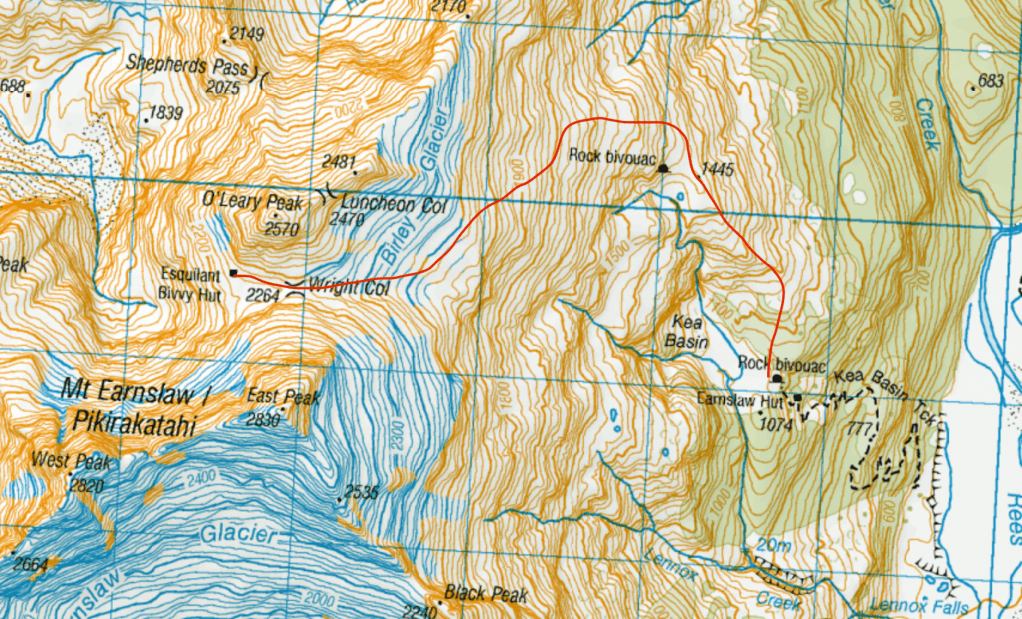
Drive from Queenstown to Glenorchy and head up the Rees valley track. Theres a car park just under cone hill but you can get a fair bit further that that (you will be glad on the way out!). As far as Fords Fall is easy (saw a Hiace make it there), but further than that requires a proper 4×4 plus snorkel. Access all the way to base of kea basin track is possible with a 4×4. Make sure you ask the land owners permission before driving up there! The Rees track is marked with orange poles all the way up on the true left of the river. After the first couple km we found it super, super boggy (wading through shin deep slop in bare feet, not a lot of fun). The valley is much drier and higher on the true right (near where the 4 wheel drive track is) and we came back this way and found it much easier ground. Be aware its a working station so don’t cross anywhere you’re not meant to! Cross at 663, there is an obvious orange marker at the top of a grassy bank marking Kea Basin track. Follow this up to the rock biv. From here on up, it’s really easy to lose the track and find yourself bashing up steep, horrible tussock which is time consuming and tiring – have attached our gpx file and photos to help keep you on track. From the 1st rock biv trend right onto the ridge which takes you to 1445 above a tarn. You should be approaching point 1445 along the ridge from directly south. Go round the 2nd rock biv staying NE of it then curve back round SW until you gain the Birley glacier and Wright col. Total of 2,339m vertical and 16.8km, took us almost 9 hours (but only 5-6 on the way down).

The hut is very cool – tiny and perched in a totally epic spot! Small though – has a top and bottom layer with mats provided, 3 people on each level. Little cooking area. No water tank – had to go hunting for water, ended up having to go all the way back to wright col and up to the slabs on the S face of E peak to fill up. Multiple flat areas in the scree that have been cleared out to pitch tents on

Climb

We set off at 4am. From the biv, traverse around under East peak to the bottom of the couloir at the base of West peak. This is a roughly 40 degree slope which as you can see from the photo has some serious exposure under it. Even a small avalanche would be bad news and when firm, a trip would result in you sliding down off the cliff so be careful. The exact route across depends on the state of the snow – the route we took is marked in red below.

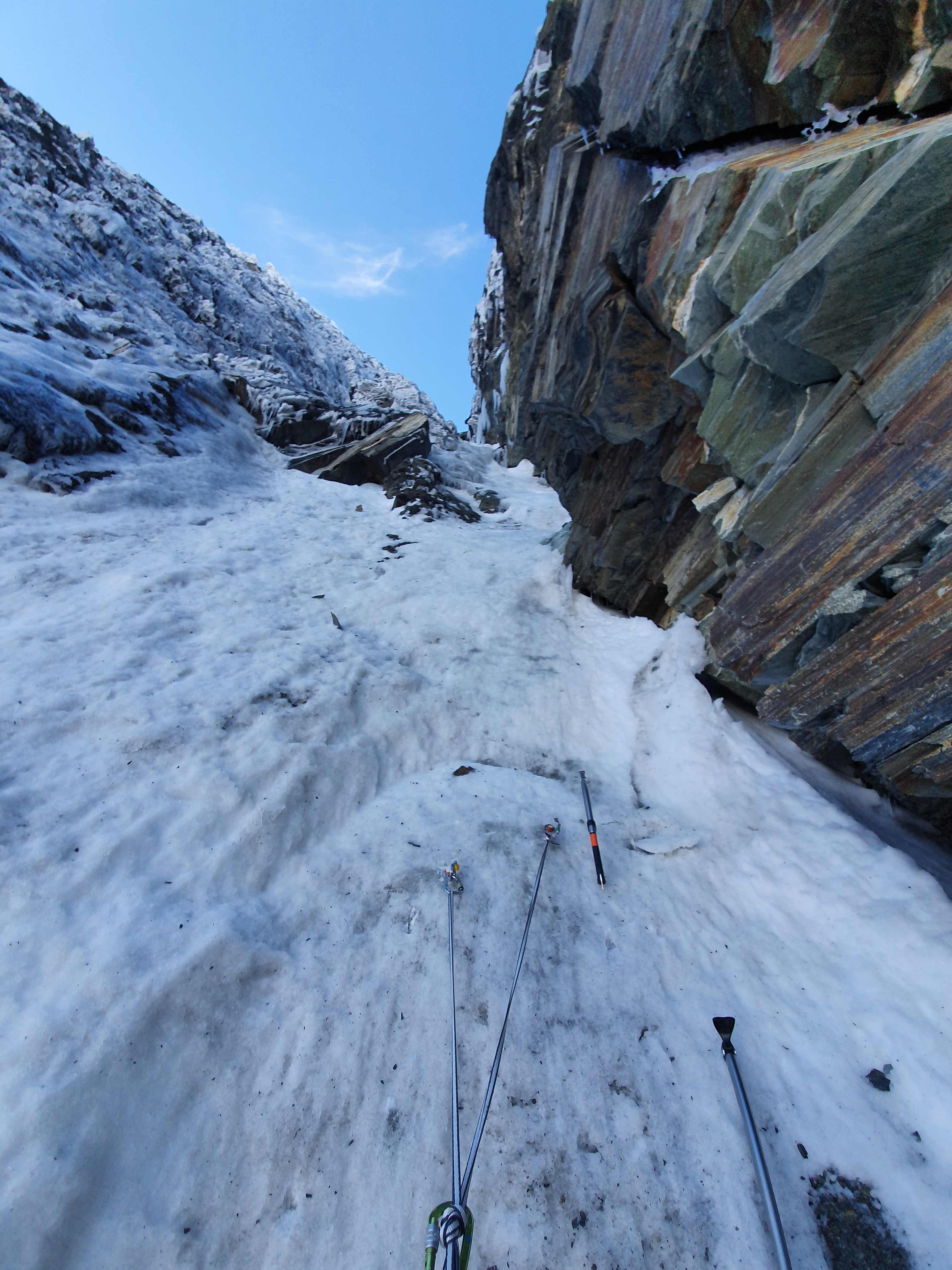
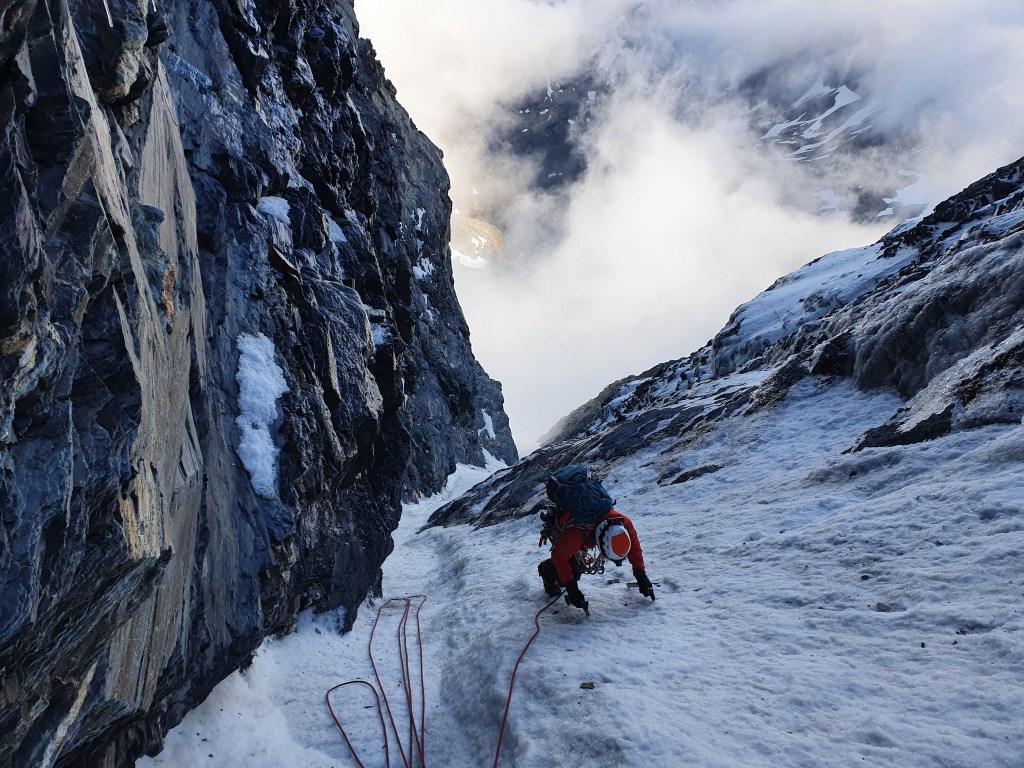
Once you get to the base of the couloir start heading straight up. 40 deg steepening and narrowing up to 45ish at the top. For the final 250m we had 4 pitches of good quality solid WI2 ice up to the top, protected with a combination of screws and rock pro on the couloir wall on the right.

We were surprised how good the ice was in there at this time of year, but the couloir is so deep it obviously never gets the sun. That being said, the walls and the top most definitely do get the sun and once it started getting warm the gully turns into a shooting gallery and was filled with old rockfall so aim to be out of the couloir by then.

Also bear in mind if you decide to bail and come back down this way, you’re going to have to wait until it gets cold again and freezes up before you descend. We left the hut at 4am and were at the top of the couloir by 9:15, which was perfect. From the top of the couloir turn left and scramble up the rocky ridge to West peak and soak up the epicness of the views.

Popping out the couloir onto the West peak

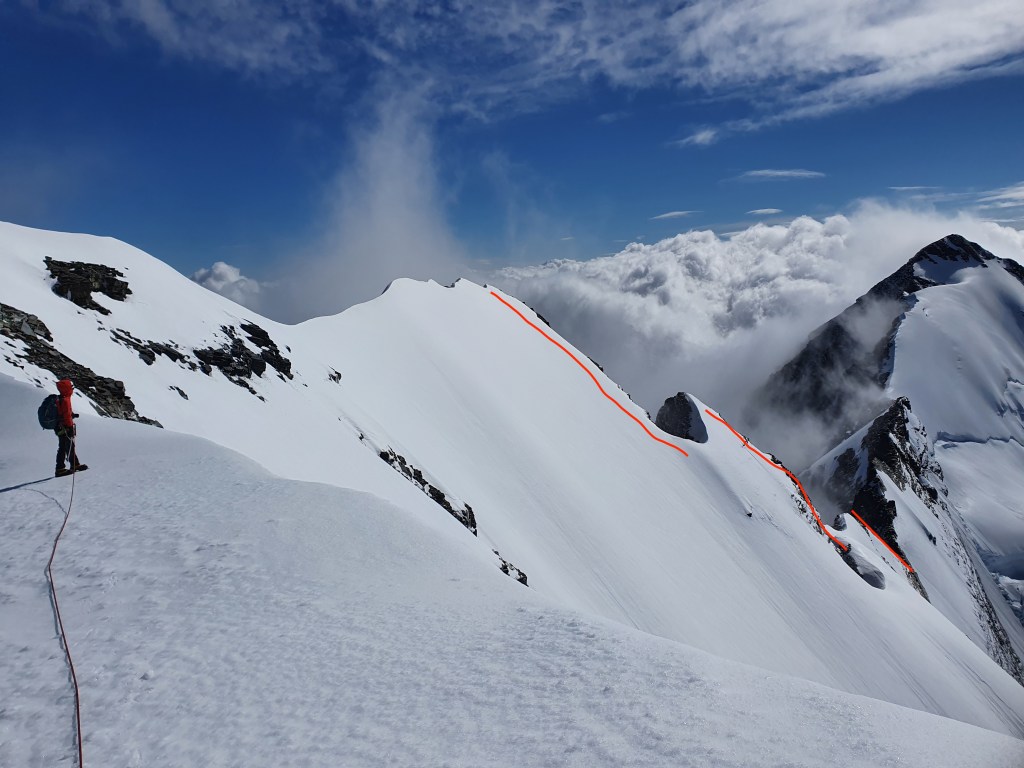
We wandered SW from here to point 2664 (partly because it looked cool but mainly because we got confused and thought that was the way to East peak… Which sounds pretty dumb but is not as obvious as you might think). Cruise along the snow ridge from West peak until you get to a col where you need to descend around 100m to the rocky part of the ridge. This is slightly E facing and so it catches the sun – was bulletproof first thing but had slightly softened so was a nice easy down climb for us but has some serious exposure so be careful – this spot is also very prone to avalanche. Some good bollards to rap if the conditions are more difficult.

Maria contemplating the ridge along towards East pk

Now onto rock for the next km. Generally sound rock (but some very loose, very big blocks) around 3 large gendarmes. Really fun section of the route – easy scrambling which we simulclimbed with a running belay, but needed a couple of raps to descend several sections, especially from the first 2 gendarmes. From the 3rd gendarme, it’s a cruise to the final snow slope up to East peak. Soak up the views from East peak before descending the south face.

Descent

The descent can be tricky from a route finding perspective if you haven’t gone up that way. It pays to take a good look at the face from the hut and take some pics before you set off to avoid getting bluffed out. There’s a big gully in the middle of the face that you come down with bluffs on both sides. From the summit, stick to the ridge to the east of the summit and follow this down heading NE for around 100m before turning to head north down the face. Keep some spare tat for if you go wrong and need to make an extra rap here.

We had a dirty soup/noodle stop at the biv before bracing ourselves for the walk out. By the time we got down to Kea basin, our boots were not our friends so we hiked the rest of the way out barefoot!

To do the traverse and the walk out to the car took us 17hours 30 min.

Our GPS track available below in GPX format to download!