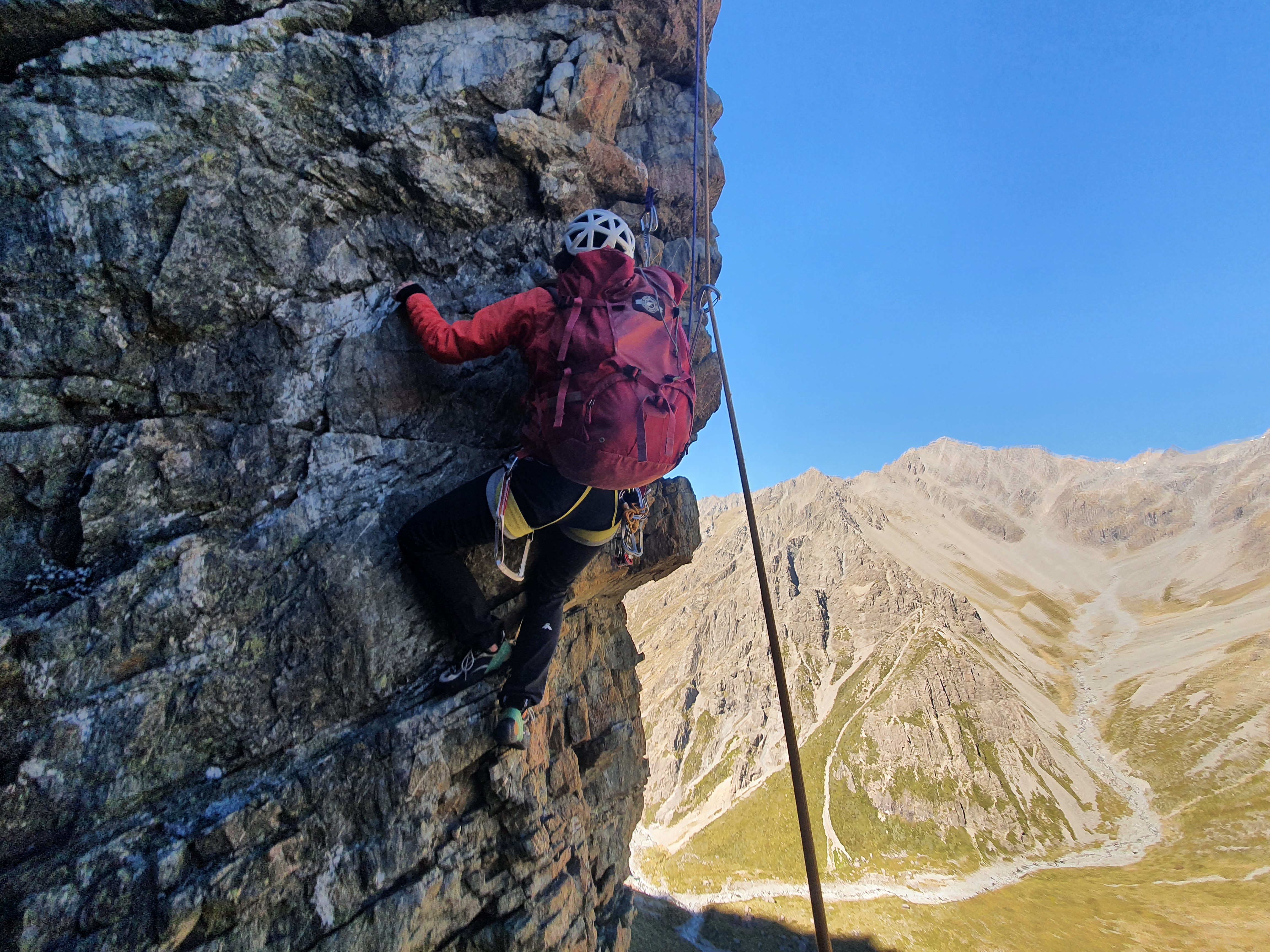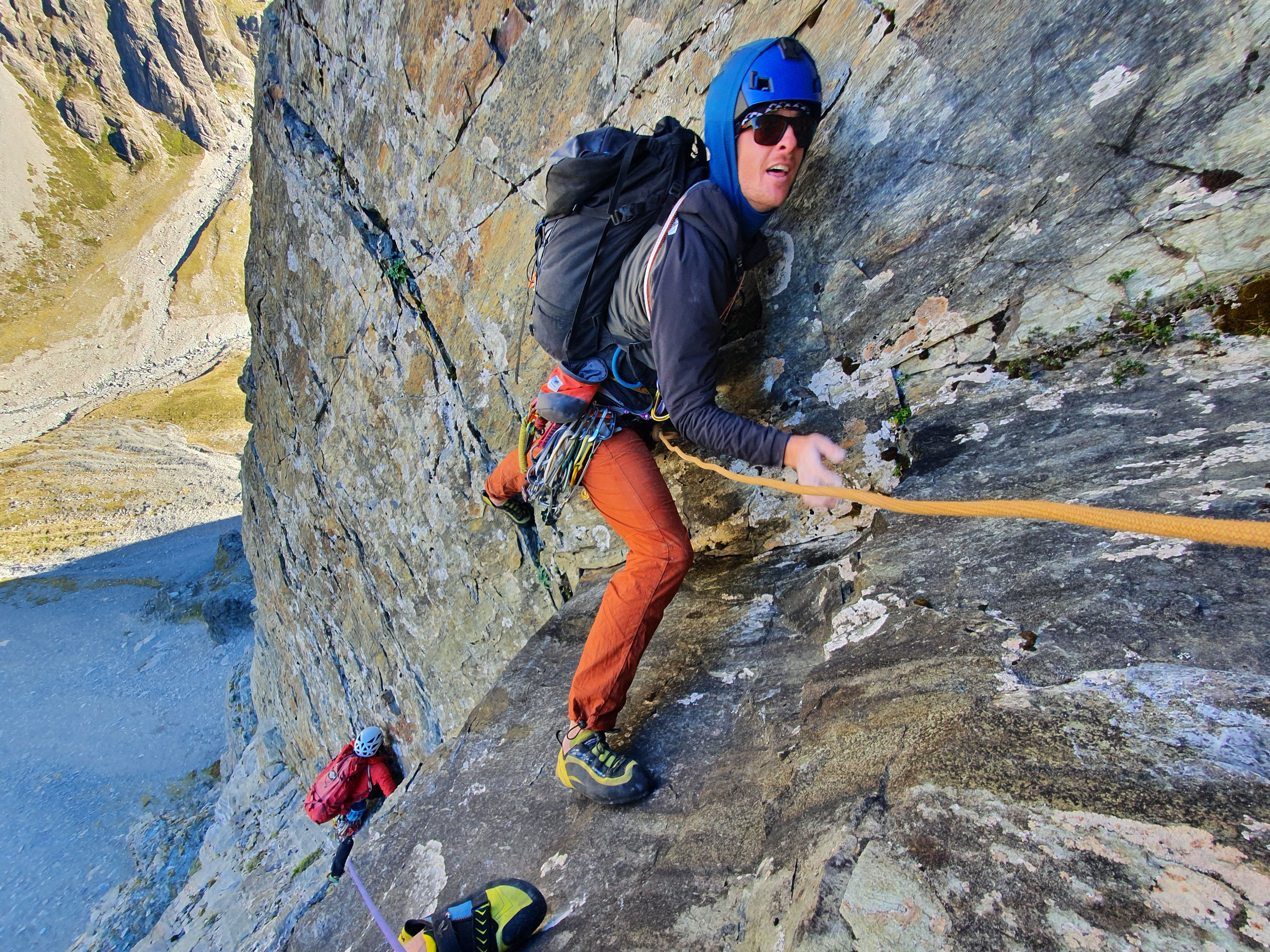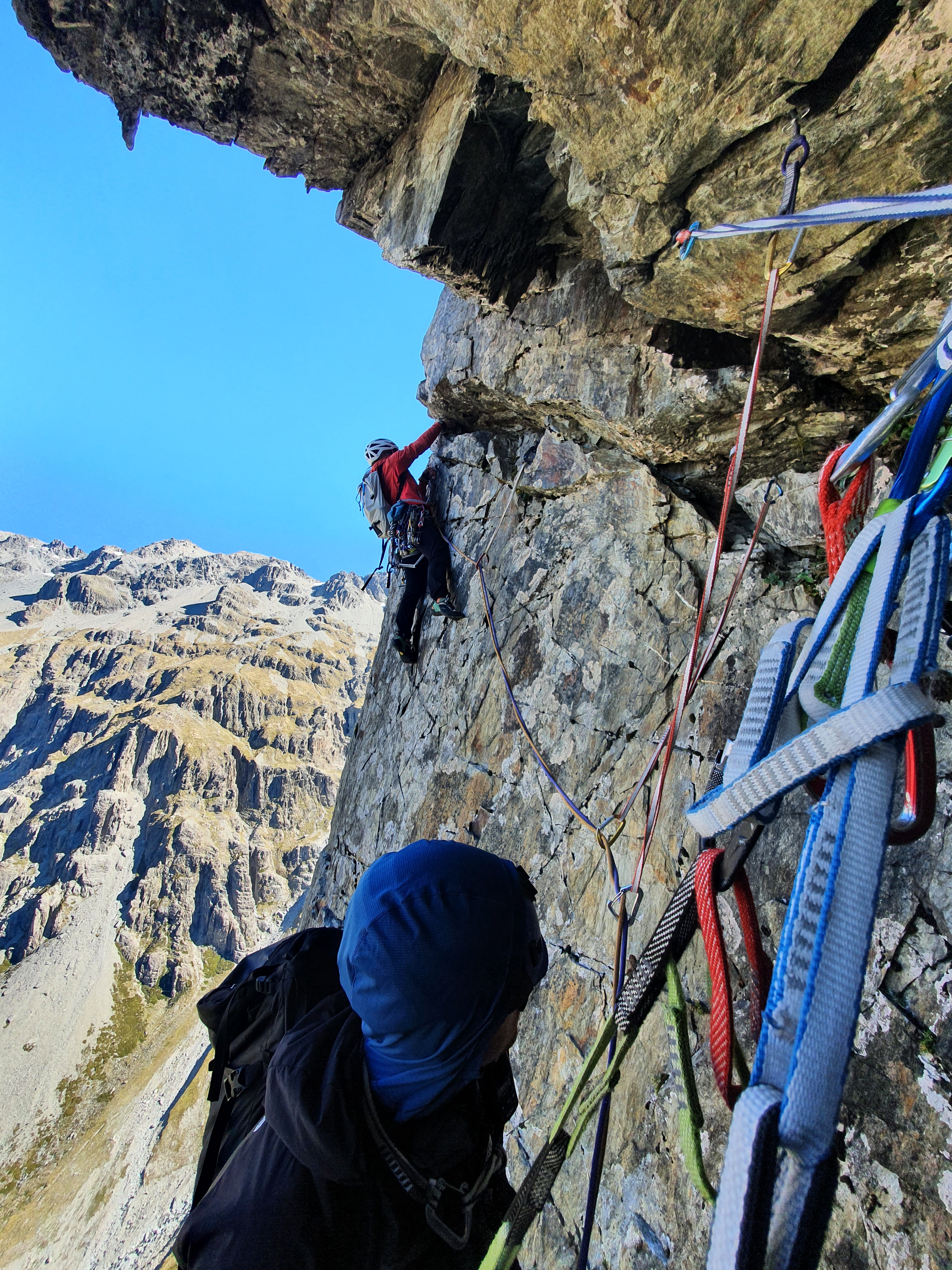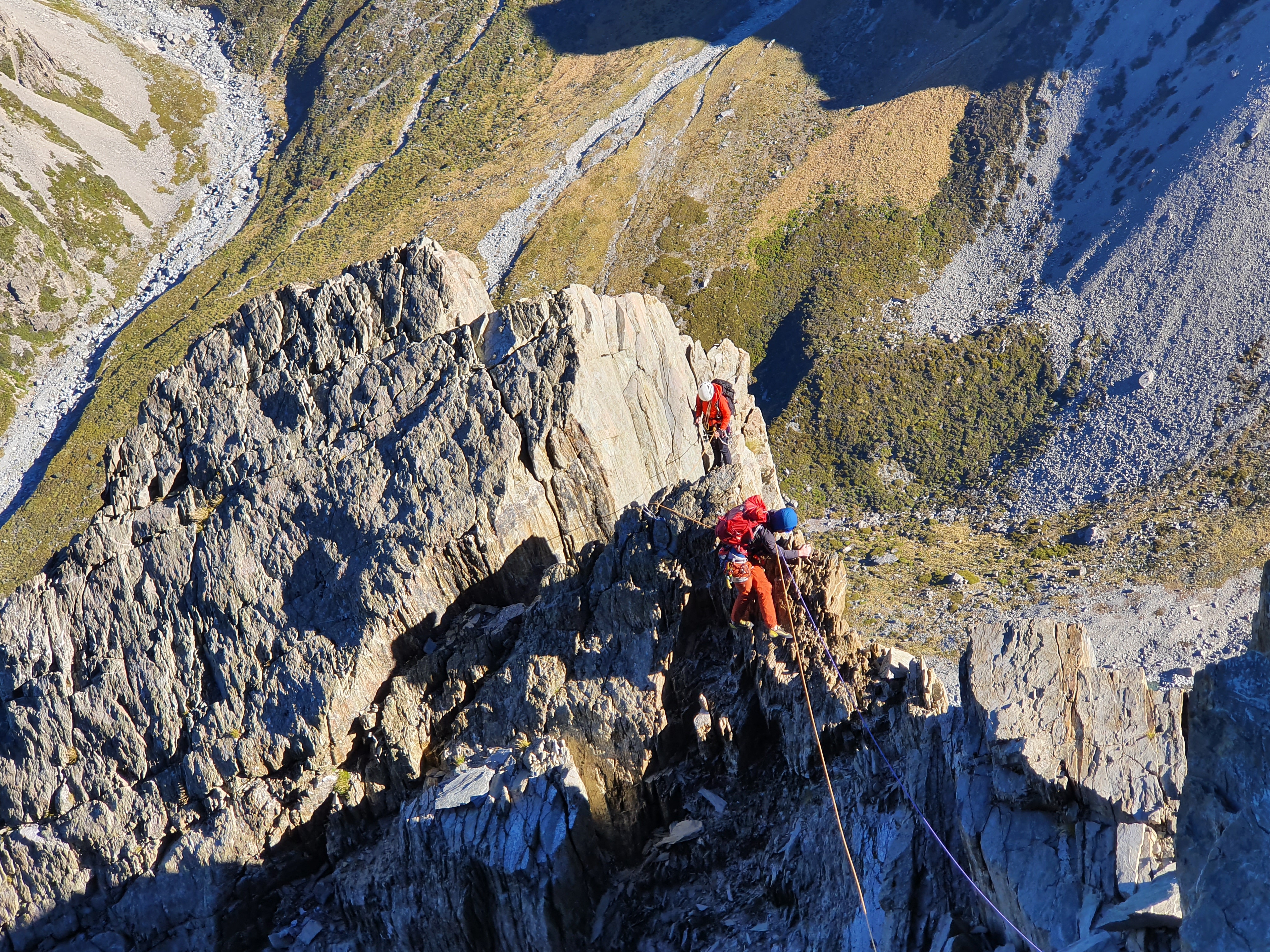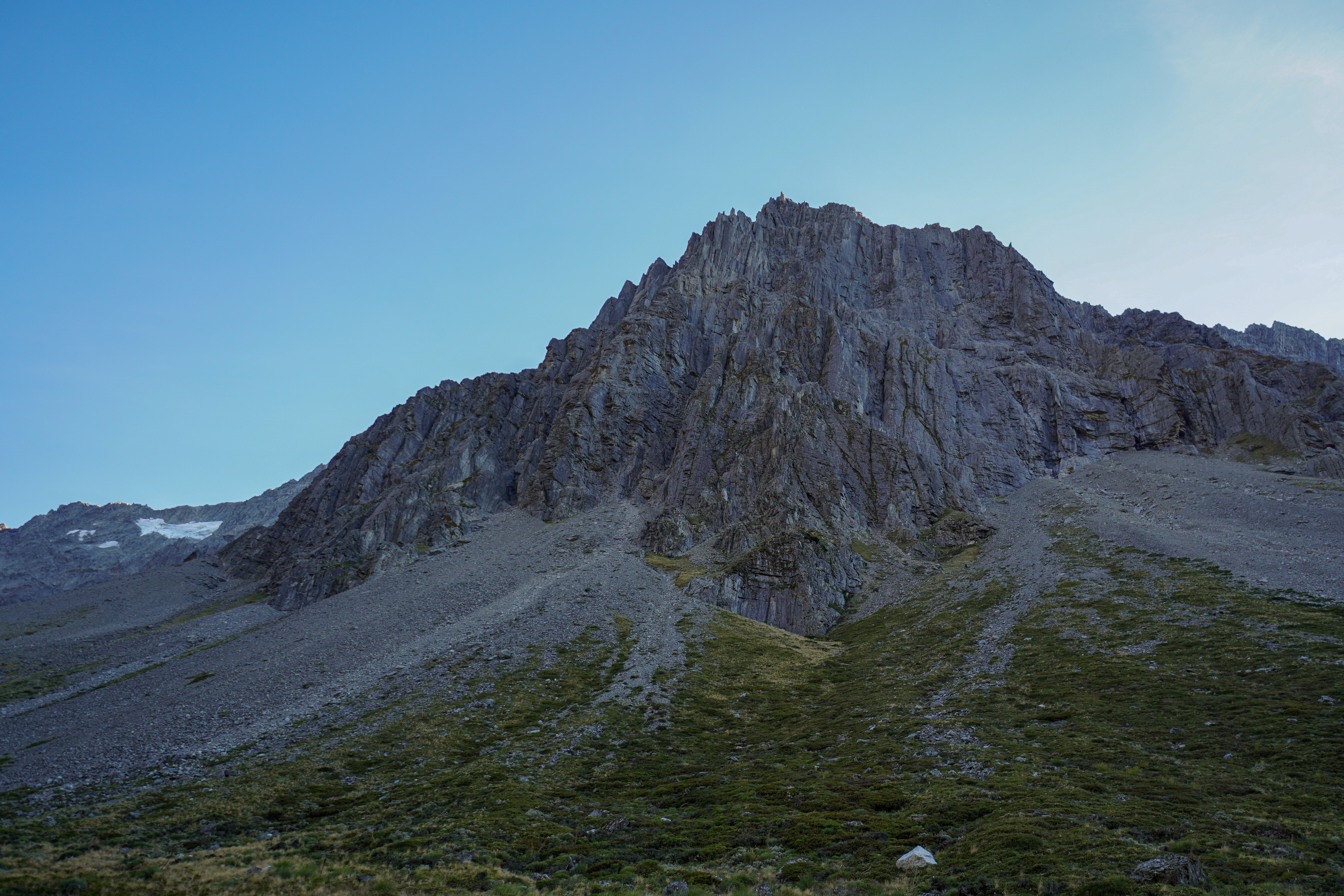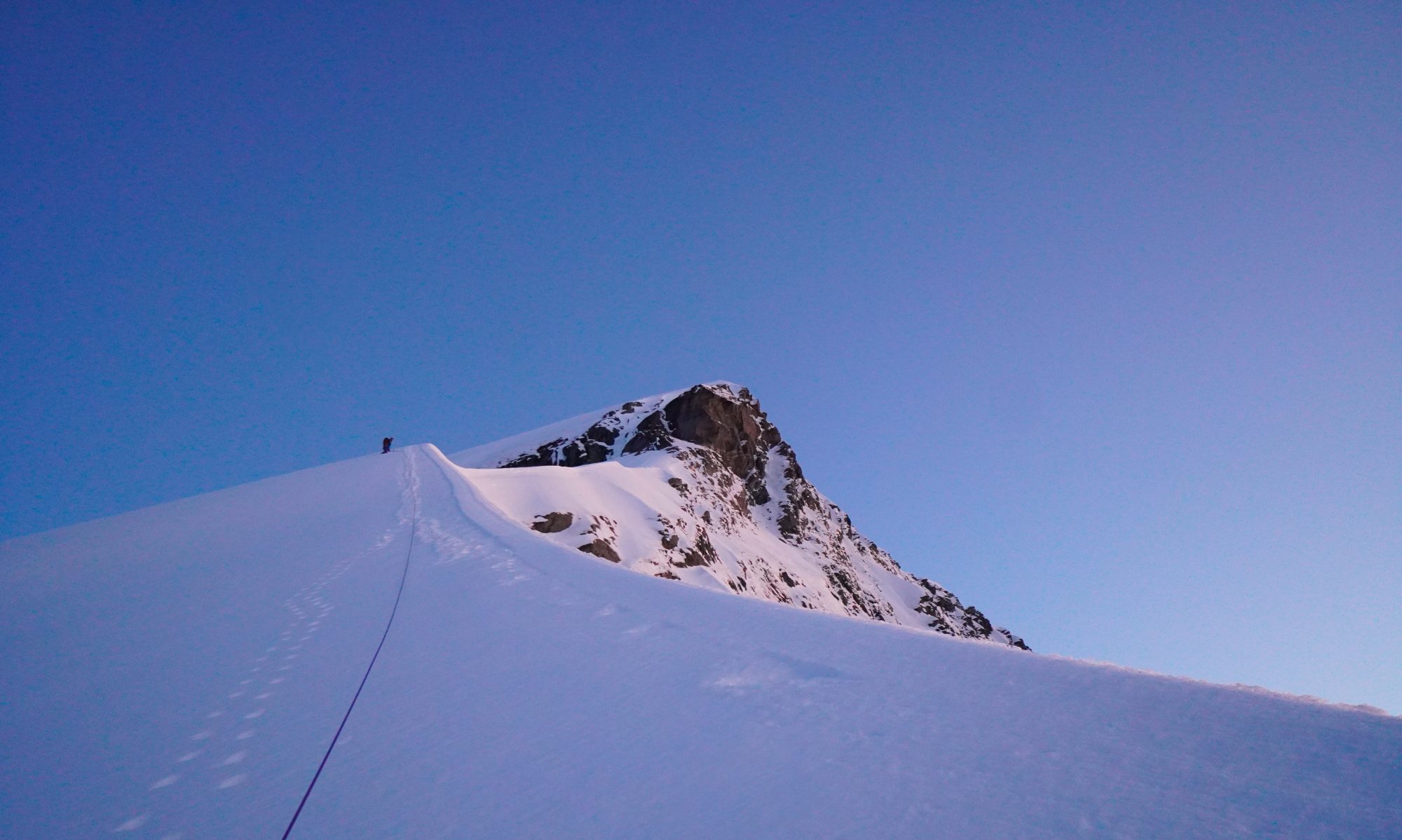
Crow Face, Mt Rolleston

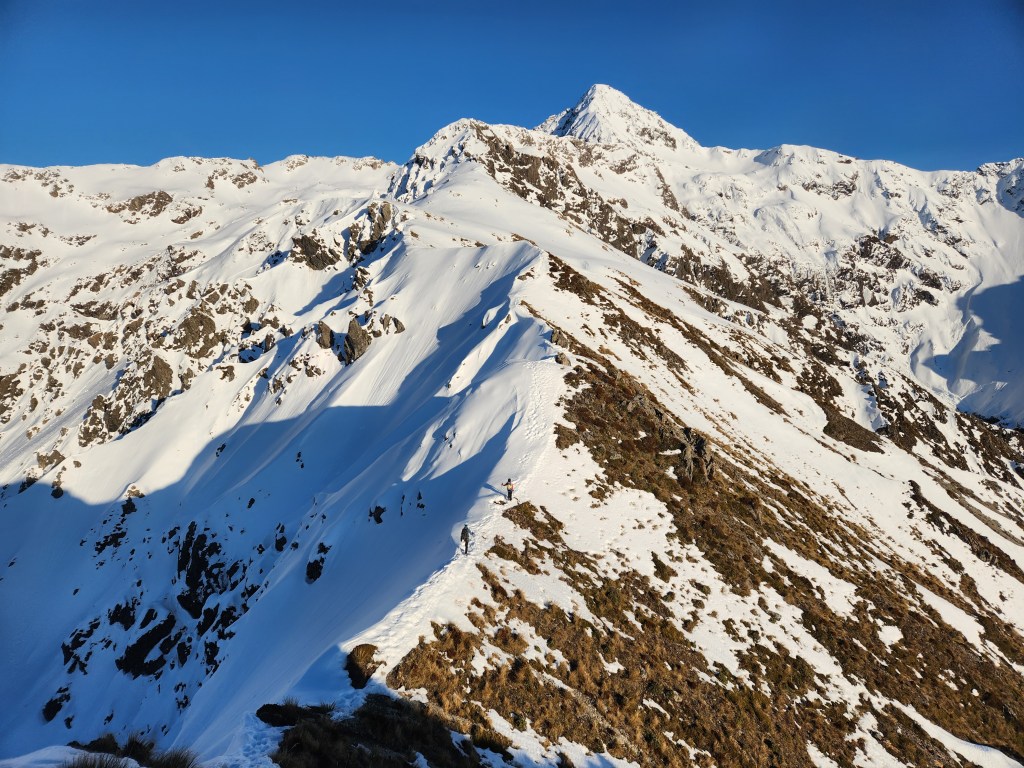
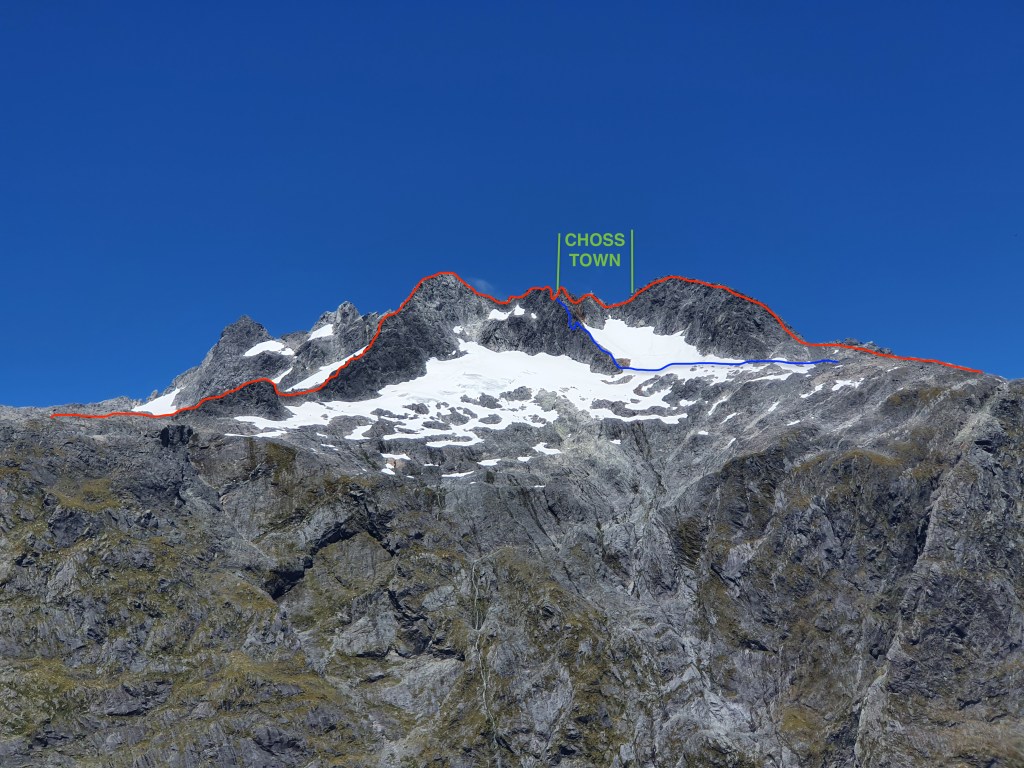
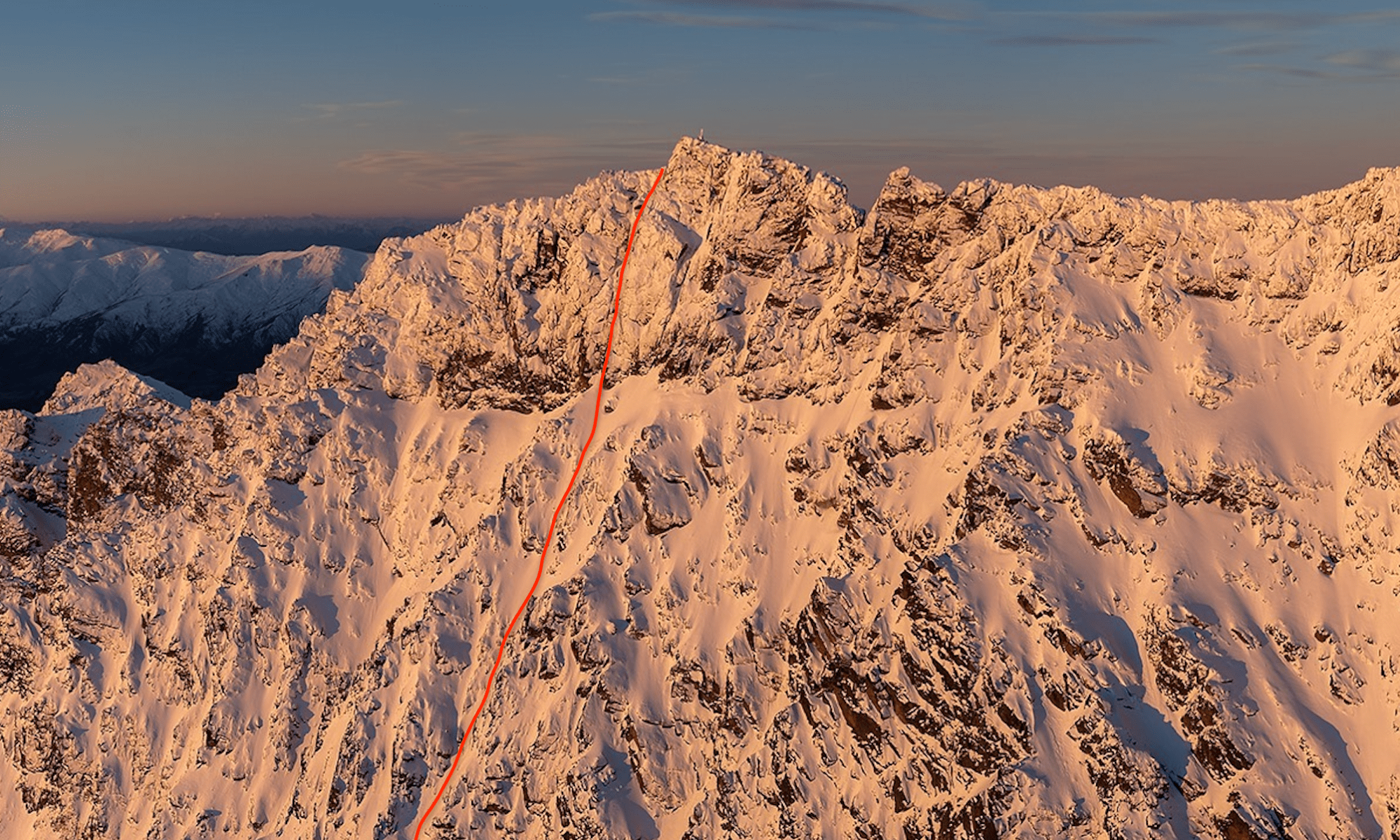
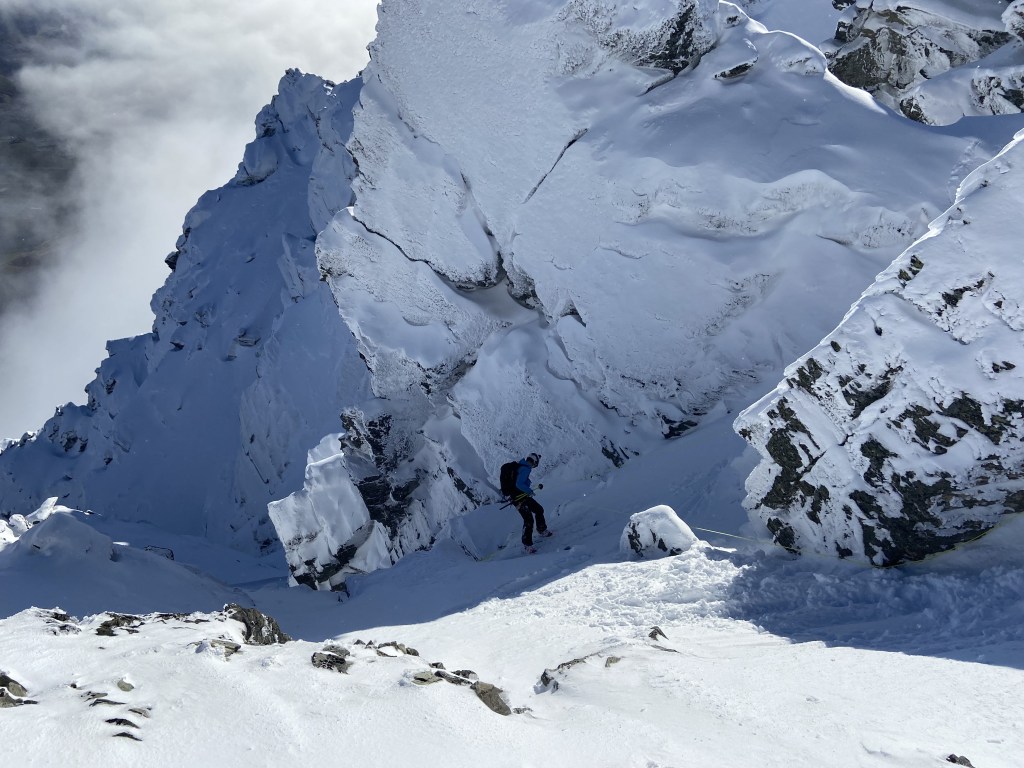
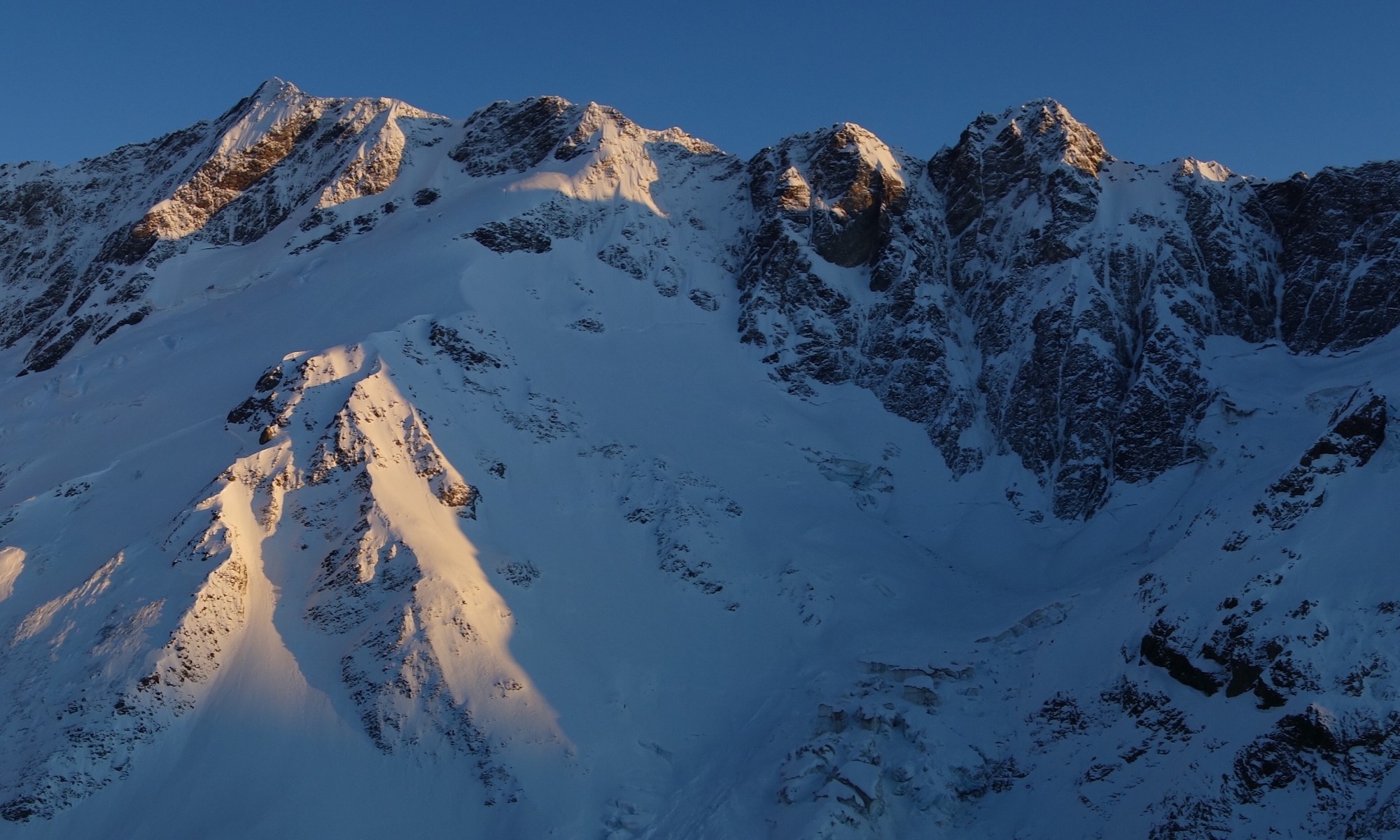
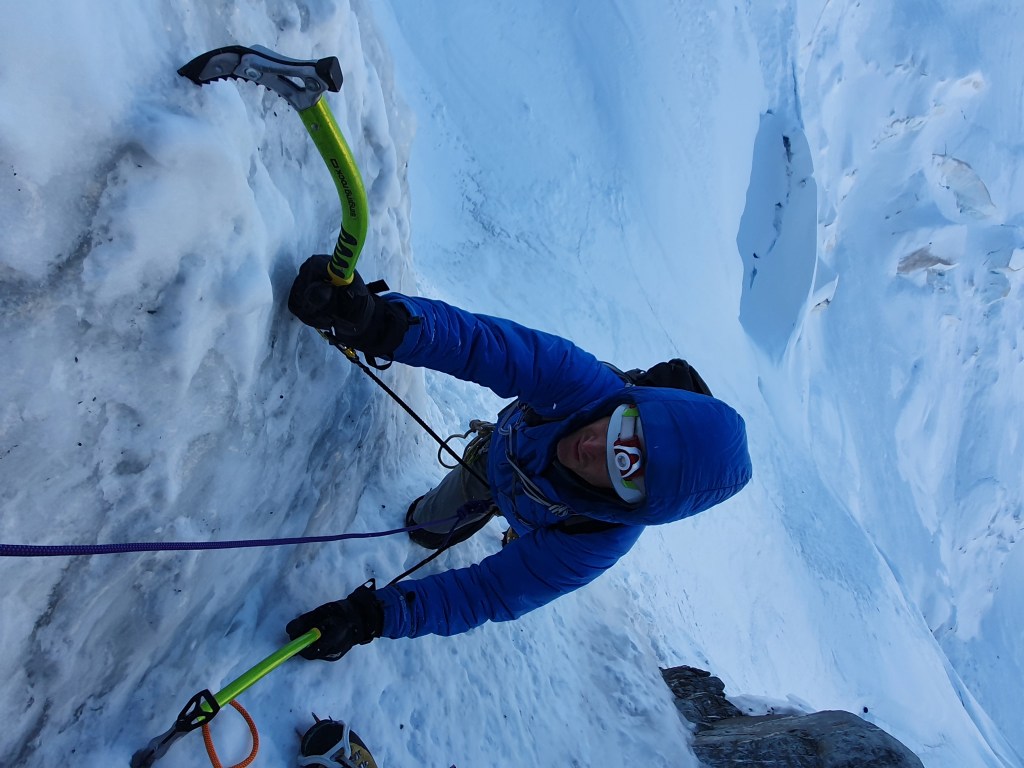
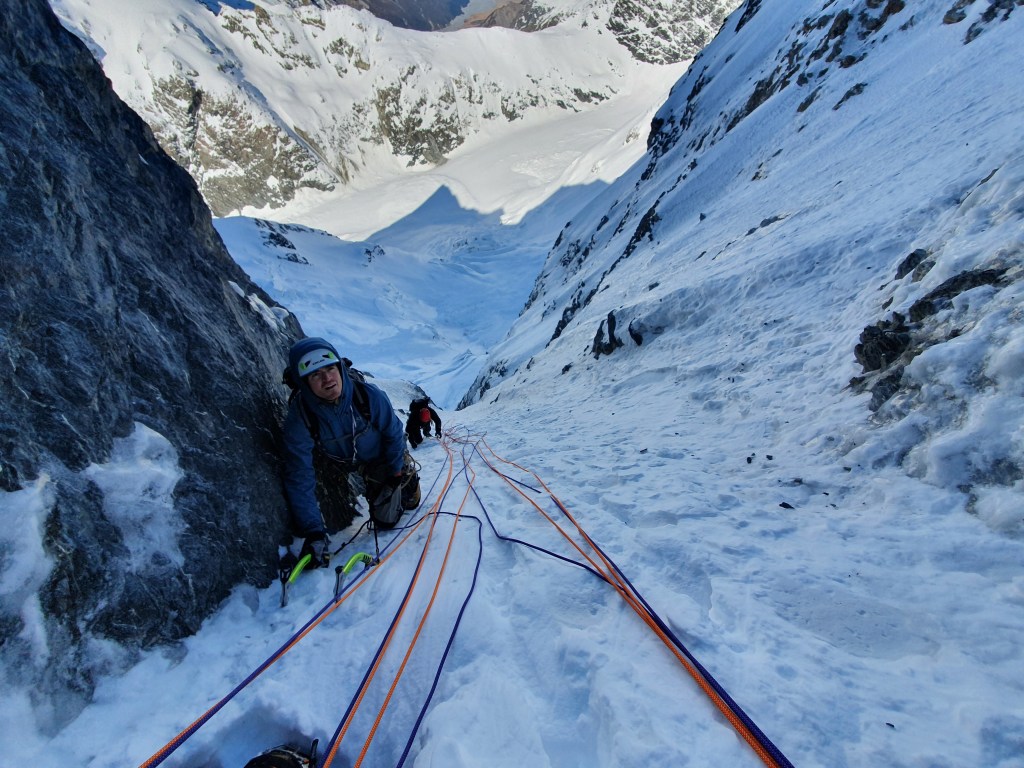
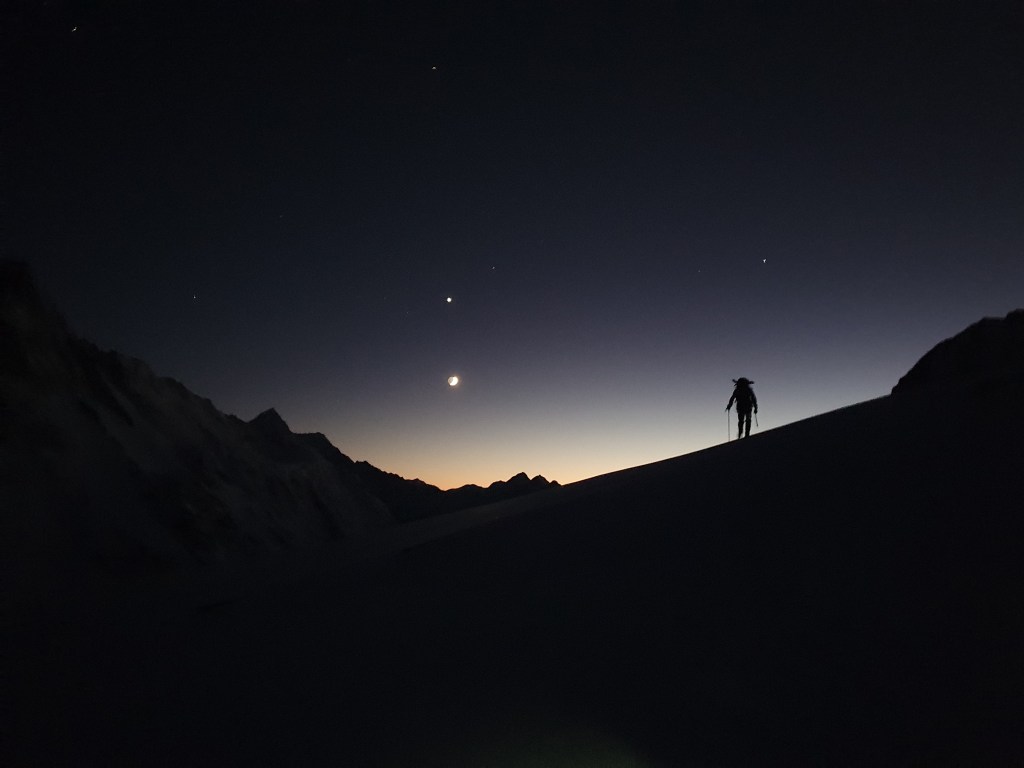
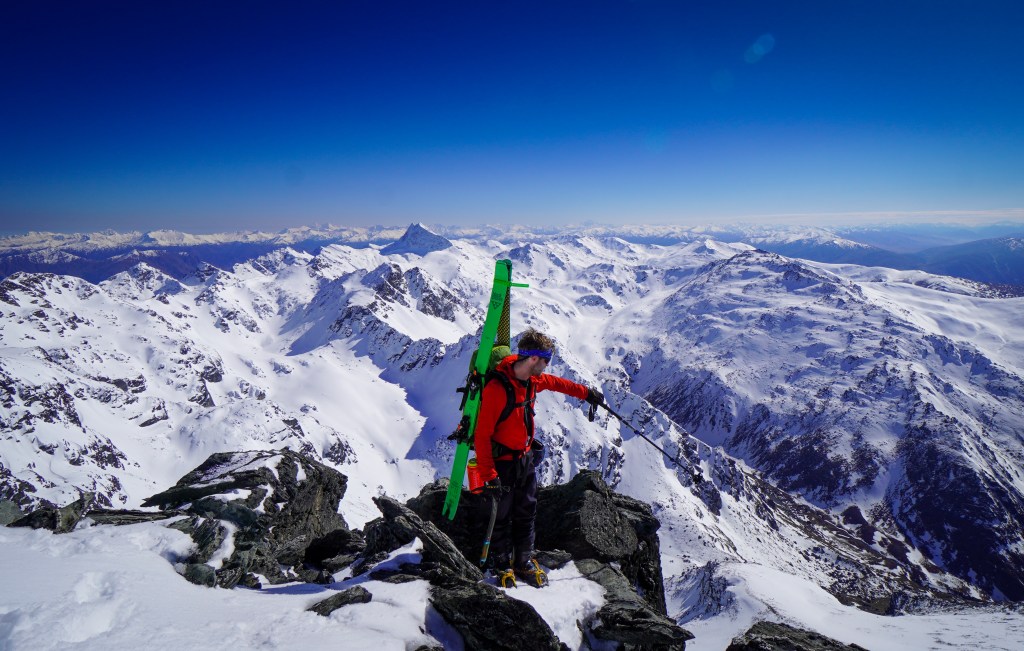
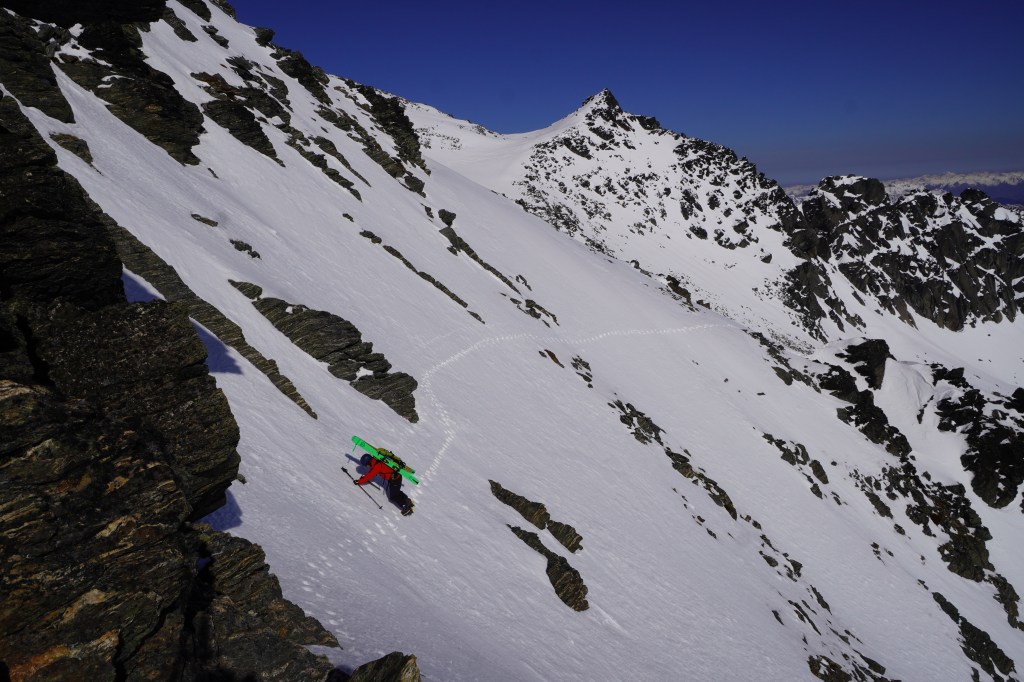
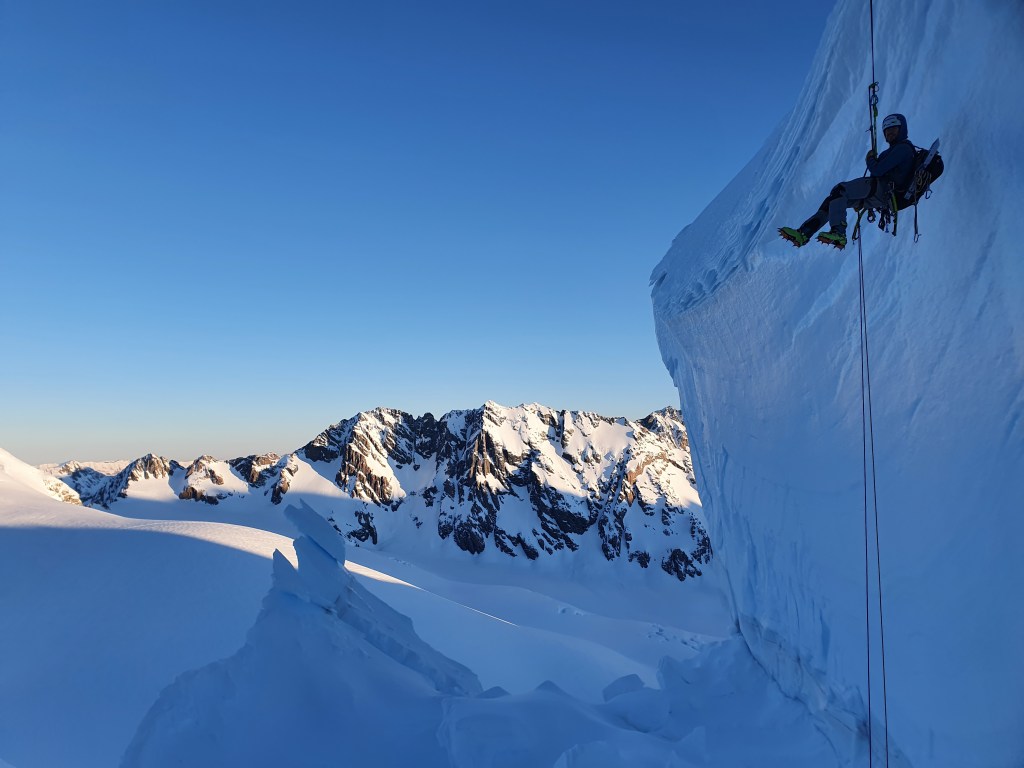
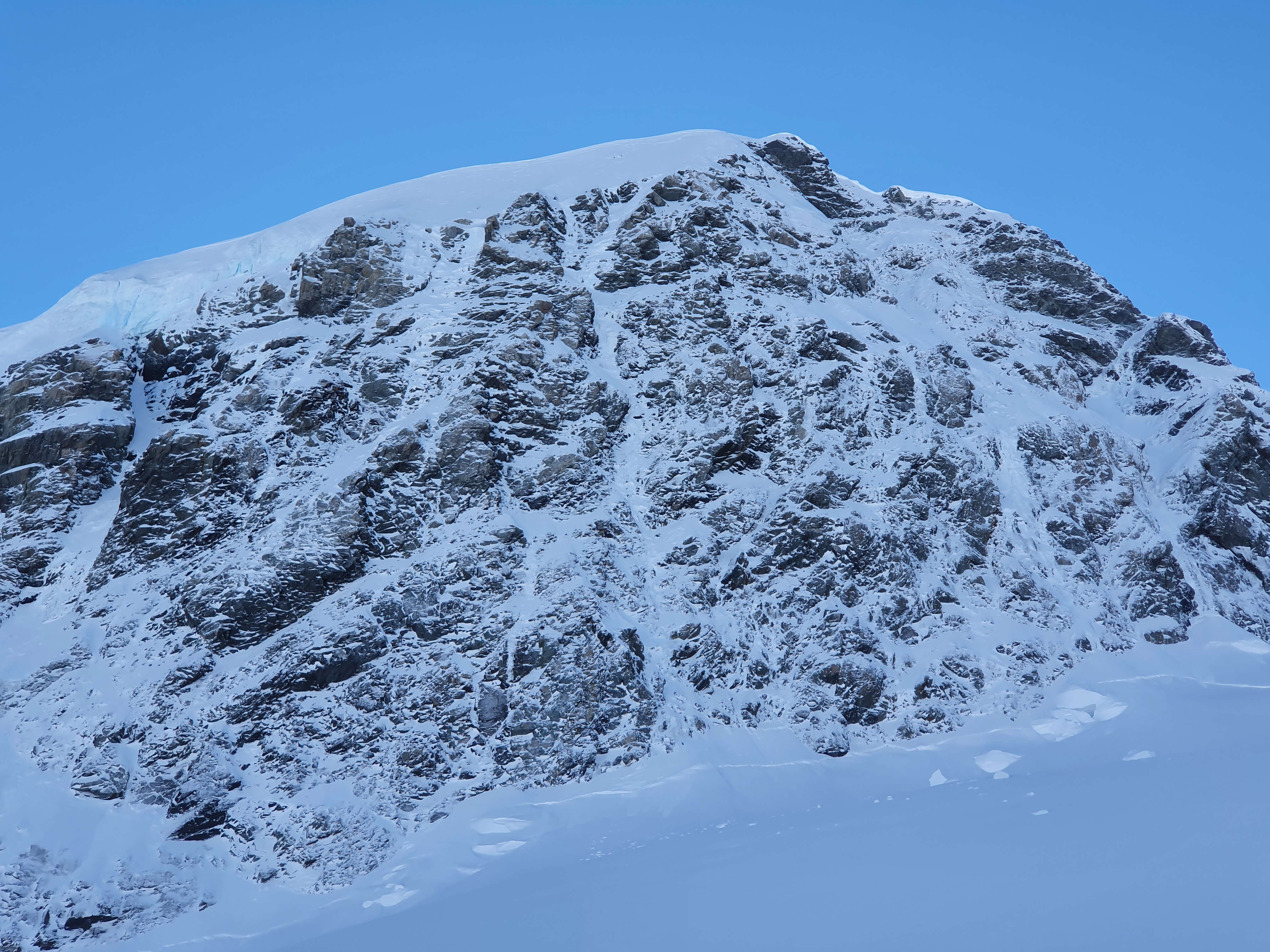
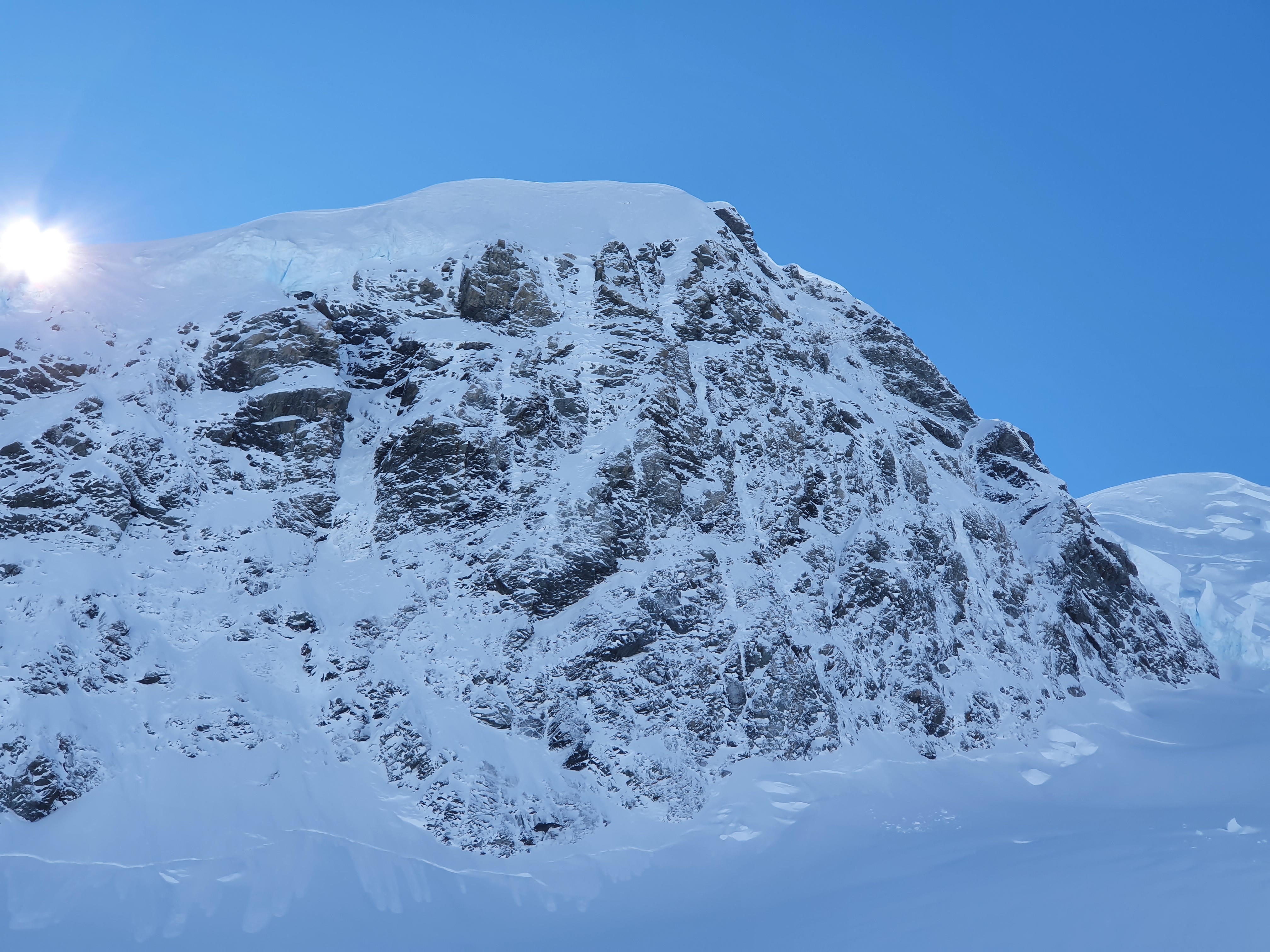
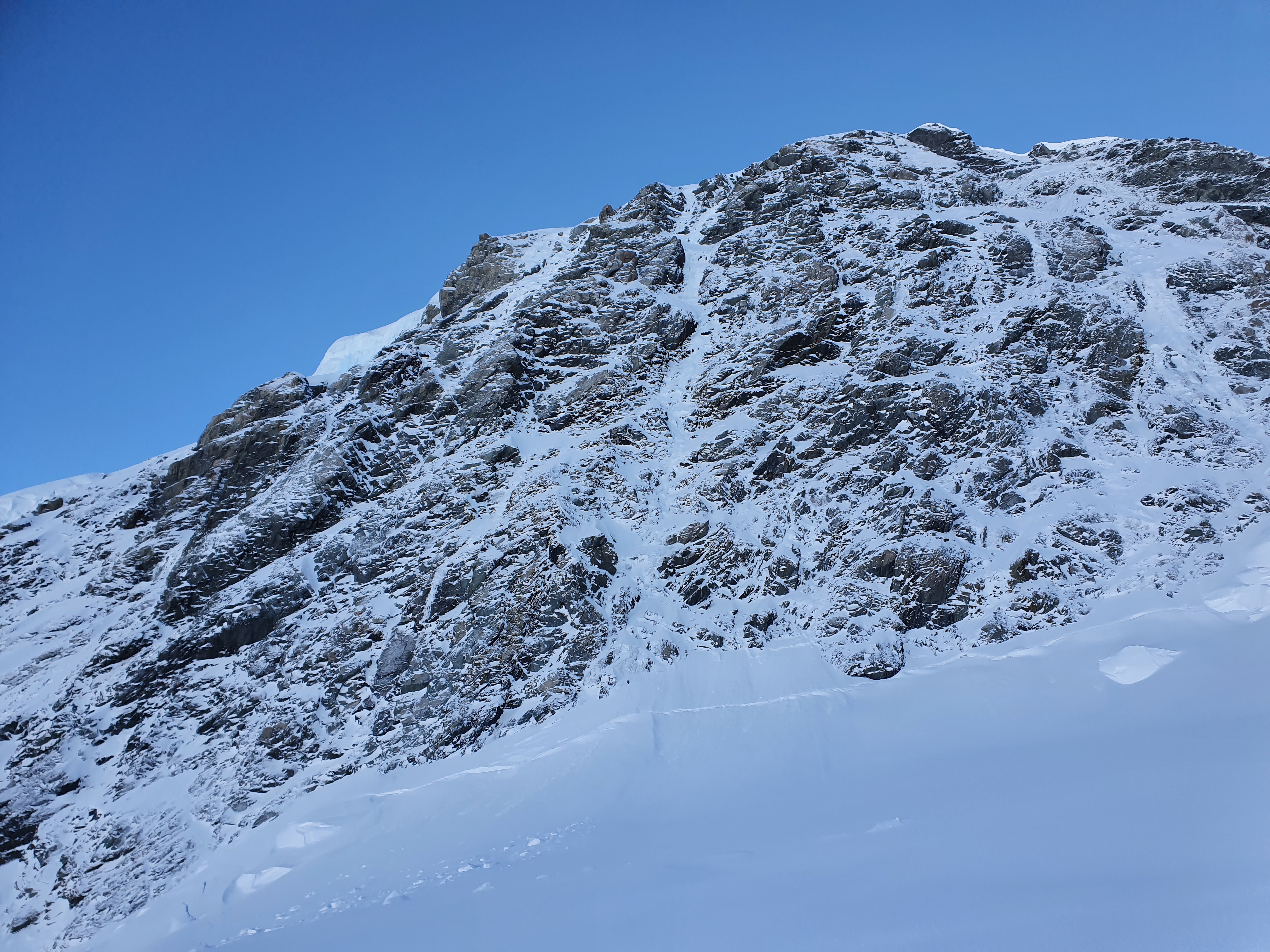
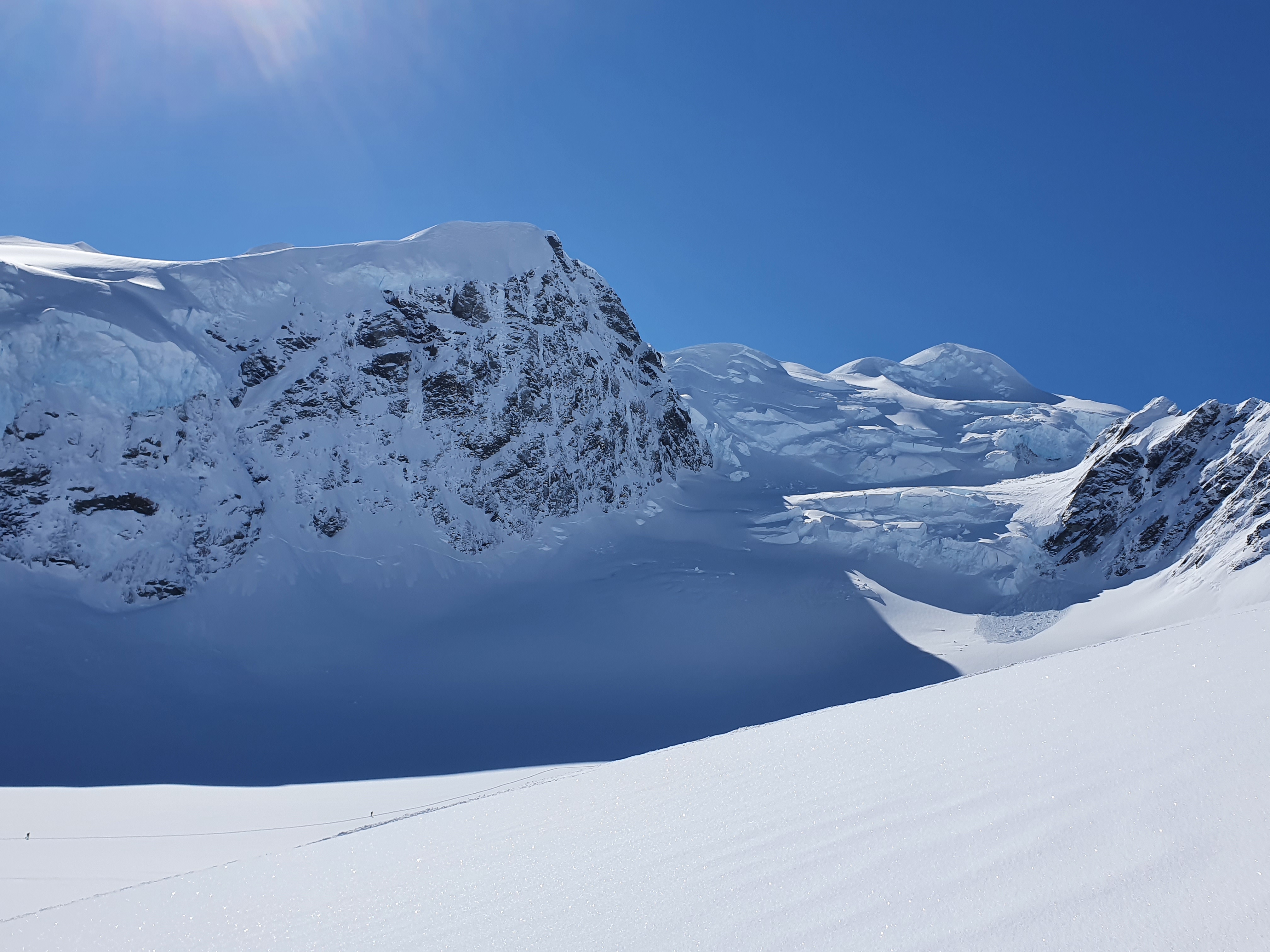
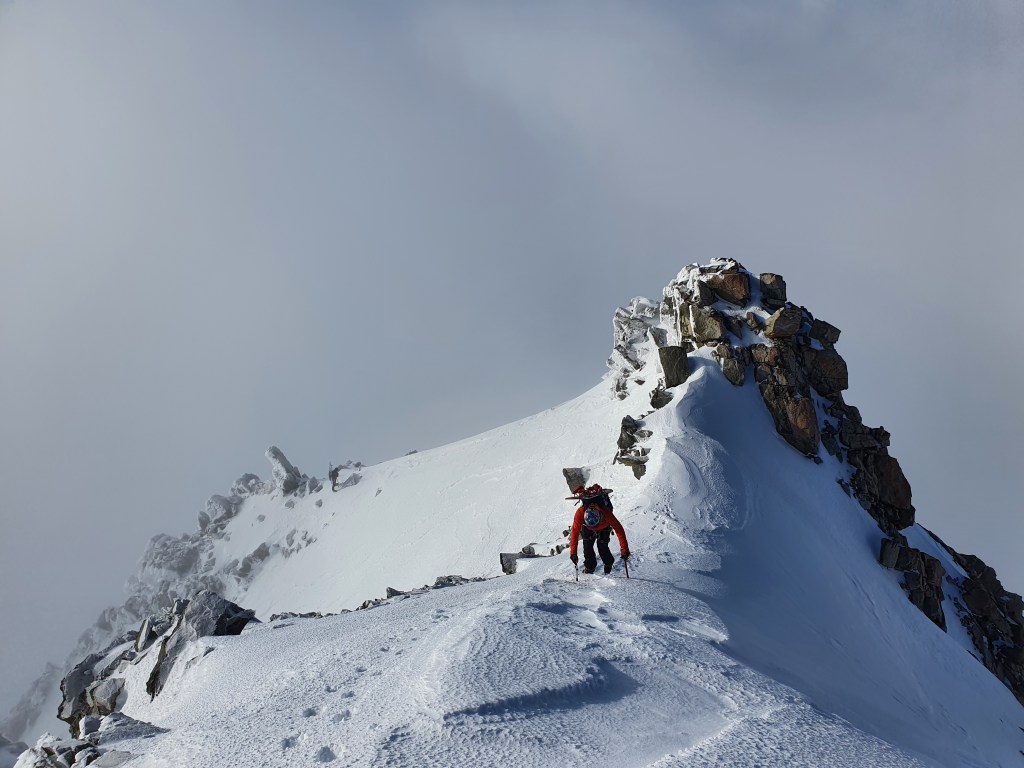
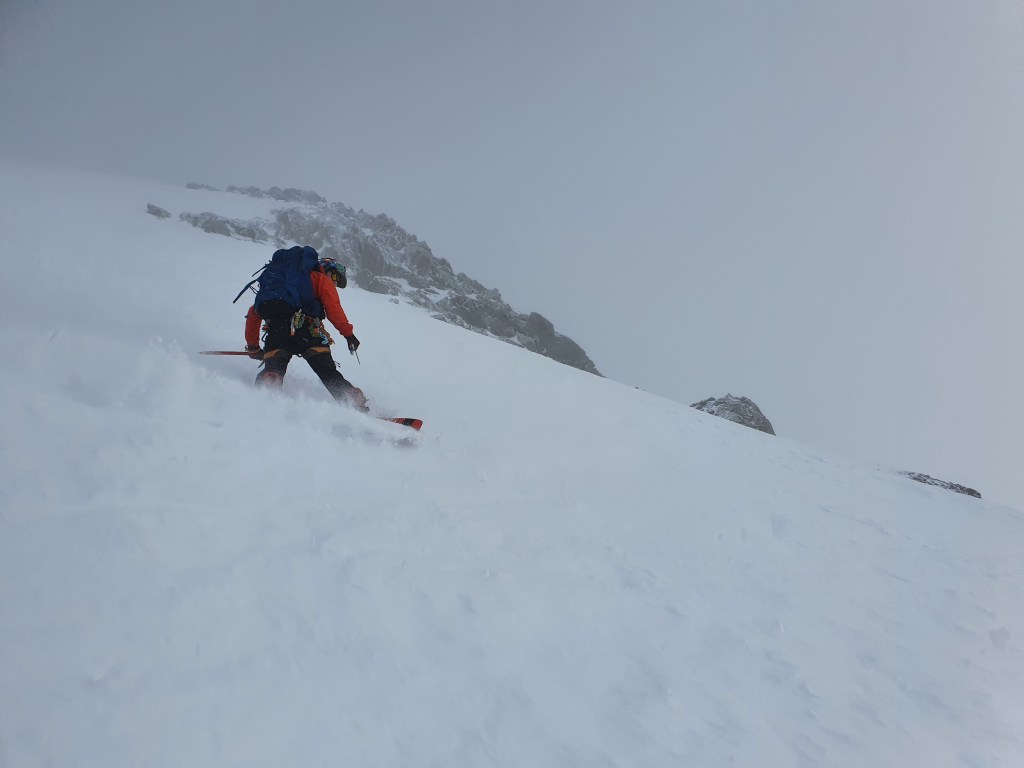
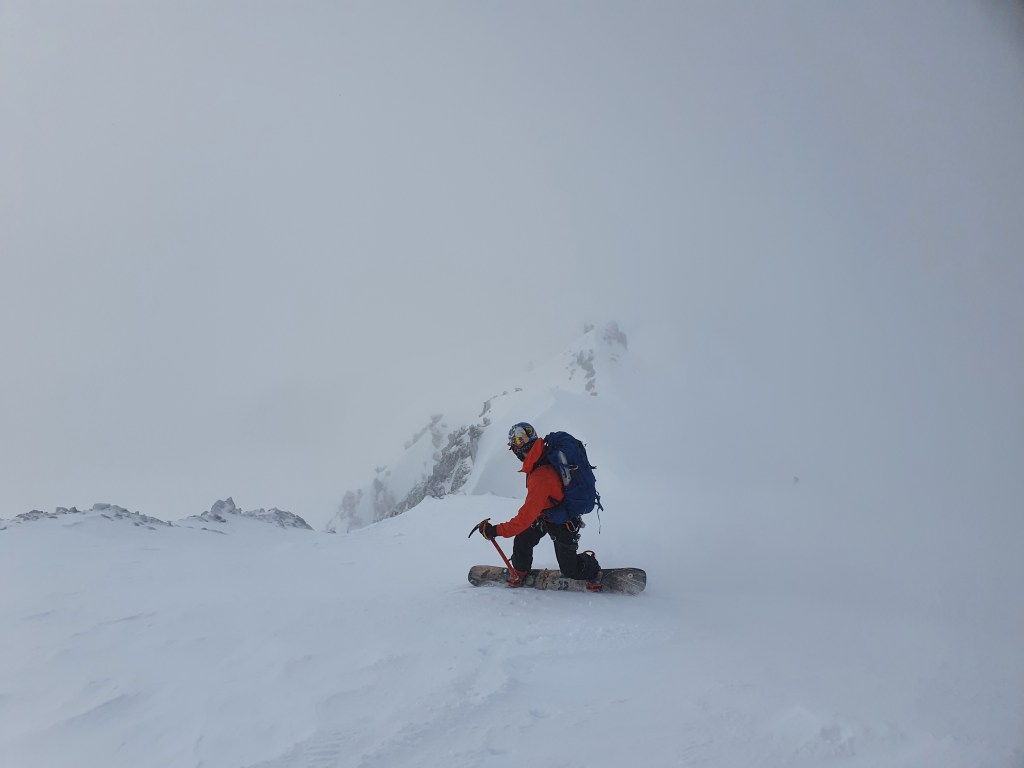
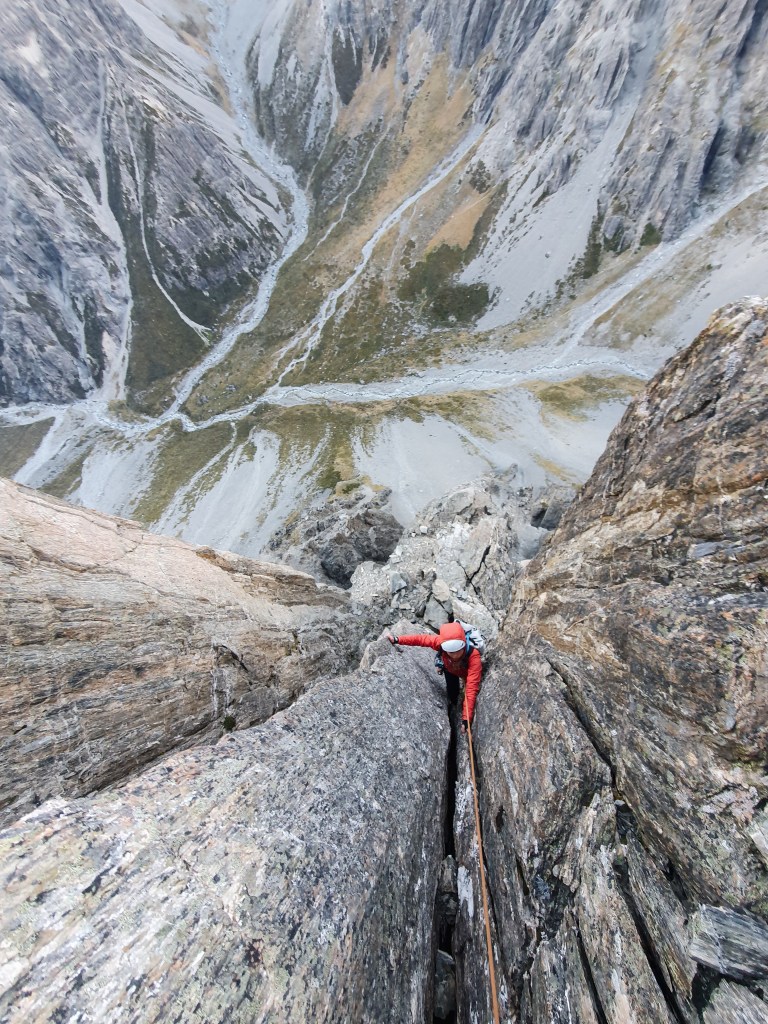
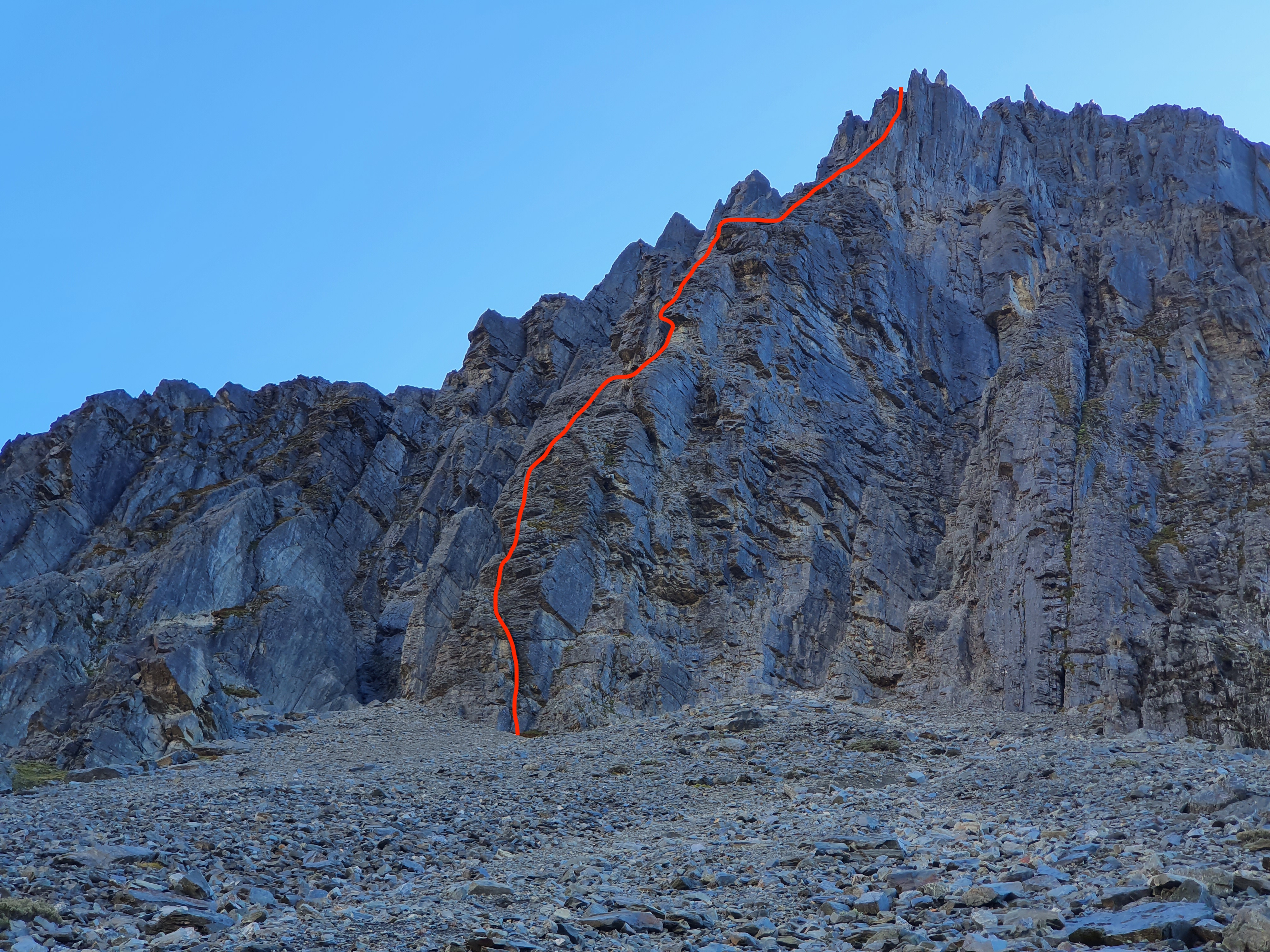
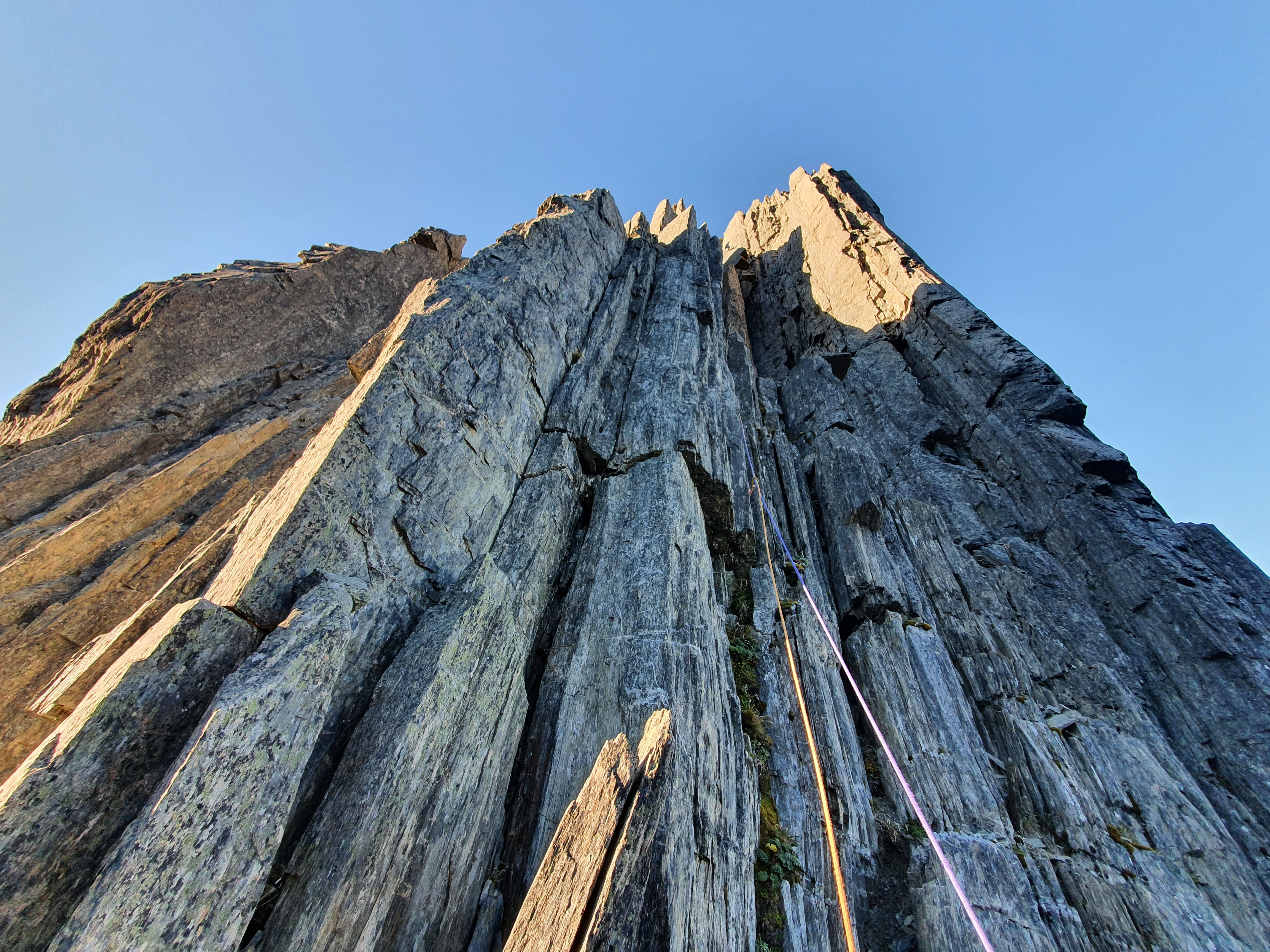
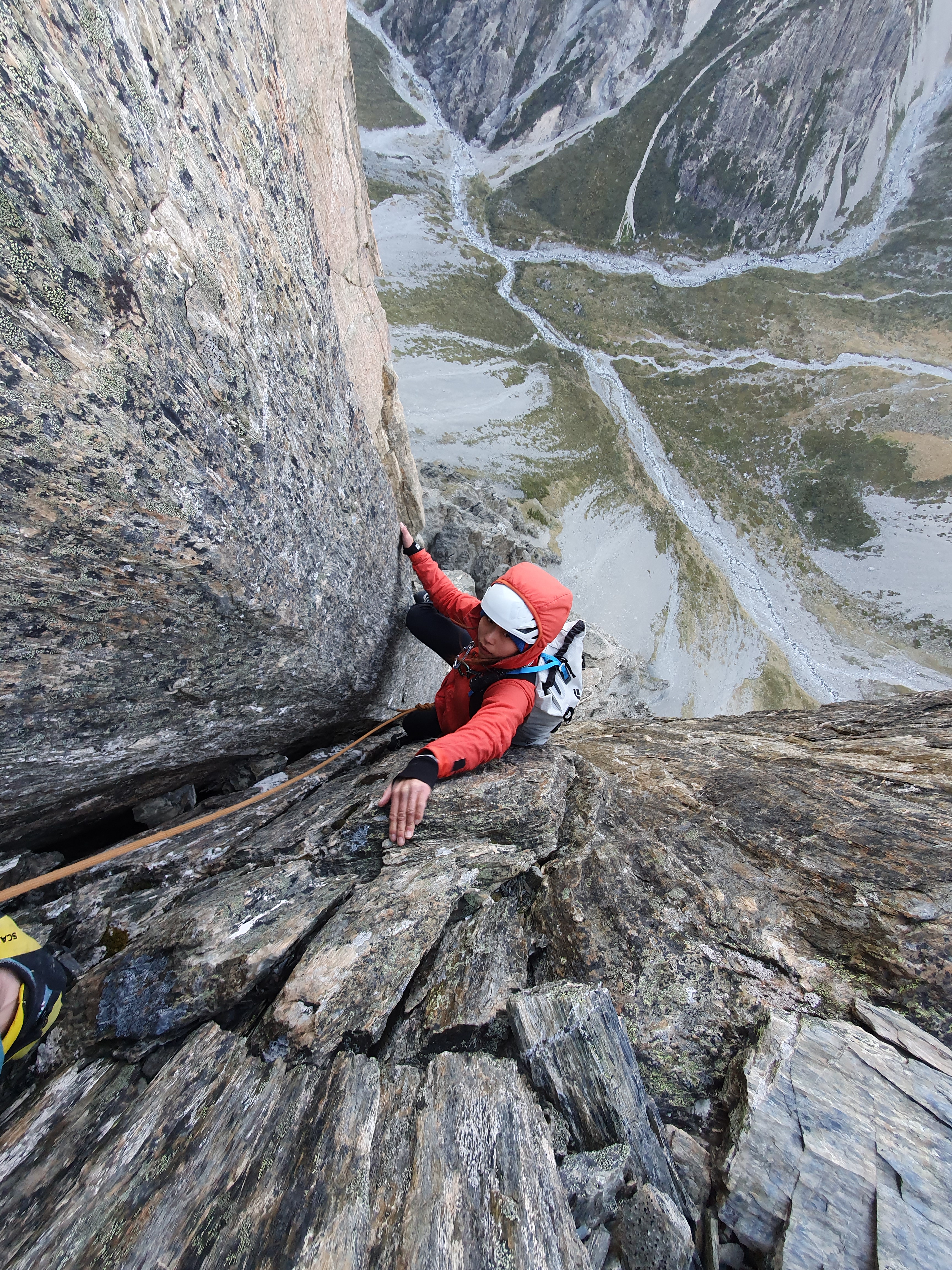
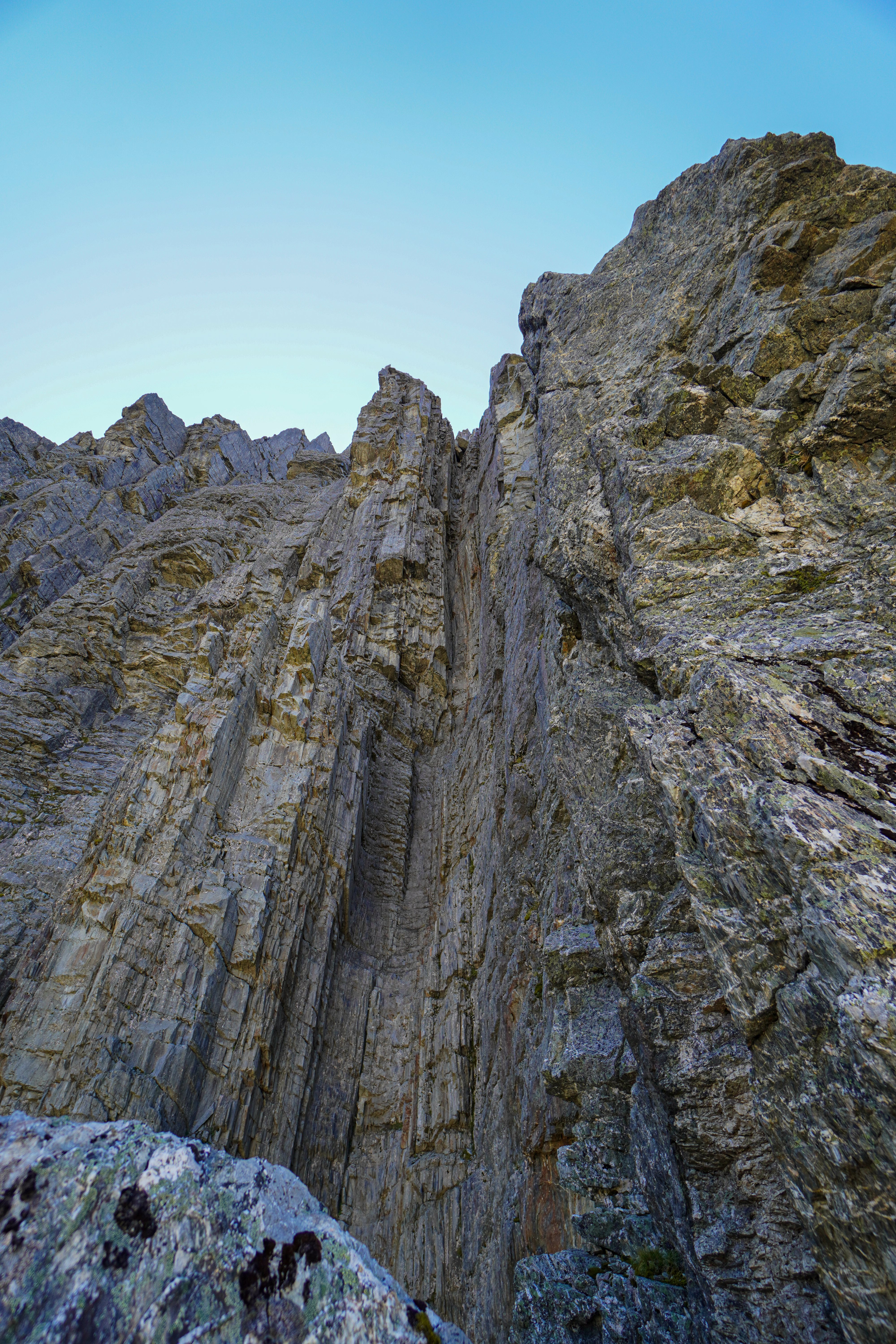
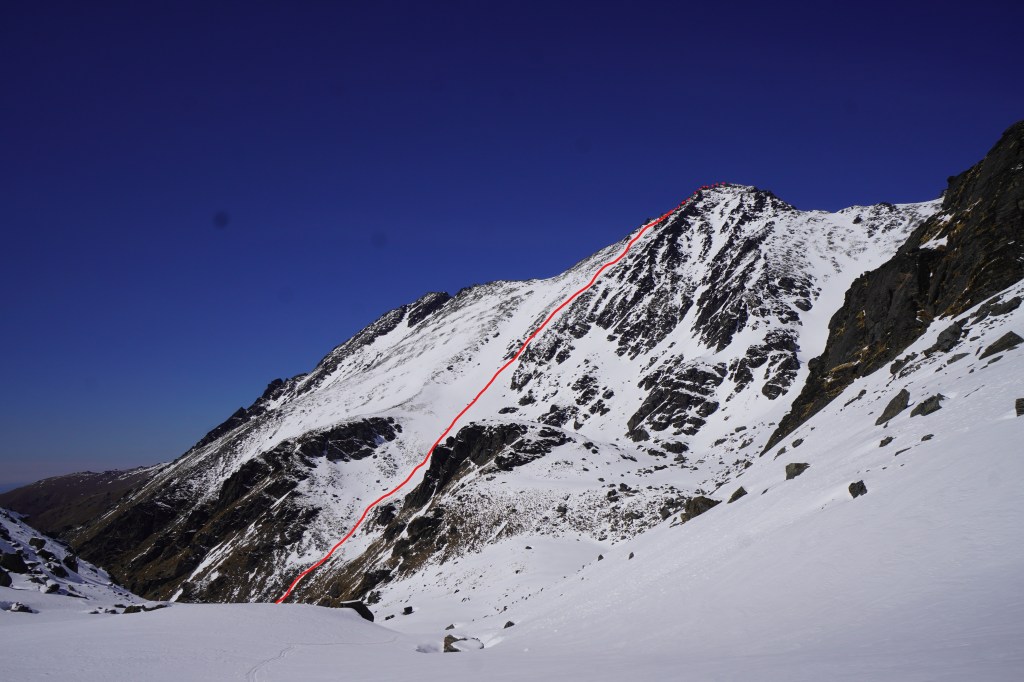
A classic climb on the proudest peak in Arthurs Pass, or a steep and technical ski mountaineering line easliy accessible as a day trip from Christchurch. Up there in terms of the steeper and more sustained lines Ive skiied in New Zealand, and with big exposure the whole way this is a serious ski. I went with Maria, Sean and Marije in early September 2023 to climb the route. I’d been thinking about the possibility of skiing the face for a while, but had no recent beta on conditions and it had been a particuarly thin winter so almost didnt bring my skis, but once we hit Rome Ridge and found cold dry snow on the shady aspects it became apparent it was on! Firm windpressed powder and some breakable crust – not dream conditions, especially on such a steep line, but edgeable enough to make it work. Would be an incredible line to ski in powder!

Length โ€“ย 400m of steep ground with optional further 500m down towards the crow rived
Steepness โ€“ย Very steep and sustained. Opwards of 55deg at the top
Exposure โ€“ย Constant serious exposure the whole way
Aspect โ€“ย S
Extras โ€“ย Picket for rap. Rad line. Screws – 3-4 to protect the climb. Threads may be possible for the descent

Difficulty โ€“  Climb 2. Ski 5.3 E4
Equipment โ€“ Glacier equipment.

Approach

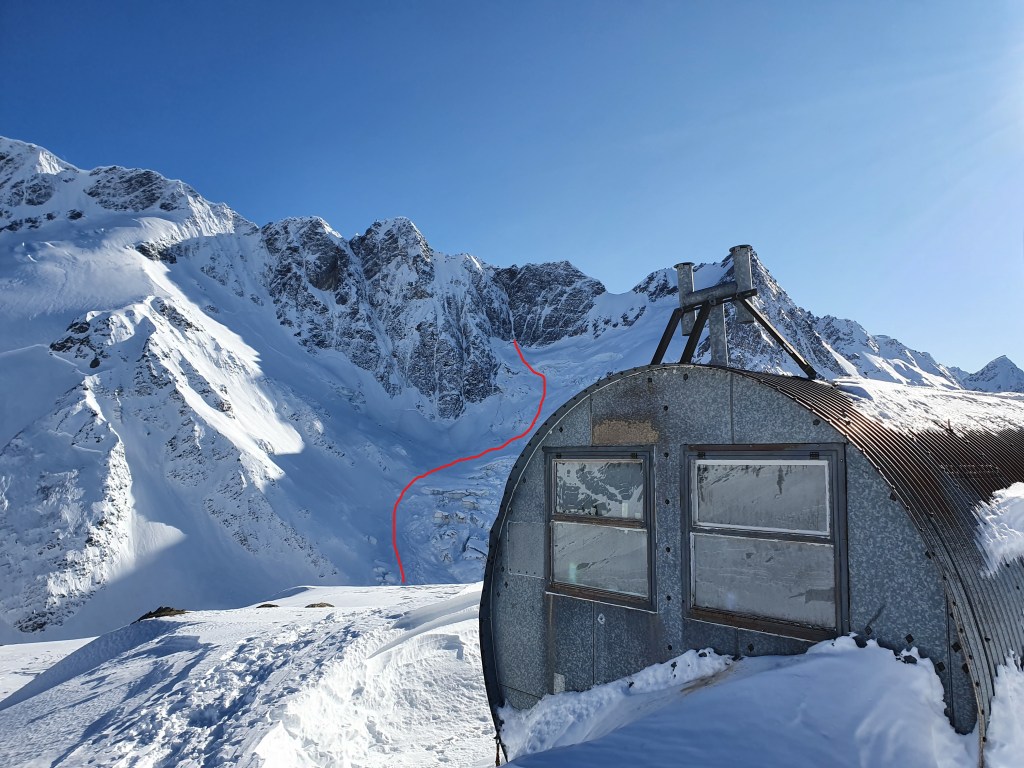
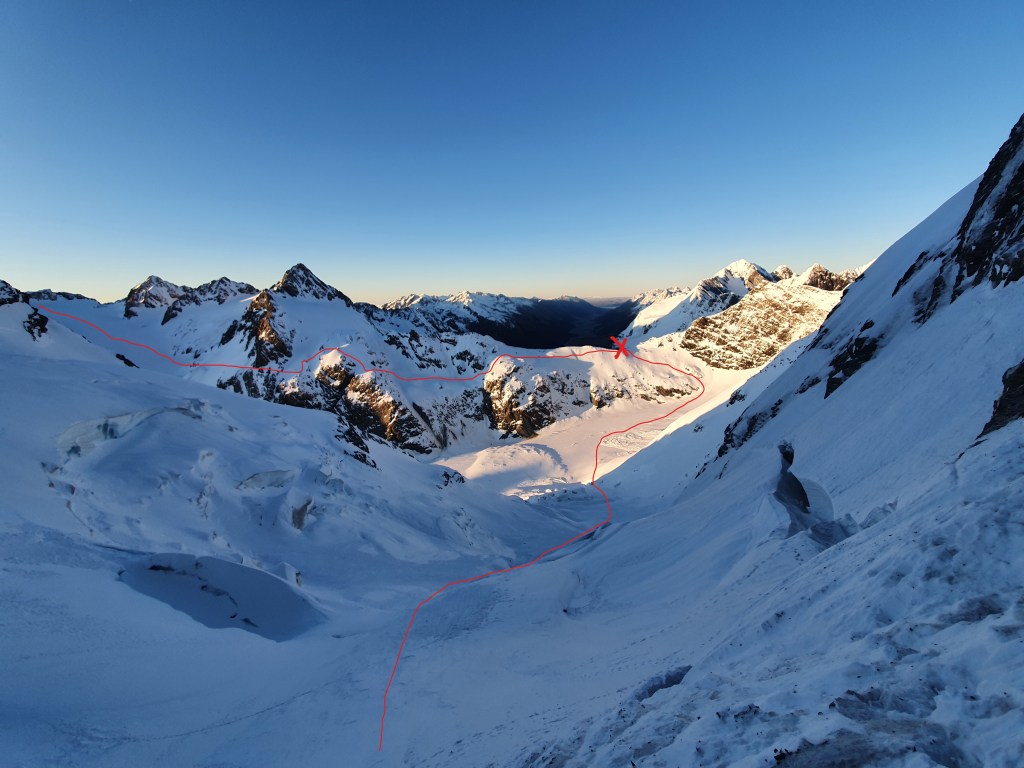
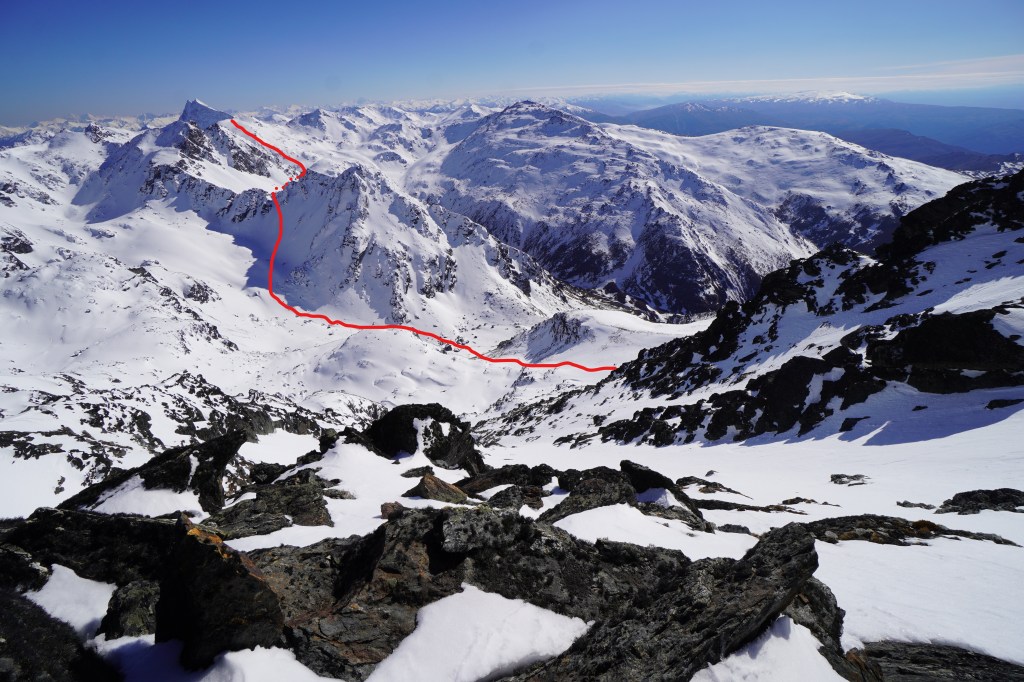
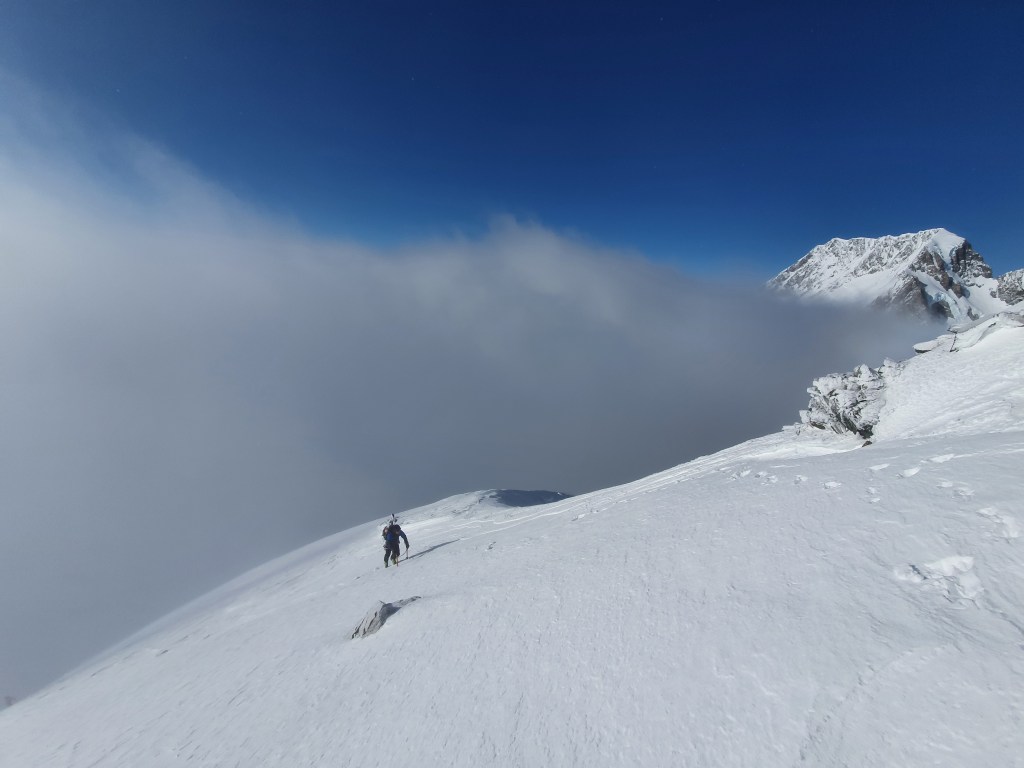
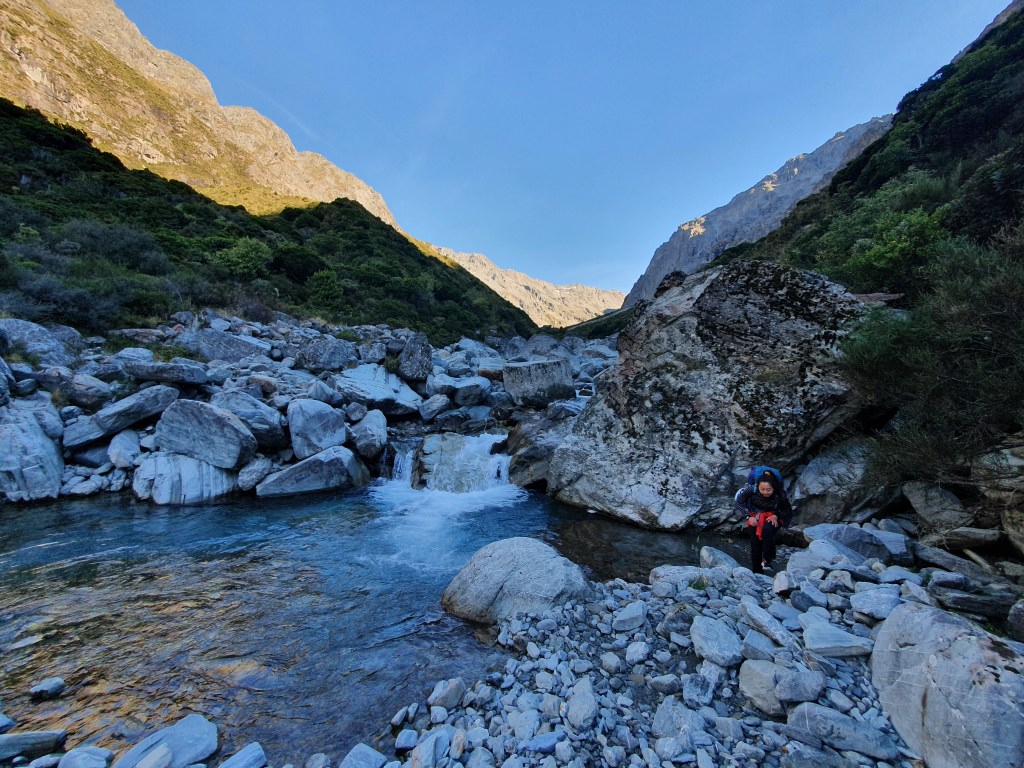
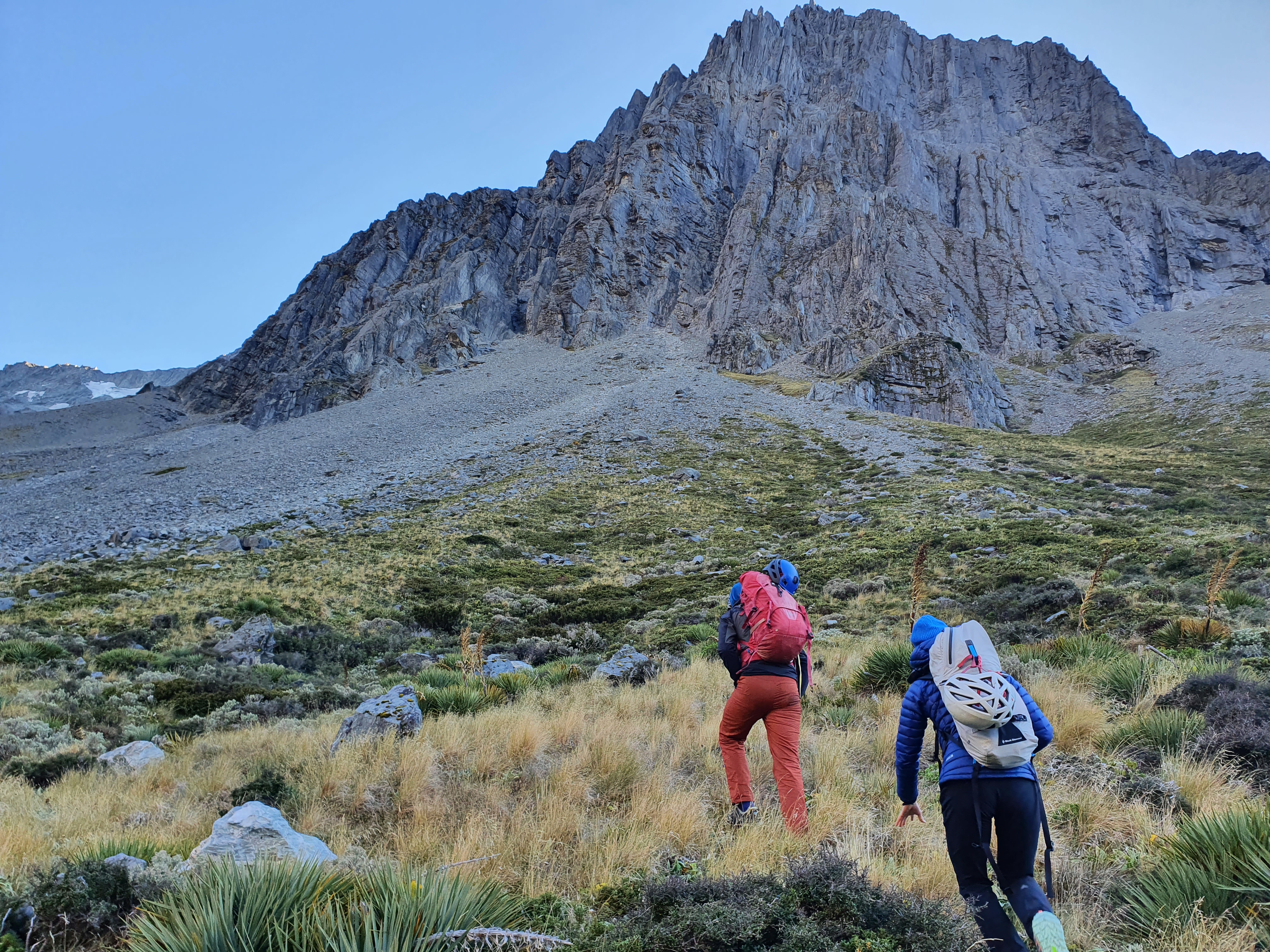
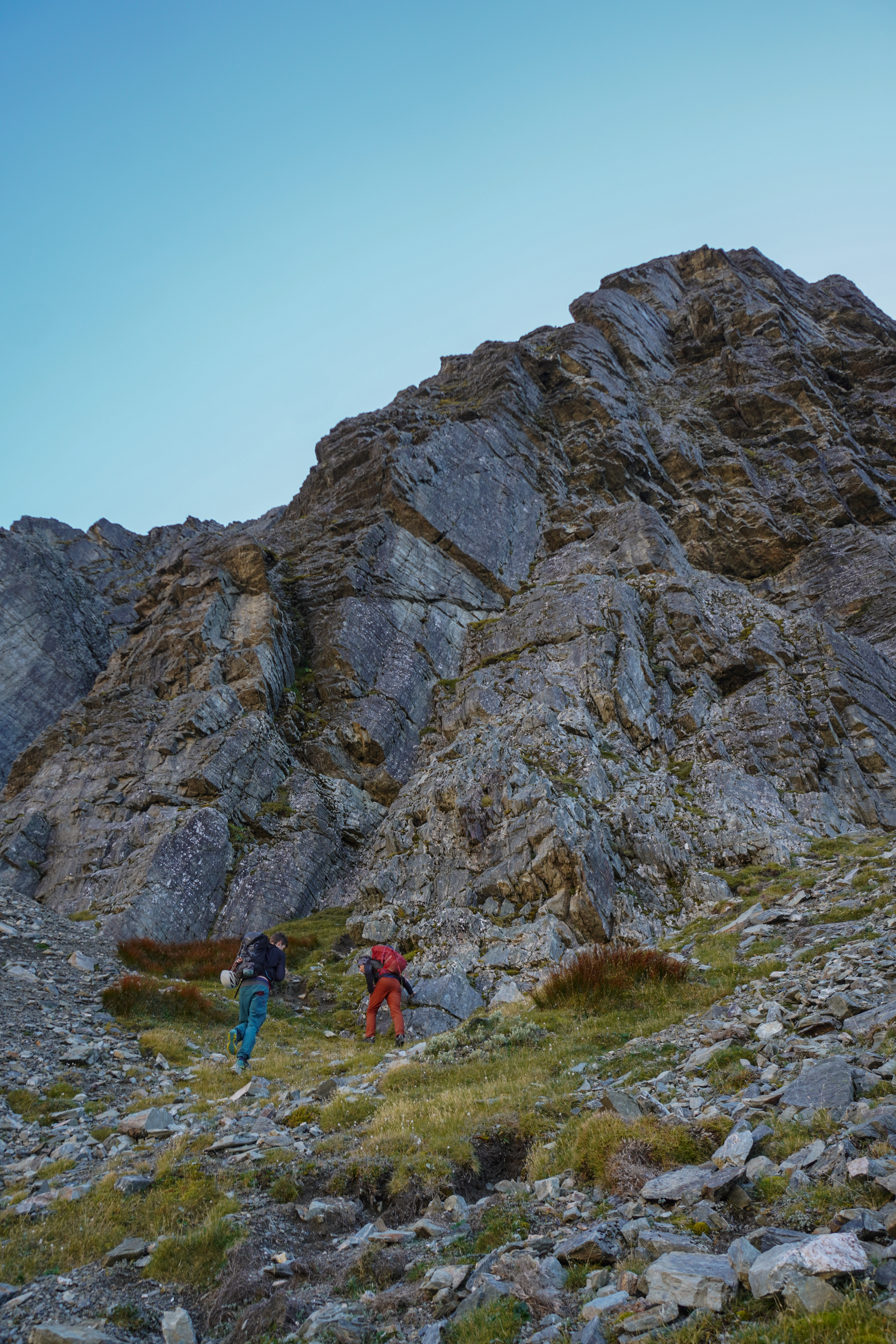
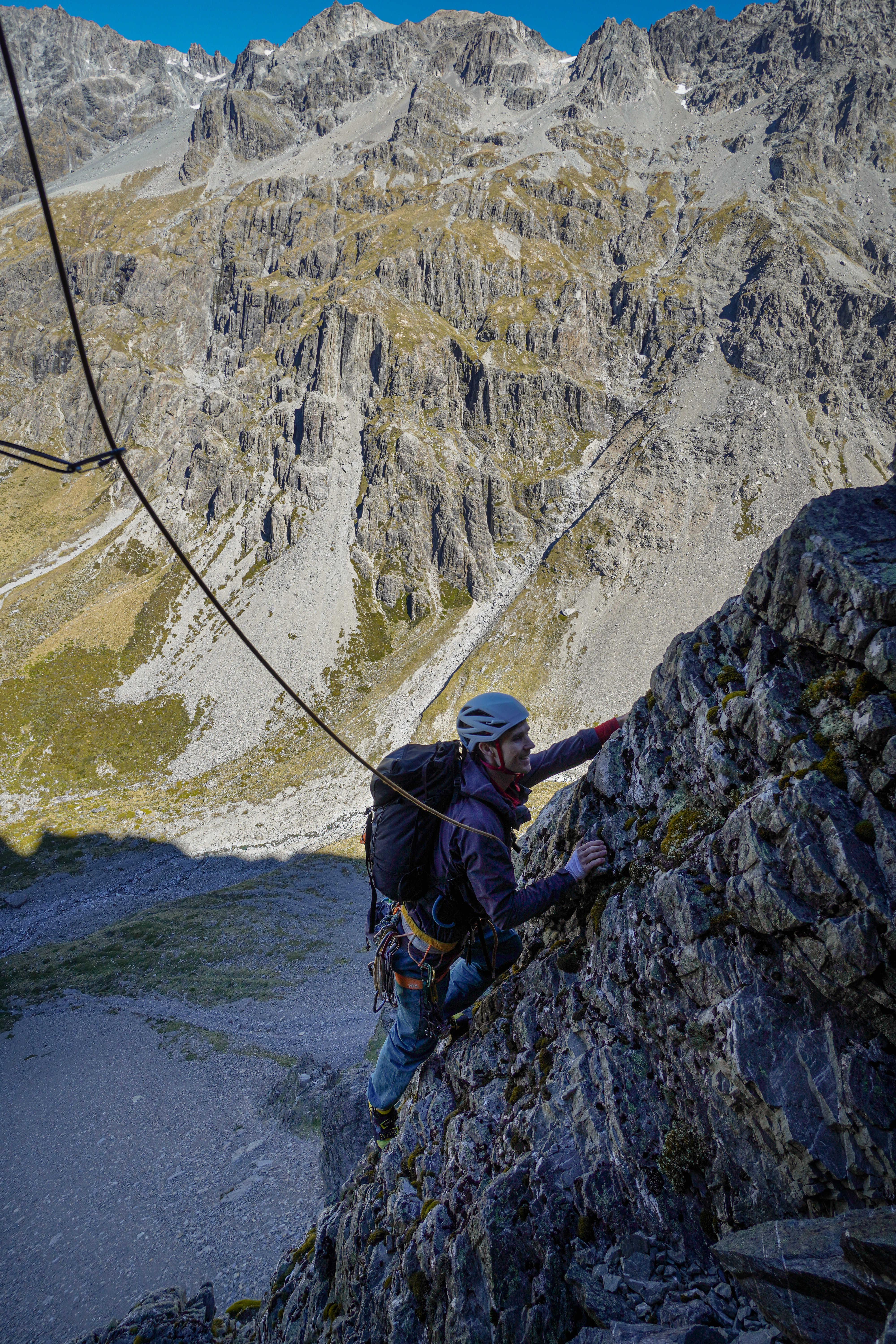
We went up Coral track to Rome Ridge, along Rome Ridge to the Sharks tooth / the gap – the end of the flat section of ridge just before the final ascent to low peak. From here theres an obvious gully that drops you down directly under the Crow face, and continues down into the Crow valley.

Travel along rome ridge when the conditions are good is fast and straightforward, but if coverage is thin and you end up on rock it would become a lot slower.

From the car it took us around 1 hour to the treeline, and 3 hours to the sharks tooth, then another 20 minutes to the base of the route.
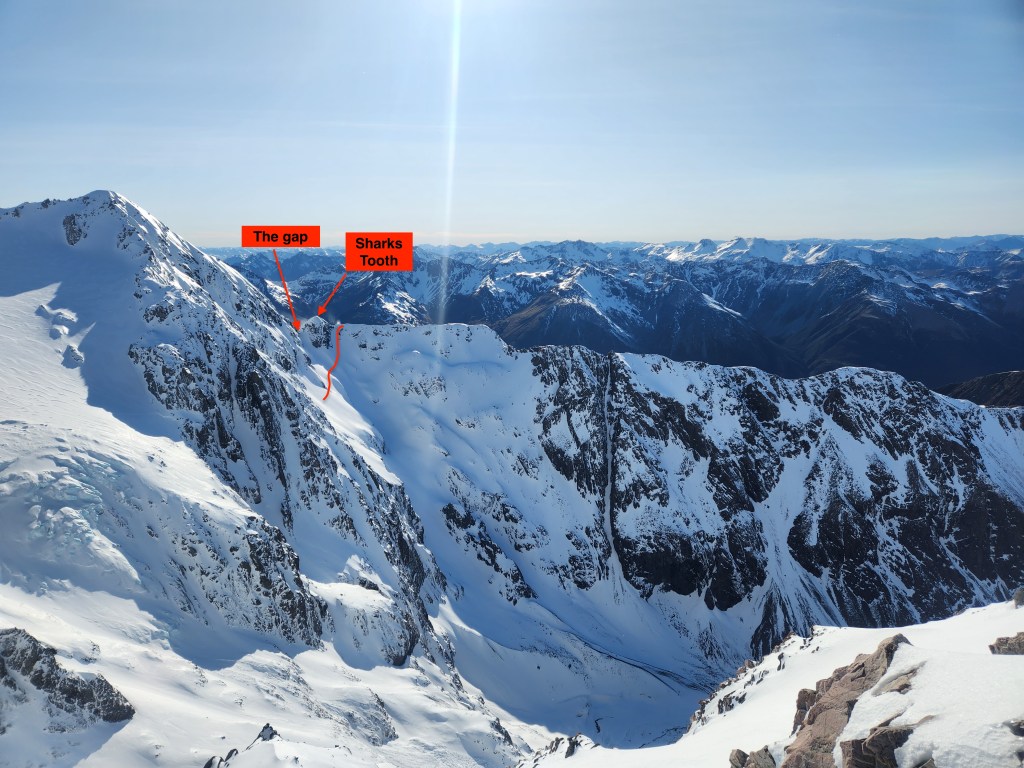
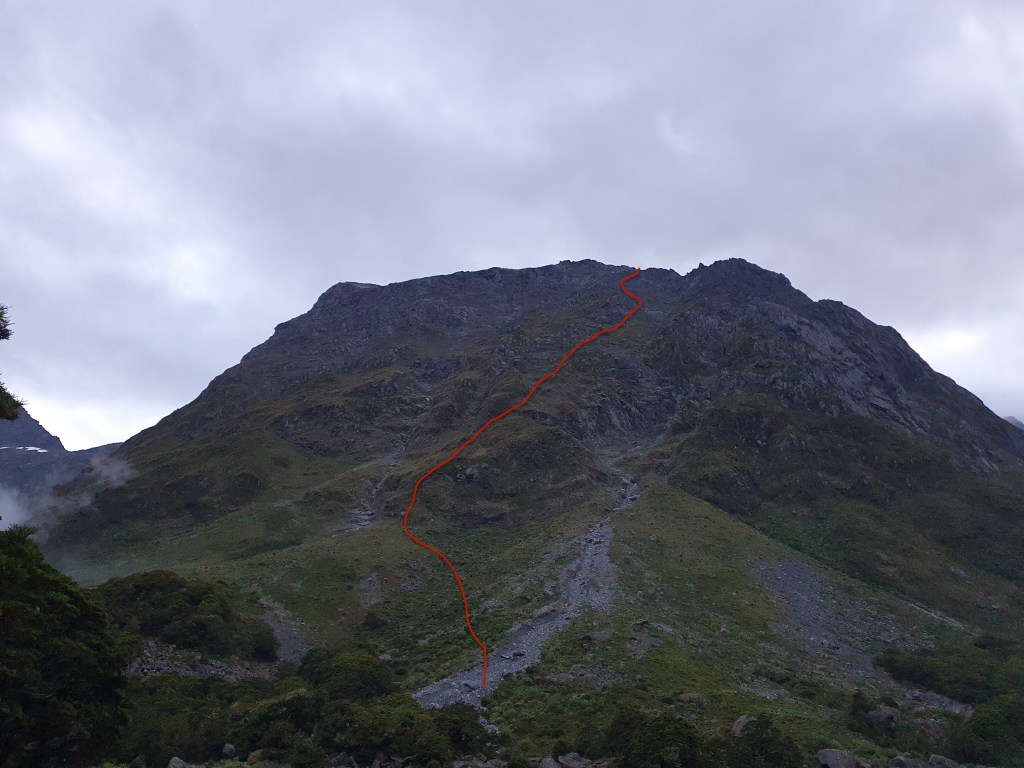
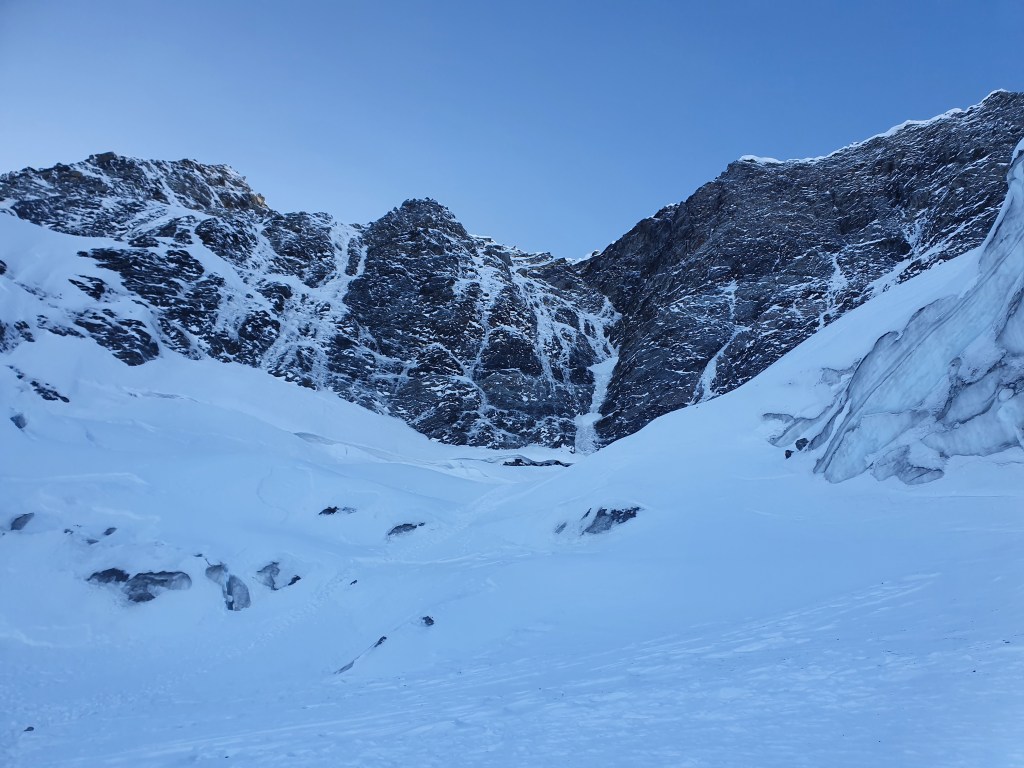
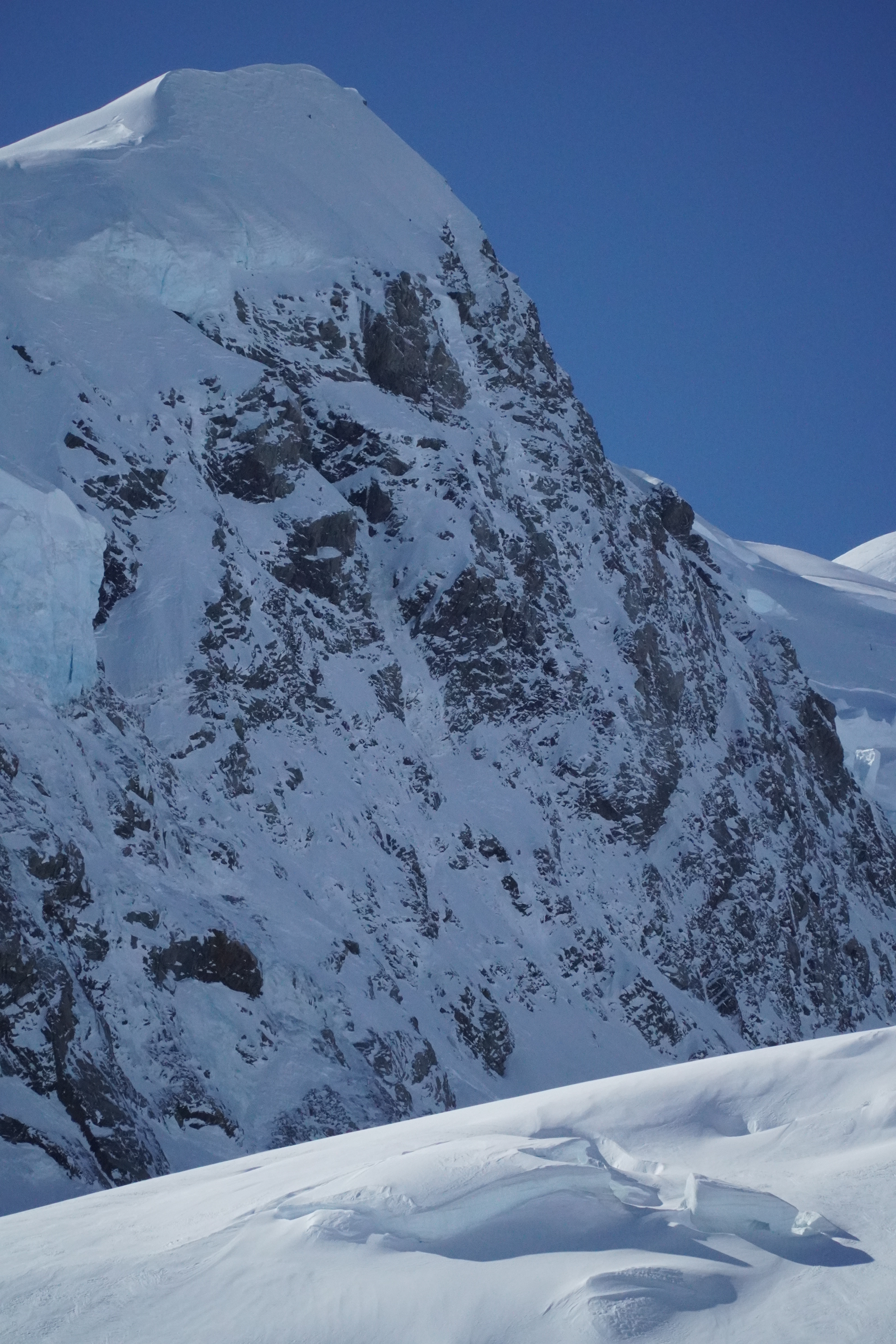
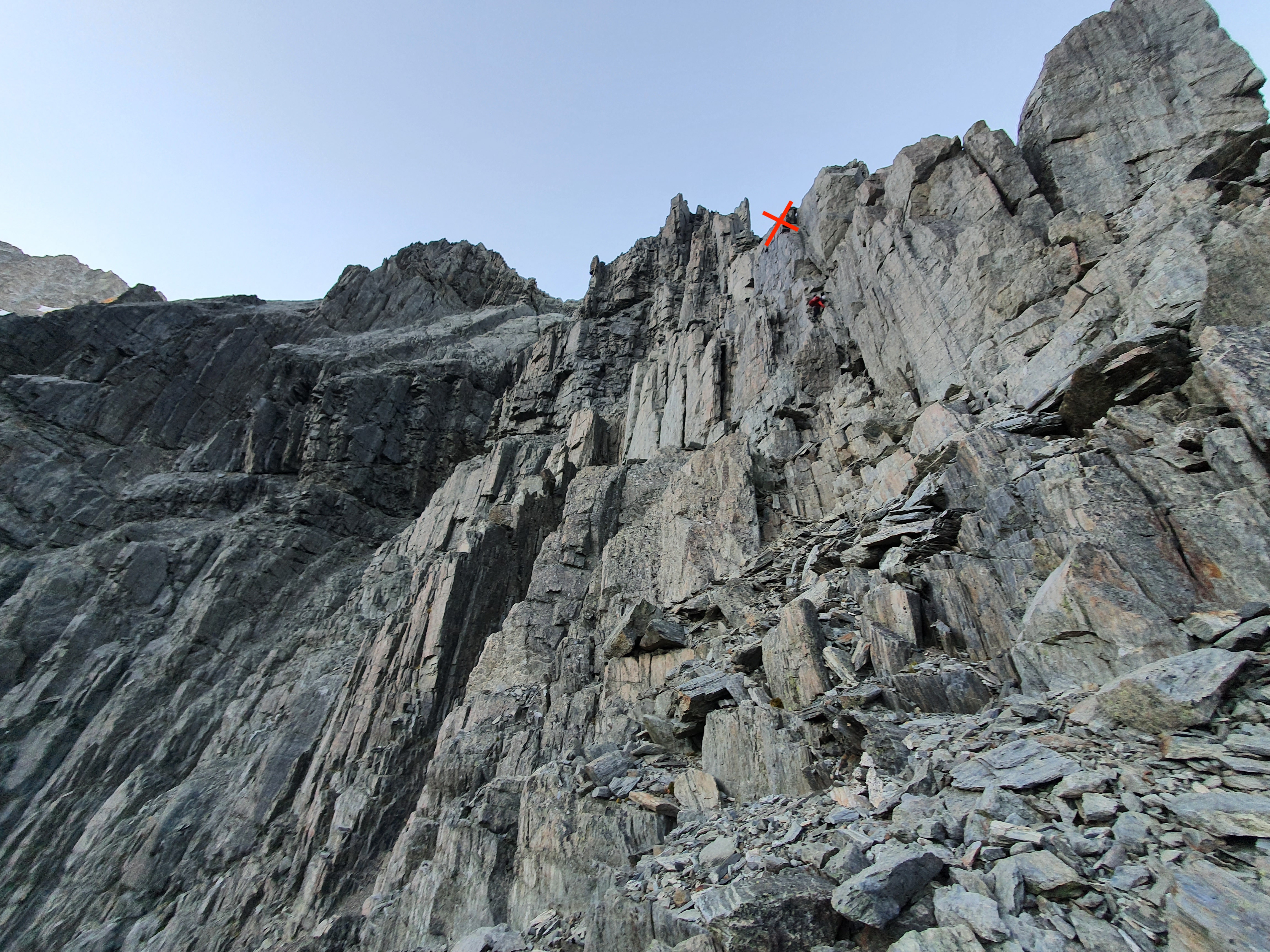
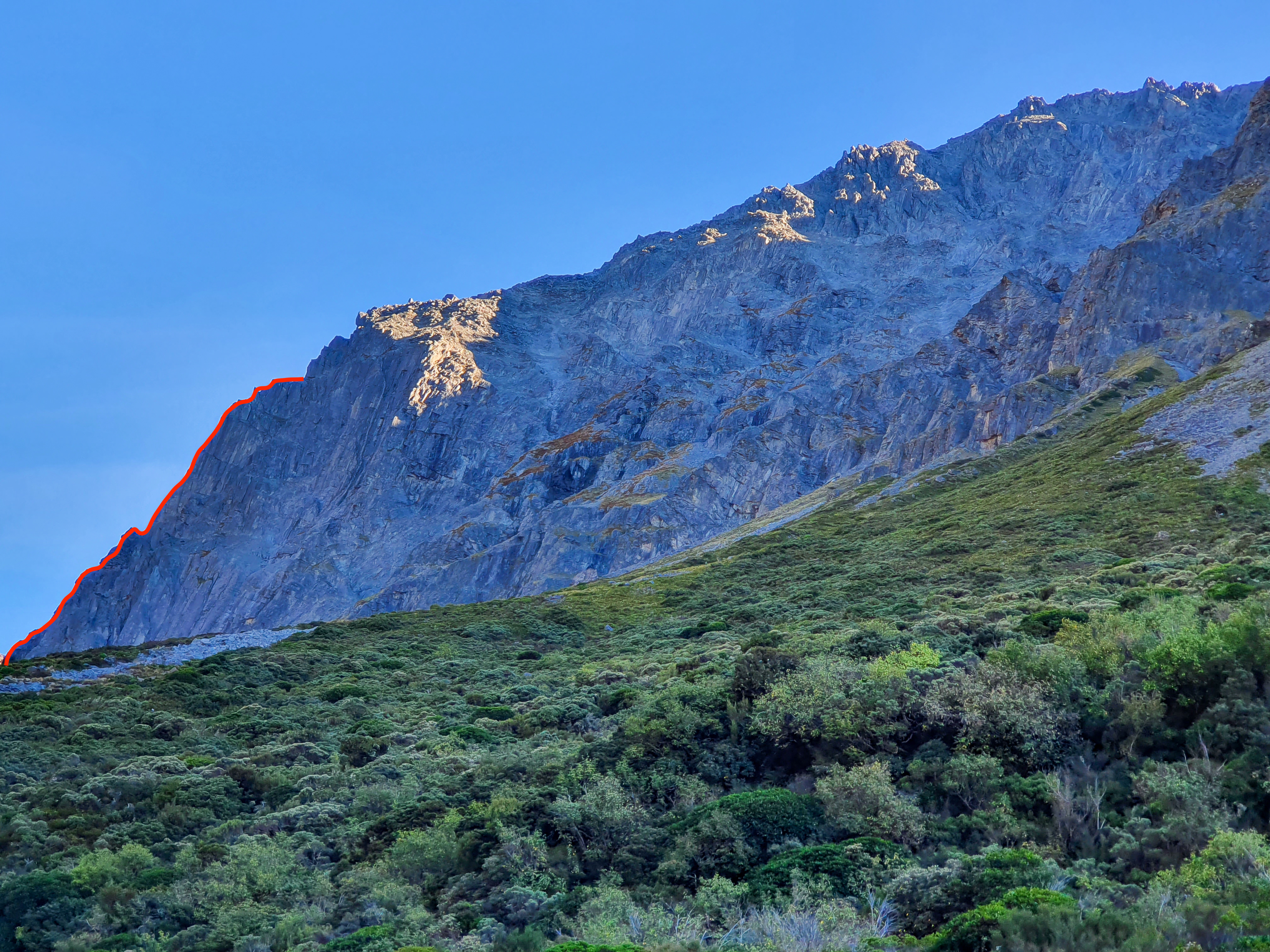
From Rome Ridge you get a reasonably good view of the face to pick a line – although its not possible to see the bottom section in its entirety to figure out the best way through the lower rock band.

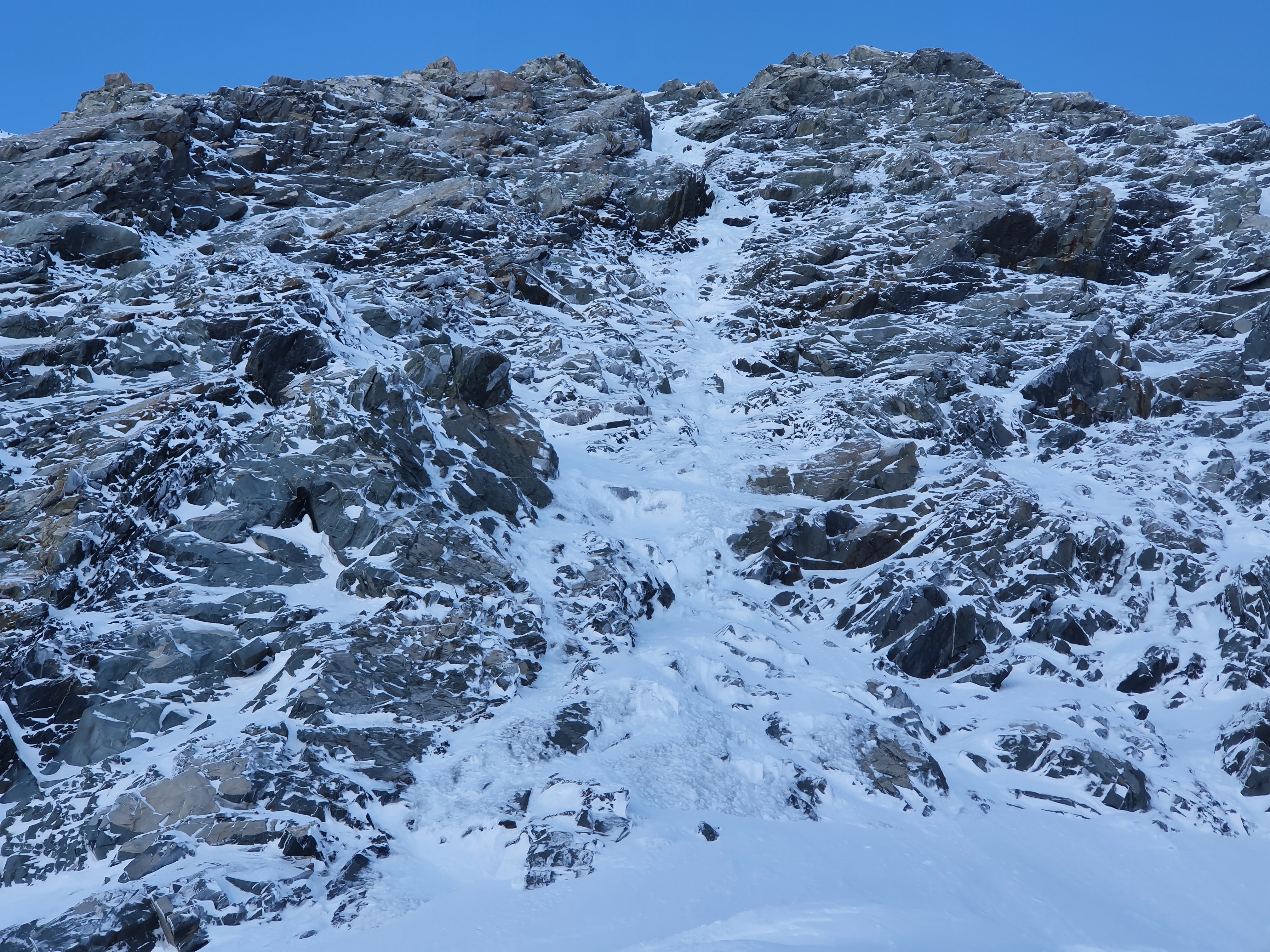
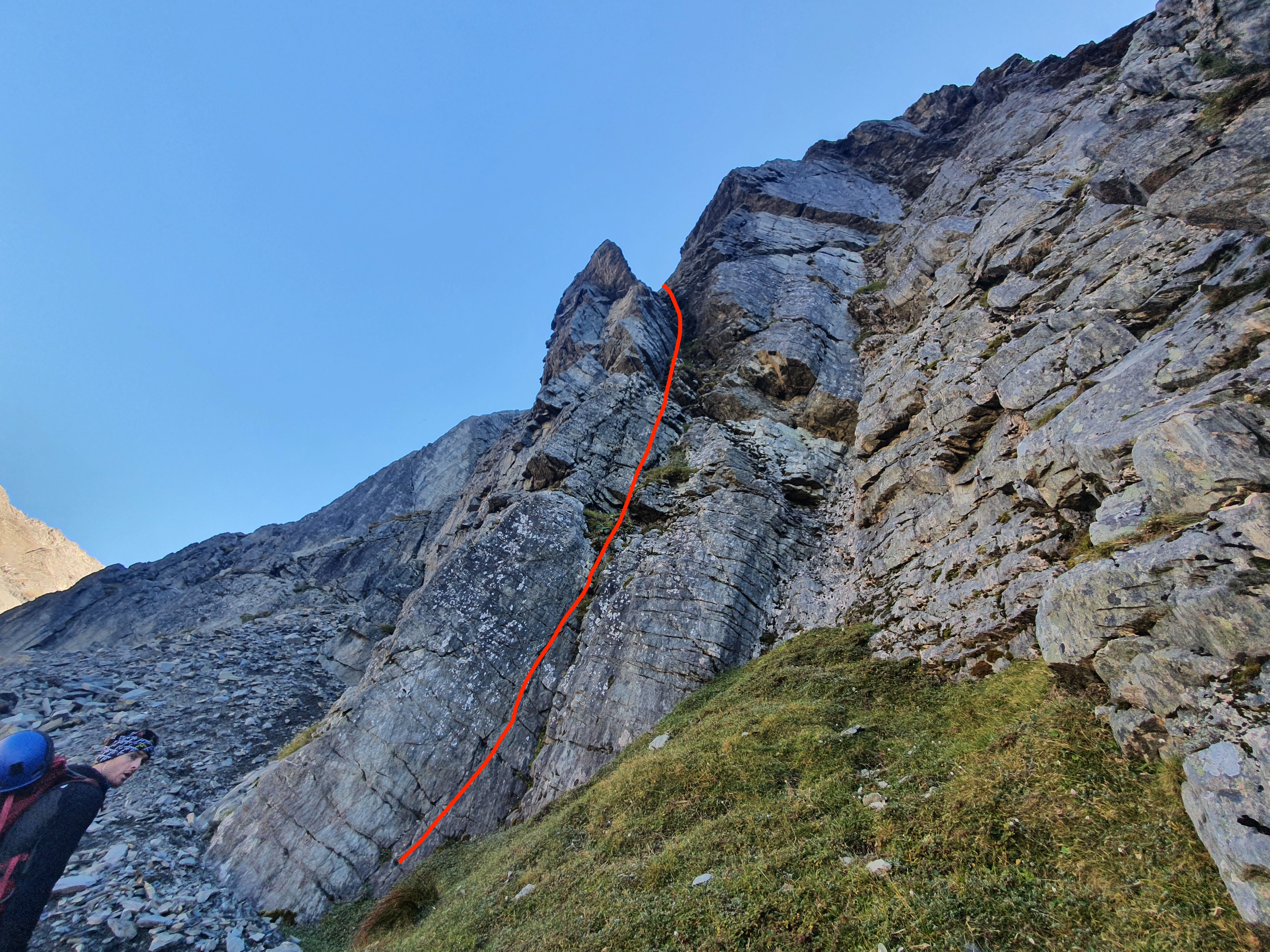
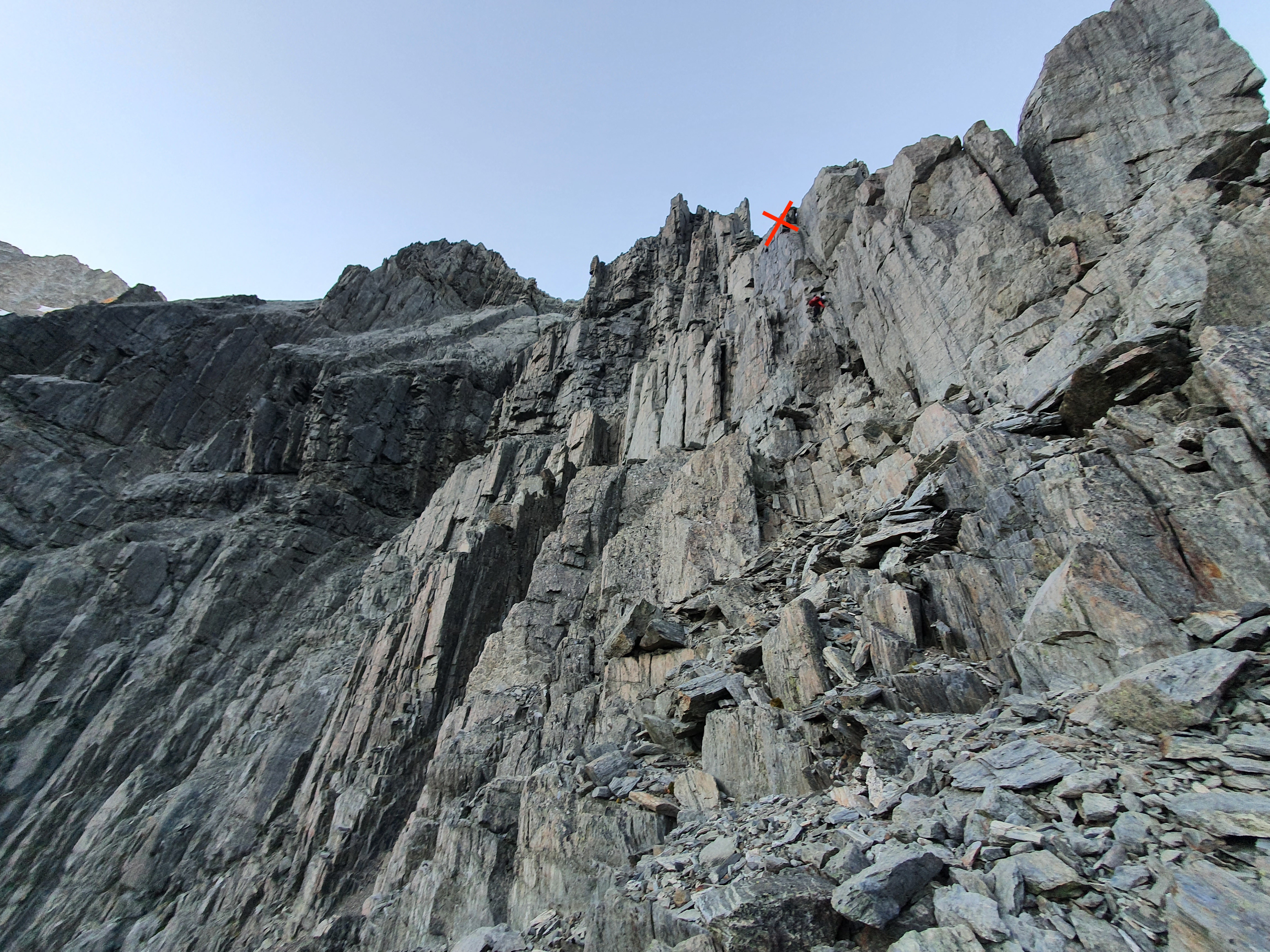
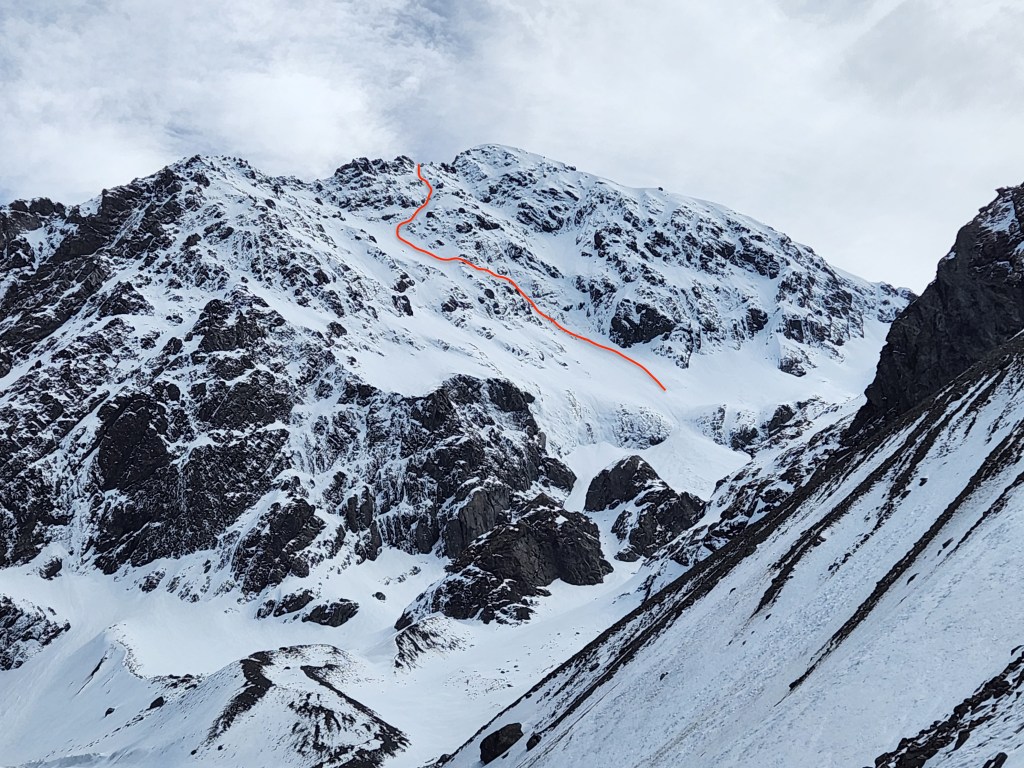
We chose a line starting on the left side of the face following the most obvious line of weakness to the summit ridge, but multiple variations exist. When we were there the other lines would have involved some scratchy mixed climbing to get establihed on the face

Climb
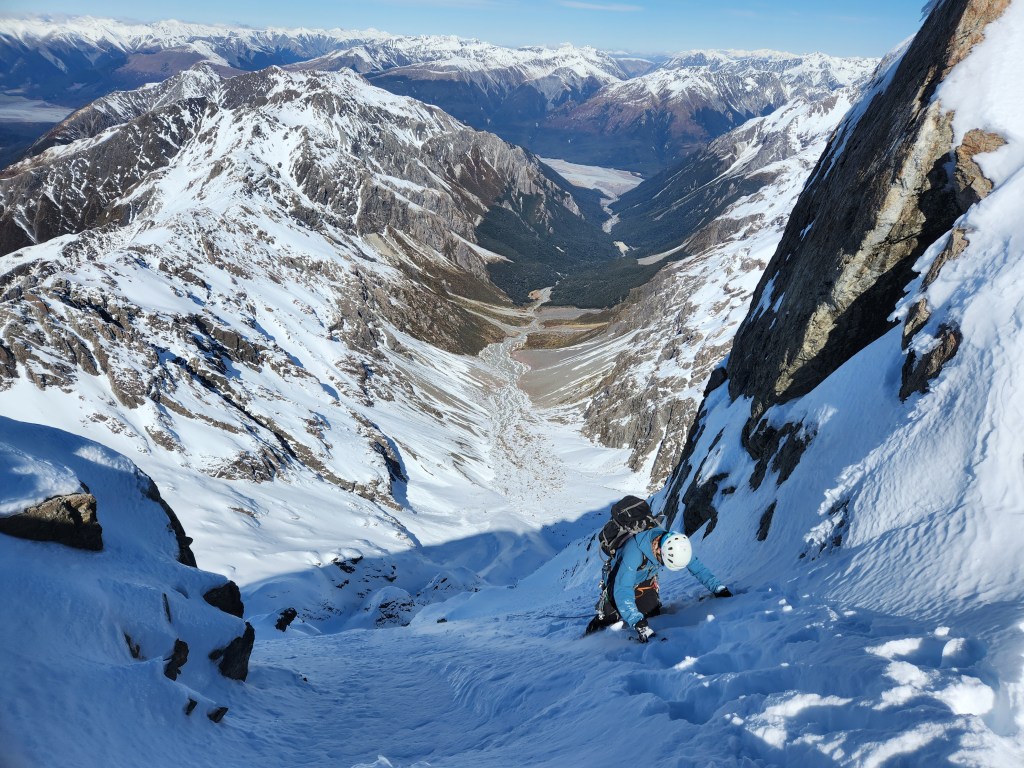
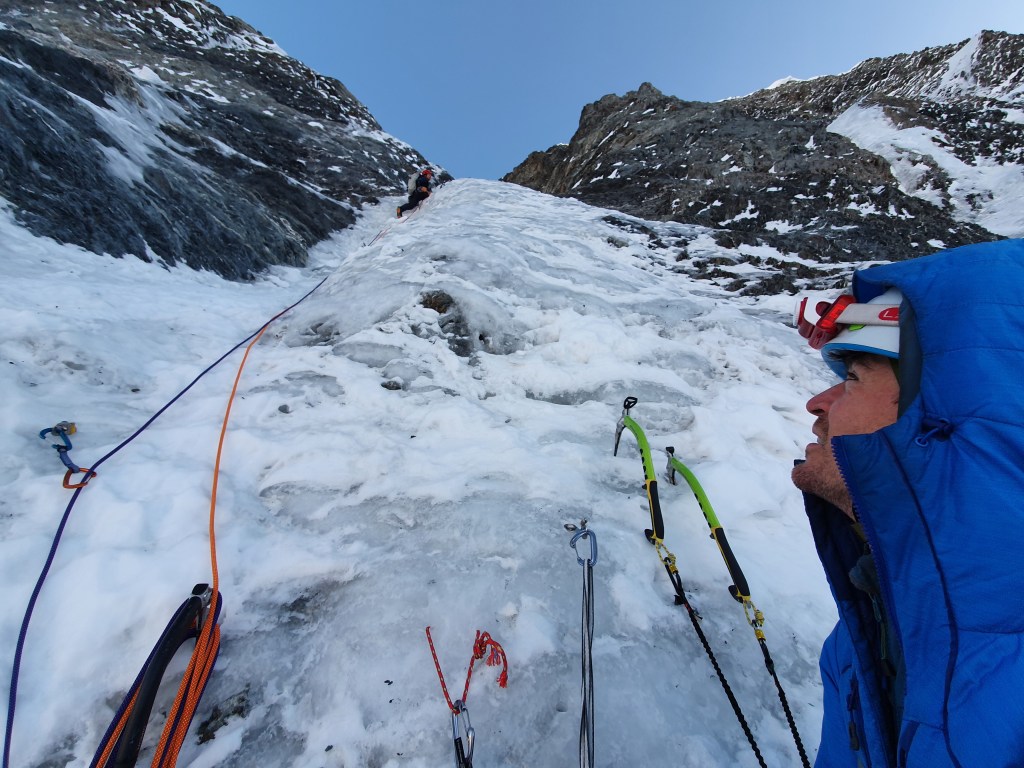
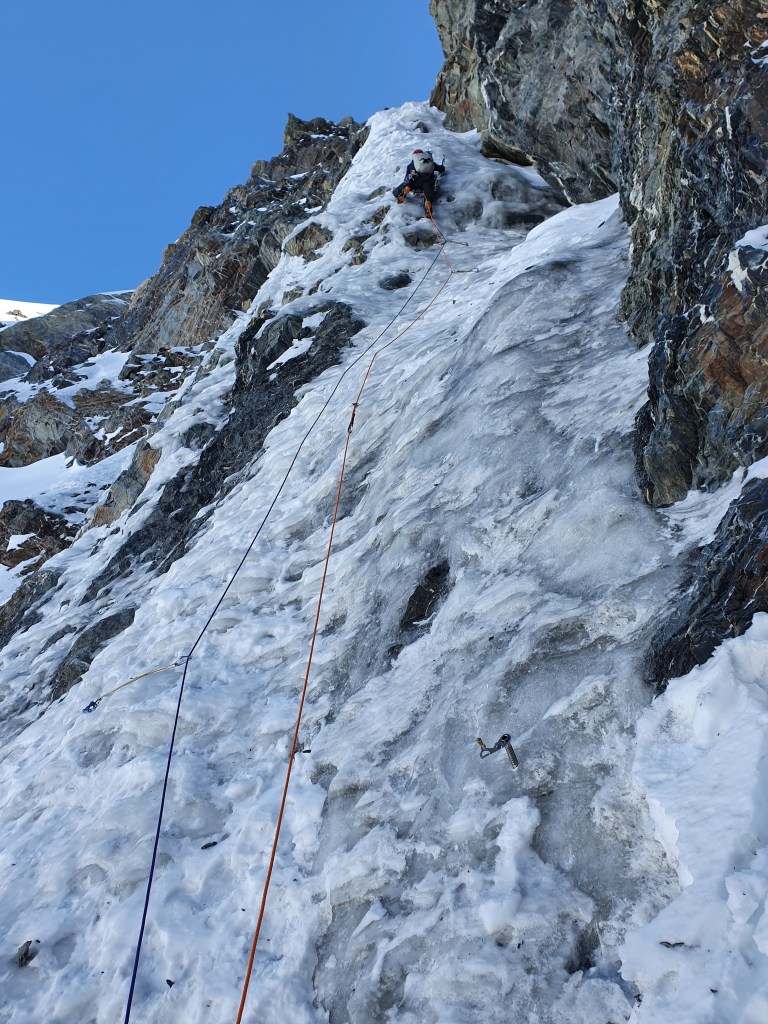
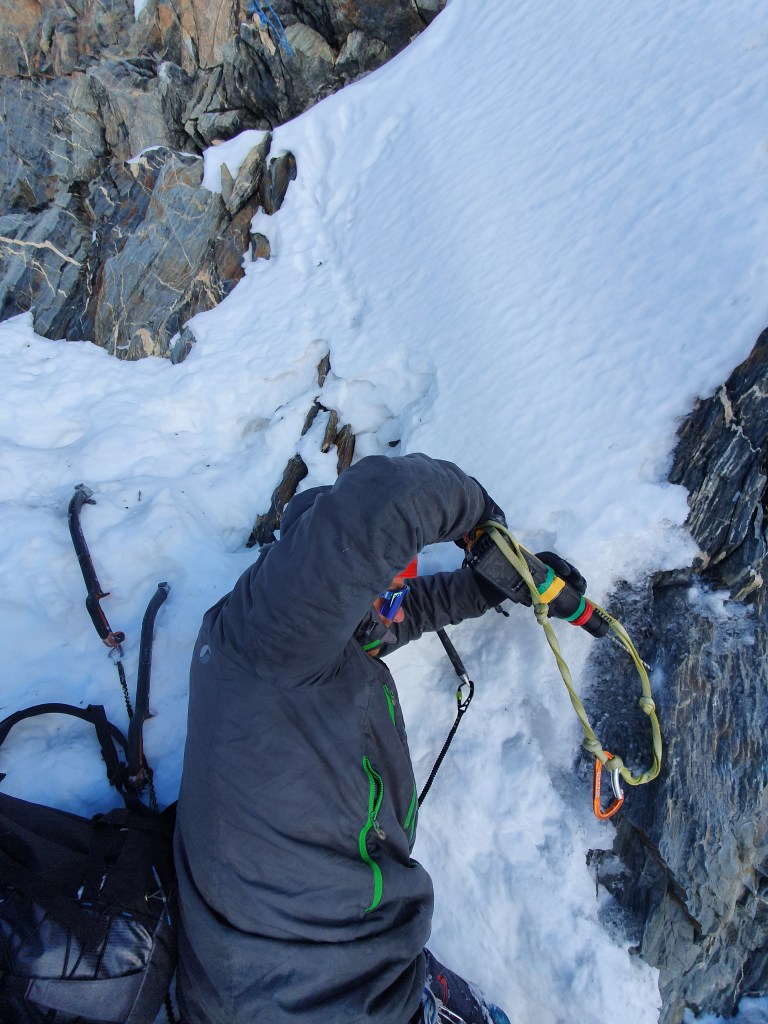
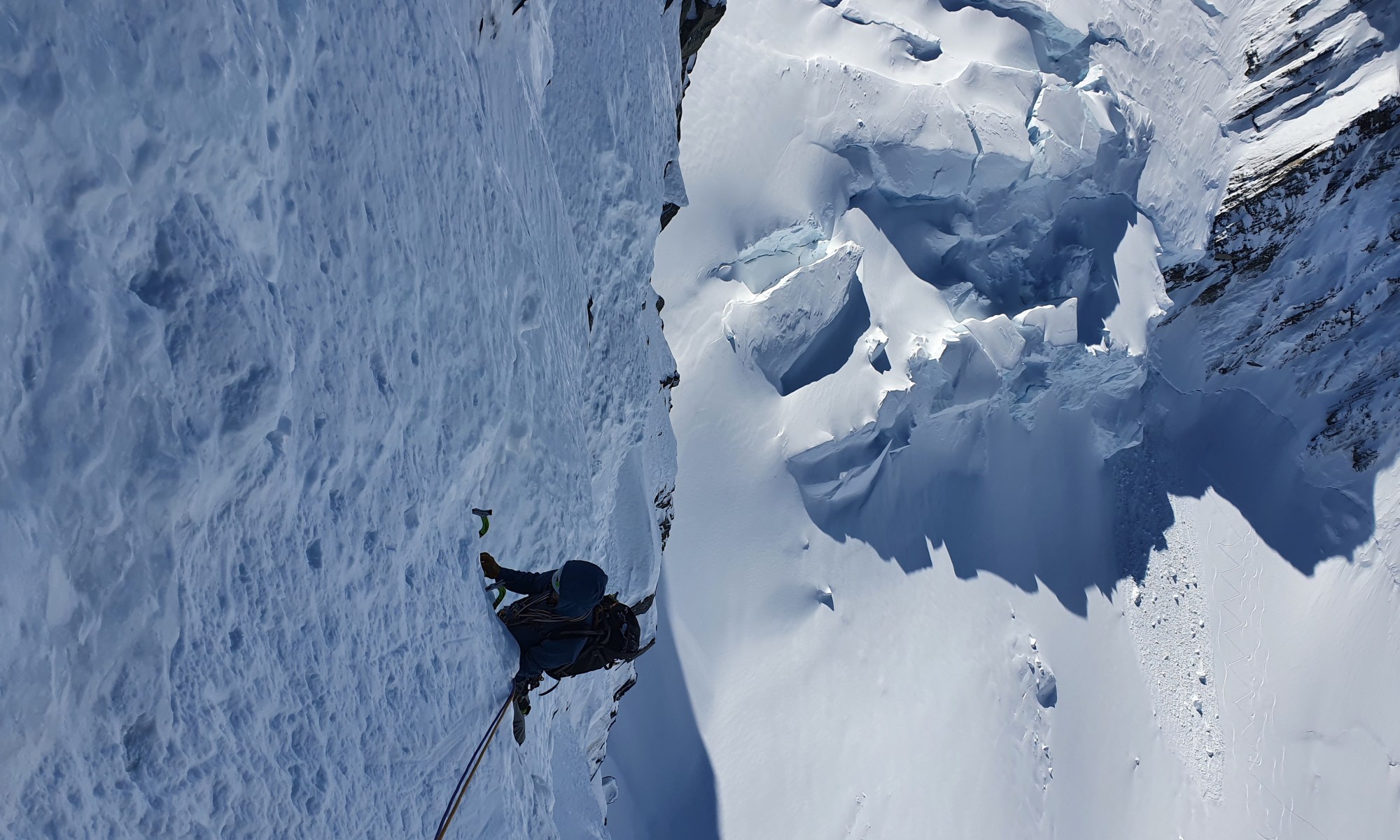
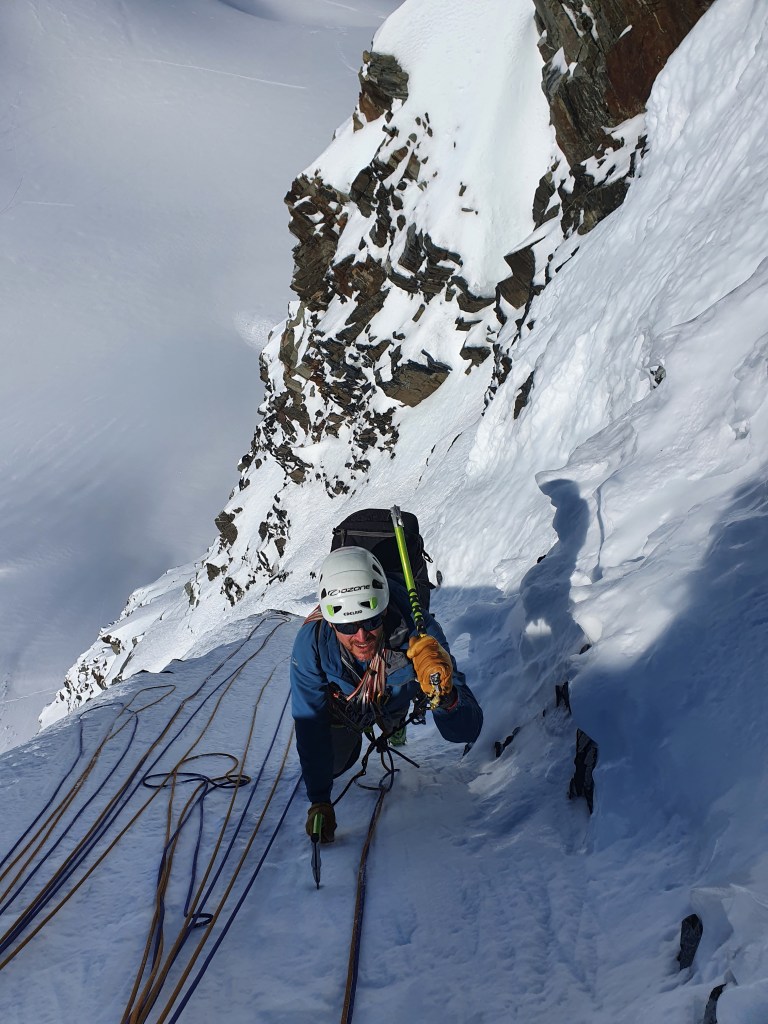
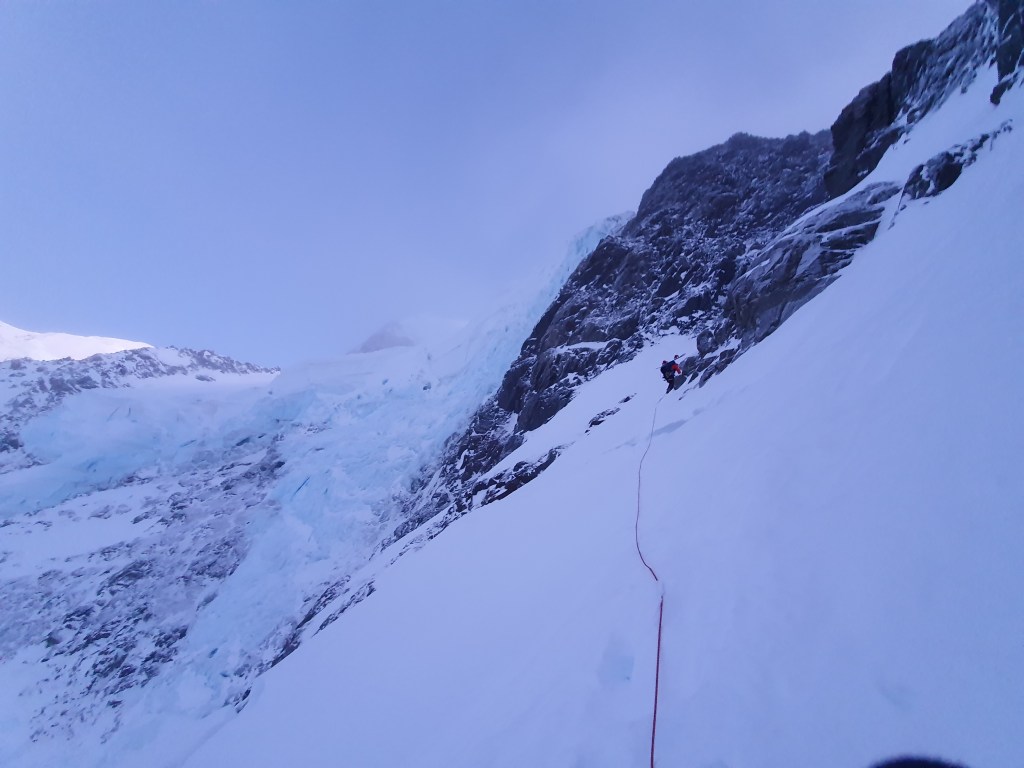
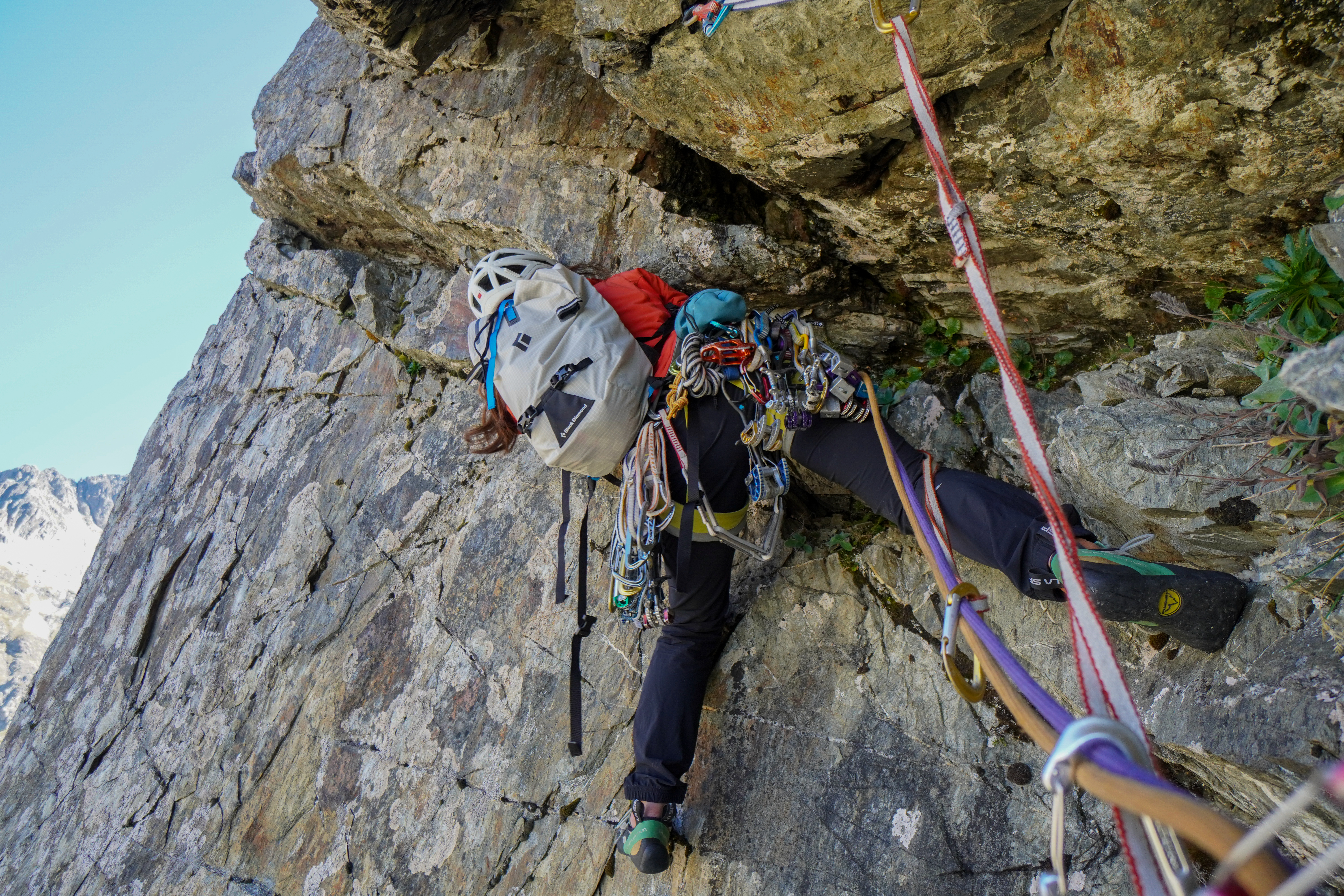
Will vary massivley year to year, but for us we found mostly pressed powder and breakable crust the whole way up the face which made for fast progress. There was a 30 section of WI2 at the very bottom of the route which we pitched, and took reasonable screws. There was another short rock step to negotiate near the summit, only a couple of metres long and no more than M2. There were plenty of oppurtunities for rock pro along the way if needed, and the pickets were solid.

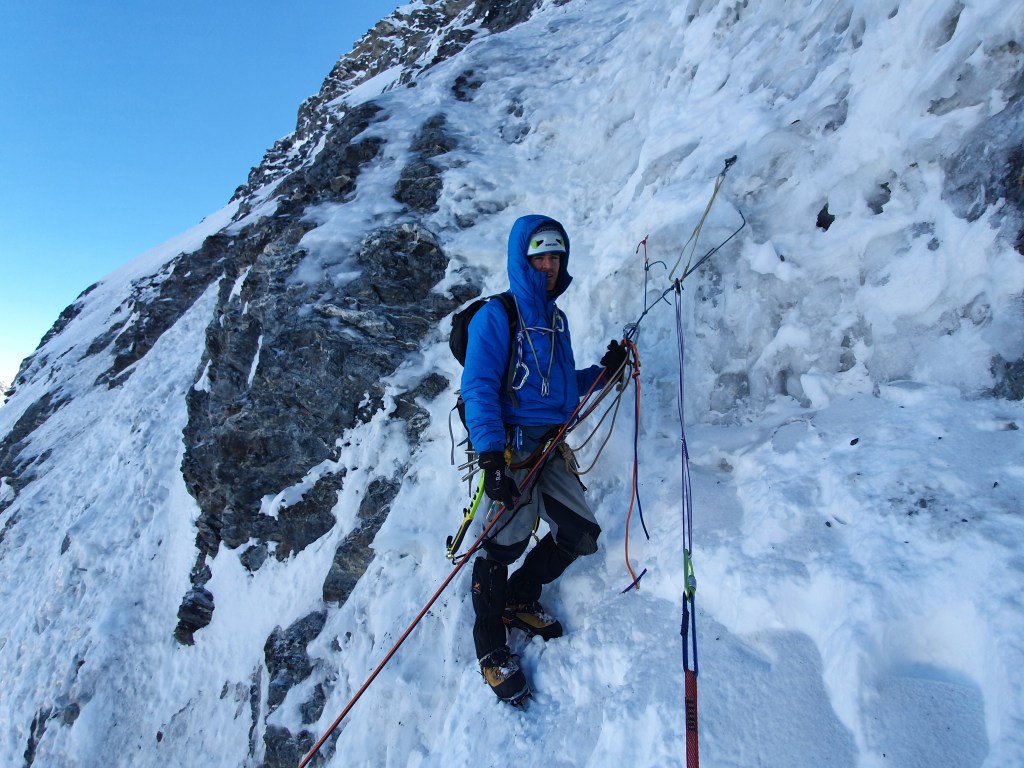
Apart from those 2 sections we simulclimbed and it took us just under 3 hours to climb the route – expect longer if pitching the whole thing.
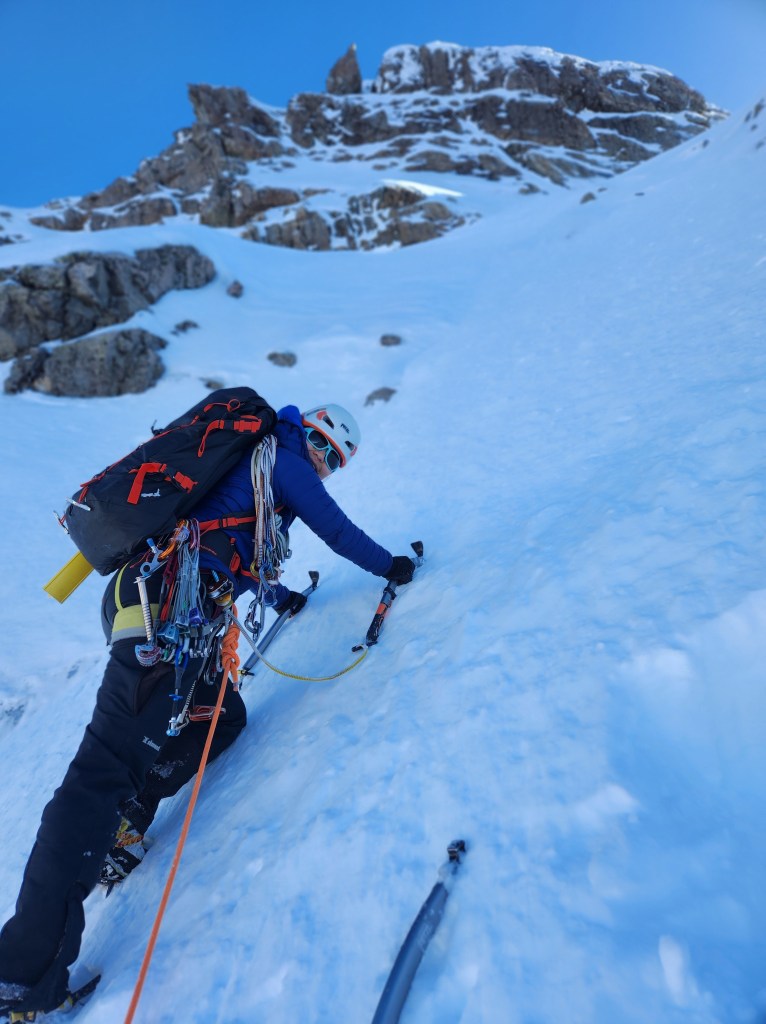
We followed the snow ramps to the summit ridge, just below low peak. The final section to the top was hard rime and rocky, but with the right conditions does look like it would go.

The climb is a really fun day out in itself, with a real sense of remoteness and scale despite only being a day trip from Christchurch, and well worth it even without the ski.

Ski
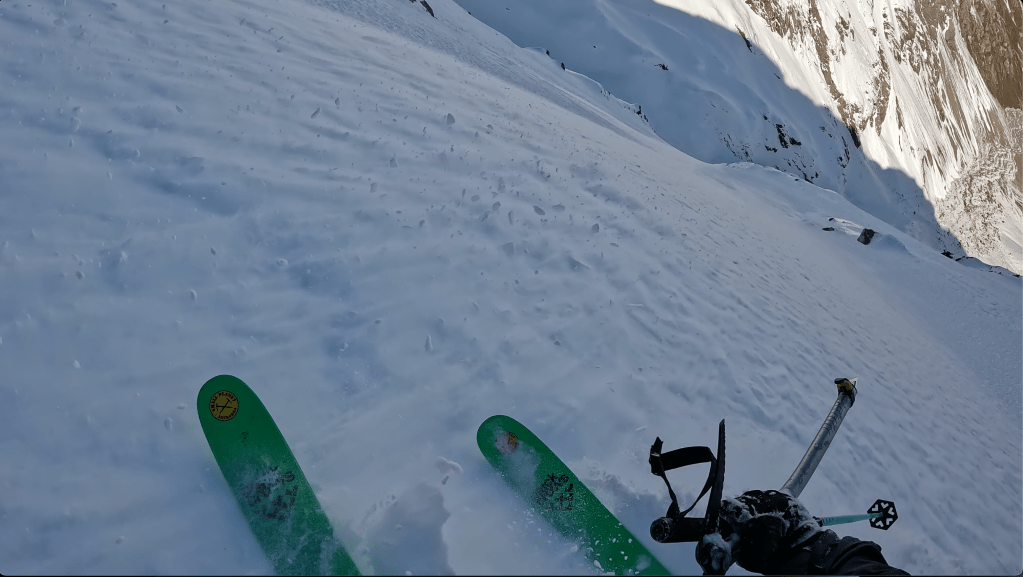
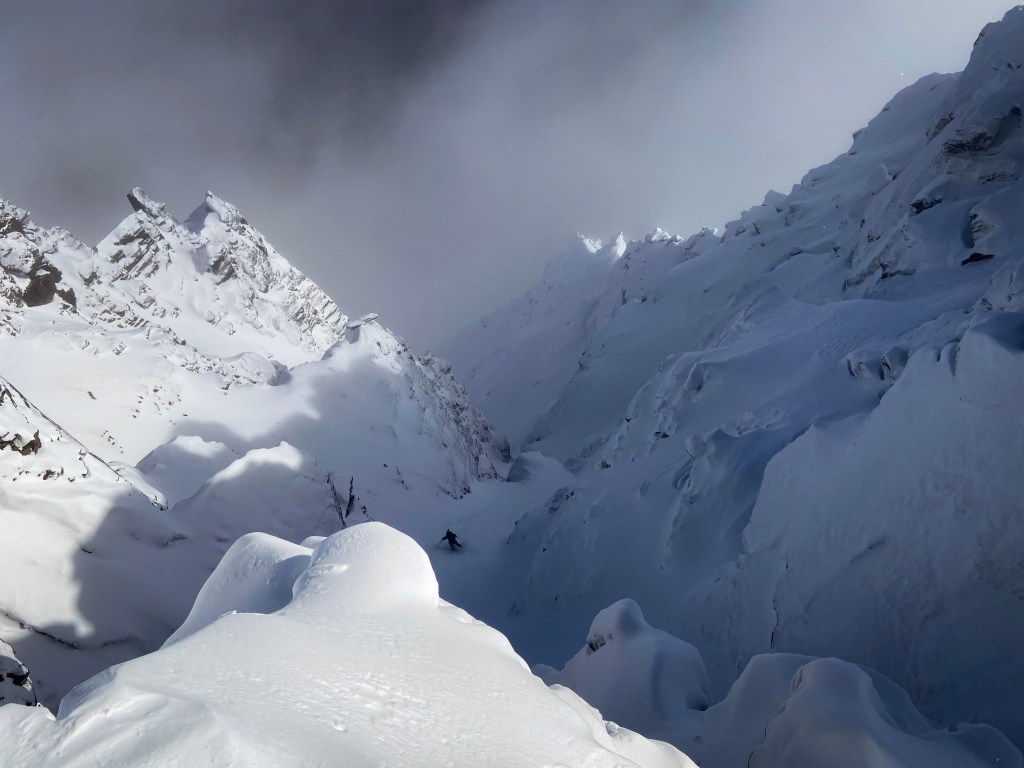
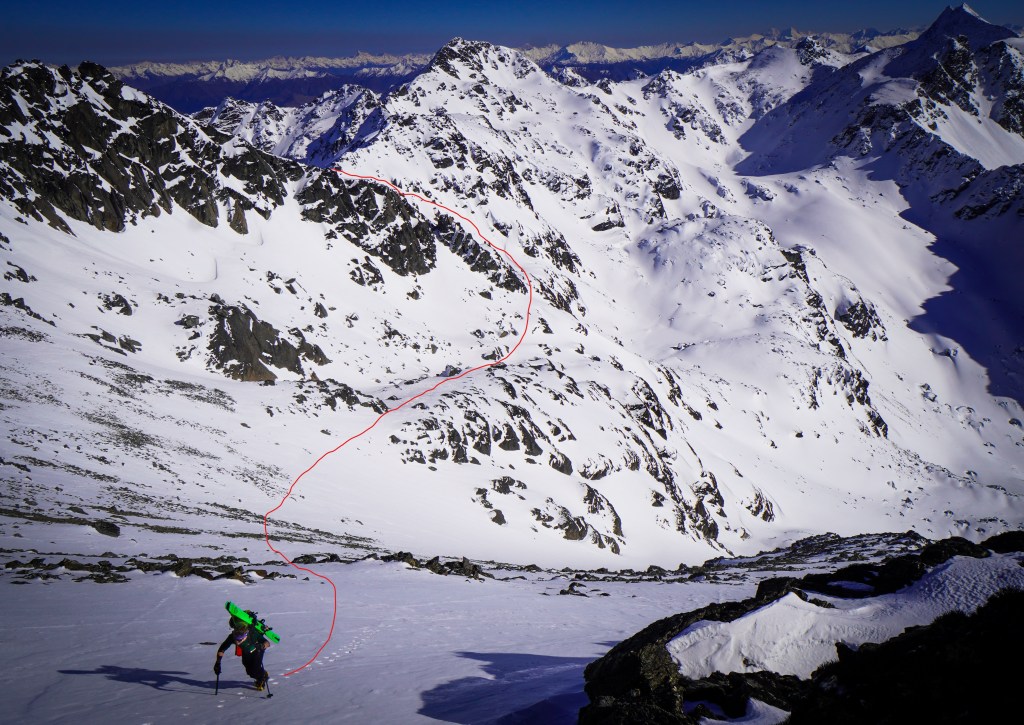
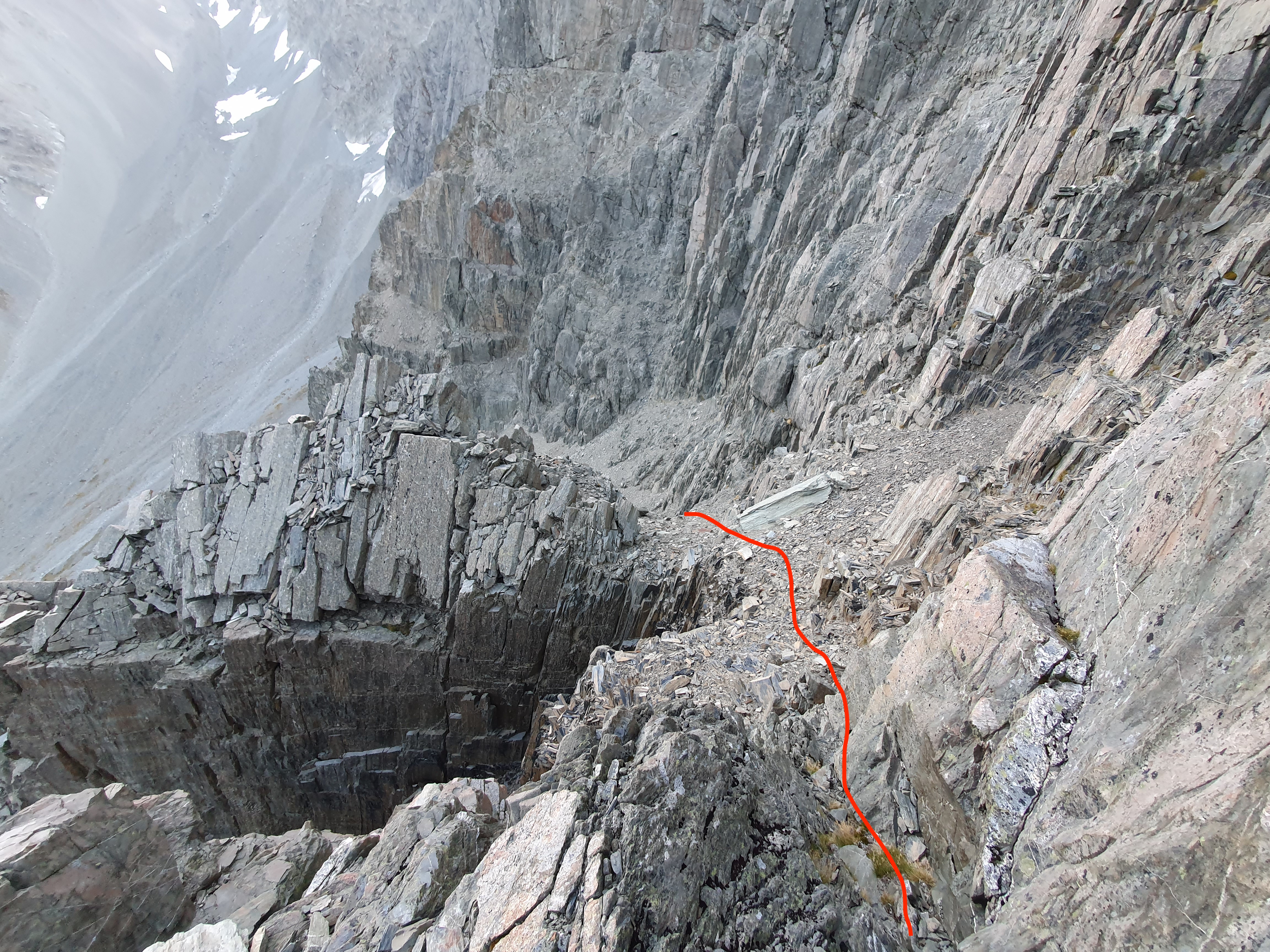
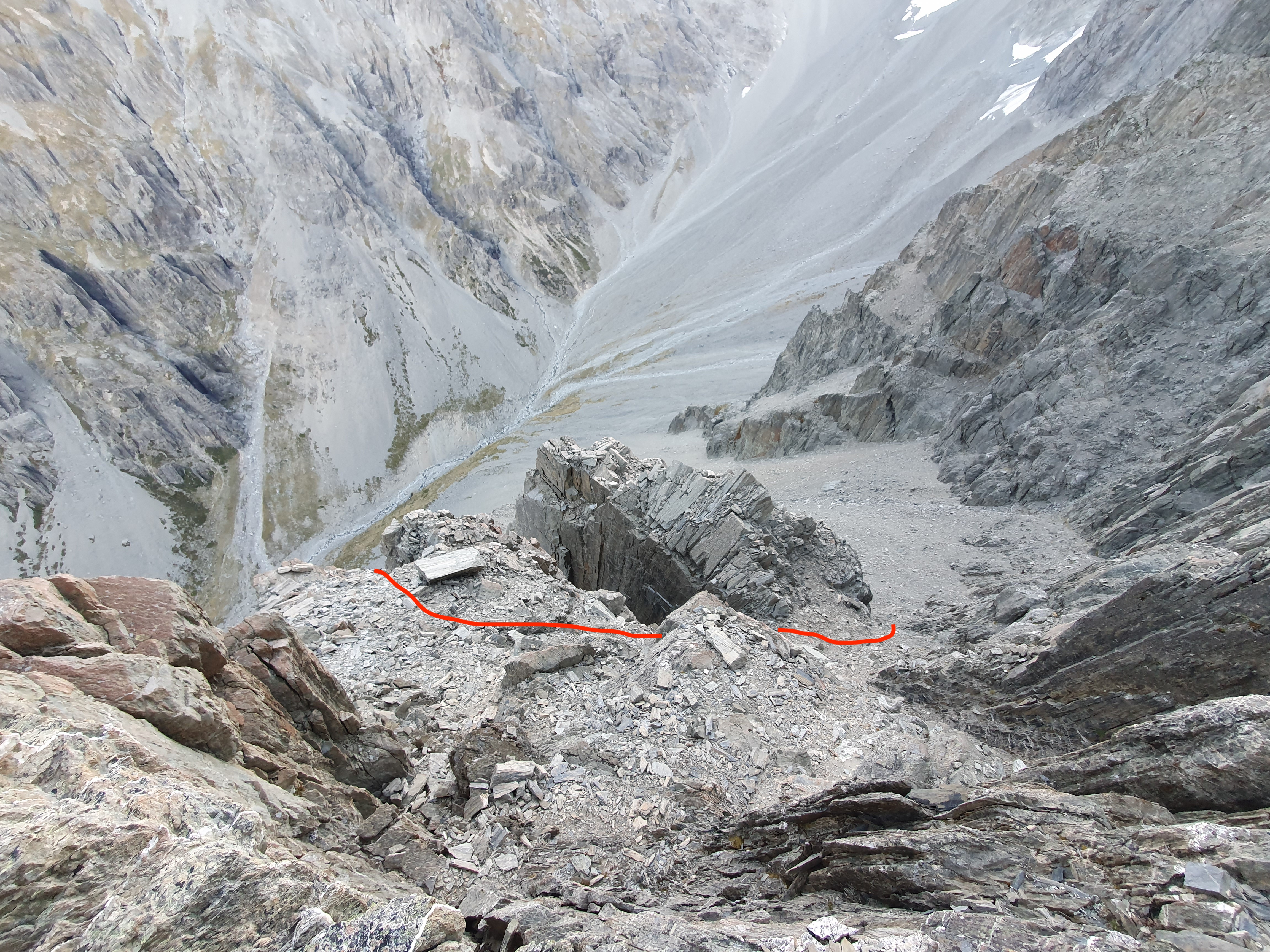
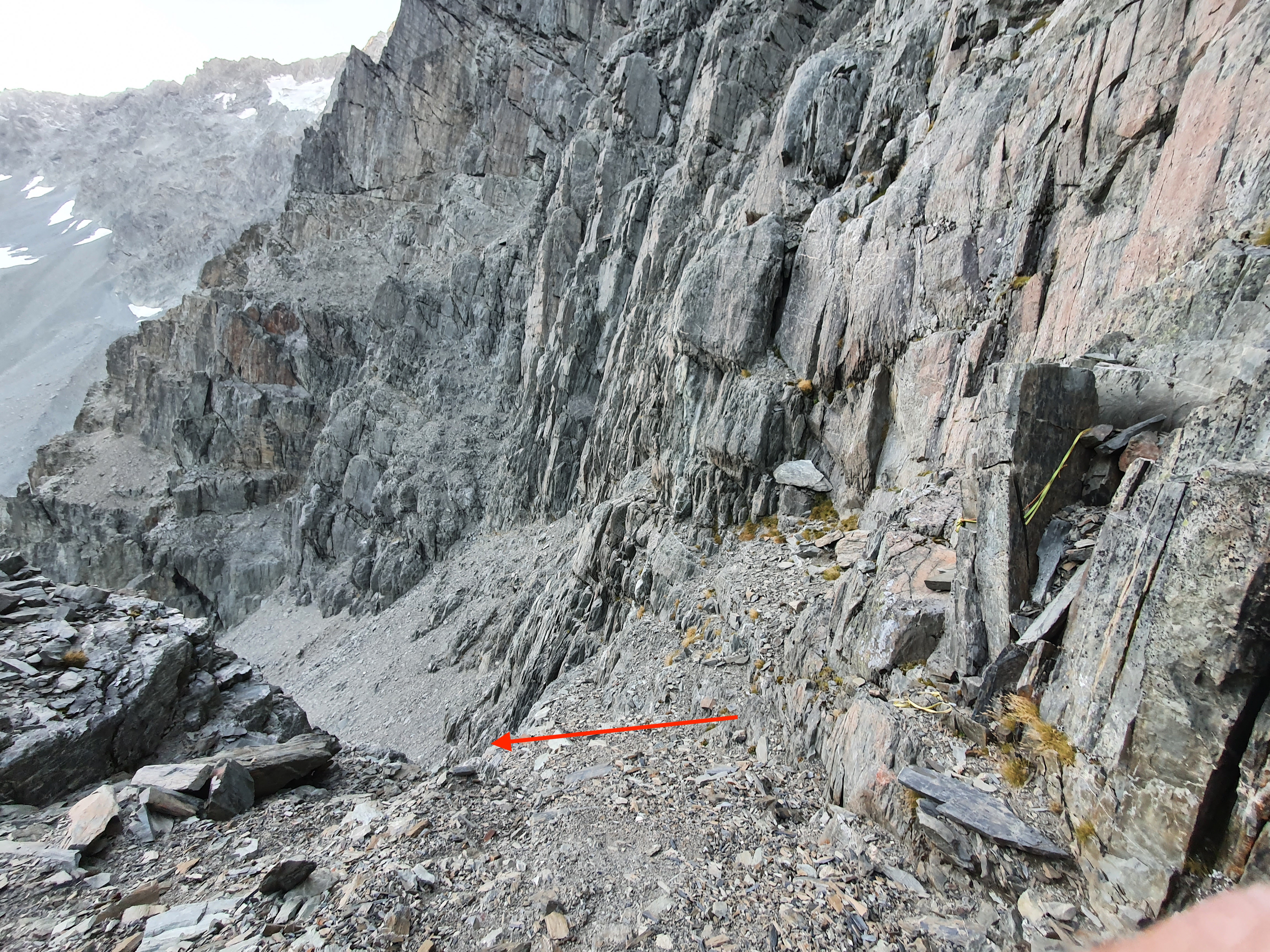
I followed the exact climbing line back down – especially on a face with such fickle conditions this gives a lot of confidence your not going to hit an unexpected chunk of ice and get thrown off the face. Starting at the obvious notch on the ridge, drop into the super steep and narrow right trending gully. This section is really steep and sustained, and the exposure is right in your face so its full focus time. This funnels you into the first rockband – I transitioned to crampons and downclimbed through this to save on loosing a picket. Once through this rockband theres a rightward traverse on a narrow terrace that puts you into the large open snowfield.

Once into this the exposure isnt quite as heinous and the angle eases off and you can open it up a bit more. I then tucked back left for the final section, which funneled me back into another steep and narrow gully ending in the WI2 section. I left a picket here and rapped 30m back to the snow.

From here its all go : mellow angle and no exposure = hoon time! You can go all the way to the snow line in the Crow Valley – an option is to then walk out via the Crow Valley to Klondyke corner (about 3 hours and a bunch of river crossings, but a good way to avoid the late in the day soft snow on Rome Ridge). I was meeting the others back at the village so instead retraced my steps exactly back up to Rome Ridge and the back down Coral Track to Arthurs.
Crosscut Barrier Traverse

  • Grade : II rock grade 10-12
  • Season : Jan 2022
  • Length – 13.57km, 1,938m elevation. 9hr 9 min solo (longer if using a rope!)
  • Gear : I had a 30m rope and some tat in case of needing a rap but didnt end up using it. Shoes with some ability to edge – glad I wasnt in trail runners. I’d just bought some Mammut 3 season mountain boots that were perfect. TX5 style approach shoes would also be ideal if you want to move faster. Late in the season the snow travel was very mellow – I had some lightweight crampons and ice axe but only used them coming down from Barrier Knob

I was meeting Maria and some other friends at Homer Hut for a trip to climb at copper point, but had an extra day of good weather and time off work so came down a day early for a solo wander. I couldn’t find a heap of beta online about this loop, which is easily accessable as a day trip from Homer Hut, so thought I would have an explore. The route starts pretty much at Homer hut, climbing up to the West Peak and then traversing to the Middle Peak of Crosscut, before descending a rib to the Crosscut-Barrier col and then ascending again to take in Barrier Peak and Barrier Knob before descending back to the hut via Gertrude Saddle. The Darrans guidebook describes it as ‘loose scrambling at grade 8-9 to West peak, and grade 10 downclimb from middle peak on solid rock’ and estimates 12-14 hours. Apart form the West Peak bit (which is horrendusly chossy and I would avoid at all costs), this is a mega fun day trip with some excellent exposed ridge travel and unbeatable views of the Darrans.
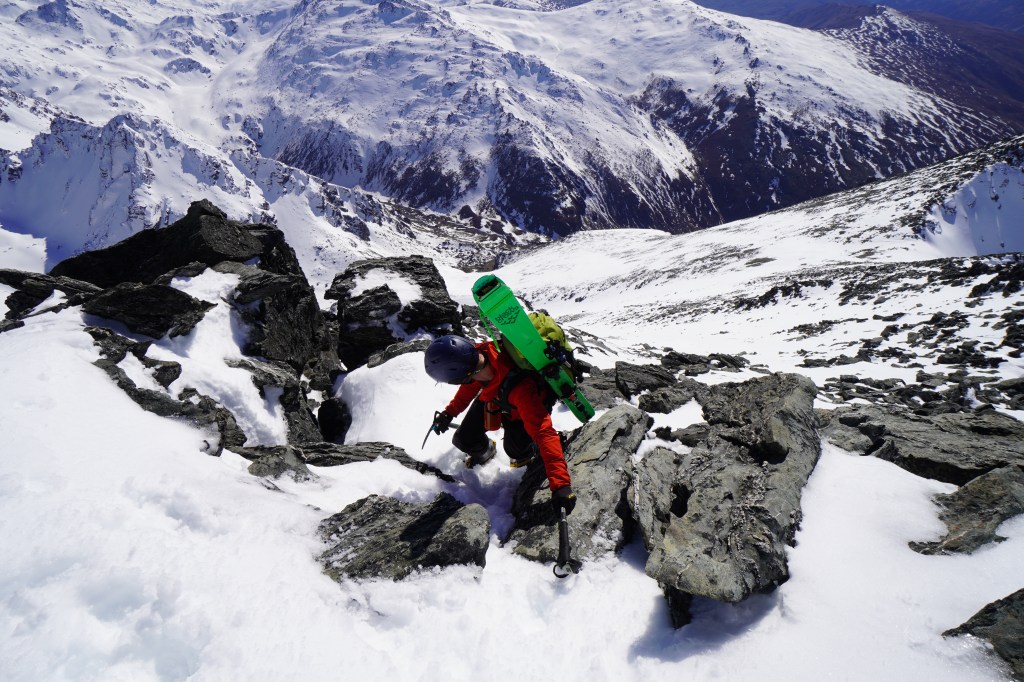
Its hard to get a sense of relative difficulty of these traverses form the guidebook – this is a lot more serious, involved and exposed than the Talbot McPherson traverse or Phillestine-Rollerston traverse and was right on the edge of my comfort zone to be soloing. Sustained mega exposure and a few sections of some actual climbing moves (although easy) means you’ve got to be mentally switched on the whole time – or bring a rope!

The first section is from Homer Hut up to the snowfield below West Peak. Head up Gertrude Valley track for about 5 minutes until you get to a clearing and then turn right up towards West peak.

Next up to West Peak. The ‘loose scrambling’ description in the guidebook is somewhat of an understatement – while getting to the summit of West peak is a walk, I wasnt prepared for the heinous levels of choss from here towards Middle peak : this is not what you come to the Darrans for! It was scary and dangerous and I wouldnt recommend it – teetering towers of weetbix which topple with the slightest tickle, above around 1000m or so of exposure to the south and east. Its also very easy to just miss this section out by sidling around the snow below West peak to take the small rib up to the sub peak between West and Middle peaks, which is where the bomber granite starts. I was very happy when this section was over, and the more heroic ridge travel started on excellent rock.

The section from Middle Peak down the rib to the col is the crux and is especially good – winding around the ridge on excellent rock over some good exposure down to the glacier below. A couple of sections had a few delicate moves – definitely is more like climbing than I was expecting. Easy but sustained and exposed. Plenty of oppurtnities to sling a spike and rap down to the glacier if the constant head game gets too much, as it is full focus for this whole section. Would have been easy to protect with a running belay if your not by yourself. Grade 10-12 seems about right to me.

Being late season I could follow the ridge all the way down to the col without hitting any snow, and there were some good tarns at the col for refilling the water bottle (and a good spot to admire the imposing south face of Marian) before heading up to Barrier Peak.

I cut around to the west of the ridge / just west of point 1734 where easy low angle slabs cut back up to join the main ridge which is then very straightforward up to Barrier peak. You could also go head on from the col to the ridge but looked a bit trickier to me.

The section to the west of Barrier Peak is really epic – easier ground than Crosscut and very good rock, but with huge exposure and amazing views up towards Lake Adelaide. Some of the best Cheval shuffling around. Soon your onto Barrier Knob and its plain sailing down the Gertrude Saddle track.

All up a great route and well worth doing if you avoid the choss. If you are protecting the ridge then could get a bit time consuming so leave early!

MK Gully, Remarkables West Face

A classic moderate M3 mixed climb on the west face of the Remarks, previously unskiied. Back in July 2021, Maria and I had taken some friends there a few days earlier for an intro to mixed climbing, and as we were wallowing up the route through knee deep powder I got thinking this would be a great ski line. Luckily I was off work the next day so came back with the skis to open the line. Farily hectic line : short but technical and exposed at the top, with a mandatory air into the steepest narrowest part of the gully, just above another cliff band. High pressure stuff! Bumped into Grice who was working patrol and told him my plans and was keen to join me, but sadly couldn’t get out of work duties. But it did mean he was at the top of the line to take these rad photos! Chur!

  • Length – The climbing route to Queens Drive is 150m. But you can keep going beyond there until the snow runs out, I made it about another 300m.
  • Steepness – Initially around 40-45. After the air its steep (around 45-50) and you havent got long to control your speed before the next drop
  • Exposure – Critical in the top section. Gets its M3 grade from several vertical rock steps which are linked by snow ramps. Once your through this your cruising
  • Aspect – West
  • Difficulty – 5.2 E3. Difficulty really all comes in sticking the air and controlling your speed in the narrow and steep mid section before the next cliff. Falling on the landing would cause a really nasty tumble through the next cliff band
  • Equipment – 60m rad line. Crampons and 1x tool. Picket and rap tat

As with all of these climbing lines, its critical to check theres nobody coming up the route before you start skiing it.

Start by going up Shadow chair and head up past the chutes across the top of diangulator all the way up to the ridgeline. The top of MK is just in front of you at a flat section. The climb has several different topouts – the furthest skiiers left is the most skiiable. The large block in the above photo is the best landmark to ID it, and also works well as a rap anchor. I rapped about 5m over the rocks at the top – after getting through it and seeing the snow on the other side, it totally would have gone to just jump the rocks. Maybe next time!

The line is in 2 distinct halves – above and below Queens Drive. Above is the climb – steep, narrow, and tight with several rock steps you have to either air or rap. The very top section from the ridge takes you diagnoally down and right to the main fall line, and the first rock step. Roughly 2-3m high into the steepest and narrowest part of the line, with only about 20m or so after to control your speed before the next cliff. I went off the skiiers left of the block where the drop was smaller but you land in a really narrow part of the gully. A more heroic option would be straight off the end of the block, but you really dont have long to stop before the next cliff, and falling through it would be seriously bad.

If you were going to rap this middle cliff a picket would be the way. Unusal to get good ice just there and scraping around for rock pro would be a pain.

The next cliff is a similar height, but had ice on the landing when I was there so I put the crampons on and downclimbed. But again I reckon it would go late season in a big snow year!

Once the skis are back on the pressure is off and its type 1 fun – blast down through Queens Drive and down the gully until the snow runs out! I then just hiked back up to Queens Drive and out to the ski field. I would definitely NOT recommend carrying on down the West Face – did this on a previous trip down Morning Glory and it turned into the quest of all quests

Youtube link below for the POV

Swiss Virgins, Vampire

A high quality 350m WI3/4 ice route with easy access from Baron Saddle hut. Unfortunately a large rockfall has affected the South face of Vampire since we were there and I havent heard of anyone going up there since so I have no idea how stable the rock is or if the line is even still there. Hopefully it will be climbable again as the whole zone is awesome

Swiss Virgins vampire ice climb mountaineering route
The climbing line with approx belays marked with yellow crosses. We linked the first 2 pitches into 1, but meant we needed a short simulclimb to get to the good belay ledge

Approach

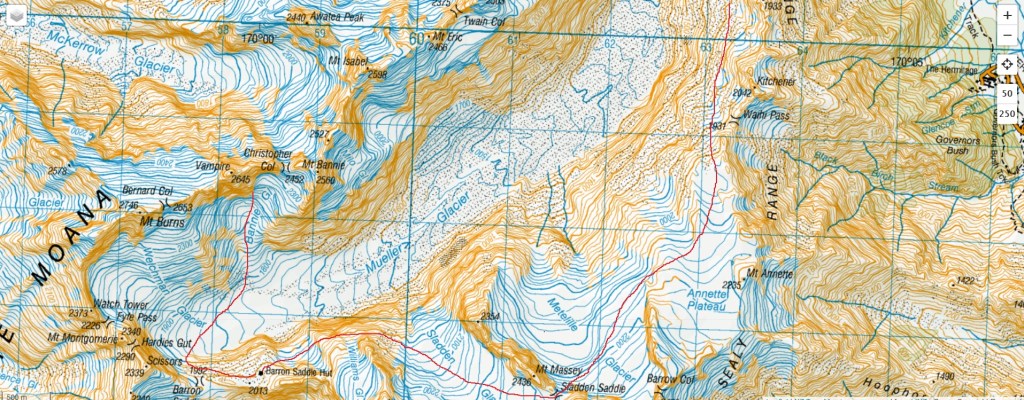
Base yourself at Baron Saddle hut. Access either via the Sealy Tarns track and Mueller hut then across the Metelline, Sladden and Williams glaciers, or a 5 min heli ridge from Glentanner. We flew in an hiked out as we only had a couple of days off work to get the trip done. I would avoid access via the Mueller glacier – the access around the Mueller terminal lake looks terrible, and then the glacier itself gets unrelentingly pounded by rockfall from above.

Baron Saddle hut with Vampire in the background. The approach to the route in red

Barron saddle hut is a compact little barrel with bunks, but no gas or cooking equipment so bring everything.

From the hut we headed to Barron Saddle and then across to the Bannie glacier. From here its a simple 3-400 vertical metre plod to the start of the route. We went up the night before to figure out the route in daylight, and left a bunch of gear at the base of the route. Skis would speed things up significantly but Sean was between skis at that point so we were booting it.

Climb

Crossing the shrund was a bit tricky and involved so traversing out to the west before sidling back in under the route.

Bottom of the 1st pitch

Pitch 1 : 2x 25m sections joined by a short low angle snow ramp. The first was WI3 but the second was near vertical for the second half, at WI4. Tubbs led this first pitch and did both sections in one long pitch. We ran out of rope and so had to simul a few metres to get him up to the snow ramp above to build a belay. To avoid the simul you could turn this into 2 pitches

Sean coming up the 1st pitch

Pitch 2 : Snow ramp into WI3 ice traversing right up to a screw belay and the start of the next section of steep ice

Good ice climbing up the third pitch of Swiss Virgins, Vampire

Pitch 3 : Steepens up for the next WI4 pitch. The ice was a little thinner here with a few mixed moves thrown in. Culminated in a near vertical 2m pillar to get onto the low angle snow field

Pitch 4 : Another 40m of WI3 to another good screw belay

Mark leading up the crux 4th pitch.

Pitch 5 : 20m of WI3 into a steep snow gully up to the summit

Descent

Good V threads all the way up, except right at the very top where we threw in some bolts

There were excellent screw anchors the whole way up, and a team of 3 is ideal for prepping the V threads on the ascent to maximise efficiency on the descent. However when you reach the very top anchor options are slim. The unconsolidated loose snow meant a picket was no good and the ice runs out so threads arent an option. There is a big rock at the top which has a thin crack in it that can fit a knifeblade piton, but the direction of pull for the rap was straight out of the crack. We had spoken to a group that had climbed the route a few days earlier and told us about the top anchor situation and we decided to do a bit of a public service and bring a power drill up and install a nice shiny new DBA with rap rings. We were hoping this was going to becoming something of a classic ice route and would get a lot of traffic – after the big rockfall I dont know if these bolts are even still there. Im sure they are still securely in the rock, but the rock may now be at the bottom of the valleyโ€ฆ..

Heading home across the Sladden glacier

From the hut it took us around 5 hours to get to the car on foot – would be significantly faster on skis. The section getting to the Sladden glacier (passing under the Williams glacier) was quite thing and over some big exposure – take extra care if crossing this late in the day and a small wet loose could cause a big fall down to the Mueller. The same is true (but to a lesser extent) between the Annette and Mueller hut.

The route from Barron Saddle hut (x) back towards Mueller hut staying high on the terraces. Gets the sun later in the day so go early. Right from the hut it the way up to the route
Looking up the route
Im going to start bringing a power drill on all my alpine outings….

Mt Tuwhakakaroria North East Face

The big obvious ski line visible in the distance when looking south from Wye saddle, Iโ€™d been wanting to ski this peak for years before finally getting round to it. Beautiful north facing spring corn in a striking couloir from the highest peak in the range make this a very worthwhile outing. It makes a great day trip from Lake Hope, or a big mission with a very early start from the Remarkables. We skiied the line marked in the photo on the North East aspect. A slightly steeper couloir on the North face looks excellent, but had a bare rock step that would have required a rap when we were there

Alex on the summit, with double cone visible in the background
  • Length โ€“ย 600m (300m main line, further 300m bowl to bottom of valley)
  • Steepness โ€“ย 35 deg average. Steeper at the top before opening into a wide open 35 deg bowl
  • Exposure โ€“ Nil on descent.
  • Aspect โ€“ย North East facing. Perfect for spring corn early in the day
  • Extras โ€“ย 
  • Difficulty โ€“ย 3.2 E1
  • Equipment โ€“ย Crampons, 2x tools (1x will be ok if your climbing the ski line and your confident on your crampons. Traversing from the West is a bit more involved and 2 tool was nice.) Snow stake, rap tat if your taking the central couloir as it may need a rap. Otherwise no rope needed.

Approach

We did this as a day trip from Lake Hope, where we were camping for a few nights. This is the easiest access – its a quick skin from the lake up to the ridge East of 2080. Its then straighforward to gain the 2000m contour and climb up the gully from the West, traversing the peak and then gaining the coulor. It took us 3 hours from the camp site to the summit.

Climbing the NW face, the line we took from Lake Hope marked in red

The alternative is to skin out from the Remarkables – I did this route on a seperate trip, and have attached the GPX file below. You can do this as a big day trip but you have to start very early. It took us about 4 hours from Remarks base building to the bottom of the face, and leave at least another 1.5 to 2 hours to climb the face. When we were there the corn was good to go 10:30-11 so you need to be at the summit around then. Skin to Wye saddle then point it down to the ridge west of point 2046 , then sidle up to the col between 2115 and 2122. The cruise down the the Doolans Left Branch and then head up to the small lake between 1964 and 2130. Climb the small headwall above the lake and then its a short ski down to the bottom of the face.

The approach from Remarkables ski area to the bottom of the ski line. Doolans creek left branch on the right of the photo. Point 1986 the peak in the middle of the pic (looks like a sick ski line!)

The climb is straightforward – even more so if you just climb the ski line. Just boost straight up the face and you shouldnt have any problems. Coming in from the Lake Hope side is slighlty more involved as you have to traverse across a couple of rock steps on the way to the summit. Once on the sumit its a short easy downclimb to the start of the skiing.

Ski Descent

A short downclimb from the summit puts you at the top of the snow field. From here you can blast down a 40 degree couloir for the first 500m or so, before the angle mellows to around 30 deg and it opens up into a wide open snowfield. From the 1700m countour we had to pick our way down a narrow strip of snow to the large flat area at 1500 where there was some much needed running water. If you time the corn right thiis is a super fun cruisy descent and you can really open it up and point it.

A short easy downclimb puts you onto the ski line, visible just to the right of Alex

From here, its easy to get back to Lake Hope – head up the river and round the back of 1911 then up the ridge to the col between 2087 and 2080. Be carefull as these slopes are also North facing so if youve timed the ski line right these slopes are going to be getting really soft. This ridge is pretty low angle and also when we were there you could actually stay on a rock rib almost the whole way and avoid the avvy risk completely.

The ski line. A shorter variation is posisble from the shoulder on the left, and a harder steeper one from the summit straight down the middle couloir. Check if the rock step is in or not – would have required a rap (or hero send) when we were there

Option 2 is to or start the long skin back to the Remarks. When we skinned it we took a slighlty different route back to the way we came in, which is visible on the GPX file. Same we loose risk applies as your crossing a bunch of north facing slopes late in the day. We started the same way over the col just west of 1964, but then went down north to the left branch. We then skinned basically up the river bed following the low angle slopes to the 2115/1967 col. We followed the ridge past 2020 and 2046 – this puts you on top of some super fun couloirs that drop from around 2017 down to upper Wye Creek. If you time it right these makes for a super fun short ski to end the day.

Doing this as a day trip from Remarks is a big old day – around 3000m of climbing and 25km distance. I’d expect the whole trip to be around 12 hours.
On the skin back to lake Hope. Taken from just above 1911 looking north. 2130 in the background (another fun looking south facing ski!)
Standing at the flat area at 1500m looking back up at the line. The thin stip of snow we took down to the base in the middle of the shot.

Ice Creme, East Face Mt Walter

An excellent multipitch ice route. The ice tends to get fatter the higher you go so if its on at the start you can be pretty confident its only going to get better.

East face of Mt Walter. If you look closely you can see me and Sean on the summit snowfield making a dash for the top
  • Grade : 5 . 400m of ice climbing, mostly WI3 but with short sections of WI4
  • Equipment : We had 2x 70m half ropes, 12 screws with long runners, small rock rack (4 cams and small selection of nuts) which we didnt need but would be useful if thinner conditions. 2 x snow stake. Tat for V threads. Skis make approach much easier.
  • Approach : 1 hour from Kelman hut on skis. 2 hours back. Less from Tas Saddle
  • Climb time : 8.5 hours
  • Season : 14/9/2021. Sept – Nov is prime season. Before this likely to be pretty thin
  • Team : Joe and Sean Cox

Approach

Sean coming up the ramp pitch

We got a ski plane up to Kelman hut. By linking up with 2 other skiiers the flight was pretty cheap. One day Iโ€™ll walk into the tasmanโ€ฆ..but not on this trip.

Skis make getting to and from the route much quicker. Tas saddle hut is significantly closer to the start of the route, but on skis theres only half hour in it. Tas Saddle was full when we went up so we headed to Kelman. Kelman also has the advantage of gas and cookers so you dont need to bring that stuff up with you, and the seperate kitchen and sleeping areas means you have a bit more chance getting some sleep and not getting woken up everytime someone wakes up (although on this route your likely to be the first up anyway). It was pretty hectic when we were there, packed to the rafters with every bunk taken and people sleeping on the benches and kitchen floor. Made for great evening chat with everyone in the hut sharing their mission plans for the next day, but made sleeping more challenging. I slept in the bootroom on my airbed which meant I avoided any snoringโ€ฆ.but got a rude awakening every time anyone went for a middle of the night pee.

Consistent polystyrene ice

We had gone and checked out the route the day before to make route finding in the dark easier and get an idea of conditions. We left the hut at 03:15 and were starting to climb just as it got light.

The route has a large snowfield threatening it and gets the morning sun – if its been loaded and/or a big increase in temps then theres a real risk of avalanche coming down the route, or you triggering something while going up the summit snowfields. Curtains and Original route are a little more protected from this perspective.

Cruising up pitch 5

Climb

We made 7 pitches to get to the summit snow field and then simulclimbed to the summit ridge. It took a bit of poking around to find a spot to cross the shrund and get established on the route. From afar we were a little worried that the first pitch looked a bit scratchy and thin, but once we got to the face there was pretty perfect polystyrene ice the whole way up. Right from the first pitch the protection was good, sinking 16cm screws and taking 19cms for the anchors. The route essentially goes straight up, with a rightward trending ramp about halfway up. This first half is sustained WI3. Past the ramp there are 2 small low angle snowfields linking the last 2 pitches. The climbing is the hardest on these last pitches at WI4. We had a 4-5m section of vertical ice just before the 1st snowfield, and then another similar section on the last pitch with some awkward traversing and a couple of mixed moves to get established on the final ice gully to the summit snowfield.

Topping out on the summit ridge.

We made ice anchors the whole way up except for the last but one in the final snow field where we made a rock anchor. There was good ice but having brought a rock rack all the way up there felt like we should probably use it!

The is a fair bit of East in the aspect and we were climbing in the sun from pretty much first light until around 11am. Excellent for shaking off the early morning barfies!

As we were getting to pitch 4 a heli came and hovered about 100m from us obviously scoping us out. In our sleep deprived and mission focused mind set we assumed it was the guys from the hut who we had been chatting to the night before – we knew they were flying out around then and they were stoked on the fact we were climbing the route so assumed they were just stopping by on the way out to take some photos. We gave them some enthusiastic shakas and carried on climbing. After a few minutes they flew off. Only when we got to the summit and got phone signal and a thousand panicked whatsapps did we realise Sean had butt dialed his Spot PLB, sending a distress message to his wife who had promptly triggered a SAR rescue. Seeing us climbing on and giving our most enthusiastic chakas they figured out what had happened and left us too it – cue grovelling apology and box of beers brought to the SAR boys on our return. Sorry about that!

It turns out that this is a really common occurrence with SPOT PLBs and SAR have had multiple false call outs this season alone. In addition, when they were analysing our distress signal the GPS co-ordinates were totally wrong and were telling them we were on the West coast somewhere. Time to upgrade to an inReach Sean!

We hit the summit at 15:00, spent half an hour calling significant others to explain what had happened (and apologising) we started to make our way back down.

Descent

Rapping down to the Walter Ellie col. Ellie on the right.

From the top of the route head north east to the summit of Walter on easy low angle slopes. From the summit traverse an exposed ridgeline around 100m long. This can be heavily corniced on the east side and is steep and exposed to the west. It was covered in rope snagging sastrugi when we were there so we soloed this section. From here its a single 60m rap down to the Walter Ellie col. We left a picket behind to rap off. From here walk down the Anna glacier to the start of the route. Its well worth getting a look at this/taking some pictures from the bottom as there are several big seracs and the route finding is not obvious from above. When walking down from the col youu need to go further left than you think – we went too far right and ended up having to make another rap off a v thread over a serac band. Once you leave the col your threatened by seracs from above, so move quickly. They tend to be more active further east.

Went the wrong way and ended up rapping off this ice block.

An alternative (especially if you brought your skis up with you or the Anna is cut off) is to ski south from the summit of Walter past Divers col and down to the 2000m contour on the Tasman. This would be a big old day on foot.

After munching the rest of the food we had stashed we chased the last bit of evening light back up the Tasman and ended up back at Kelman around 21:00, 18 hours after setting out.

When we got back to the hut everybody was talking about our SPOT cock up – as part of the rescue attempt every guided group in the park had been alerted to what was going on. And to make matters worse when leaving the hut I had managed to put on the wrong pair of ski boots – there were about 25 pairs of boots and I had picked up an identical pair to mine in almost the exact same place, just 1/2 a size bigger. So they were extra comfy for meโ€ฆ.but not so comfy for the guy that ended up with my boots. (I was wondering why they didnt quite fit into my bindingsโ€ฆbut had just readjusted them for my other boots and assumed I just hadnt adjusted it quite right). He had spent the whole day touring in them and then flown out early afternoon so never got a chance to give me a bollocking in person. I can only imagine how pissed off he wasโ€ฆโ€ฆ..but he didnt let it show when I called him once I was down to arrange the swap. Sorry buddy! So that was a second box of apology beers from one trip – a good lesson to me to write my name on my boots in huts from here on in.

So a successful trip in terms of climbing but otherwise managed to totally kook it! (although I can really recommend climbing in ski boots half a size too bigโ€ฆ.extremely comfy!)

The final part of the descent. Surrounded by big seracs, dont hang around

Mt Dixon East Face

The most accessible ski of the monster peaks towering over the Grand Plateau, Dixon offers makes for a good introduction to this kind of high stakes ski mountaineering and is often used as a warm up for skiing Cook. Easy but exposed skiing from the summit leads into short steep and technical couloir back down to the Plateau. An alternative more difficult line is to cut from the East face onto the South face and cross diagonally left between the two serac bands. This is the line we were hoping to ski but the final section was bare ice when we were there.

The line we skiied. The line cutting diagonally across the South face between the serac bands
  • Length โ€“ 800m from Plateau hut. Summit 3004m
  • Steepness โ€“ Access couloir from plateau to East face around 50 deg. East face around 40.
  • Exposure โ€“ East face is easy but exposed. Couloir is steep but a straight line to the plateau
  • Aspect โ€“East (couloir S facing). Significant wet loose risk if you leave it too late
  • Extras โ€“ As for all of these big lines spring (Sept – Nov) is generally when they are in condition
  • Difficulty โ€“ Climb : 2+ Descent : 4.1 E2
  • Equipment โ€“ 60m rad line. Crampons, 2x tools. Snow stake.

Access

Climbing the last section of the East face, Aoraki in the background

Heli or ski plane into plateau is the most common access route. Plane is cheaper if you fill it, but means you land a 20min skin from the hut so need to be more on it with your packing. The heli drops you at the door so you can rock up with a cardboard box full of food and beers and not worry about it. The heli also can fly in worse weather than the plane. Iโ€™ve always avoided the hike in, but the general beta (as of summer 2022) is to head up the Ball shelter track, and get around the husky washout generally by staying high. Head up almost to the ball hut site and get down the morraine wall to the tasman via garbage gully (series of grassy ledges). From here head up towards the Boys glacier and then up to Cinerama Col. This is changing on a yearly basis so look for up to date beta before heading up. From my experience of climbing up and down moraines its the most dangerous part of these trips and to avoid a rock to the head I want to avoid it if I possibly can. Does that make me soft? Probably.

Climb

Roping up to cross the shrund at the bottom of the couloir. The imposing ice cliffs of the South Face on the left

Skin across Plateau towards the obvious couloir at the east end of the south face. The large imposing ice cliffs on the south face are quite active and reguarly throw death chunks on top of the entrace to the couloir so dont hang around – make a plan and smash up into the safety of the couloir. Late in the season the shrund can open up and become impassible (climbing parties have been known to bring the ladder from Plateau hut to cross Himylayan ice fall style) but as a general rule if its that late you probably wont be skiing it. It pays to go and scope the shrund out from a distance the day before and work out exactly where your going to cross. Climbing the couloir is straighforward steep snow climbing up to the quite dramatic knife edge ridge at the top. Here the angle eases off significantly and you follow the snow slopes up to the summit – easy snow plodding. At the very top you gain another short ridge to get to the summit. We got to the summit at 09:20

The couloir to access the East ridge. Peet coming up through the choke
Taken from the summit. The ski line goes down the skyline

Ski

Peet making tuns on the upper section

Average 40 deg snow slopes from the summit. Most exposed right at the top, with significant hazard on both sides. We had a recent 10cm of snow which had bonded well with the underlying snowpack and so skied this section in powder. Its important to be skiing early in the day as this top section gets blasted by the morning sun. Some low cloud rolled in for us during the descent and kept the direct sun off it, but made for trickier route finding. The gradient and the exposure decreases as you descent, until reaching the ridge on top of the couloir. From here traverse across and descend the couloir. Pretty steep at the top and narrows to a choke. We made jump turns down to the choke and then had to downclimb a few metres as the choke was narrower than a set of skis and the snow wasnt soft enough for me to fancy the straight line! From here the skis went back on and it was around 45 deg back down to the shrund. After clearing the shrund we pointed it and put as much distance between ourselves and the ice cliffs as possible. Back at the hut by 11am we had a pasta feast and tried to get some sleep before heading up the East face of Cook the next day

Towards the bottom of the East face, with the ridge on top of the couloir coming into view in the cloud

Mt Brown South Face, Actions Speak Louder

A 550m grade 19 trad route on solid rock with varied interesting climbing, just a 3 hour hike from the Mount Cook Road. This route wasnโ€™t really on our radar until Will suggested it, but turned out to be the best multi-pitch route we’ve climbed outside the Darrans. Better than Sabre peak!

Maria coming up the final crack pitch

  • Grade: 6 IV 550m. Crux grade 19 (According to topoโ€ฆI think more like 20). All trad including anchors.
  • Equipment: full trad rack, doubles up to #2, full set of nuts. RPs/micronuts useful. 2x 240 slings for anchors. 5m of tat to sling the big boulder for the descent (its a massive boulder). 12-14 alpine draws including some 120s especially if your planning on doing long pitches like we did. Wandering route, 2x ropes definitely better than a single.
  • Approach time: 3.5 hour hike from road or 5 min heli and 30 min walk
  • Climbing time: 7.5 hours
  • Season: Best in Summer, you want long days and no snow on the route. It’s South facing so you dont get any sun. I wouldnโ€™t have wanted to climb it any later in the year than we did, it was pretty cold and we just got it done before dark
  • Team: Joe, Maria and Will Rowntree 09/4/2022

The route. Generally stick to the ridge. About half way up step right onto the right facing black wall up to the big yellow roof
Approach
The riverbed approach

If hiking in, park up in the lay by just south of the bridge at the end of Bush stream. The track is initially fairly well trodden but after a km or two you’re rock hopping up the river bed, crossing multiple times. It’s uneven ground but fairly easy going, and no bush bashing is required. The climbing line is super obvious as you come up the valley, dominating the skyline on the northern side. As you get to the upper valley under the route the river bed flattens up and you can cruise up scree slopes to the base of the route. It should take around 3.5 hours to get to the base of the route from the car (it would be pretty difficult in the dark though). The alternative (and what we opted for due to only a short time window) was to fly in from Glentanner airport and then walk out. A flight was $580 so pretty affordable between 3, and the 08:30 had us at the base of the route and climbing by 09:30.

the route
Walking up from the river bed to the base of the route

Follow a line up the obvious prominent buttress. Varied climbing with delicate slabs, stemming corners, excellent finger and fist cracks and juggy overhangs. There are multiple short defined cruxes which are generally 4-5 moves long before the difficulty eases again. You generally follow the ridge apart from one section – the most obvious feature from the ground is the right facing black corner about halfway up that ends with a big yellow roof. You stem up this corner and traverse left back onto the ridge under the roof. The gear and rock quality is pretty consistently good and it never felt particularly run out or scary. The route finishes at about 1700m (so significantly lower than the summit of Mt Brown), from here you can either make one 30m rap to a scree field and descend or continue on to the very top which is a lot of scrambling and it looks like a few more pitches of climbing.

The topo on climb nz describes 14 pitches, but we ran a few of these together to end up with 9.

Pitch 1: (14 40m) Don’t judge the route by this pitch! Start at the base of a mossy grassy gully which trends up and left. Either stay in the gully for easier but mossier climbing or step left onto the slab for harder but cleaner climbing. Marginal gear on this first section but it isnt too difficult. Once past this mossy section the gear gets better, and you pull over a slightly steeper section onto a large low angle slab with a great fist sized crack that takes #3/#2 cams to make an anchor.

Pitch 2: (16 40m) The start of the good climbing. Fantastic layback crack from the anchor. Eases into low angle slab after 3-4 moves. 2 more of these steps up to a spike belay on a boulder on left hand side of the ridge.

Pitch 3: (17 40m) Head up and right from the belay to the top of the arete. From the flat platform step right onto the steep wall hanging out over the edge and traverse up and round to the right. Mega exposure! Big jugs and good gear. Once you’re up over this section the angle eases off. Aim for the right hand side of the ridge to make your belay.

Will coming up through the crux of the 4th pitch. Stemming up the black right facing corner.

Pitch 4: (19/20 50m) First crux pitch. Traverse right from the belay on a balancey slab with underclings on a small roof. Try and stay low and use long runners on the traverse to reduce drag. After the traverse head up the black right facing corner to the roof where you make a hanging belay. Really cool technical climbing with stemming in the corner. A stuck in #1 red cam and 2x abandoned nuts on the right mark where you’re aiming for! There’s good gear up the corner, gobbles up small cams, especially #0.5 and smaller. The crux is the last move before the anchor, with delicate moves pulling up over a blank black overhang. Save a #2 cam and a micronut / RP to protect this move. Try not to use your #3 in the anchor as you’ll want it for the next pitch.

Pitch 5: (19 40m) From the hanging belay head left under the roof along the crack to the arete. Solid gear (#3 cam) and big jugs for hands but delicate feet and great exposure! Crank up and over onto easier ground.

Maria leading off from the hanging belay on the 5th pitch

Pitch 6: (16 50m) Low angle scrambling straight up the ridge to a large flat platform several metres wide. Cranky move to get up over onto the next section.

The ledge traverse at the top of pitch 7. Its tempting to go up to the top, above and left of Maria, but then you’ll have that big down climb to negotiate, so stay left where Maria is.

Pitch 7: (14 50m) Head up towards the top of the ridge. Stay to the left and traverse along the ledge – it’s tempting to go right up onto the very top but if you do there’s a difficult downclimb of a few metres. From here you get to a knife-edge ridge about 20m long made of quite loose flaky rock. Take care traversing this and get to the base of a series of steps up blocky ground.

The final section – around 10m finger crack then into a similar length fist crack. The most fun climbing of the route!

Pitch 8: (17 50m) Head straight up a series of corners / cracks which initially is quite loose but the quality improves as you go up. Some great stemming and laybacking towards the top. Good spike belay.

Pitch 9 : (19 70m) we did this all as one but probably better broken into 2 (or 3) pitches. Easy ground from the belay for 20m up to a ledge. Then up the big black towers to the top! Up the finger crack first to another small ledge, then into the fist crack which slowly widens to the top. Fantastic jamming and excellent gear on super interesting rock! Then scramble up the final scree gully to the big flat ledge system which it the top of the route.

Maria doing the last moves on the final fist pitch
descent

From this large scree platform there is a lot more vert up to the top of Mt Brown, but the standard route cuts off left down the scree ledges to a north facing gully. There is a giant block here which you can make a 30m rap down to the large scree slope to the North and then it’s an easy walk all the way back down to the valley. It took us around an hour to get from the top of the route back down to the valley.

Carrying on to the very top looks like it would involve 2 more pitches of climbing (beyond the Red Cross in the above picture) and then a good few hundred metres of walking up through scree fields.

Doing the route in April meant the days were short and by the time we got back down to the valley it was fully dark. Thankfully we had left a GPS dot on our camping gear or we would never have found it after burying it under rocks for Kea protection. The whole river bed is covered in good bivvy spots, or if you cross to the south side of the river near the big boulders there are some even bigger spots.

Biv spot

It’s a really leisurely day to fly in and then camp, and we got stuck into our soups and curries feeling pretty smug we werent going to go straight into a big walk out. Saying that in summer with more daylight it would be no problem to do the route and walk out the same day.

After a good night’s sleep we cruised out to the car in 3 hours and then headed back up to Christchurch – all up one of the best weekend trips from Chch Iโ€™ve had with an unprecedented ratio of actual good climbing compared to slogging through approach. Highly recommended!