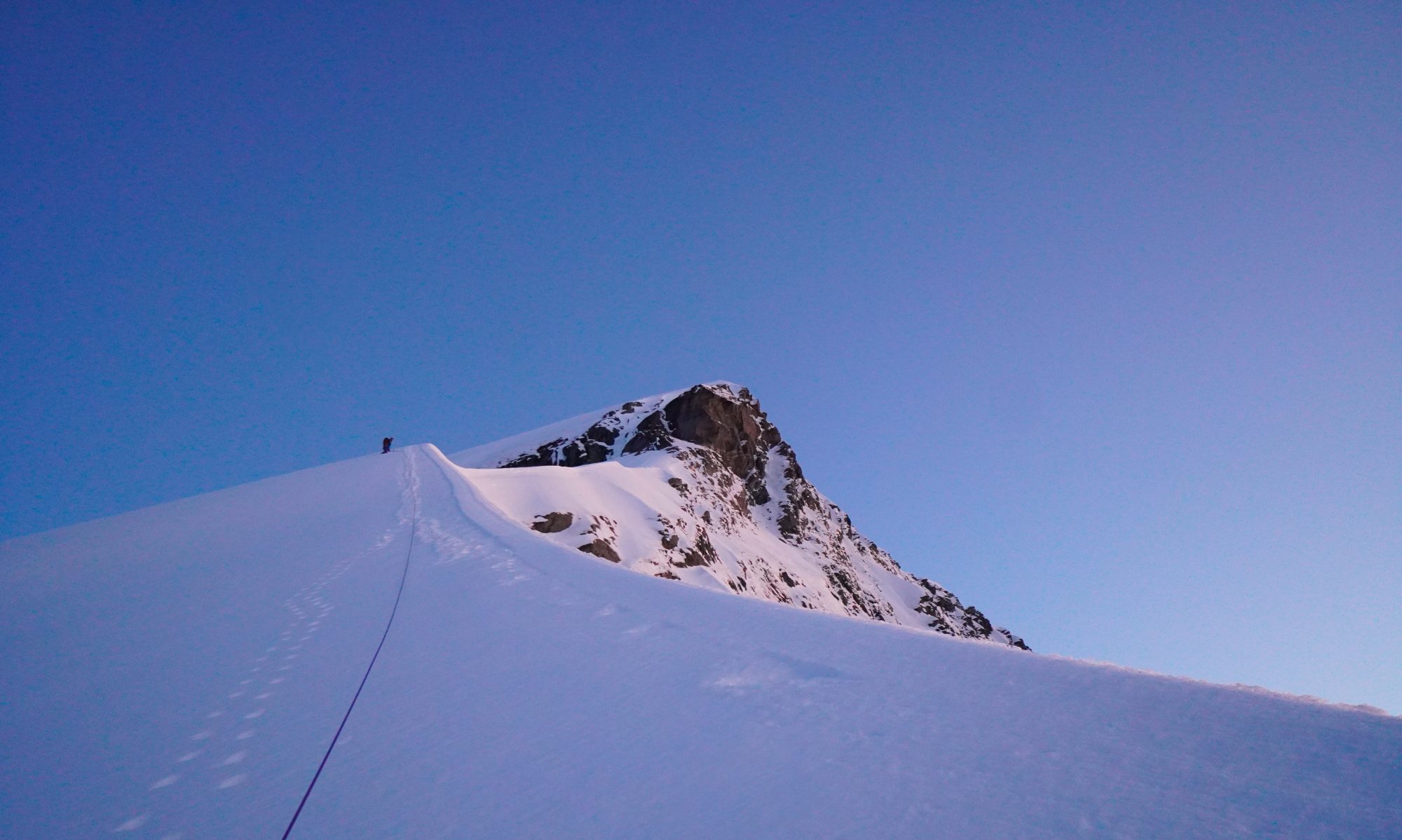
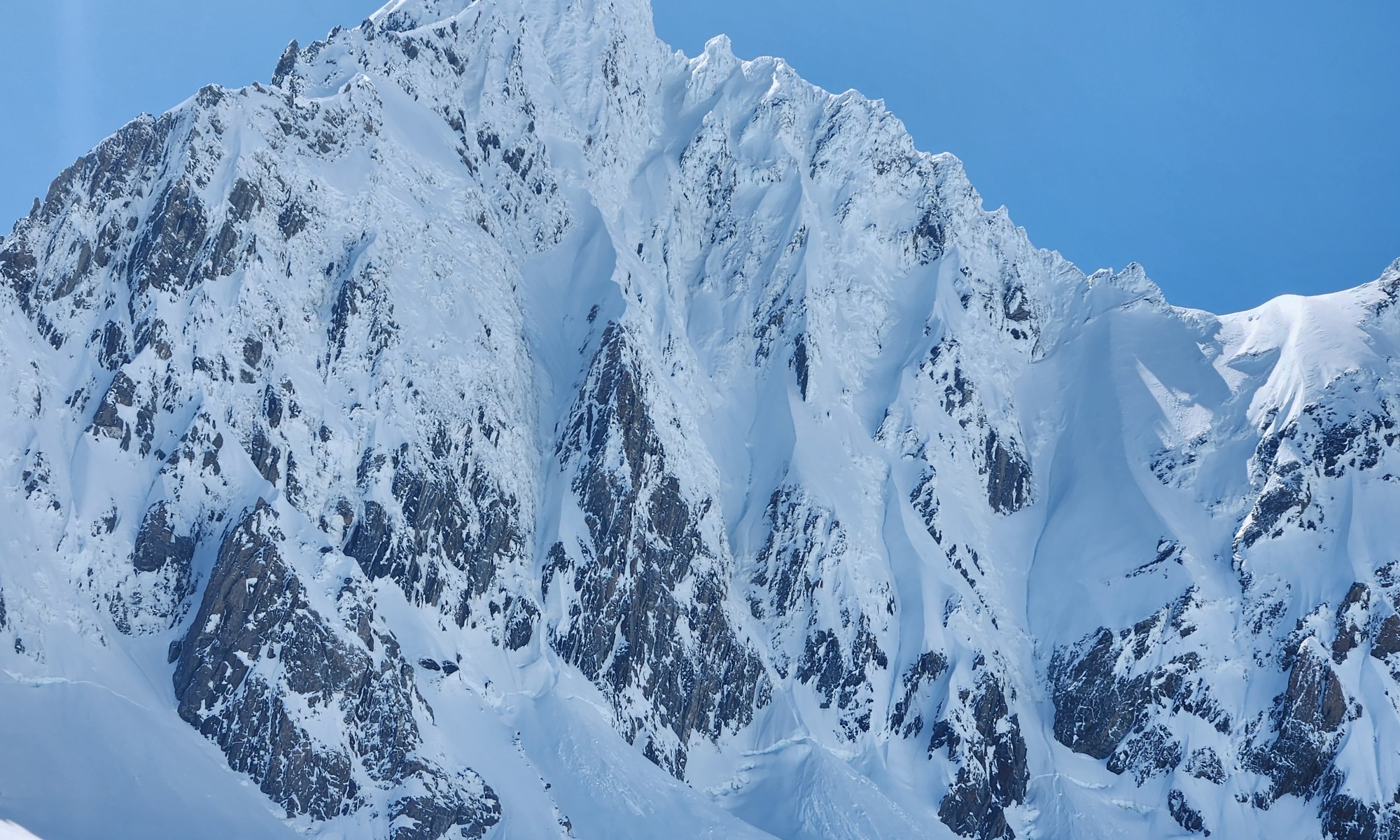
A huge day, stoked to have climbed this one! Decribed in the guide book as ‘one of New Zealands great ice climbs’ and ‘a perfect line on a beautiful face’, we had to see if it lived up to the hype. Not only is its reputation enticing, but its an incredibly aesthetic mountain and (provided you heli in to Pinoeer) is only an hour approach from the hut. Despite being only slightly taller than neighbouring 3000-ers Haidinger and Glacier peak, due to its sheer, forboding near vertical south face it dominates the surrounding skyline, appearing to overshadow everything nearby.
Ice is nice, but it ain’t rock so Joe took one for the team, taking on all the leading. Thanks Joe!
In terms of difficulty, the main issue is the long length of the route, especially if pitching the whole thing. You need to be efficient and confident at the grade to get off the face in time. Technical difficulty varies depending on the conditions but expect back to back pitches of sustained WI3, and when we were there short but delicate vertical sections, edging more into WI4.

- Grade : Technical grade = 5, Seriousness grade = IV
- Equipment : 2x 60m ropes, 12 screws with long runners, small rock rack (didn’t end up using). 2 x snow stakes. Tat for V threads.
- Approach : 1 hour from Pioneer hut on skis, 30 mins on skis.
- Climb time : time on route around 12h (we pitched it all); round trip via glacier peak was 18h
- Season : 19/11/2023
- Team : Joe and Maria
Approach
Stayed at NZAC’s H.E.L Porter Memorial Lodge the night before. Flew with Heliservices, linking up with 2 other climbers making it $525 between 2 of us (770 on the way out between 2). We have never walked in or out of the west coast neves. It is still possible and reguarly done, but it looks increasingly gnarly and difficult as the glacier recedes leaving unstable moraine walls. Horror stories abound, and it certainly seems more dangerous objectively that anything you would experience on the route.
We landed at the hut mid morning, so went to scope the route out to plan for the next day. It’s an easy approach from Pioneer hut, giving you a full view of the face without having to get too close. We could see the route was looking fat, but also that by midday it had turned into a shooting gallery. The sun hits the final headwall around then, and all the debris gets funnelled directly down the route. Options are to either climb in the winter so it stays cold and a few days after a storm so there is less ammo at the top, or aim to be off the route by around midday. Factor this in if you’re planning to rap the face. We stashed our gear at the base of the route for a cruisy approach the next day and headed back to the hut.
We had always planned on descending via glacier peak as a round trip always seems like a more complete day out, and the afternoon icefall confirmed that this was the way to go. If your planning on descending this way, its vital to walk round and make sure the descent from Glacier peak onto Explorer glacier isnt cut off – this only takes 30min from the hut.
The hut book showed the route had been climbed a couple of times in the last week, and that the conditions were generally good but with poor quality ice at the top. This cemented our decision to avoid rapping the route if possible. It seemed like there had been some epics in the previous week, with one team getting benighted – we aimed for an early start and to move fast to avoid the same.
Back at the hut, we almost had to call the whole trip off after #bootgate when someone else staying at the hut knocked one of Joe’s boots that were drying outside off the platform they were on – a platform perched out over a 50m cliff with a big shrund at the bottom. Miraculously, the boot and footbed both landed on seperate little ledges on the cliff just shy of the crevasses below…!! A good lesson to not leave stuff out drying over a cliff!

climb
We were up at midnight, and left the hut at 1am.
From the base of the route, there are 3x relatively low angle (50ish degrees?) pitches to get you warmed up. Some parties solo or simul this section to get to the water ice, especially it this section is snow. For us this section was hard snice, littered with small rocks and with a waist to overhead deep runnel straight down the middle where a fridge sized boulder had plowed its way down the bottom of the route. You definitely don’t want to be here when the rockfall starts! We pitched this whole section, but were able to move pretty quickly.
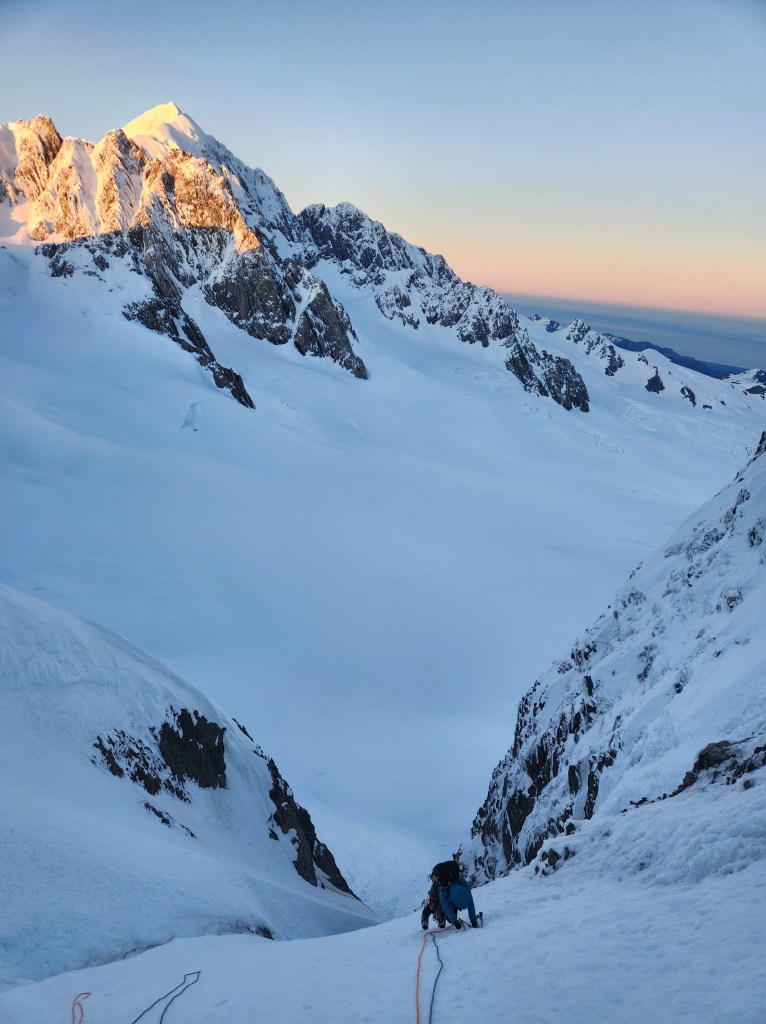
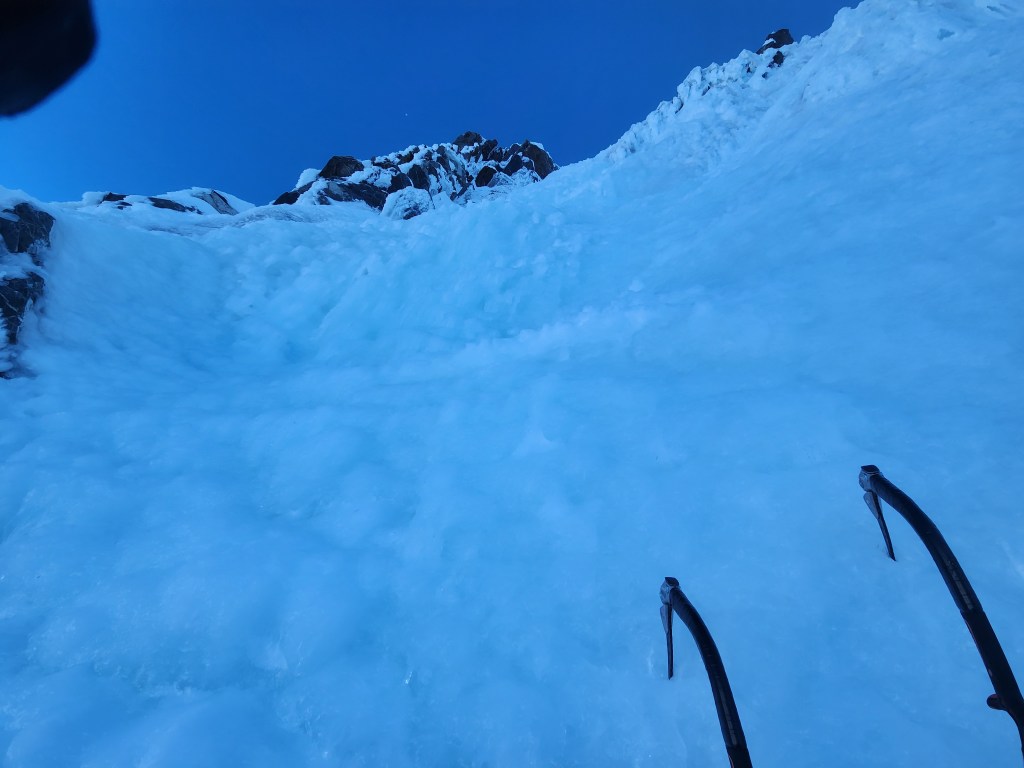
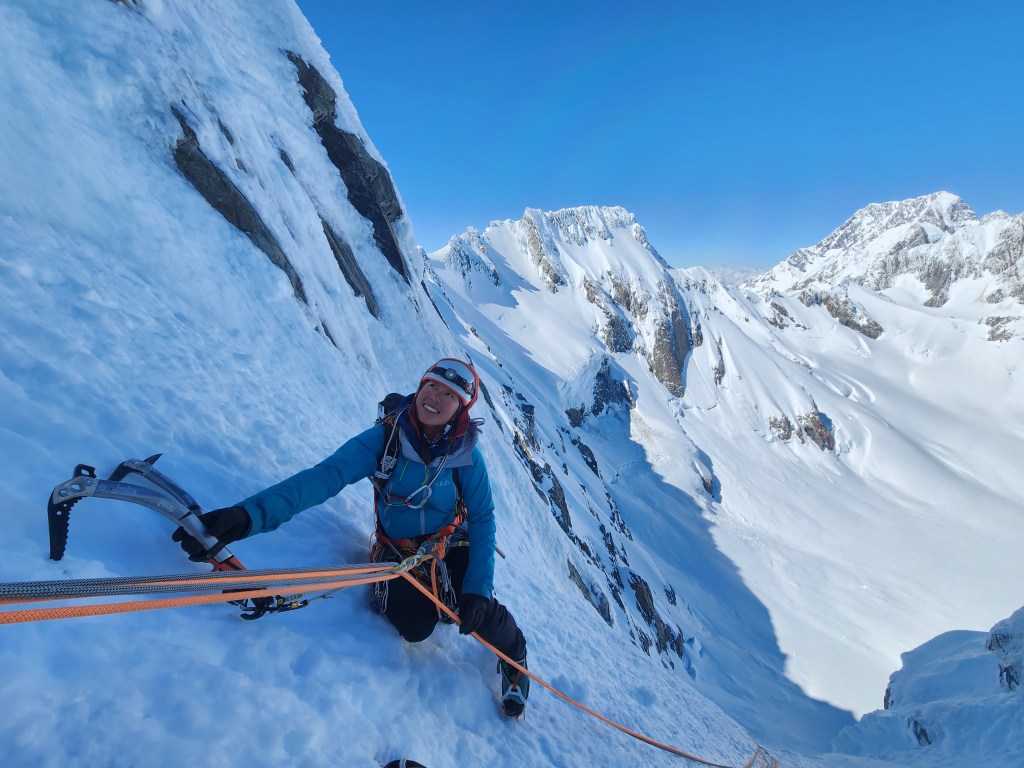
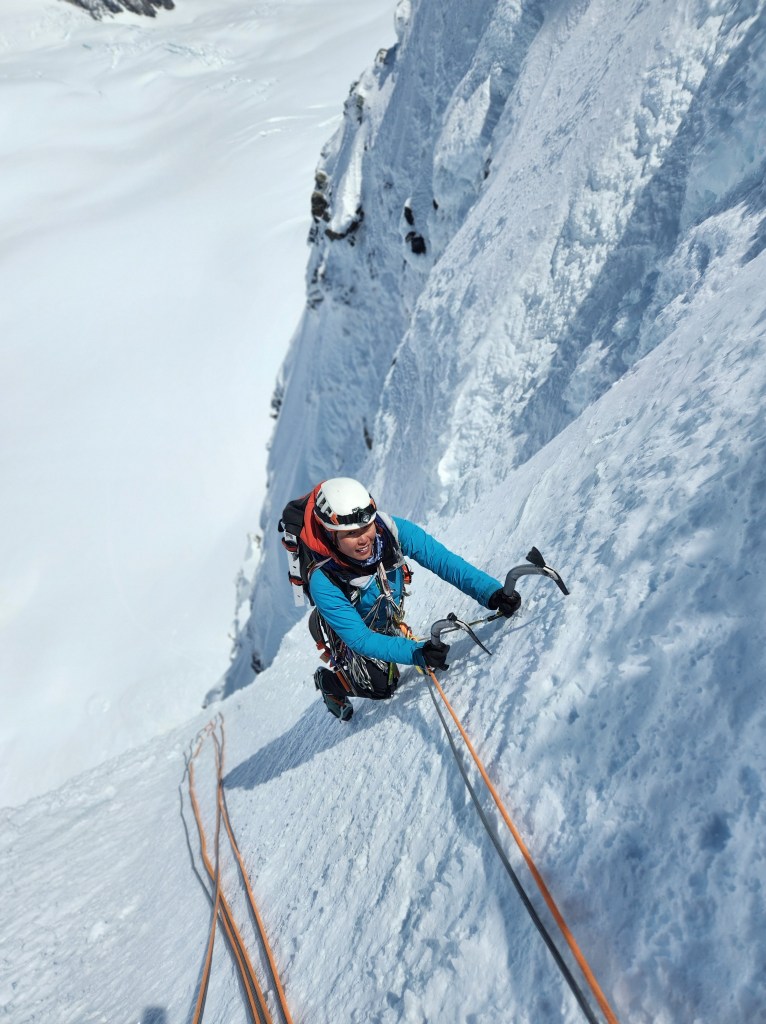
Pitches 4-8 were phenomenal – full pitches of fat water ice climbing, taking bomber screws at a sustained WI3. Multiple blobby bulges mostly in the 70-80 deg region. Pitch 6 was the definite crux (the 11.62 section in blue in the guide). Here the ice steepened up to just below vertical and became more technical, but this section was short, 20-30m. After the crux its back to the hero blobs for a couple more pitches until reaching the final headwall. The angle drops off to around 70 deg to the summit – we made a total of 12 pitches but these were all rope stretchers so could easily end up being a bit more than that. This time of year the sun effect on the top pitches was affecting the ice quality, but could still make reasonable picket anchors. If you were rapping the route this late in the year you would need to be leaving pickets for several raps as it was too soft for threads.
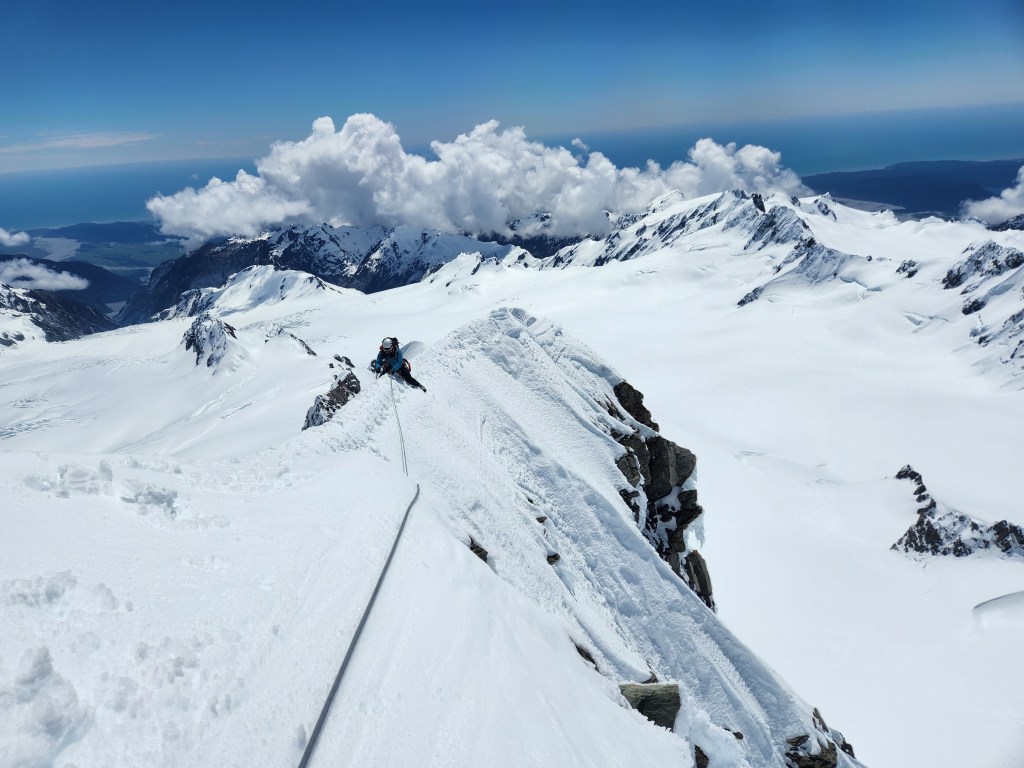
The summit is a knife edge ridge that extends towards a large block at the far climbers right side of the face, which is the true summit. The topos mostly show the route aiming up to the far climbers left of the face which is the route we took – this is a bit awkward as making a belay on the ridge is not the easiest. Genuine knife edge ridge with a lot of exposure on both sides, and the sun is blasting the other side of the ridge so going down there to make a belay wasn’t going to work for us. The top of the south face also catches sun so the snow / ice quality if pretty poor here – we made a 2x picket anchor just below the ridge, but there was a bit of messing around from me going up and down figuring out where best to make the anchor which wasted a bit of time. We then chevalled across the ridge to the true summit where theres a good belay rock you can sling. If we were doing the route again, on the final pitches would just trend climbers right to just top out at the block / true summit and avoid the messing around on the ridge.
descent
Rapping the route – a popular option, and espeically good in a team of 3 where one person can be equipping the threads as your going up. However probably wouldnt recommend it this late in the year unless you can move fast enough to be off the face by around midday or 13:00 due to icefall. Another party climbed a route to the left of us at the same time as us and ended up rapping through the heat of the afternoon, and it sounded like a fairly terrifying experience with a constant bombardment of ice and rock.
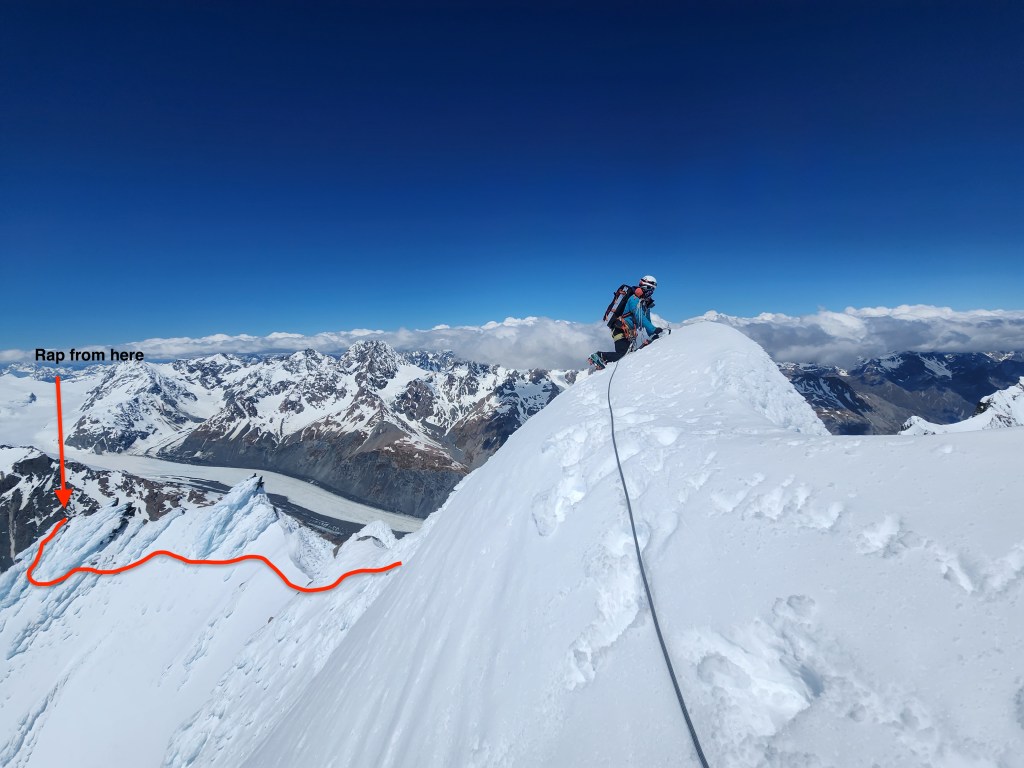
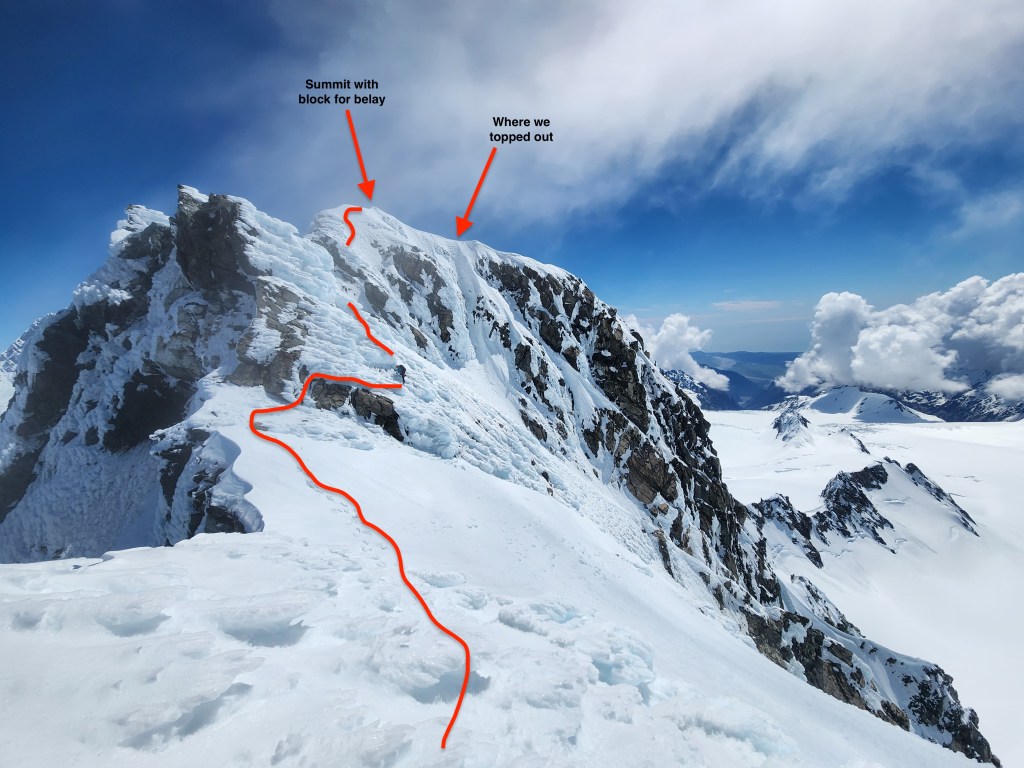
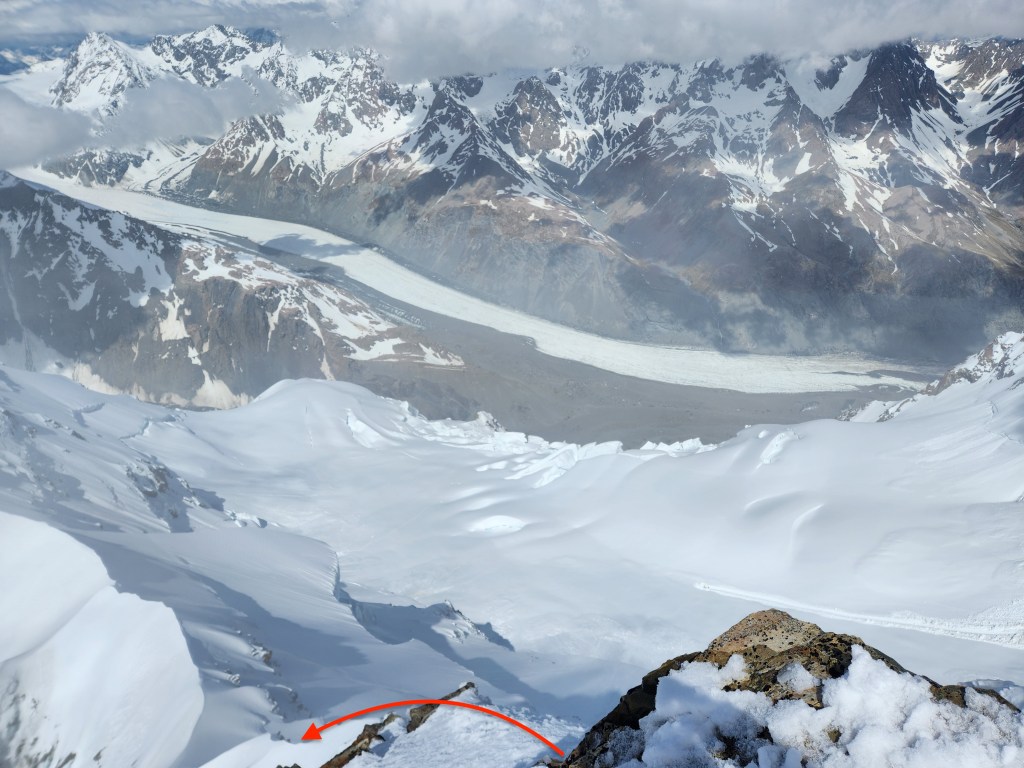
Preferring a loop, and because we had topped out after midday, we opted to descend via Glacier peak. On the summit of Douglas there is a decent rock that you can sling for an anchor. The first section of the traverse towards glacier peak is a little involved – we made one 30m rap from just below the summit to get to the lower snow field, and then traversed on the North side of the ridge around 2x large rime covered blocks for around 100-200m to get to the main rap. Stay on the north side of the ridge and go as far as you can until the ridge forms a point to find the rap station which may well be hidden by snow. From the end of the ridge aim to rap on the north side, around 50m, putting you onto the main ridge connecting to Glacier peak. See photo below.
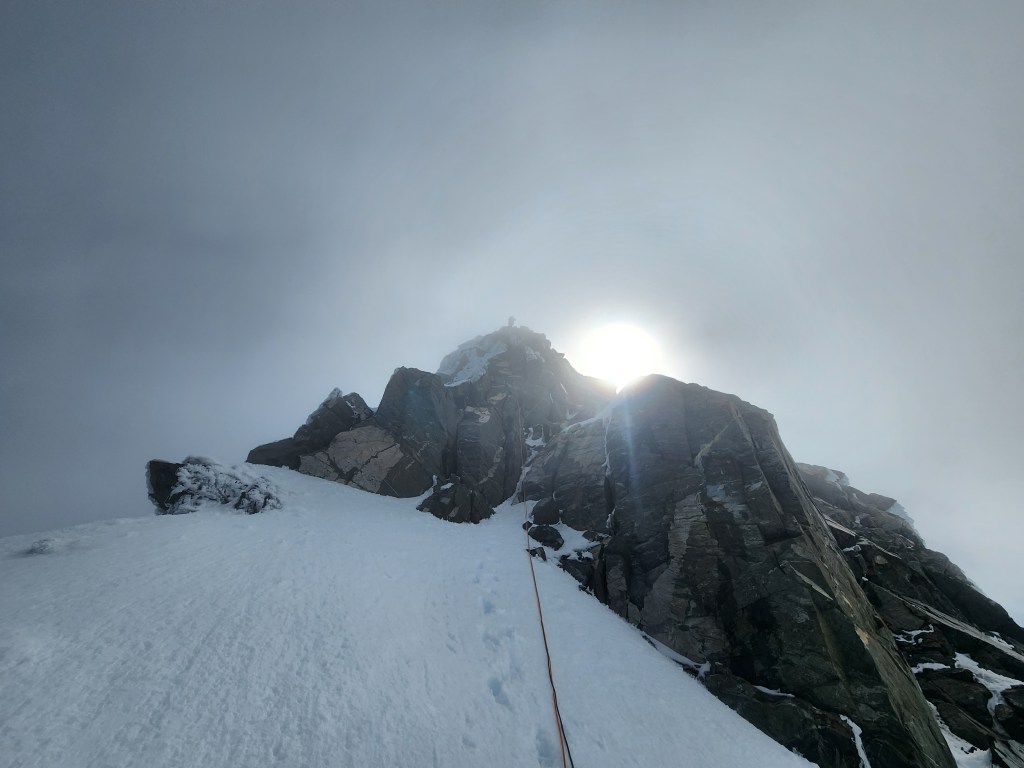

Then it’s a straightforward walk to the lowest point of the col between Douglas and Glacier peak. We descended from there onto Explorer glacier, and were glad for the photos we had taken the day before of the route down through the crevasses. By now it was 6-7pm and the snow was soft. We post holed once or twice along the way back, so again, we didn’t hang around and boosted back to the hut. The others at the hut spotted us returning, so the water was pre-boiled and ready – hallelujah.
 Peak Exposure